We have been super lucky on weekend weather, but this Saturday it was overcast. Thankfully the rain held off for most of the day, but it was kind of a bummer that I couldn’t really capture all the gorgeous foliage. We love the West, but nothing beats an east coast fall, and West Virginia mountain foliage was absolutely gorgeous.
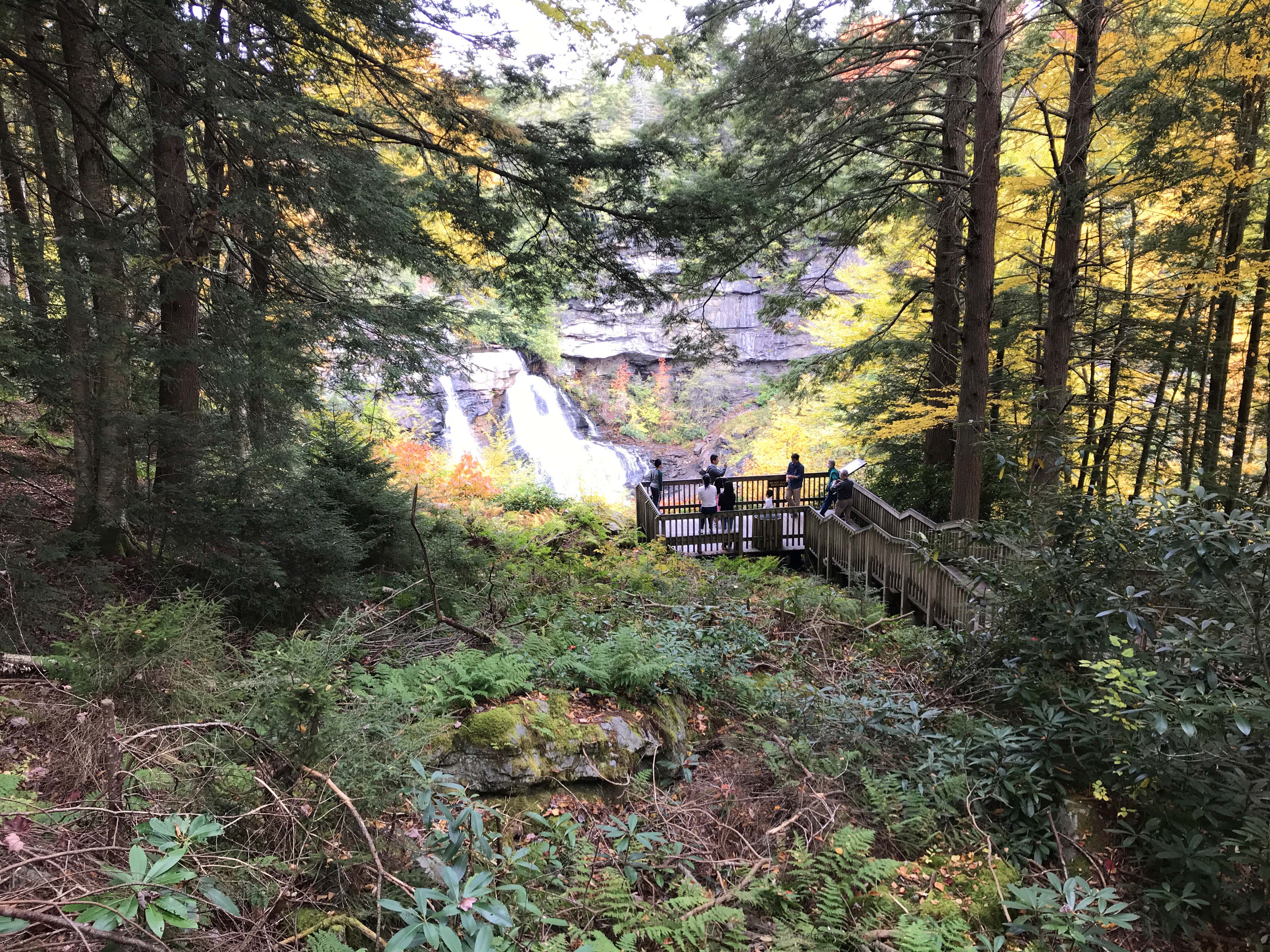
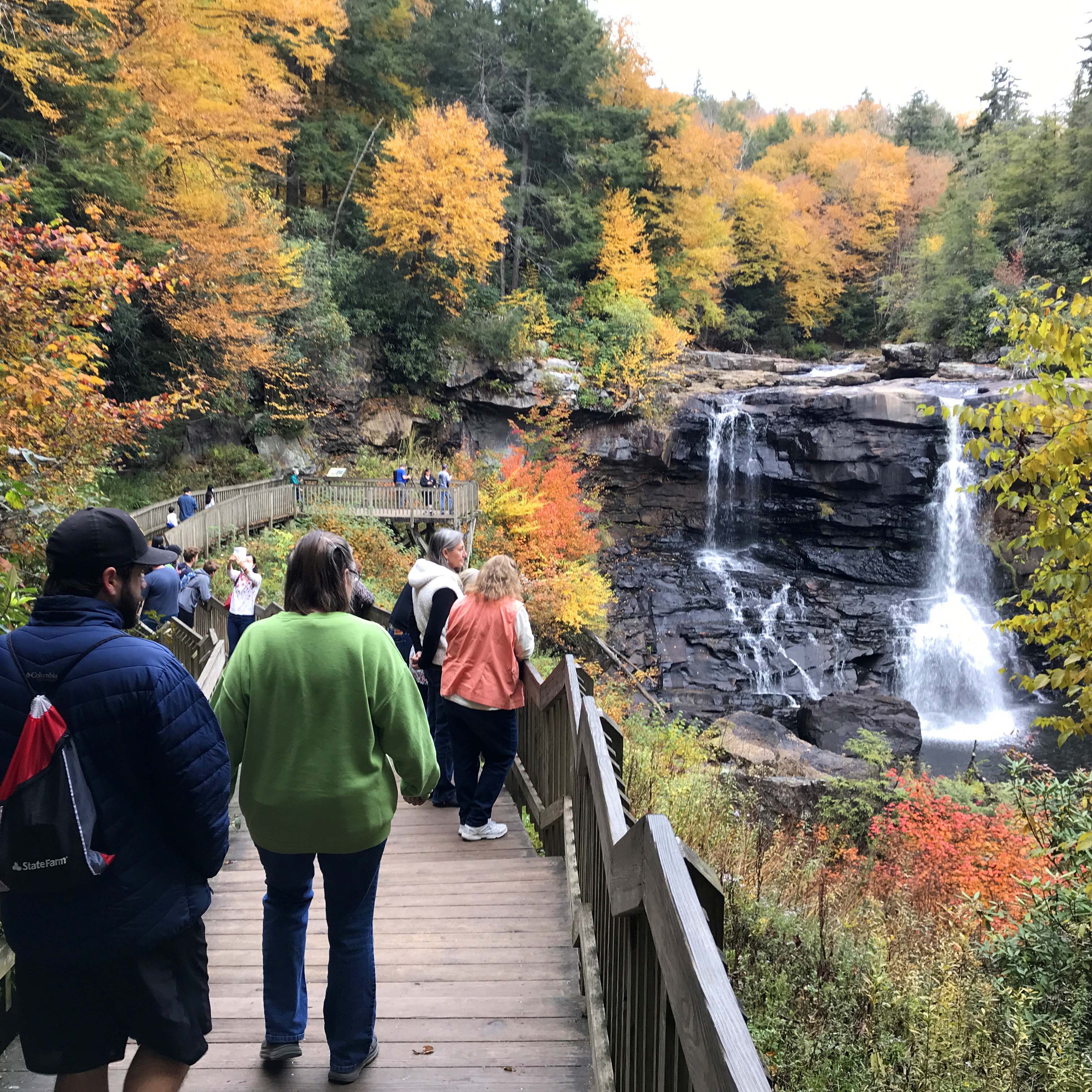
Our first stop was Blackwater Falls and It was a lovely waterfall. There is a nice wooden walkway that wanders through the woods and the views were amazing. It was a little crowded for my taste (a downfall of visiting places on weekends), but super glad we went.
Beautiful walk way
It curved around huge rocks
The magic of Photoshop allowed us to get this pic and take Lee out of it. He was standing to the left holding a treat.
First platform
I loved loved this picture
Lots of folks we weaved our way through
If you look at the top middle of the rocks you see a guy who walked out to the edge. This will give you some scale.
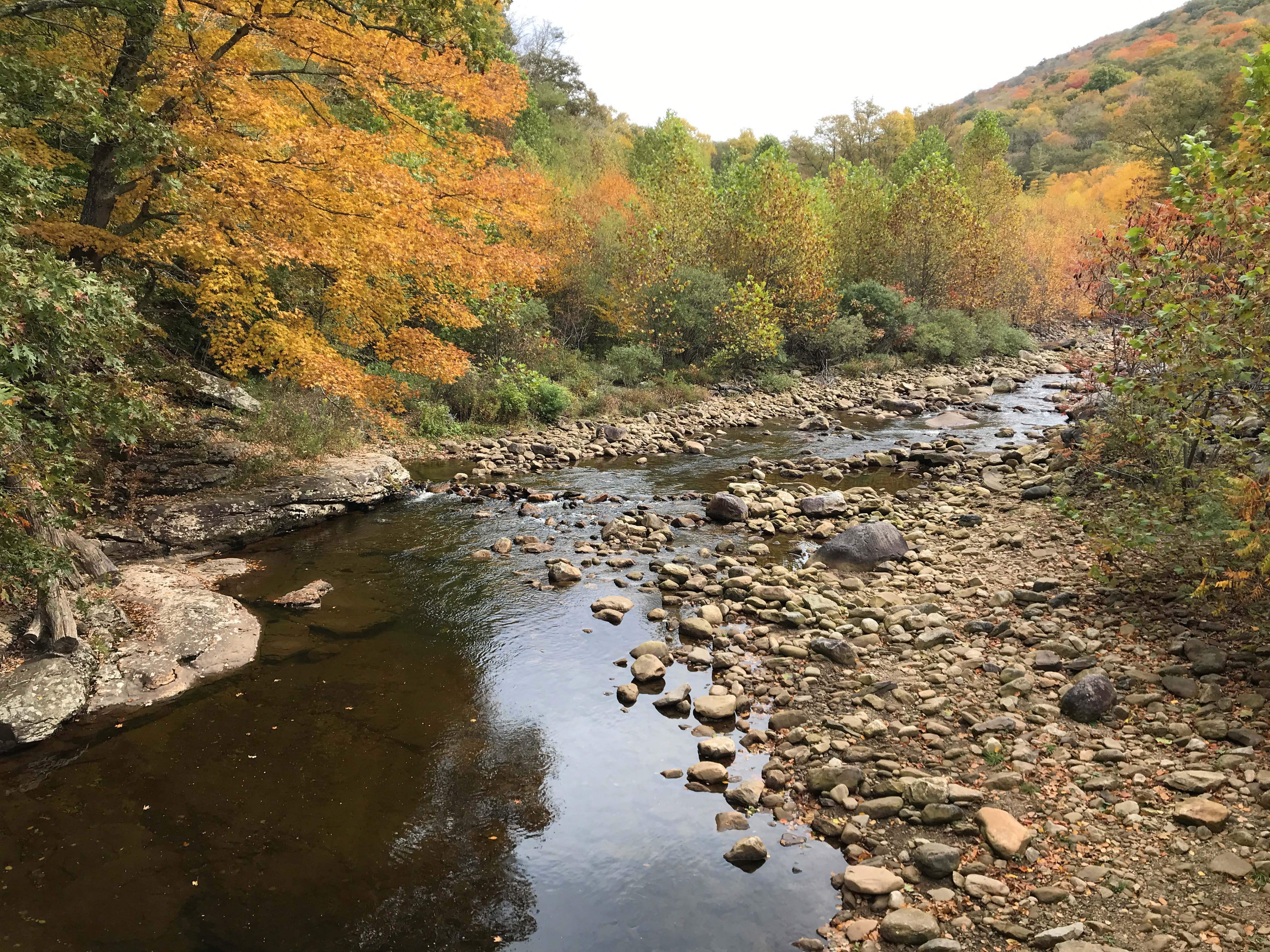
Next we drove down into the Dolly Sods Wilderness. There is an amazing viewpoint up a gravel road, but it was too rough for me that day. Plus with the overcast skies I didn’t think it was worth it, so we just took some pictures from the bottom.
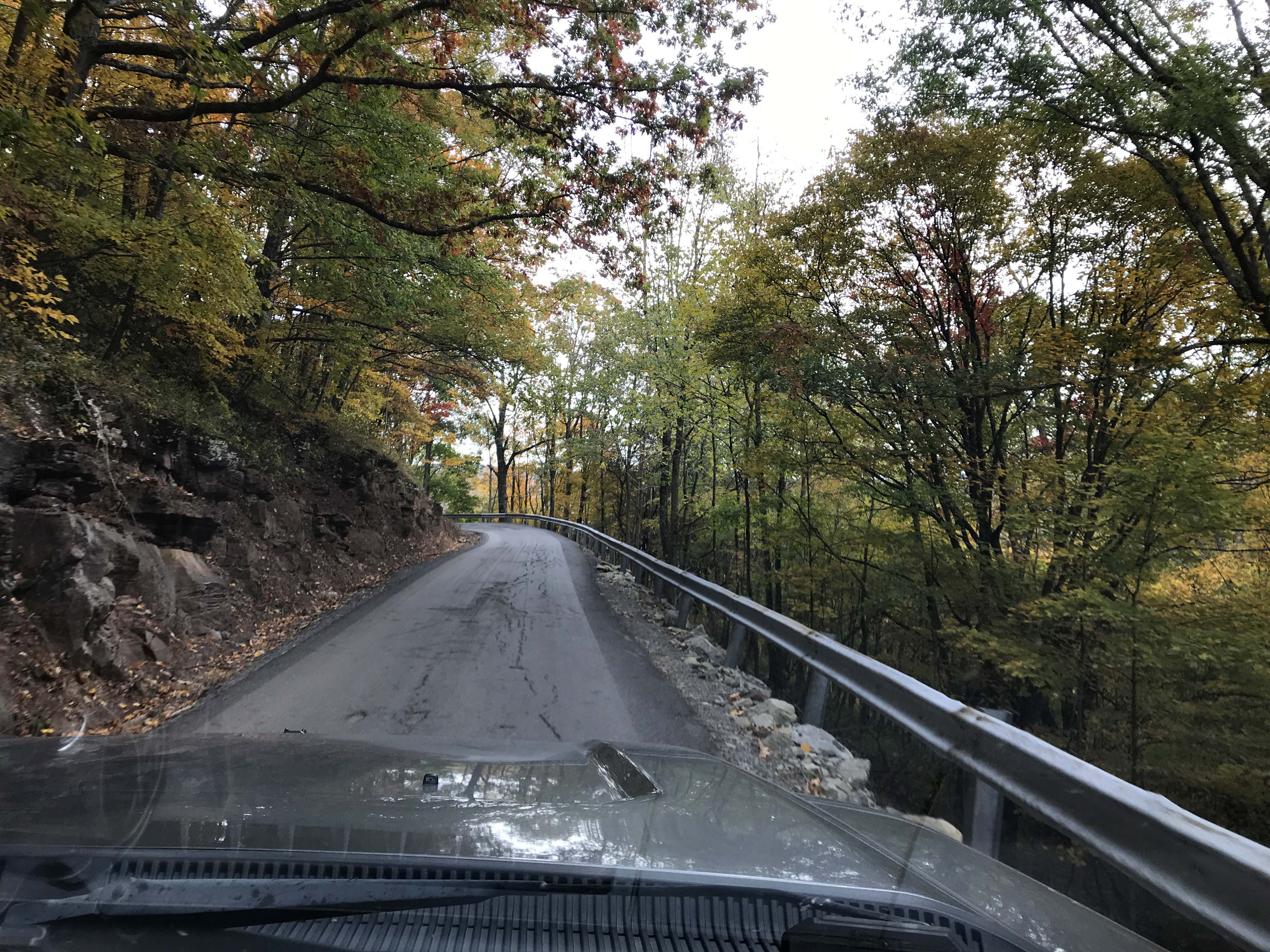
The road to get to Dolly Sods was paved
Gorgeous 360 views from a bridge.
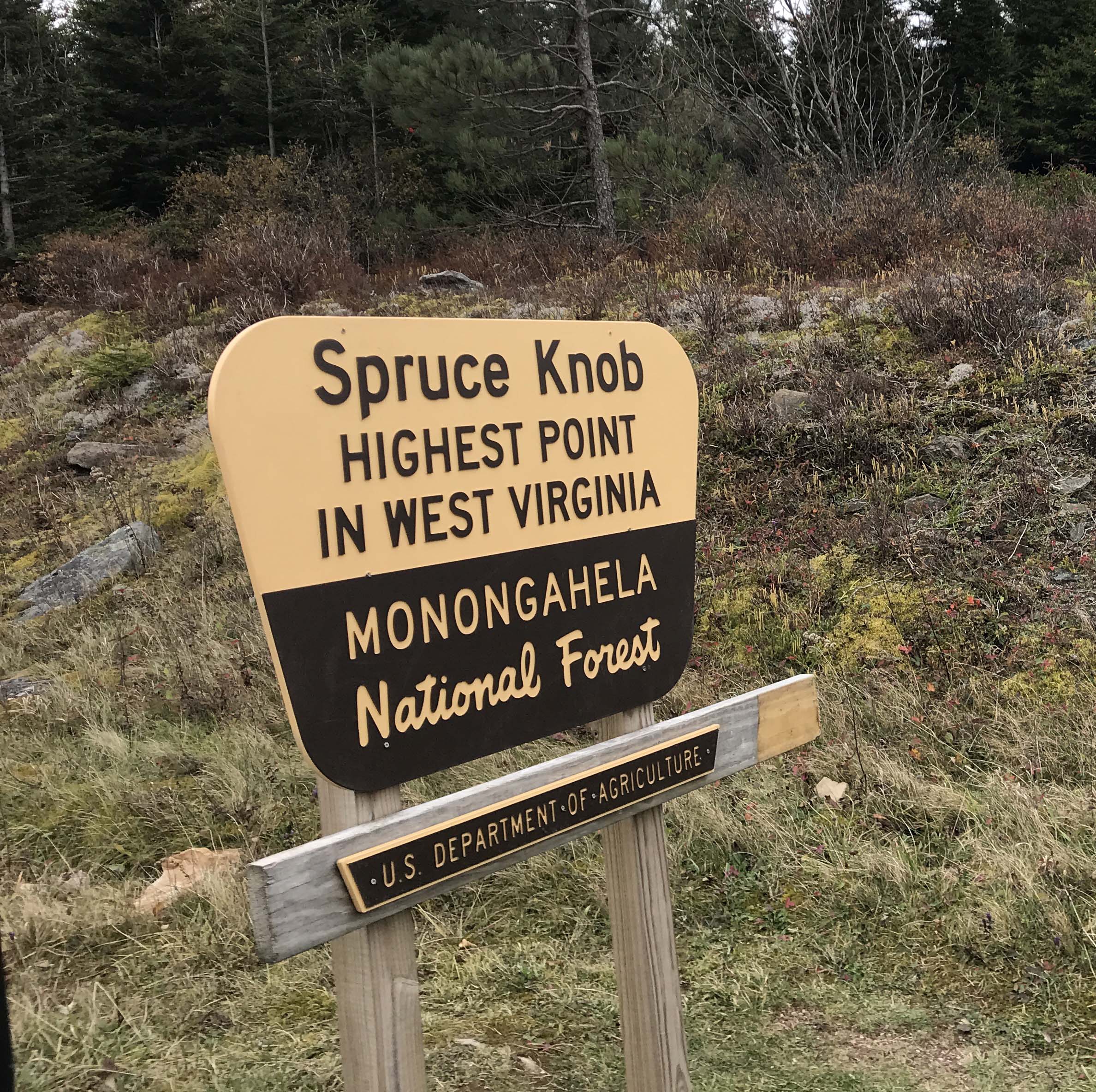
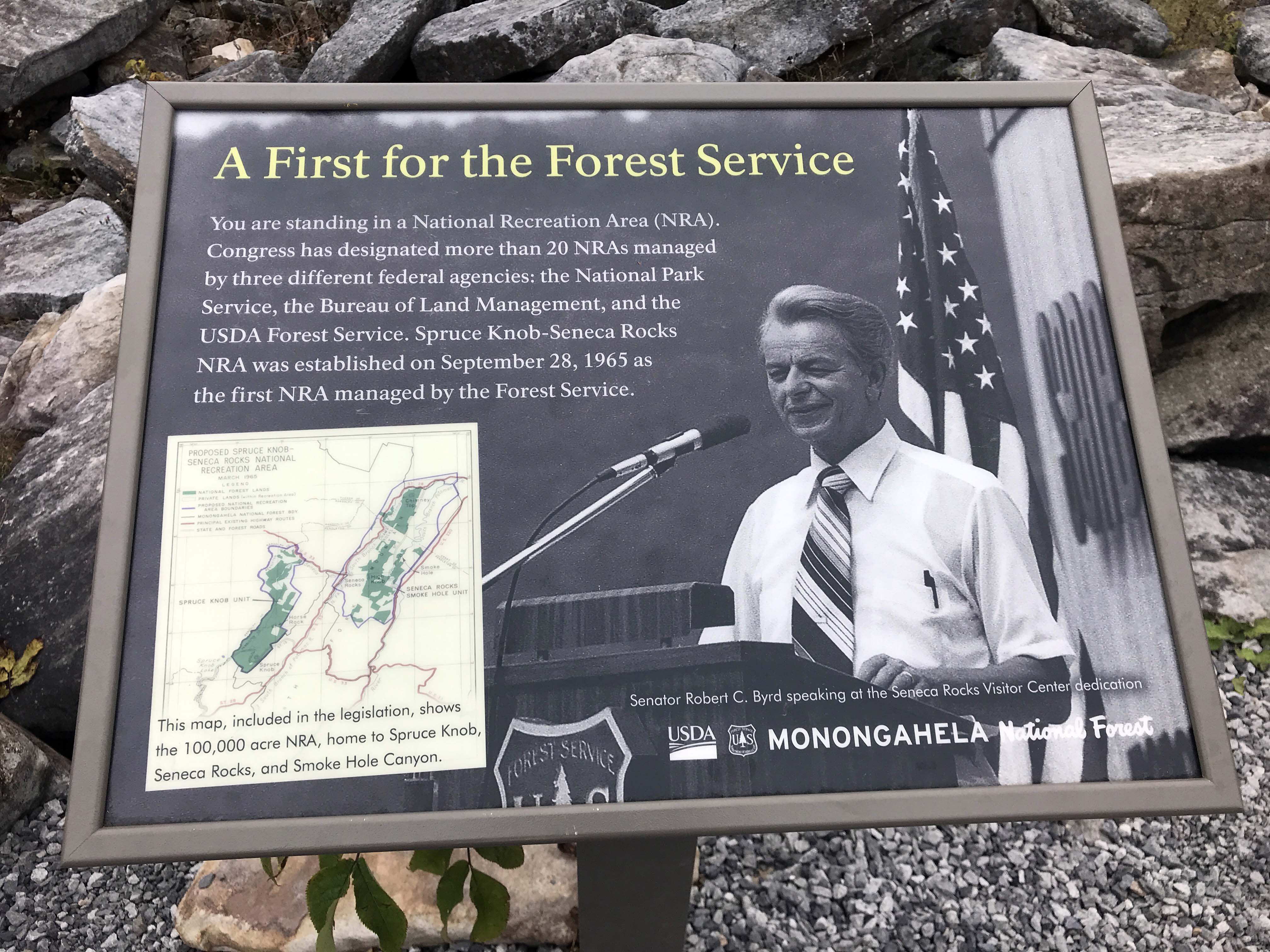
Next we headed to Spruce Knob (the highest point in West Virginia) and along the way we stopped for lunch and saw Seneca Rocks. These rocks are super popular with climbers and kind of interesting, but for those of us who have been out west just so-so. The area was packed though and they were doing a good business. One benefit of traveling on Saturdays is places were open. Our neighbors in the RV park said the restaurants were closed when they went during the week.
Seneca Rocks
Had a so-so sandwich at the deli, but it did the trick.
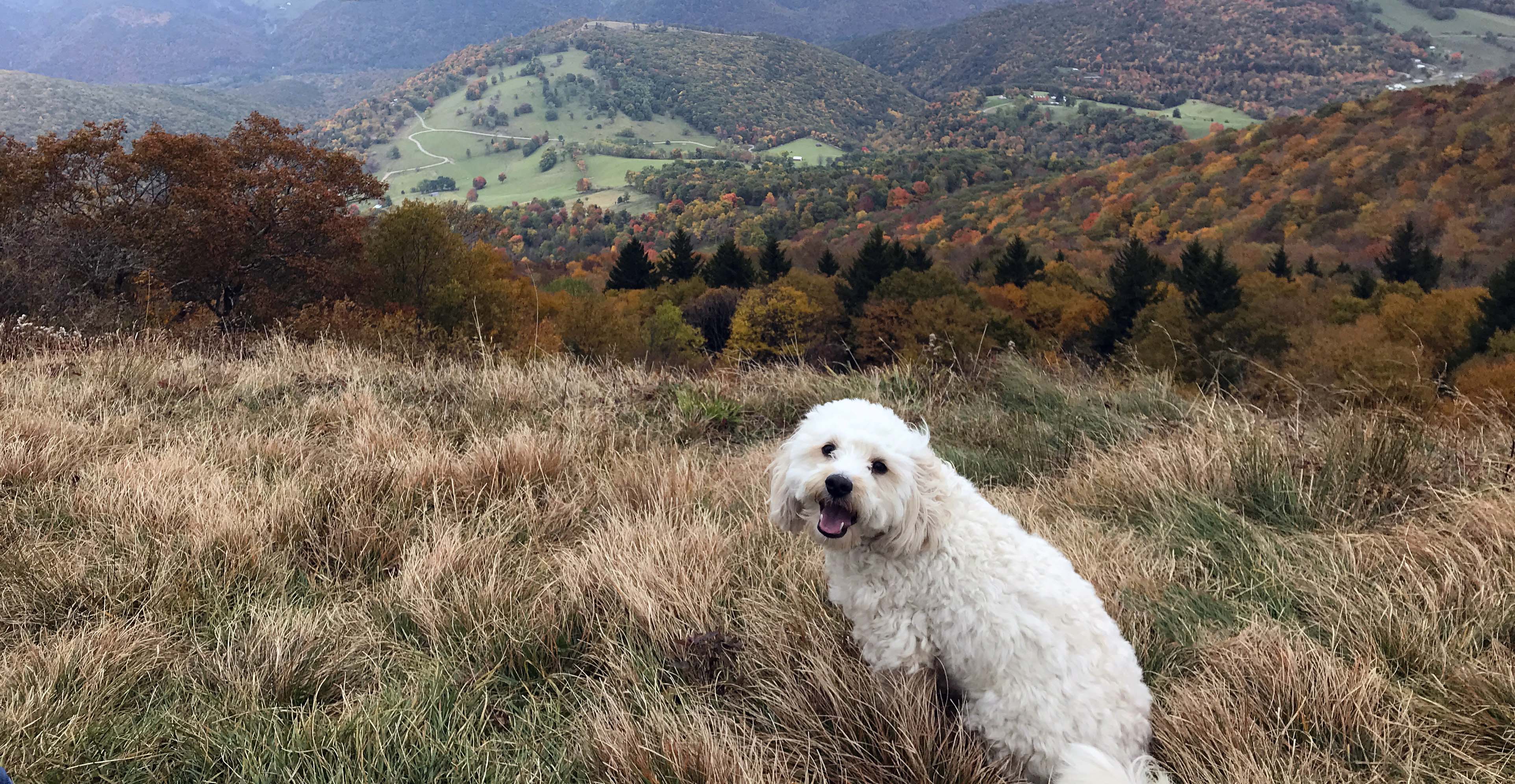
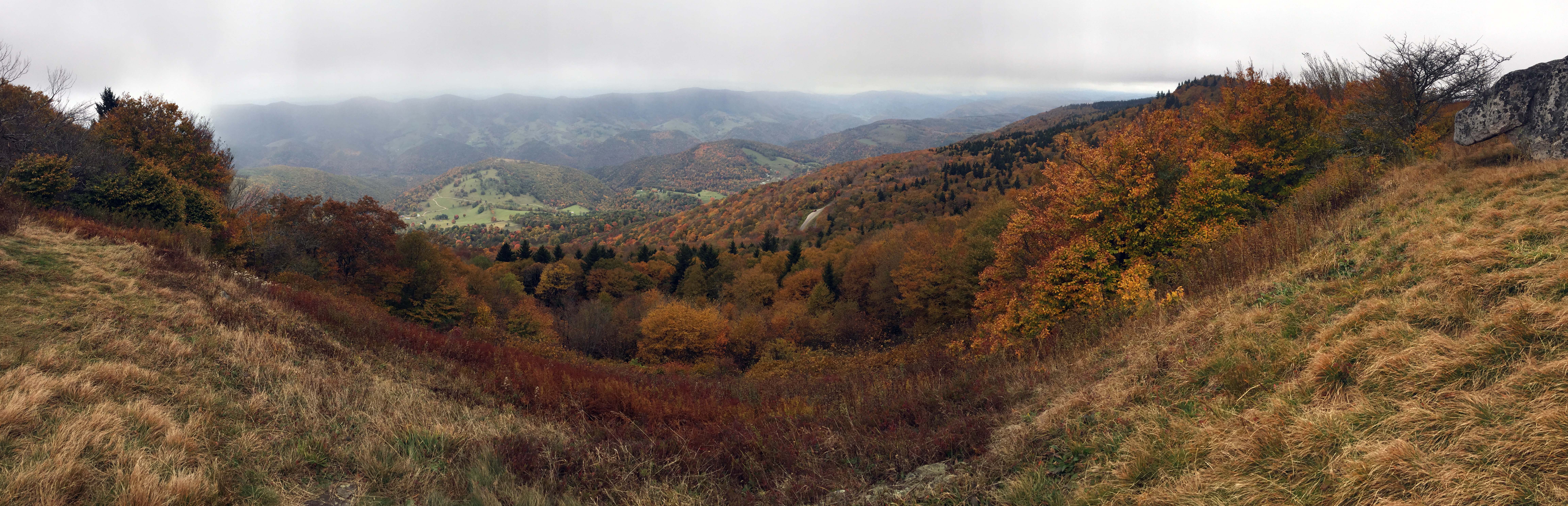
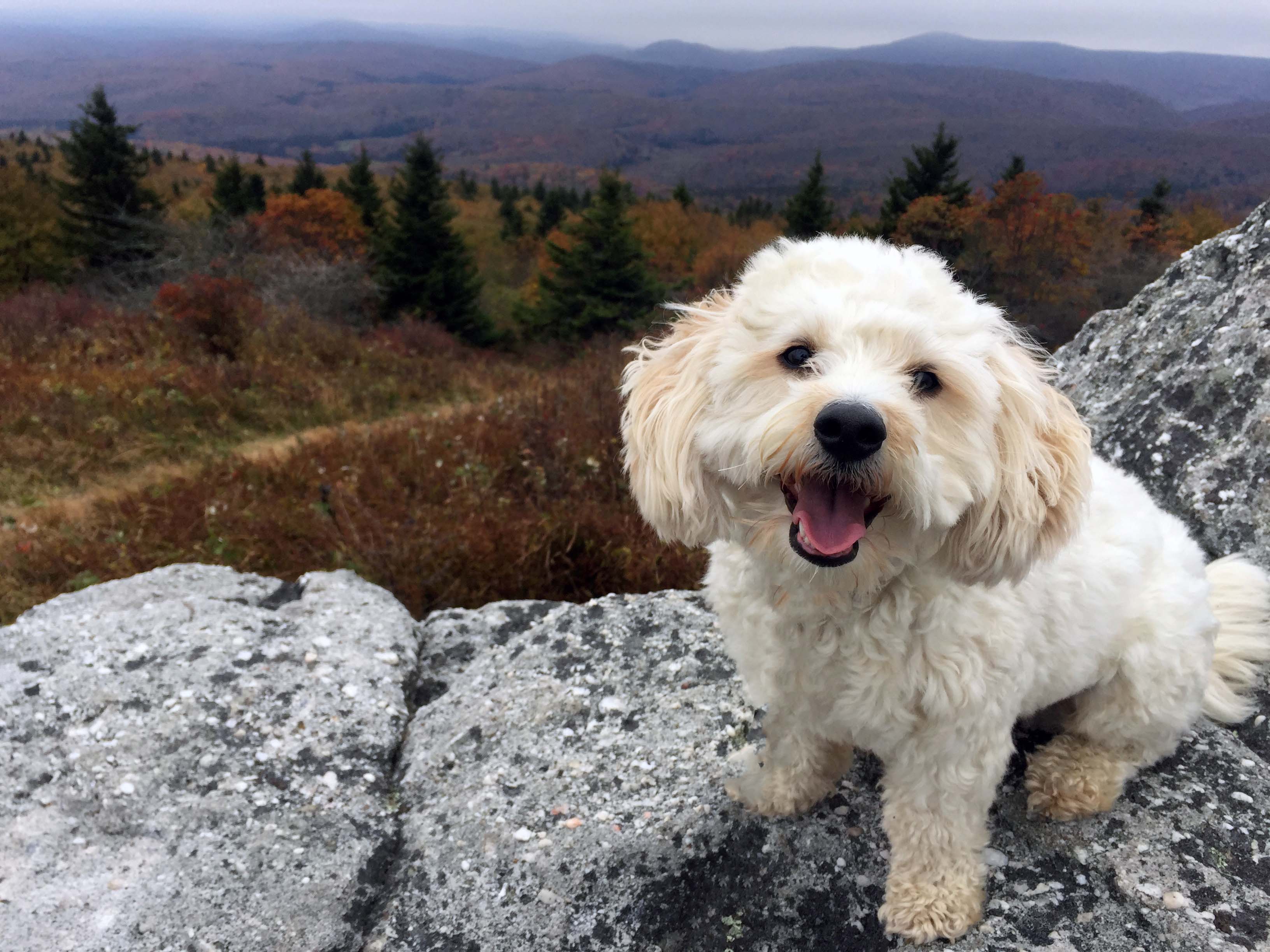
Finally we made it to Spruce Knob and we drove to the top. There is a half mile walk with an overlook tower, plus a nice point you can walk out to. Definitely wear your hiking boots because the terrain to get to the point is really rough.
.
.
.
.
.
.
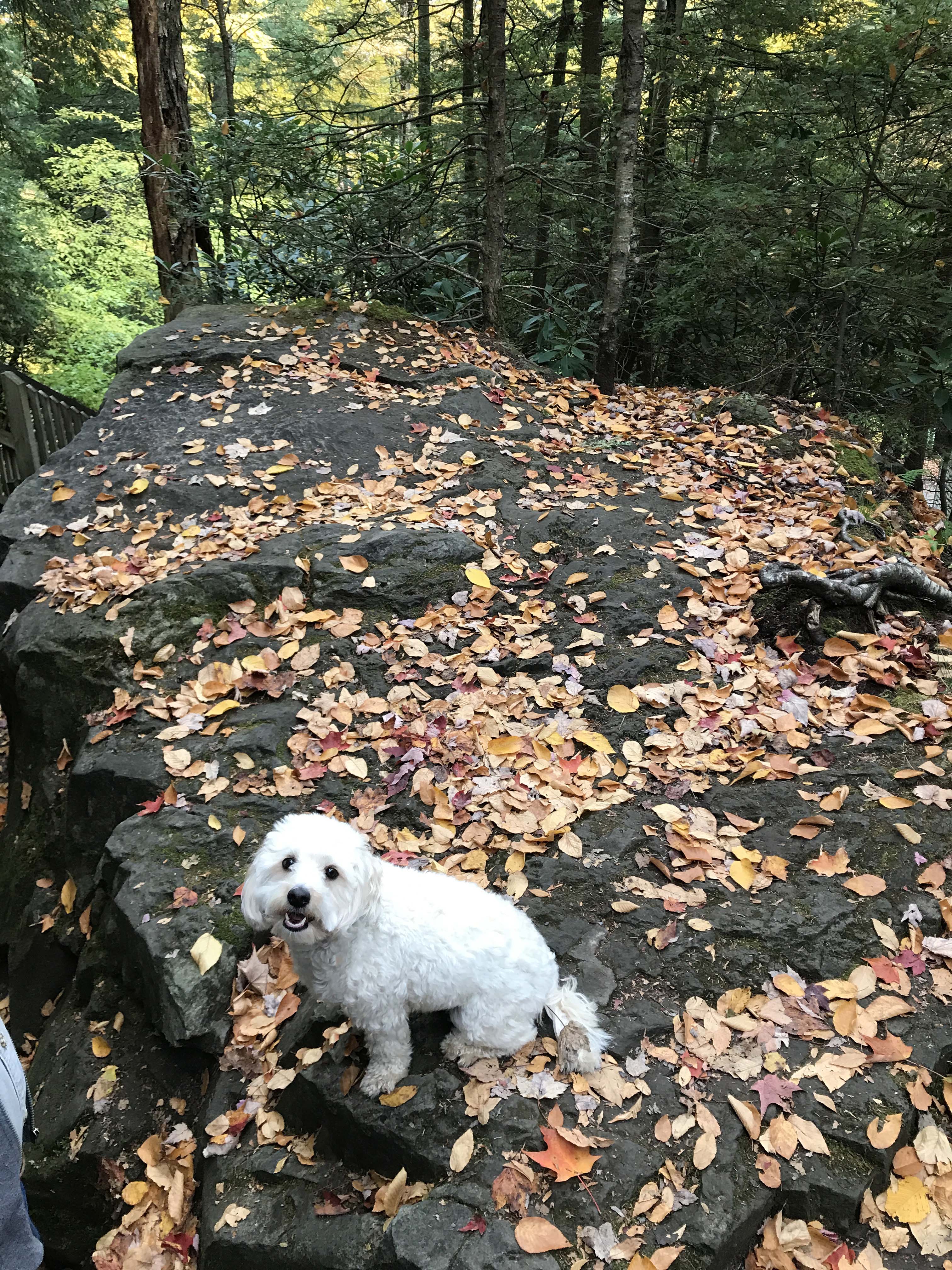
Got some awesome Jack pictures
The valley was beautiful sorry I couldn’t capture it with the fog
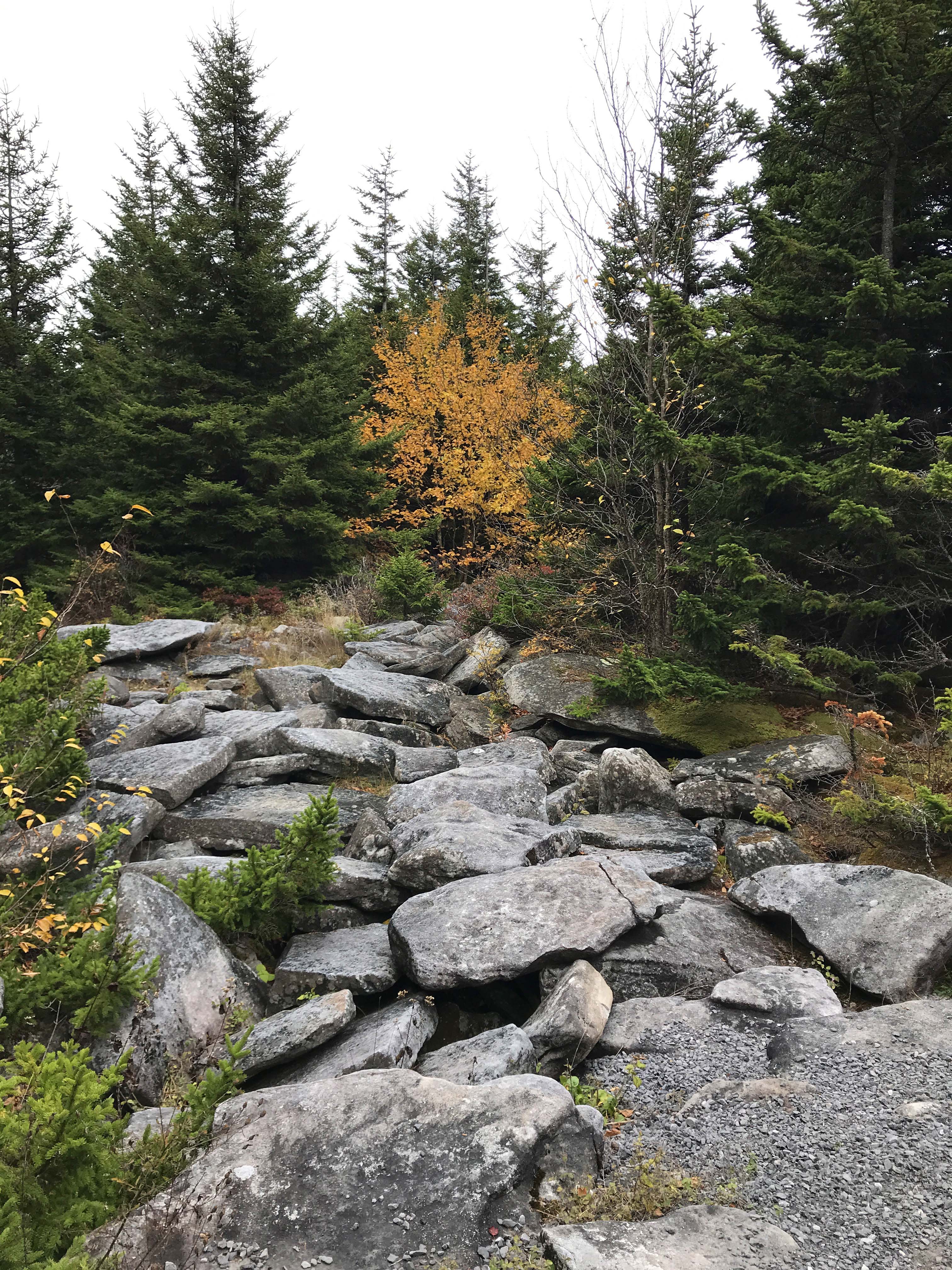
This was what we had to walk down to get to the point.
.
.
Of course we would never let Jack off leash, Lee just likes to remove the leash using Photoshop because it makes for better pictures.
Lee’s pic
It was a lovely day despite the weather and we got back right when the rain started. It rained for the next three days so I am grateful we got some sightseeing in at all. Next up more information about our traveling as we head to Maryland.
Supporting our Blog
We very much appreciate your support of our blog.
You can purchase the ebook telling the story of how we became full-time RVers.
You can purchase our recipe book filled with 80 recipes we have cooked in our RV and taste tested by Lee himself. You can purchase the kindle or paperbackversion on Amazon or buy the Apple version on iTunes.
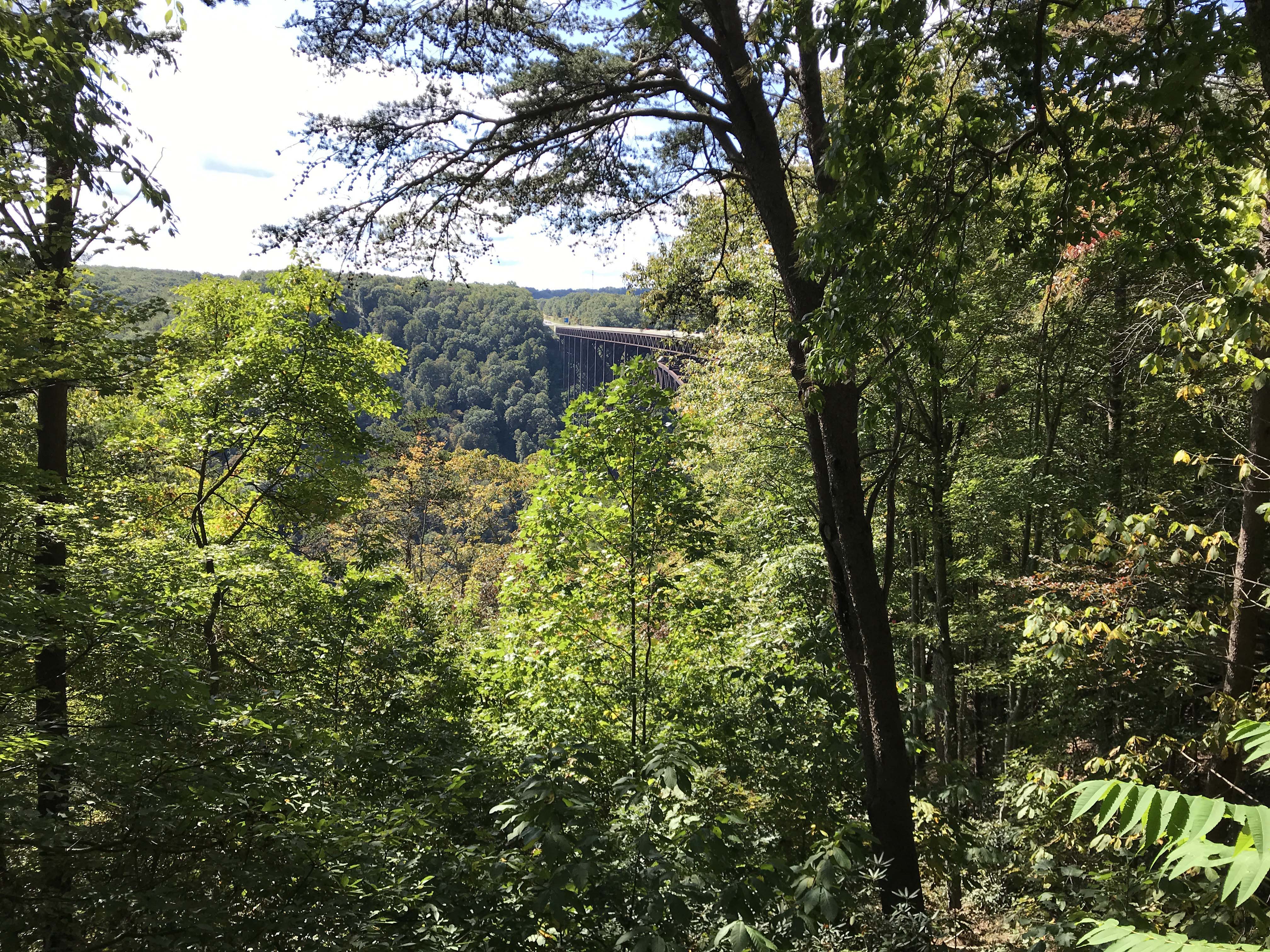
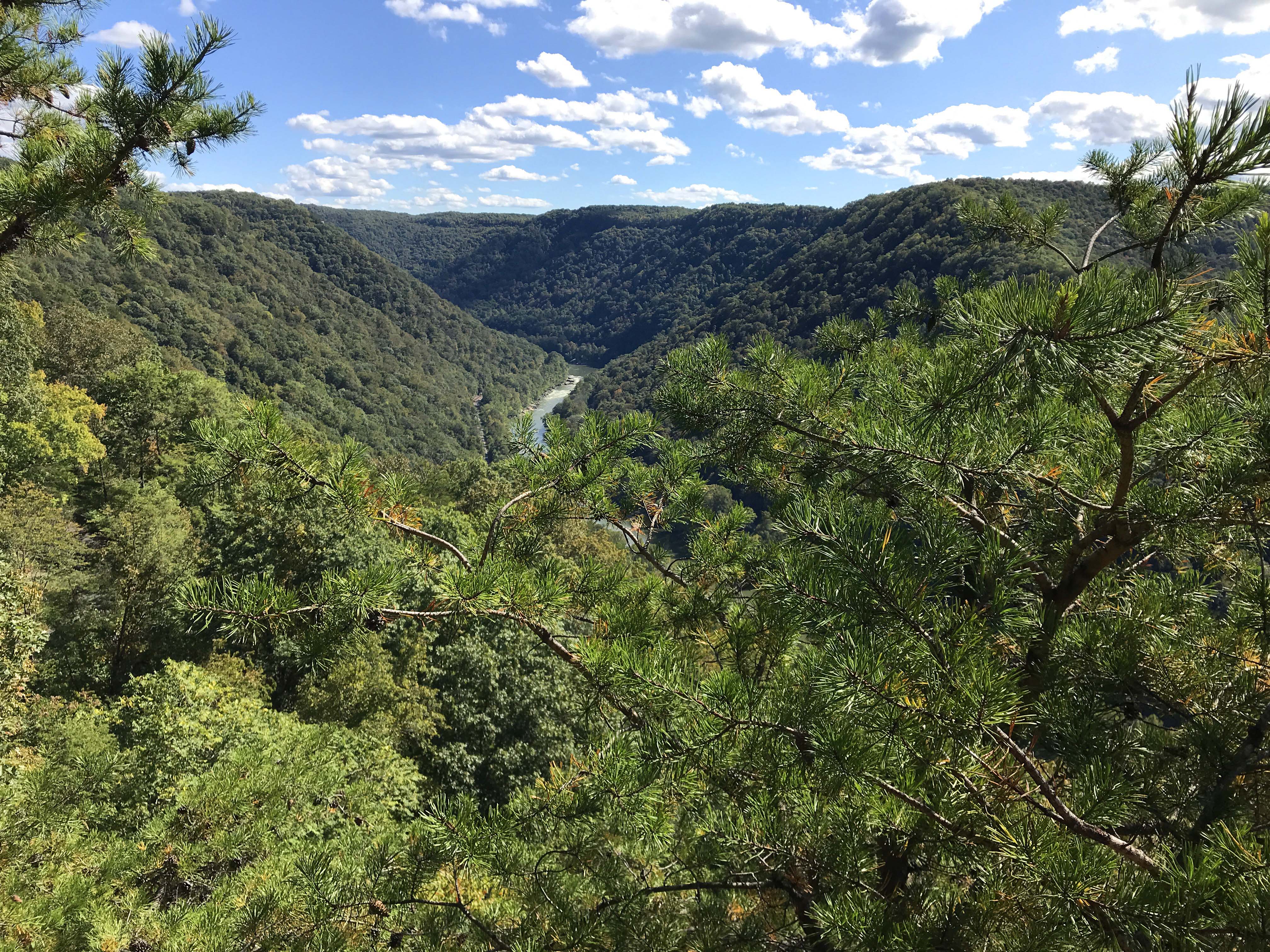
After we visited The Greenbrier we went back and picked up Jack and headed to the New River Gorge. My Dad had said it was a must visit while we were in the area and since he rarely makes those kind of suggestions I was determined to go. It was a 1-1/2 hour drive to get there, but since it was all scenic highway and the leaves are starting to turn it was fun. Unfortunately when we arrived we discovered the Visitors Center was closed, but they did have rangers outside answering questions and handing out copies of maps. Our park service is amazing.
The first thing we did was walk on a paved path to an overlook. The views from there were just OK so we decided to walk the 136 steps down to better views. I loved the sign at the entrance to the stairs.
Path
Views before the stairs
Cracked me up. “Please remember that while going down is an option, coming back up is not.”
Jack didn’t mind the stairs
Look at all that love
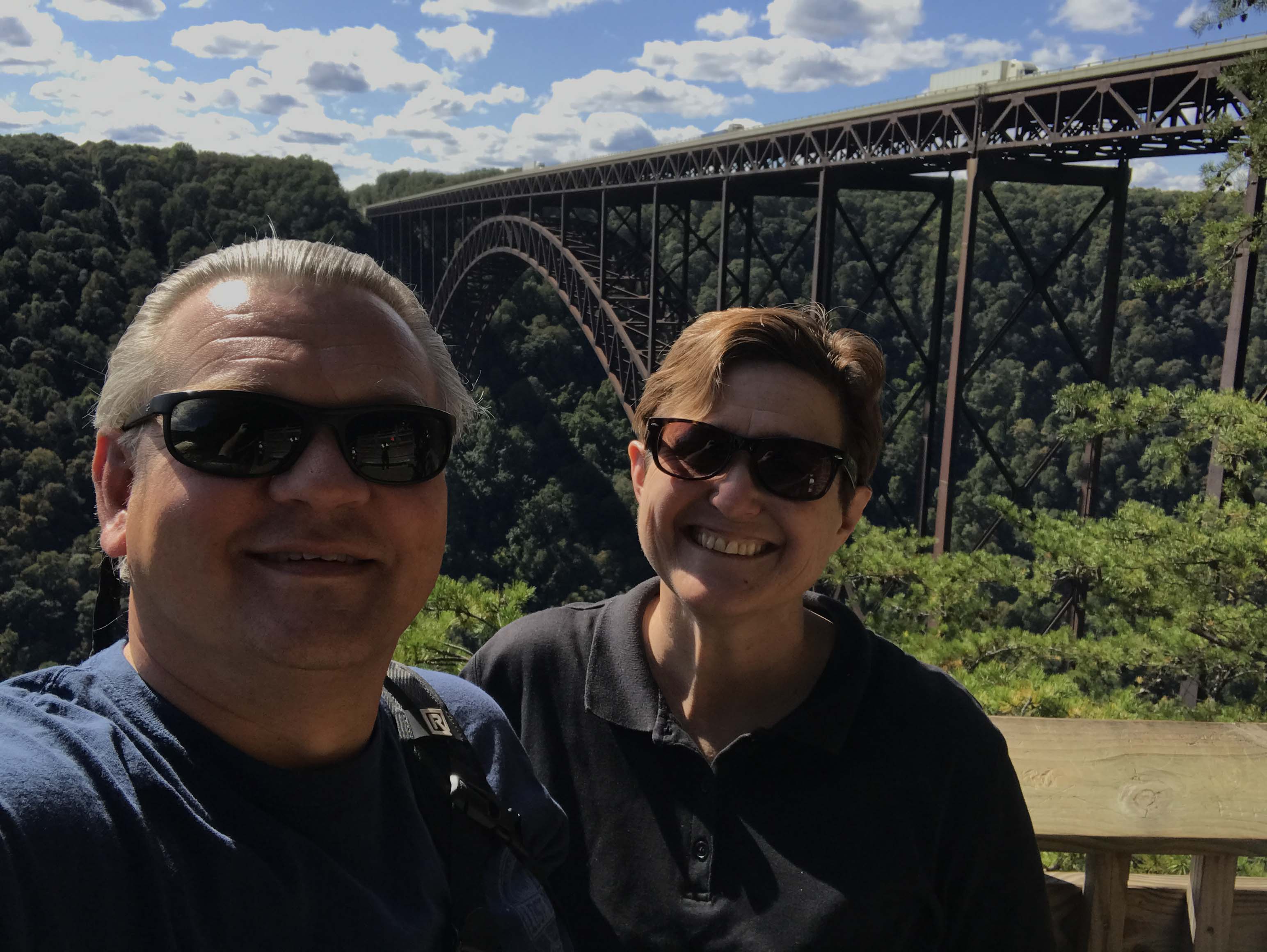
The lower landing was a bit crowded for my taste, but the views were much better. And we got a couple cool selfies.
After huffing and puffing up the stairs we decided to take the scenic drive down to the river. This route is largely one lane paved road, but Lee had fun driving it and the instructions as provided by the rangers were perfect. There were several pullouts for hiking trails along the route and we stopped at one halfway down to take a couple of pictures.
The drive down and roaming around took over an hour even though it was only 8 miles so make sure you have the time if you decided to do it. For me this was the best part though so I wouldn’t skip it unless you had to.
We crossed this bridge at the bottom, parked, and then walked back to take pictures.
Lee’s cool pic of the bridge.
Absolutely beautiful day. I have been so lucky that Saturdays have been such nice weather.
After checking out the bridge we walked down the the river. We were lucky because a train went by and we saw some whitewater rafters. Really fun day and Jack had a nice time. Even got some video which is at the end.
Families were exploring the area, but lots of room for everyone to social distance.
We explored the rocky area and Lee taught Jack to come along with him. At first Jack was tentative, but by the end he was doing better than me. The footing was rough, so definitely wear your hiking shoes.
You can see the train above the river in the picture
Happy Jack
Supporting our Blog
We very much appreciate your support of our blog.
You can purchase the ebook telling the story of how we became full-time RVers.
You can purchase our recipe book filled with 80 recipes we have cooked in our RV and taste tested by Lee himself. You can purchase the kindle or paperbackversion on Amazon buy the Apple version on iTunes.
One of the main things Lee wanted to do when he visited West Virginia was take a tour of The Greenbrier. Surprisingly, I had never heard of it and I say surprisingly because my Dad has gone several times and other people I know as well. It has a golf course that is on the PGA Tour and is a VERY nice resort. None of that was why Lee was interested though. It turns out that for many years Greenbrier was a secret radiation fallout shelter for the US government and he wanted to tour those facilities. At $39 per adult the tickets were not cheap but I was interested enough to go along and I was glad I did.
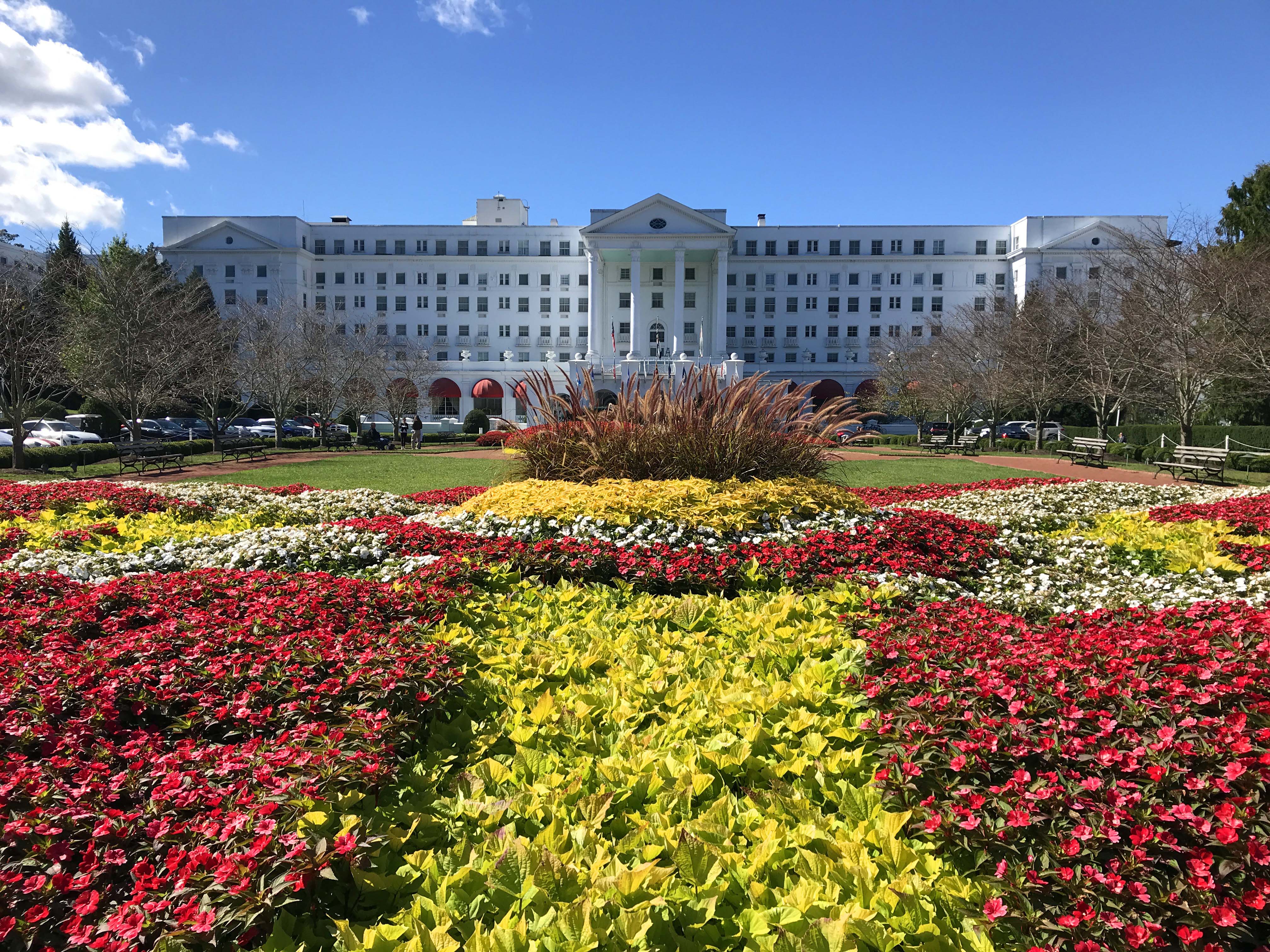
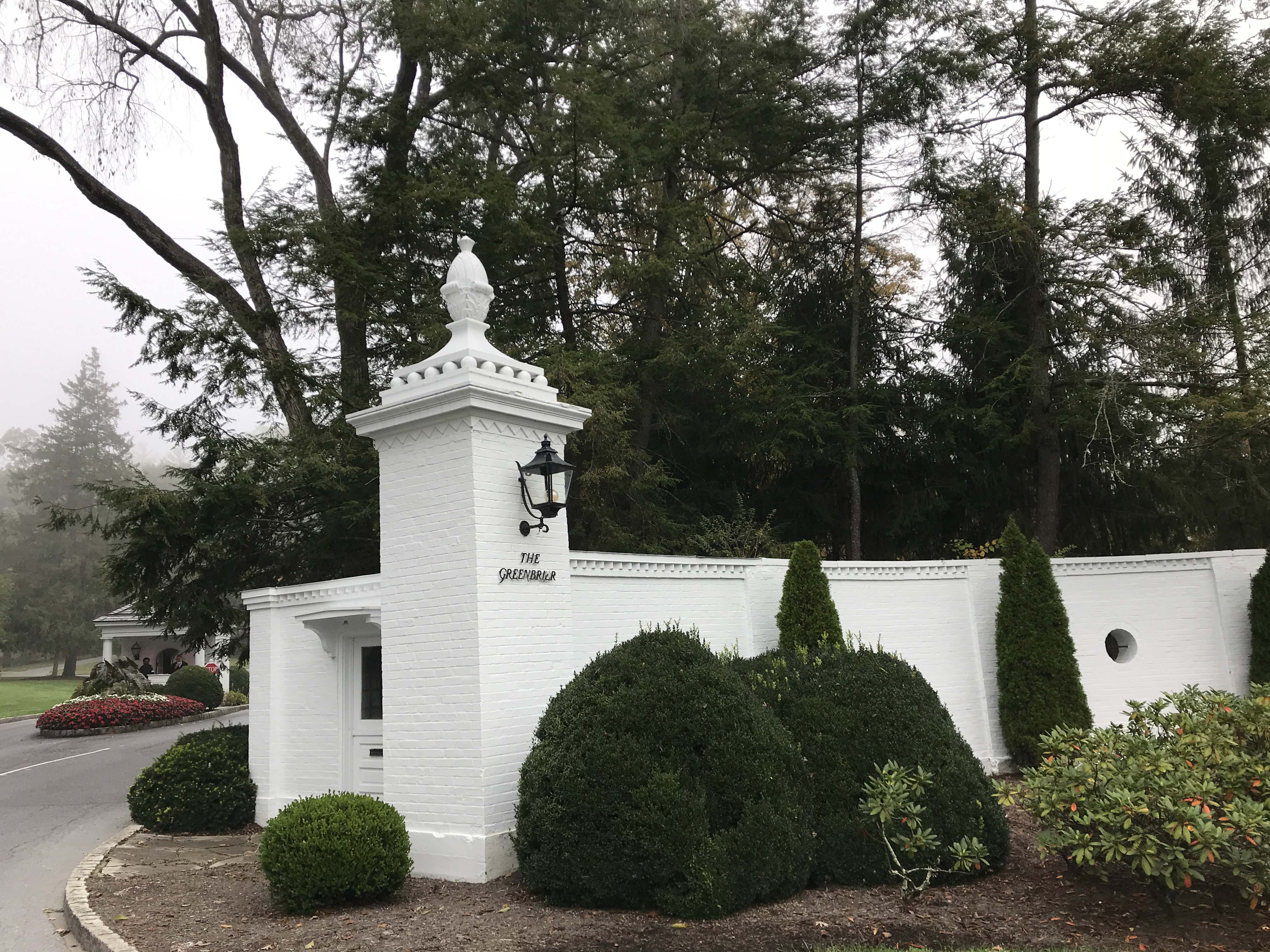
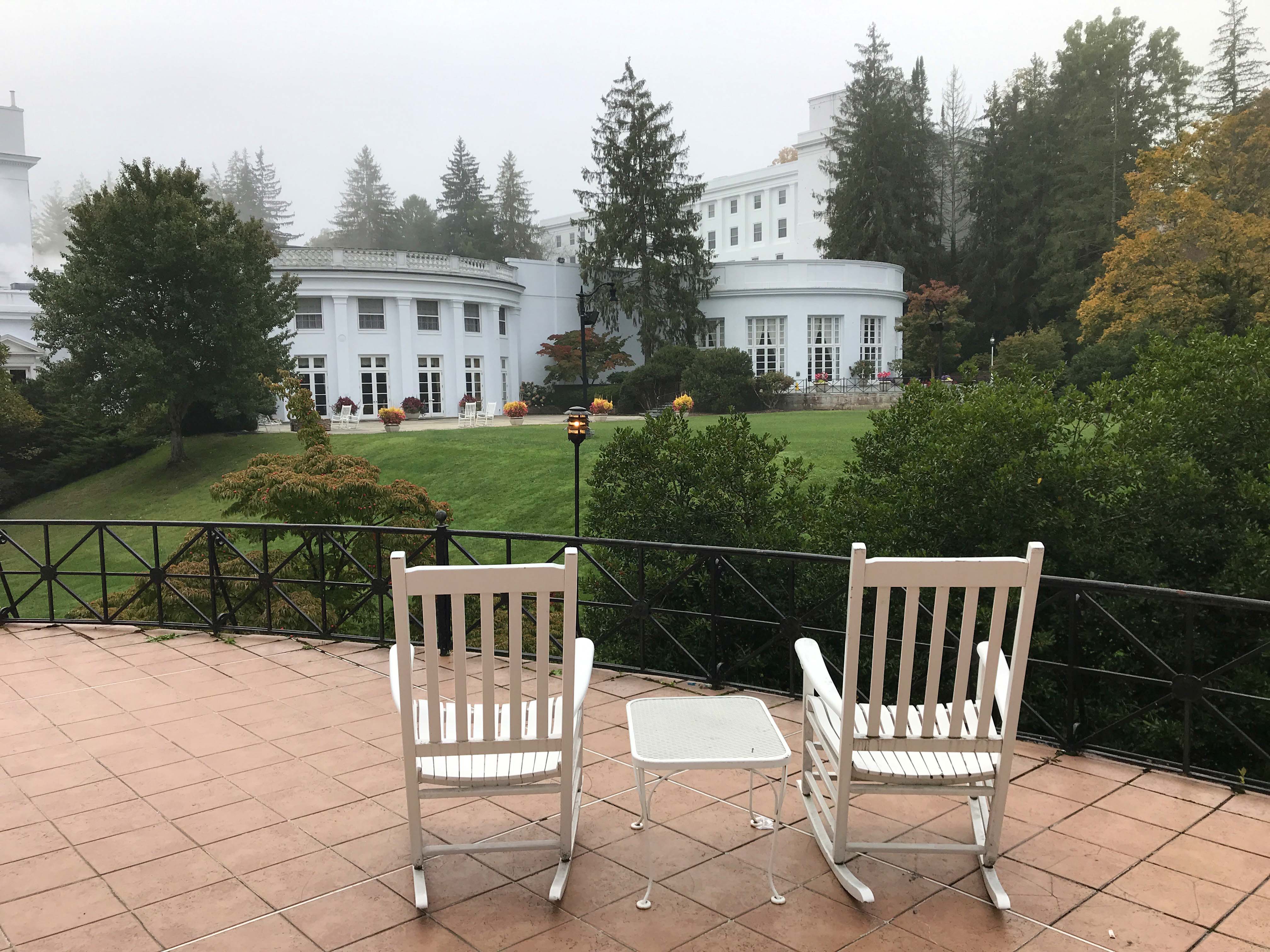
We arrived about an hour early on a foggy morning which gave us plenty of time to take pictures of the hotel.
I took this picture after we left when the fog had burned off.
The front gates. You have to stay across the street if you are just taking the tour.
The security kiosk took our temperatures and then called a shuttle bus to run us up.
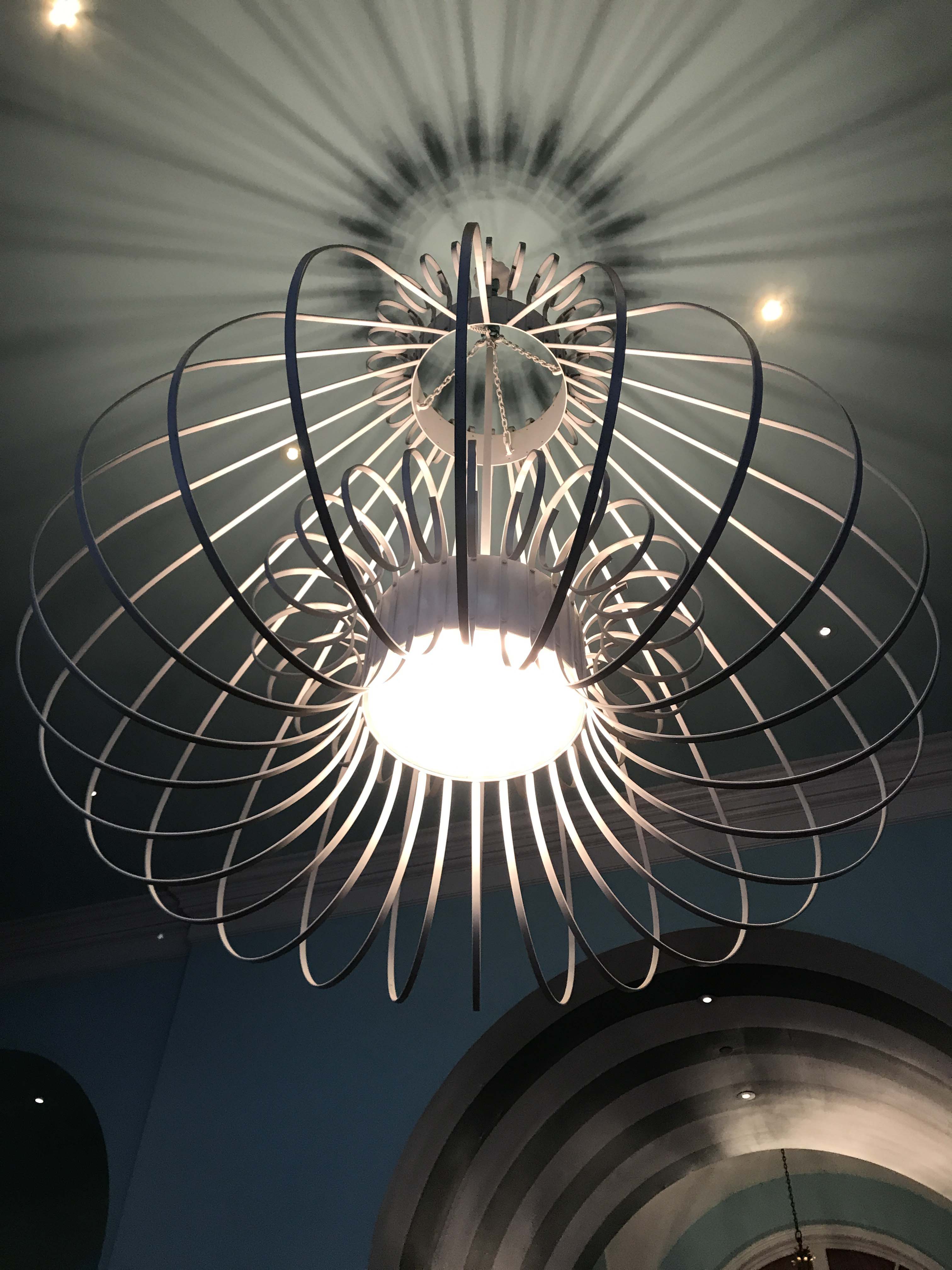
Right when we walked in the door I loved the chandelier.
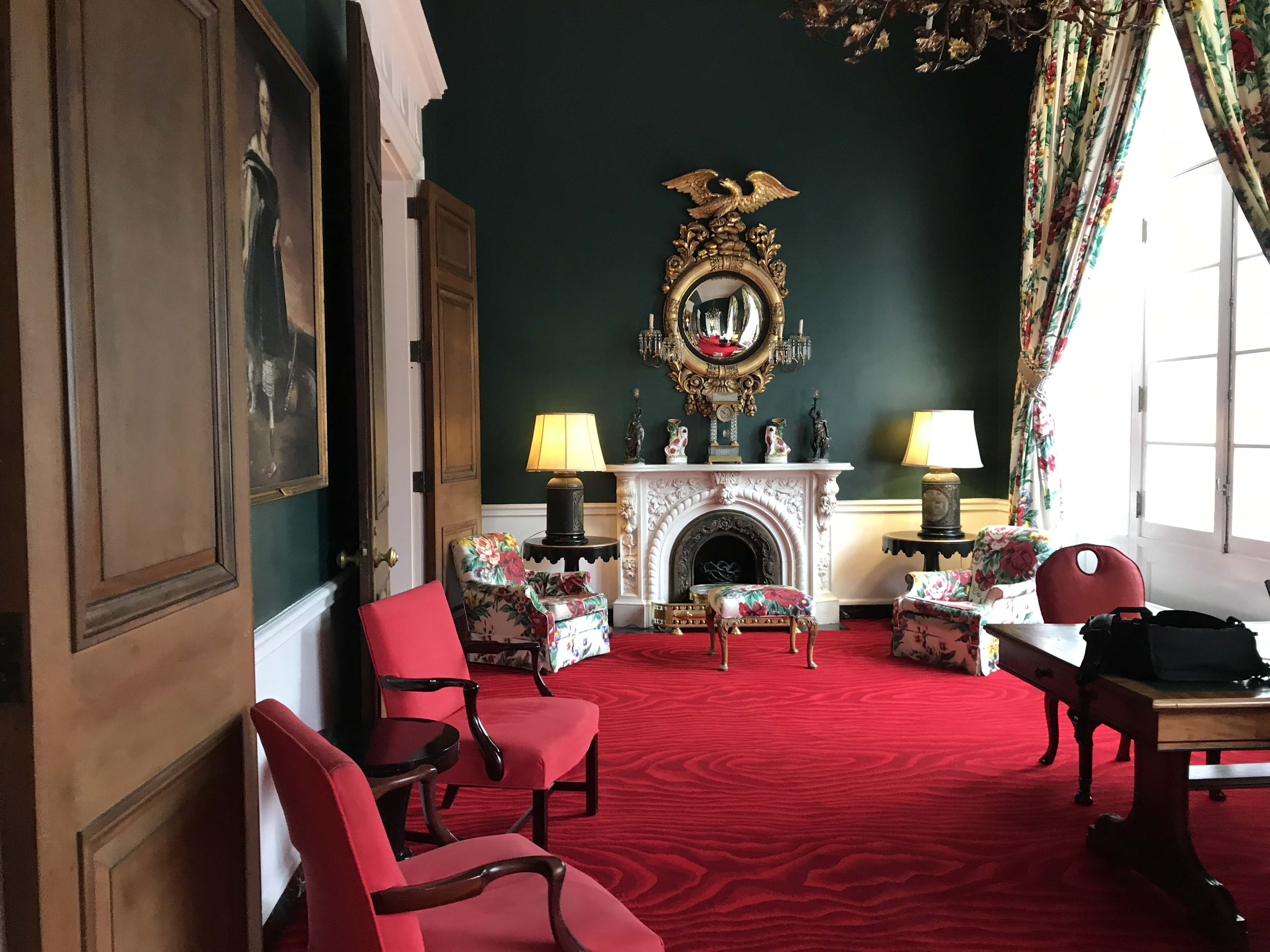
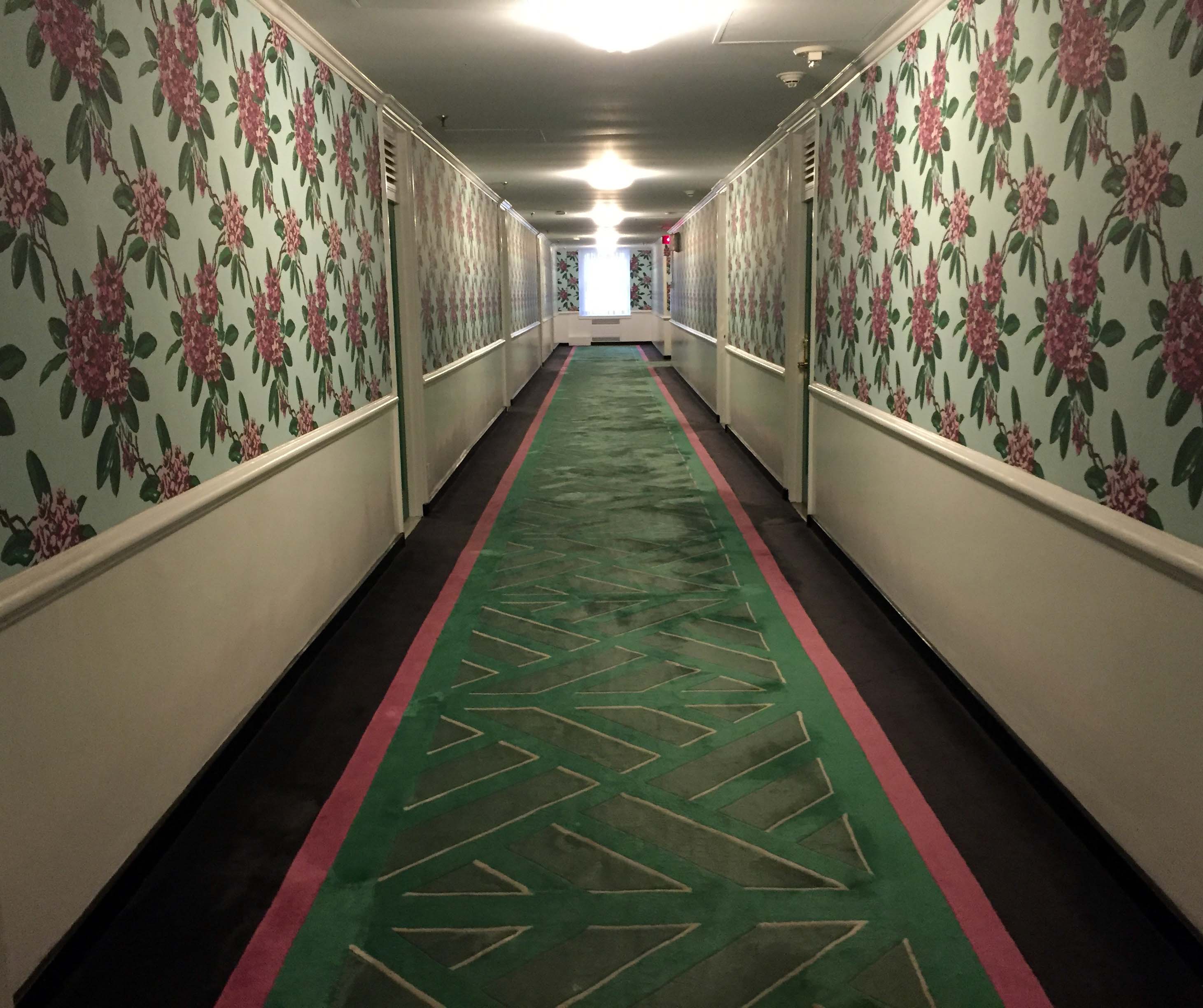
And all of the different rooms were gorgeous.
There was seating outside with lit fire pits
We learned later that the grassy area is turned into an ice skating rink in the winter.
One of my favorite rooms was the ballroom. Absolutely gorgeous
The chandeliers were amazing. Two of them were even from the movie Gone with the Wind which gave me chills.
Beautiful flowers throughout the facility.
Large dining room.
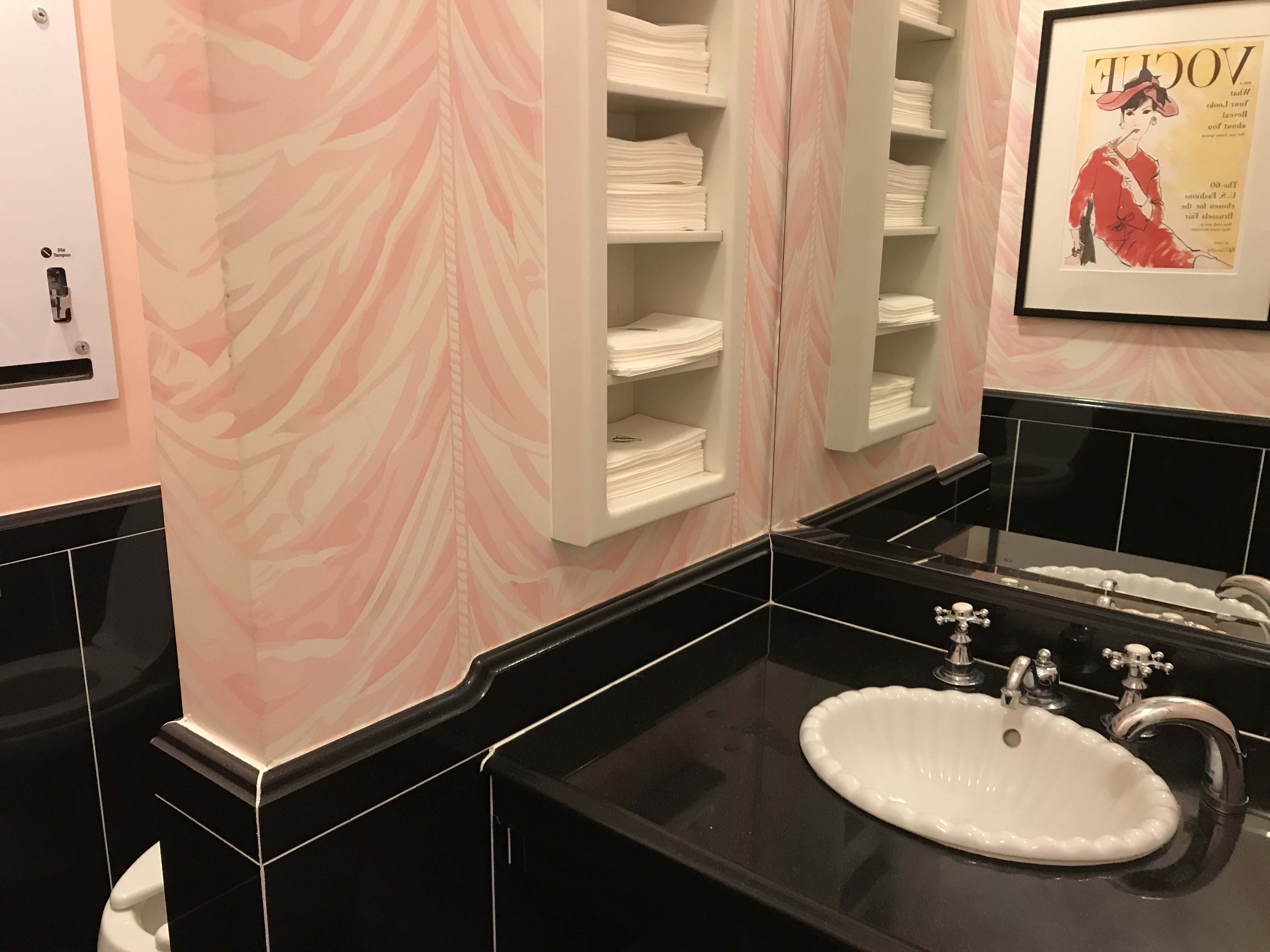
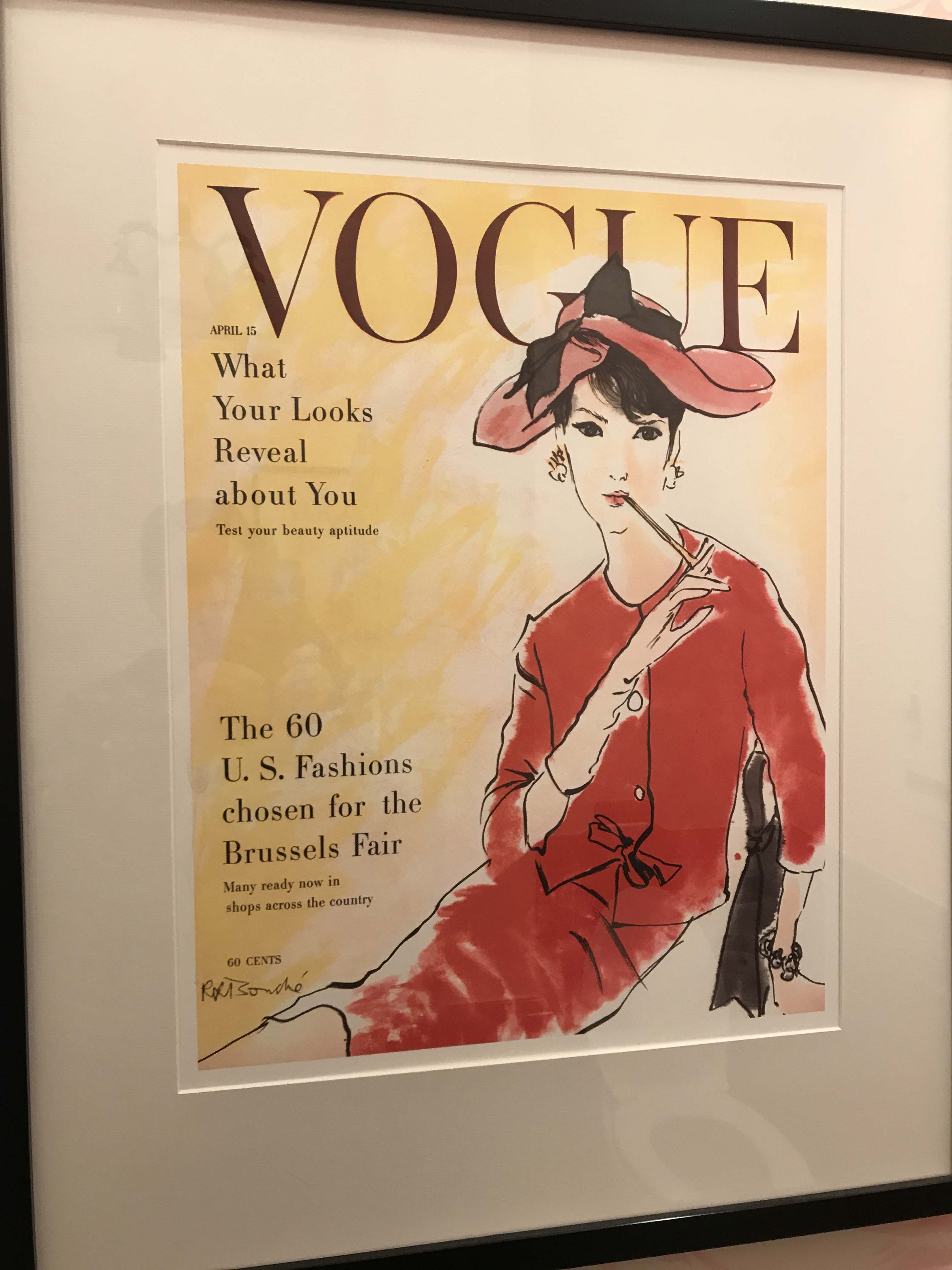
Call me crazy but the way I judge how fancy a place is by its bathrooms. So as soon as I could I went into one and it did not disappoint!
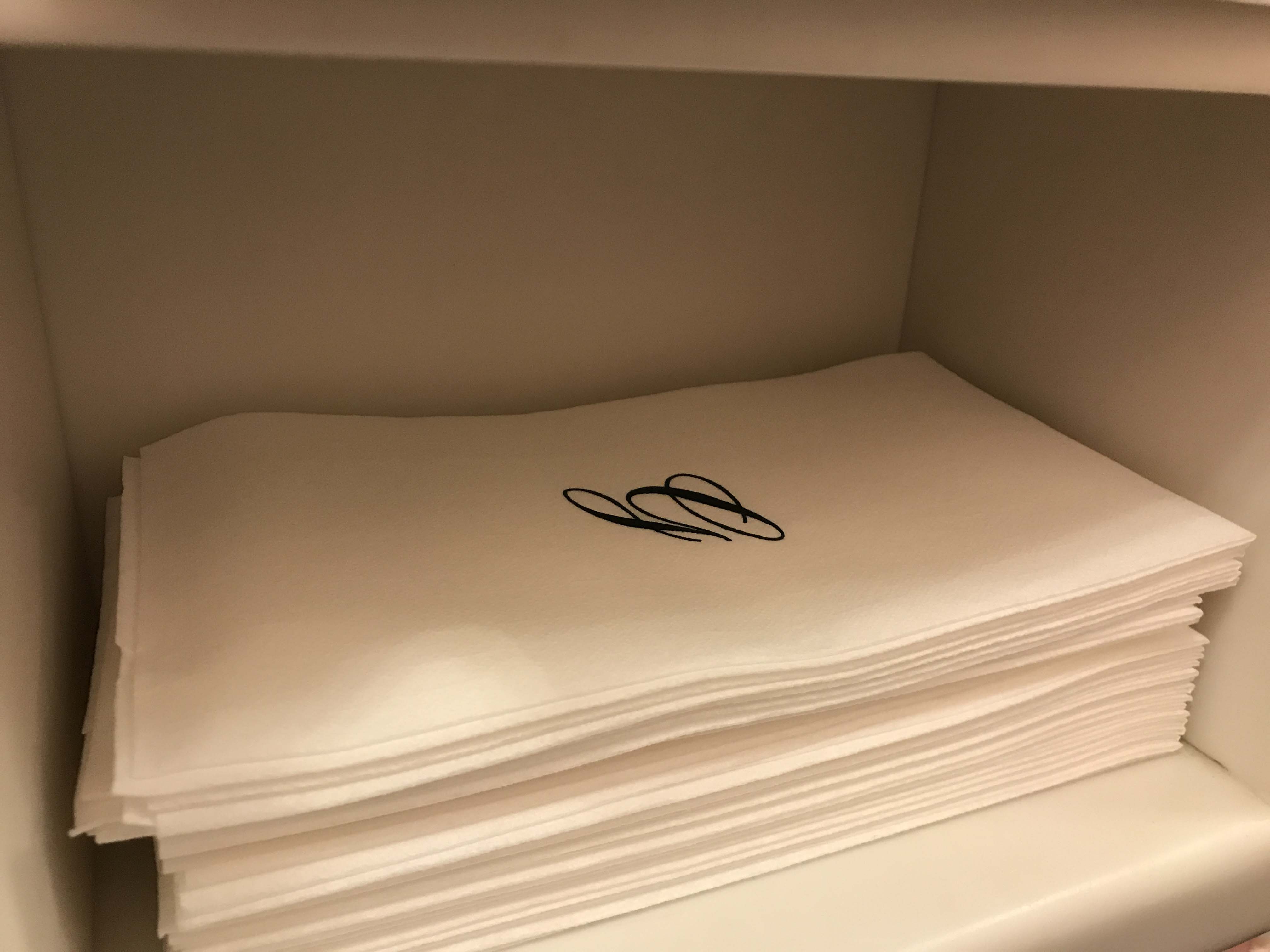
The towels in the bathroom were heavy and monogrammed.
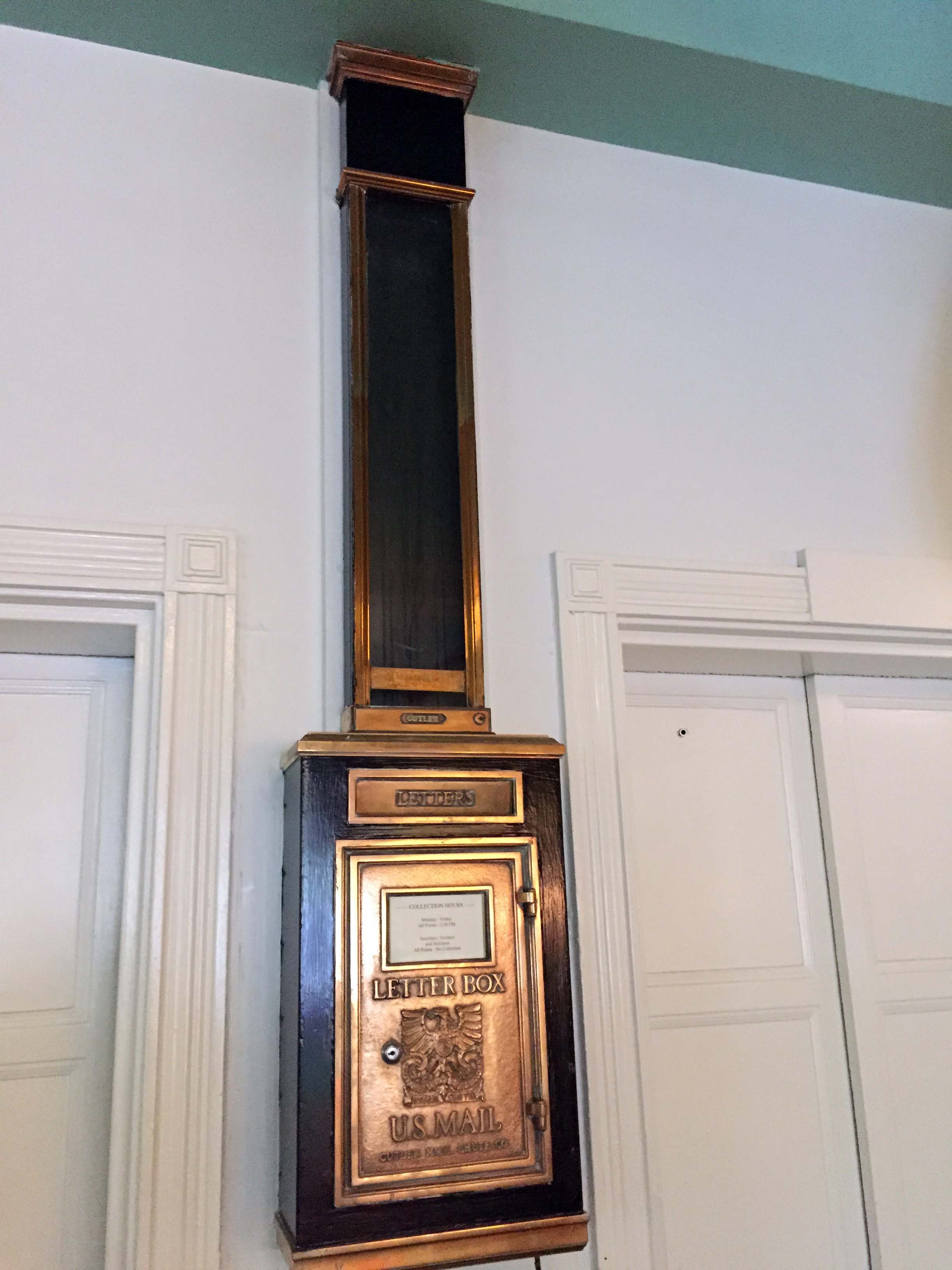
They also had this fancy mailbox.
We kept wandering and there were so many rooms and little seating areas. We didn’t even get pictures of them all.
I think Lee counted 8 pianos.
.
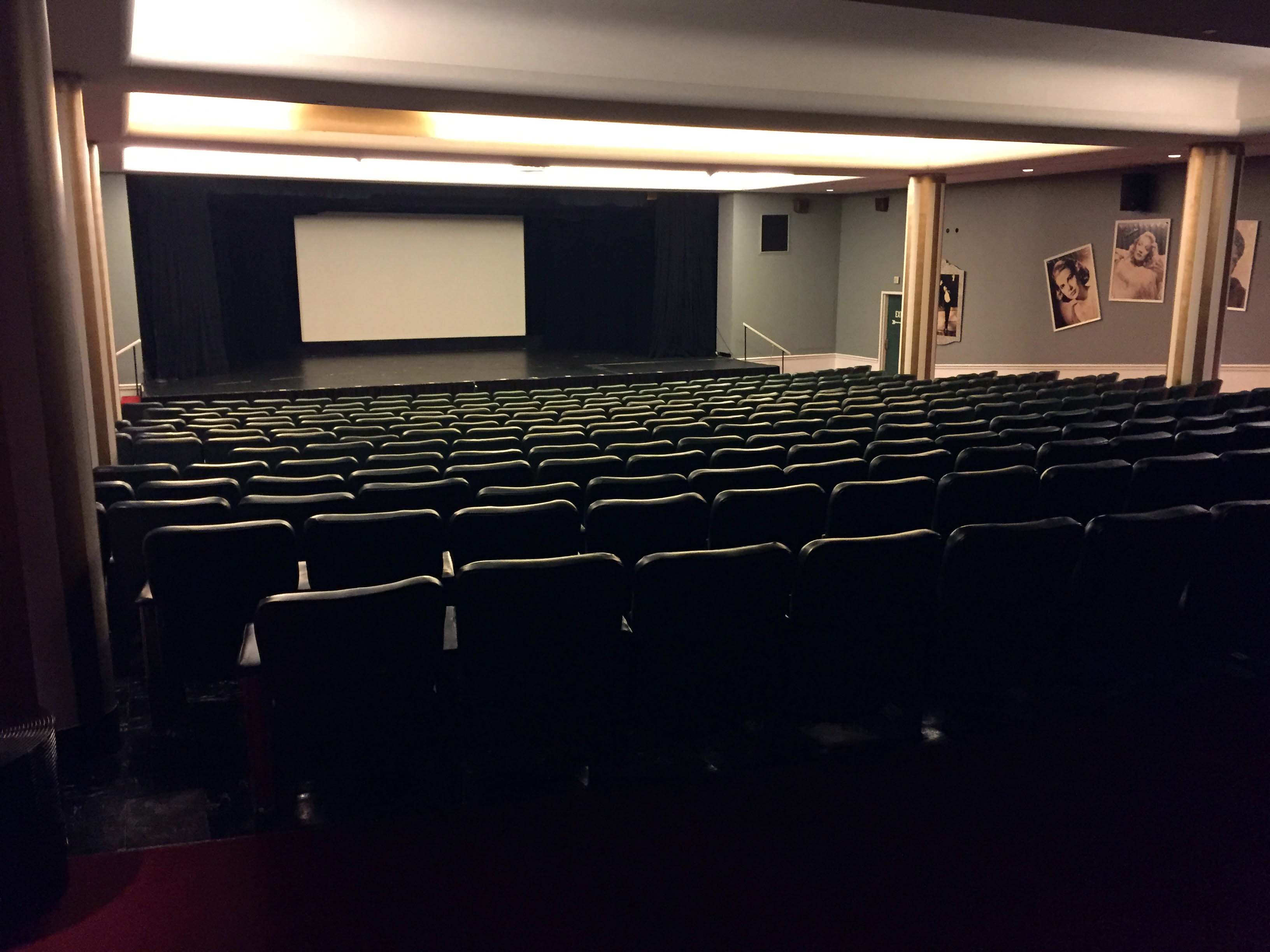
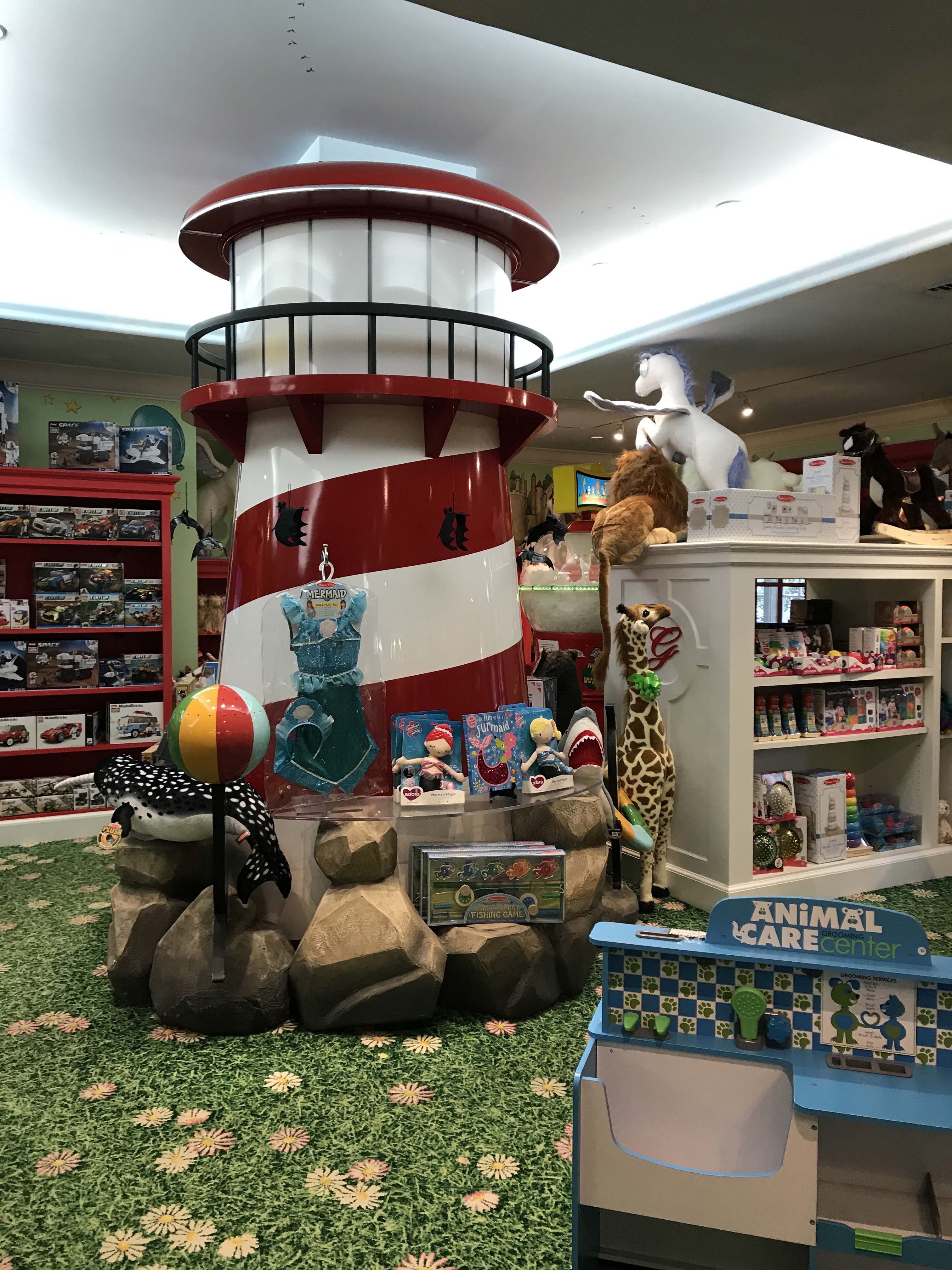
Truly this place kind of reminded me of a Las Vegas casino with all kinds of services available on property. It has a casino, movie theater, shops,and multiple restaurants.
Classic cars in the lobby.
The movie theater.
Casino. You have to be staying there to enter. Wonder how well that plays with the locals.
Amazing toy store.
All of that was really neat but we were there for the tour. Unfortunately we were not allowed to take pictures but at the end we did get a few post cards that I took pictures of. We learned later there is a huge data center in part of the bunker and for security reasons they won’t allow pictures to be taken. When I learned this I realized I may not have heard of Greenbrier, but I had heard of the data center. Side note, the data center make the owner (the governor of Virginia) more money than the resort itself. Smart!
I didn’t mind the pictures as much as my inability to take notes during the tour. Normally I jot things down, but I am relying on my 54 year old memory so if I get anything wrong I apologize in advance. Here’s my attempt to tell you the story of how it all came to be.
During the Cold War President Eisenhower understood the need for a fallout shelter that the legislative branch of the government could evacuate to in case of a nuclear attack. If that seems odd, keep in mind that at the time nuclear bombs had to be delivered by planes, and the hills and valleys of West Virginia would make it difficult for a direct hit strike and the terrain and winds would help clear the fallout.
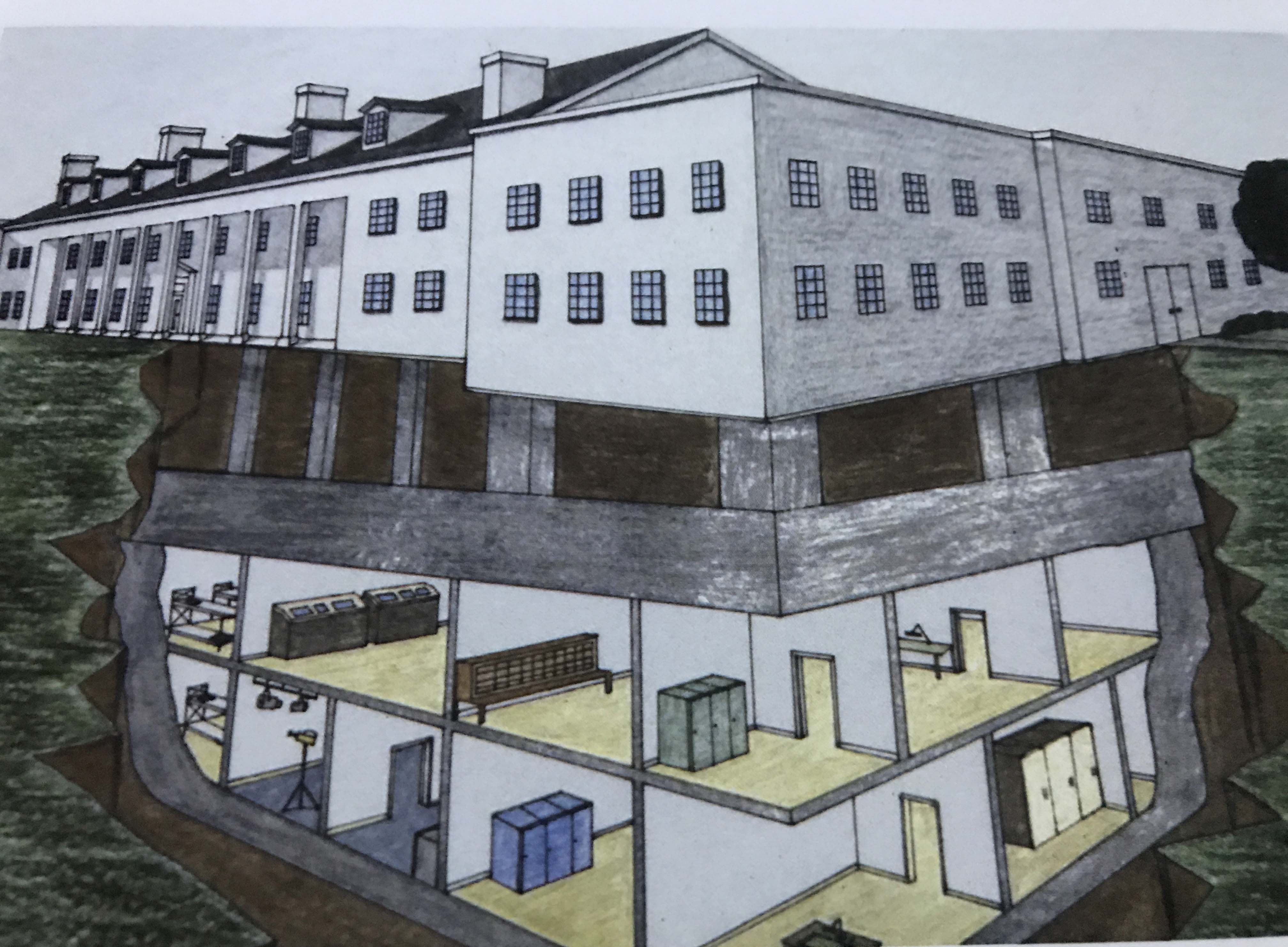
Also President Eisenhower loved the resort and was friends with the original owners. The idea that was proposed under amazing secrecy was that a new “West Virginiaa” wing would be built, and underneath the wing the bunker would be constructed. There were rumors, of course, but the contractors were threatened with treason if they spoke about anything. It was a different time, and it worked.
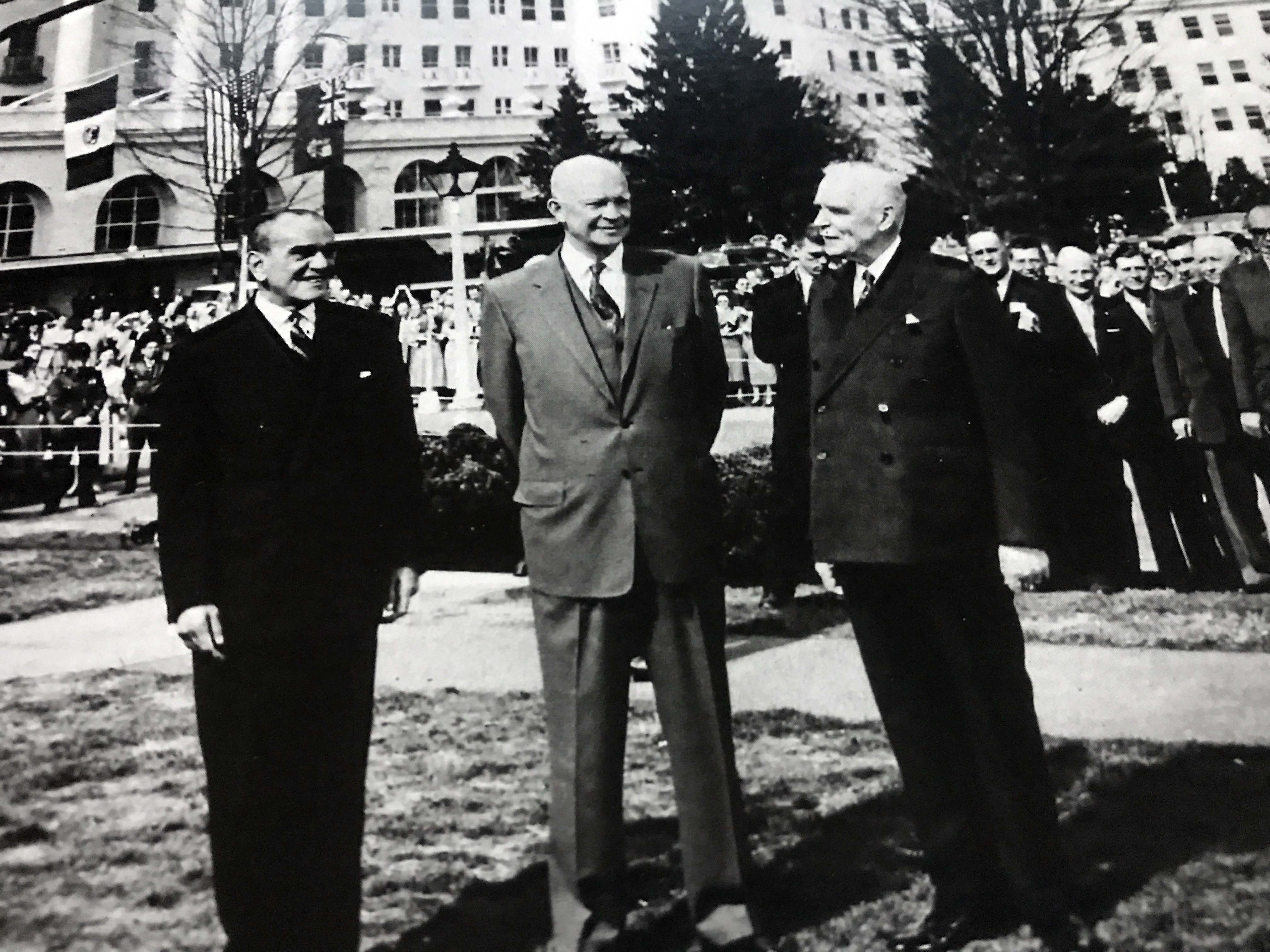
The President met the Ambassadors for Mexico and Canada at The Greenbrier but this was actually a cover to finalize the deal with the owners.
A drawing of the building.
The official letter introducing the architect. Only these four members of congress were notified, one of which was Lyndon Johnson. The building was paid for with funds that were supposed to go to another purpose.
At this point I am going to let Lee take over. He found some pictures online taken by a nonprofit prior to the ban going into affect so I will let him try and recreate the tour. I absolutely recommend going though. Our tour guide was excellent and although the group at 20 people was a little large I felt it was well worth the $39 per person. So here’s Lee.
Initially known as “Project X” and then “Caspar” and finally “Project Greek Isle”, the Greenbrier bunker was part of the US Government’s Cold War era continuity plan which included ships (now decomissioned) and aircraft; Air Force One, Nightwatch and Looking Glass. (As an interesting side note, Looking Glass was so called because of it’s ability to “mirror” the Strategic Air Command’s underground command and control at Offutt AFB outside of Omaha. Beginning in 1961, for 37 years, one of eleven Air Force Boeing EC-35 (modified C-135 Stratolifter) Looking Glass aircraft was airborne 24 hours a day, 7 days a week, 365 days a year. In 1998 the US Navy took over Looking Glass. On a more personal note, I got to take a peek through a hole in a wall while recently visiting the Strategic Air Command museum outside Omaha this past July, and saw one of these undergoing restoration. I hope to one day be able to see it when it’s finished and on display.)
Greek Isle was only for the legislative branch of the government. Other branches and parts of the continuity plan were covered by other facilities, such as Raven Rock (Defense Dept.), Mount Weather, and Cheyenne Mountain.
A Look Glass EC-35, which is a modified C-135 Stratolifter, capable of flying over 3500 miles before needing refueling, which can be done in-flight.
Inside a Looking Glass aircraft during exercises in 1979.
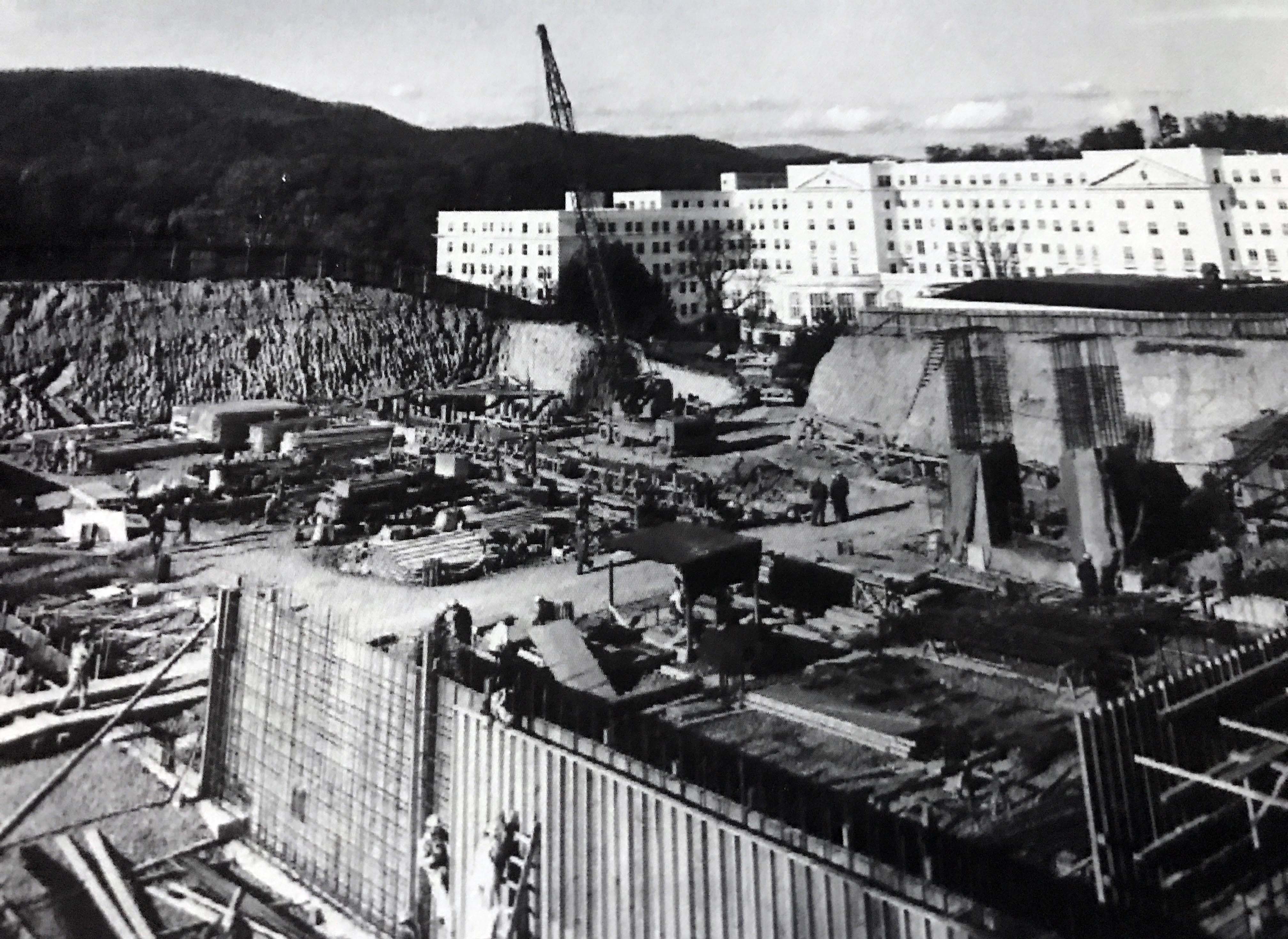
Construction of The Greenbrier facility began in 1957 and took about four years, finishing up within days of the Cuban missile crisis. One of the methods they used to conceal what they were doing was cut-and-cover, where material removed from the hill to create the bunker was then moved to another location at the property and used to expand the gold course and as fill material to extend the local airfield runway. The bunker is not designed to withstand a direct hit, but with walls of two foot thick reinforced concrete a missile hit as close as thirty miles away would not damage it.
The construction.
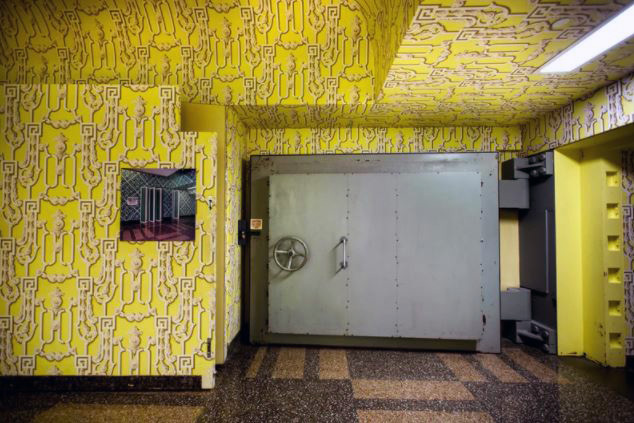
One of my favorite parts about this entire thing is that it was designed to be partially hidden in plain sight. The largest main room, which if needed by Congress would be set up as a massive office full of cubicles, was used at all other times as a convention/exhibit hall. Hundreds of thousands of people over decades passed through the main entrance, never knowing that the wall next to the opening concealed a 20 ton blast door. The door was so perfectly balanced on its hinges, that it requires only 50 pounds of force to open and close. A single person can easily do it.
You can see the door hidden away in the nook and the folding wall that kept it hidden for decades.
Right inside that door is the massive 17,000 sq. ft. Exhibit Hall. For decades this was where trade shows and conventions were held, and it was actually part of the fallout shelter. In this picture you can see an early trade show.
Now it’s still an event space, but it’s been updated. You can see that they have covered the load bearing concrete columns with drywall covers, and installed outlets and other technology inside those covers.
Beyond the “public” space, was the secret stuff. It’s not terribly exciting, really, it was just a fallout shelter, so it contained all the things that would be needed to house people for six months if the bunker was sealed up.
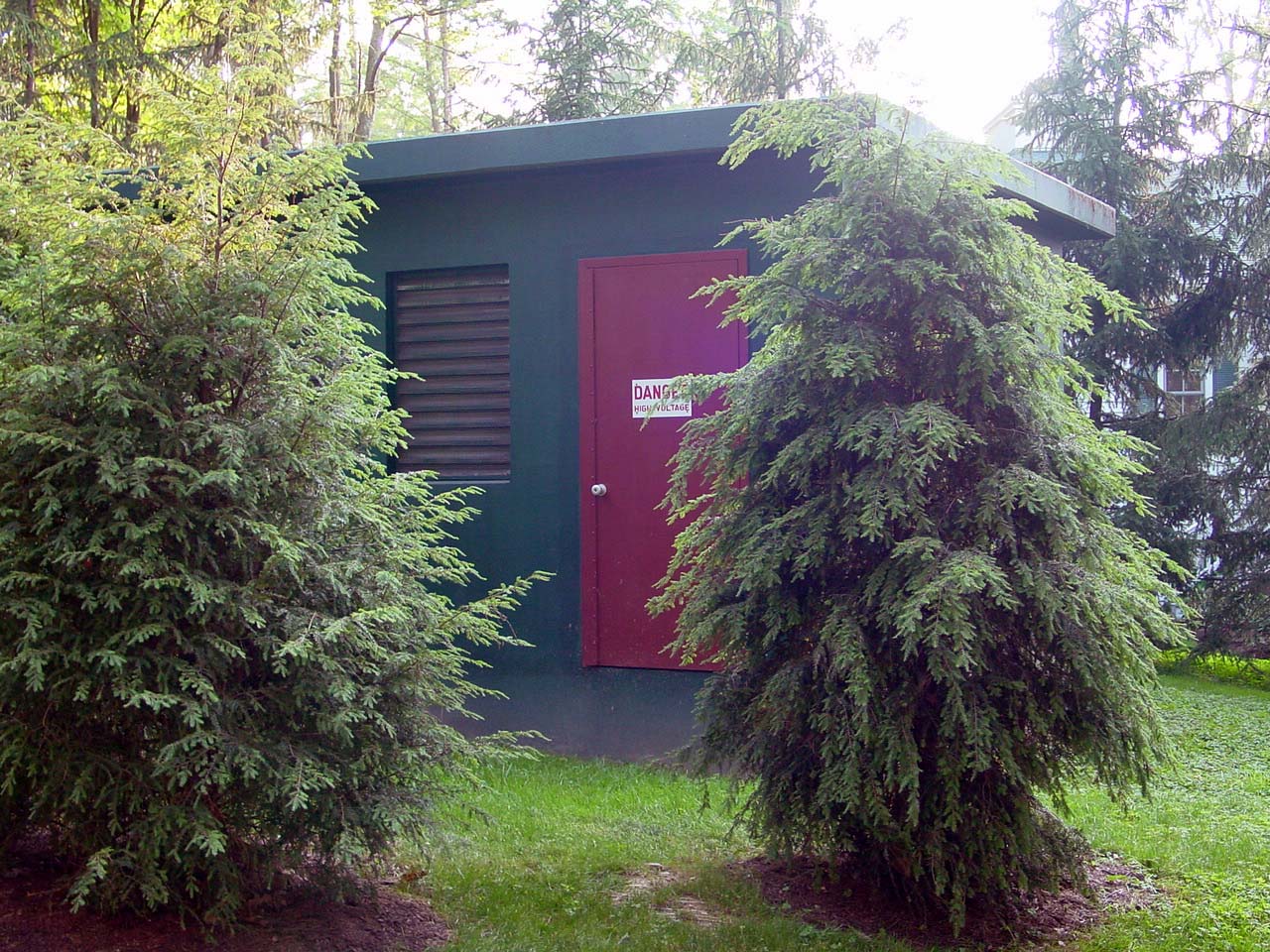
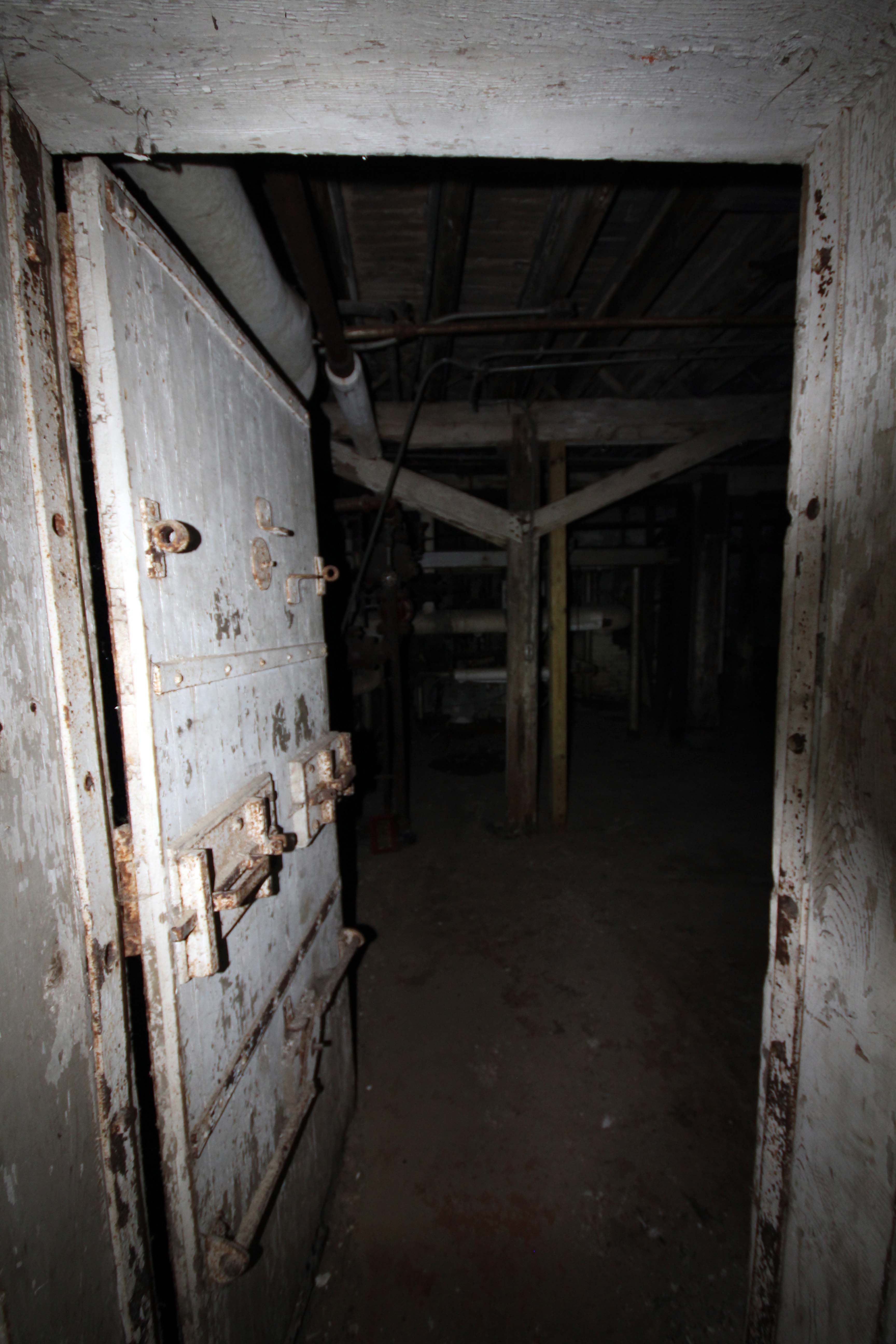
In addition to the door pictured above, there are three other 20″ thick blast doors, two of which large enough for vehicles to pass through, all weighing twenty tons or more. In addition to the “hidden in plain sight” door inside the hotel, another of the doors was hidden behind a large door with “Danger High Voltage” signage warning people away.
The concrete tunnel entrance is disguised with green paint and a fence, as well as a “standard” outer door. t
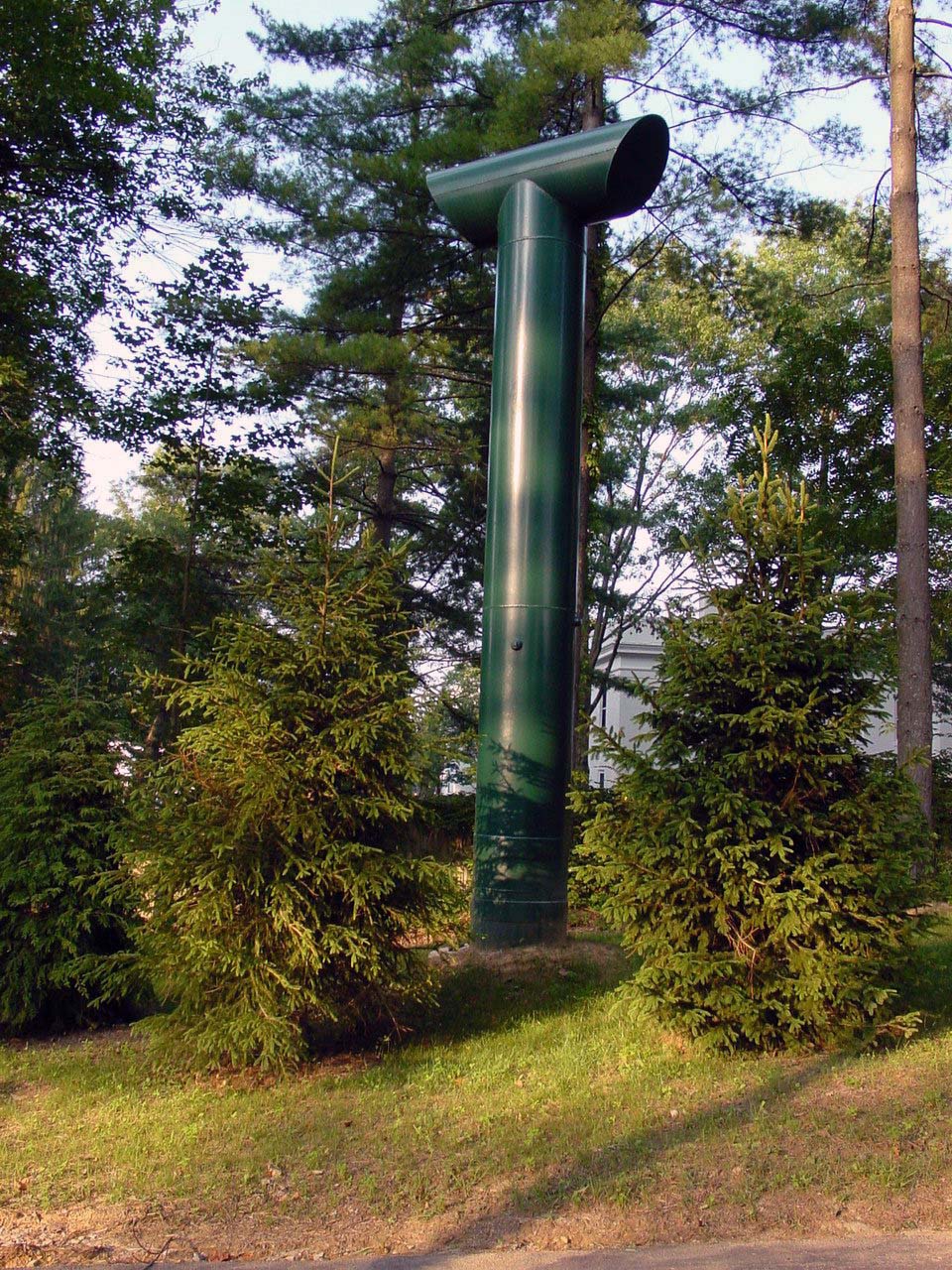
Once the doors were closed and sealed there was 72 hours worth of air inside the bunker, but fresh air could be vented in from the outside and filtered using stacks hidden around the property and protected by more “high voltage” warning signs.
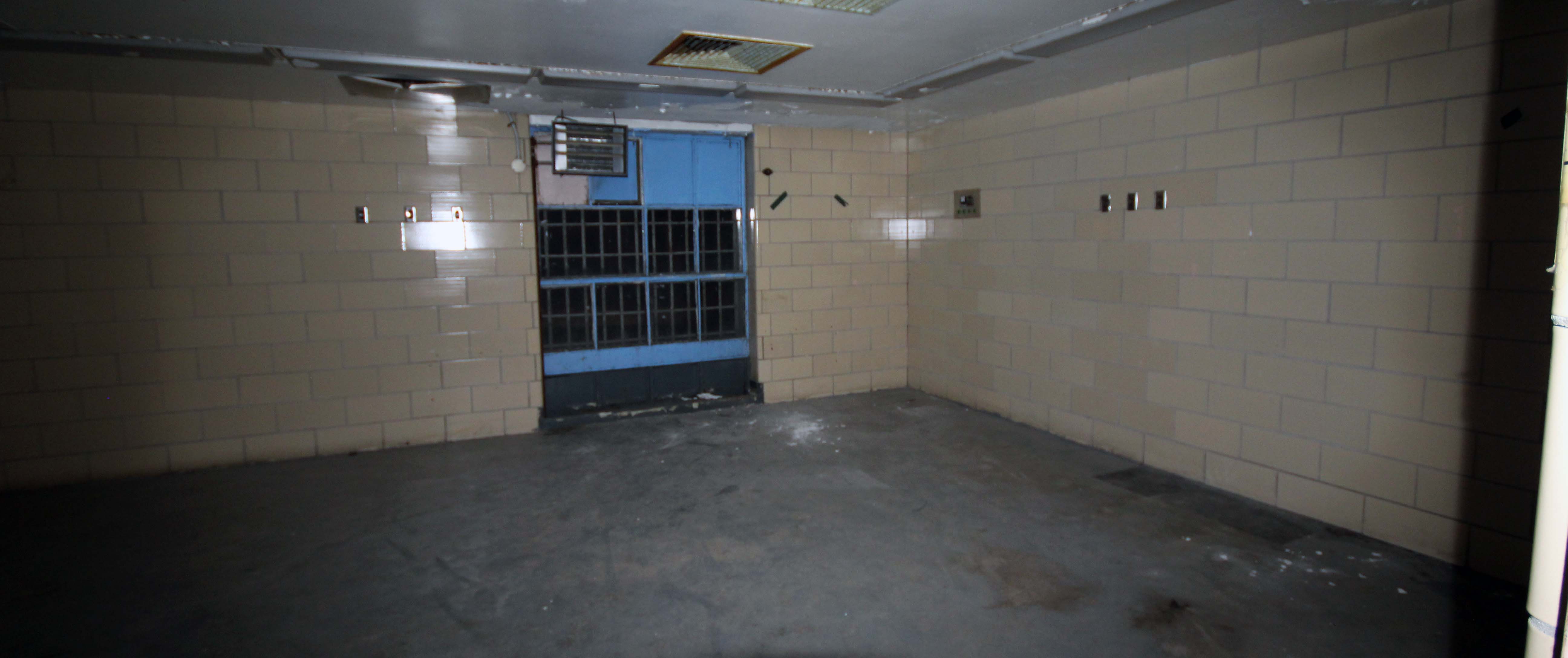
In the event of an attack, Congressmen would have been taken to a decontamination room where they would have stripped, showered, and put on uncontaminated clothes.
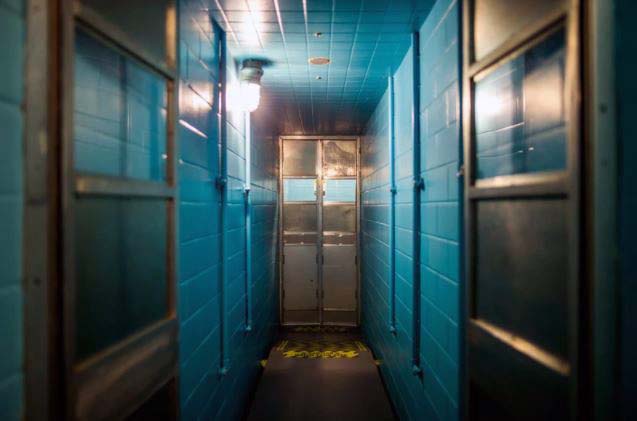
Decontamination facility
They would have been shown to one of 18 dorm rooms, each designed to house 60 people in individual bunks. For thirty years, every bunk was assigned to a specific person, even though almost none of them ever saw them. Each of them would also have had part of a locker and a single lockable private drawer under their bunk. Interesting note there were so few women in congress at the time that the co-ed nature of the bunkhouses wasn’t an issue. – Trace
There were also day room or “living room” spaces scattered throughout.
There was also a kitchen and 400 seat cafeteria, which had fake windows with fake scenic views. That kitchen is now used as a culinary training center. Among other supplies, the bunker was provided with enough food for 1,000 people to last 60 days. How this was done was pretty brilliant. The hotel just always had this food on hand, and used it in their restaurants, replacing as needed. Government employees also had to constantly update their plans based on who the current members of Congress were.
Of course, once that resort food was gone, there was nothing but rations for a looong time.
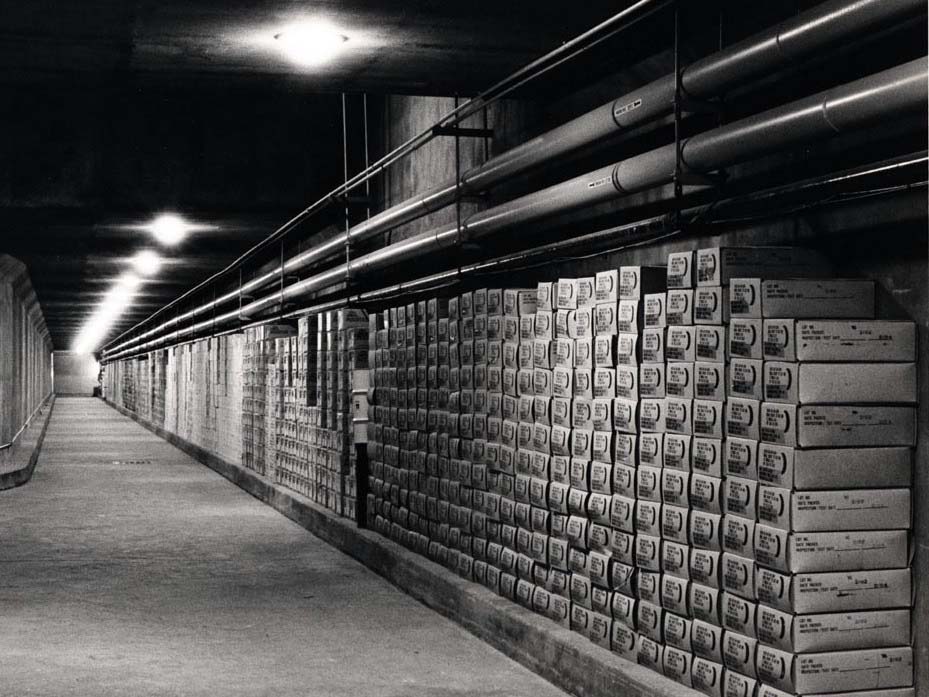
Rations stock the long entrance to the bunker.
There are also two auditoriums, one for the House, and one for the Senate.
Perhaps the most interesting feature of the bunker is the vast television, radio, and communications facilities. In the event of an attack, congressmen would have been expected to give speeches broadcast to whatever was left of the American population. The TV conference room even includes a backdrop of the Capital Building, giving the illusion of normalcy. Sadly nothing of that is left but the giant murals.
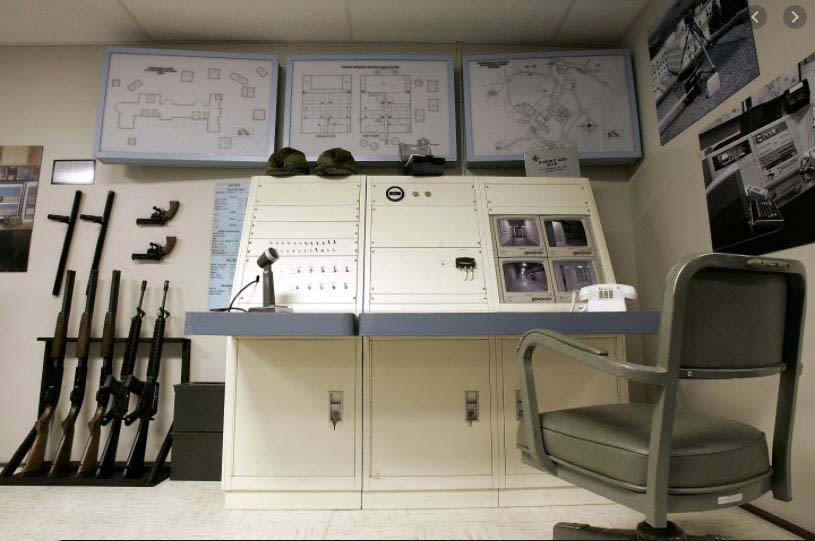
There’s a nice little museum area that shows some of the equipment and facilities that were part of the original installation.
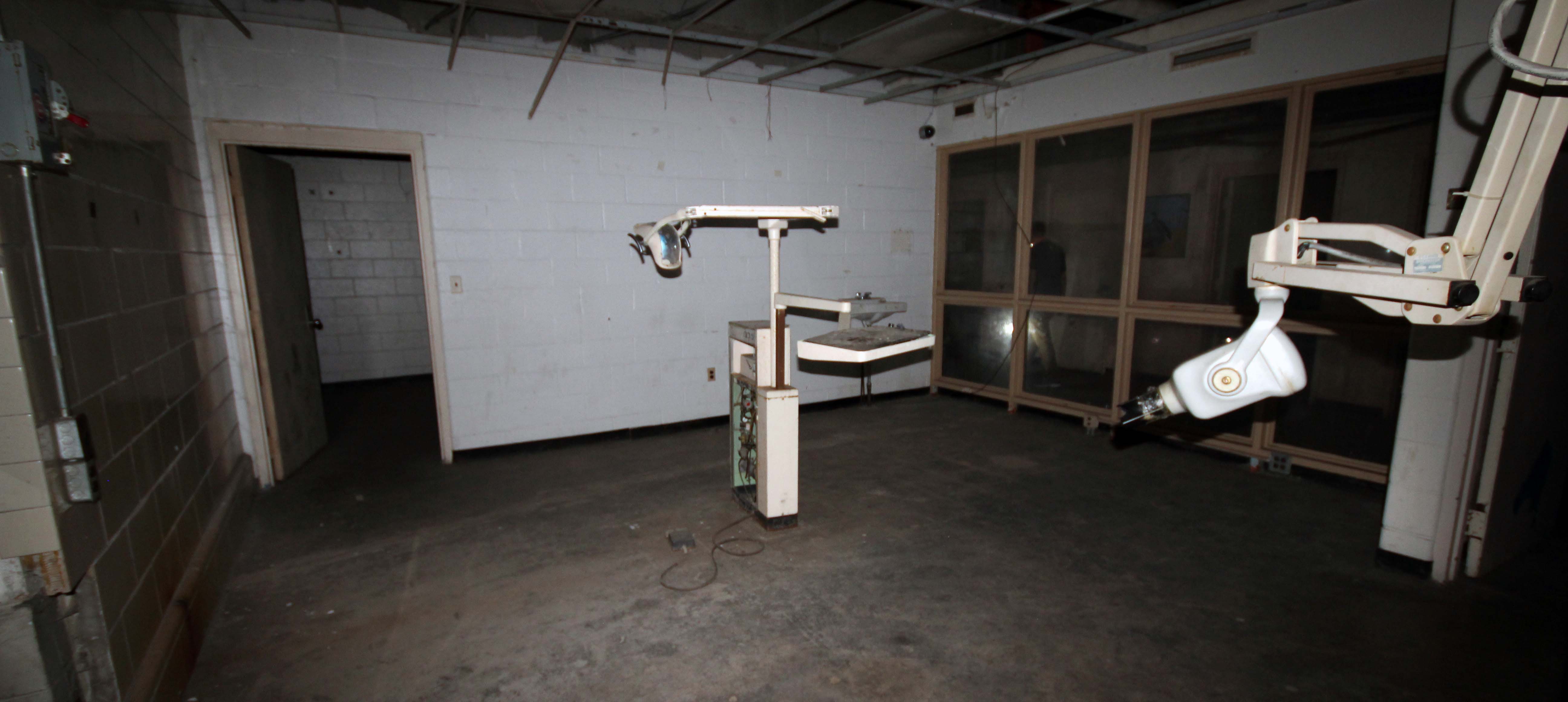
The facility could also provide medical and dental care for the residents.
Of course, a facility like this requires infrastructure. Six generators and associated equipment, water purification systems, 75,000 gallons of water storage.
Including three 14,000 diesel tanks.
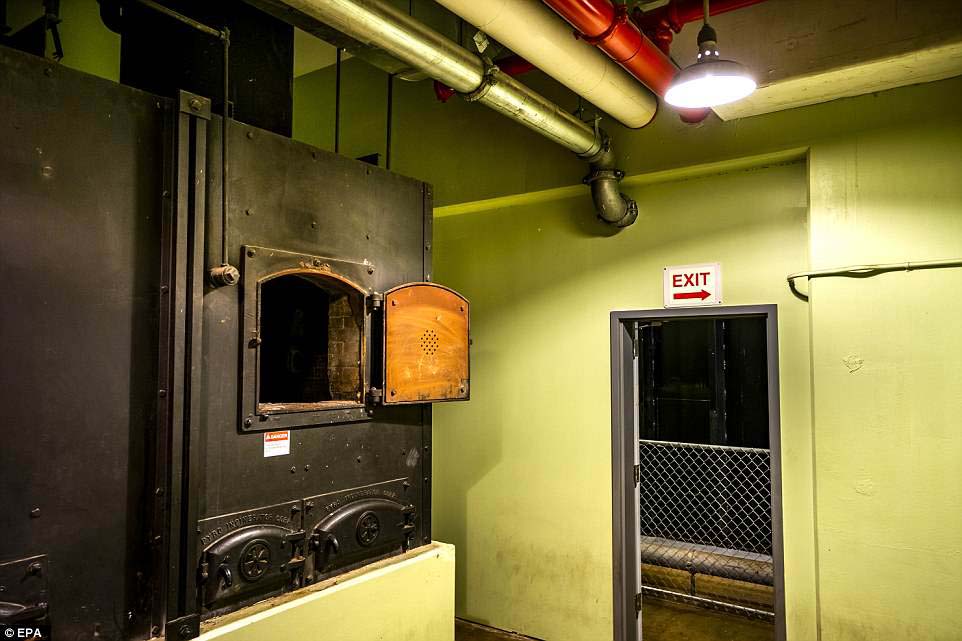
And to get rid of their garbage a incinerator. It would also double as a crematorium if someone died.
And of course, the best part of all this for me is that while the facility was never used once in thirty years, it had to always be ready for use. Constant maintenance, updating of equipment and technology, and preparedness drills required an onsite staff. They needed to be there, but they needed their true purposed to be a secret.
In order to solve this problem, Forsythe Associates was created. It was a dummy corporation that consisted of top secret government employees who pretended to be part of a contract company the Greenbrier had hired to provide AV support for the hotel’s 1000 televisions, and other technology. I’m sure they also provided AV support for the trade shows and conventions, as their office was just off the exhibit hall, along with a concealed entrance that gave them access to the rest of the bunker through a closet in their office.
Even after the technology changed and missiles delivered nuclear bombs, the facility was maintained with significant expense to the tax payer. Finally in 1992 a Washington Post story revealed the secret, and it was immediately decommissioned and shut down. Now some of the area is being used as a data center and the rest is open for tours. It truly was very interesting and although the cost was on the higher side I do highly recommend it.
Supporting our Blog
We very much appreciate your support of our blog.
You can purchase the ebook telling the story of how we became full-time RVers.
You can purchase our recipe book filled with 80 recipes we have cooked in our RV and taste tested by Lee himself. You can purchase the kindle or paperbackversion on Amazon buy the Apple version on iTunes.
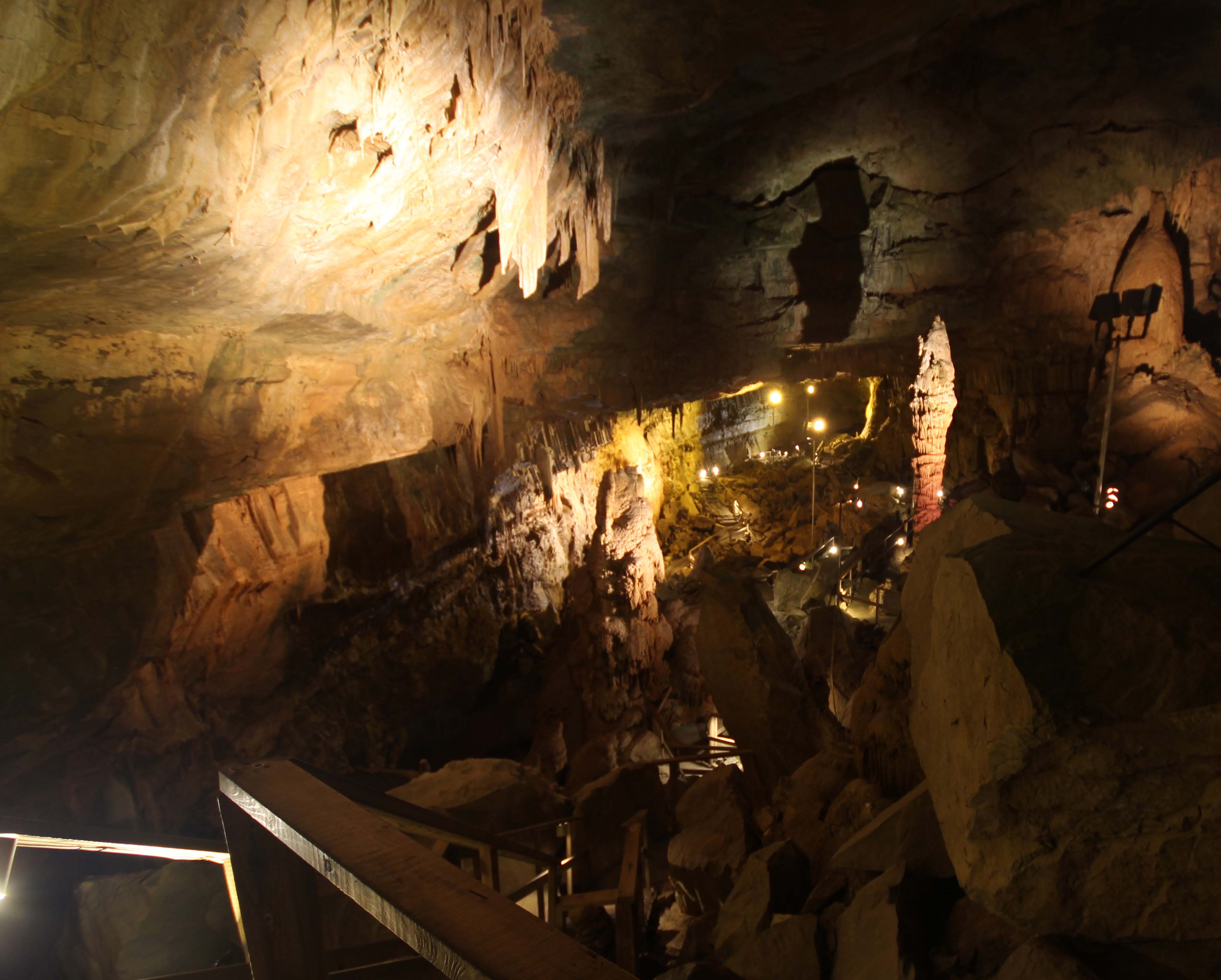
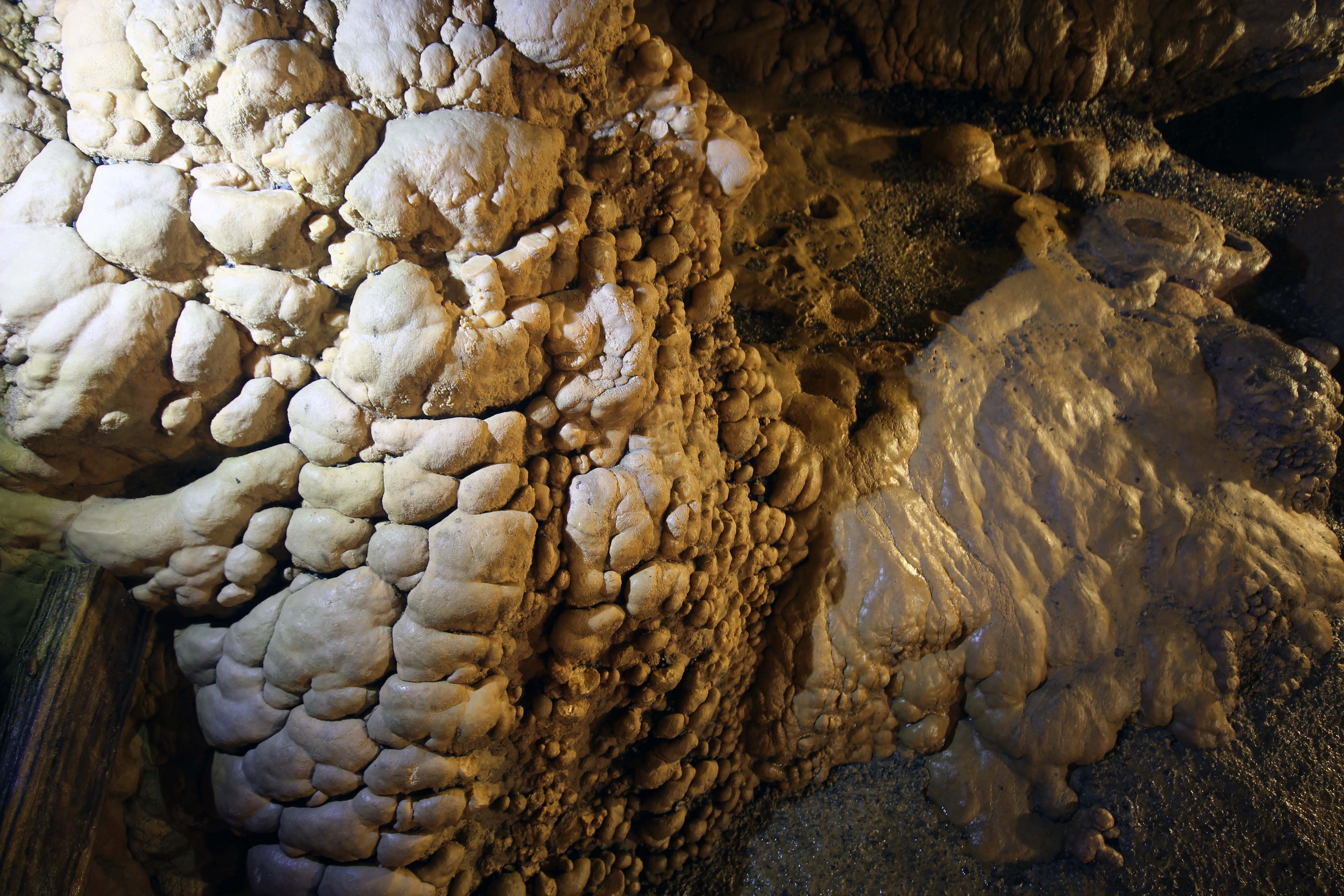
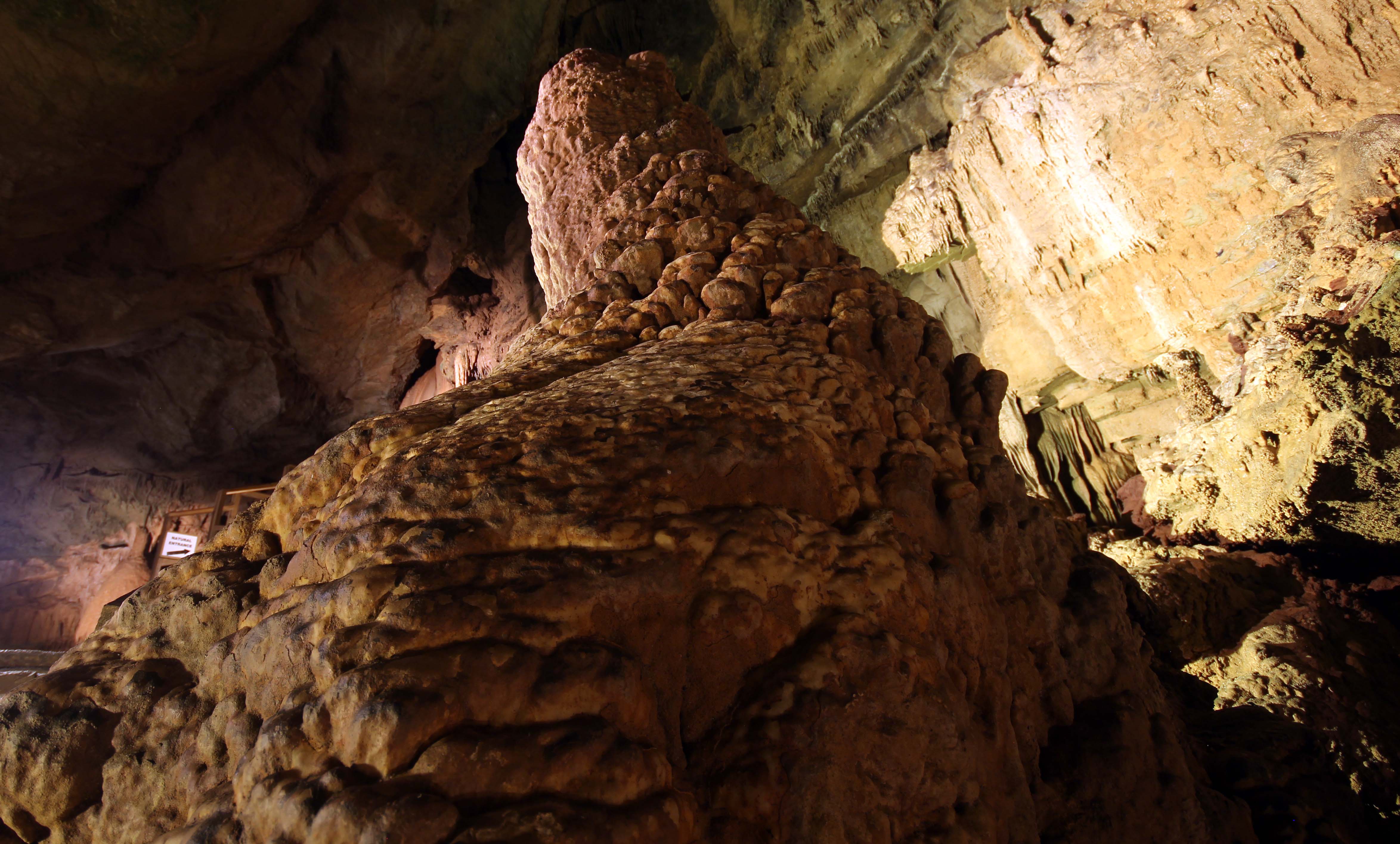
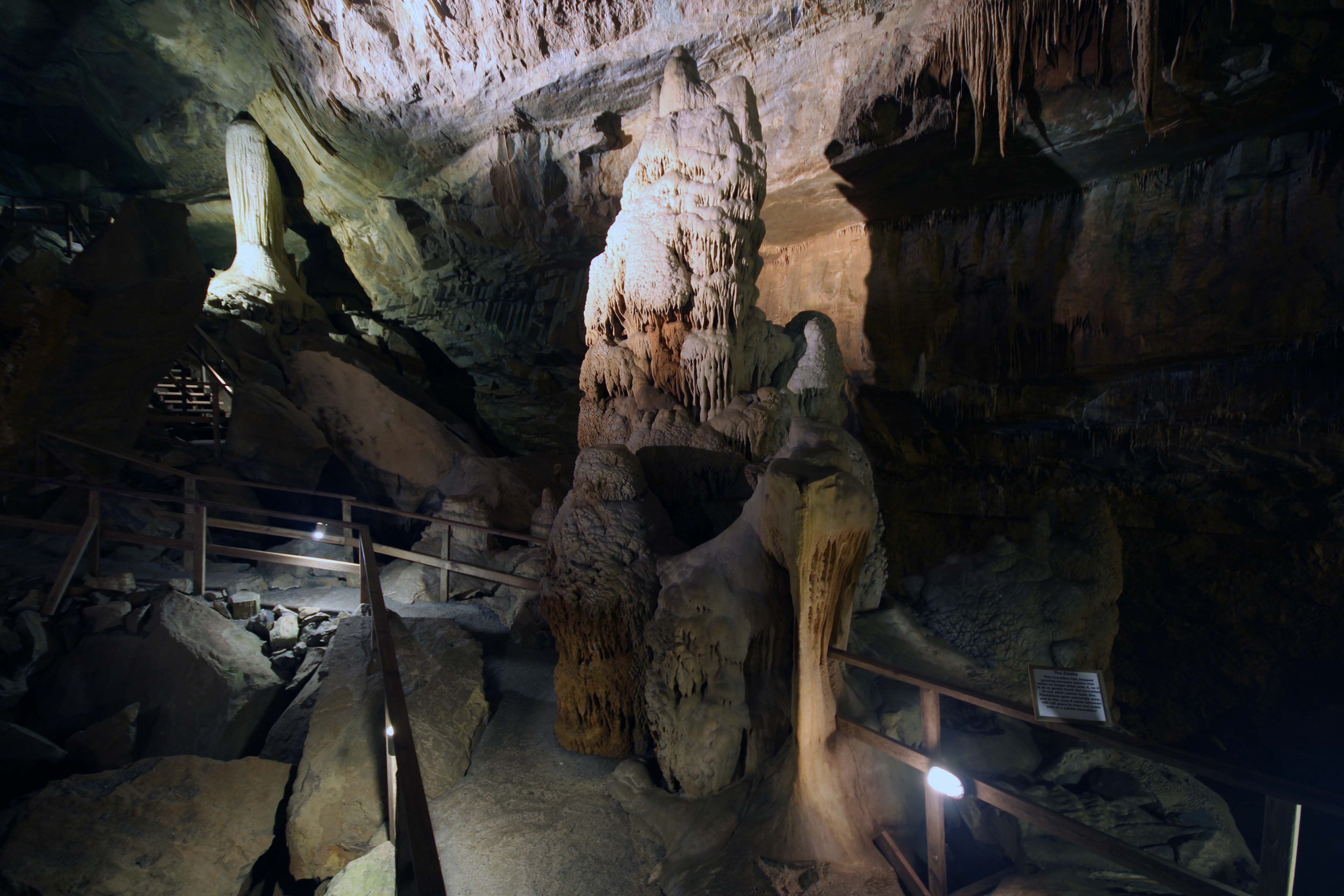
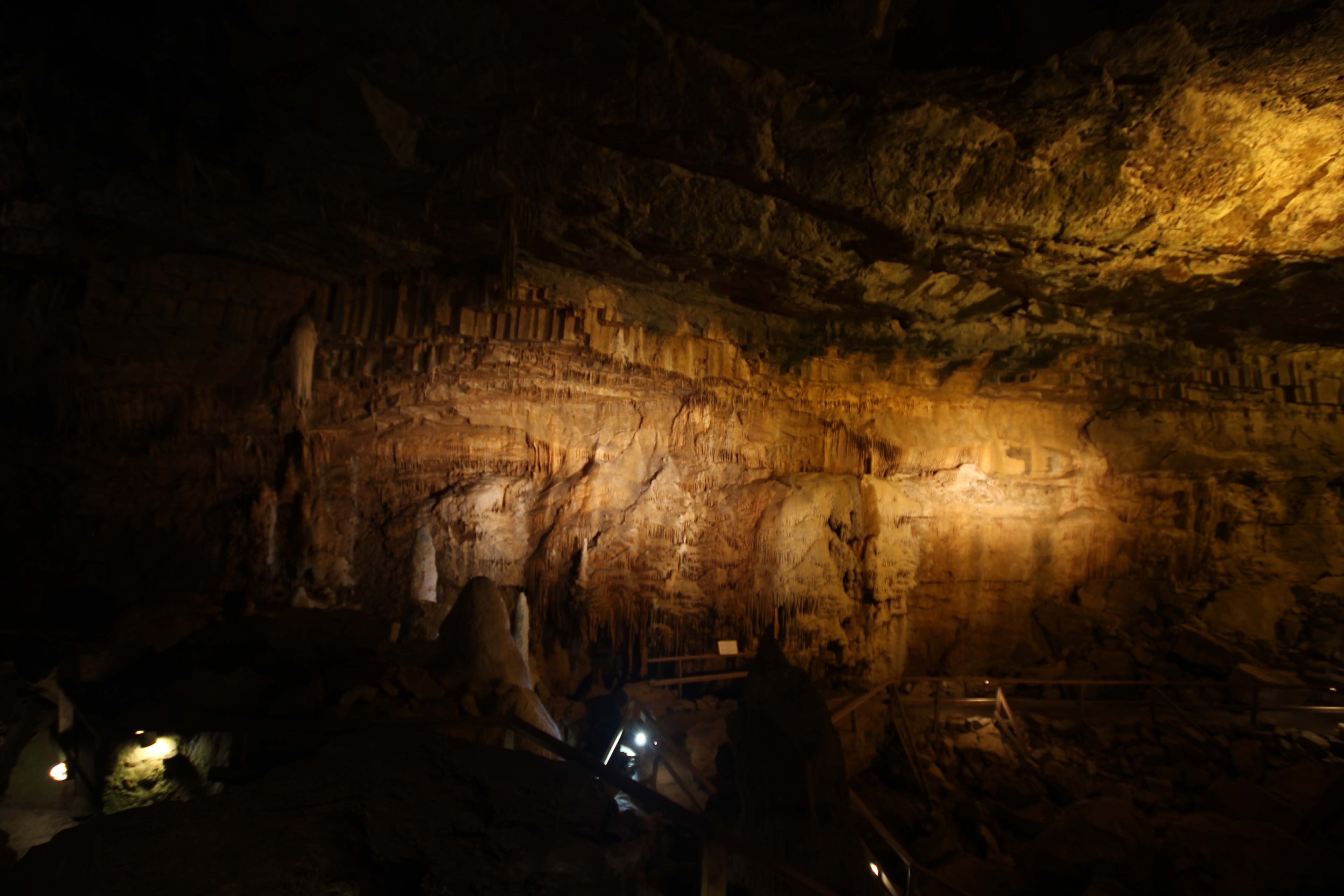
Written by Lee. You may remember that I am a little claustrophobic so caverns are really not my thing. If you are worried I am not getting to do much sight seeing we are making the most of Saturdays and Lee is picking stuff to do that I wouldn’t want to do anyway. Win-Win!! – Trace
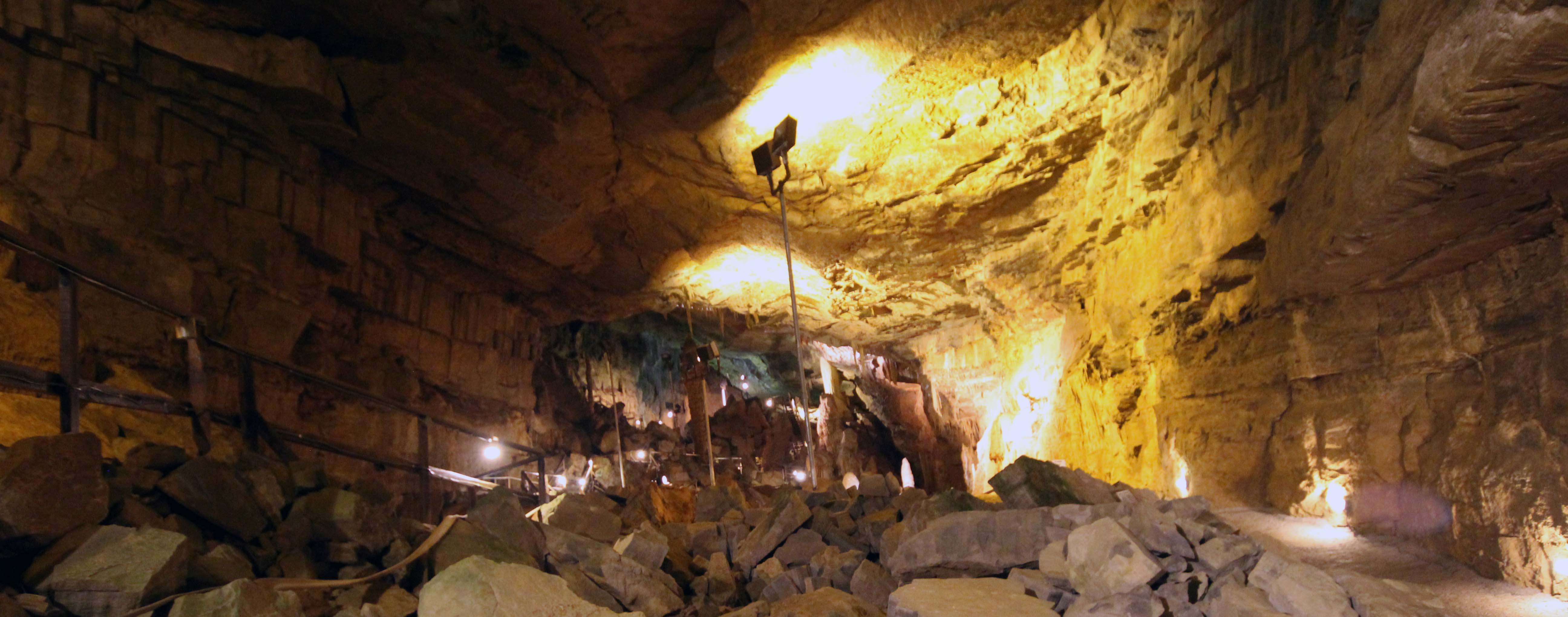
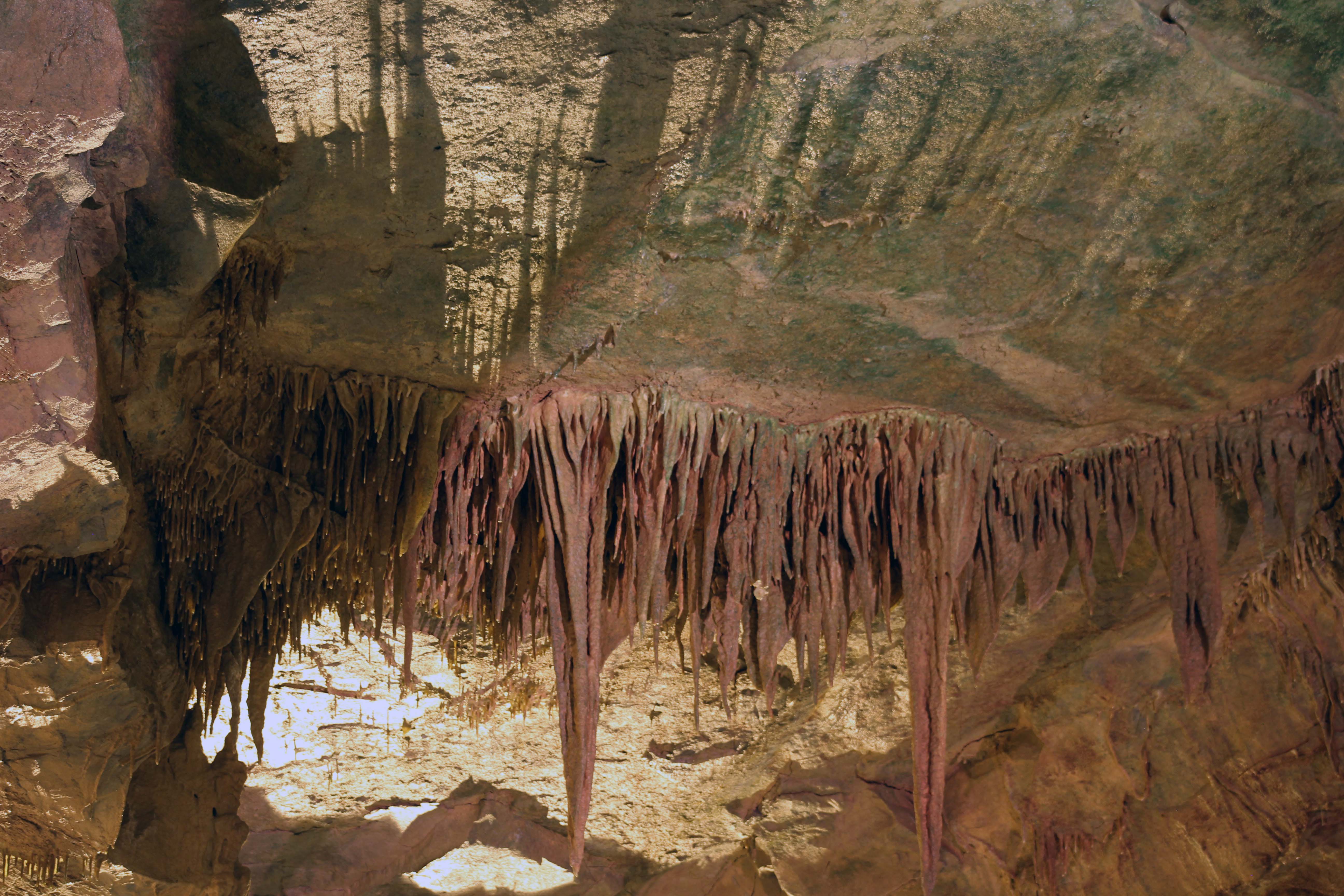
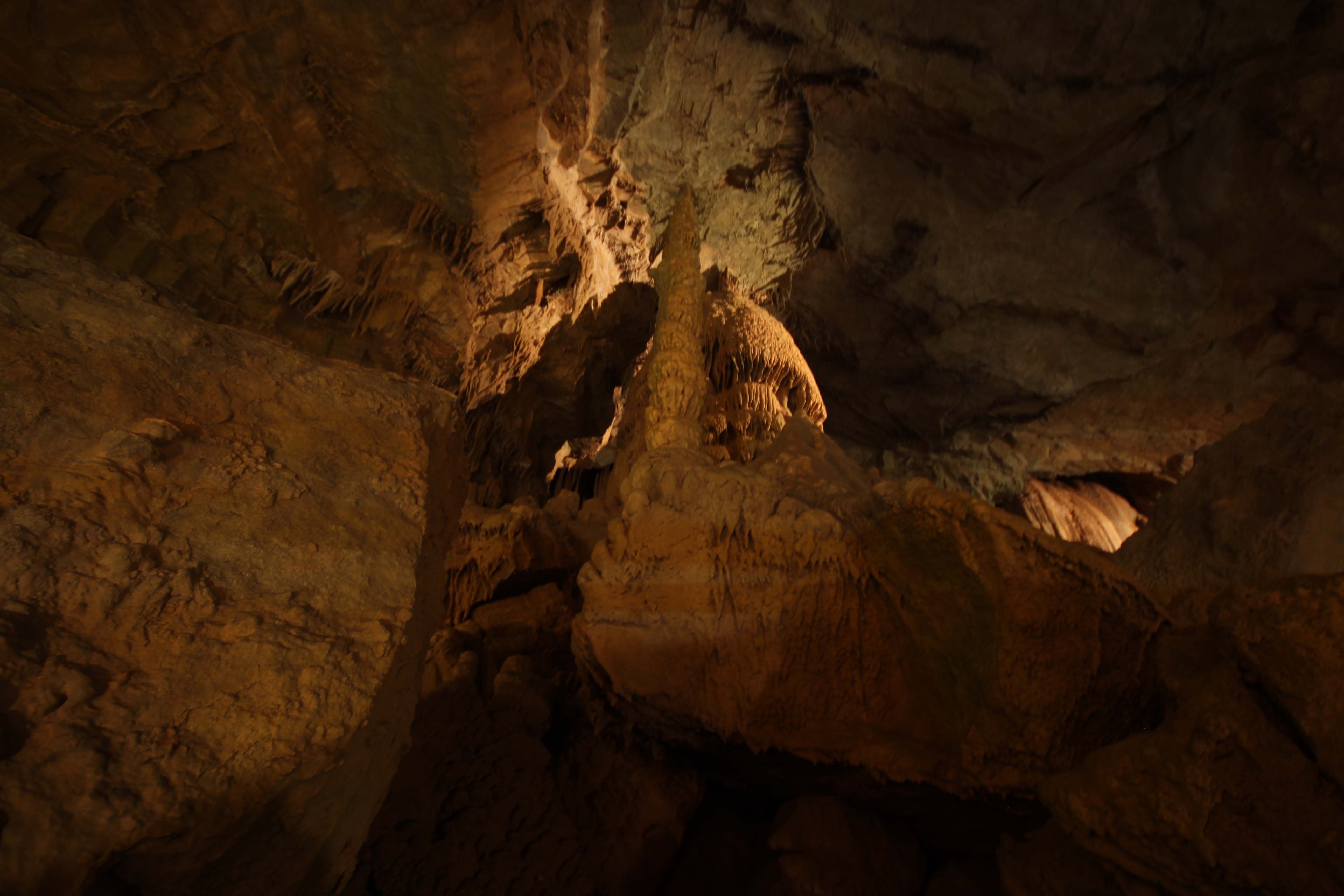
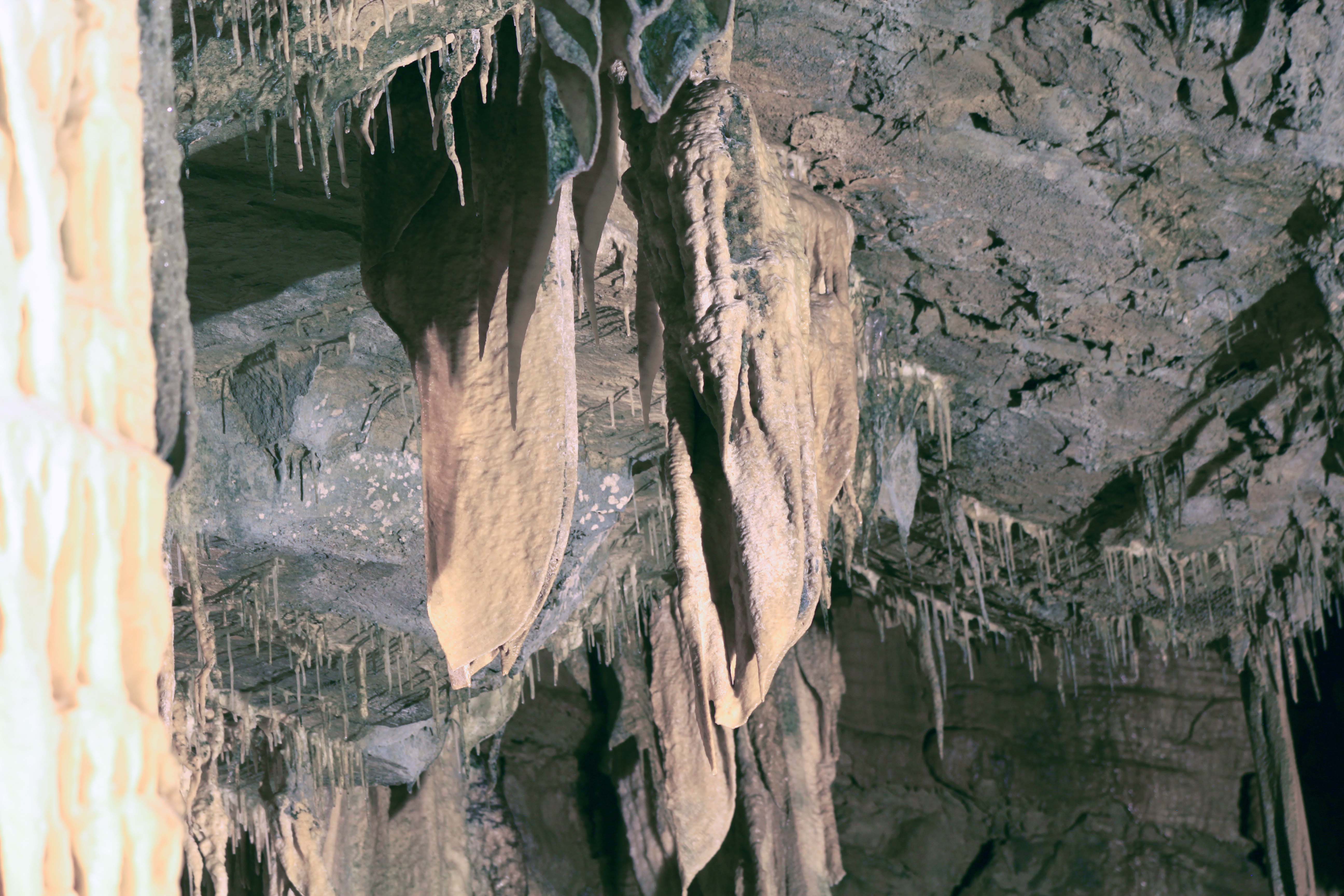
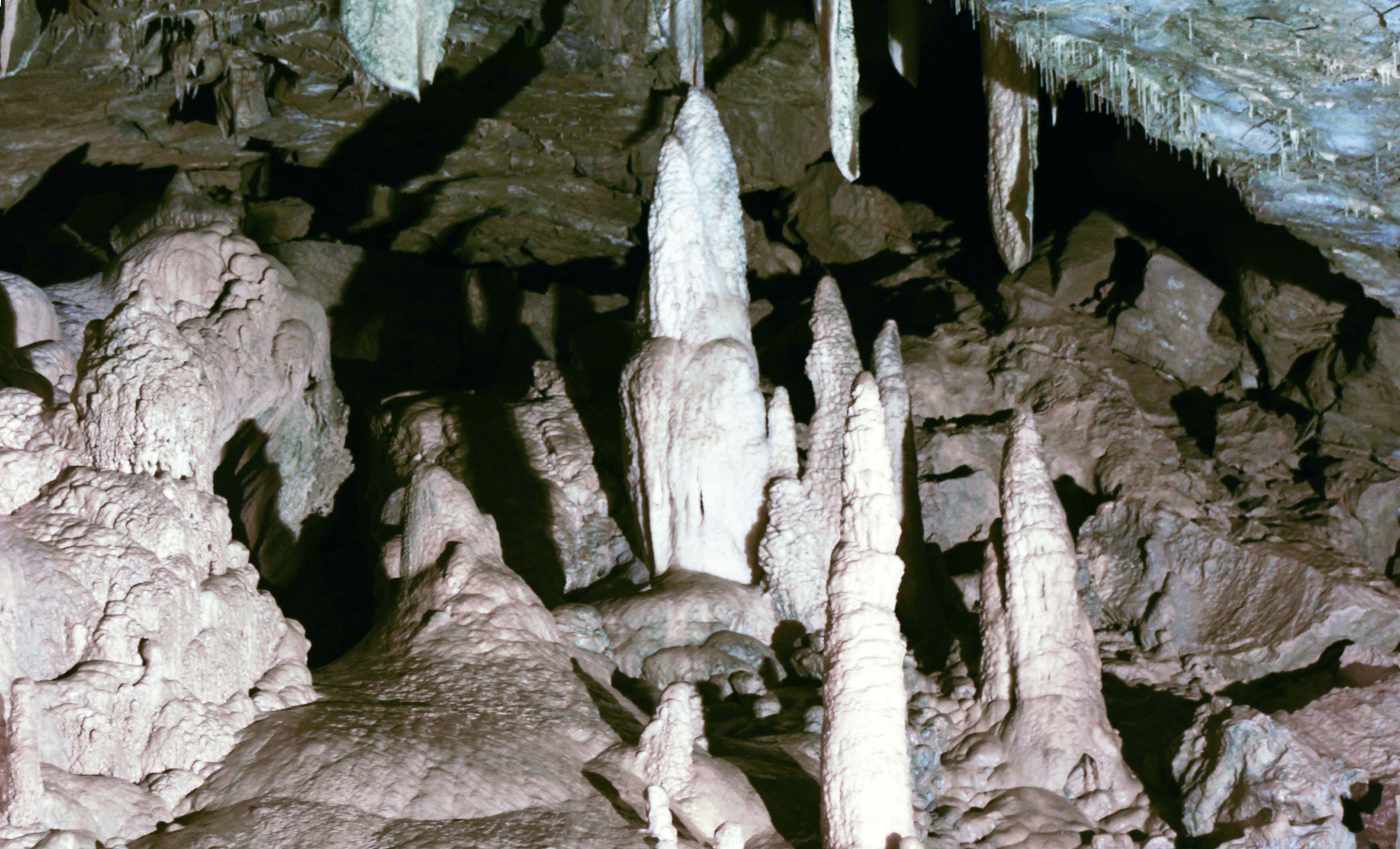
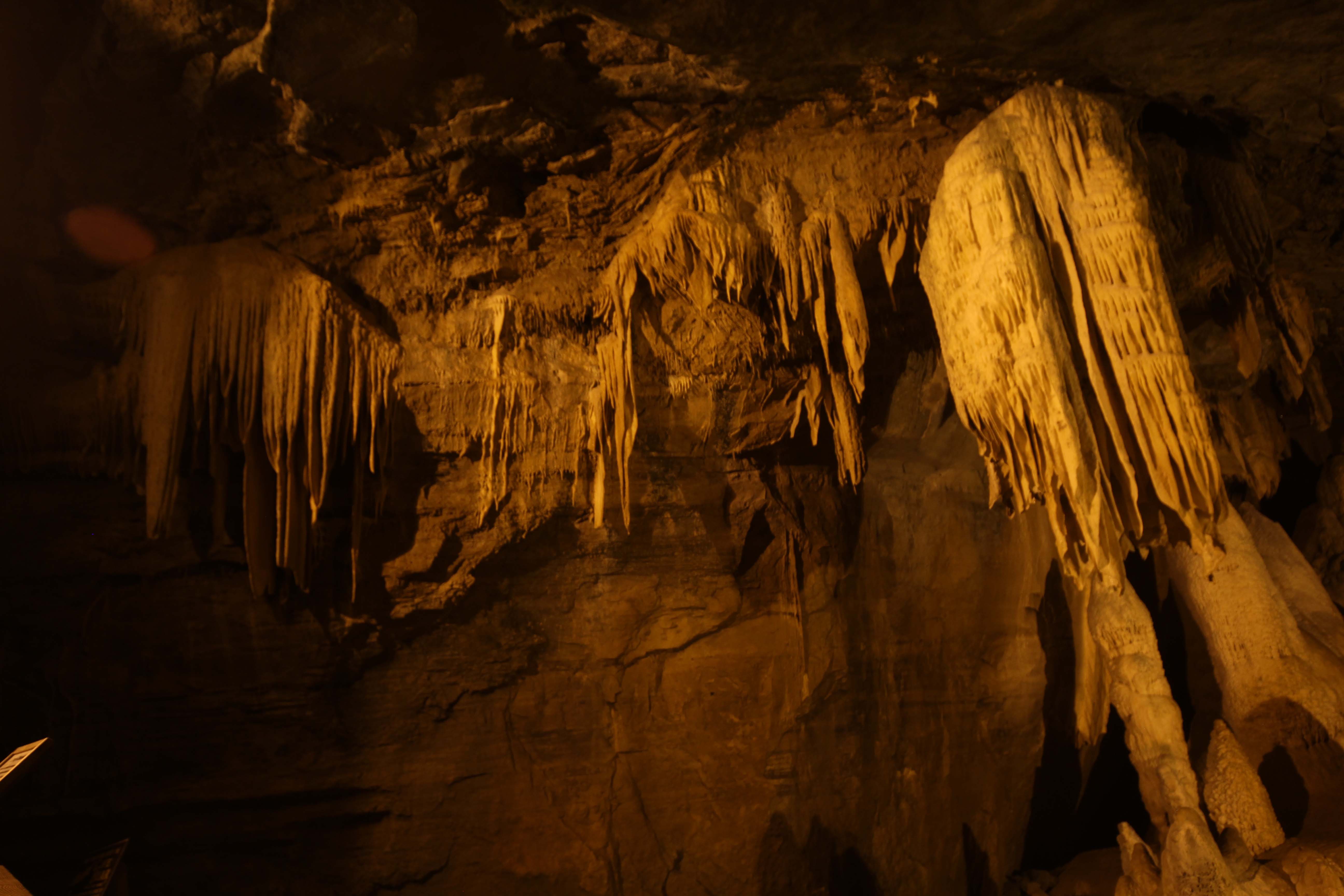
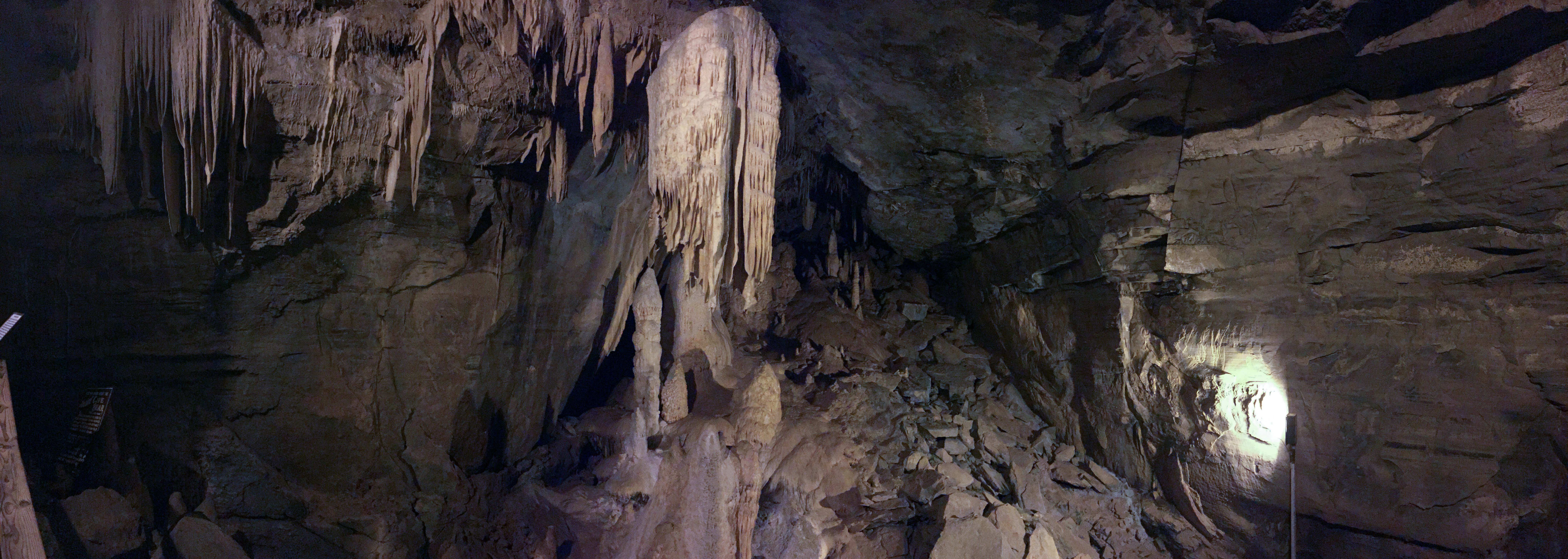
If you should happen to find yourself in this area, Lost World Caverns is a great stop for a quick hour of fun. It’s only 2.5 miles from the Lewisburg Interstate exit, very inexpensive ($15), and well maintained. Just an overall good cavern tour experience. The best part is, it’s self guided, so you can take as long as you want, or run through as fast as you can. Lee really doesn’t like guided tours because he likes to take his time with taking pictures. On guided tours he is always last in line and invariably he gets scolded for not keeping up. – Trace. The guy who sold me my ticket said most people spend 45 minutes to an hour, but I was in there for four hours taking long exposures with a tripod. It’s pretty rare that places like this allow a tripod, so it’s a great opportunity to learn the manual settings on a camera.
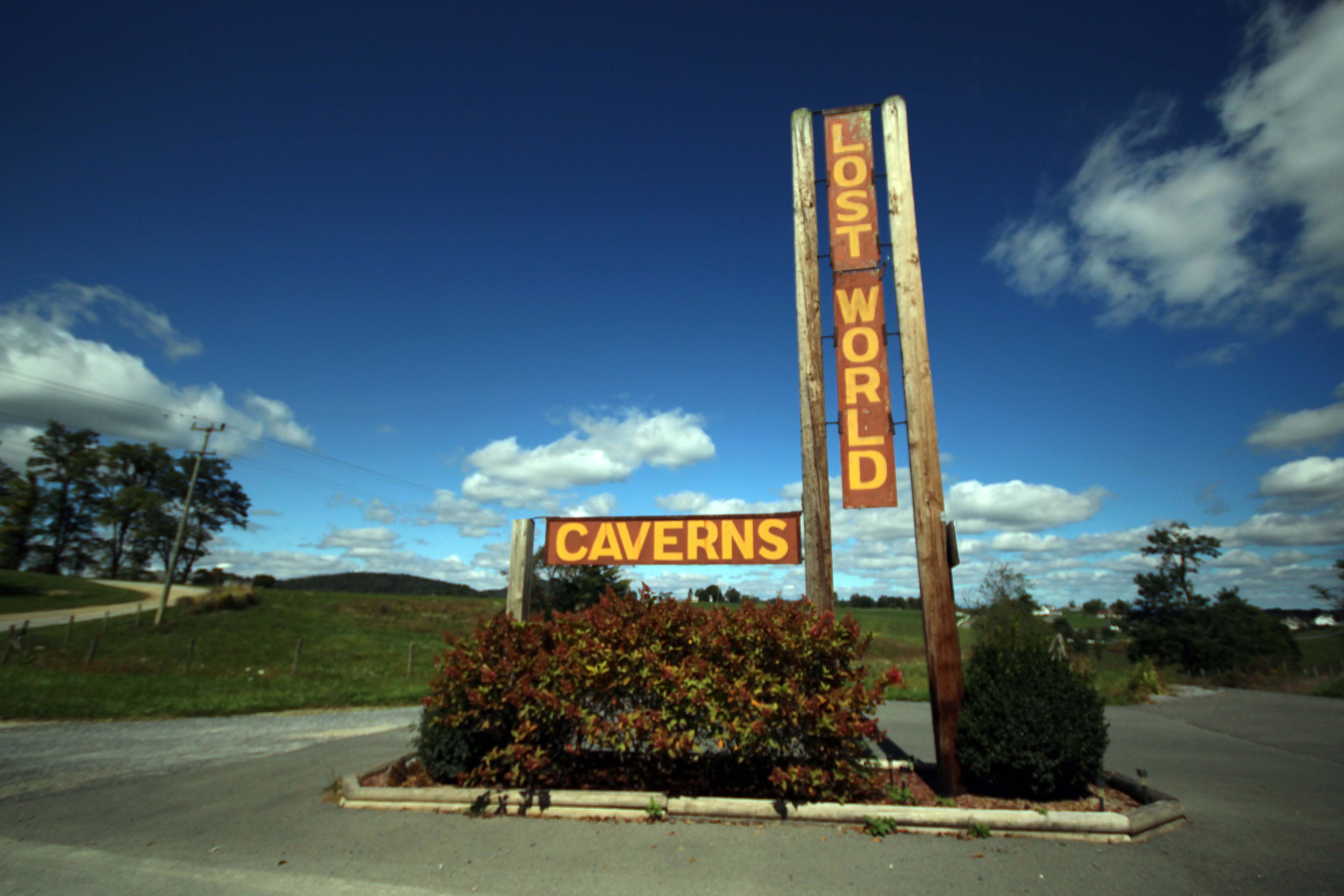
Clearly marked entrance, there’s no missing the turn off!
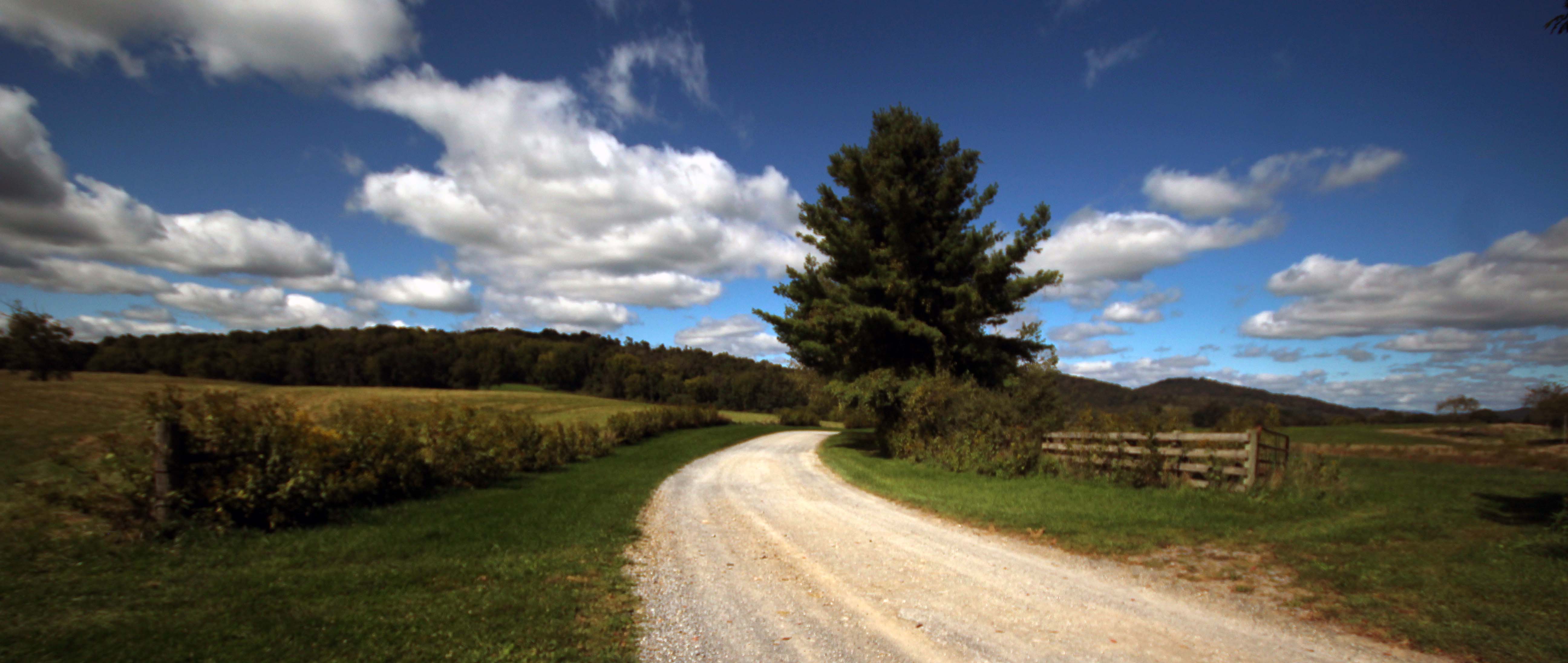
Plenty of parking, but I wouldn’t bring a big rig, the road here is narrow and twisty.
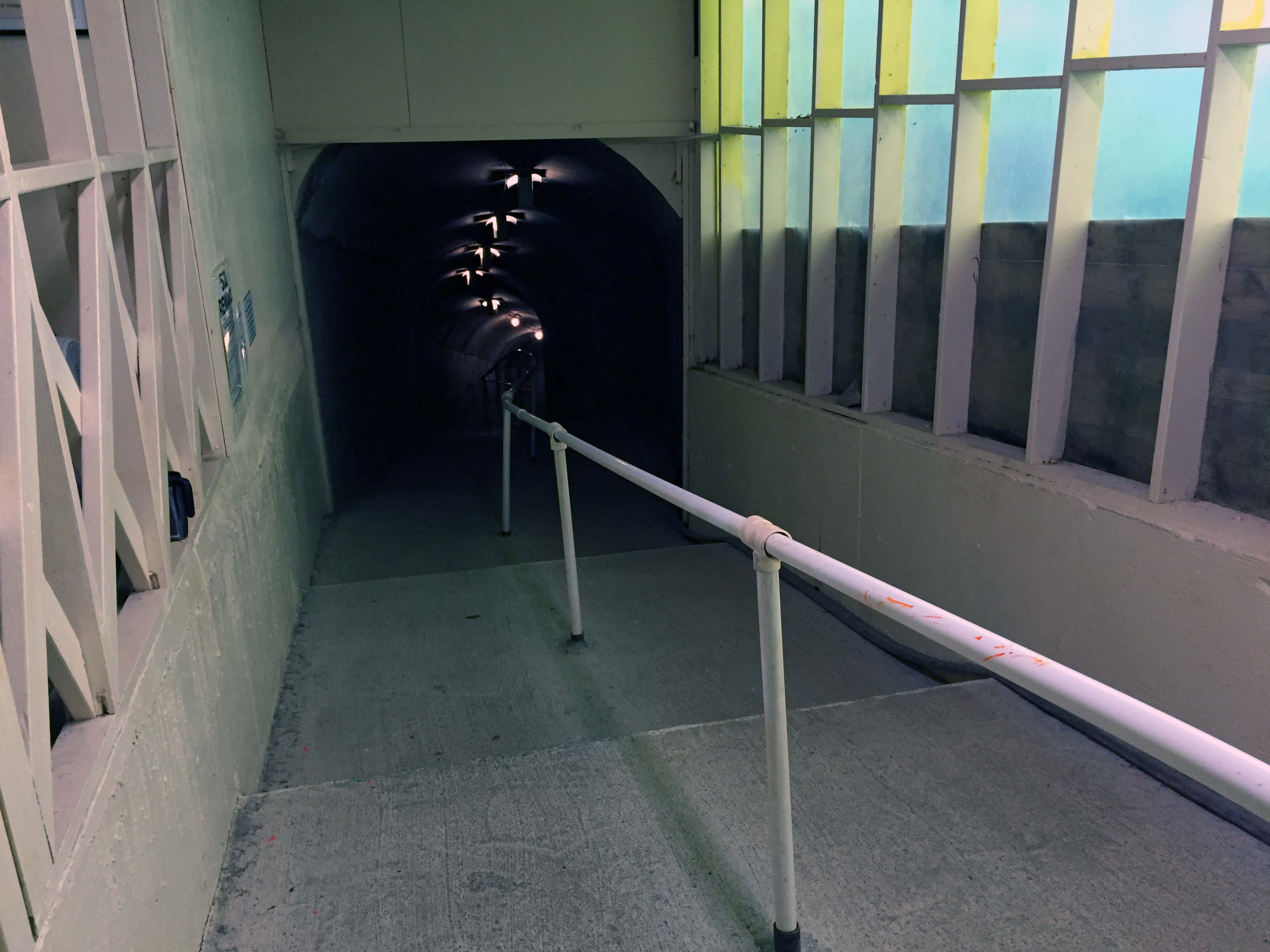
After walking through a HUGE gift shop and museum area, you head down the stairs! Make sure you have everything you need. I forgot my tripod plate and had to come ALL the way back up. He got his steps in that day – Trace
Dress accordingly, the temperature at this depth is always 52°, and it’s damp on the walkway. Another reason I am not fond of caves. They are damp cold, my least favorite – Trace
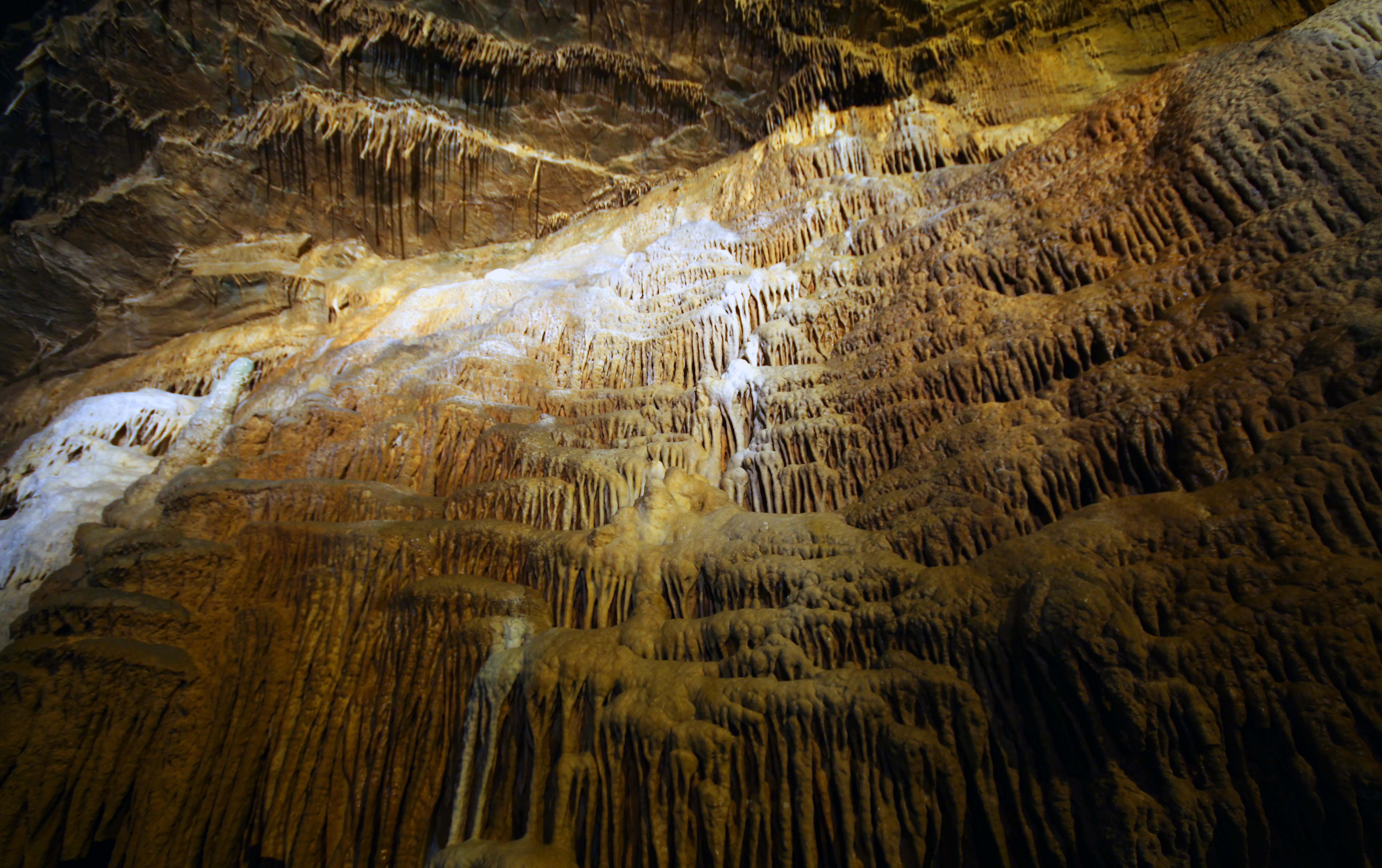
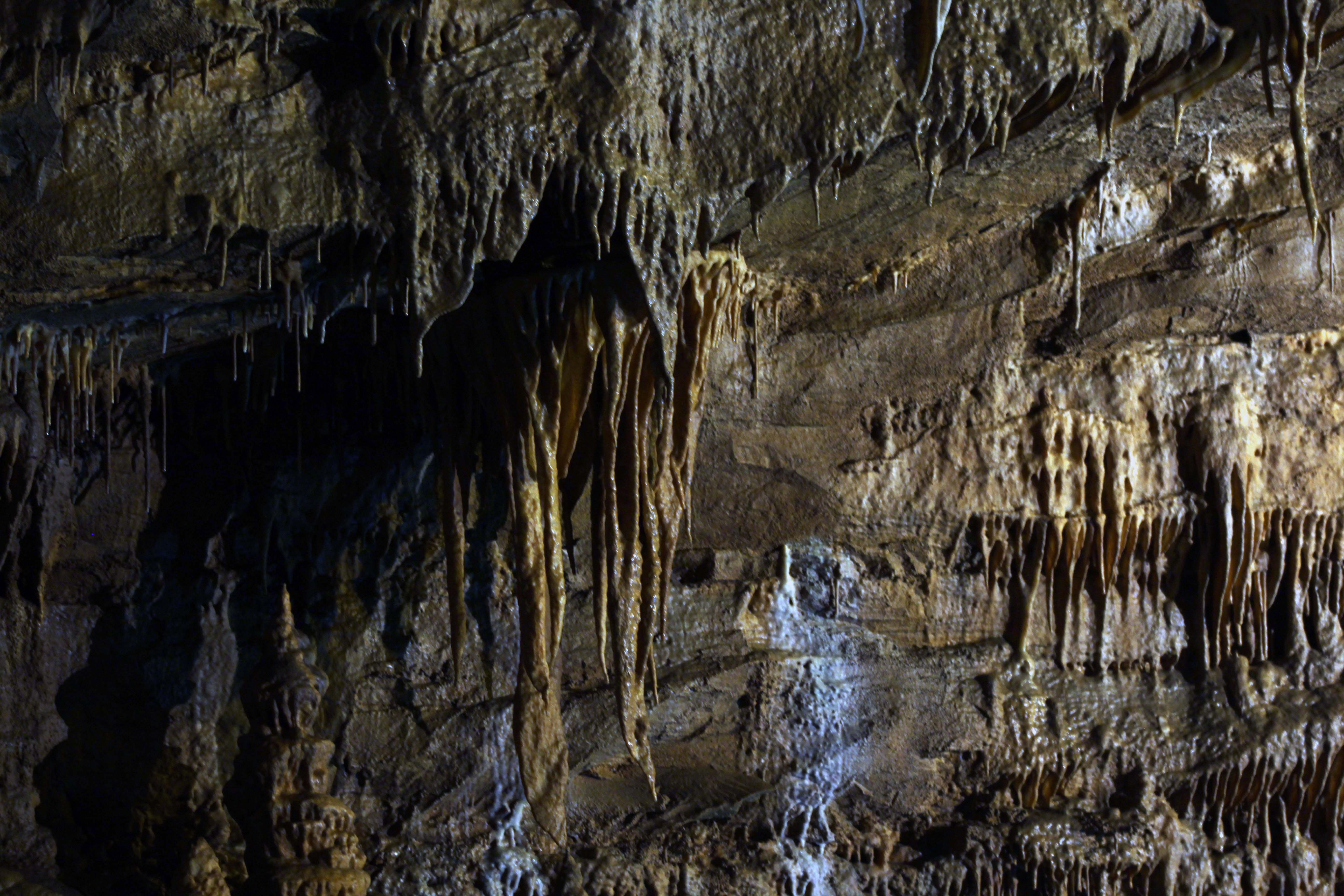
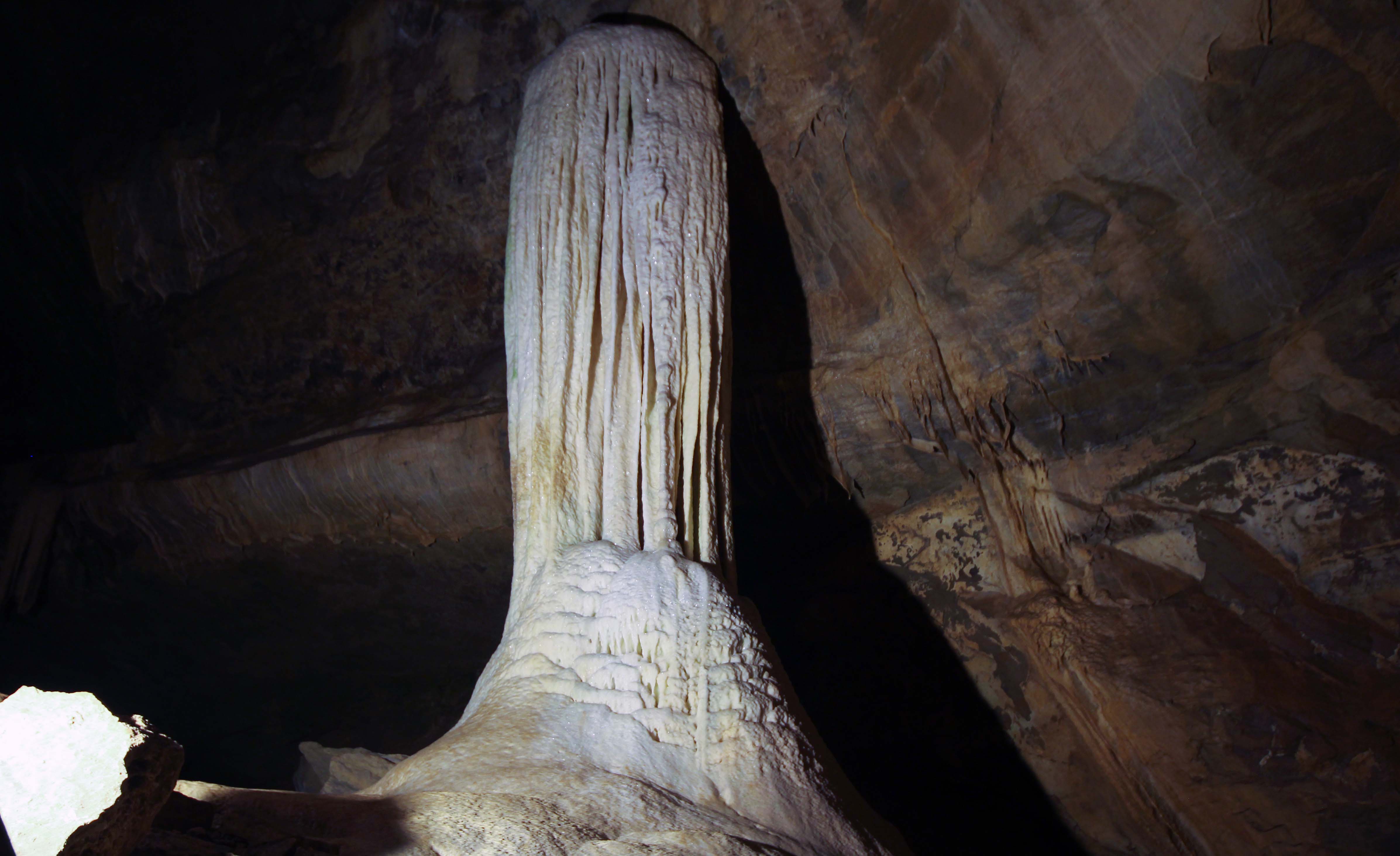
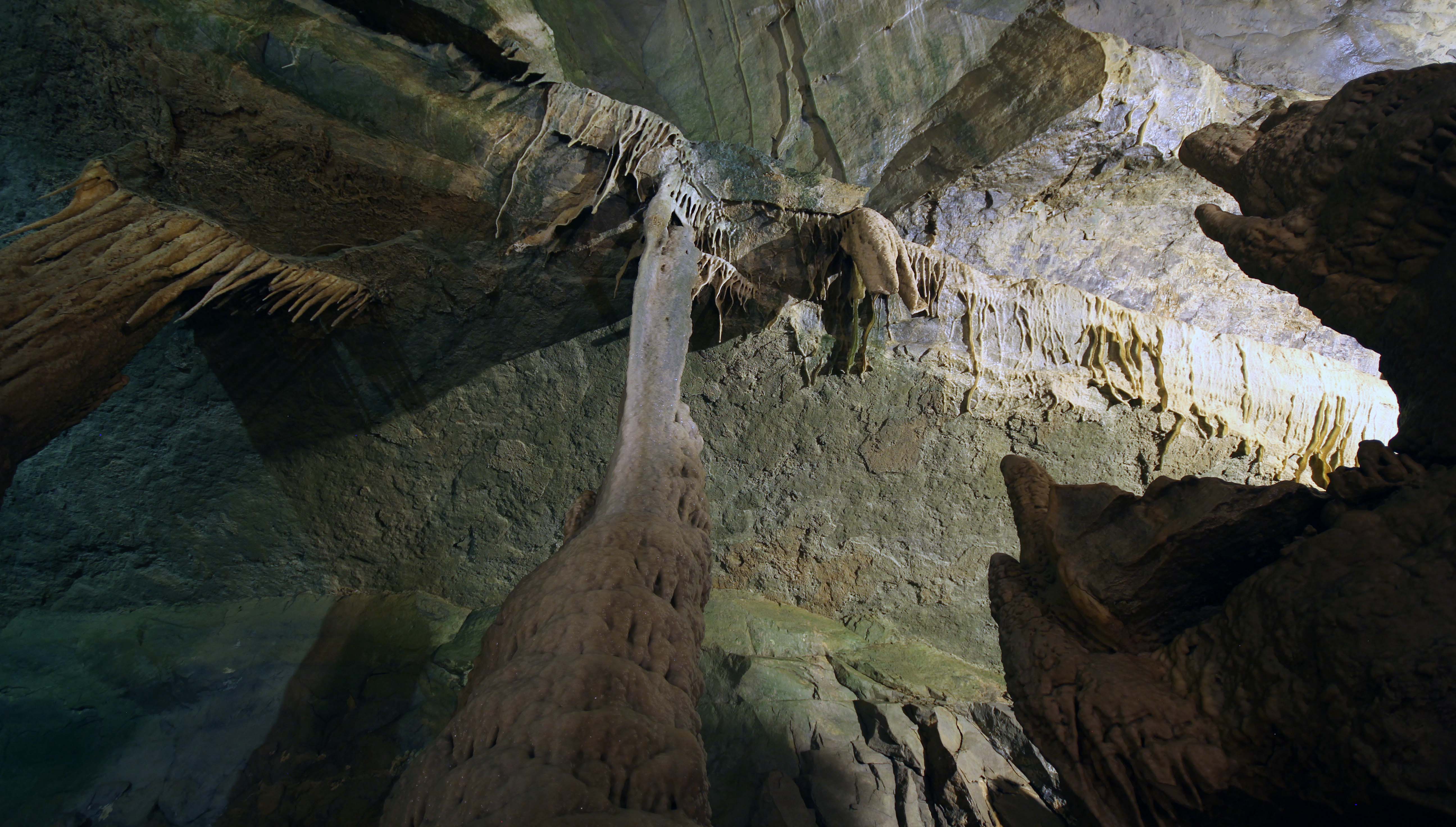
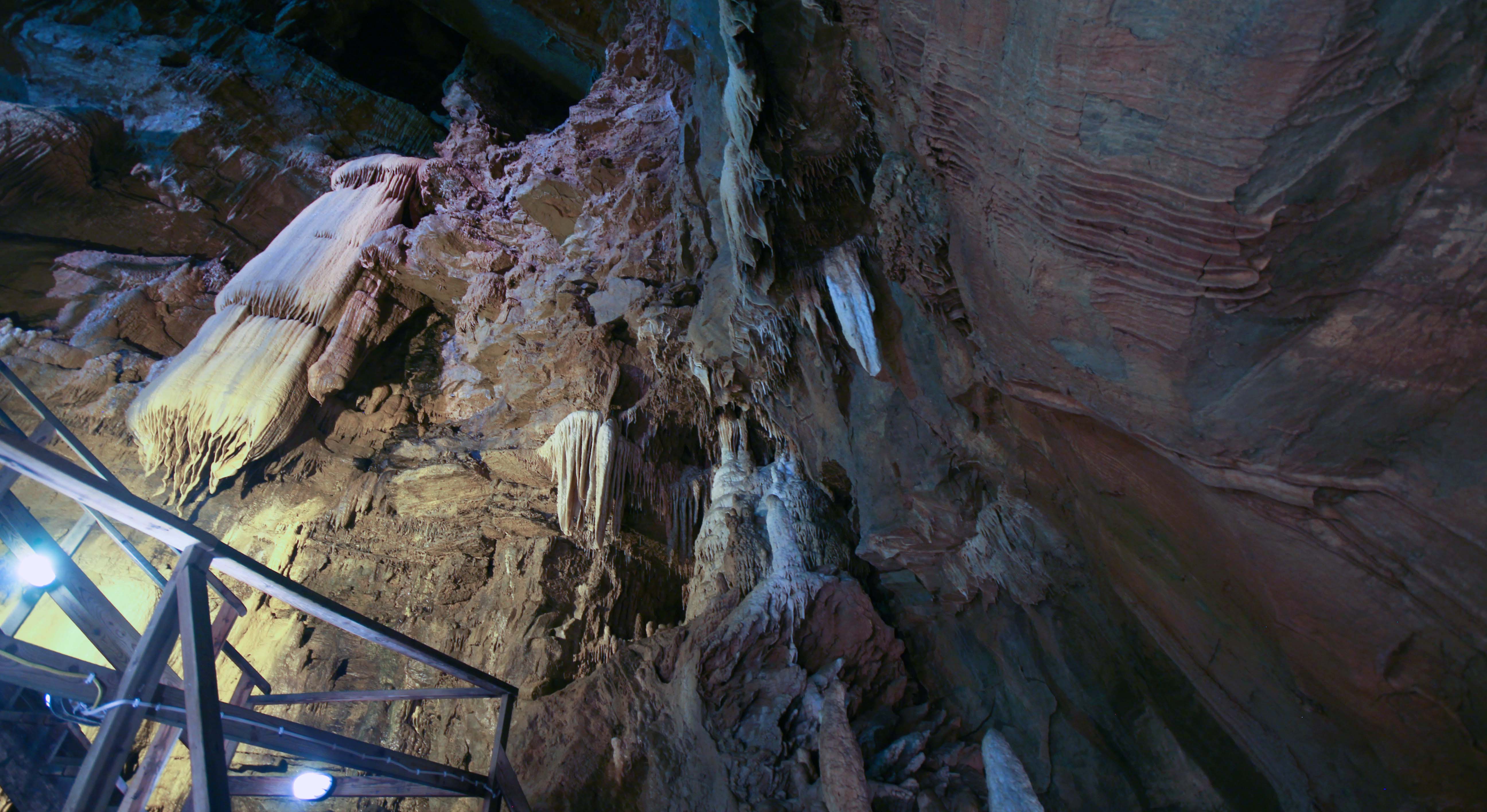
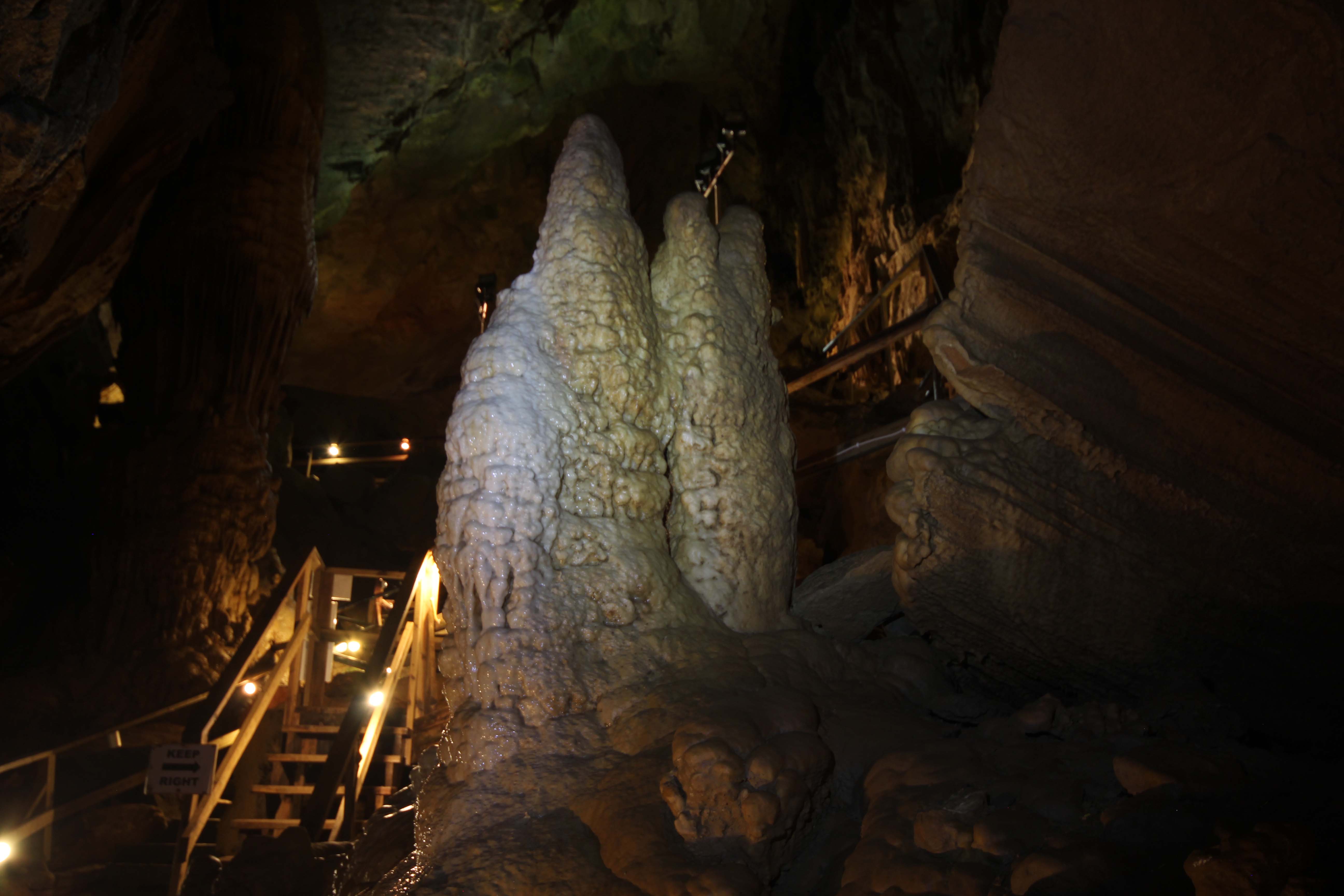
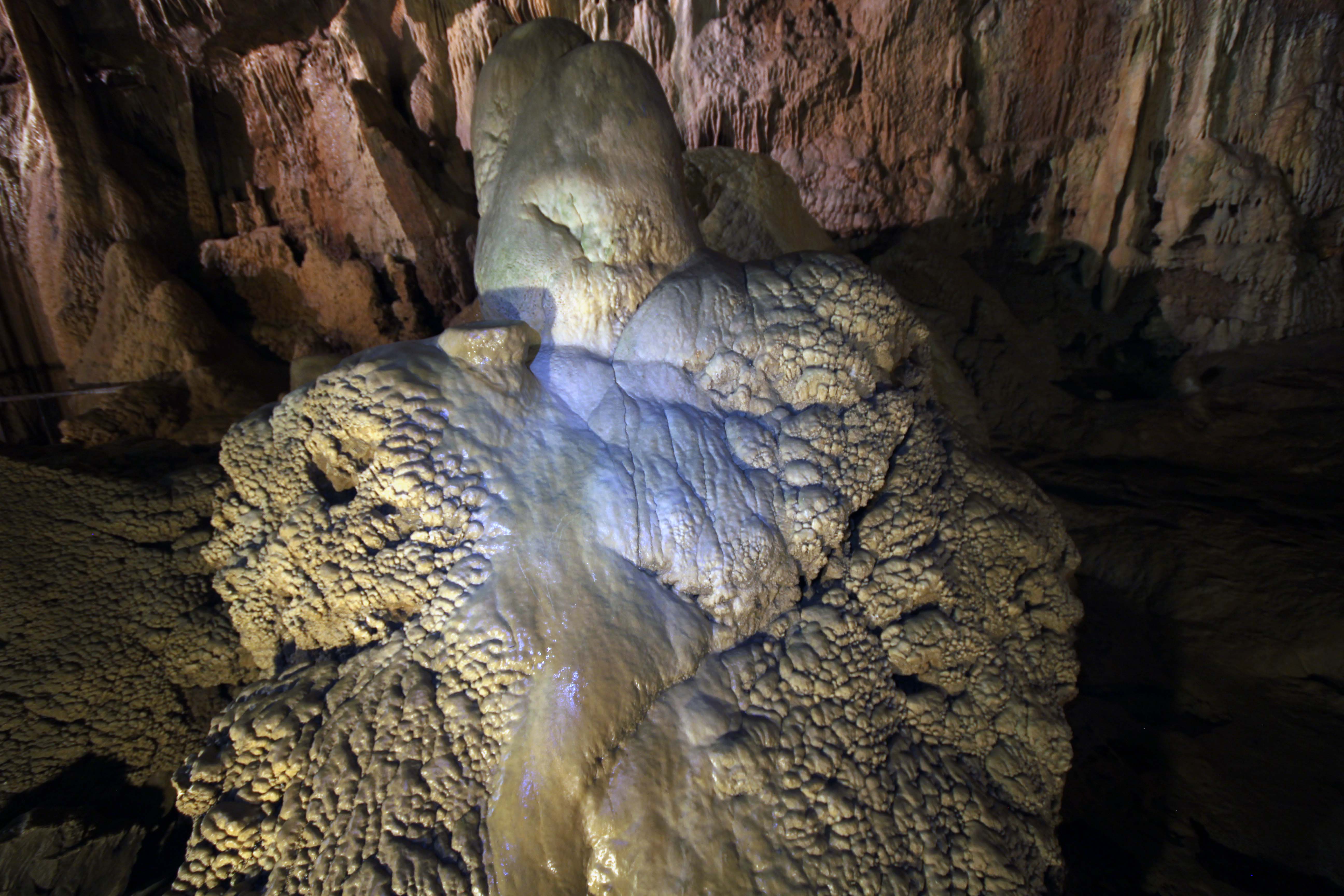
Lee just started with the pictures, but I wanted to mention that he took all of these using a tripod and long exposure. It was super dark in the cavern and taking pictures is hard in the dark. Pretty happy about how they turned out. – Trace
I thought this one was super cool. – Trace
This was was really creepy. Reminded me of pods from the alien movies. – Trace
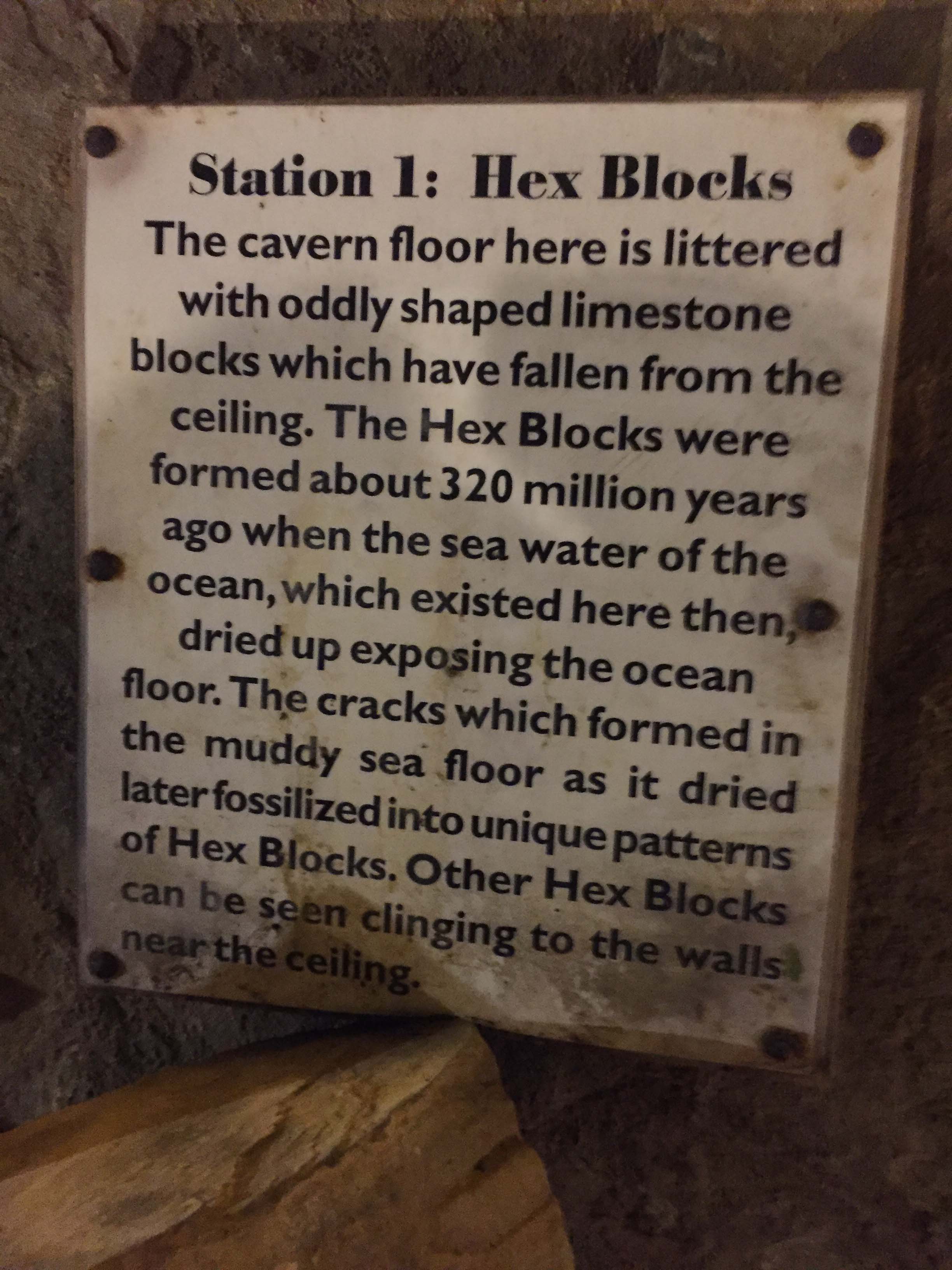
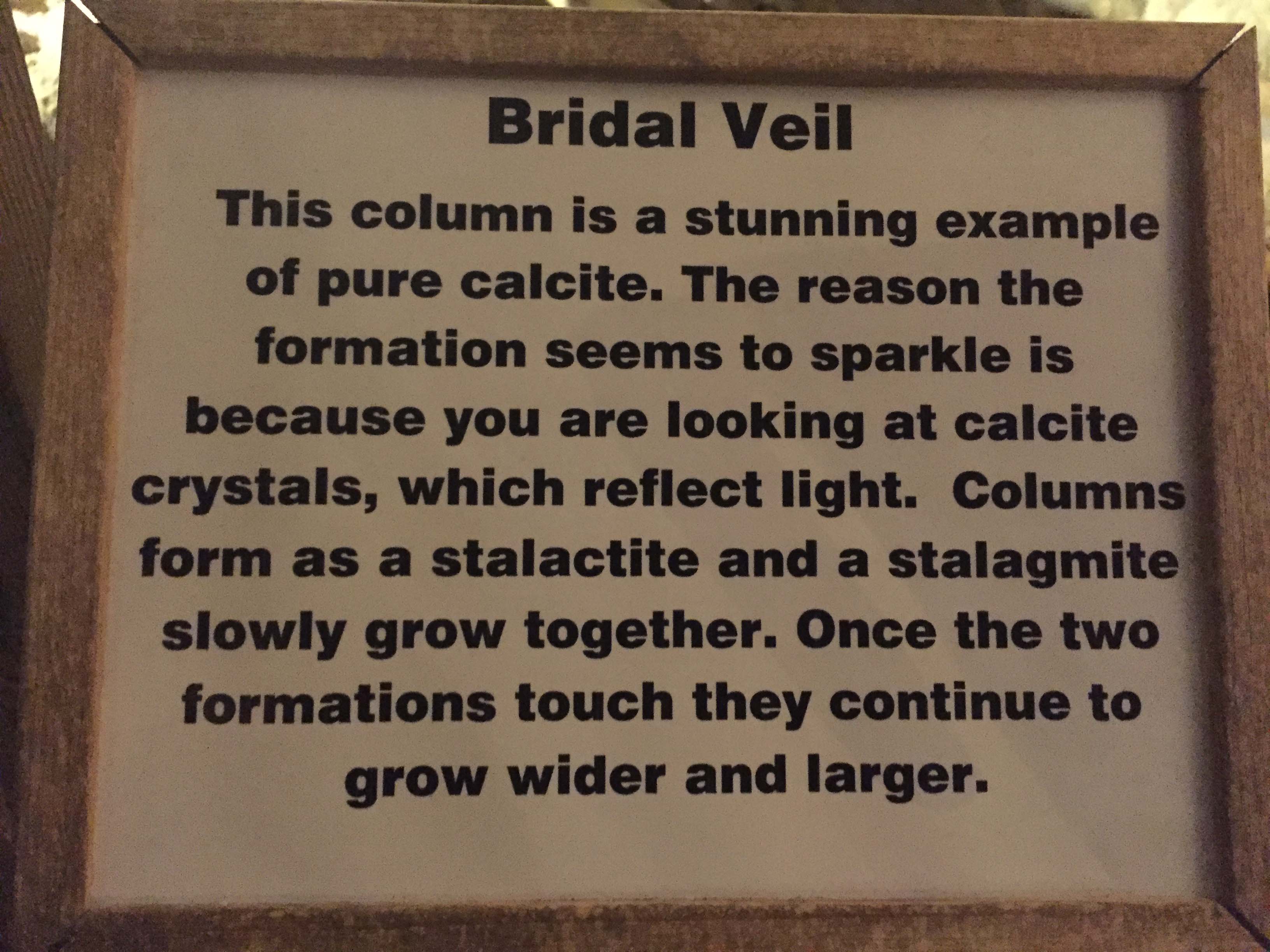
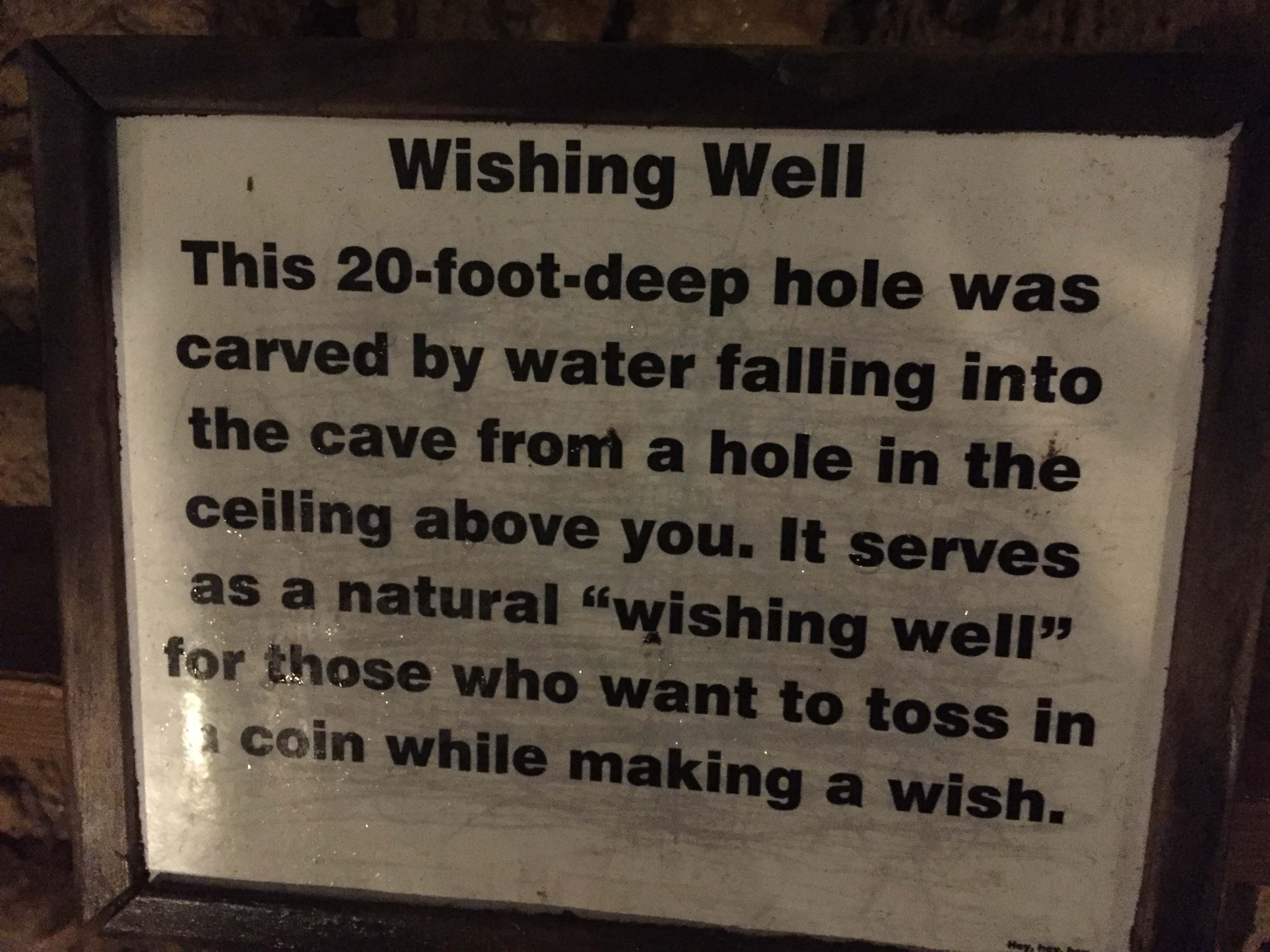
It was too dark to get pictures of the bones and the ladder, but I thought it was pretty interesting so I included the plaque!
And here’s a little video with some creepy music!
Supporting our Blog
We very much appreciate your support of our blog.
You can purchase the ebook telling the story of how we became full-time RVers.
You can purchase our recipe book filled with 80 recipes we have cooked in our RV and taste tested by Lee himself. You can purchase the kindle or paperbackversion on Amazon or buy the Apple version on iTunes.
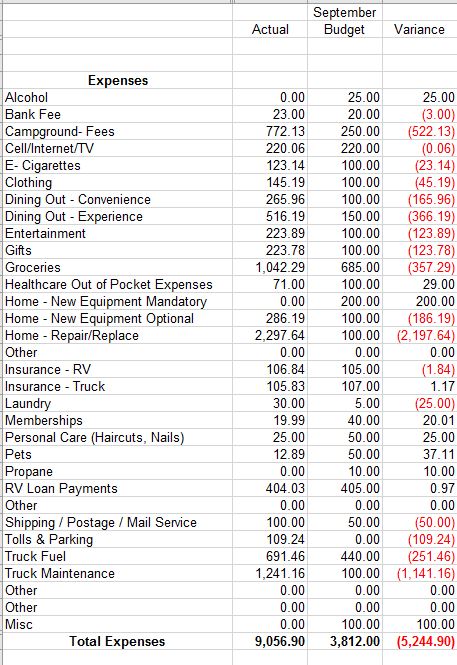
Whew, this was an expensive month! We spent $9,057. Much of this was around truck and RV repairs, and you can see that detail below. Plus Lee has added lots of other cool data, so even if you don’t care about the budget you might want to scroll down and look at that stuff.
Campground Fees – Now that we are traveling, we are finding campgrounds based more on location and cost. We do try to watch costs, but that has been somewhat out of our control. This month was $772 and Lee has provided more detail below.
Clothing – We spent $145 this month mainly on collector T-shirts and sweatshirts. We like to get our casual upper wear from places we visit and there were lots of opportunities this month with our travels.
Dining Out– Wow we went crazy in this category spending almost $800 on dining out food. A chunk of this is because our generator isn’t working and we like to have a hot lunch when we travel, but it was also just eating out on exploring days.
Groceries – It was disappointing that our groceries were so high since we ate out so much, but rural areas are much more expensive for groceries as well.
Home Repair – We finally found a place to replace our “G” trailer tires which makes this the fourth set of tires, if you include the originals, since we picked up the rig in April of 2014. We had cheap E tires, then good G tires which wore out prematurely due to an axle problem, then we replaced with cheap G tires about a year and a half ago, and had lots of trouble with those, and are back to Goodyear G tires. $2200 was a decent price though, and the work was done expertly and quickly. Lee has more on this below.
Tolls – Because we are in the east now tolls are a thing and we finally purchased an EZ Pass. Even with the discounts tolls add up but since we are committed to staying on easier roads that is the price we pay.
Truck Fuel – $691 actually wasn’t that bad for all the miles we put on this month. We did a decent job of trying to find cheap gas but when we couldn’t it was around $2.46…ouch! Staying on major roads added extra miles and our inability to find a campsite in one area caused significant backtracking. Still we are learning how to travel the new way and I am OK with this as a starting point. More details on fuel below.
Truck Maintenance – We had to get a coolant change, oil change, two new front tires, and new brake pads. Since a Ford dealer quoted us $1500 to do the brakes (we got it done at the tire place for $200) I am OK with the total being $1200.
If you take the truck and home repairs out our month was $5518 which is much more reasonable. I am just happy we were able to do those repairs without losing too much travel time.
Additional monthly data from Lee…
But first….
I did some research after reading this post and I wanted to provide a little context on the tires. They’re pretty expensive, and sometimes it seems like we are ALWAYS buying tires. Here’s what I found on our tire purchases.
The first tires we bought were two new front Michelin tires in June 2015, when the truck was about a year and a half old, and had only 16.5k miles. The reason was that the alignment on the truck was terrible, and as soon as we started towing the rig around it just destroyed the tread wear pattern.
Next in November 2015 we bought four Goodyear G614’s for the fifth wheel to replace the horrible tires that came with the rig. At that point we only had 10k miles on the trailer, but we had had two tires go bad on us.
April 2016 we got four rear Michelin tires for the truck. The originals were 28 months old and had around 41k on them. That’s not too bad considering what came with the truck was junk.
January 2017 we got front truck tires again, this time we got around 19 months and 44k miles out of them before they need replaced.
April 2019 we replaced the Goodyear G614s with four horrible garbage tires on the rig, because the Goodyears were completely ruined from having axle issues before the Mor Ryde system was installed. Trailer mileage when we got those tires was 44,259, and we had bought the G614s at 10,000, so we had the G614s for 41 months and 34k miles, which is not really too bad.
September 2019 we got 4 rear Michelins for the truck. The set we replaced lasted for 41 months, 75k miles. We definitely got our money’s worth out of those!
And finally, in September 2020 we got 2 front Michelins for the truck, after 44 months and 74k miles.
At the same time we got rid of the junk tires on the fifth wheel and got new Goodyear G614s. The “bad” tires (which had one flat) we had for 17 months and only 9k miles. Absolutely ridiculous. Key takeaway buy Goodyear tires! – Trace
So I project that we will need four new rear tires for the truck around December of 2022 and/or 186k miles, although it might be sooner if we travel more than we have been.
And I project that we’ll need trailer tires and new front tires for the truck in December of 2023, and/or 205k miles, and again, it might be sooner if we travel more than we have been.
And now here’s the data you’ve been waiting for!
In the month of September, we used a total of 304 GB of data on our AT&T unlimited plan, across all of our devices. (Total for the year is 39.3 terrabytes)
We took 2,431 pictures, bringing our total for the year to 7,854.
We had a mixture of places we stayed. We had 4 nights of “moochdocking” where we stayed at Tracy’s father’s farm. The other 26 nights were paid, with a mixture of public (State Park) campgrounds and private RV parks.
The least expensive place was Riverside Campground, at $20 per night for 50 amp and water and sewer.
The most expensive place was West Virginia State Fairgrounds, at $47.70 per night for 50 amp and water and sewer.
The total cost for our “rent” was $772.13, which averaged out to $29.69 per night. We were just over our monthly budget for this item.
We put a total of 1,581 miles on the trailer, over a total of 8 travel days. We are now traveling much shorter days than we used to, which is a LOT more pleasant. Our shortest travel day was only 35.7 miles, and our longest was 375 miles. We averaged 197 miles over 8 days of travel. Our total travel miles year to date is 4,328.
We put a total (travel and non-travel) of 2,833 miles on the truck over 82 hours of engine time, with a year to date of 8,550 miles on the truck.
Year to date we’ve traveled 8,550 miles, 4328 of which was pulling the trailer, with year to date engine hours of 325 hrs, 47 mins, 32 secs.
We burned a total of 263 gallons of diesel, and averaged 11 mpg for all of our travel, with a year to date total of 985 gallons at 11.6 avg mpg.
We used the TSD Logistics card 7 times this month, and we have some great data from that! In the table below, you can see the date and location we used the card to purchase fuel, as well as how many gallons we bought and the “street” price, which is what we would have paid without the card. The “actual” price is what we paid using the card after the discount fee and per use fee was charged. That total is also used to calculate the “actual per gallon” price we paid, the savings and the % saved. As you can see, sometimes the savings is fantastic, 21.45% at a TA in Hebron, OH, outside of Columbus. And sometimes there’s no discount at all and we actually paid a tiny bit more than the street price because of the 65¢ per use fee.
Overall for the month we used the card for 179 of our 263 gallons of diesel, and we saved a whopping $62!
If you haven’t already read about the TSD Logistics card, you can read our post about it here.
DATE
Location
Gallons
Actual PG
Street
Actual
Savings
% Saved
9/1/2020
Albert Lea
19.69
2.00
46.06
39.3
6.76
14.68
9/2/2020
Brooklyn
24.15
1.93
55.54
46.62
8.92
16.06
9/3/2020
Bloomington
26.99
2.34
69.08
63.03
6.05
8.76
9/3/2020
??????????????
26.32
2.23
67.36
58.65
8.71
12.93
9/17/2020
Hebron, OH
29.59
2.04
76.92
60.42
16.5
21.45
9/23/2020
Somerset Travel Center
26.83
2.73
72.95
73.23
-0.28
-0.38
9/26/2020
TA Wheeling
26.13
1.94
66.87
50.8
16.07
24.03
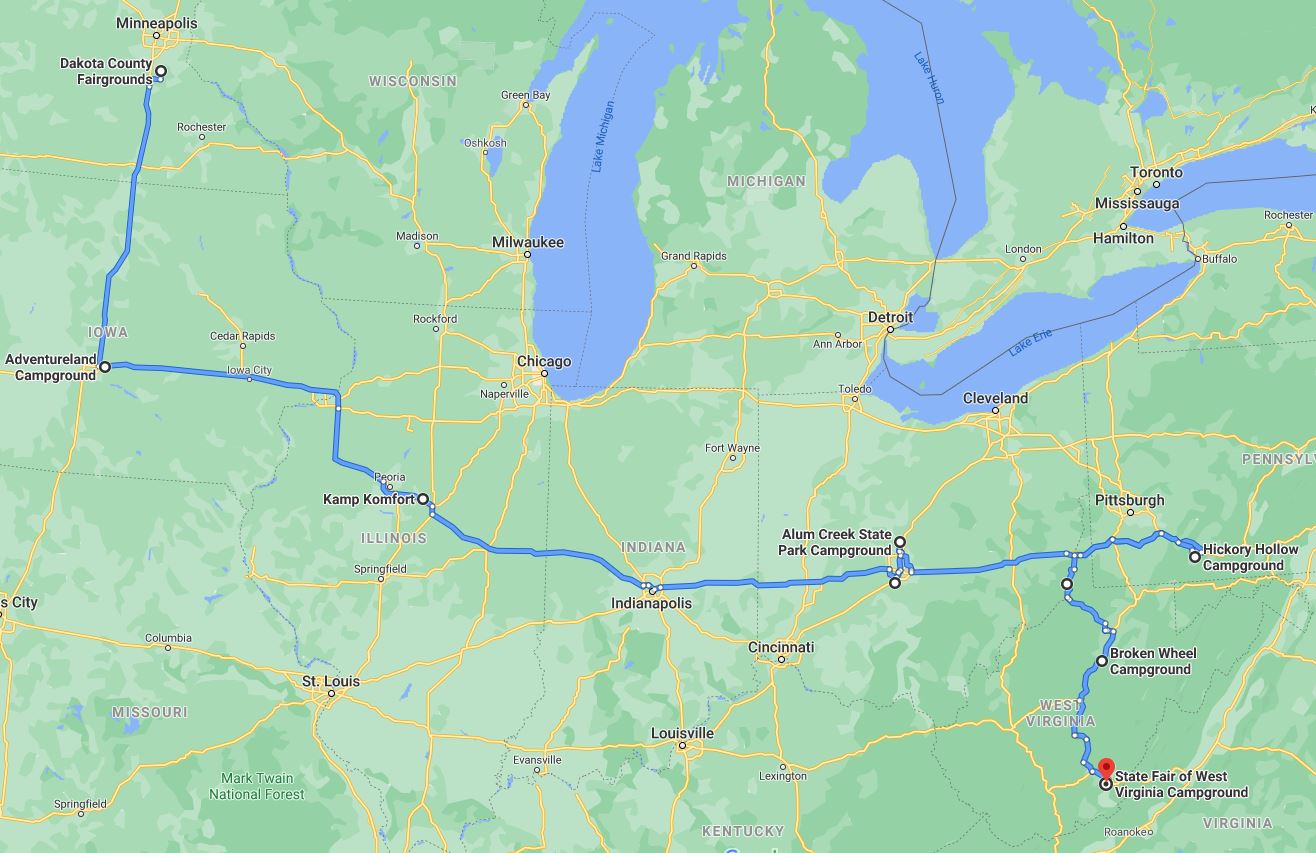
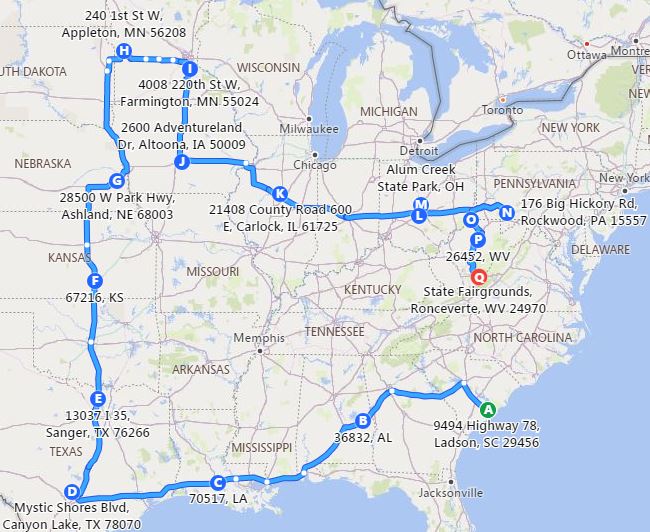
And here’s our travel map for September….
And our year to date travel map,
Supporting our Blog
We very much appreciate your support of our blog.
You can purchase the ebook telling the story of how we became full-time RVers.
You can purchase our recipe book filled with 80 recipes we have cooked in our RV and taste tested by Lee himself. You can purchase the kindle or paperbackversion on Amazon buy the Apple version on iTunes.
Written by Lee. This is a very long post, but this subject is extremely important to Lee. – Trace
We’ve already established that Gothic architecture grabs my eye. Plus, history just fascinates me. I am riveted and transfixed by it. I enjoy being in places where history has taken place and I love the feel of the vibrations of it resonating in me. Since I was a kid, I have been interested in the concept of asylums, partially due to pop culture like The Bell Jar and One Flew Over The Cuckoo’s Nest, and partially due to our utter failure as a society to ever appropriately deal with the most pervasive medical problem in the history of our country. In the United States, almost half of adults, 46.4%, will experience mental illness during their lifetime. In any given year, 5% of those over 18 experience mental illness. That’s nearly 45 million people. In 1988 I personally got a taste of how bad our society is at dealing with this when I spent a few months in a psychiatric facility courtesy of the United States government while the Air Force tried to figure out what to do about my particular inability to conform. It turned out to be less of a problem than they thought it would be once we parted ways, but for a little while I was convinced I might never get to leave.
So when I saw that we would be within a reasonable traveling distance to visit a decommissioned asylum, I really wanted to go.
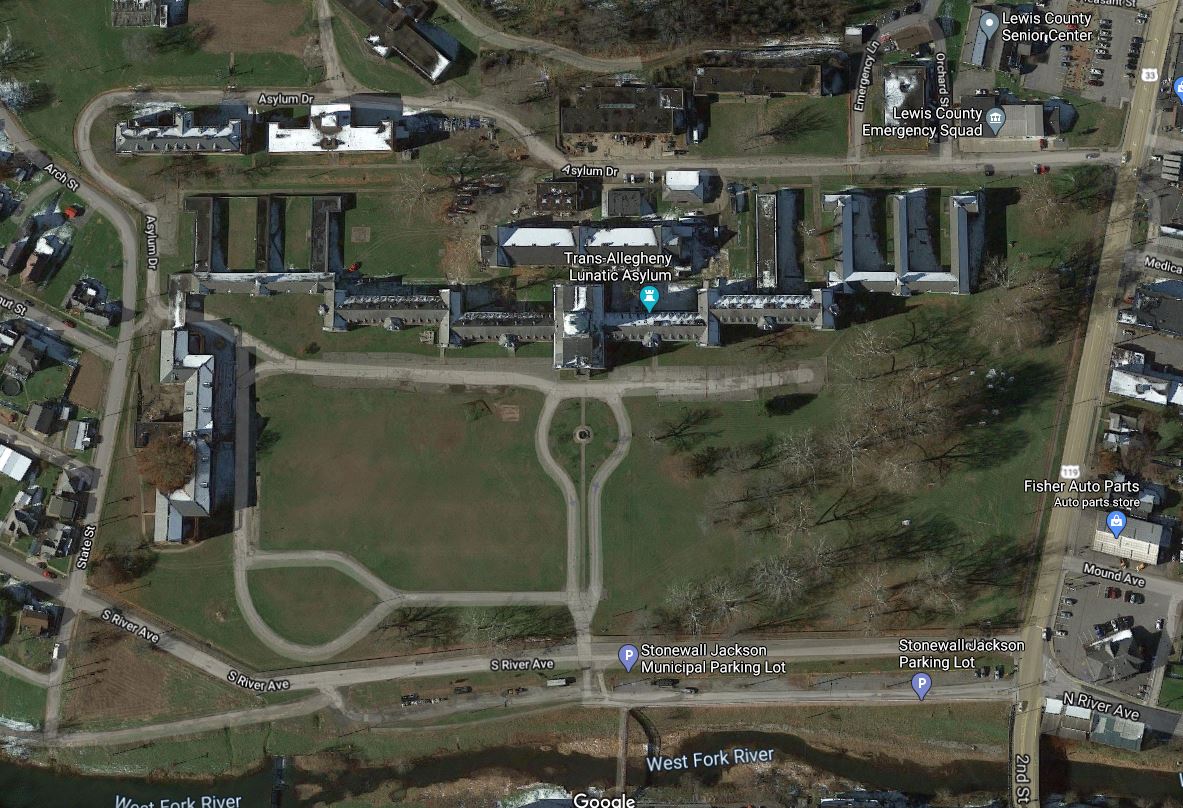
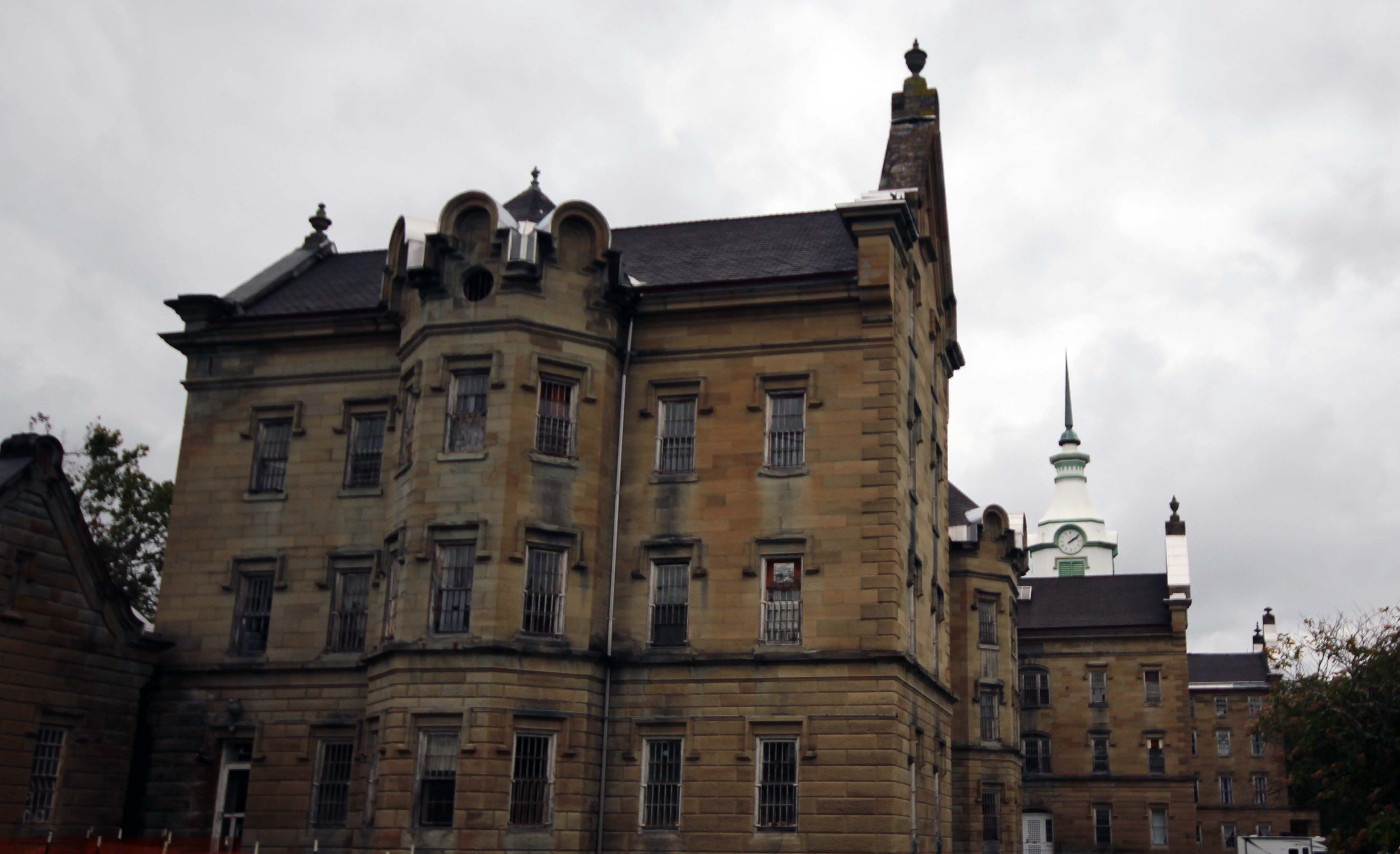
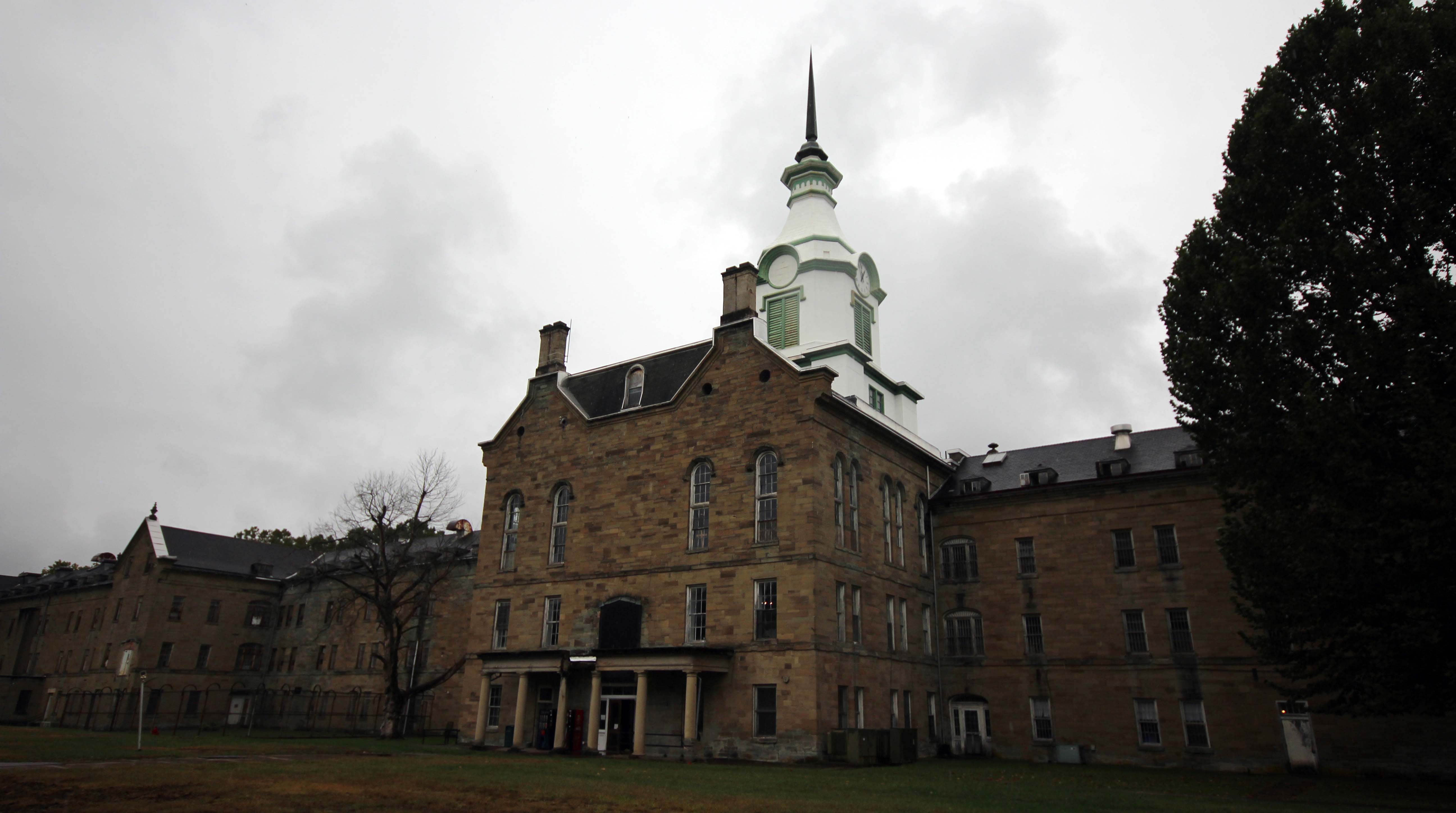
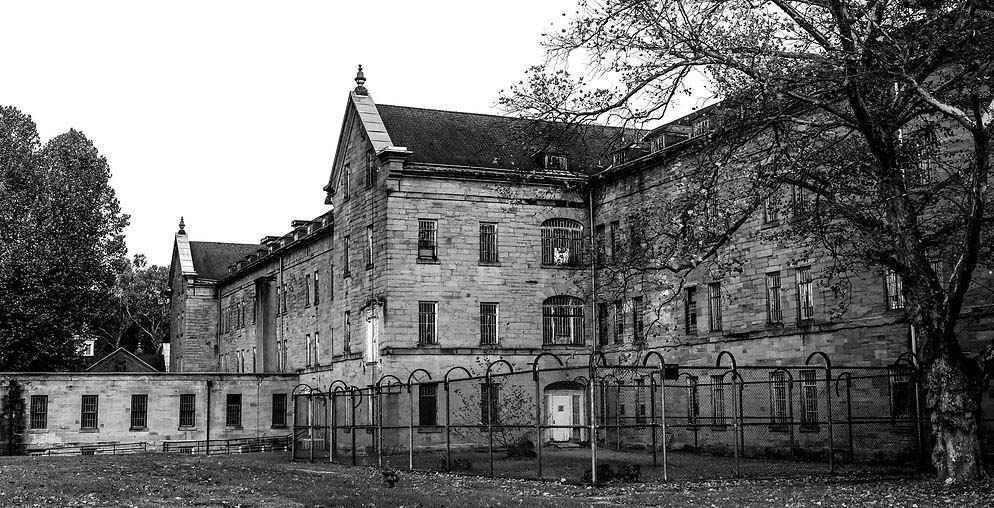
About 100 miles northeast of Charleston, WV, in the town of Weston, is the former Trans-Allegheny Lunatic Asylum. Originally known as the Weston State Hospital, it was a “Kirkbride” psychiatric hospital that was operated from 1864 until 1994 by the government of West Virginia. A classic state institution of the time.
The “Kirkbride System” of facility design was based on Philadelphia psychiatrist Thomas Kirkbride’s theories regarding the healing of the mentally ill, in which environment and exposure to natural light and air circulation were crucial. The hospitals built according to the Kirkbride Plan would adopt various architectural styles, but had in common the “bat wing” or shallow “V” style floor plan, housing numerous wings that sprawl outward from the center.
The idea was a to maximize the privacy and comfort of the patients. Kirkbride firmly believed that the building design had as much to do with curing patients as other forms of treatment. The design also called for long rambling hallways and very tall ceilings, 12 feet whenever possible. The standard number of wings was eight, with rooms for 250 patients. This was the design used for the Weston Hospital.
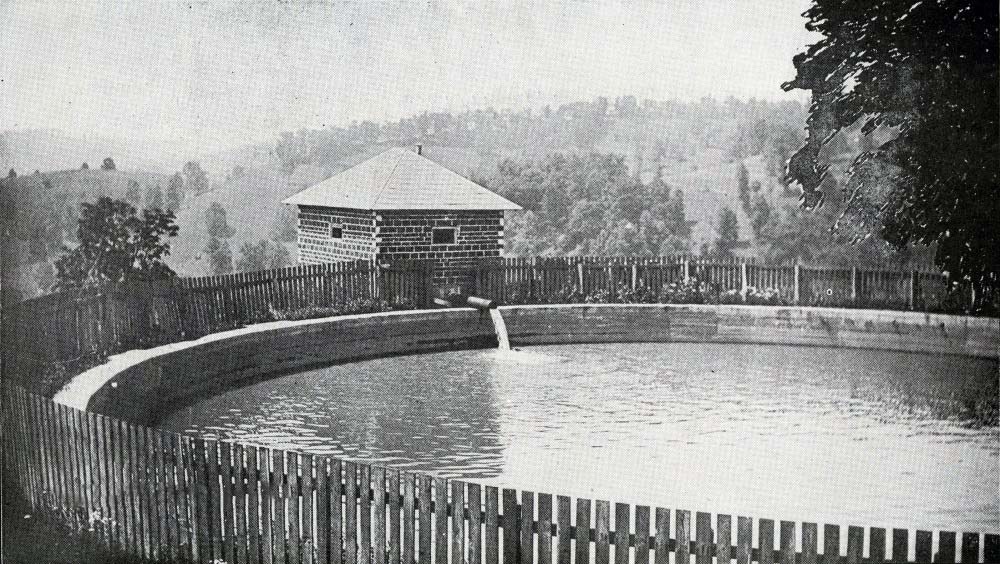
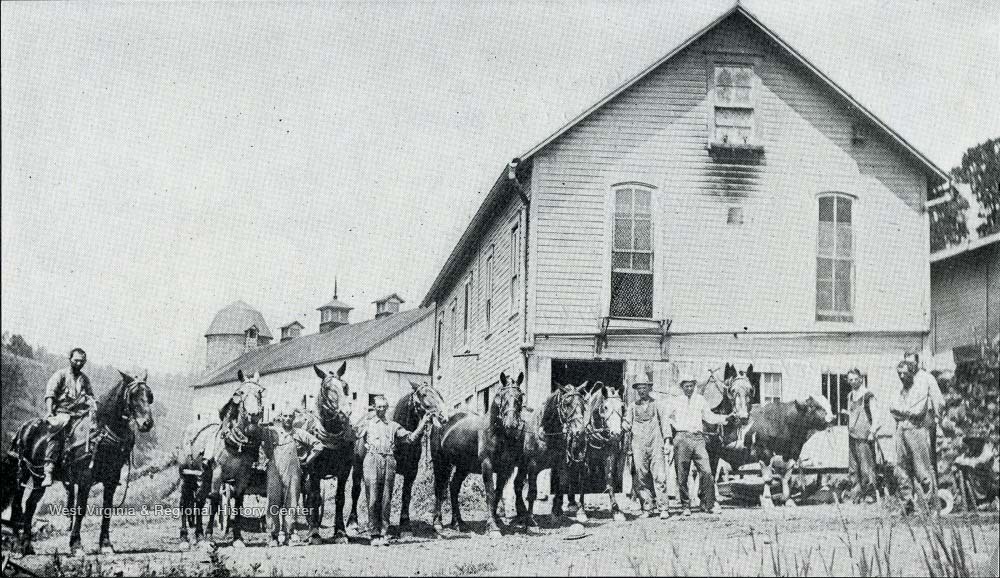
Kirkbride’s design also called for facilities to be as self sufficient as possible, and to be on sprawling grounds. The Trans Allegheny was no exception, and boasted it’s own water plant with pump house and filtration facility, wastewater treatment facility, dairy barn, cannery, extensive gardens, livestock pens including hog fattening building, greenhouse and horse barns, using a total of 666 acres.
Garage and Cannery, circa 1919
Greenhouse, 1919
Water plant, 1920
Pump House, 1922
Filtration Building, 1920
Hog Pens-1920
Horse Barn-1920
Dairy Barn-1930
Summer House-1920
Kitchen-1914
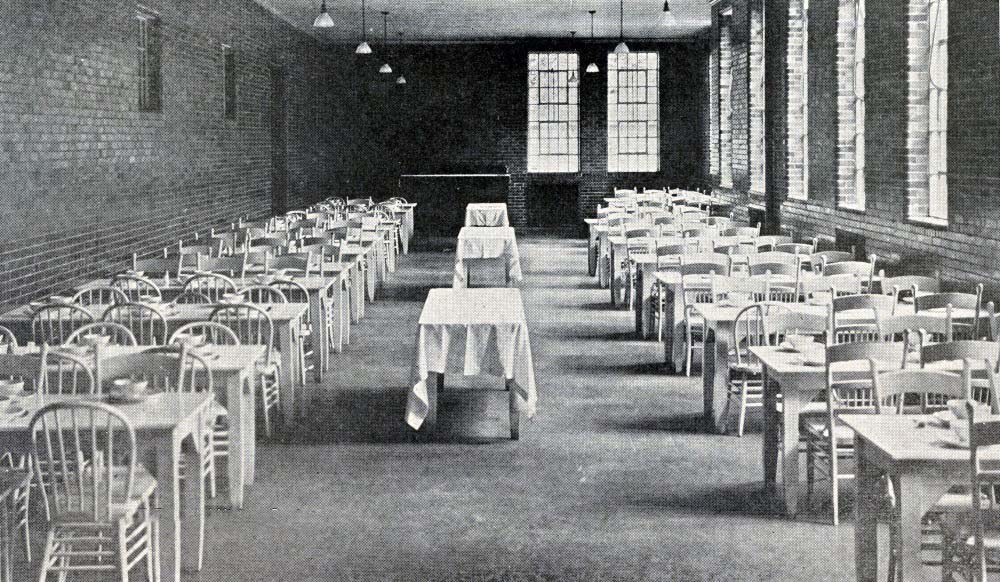
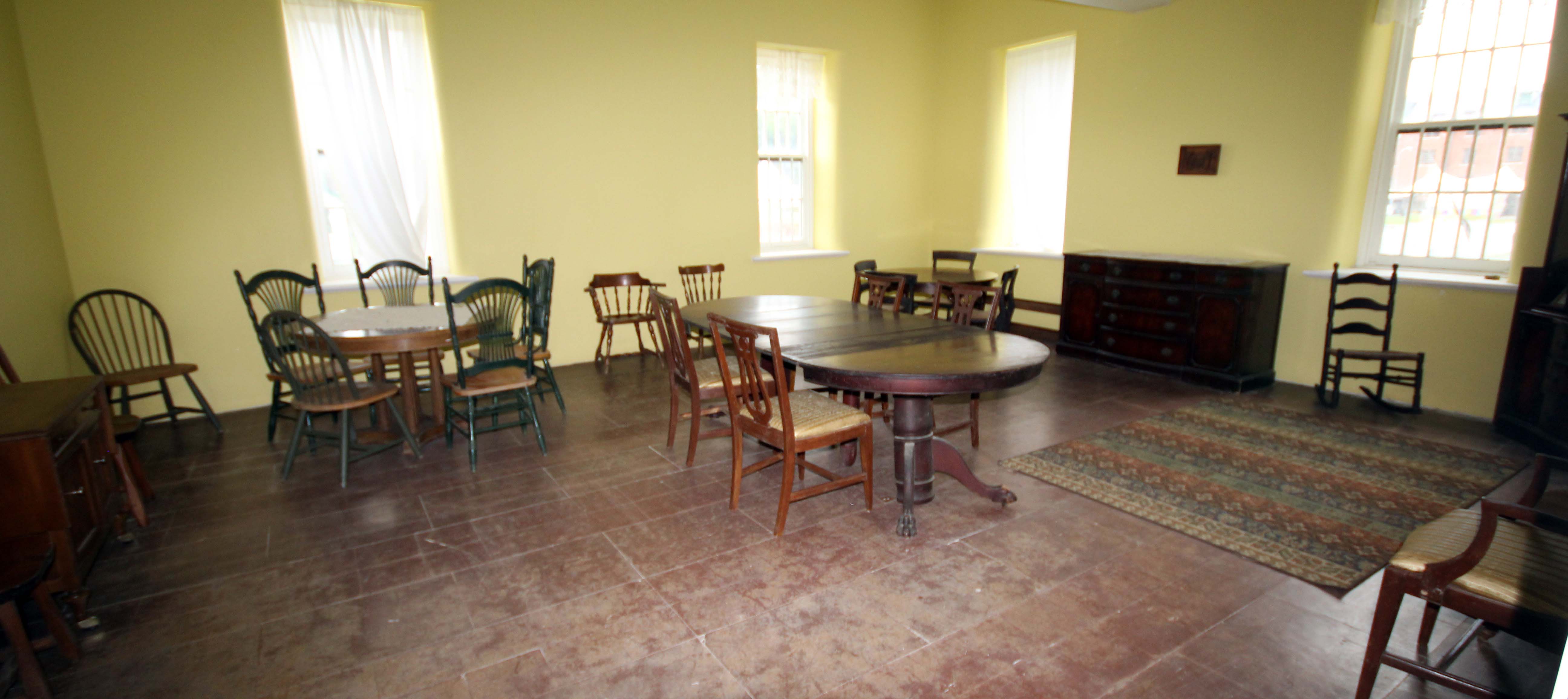
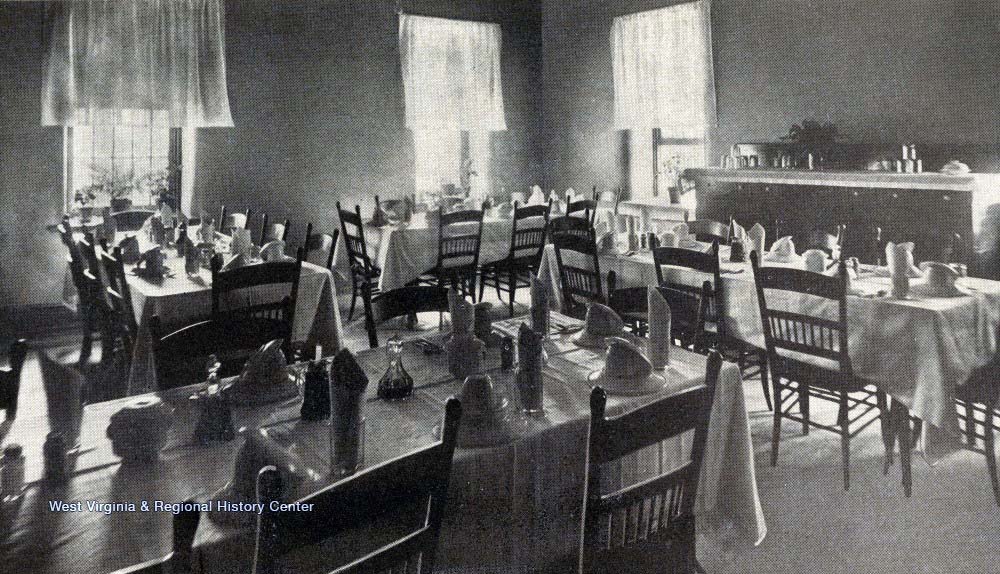
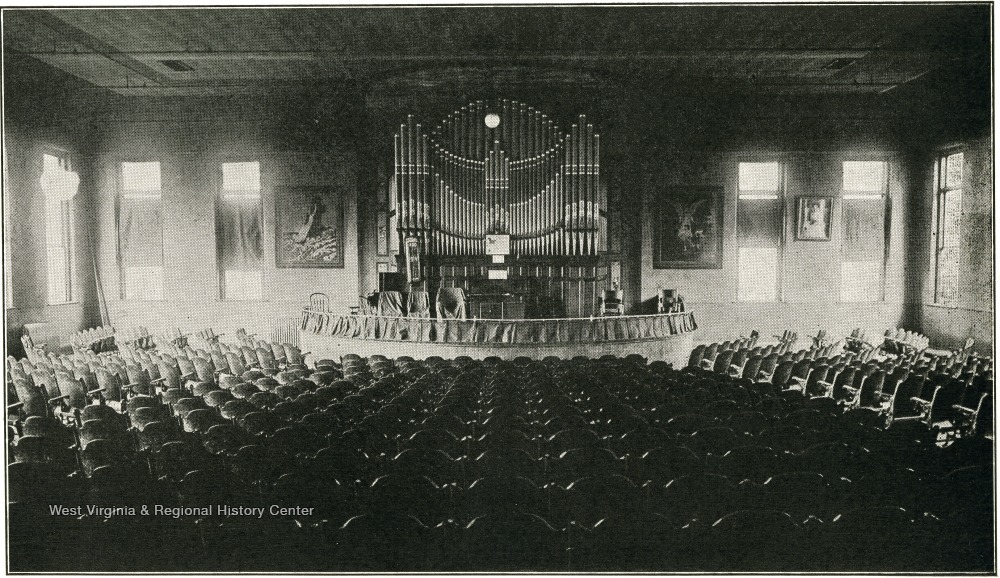
Dining Room-1924
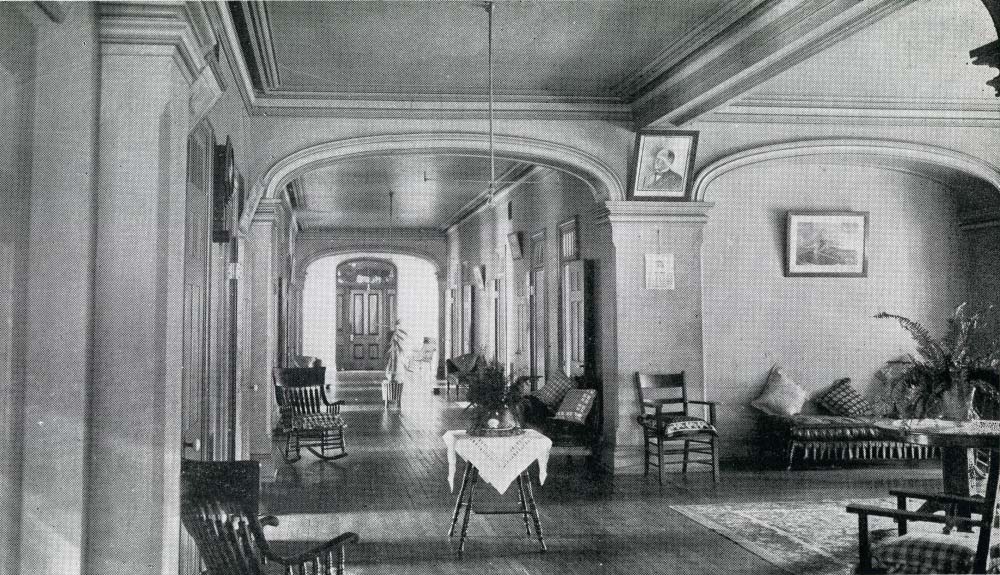
One of the patient wards, with a day-room partially shown on the right, circa 1912
Nursing Staff-1916
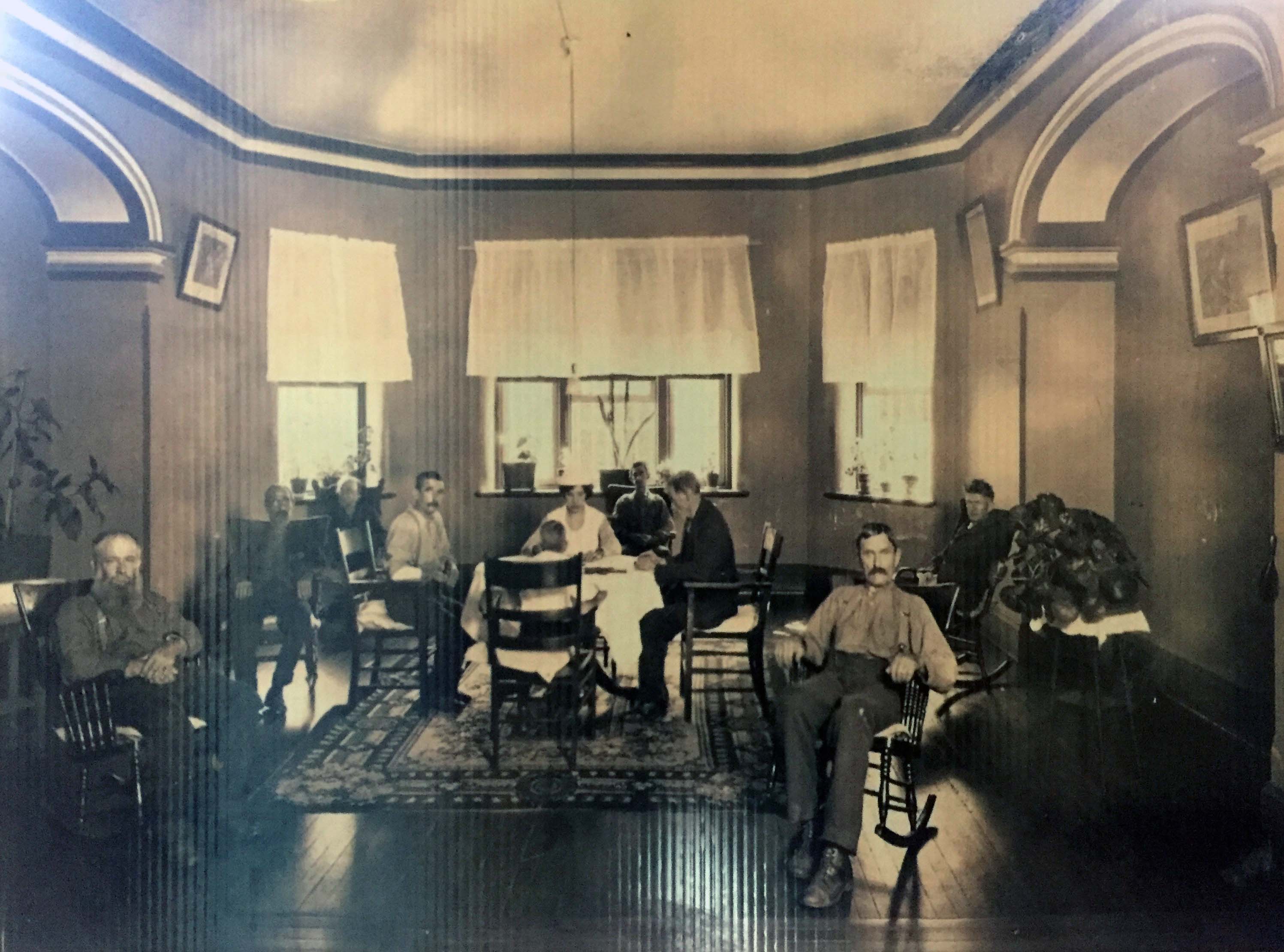
Dayroom-1924
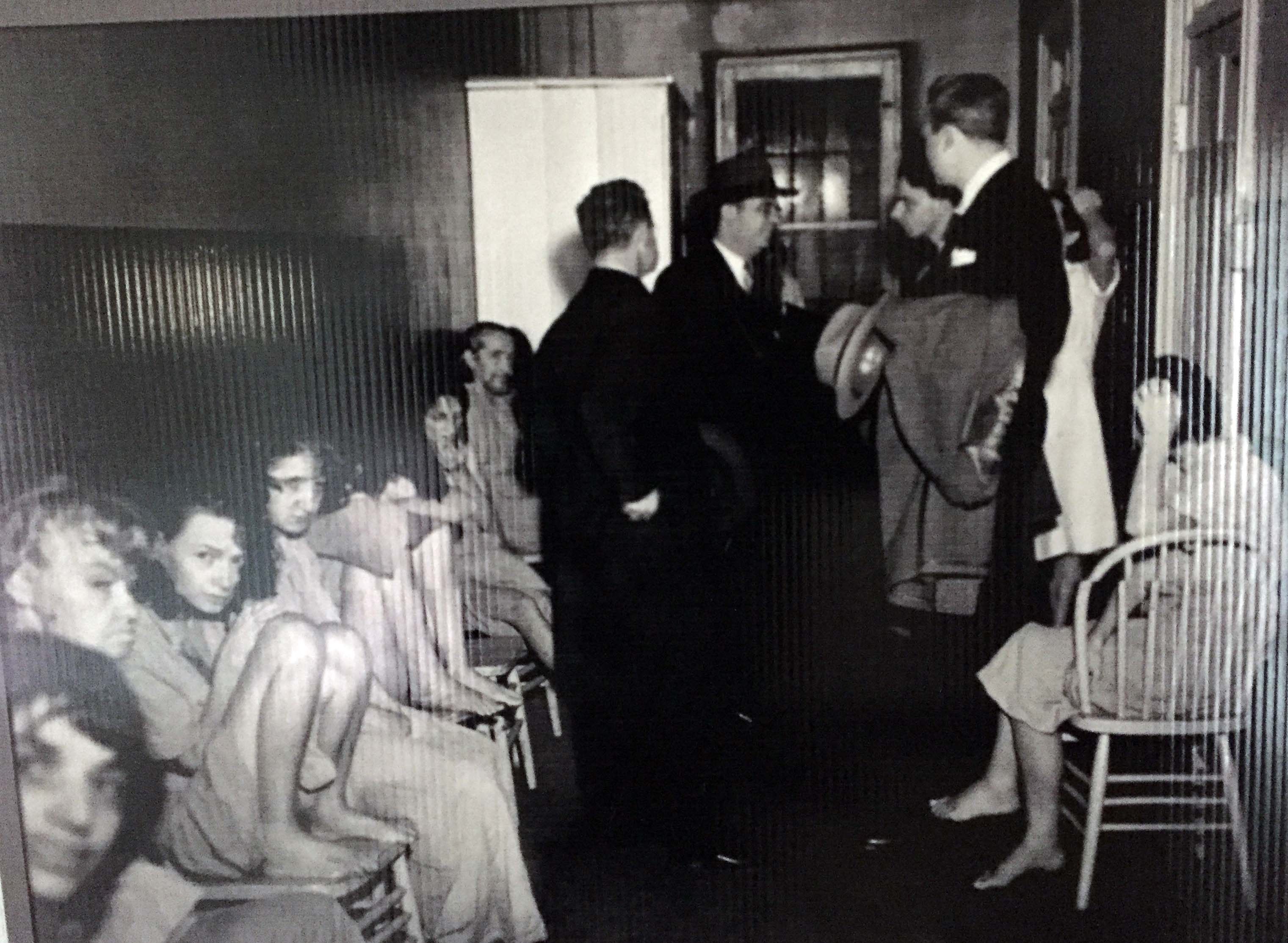
Designed in Gothic Revival and Tudor Revival styles by Baltimore architect Richard Snowden Andrews, Trans Allegheny was constructed from 1858–1881, but starting accepting patients in 1864. The hospital was designed and built to hold 250 patients, one per patient room. Over time it became more and more crowded. At first they added a person to each room. Then another, then another, until every room had four patients in a room designed for one. Then many of the larger rooms originally designed for recreation were repurposed to dormitories. By the middle of the twentieth century, the state of psychiatry was such that people were being institutionalized at an alarming rate.
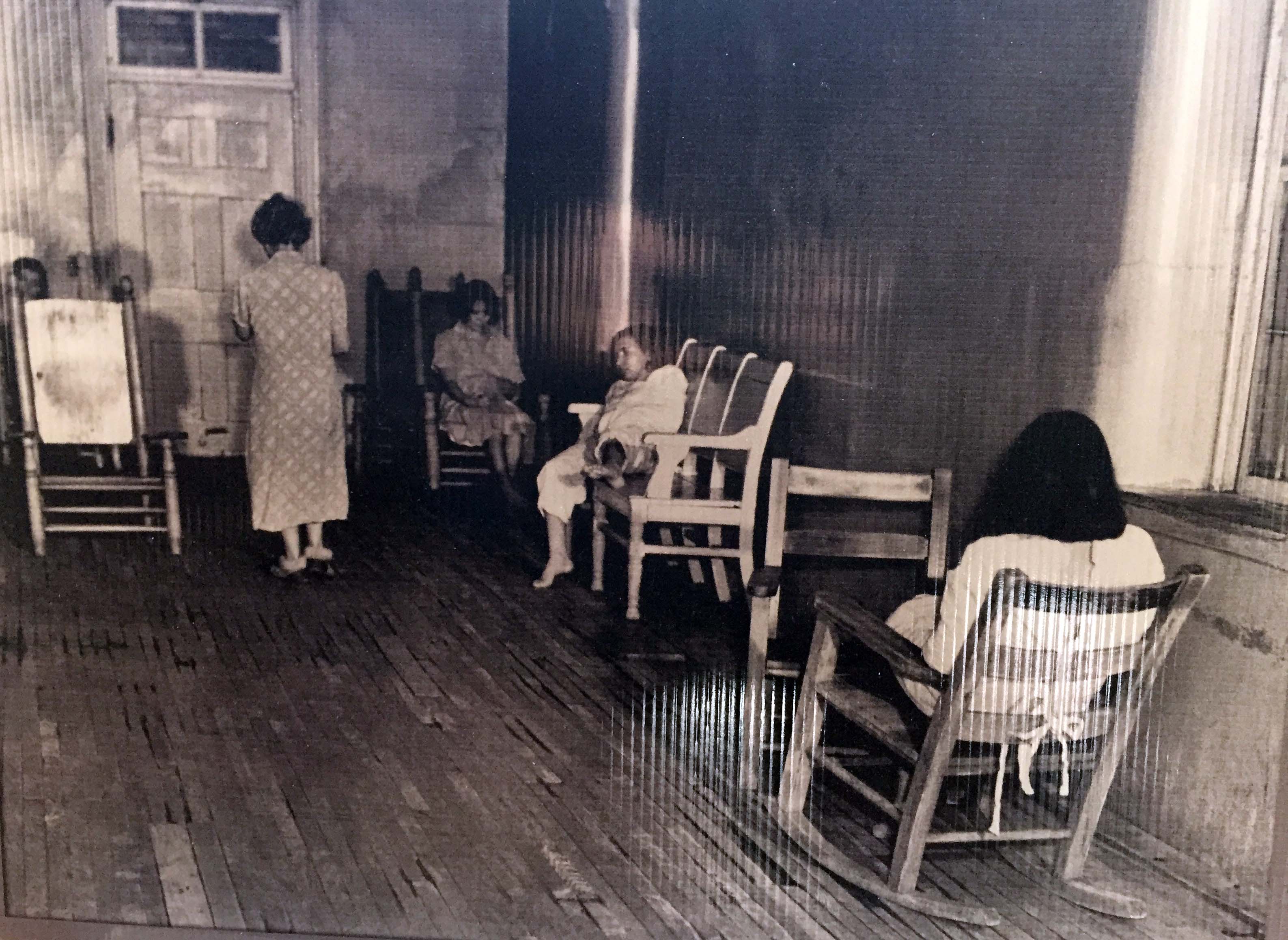
Designed to hold 250 patients in comfortable and peaceful solitude, it had 717 patients by 1880; 1,661 in 1938; over 1,800 in 1949; at its peak, 2,600 in the 1950s, sleeping on mattresses in hallways and quadrupled up in the patient rooms, sleeping in shifts.
I found this picture particularly poignant – Trace
Superintendent’s Office
A 1938 report by a survey committee organized by a group of North American medical organizations, found that the hospital housed “epileptics, alcoholics, drug addicts and non-educable mental defectives” among its population. A series of reports by The Charleston Gazette in 1949 found poor sanitation and insufficient furniture, lighting, and heating in much of the complex.
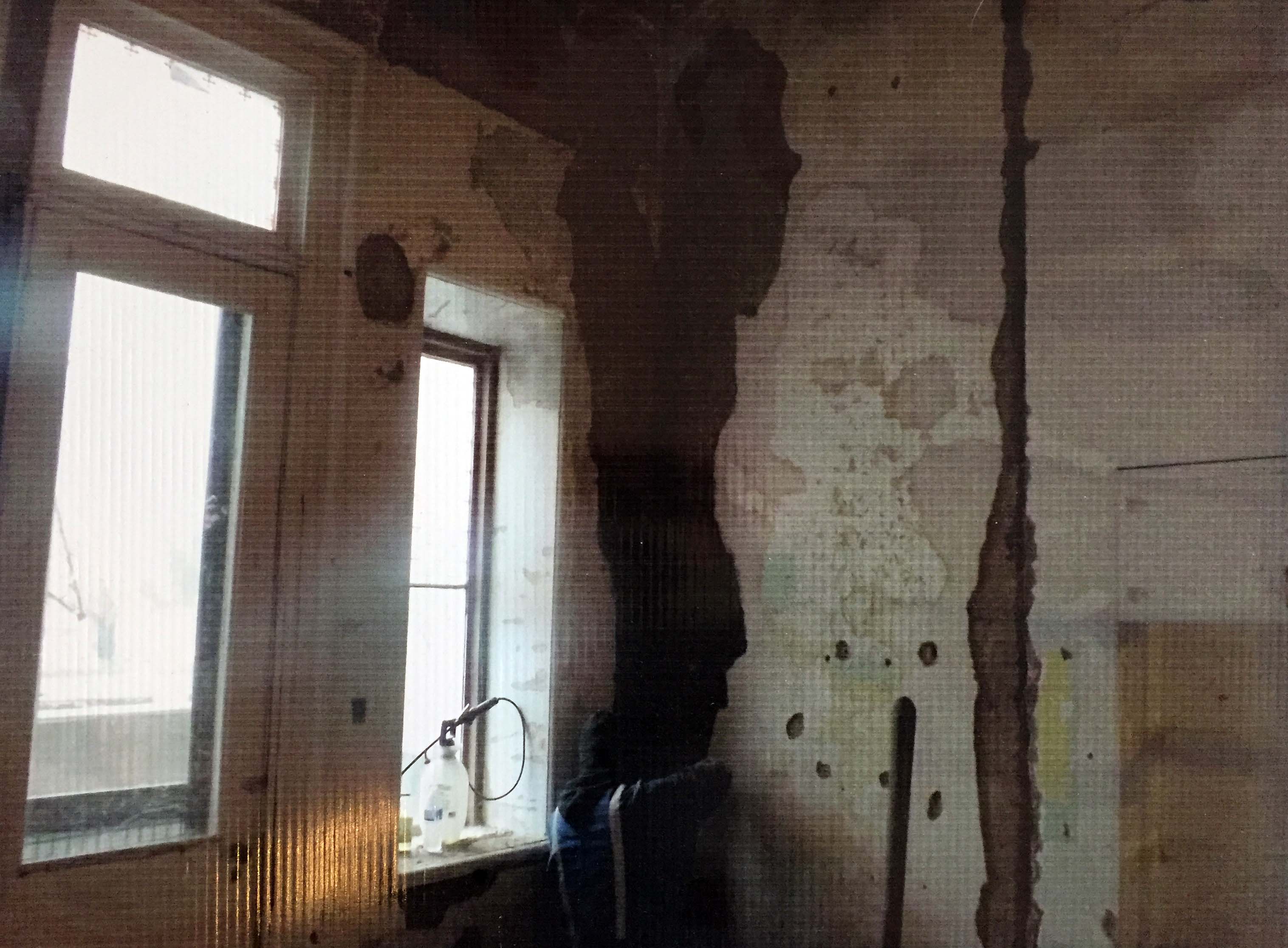
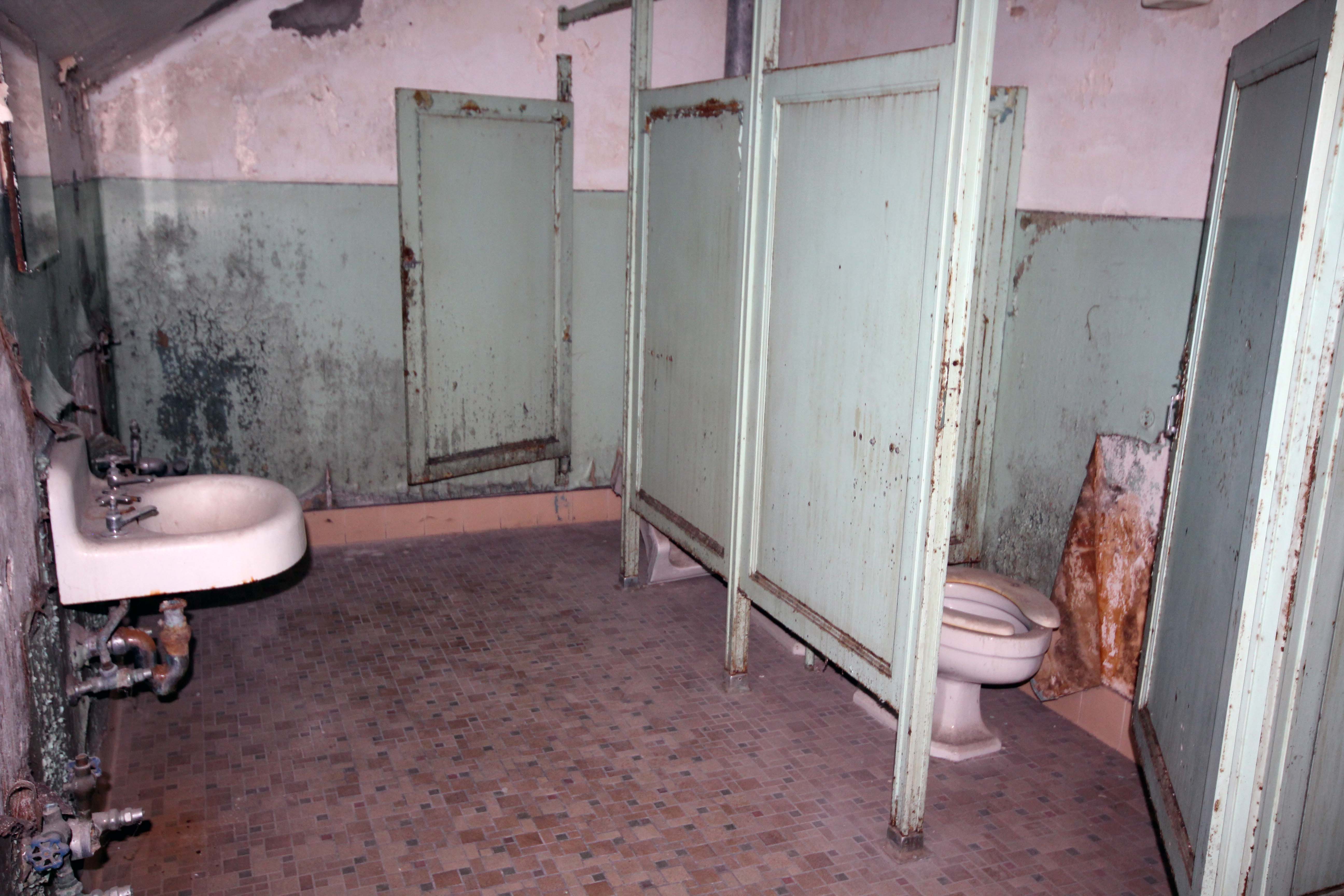
Trans Allegheny was forcibly closed in 1994 due to changes in patient treatment. The state notified them that they would be closing the facility in 1980 and they began to close down wards over time. Once an area was closed it was essentially locked up and abandoned and left to rot. Finally in 1994 the last patient was removed and the building was padlocked and left to the elements. The hospital was bought at auction for $1.5m by WV businessman Joe Jordan in 2007, and he has spent over a million dollars restoring portions of the building to how it would have looked in the early 1900’s. Below are some photos of the building as it was when it was first seen by Joe Jordan in 2007. I find this a little odd. If I had that kind of money lying around I wouldn’t use it to buy a former insane asylum, but that’s just me – Trace
The hospital’s main building is one of the largest hand-cut stone masonry buildings in the United States, and the second largest hand-cut sandstone building in the world, with the only bigger one being the Moscow Kremlin. It took 23 years to build, and when completed it was 1295 wide, just 25′ shy of a quarter mile. It has 3.5 miles of hallways, and 9 acres of walkable floor space. There are 901 rooms, 250 are for patients, and 980 windows. As someone who loves architecture I was very tempted to go see it, but I also believe that buildings soak up (for lack of a better word) the emotions that are expended in them. This building must be full of agony and pain. – Trace
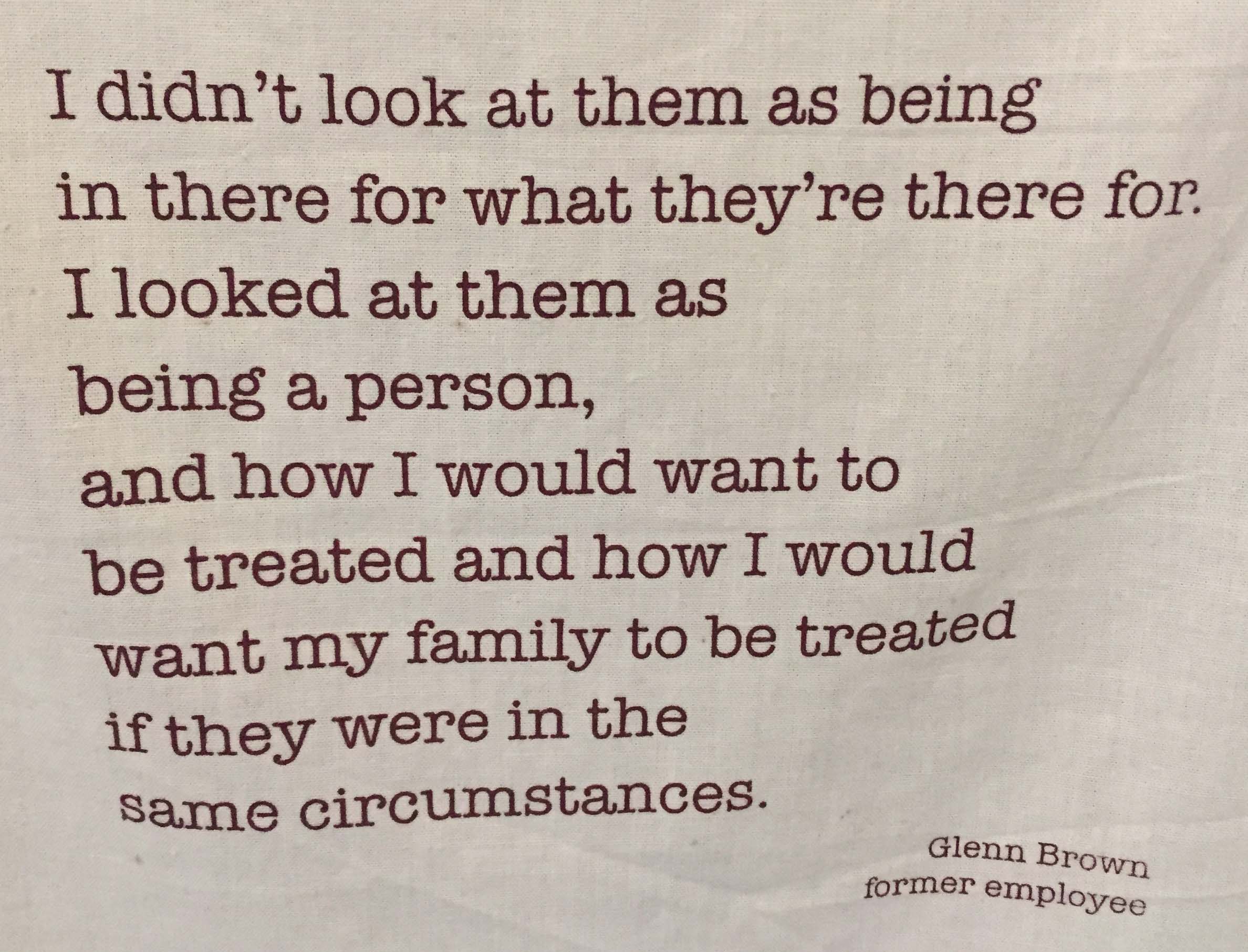
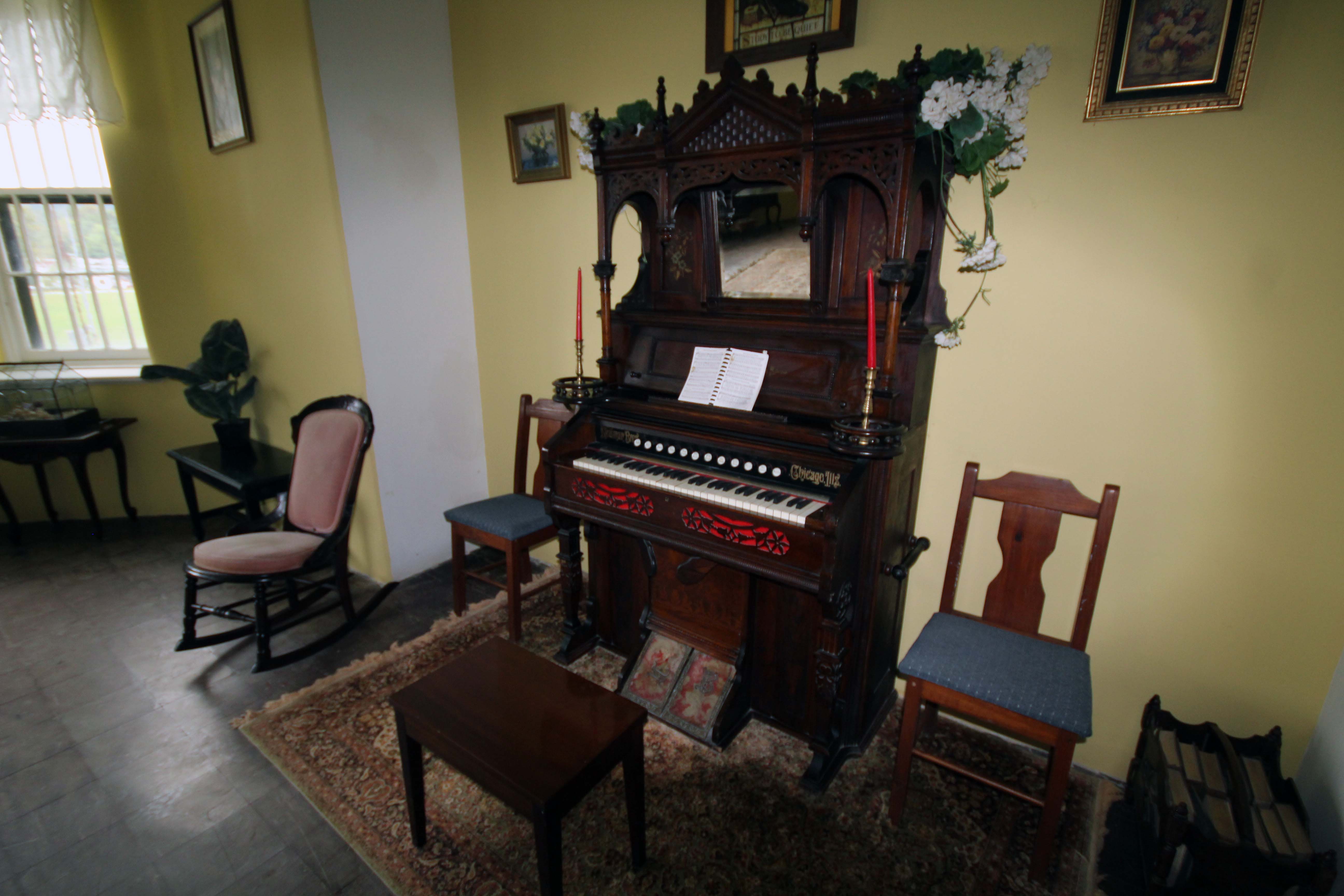
The main building of the asylum, the “Kirkbride”, holds several rooms that serve as the museum. There are paintings, poems, and drawings made by patients in the art therapy programs, a room dedicated to the different medical treatments and restraints used in the past, and artifacts such as a a straitjacket and hydrotherapy tub. The tour guides dress in clothes that resemble 19th century nurse outfits; blue dress, white apron, white cap, and white shoes. The shorter historical tour allows visitors to see the first floor of the Kirkbride, while the longer historical tour allows visitors to see all four floors, apartments of the staff, the morgue, and the operating room. Aside from the historical tours, there are also two paranormal tours. Both start as the sun sets, the shorter tour lasting around two to three hours, the longer tour being overnight with the option of having a private tour.
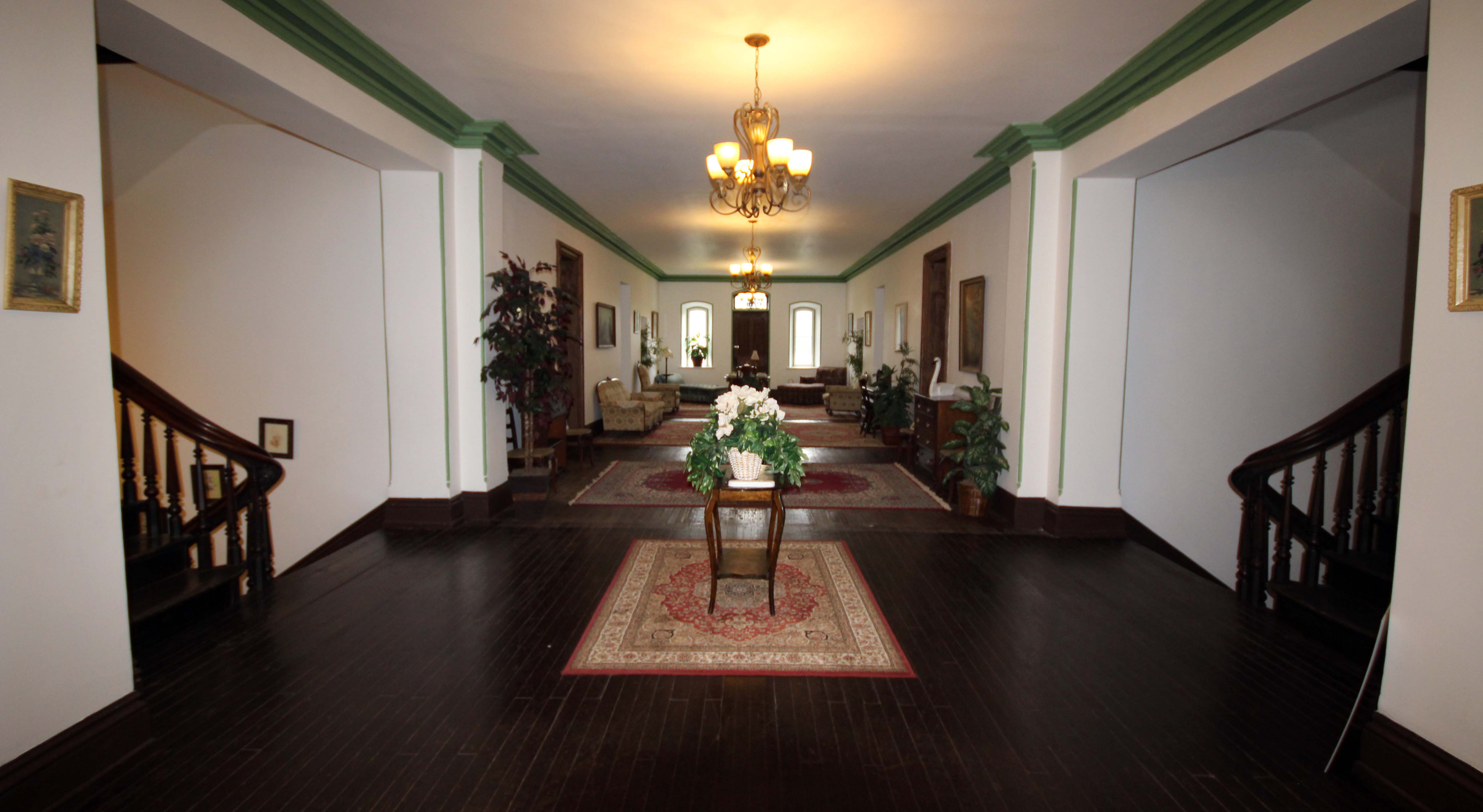
The ground floor of the main Kirkbride building is taken up with offices for the company that operates the tours, and a gift shop, and around 20 very well done museum rooms, some of which feature patient artwork.
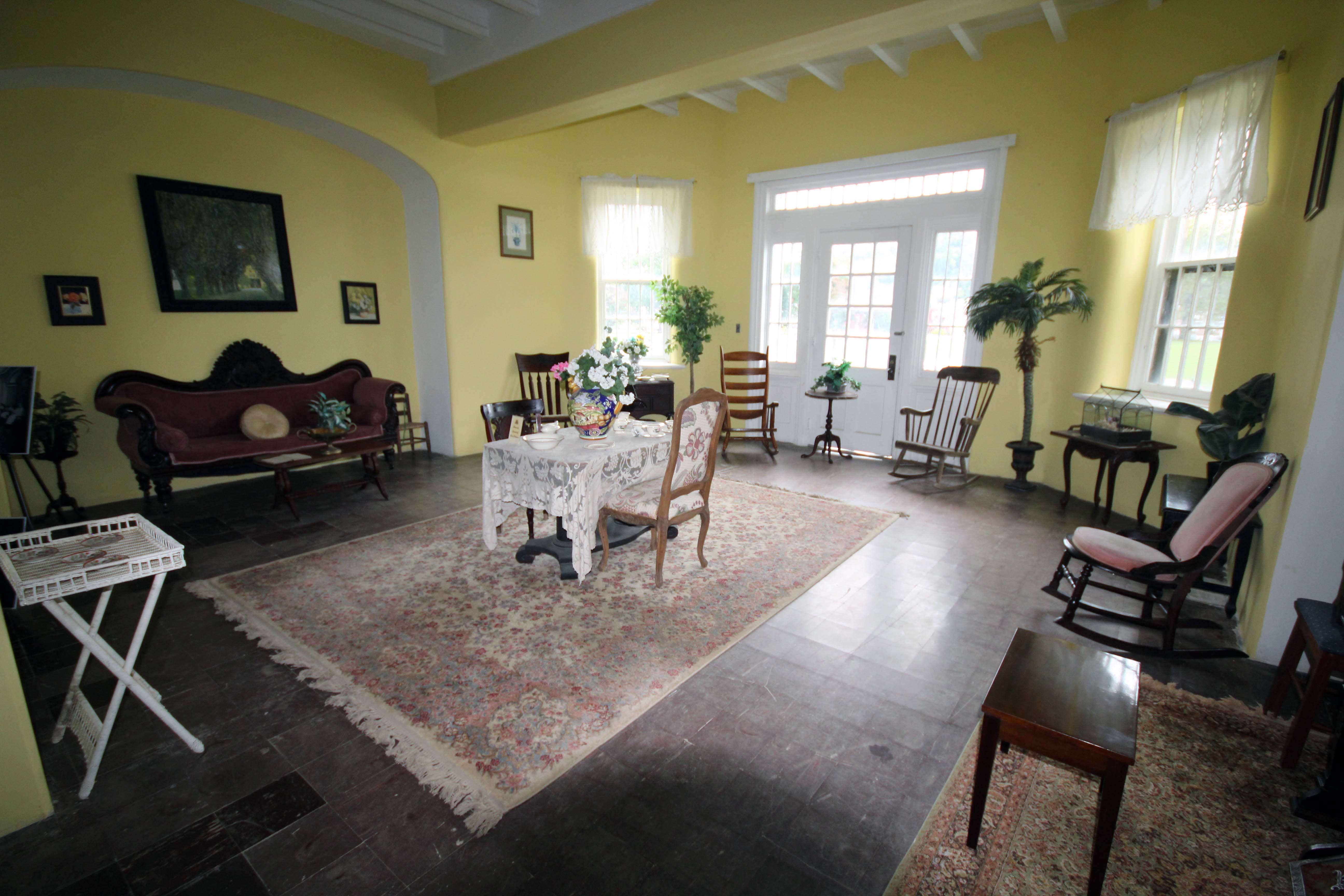
The tour starts right off in one of the first wards, which has been restored to what it would have been like in 1900 or so.
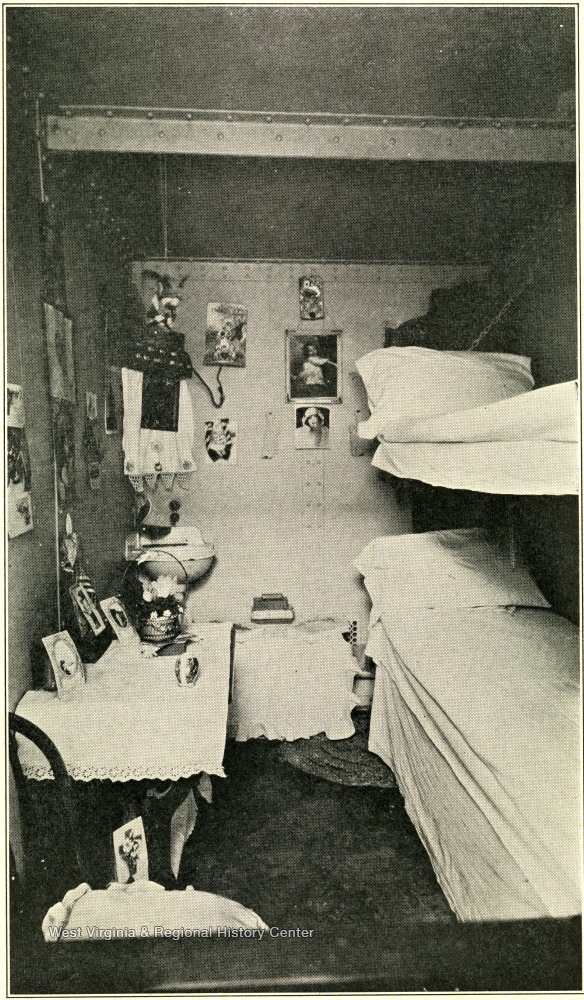
A typical example of what a patient room would have been like. Every room had a window, and was large enough for one person to sleep in comfortably.
In the center of each ward was a day room, sort of a communal living room space.
This room was made up to show how larger rooms built for other purposes were eventually turned into patient rooms. Beds were added until they couldn’t fit any more in.
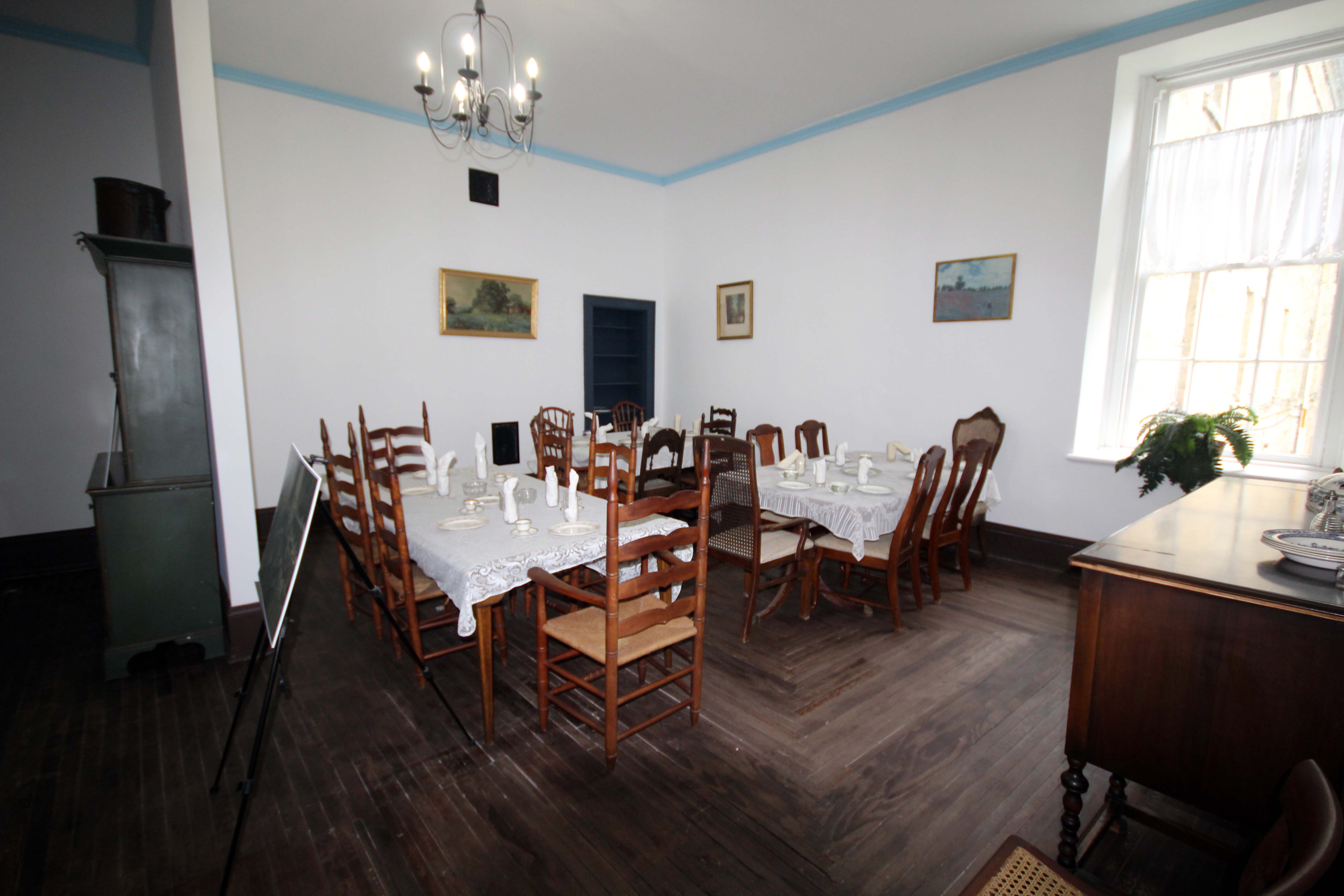
One of the dining rooms
One of the larger rooms that was converted to a dormitory.
Beautiful walnut staircase s throughout the building. This is the stairs to the second floor of the Kirkbride building.
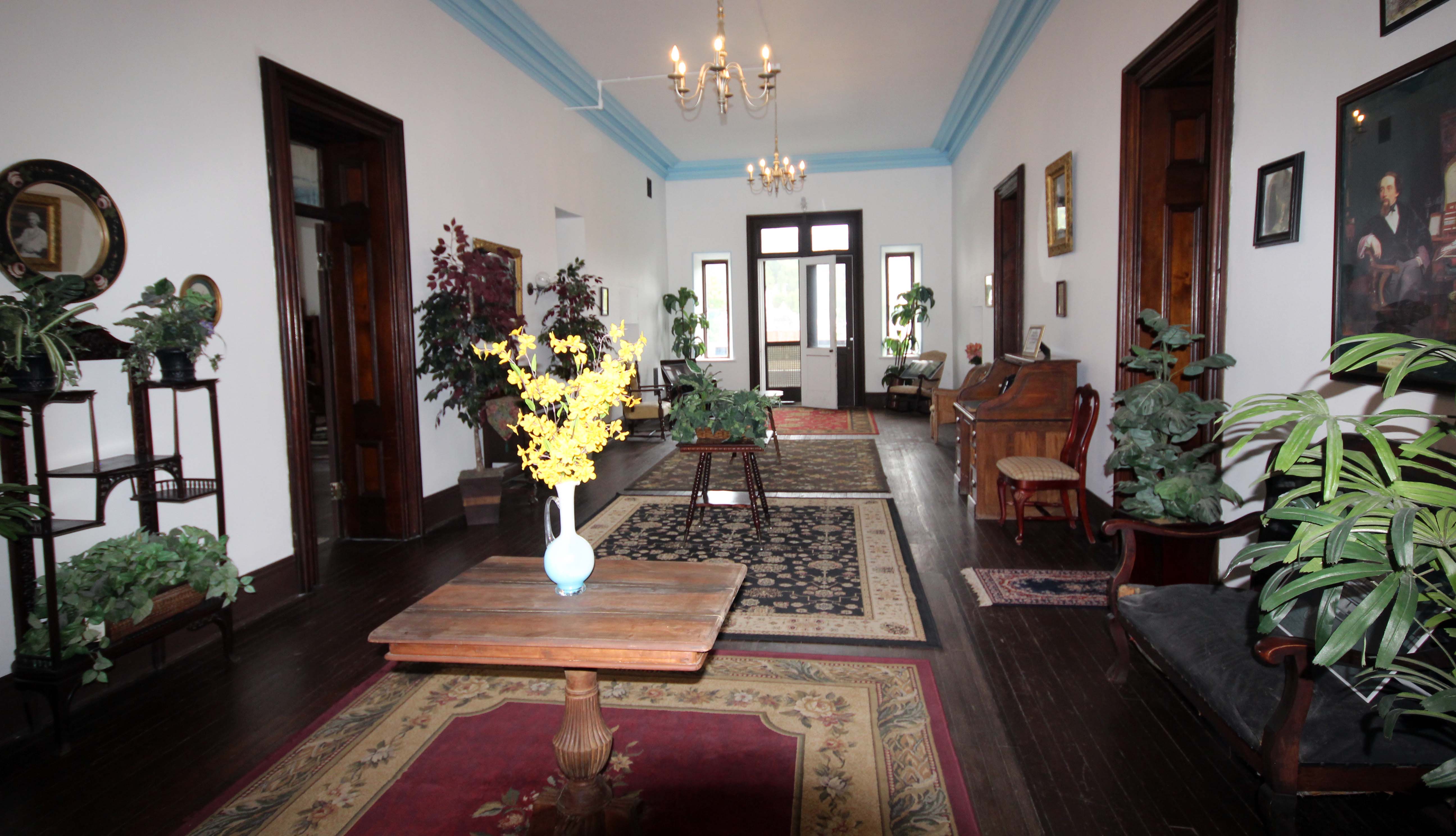
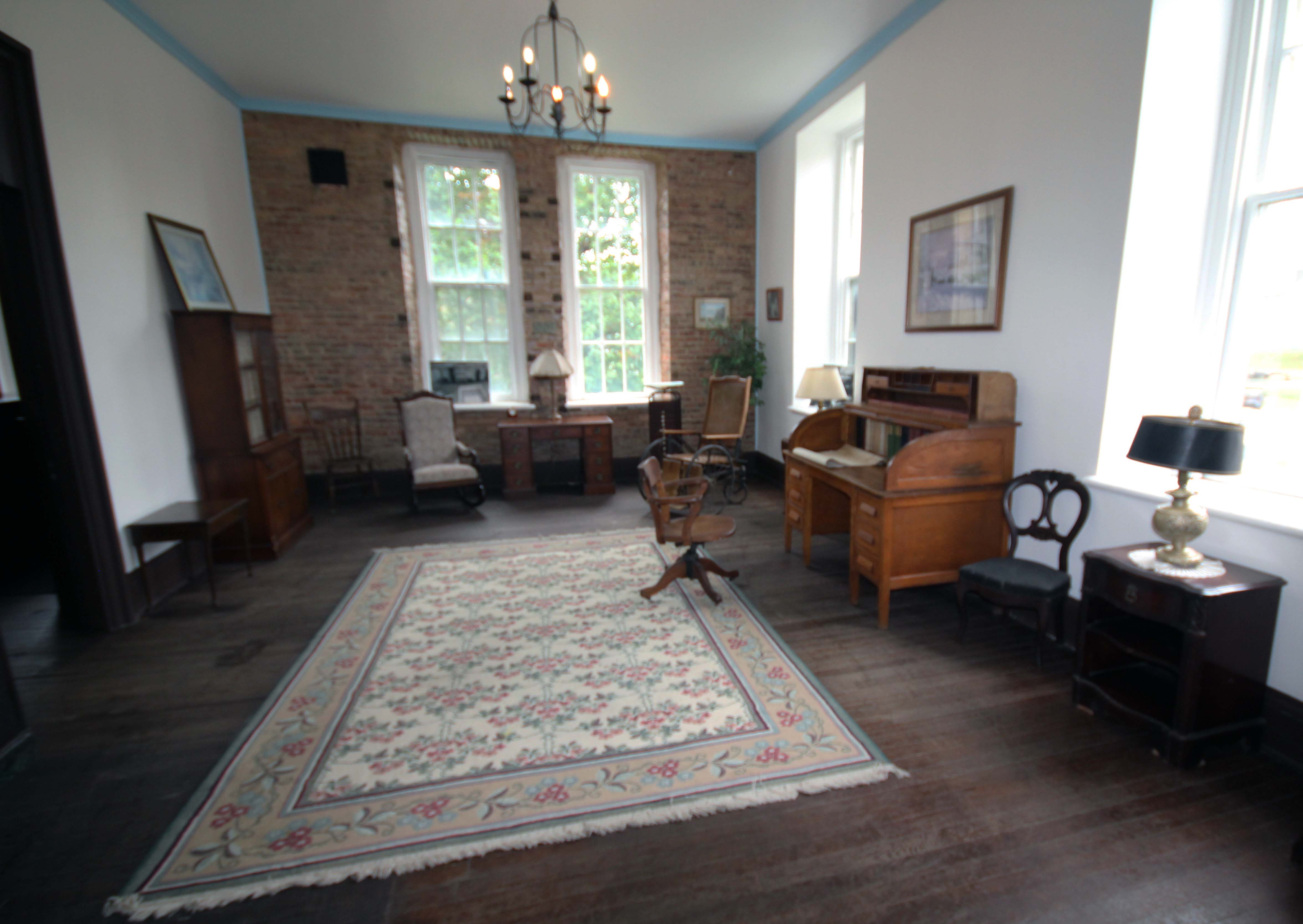
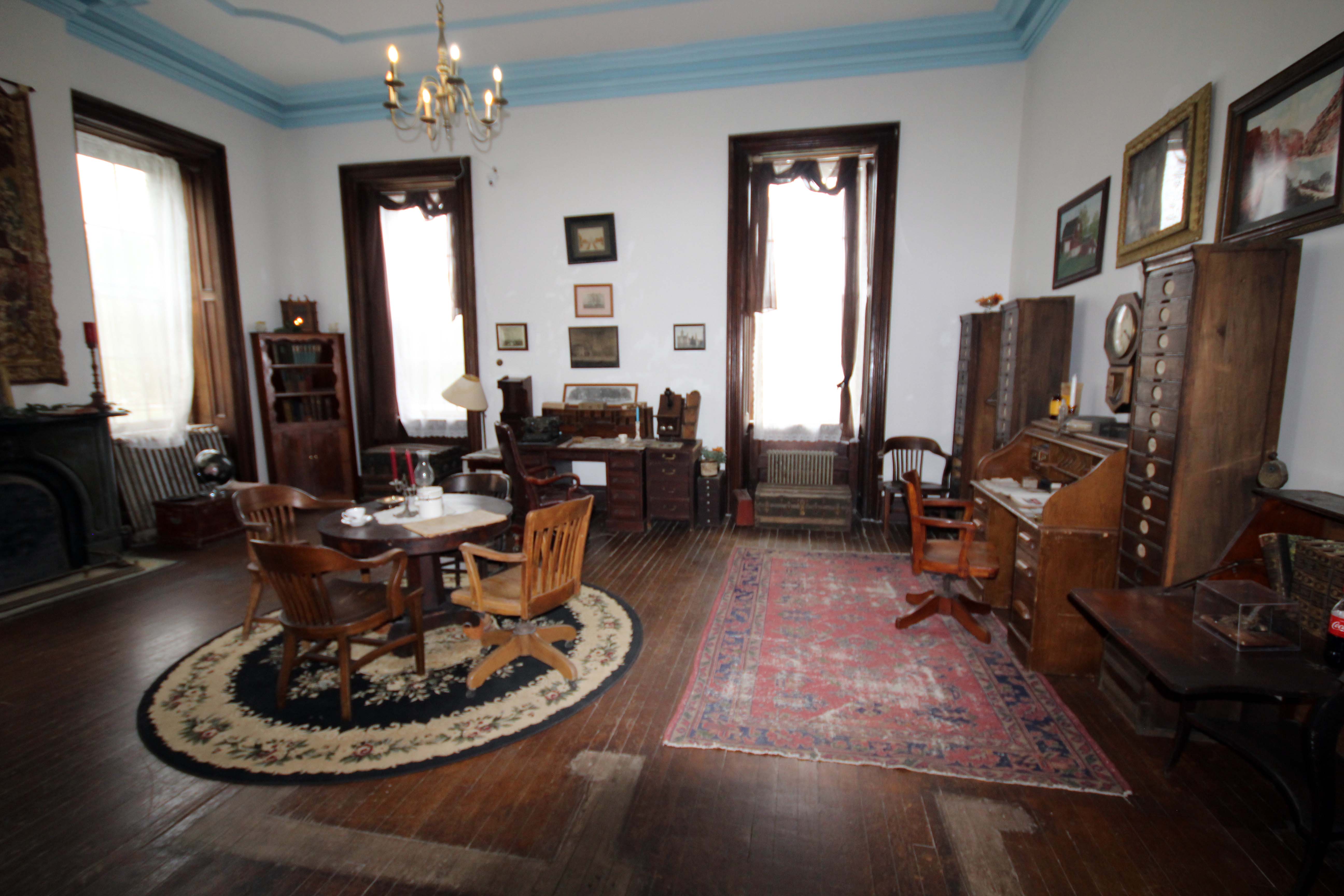
The upper floors of the main building were used for offices for the Superintendent, the chief physician, psychiatrist, the residence of the Superintendent and the lead nurses quarters. The following pictures are of the offices and the residence of the Superintendent. Pretty stark contrast to the living situation of the patients. – Trace
The following pictures are of the top floor, where the head nurses quarters were.
There was also an amazing ballroom that was used as a shuffleboard court, a theater, and a basketball court.
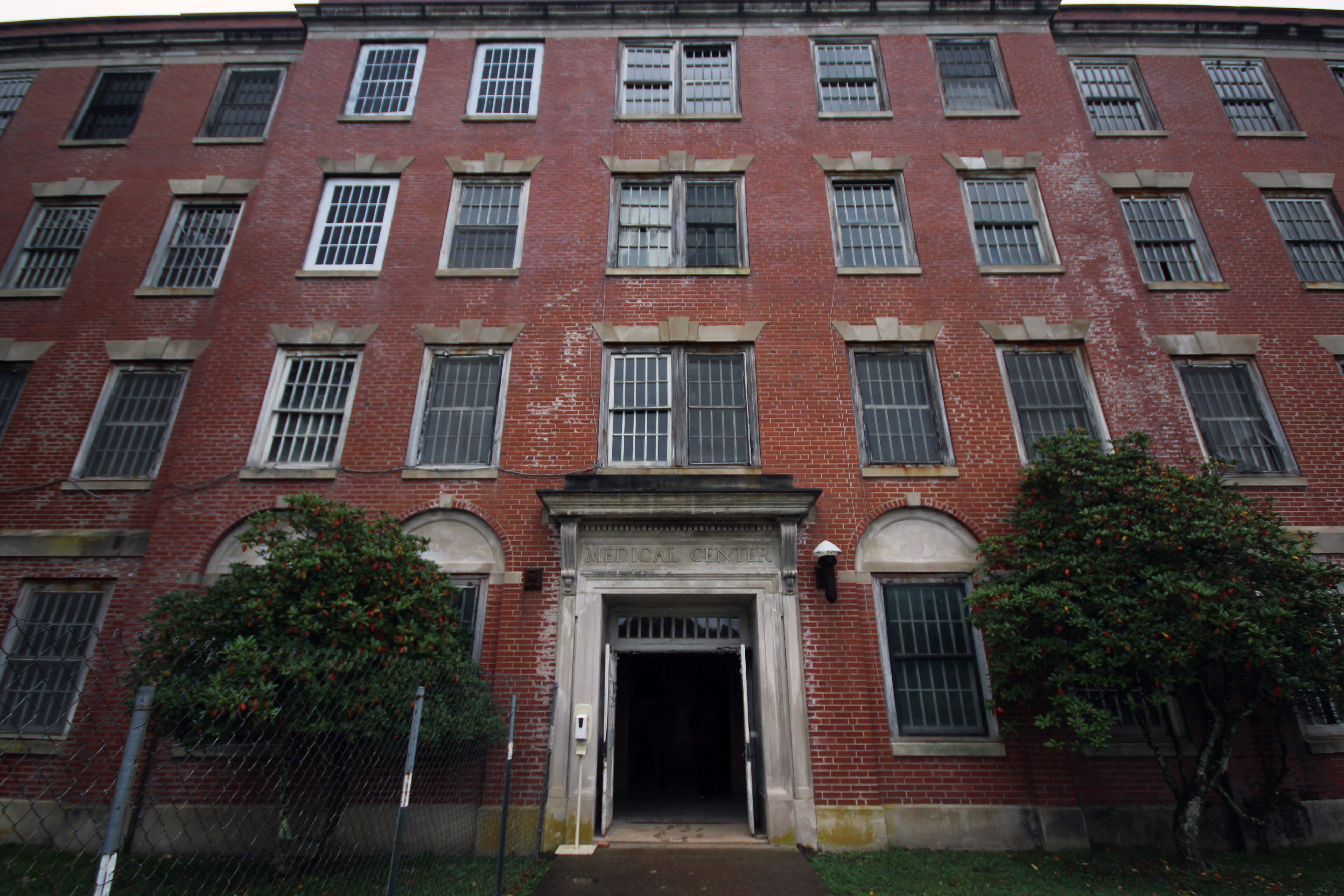
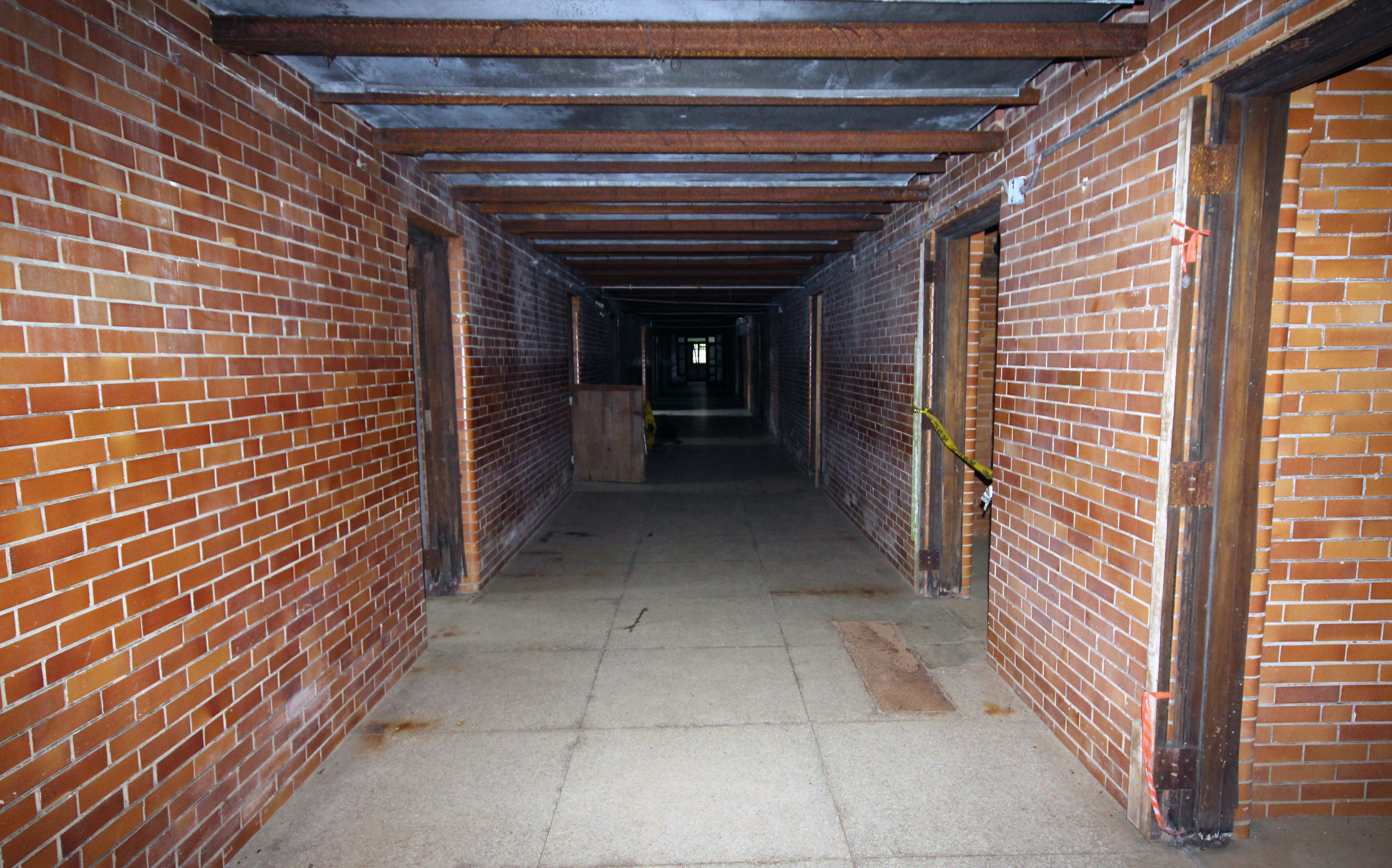
Moving out of the main building we went to the old medical building, which has been so badly damaged that only a few rooms on the ground floor are available to see.
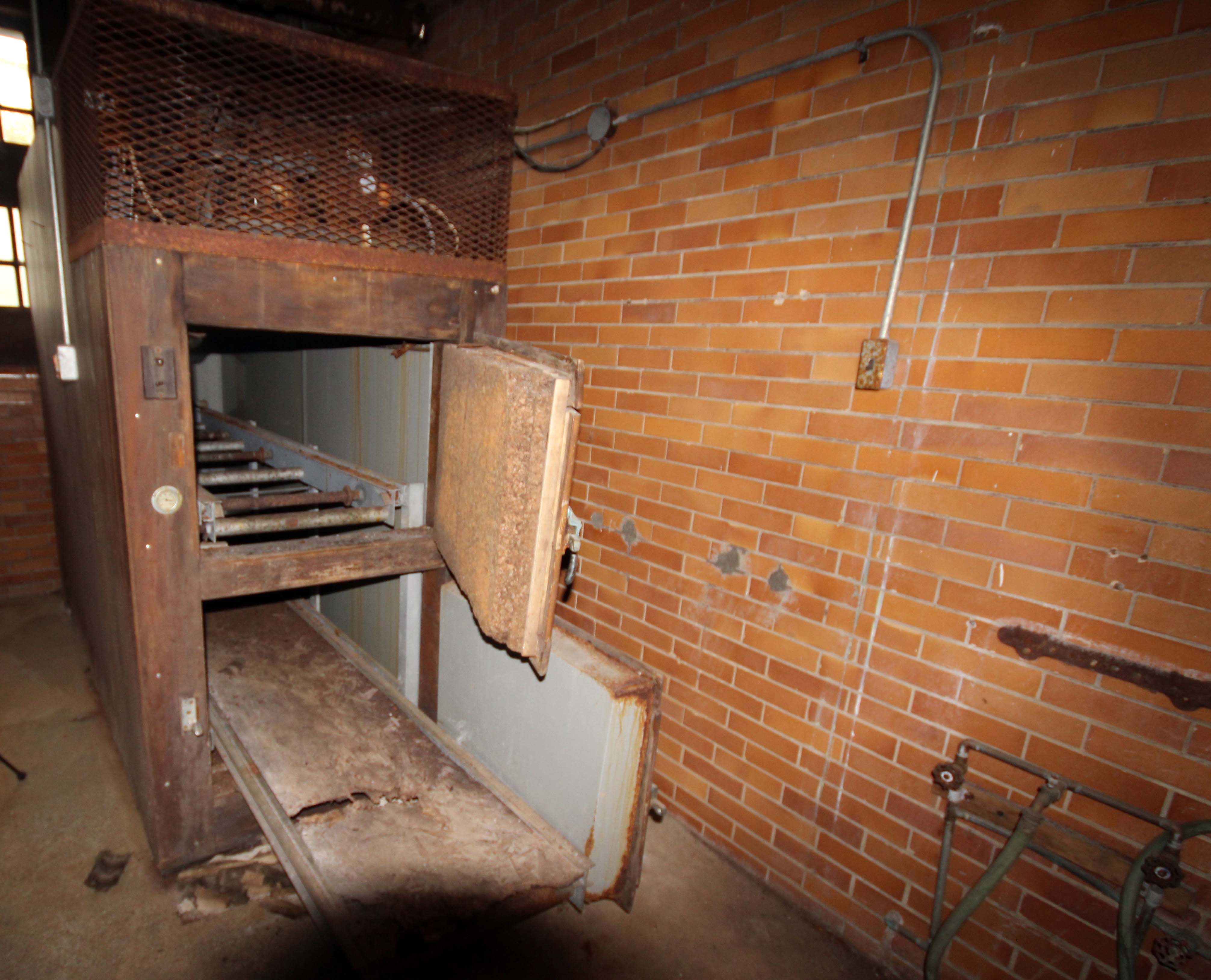
The medical building includes the morgue and “cooling room” where bodies were kept before burial.
For some reason, haircuts were done at the medical center. Well that must have been terrifying. You wouldn’t know if you were getting a “treatment” of some kind or a haircut. – Trace
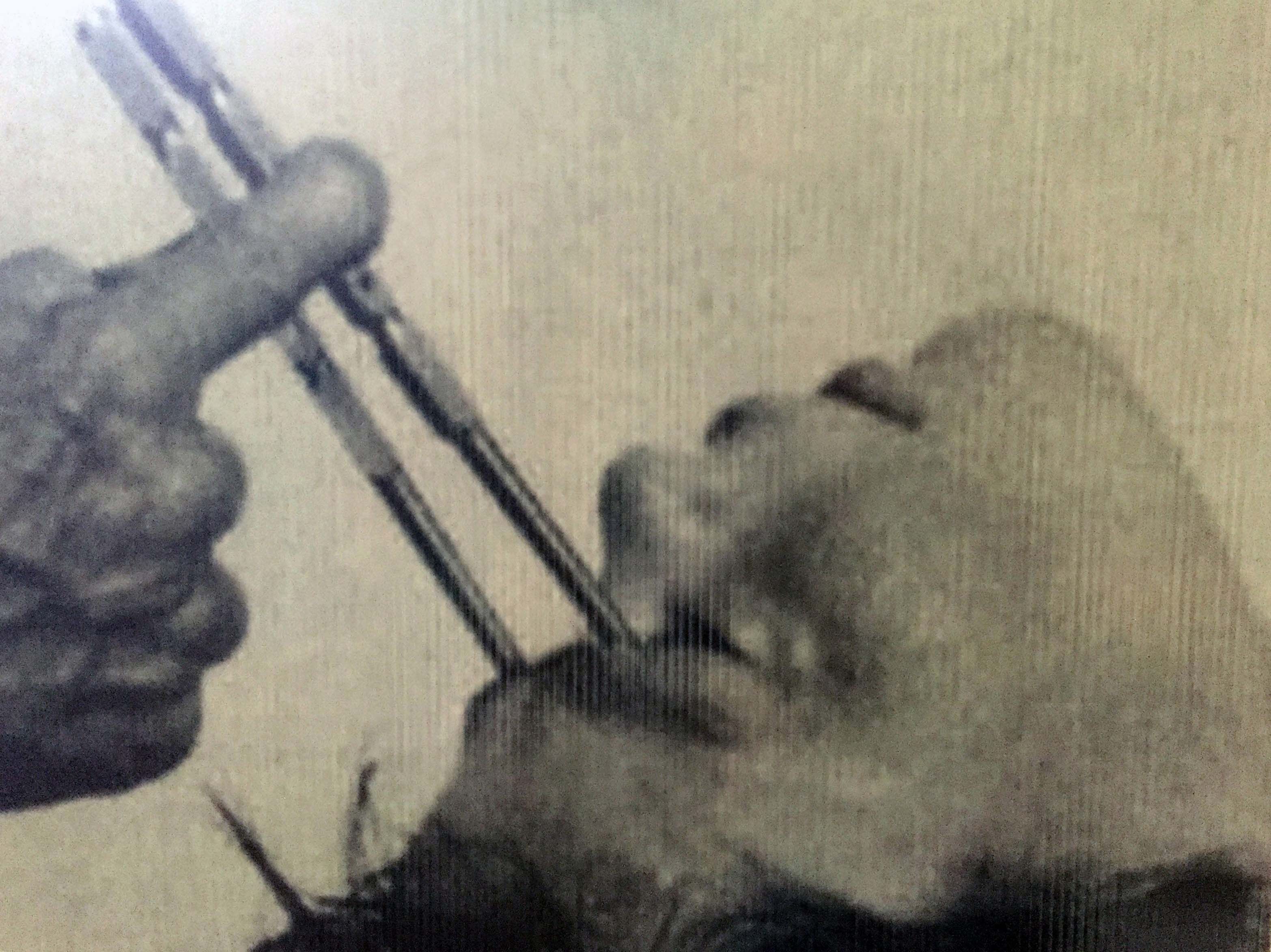
There is no shortage of history about how badly this particular area of medicine was handled throughout history. This location is particularly bad, however, as Weston State Hospital found itself to be the home for the West Virginia Lobotomy Project in the early 1950s. This was an effort by the state of West Virginia and Walter Freeman to use lobotomy to reduce the number of patients in asylums because there was severe overcrowding. Freeman’s story is an amazing one all by itself, and worthy of some reading. But the beginning of the end of his career came when he performed a lobotomy on Rosemary Kennedy, at the request of her father Joseph, after which she regressed to the mental state of a two year old. She was immediately placed in an institution where she was not visited by her mother for twenty years, and never saw her father again. Her existence was hidden from the public until after JFK was elected, and then she was described as “retarded”. The failed lobotomy was not public knowledge until 1987.
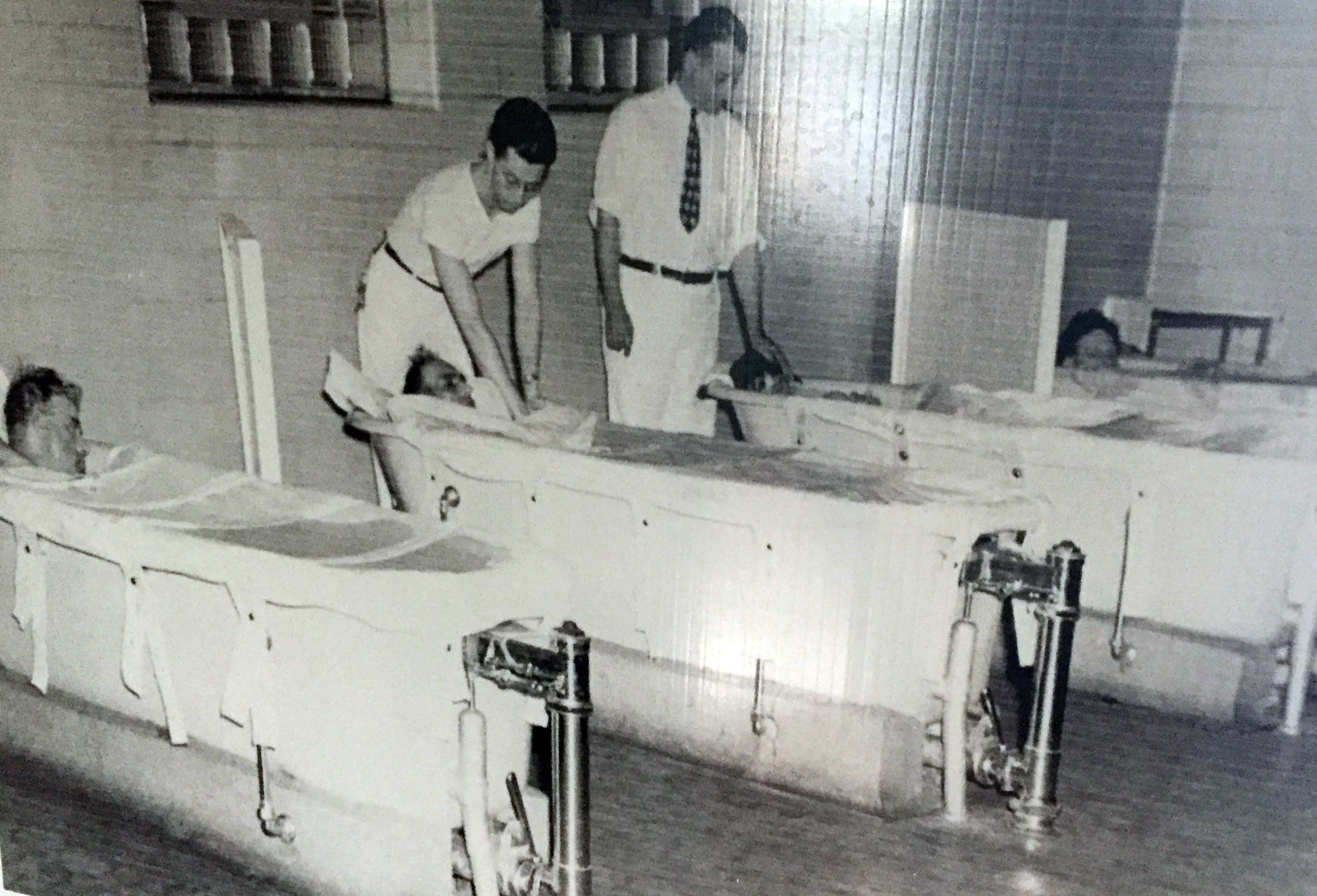
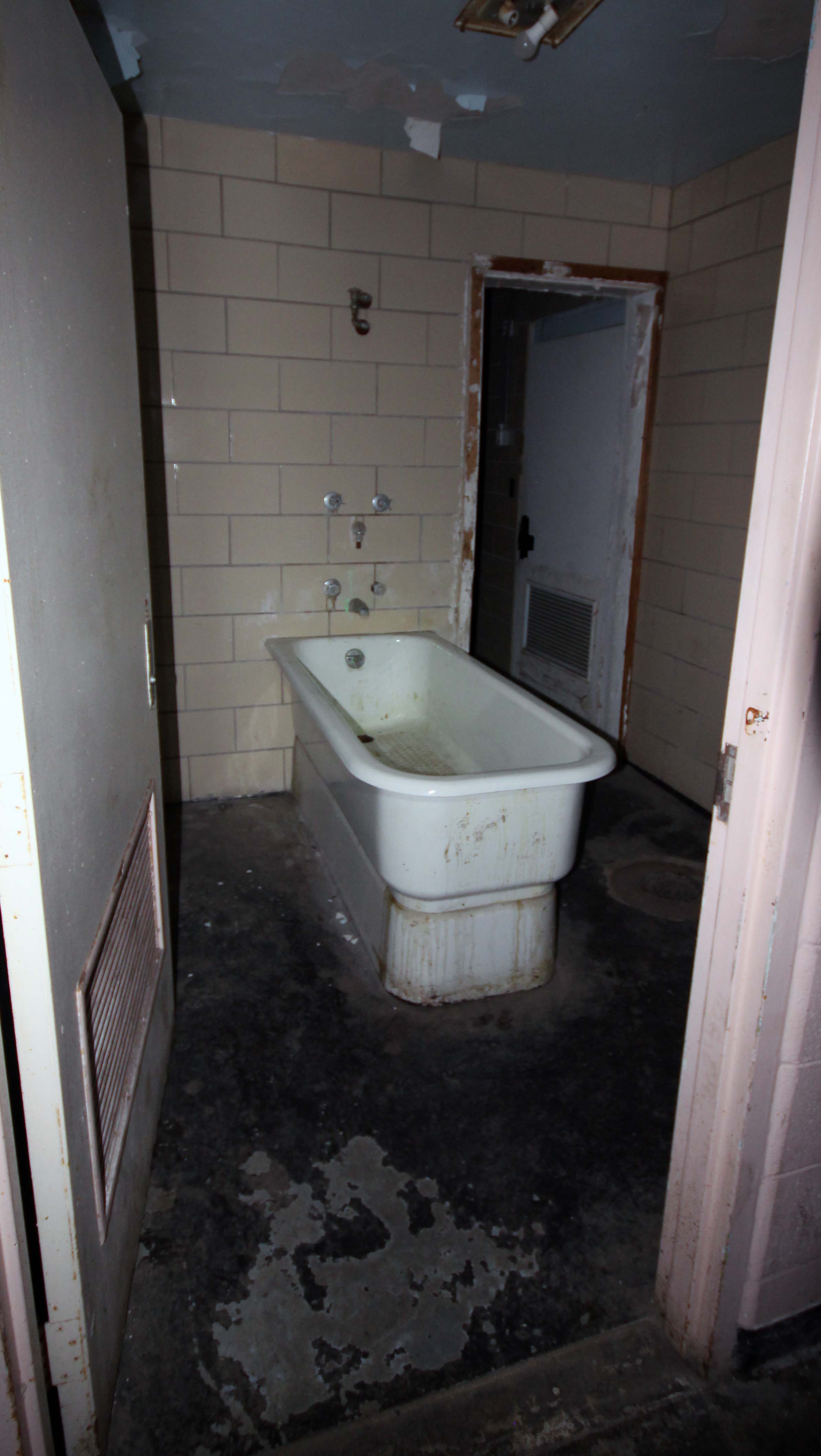
“Hydrotherapy” was also used extensively, where patients would be submerged in high walled bathtubs full of 55° water. Hundreds and hundreds of people died as a result of this “treatment”.
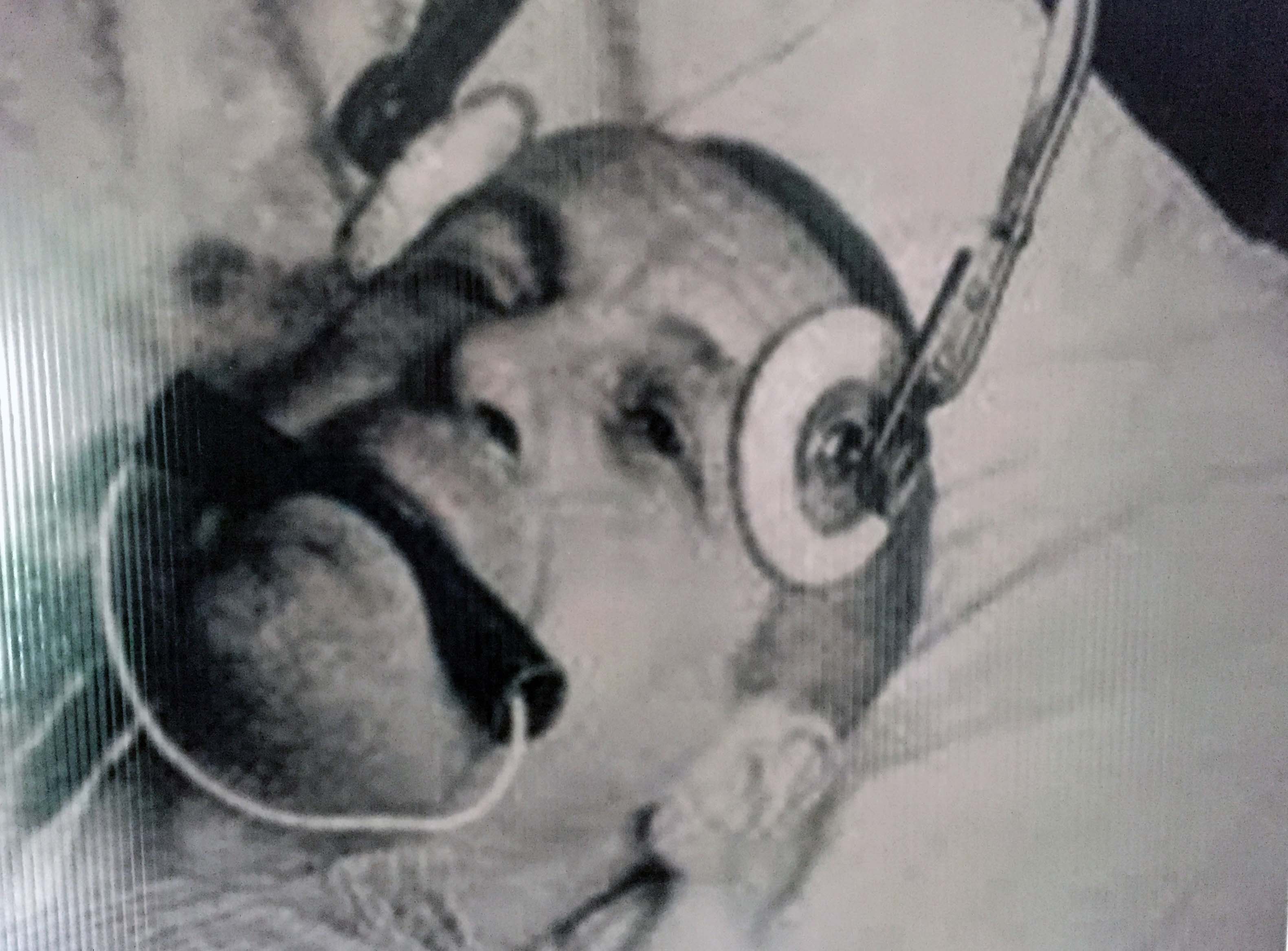
And of course there’s electroshock therapy.
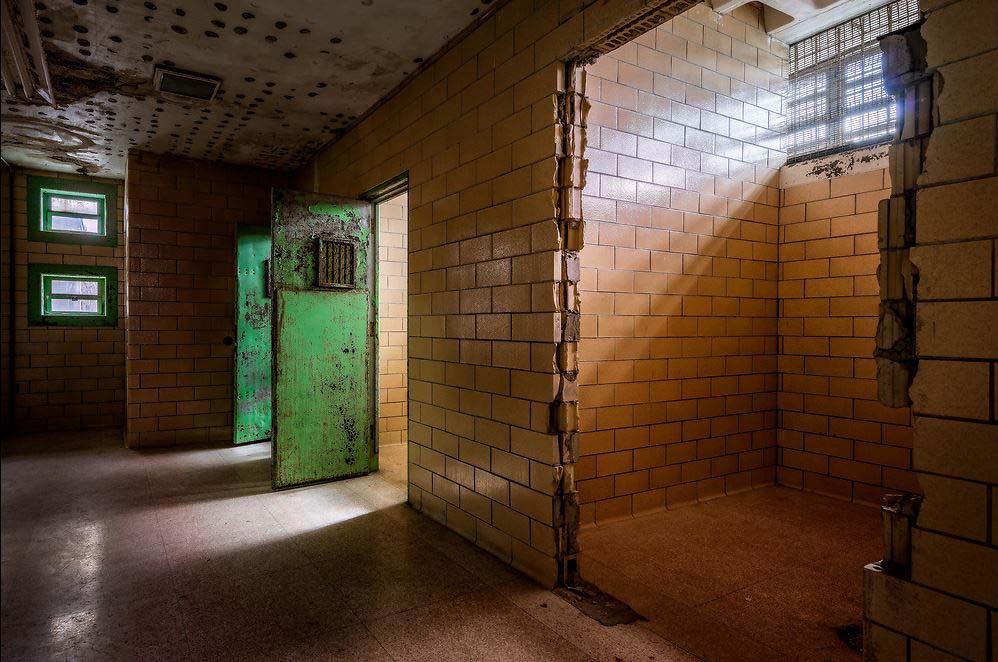
In 1949 the state built a maximum security ward for the criminally insane. My interior pictures didn’t come out for that location, so here are a few I found online, credit to photographer Walter Arnold.
Alongside the maximum security building was the greenhouse, which is creepy and beautiful.
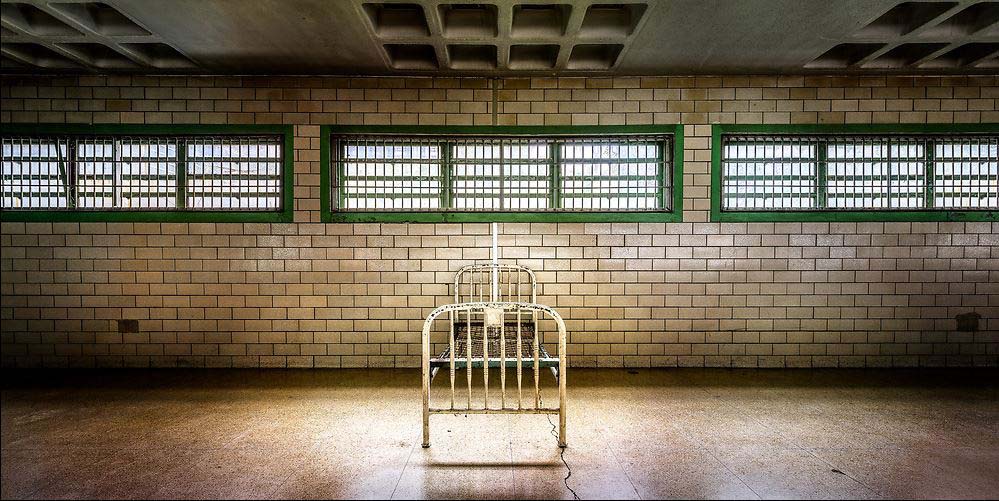
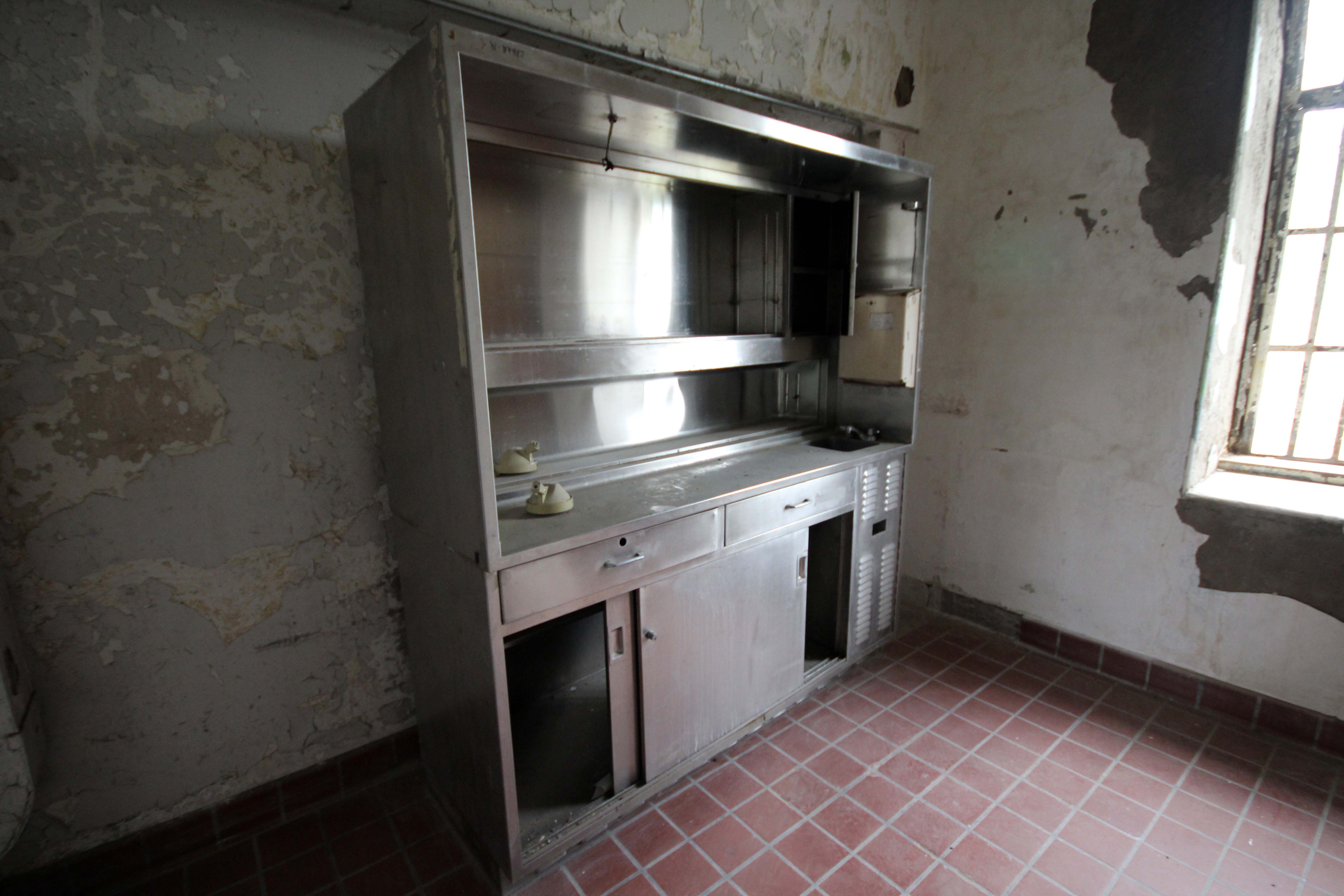
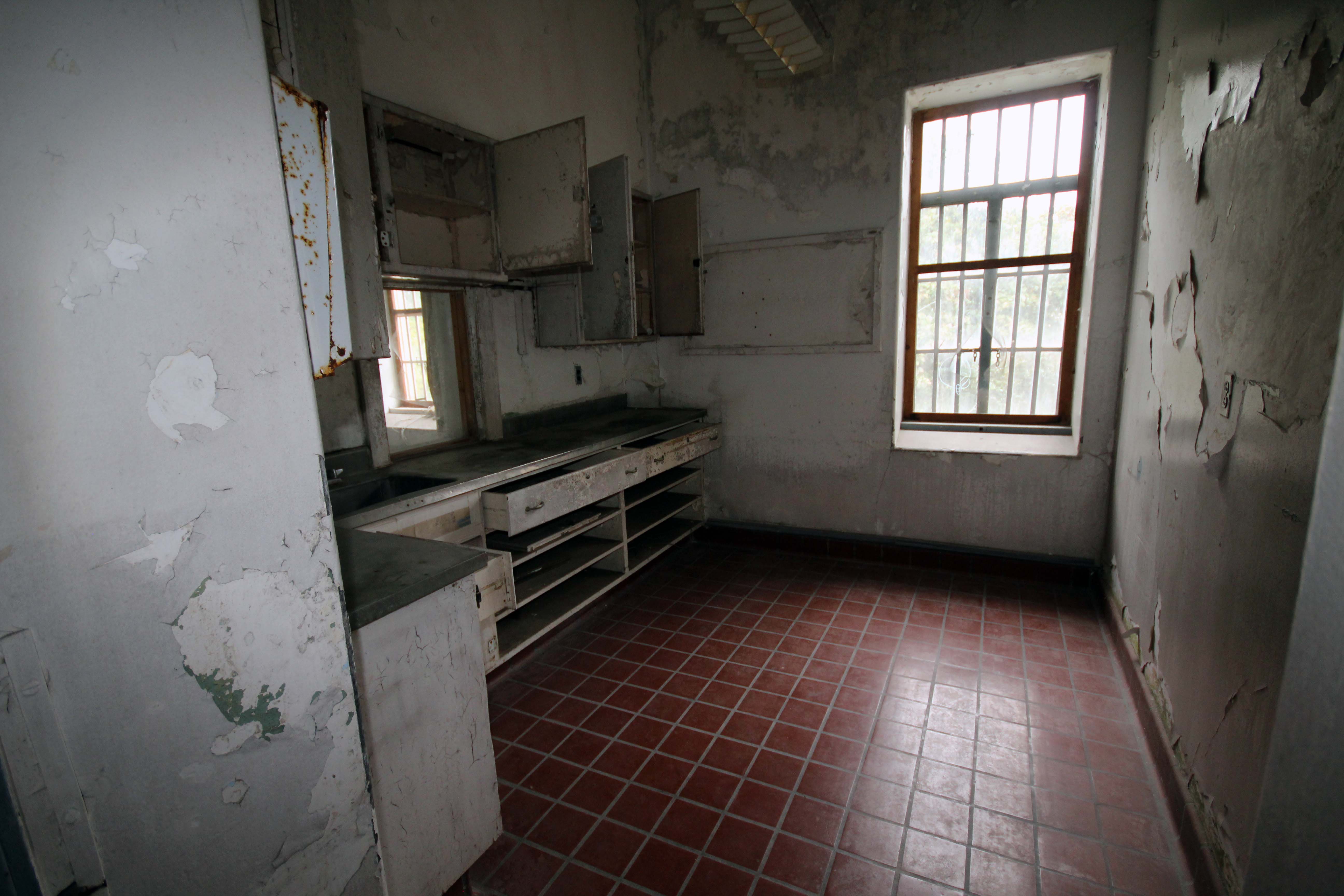
The tour continued with some more interiors of wards not yet restored, including an isolation area, and fourth floor attics where employees lived.
Apparently it’s pretty common for visitors to have a personal connection to the facility, such a family member who was here, or worked here, or they might have been a patient or worked here themselves. And it’s equally common for them to leave things behind, as one might do at a grave site.
Employees have a strict “hands off” policy for these tokens, and leave them there indefinitely. Eventually, according to our tour guide, a ghost hunter will move them to another location, or some other tourist will take them. Nothing stays forever.
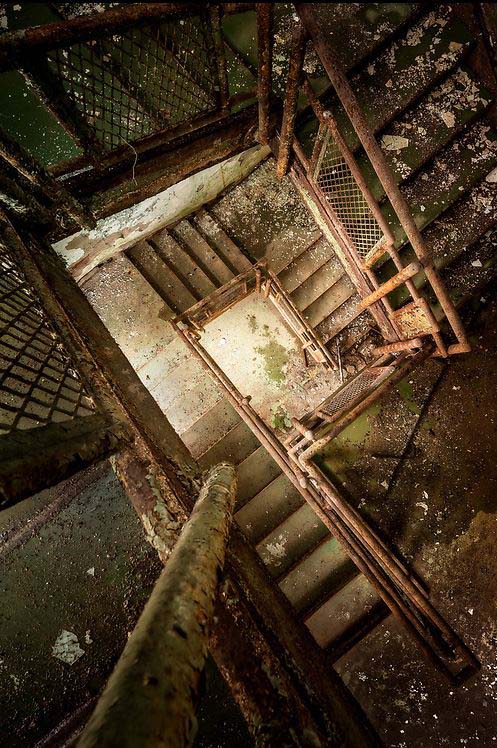
That’s a long way down.
A secure “back stairwell” to allow employees to get around more quickly than following the long hallways from ward to ward.
One of the isolation rooms for the more dangerous patients.
All of the interior doorknobs were like to prevent patients from using them to harm themselves.
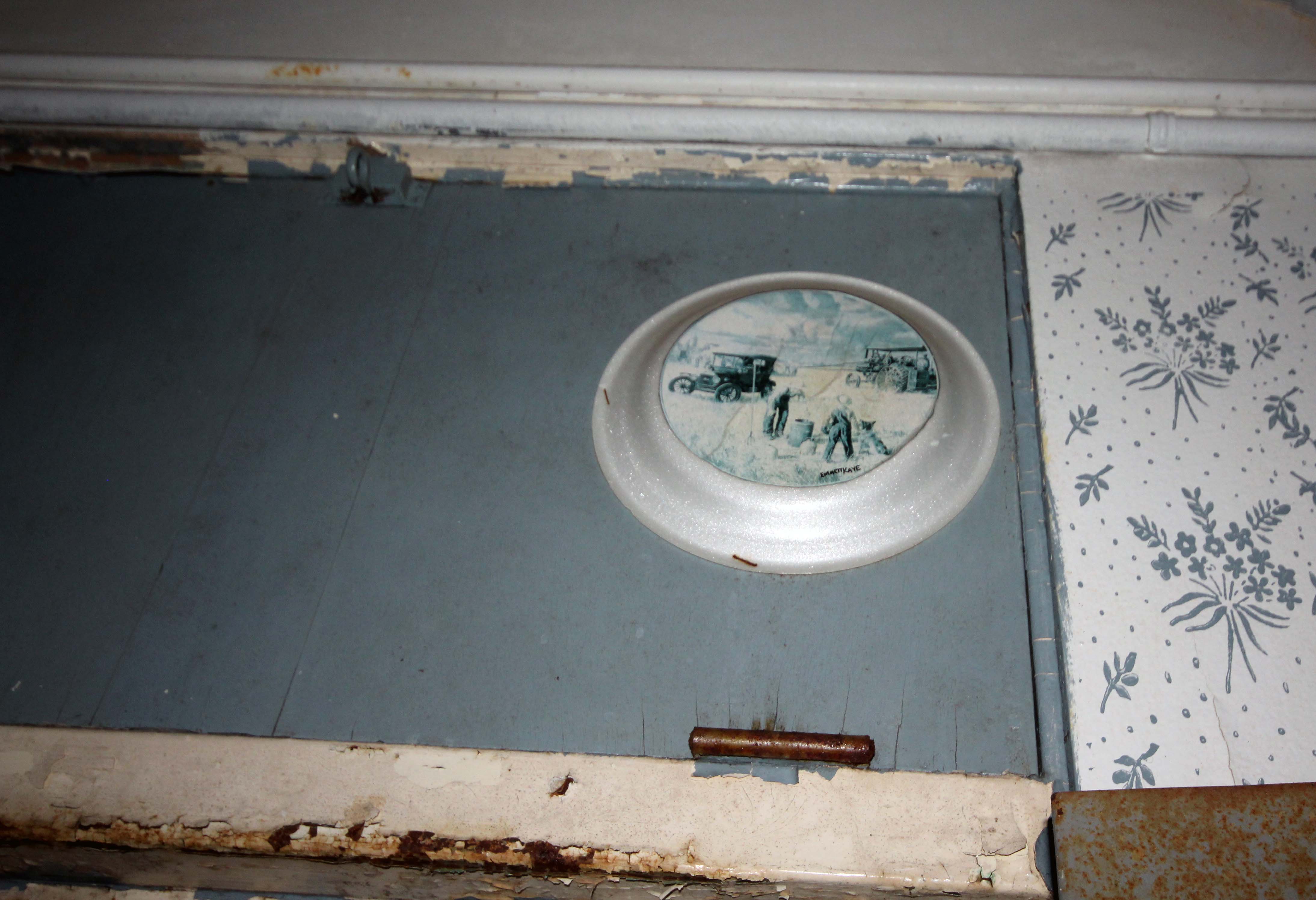
Patients were encouraged to use art to express themselves, and used pie plates to do so. Only two original paper plates remain hanging over transoms.
In addition to the things left behind by visitors, ghost hunters also leave things behind, but employees always move those items to one room and routinely cull the collection so it doesn’t get out of hand.
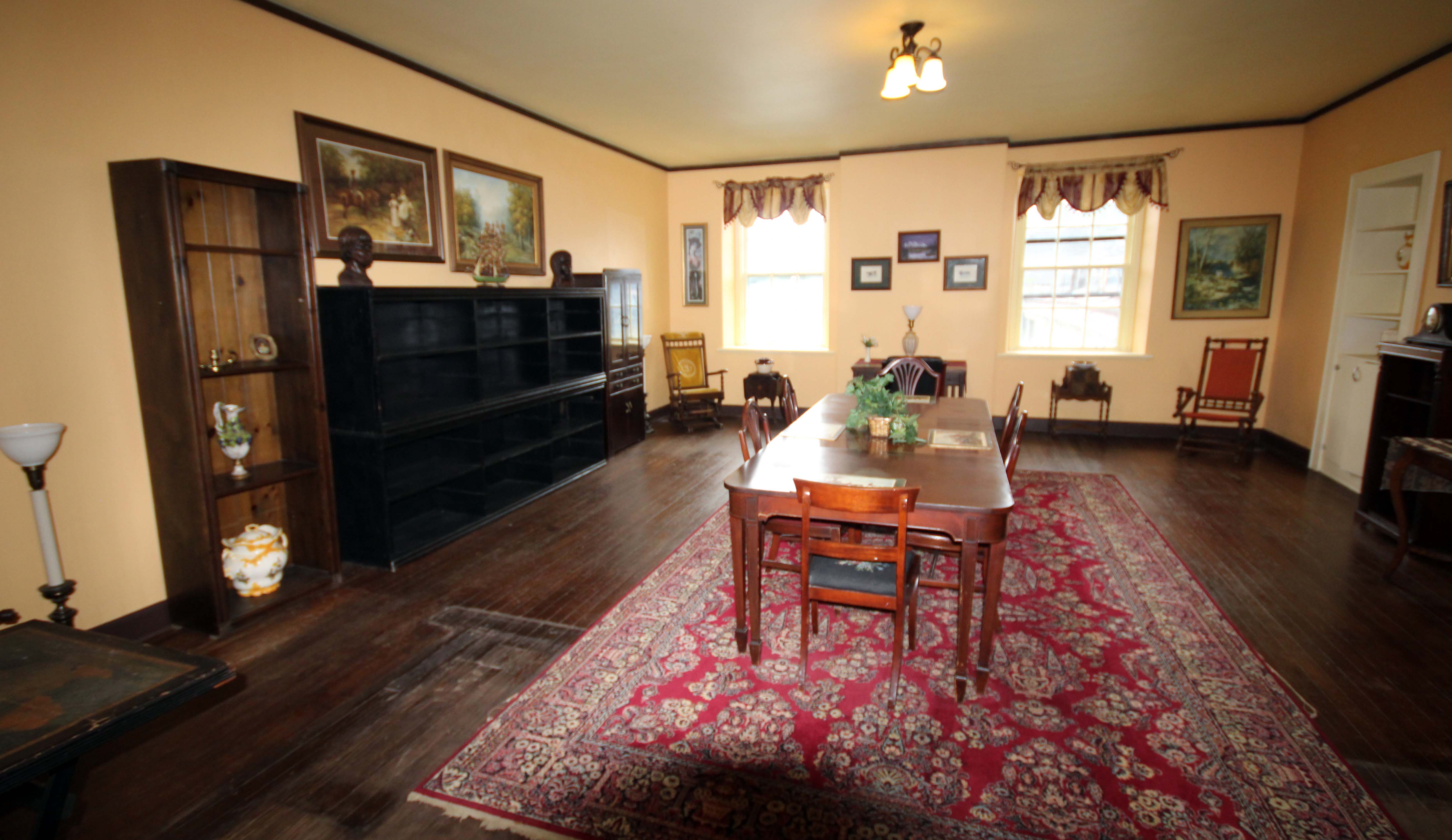
I was fascinated by the fourth floor attic area which was basically the same as patient wards, except these rooms were for the employees to live in. It was VERY similar to the servant’s quarters area in the TV show Downton Abbey. I’d love to see some pictures from that era of what these areas looked like when they were lived in.
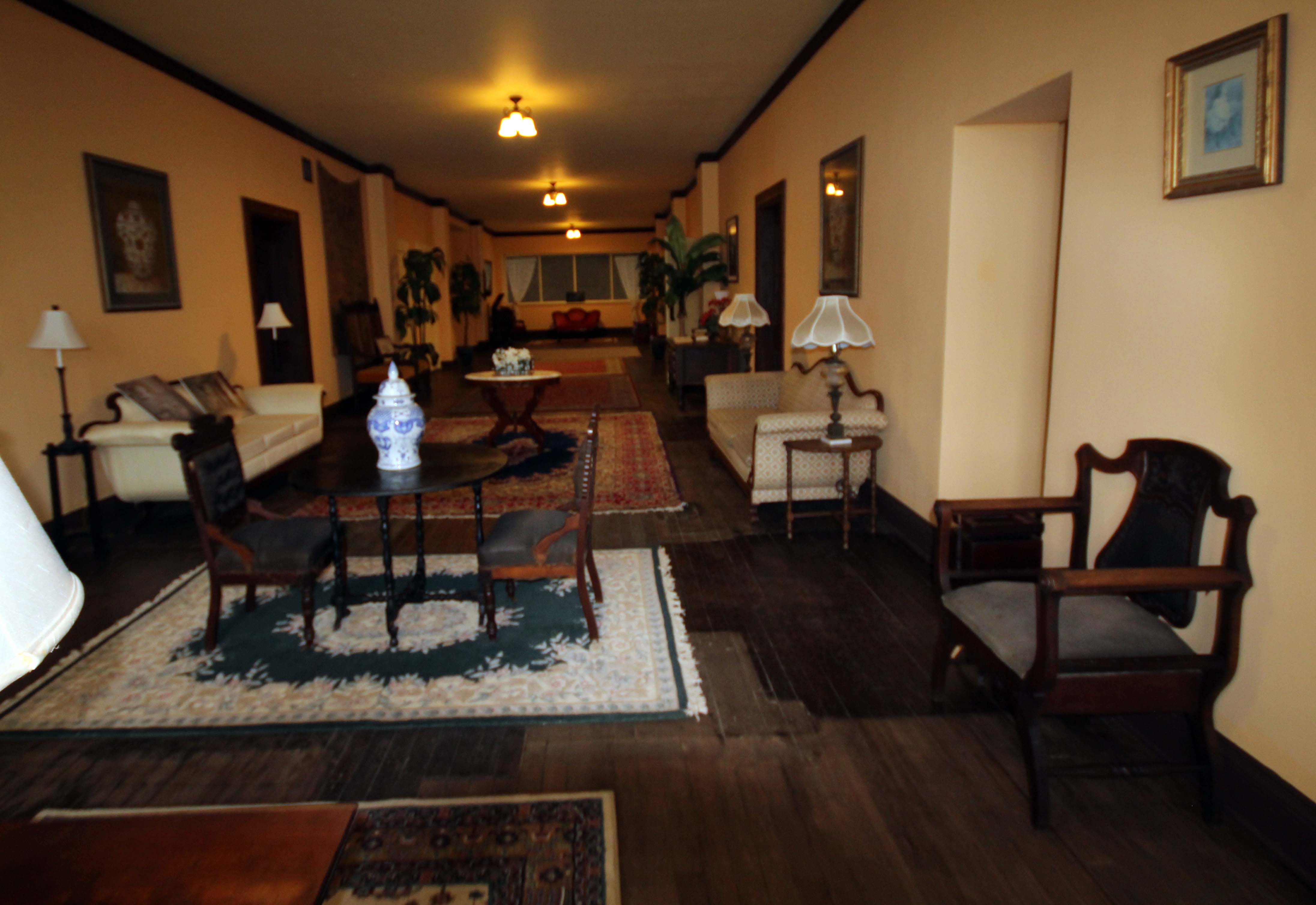
And finally, the tour concluded with a look at a “VIP” area that overlooked the ballroom.
Four story staircase back down to the main entrance.
There’s a piece of “art” that has been circulating around the internet for ages that originated here. It’s a list someone compiled from records of patients, of all the reasons people were admitted to the facility between the years of 1864-1889. Obviously some of the stuff on that list is ridiculous, but LOTS of those things were still used as reasons for commitment to institutions as late as the 1970’s. I took a picture of it, but it’s so long that the type is too small to read, so I typed it up instead because I think it’s important to see. Not because of the silly ones, although certainly at the time they weren’t silly, but because of how many of them could still be pointed to today, with a little rephrasing.
REASONS FOR ADMISSION
WEST VIRGINIA HOSPITAL FOR THE INSANE (WESTON)
OCTOBER 22, 1864 to DECEMBER 12, 1889
Amenorrhea
Asthma
Bad company
Bad habits & political excitement
Bad whiskey
Bite of a rattle snake
Bloody flux
Brain fever
Business nerves
Carbonic acid gas
Carbuncle
Cerebral softening
Cold
Congetion of brain
Constitutional
Crime
Death of sons in the war
Decoyed into the army
Deranged masturbation
Desertion by husband
Diptheria
Disappointed affection
Disappointed love
Disappointment
Dissipation of nerves
Dissolute habits
Dog bite
Domestic affliction
Domestic trouble
Doubt about mother’s ancestors
Dropsy
Effusion on the brain
Egotism
Epileptic fits
Excessive sexual abuse
Excitement as officer
Explosion of shell nearby
Exposure & hereditary
Exposure & quackery
Exposure in army
Fall from horse
False confinement
Feebleness of intellect
Female disease
Fever
Fever & loss of law suit
Fever & nerved
Fighting fire
Fits & desertion of husband
Gastritis
Gathering in the head
Greediness
Grief
Gunshot wound
Hard study
Hereditary predisposition
Ill treatment by husband
Imaginary female trouble
Immoral life
Imprisonment
Indigestion
Intemperance
Interference
Jealousy
Jealousy & religion
Kick of horse
Kicked in the head by a horse
Laziness
Liver and social disease
Loss of arm
Marriage of son
Masturbation & syphillis
Masturbation for 30 years
Medicine to prevent conception
Menstrual deranged
Mental excitement
Milk fever
Moral sanity
Novel reading
Nymphomania
Opium habit
Over action on the mind
Over heat
Over study of religion
Over taxing mental powers.
Parents were cousins
Pecuniary losses: worms
Periodical fits
Political excitement
Politics
Puerperal
Religious enthusiasm
Religious excitement
Remorse
Rumor of husband’s murder or desertion
Salvation army
Scarlatina
Seduction
Seduction & disappointment
Self abuse
Severe labor
Sexual abuse and stimulants
Sexual derangement
Shooting of daughter
Smallpox
Snuff
Snuff eating for two years
Softening of the brain
Spinal irritation
Sunstroke
Superstition
Suppressed masturbation
Suppression of menses
Tobacco & masturbation: hysteria
The war
Time of life
Trouble
Uterine derangement
Venerial excesses
Vicious vices in early life
Women trouble
Young lady & fear
It’s worth saying here that most of us have experienced one or more of these in our lifetimes. Imagine living in a world where a person of power in your life could stick you in an asylum for an indeterminate amount of time for one of these activities. Women in particular we at risk from abusive husbands, because they had the power to commit their wives. While lots of people know that, what few people know is that for a very long time, if a woman was committed by a man, the only way she could leave is if that same man came and got her. If he died, she was there for the rest of her life. In this way lots of unruly daughters were institutionalized for life by prominent fathers. – Trace
At one point towards the end of the two hour tour, I wandered off by myself for a while because the endless stories of misery and suffering were getting to me. I ended up in a small room with a window that had a broken pane so I could get some fresh air. Someone had left a little music box on the window sill, and I took a few minutes to just breathe and listen to the world outside, and the song from the music box. This video sums up the experience. – Trace
According to the VA, 20 Veterans commit suicide EACH DAY.
In the general population, 132 EACH DAY.
You can purchase the ebook telling the story of how we became full-time RVers.
You can purchase our recipe book filled with 80 recipes we have cooked in our RV and taste tested by Lee himself. You can purchase the kindle or paperbackversion on Amazon or buy the Apple version on iTunes.
Another post by Lee, because Trace has a job and stuff.
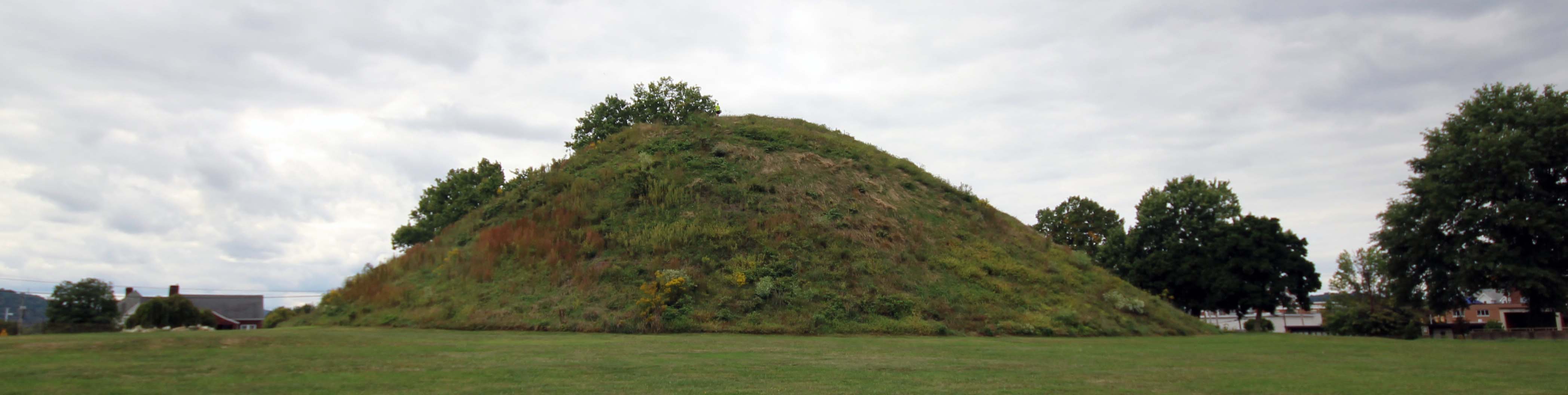
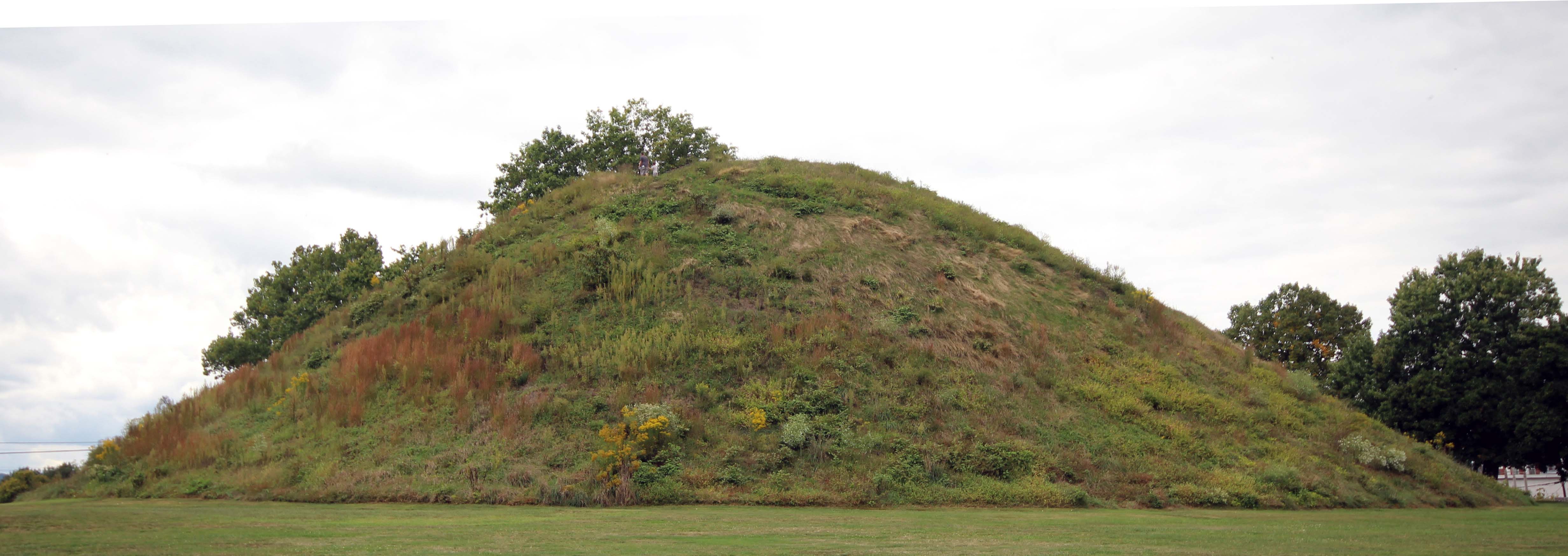
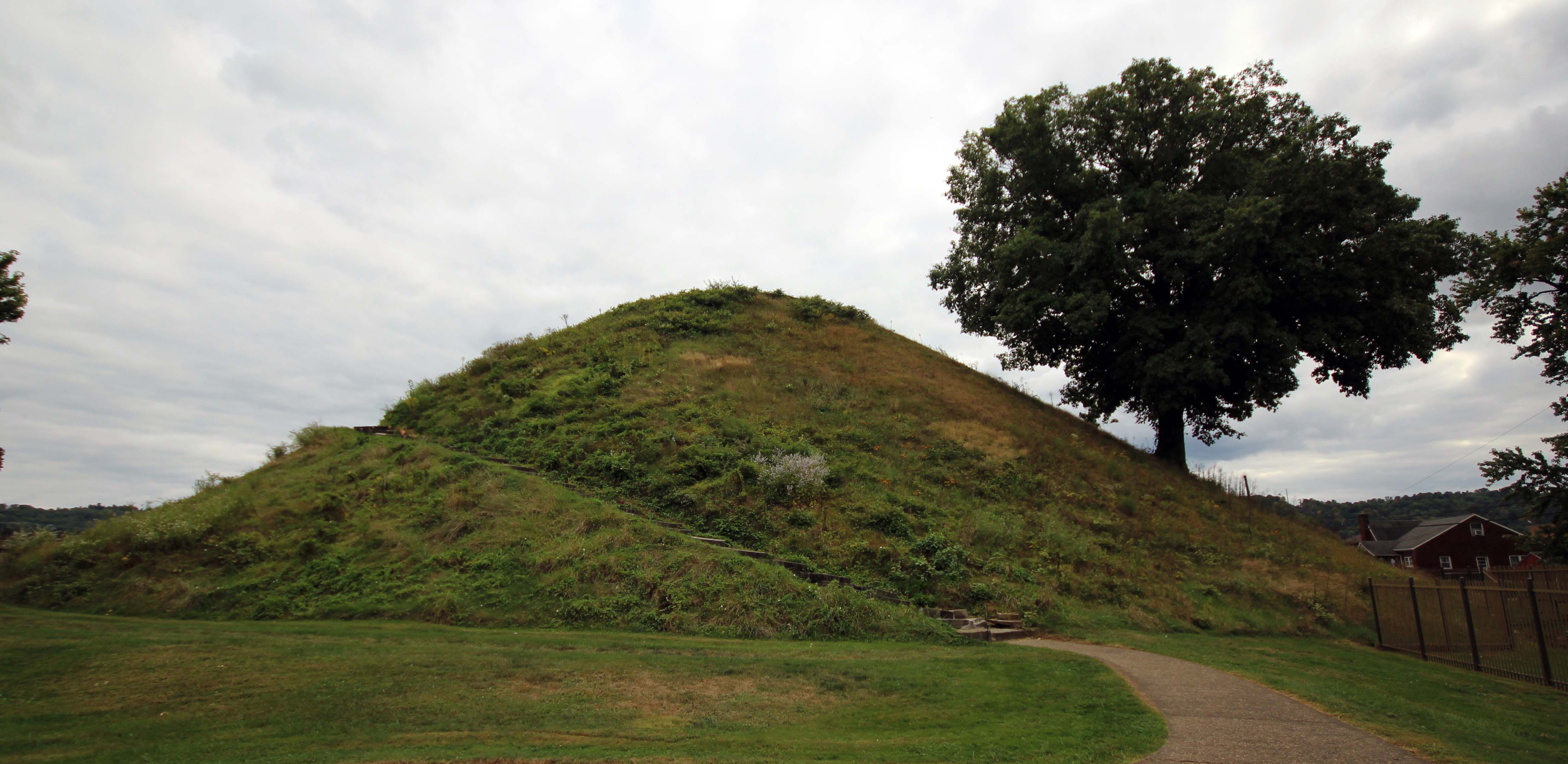
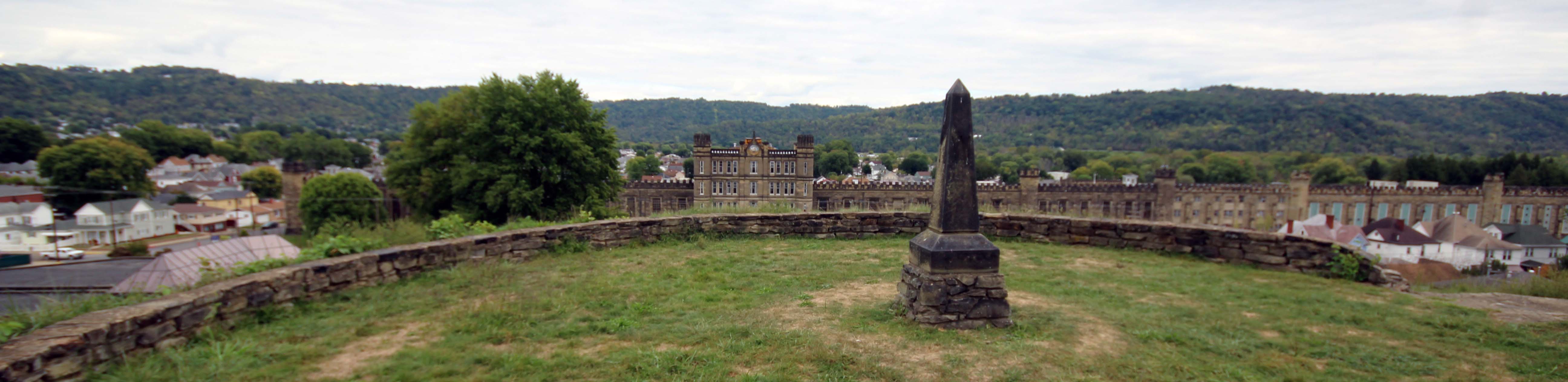
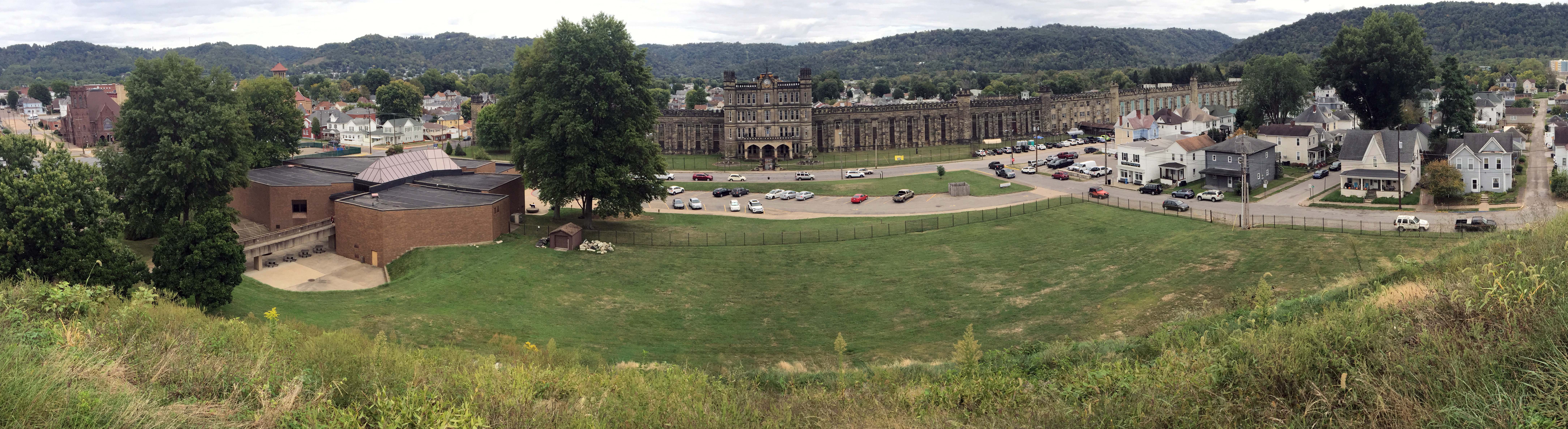
Just across the street from the West Virginia State Penitentiary is the Grave Creek Mound. There were actually many of these mounds in the area, hence the name, Moundsville. The Grave Creek Mound is one of the largest conical-type burial mounds in the United States, at 62′ high and 240′ in diameter. The Adena (pre-Columbian native Americans) built it, moving over 60,000 tons of dirt, and it was created around 250-150 BC. The first recorded excavation was in 1838 and their tunnel revealed two log tombs with graves and burial offerings. This is the largest of these mounds remaining, and has been designated a National Historic Landmark.
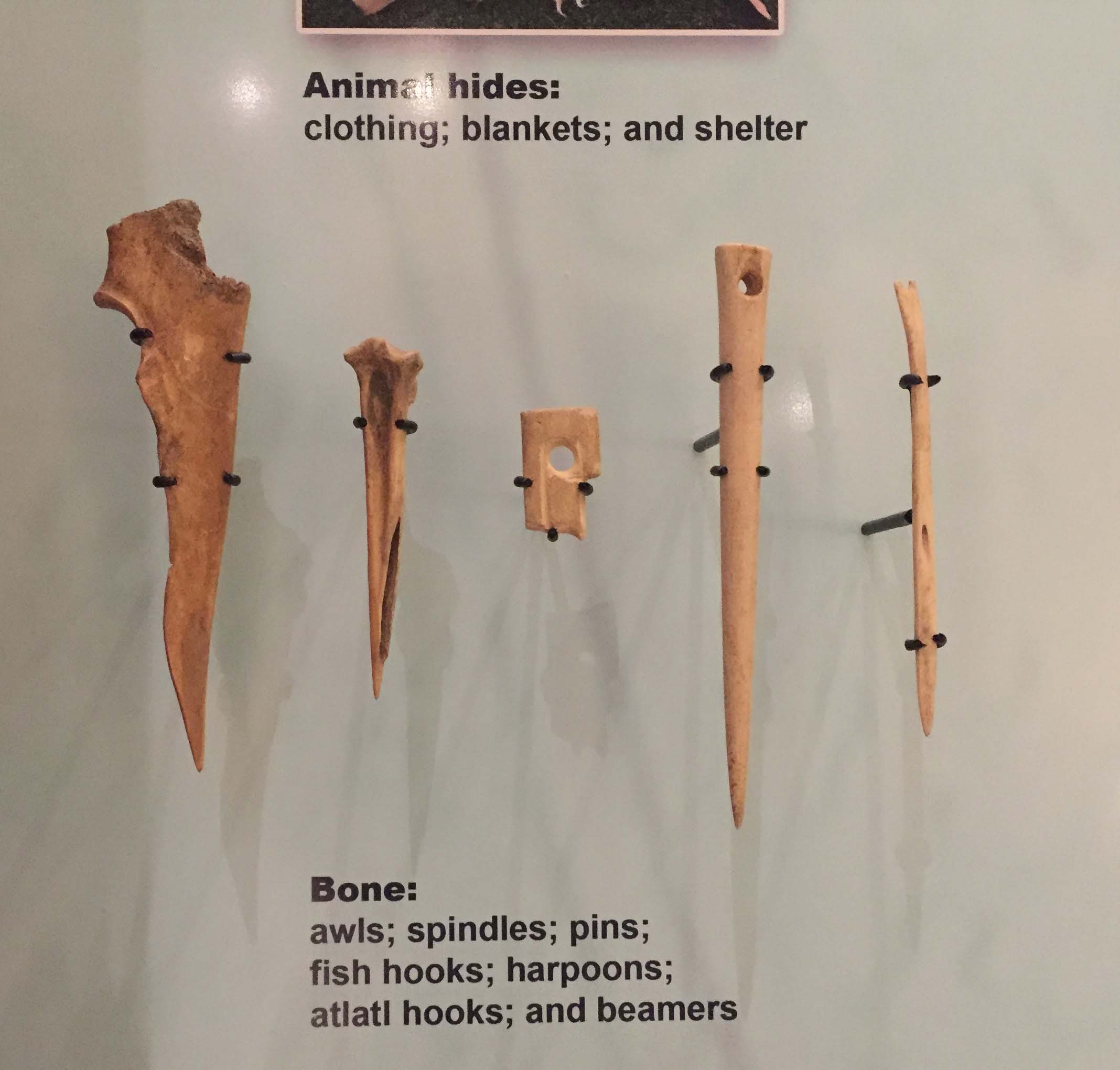
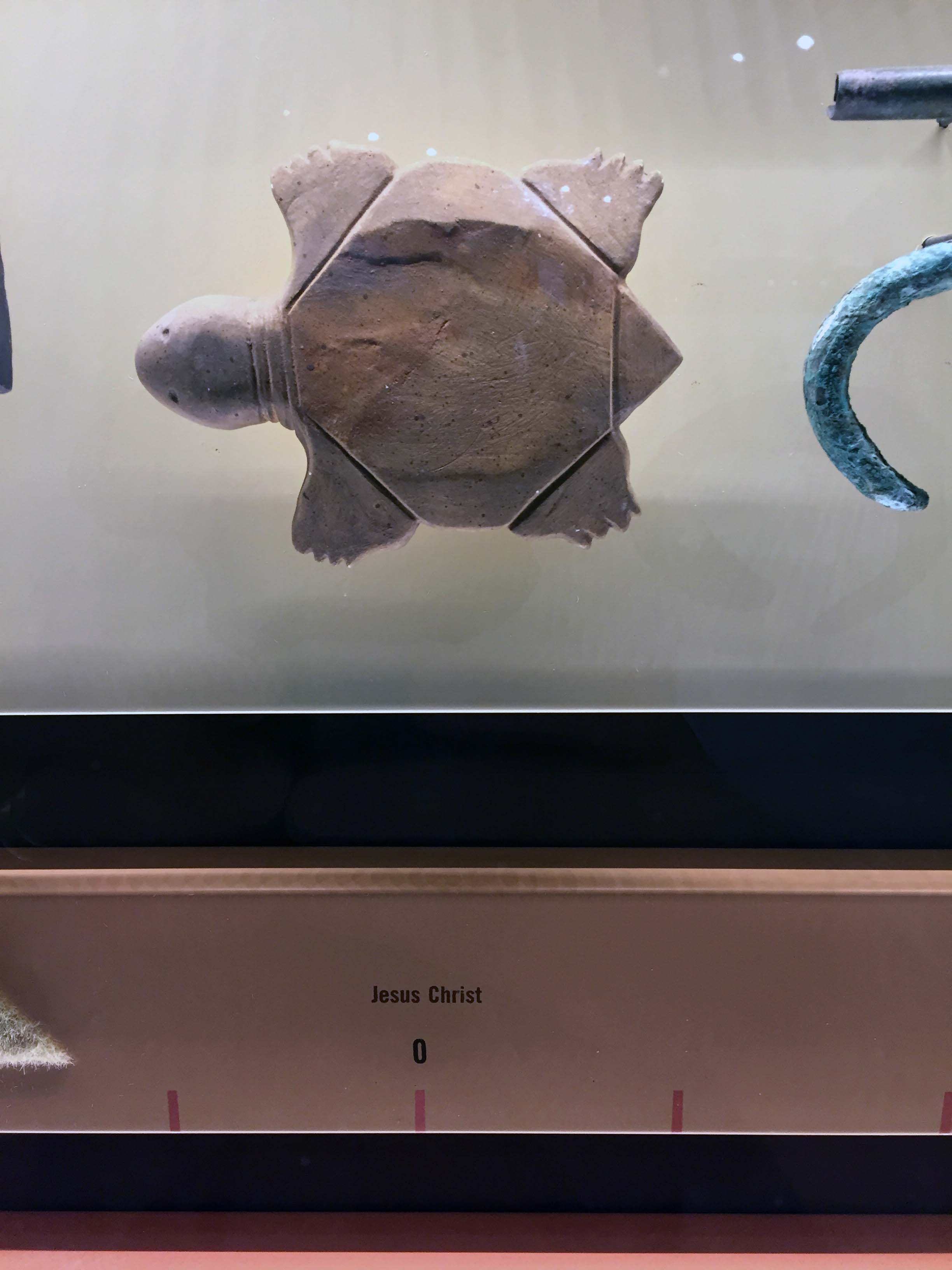
On the site is the Delf Norona Museum, displaying artifacts and interpretations of the Adena Culture.
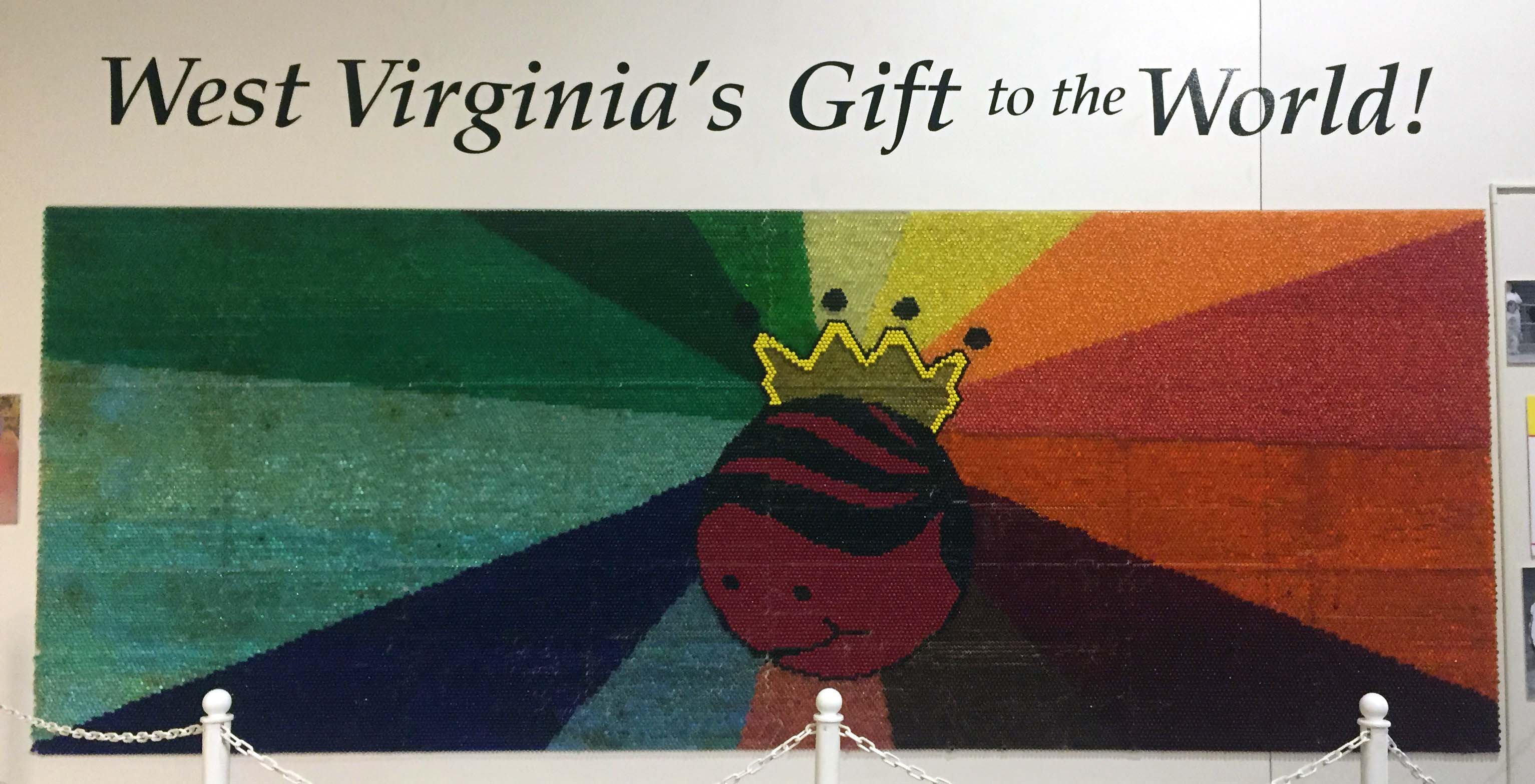
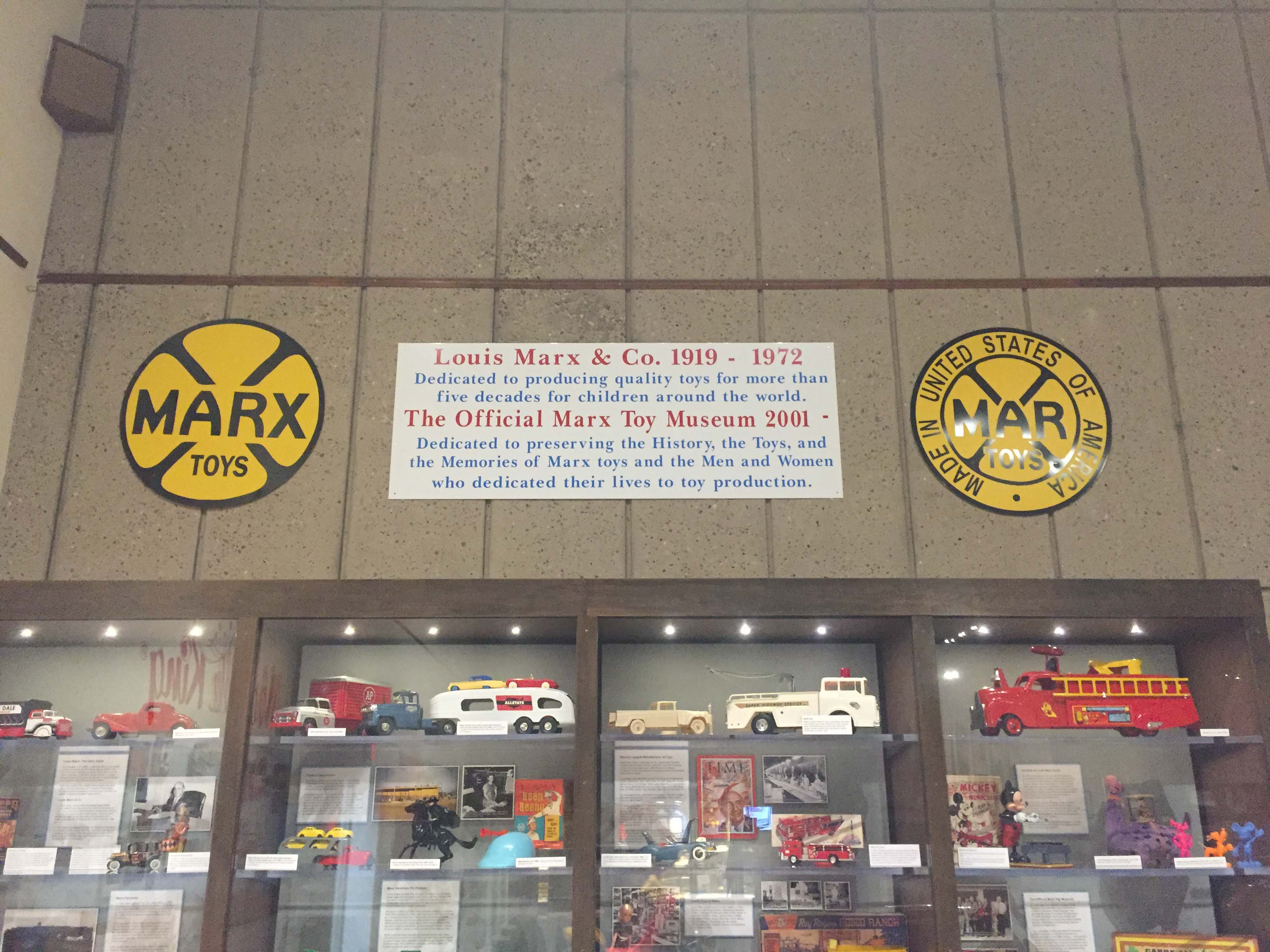
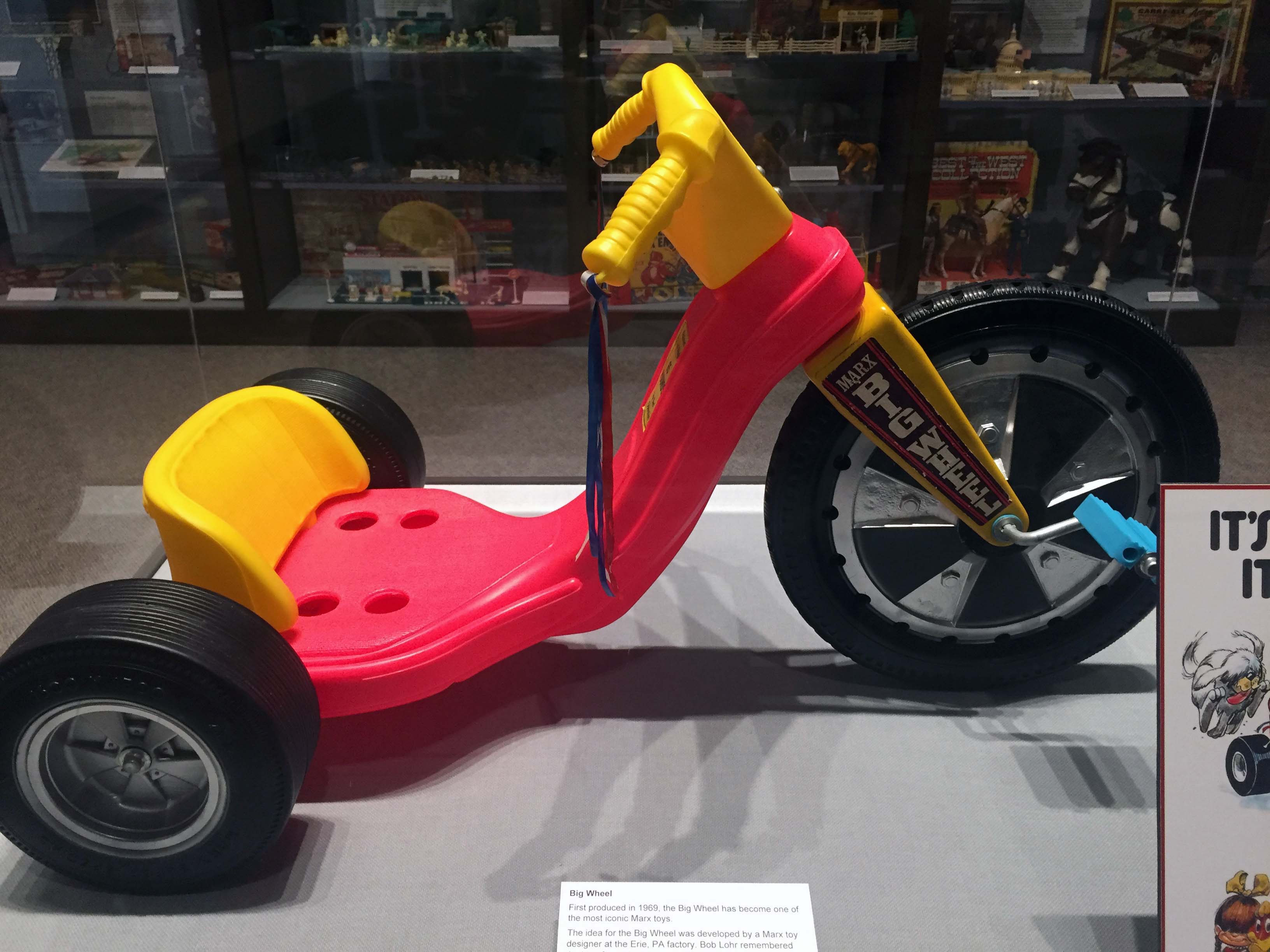
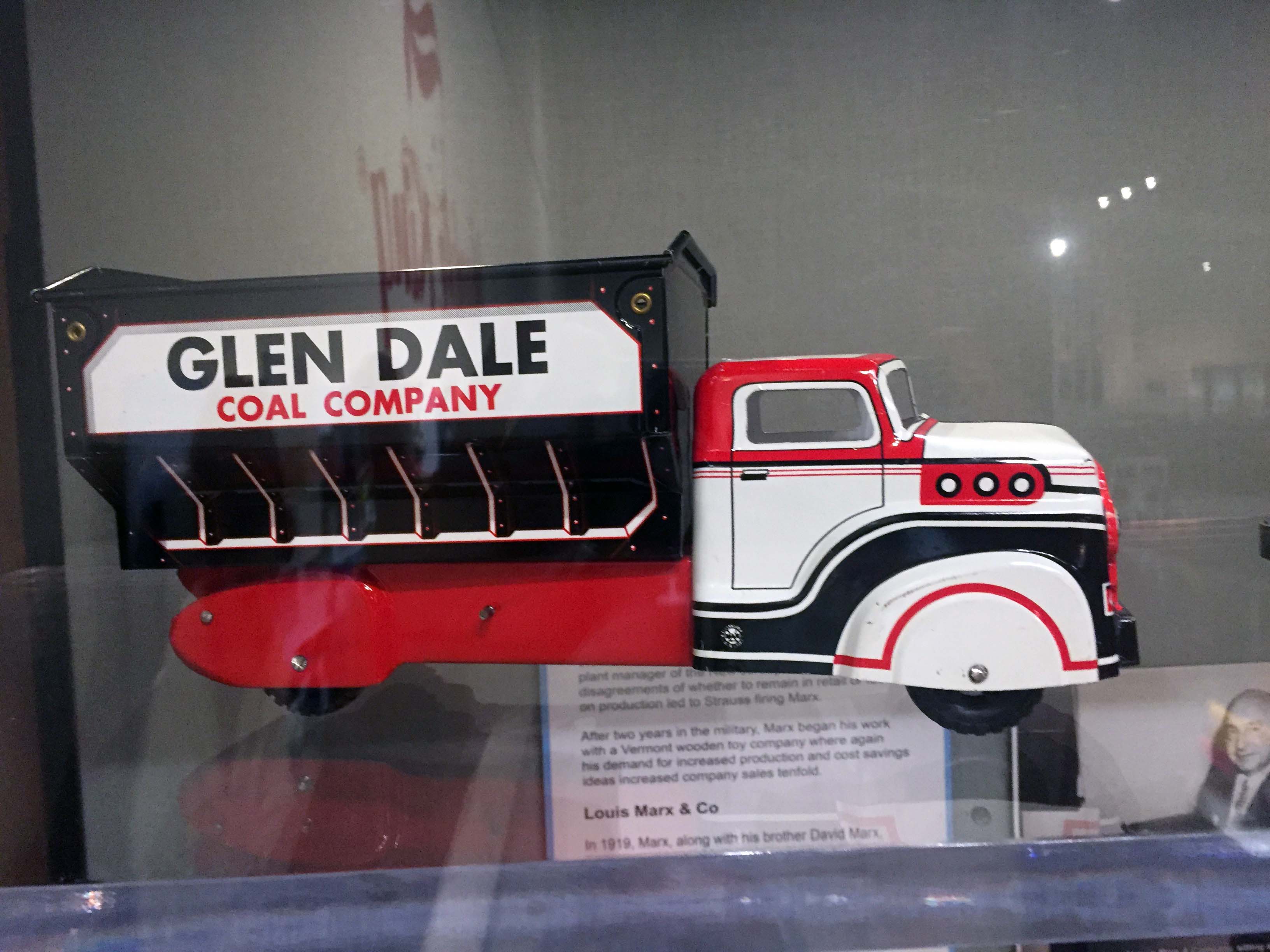
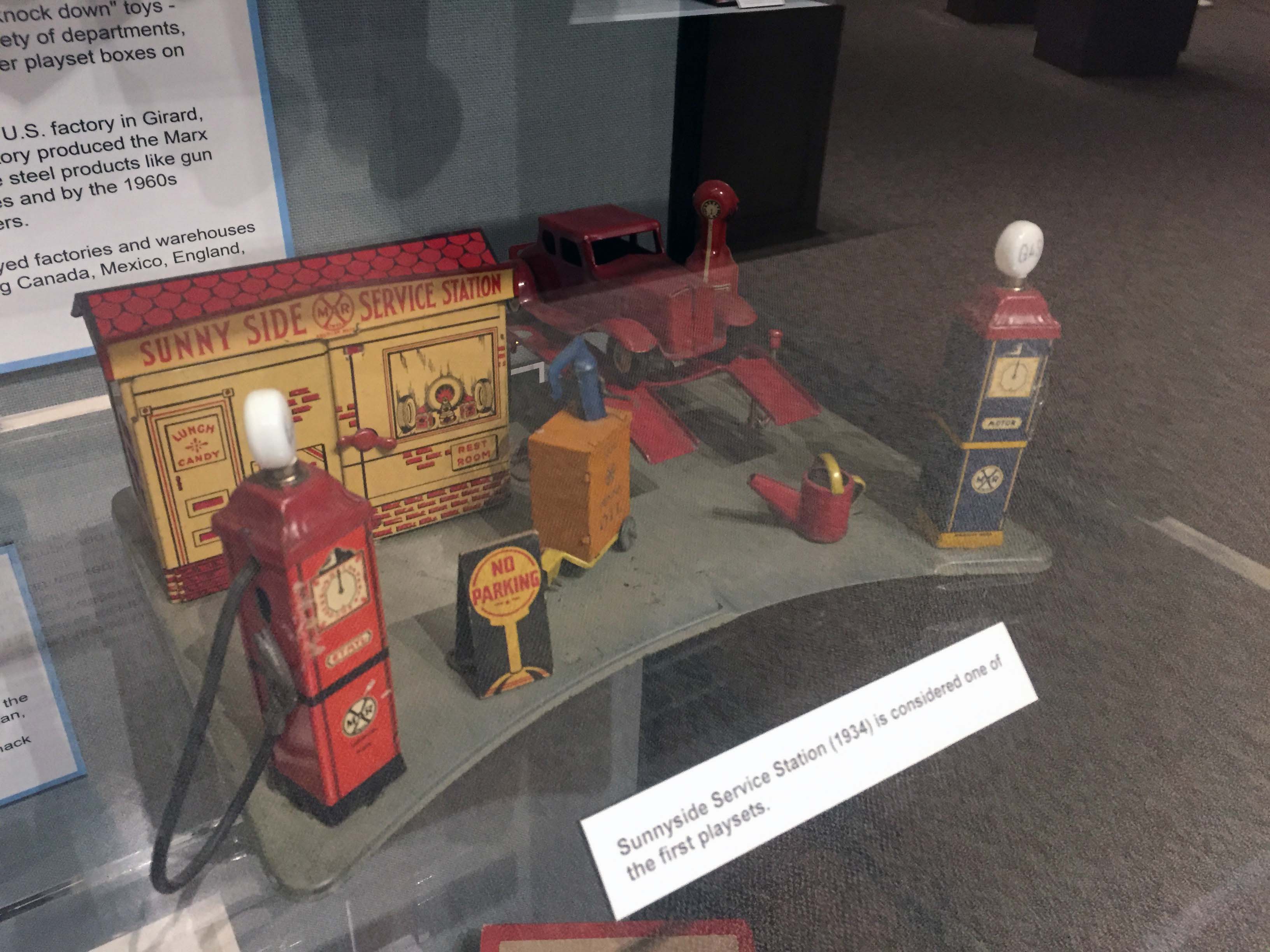
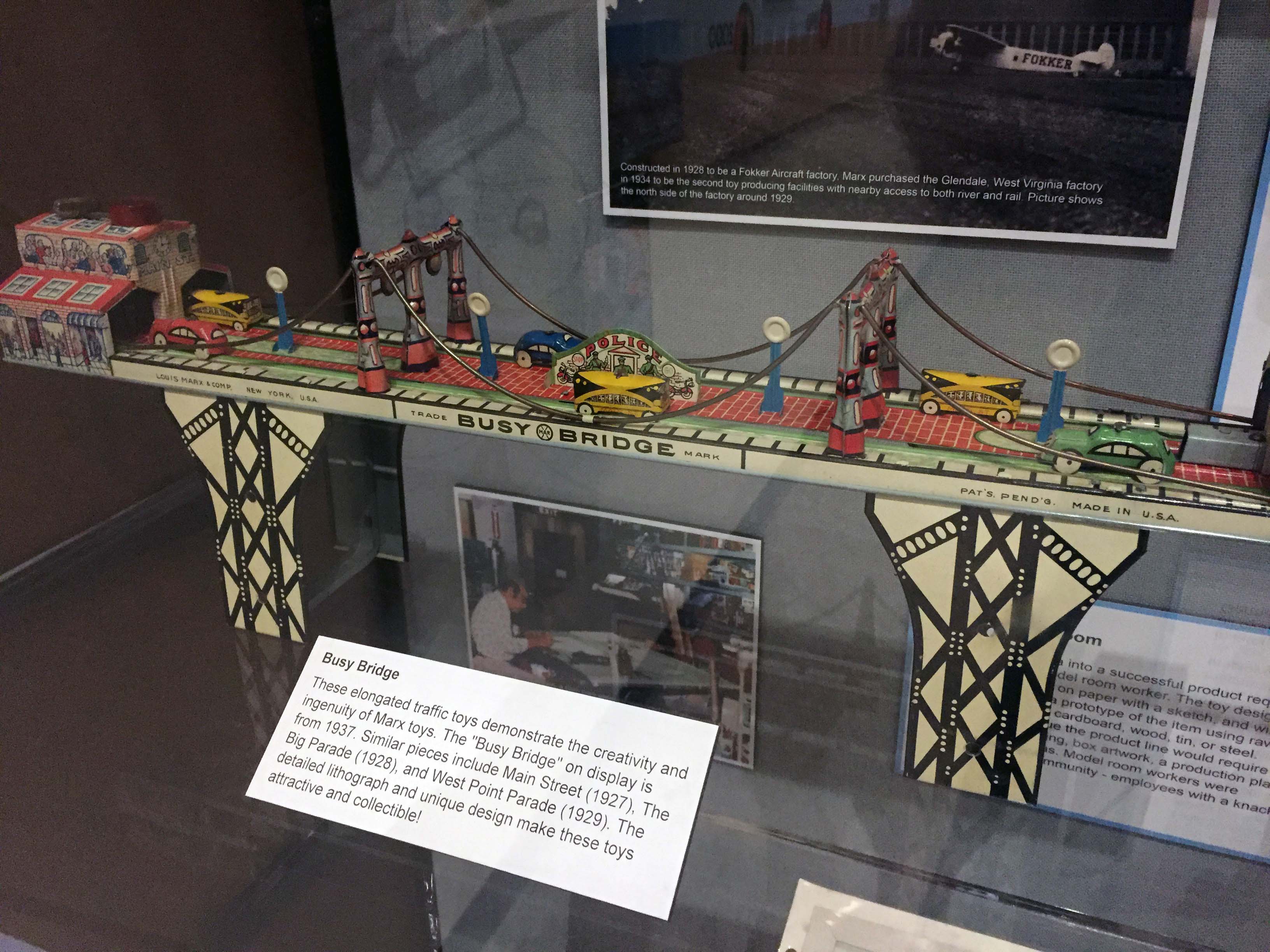
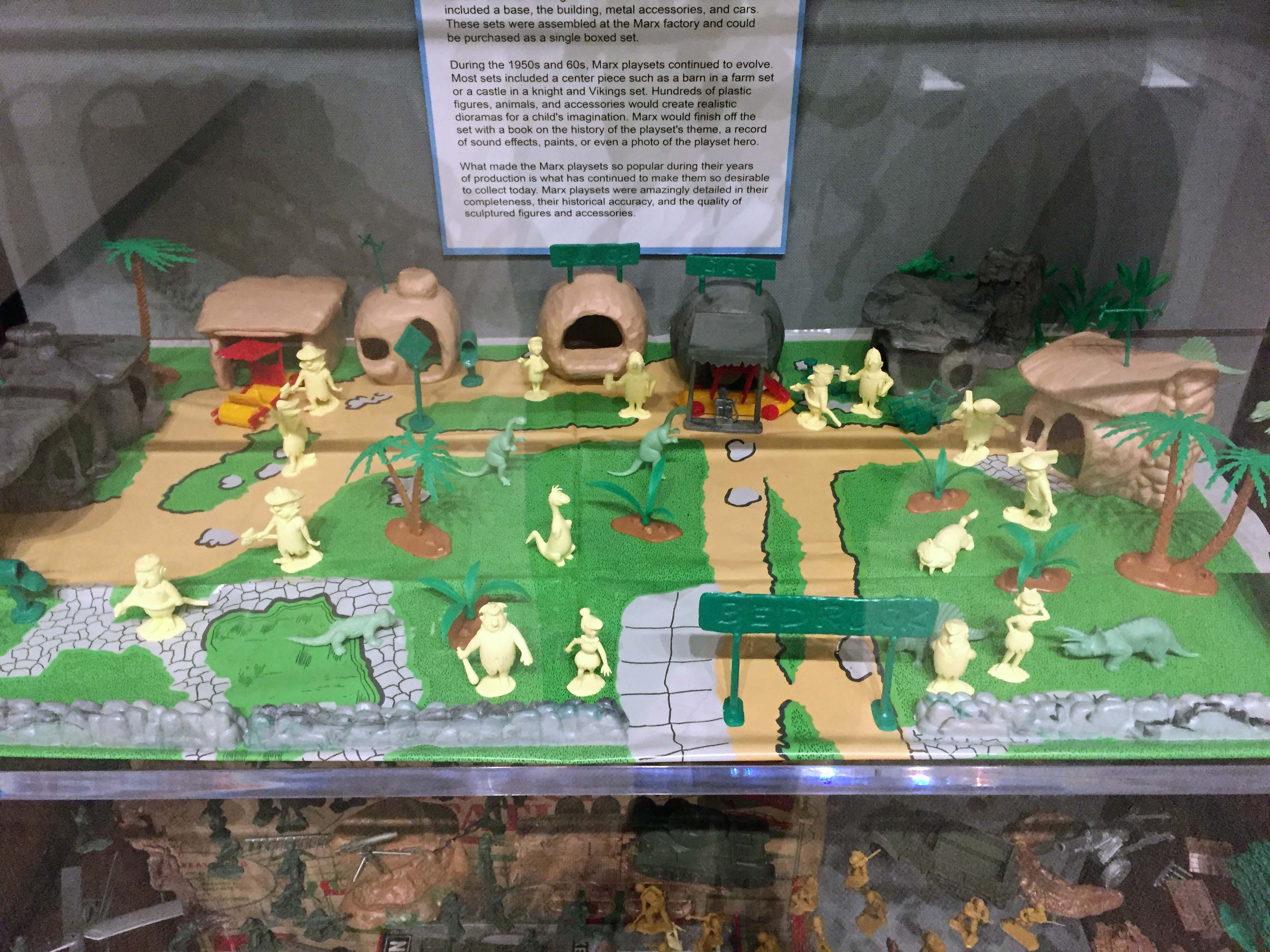
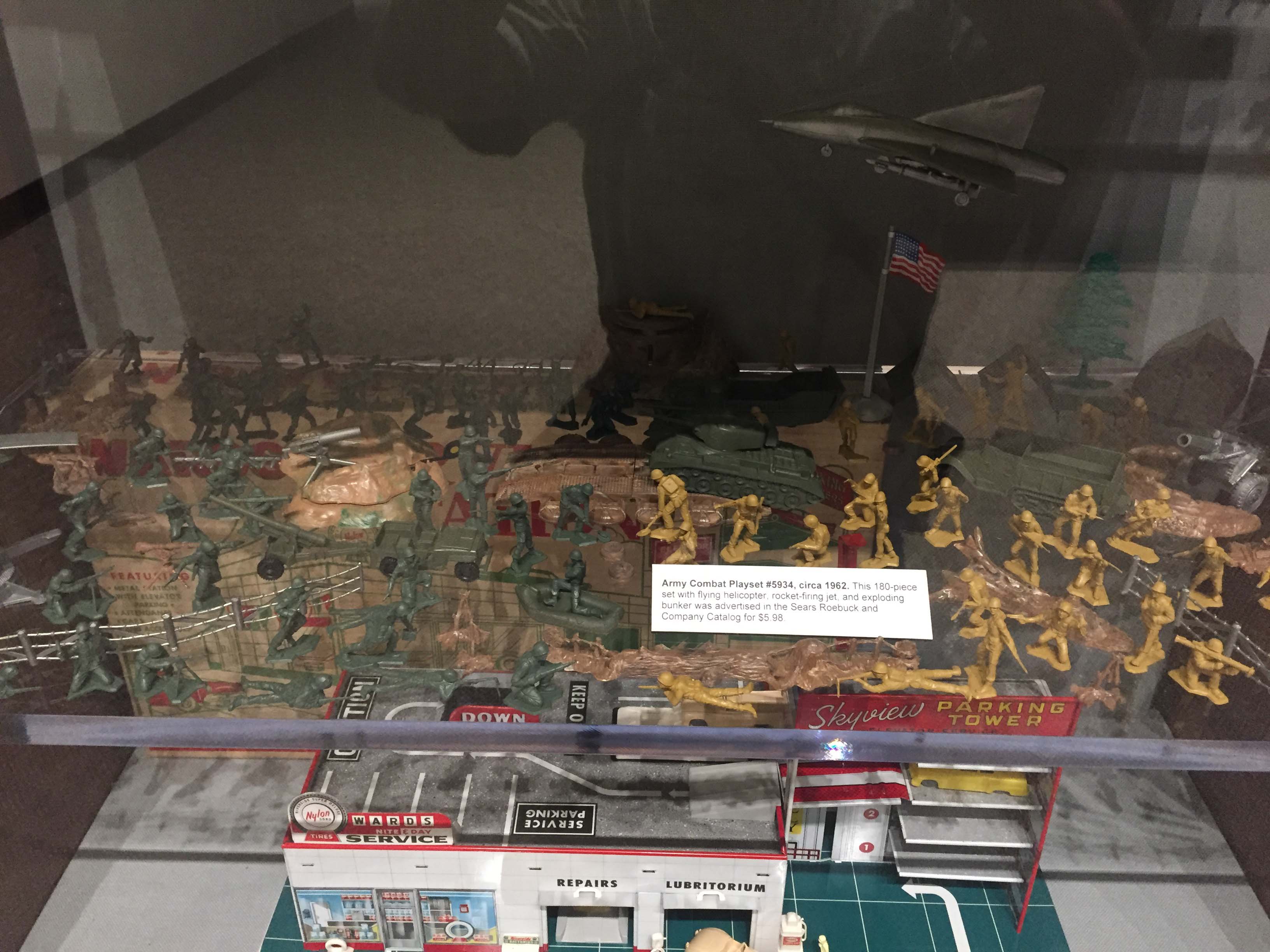
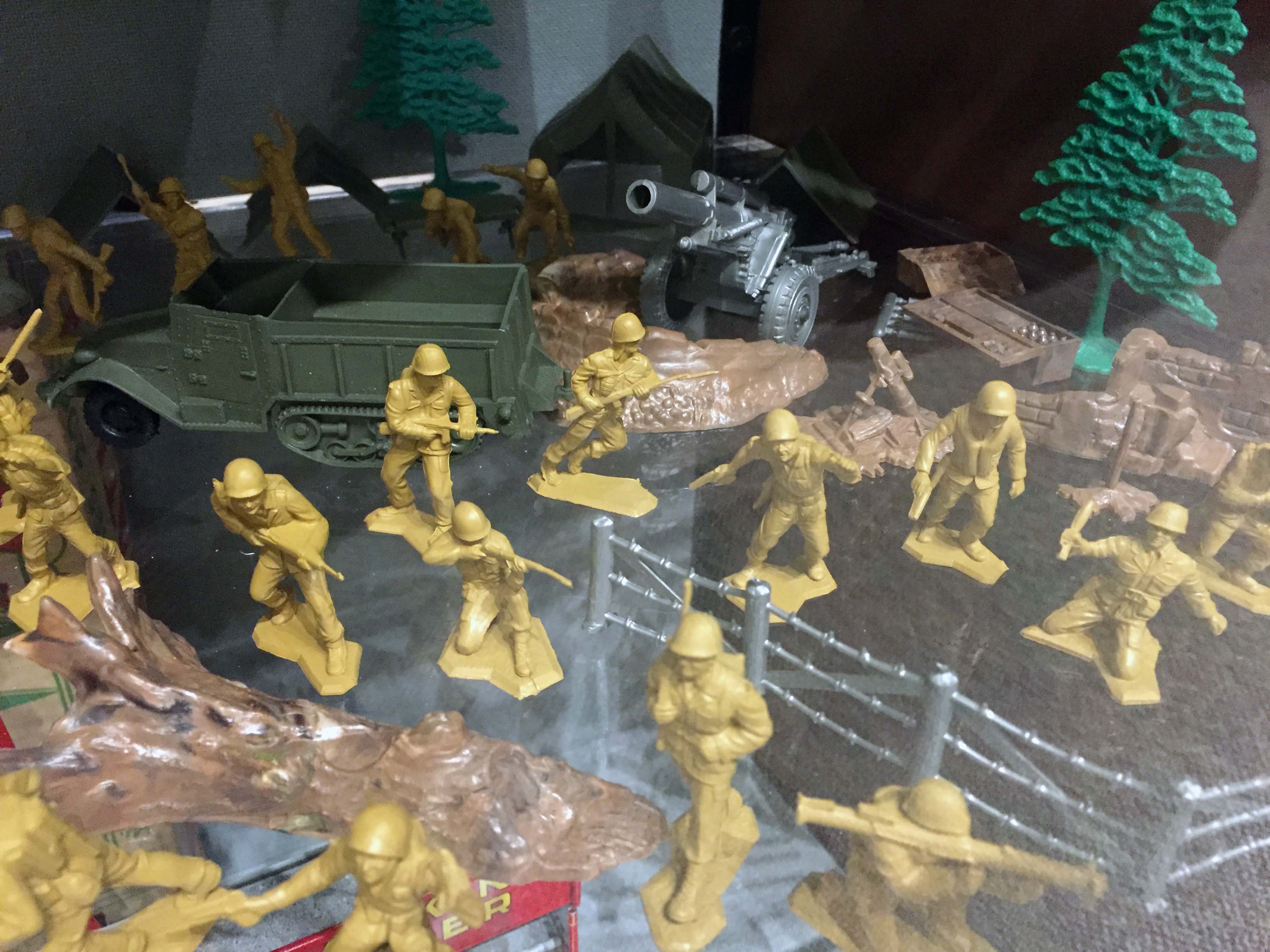
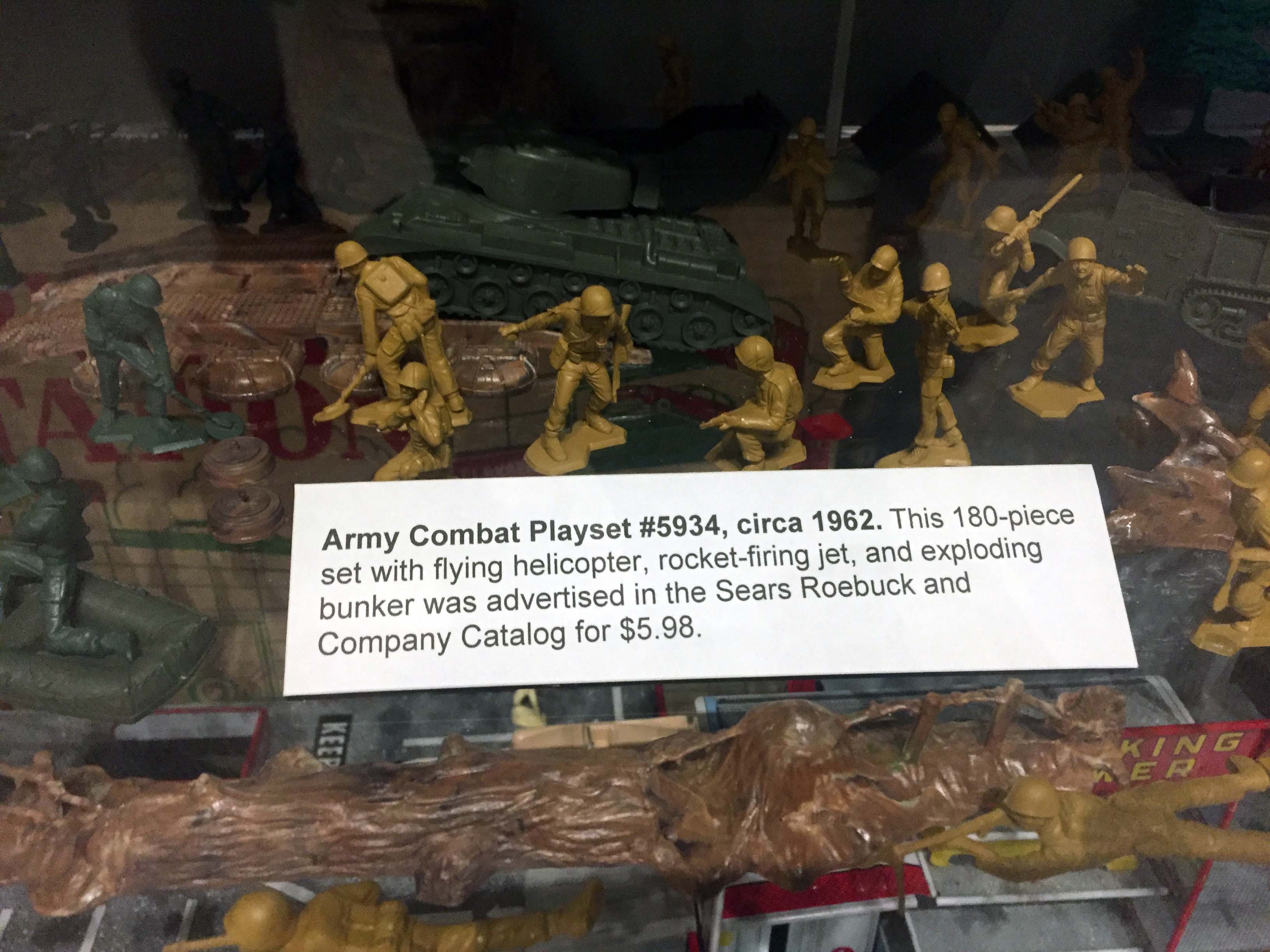
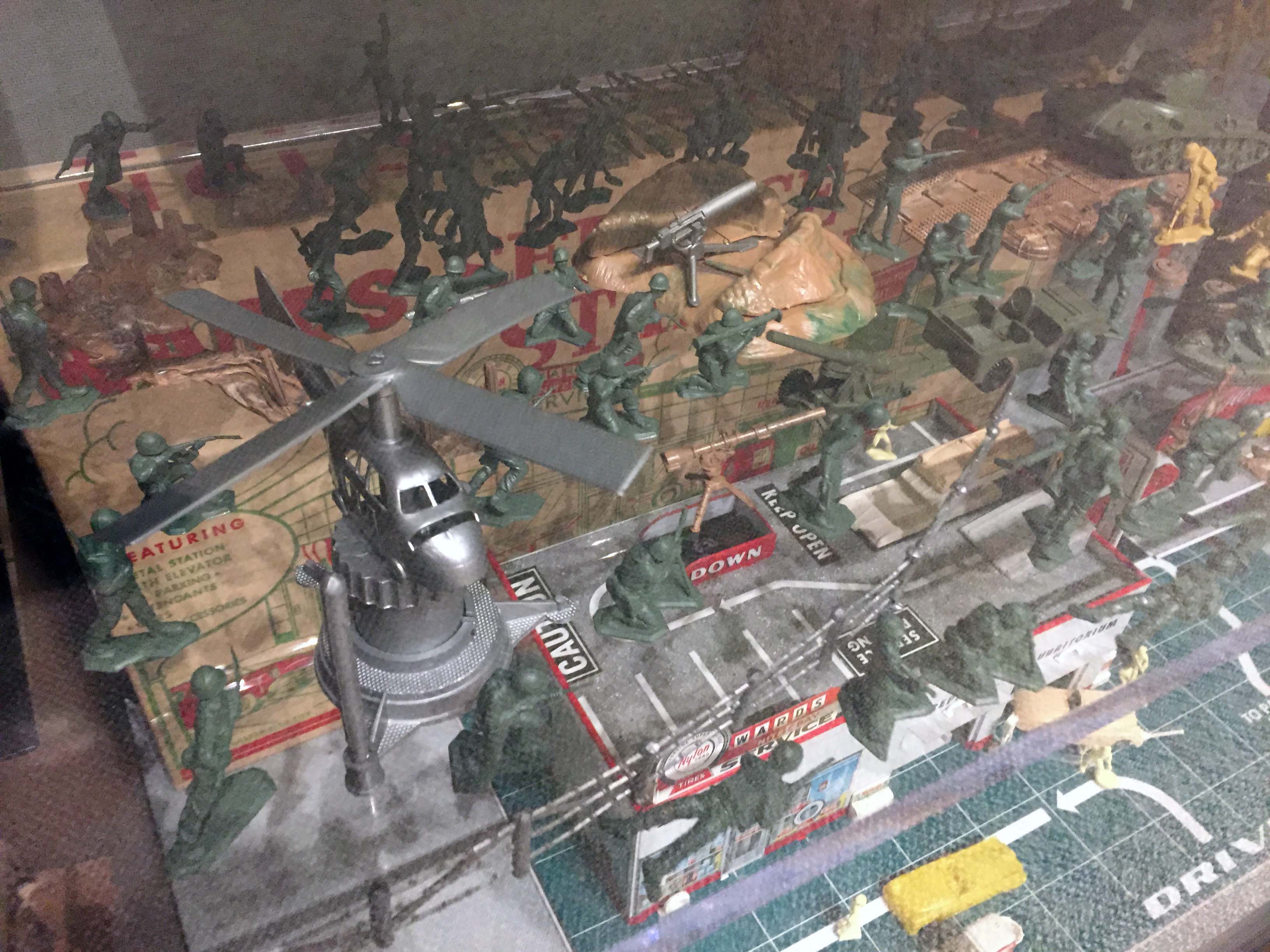
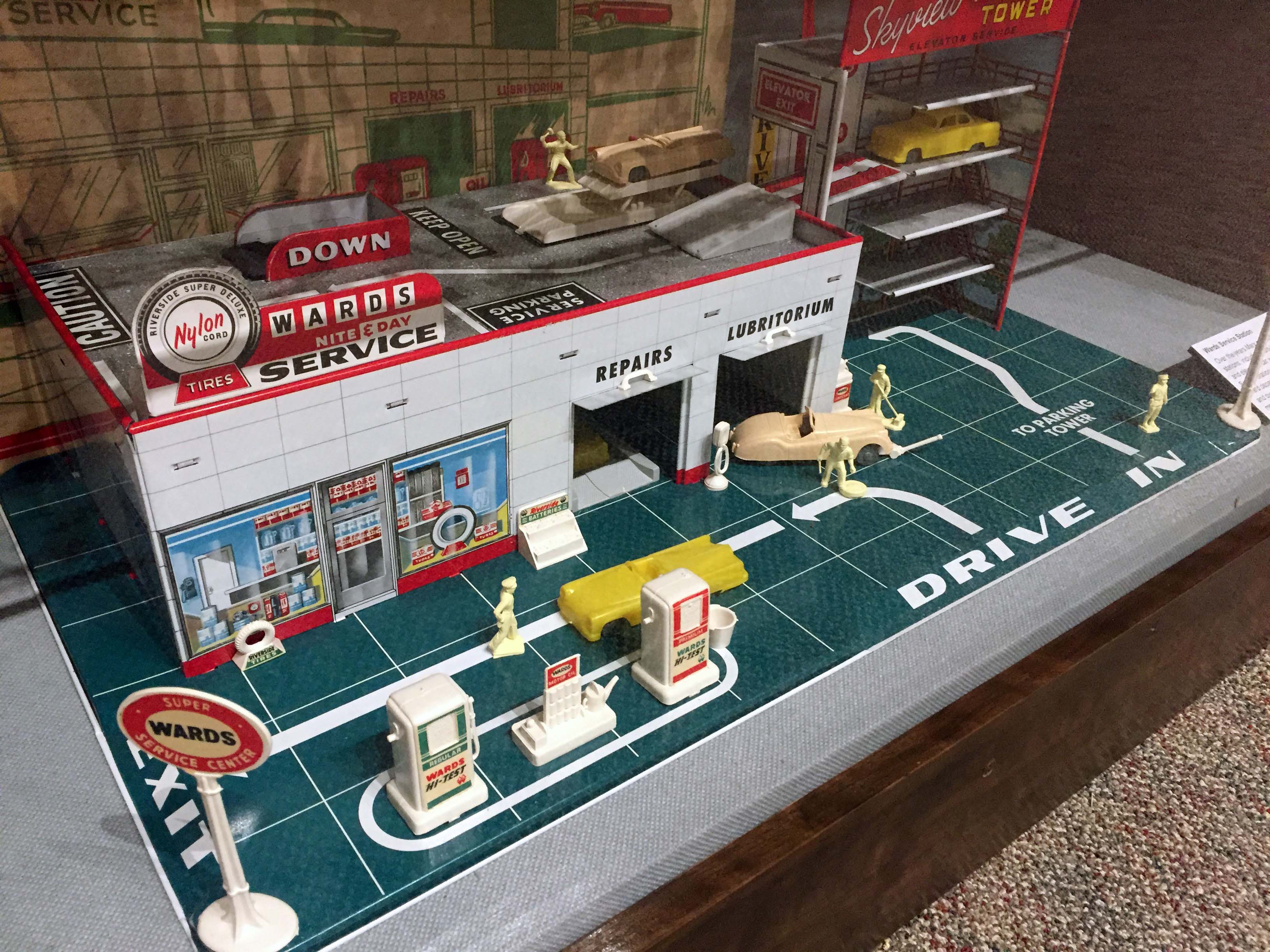
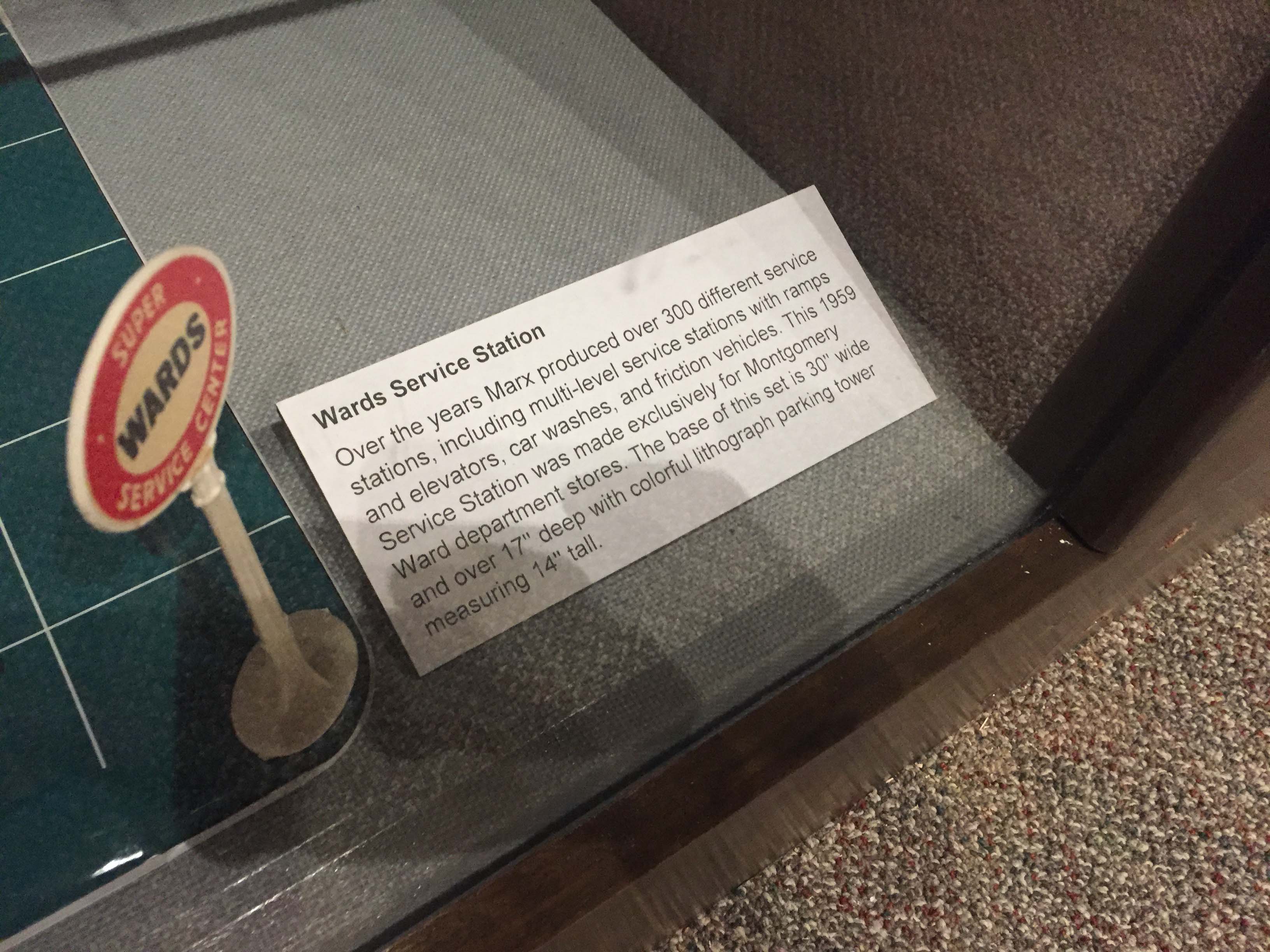
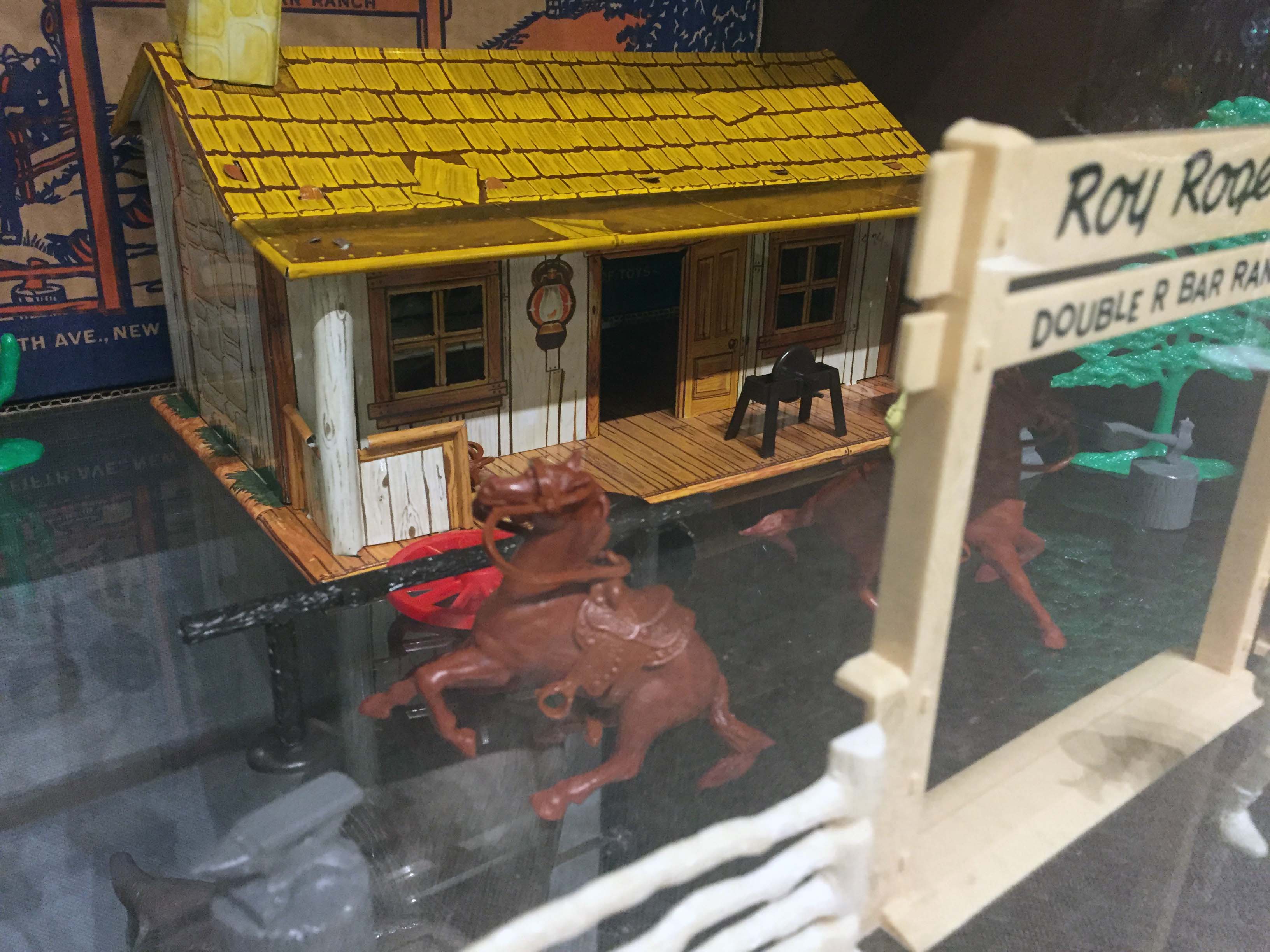
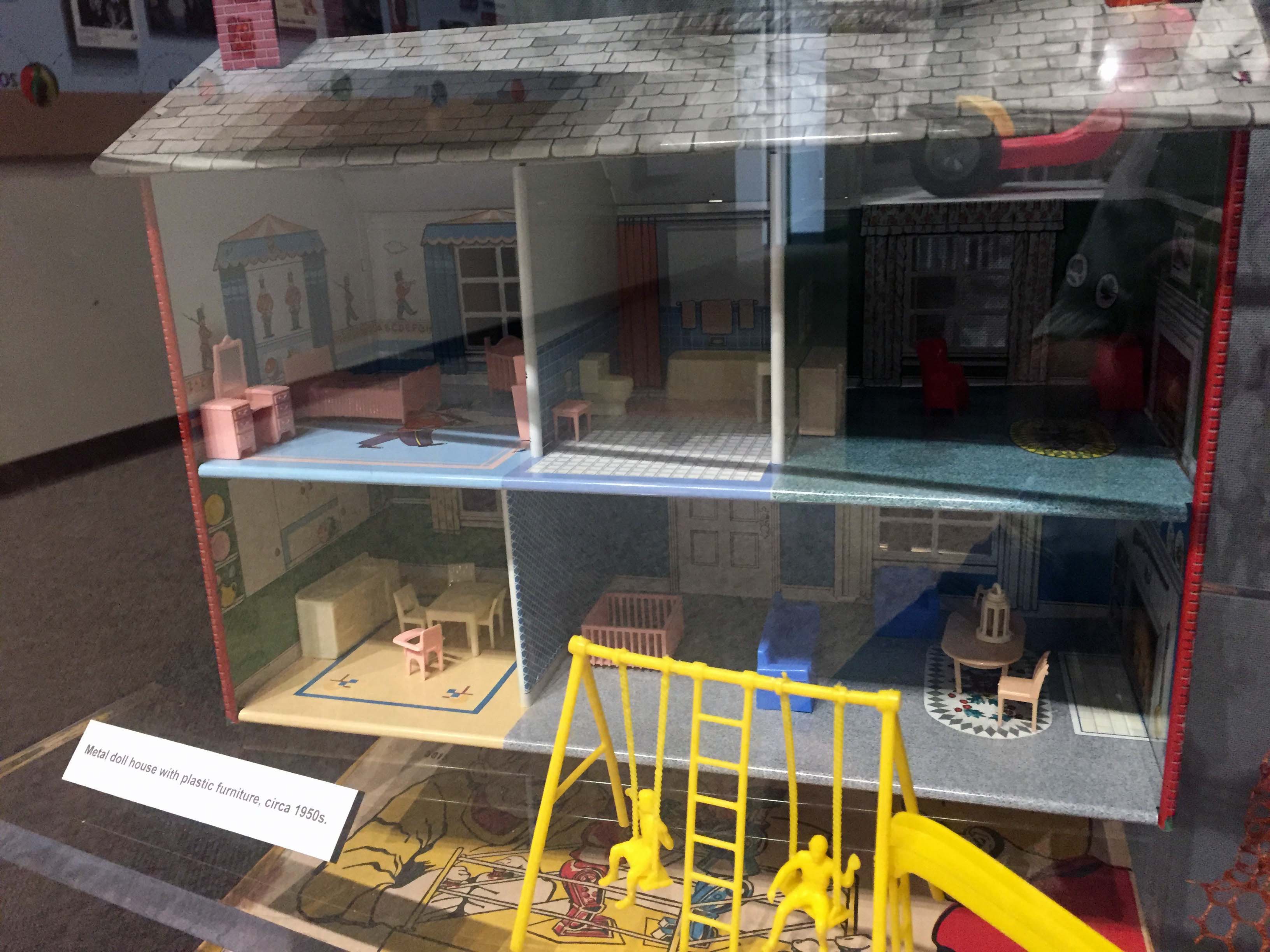
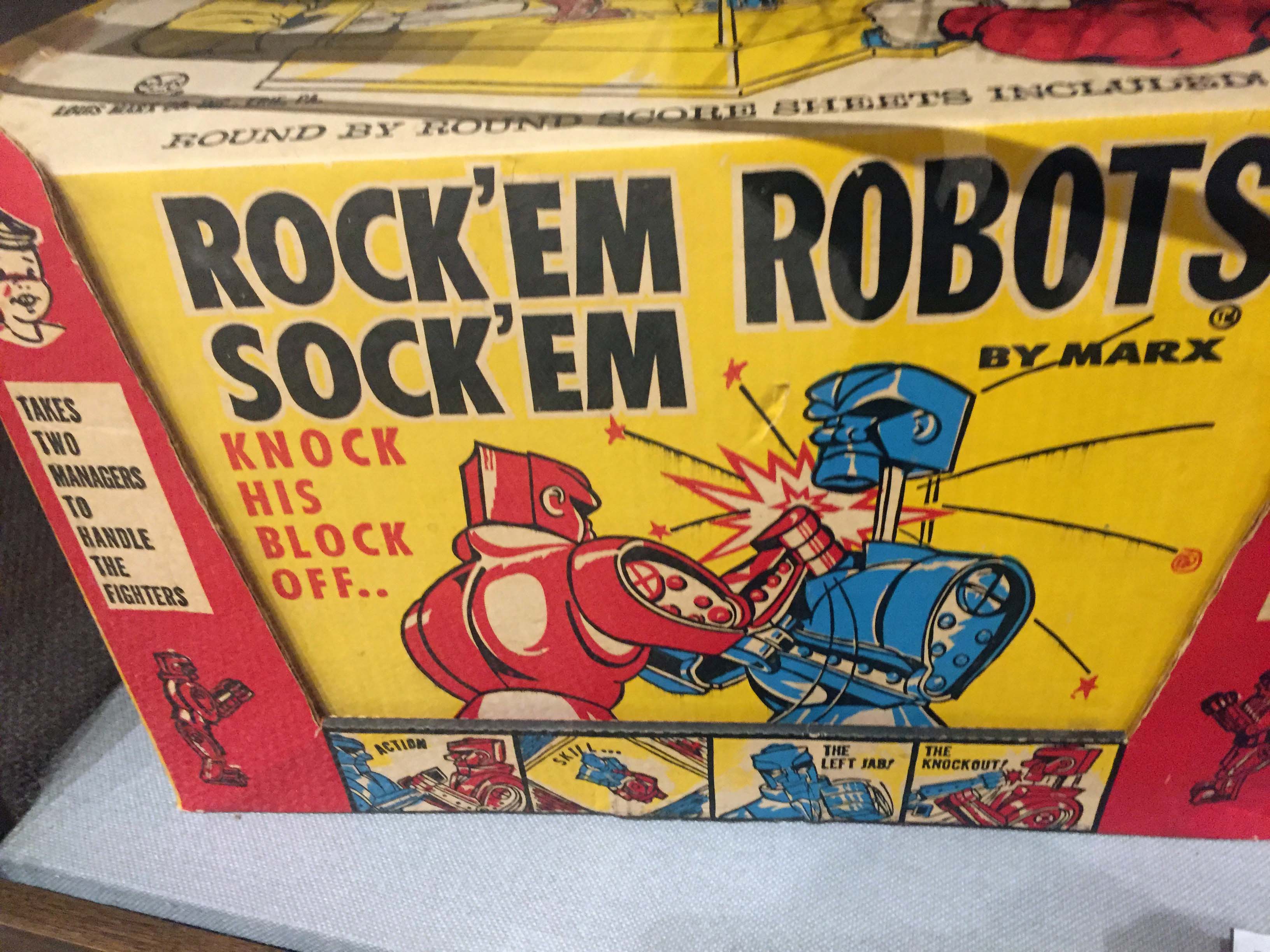
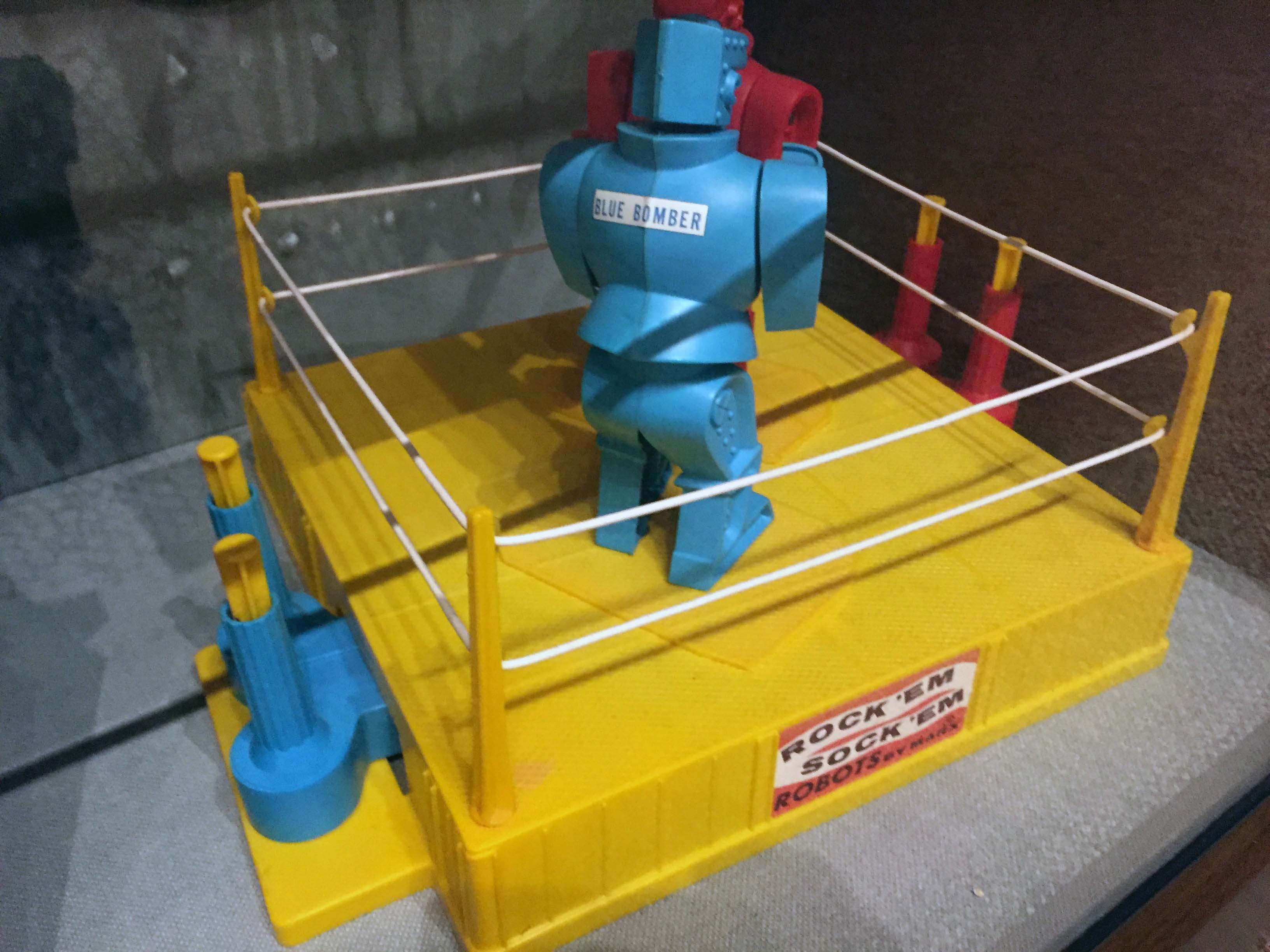
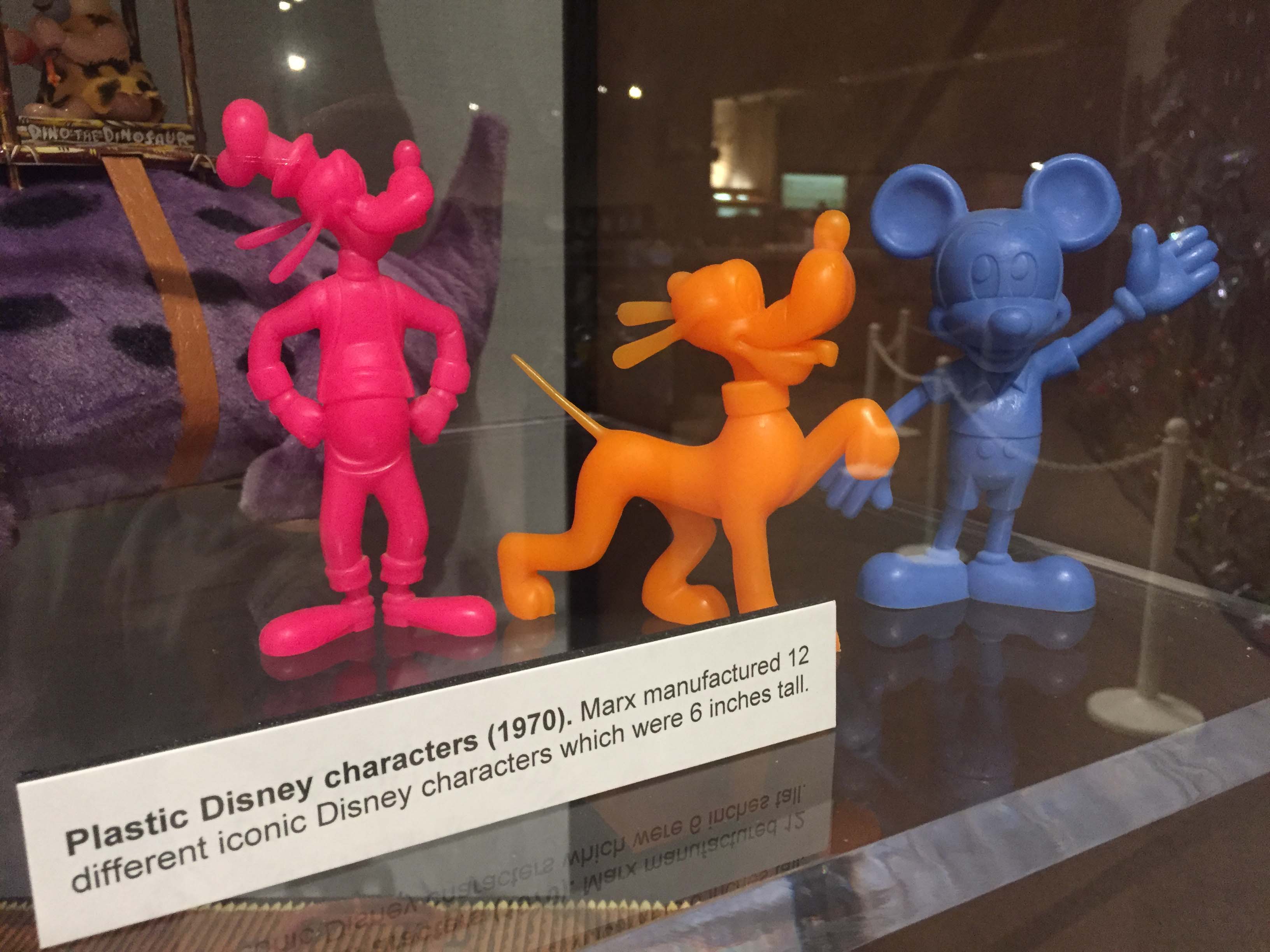
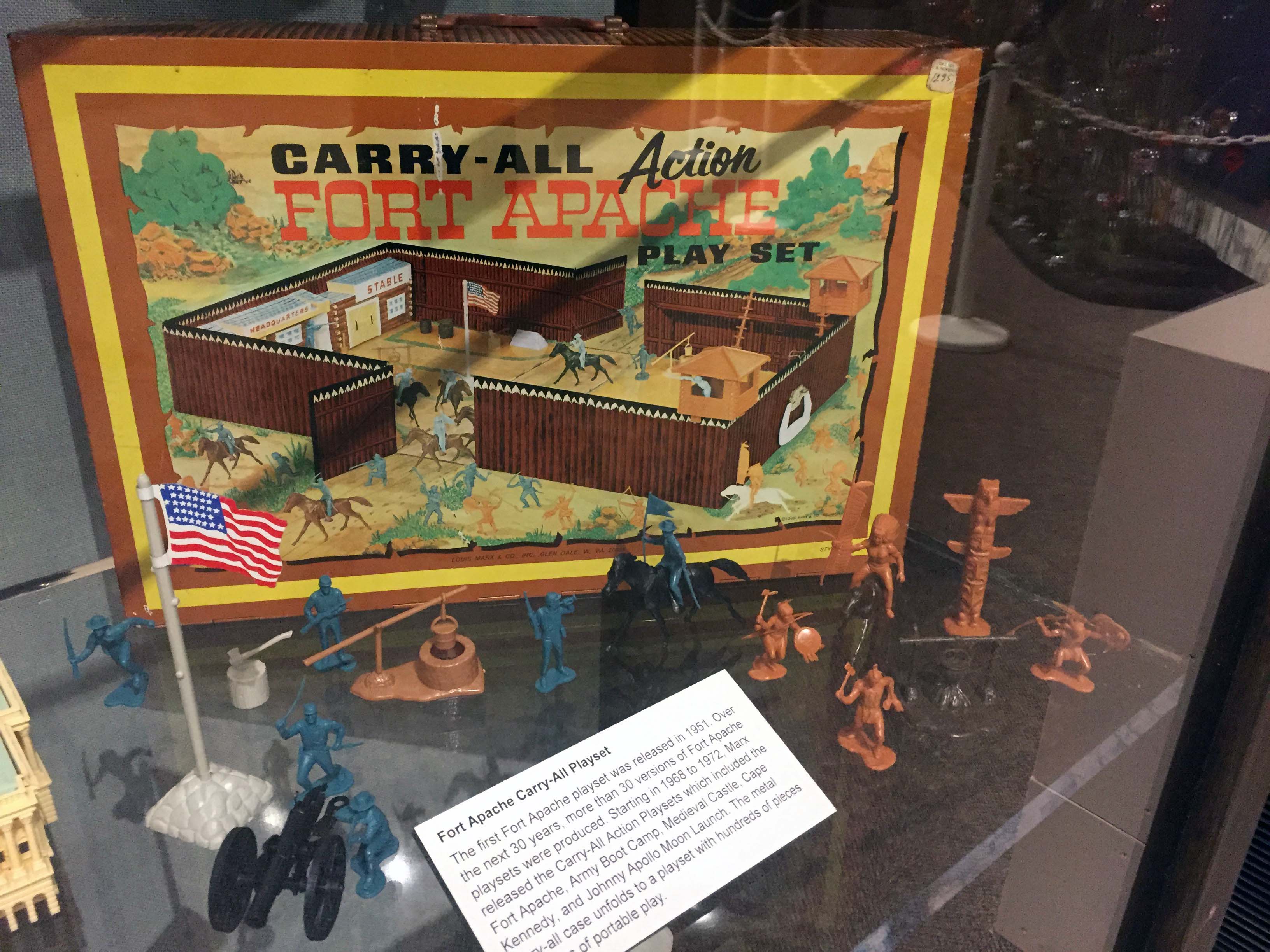
The museum also has great exhibits of the Marble King company, and Marx Toys, which had factories in the area.
Love this marble mural!
A side perspective of the marble mural
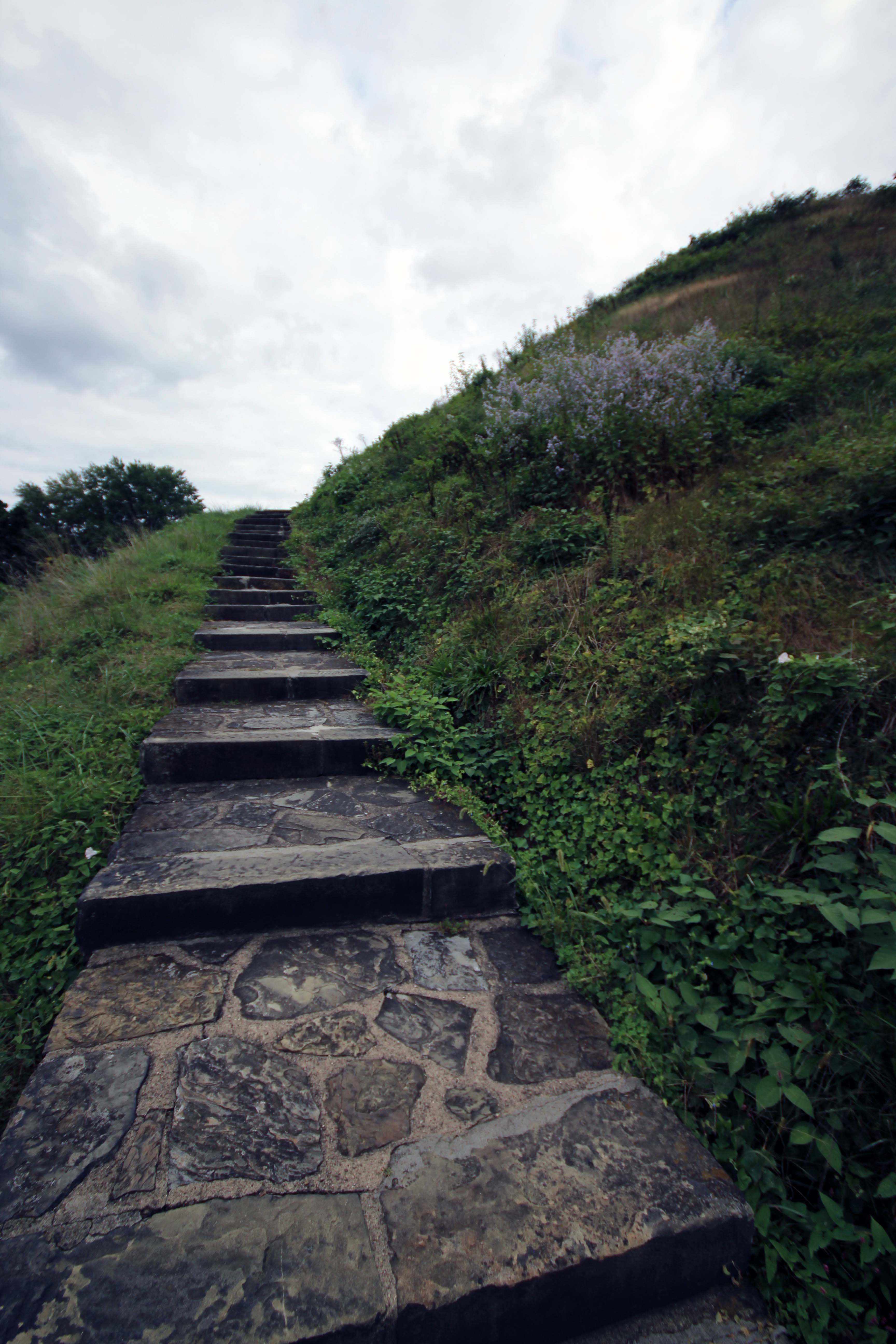
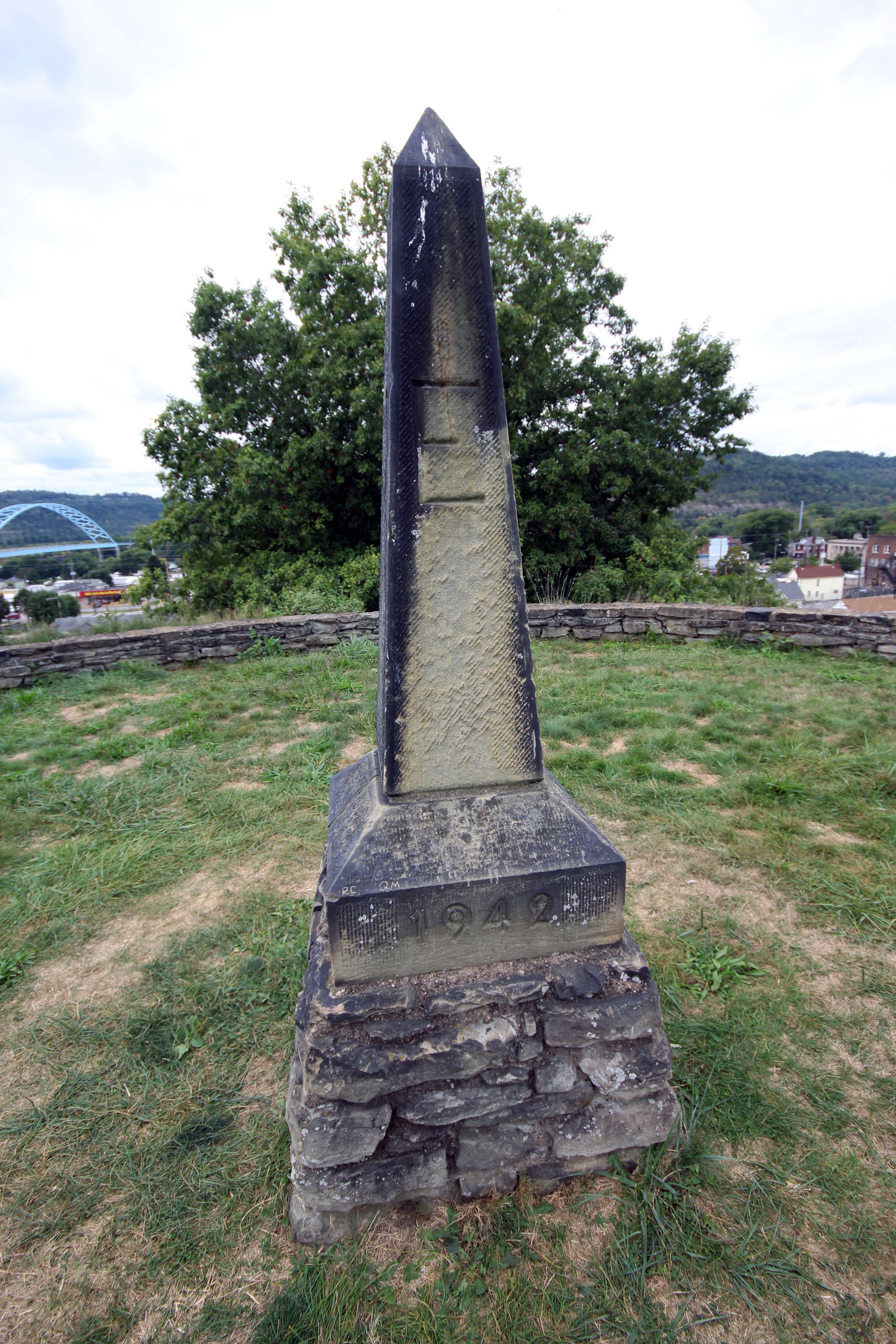
After enjoying all of the exhibits and artifacts inside, I took a stroll up to the top of the mound.
Going down was much easier than going up!!!
Supporting our Blog
We very much appreciate your support of our blog.
You can purchase the ebook telling the story of how we became full-time RVers.
You can purchase our recipe book filled with 80 recipes we have cooked in our RV and taste tested by Lee himself. You can purchase the kindle or paperbackversion on Amazon or buy the Apple version on iTunes.
We are always on the lookout for interesting things to do, so when Cori mentioned we should check out the Palace of Gold in the unincorporated town of New Vrindaban it immediately went on my list. Unfortunately it is in a remote area of West Virginia, so we never “drove by” but it did become one of my main motivators for wanting to explore West Virginia. Because Krishna is a religion, I will be handling this post the same way I wrote about the ARK encounter. I ask that your comments are respectful.
According to their website, “New Vrindaban was founded in 1968 in pursuance of Srila Prabhupada’s mission to give Westerners an alternative to the materialistic way of life and to teach a lifestyle based on the principle of “simple living and high thinking.” The project is named after the holy land of Vrindavan, India, the place of Krishna’s birth, where life is centered around the service and glorification of Lord Krishna.”
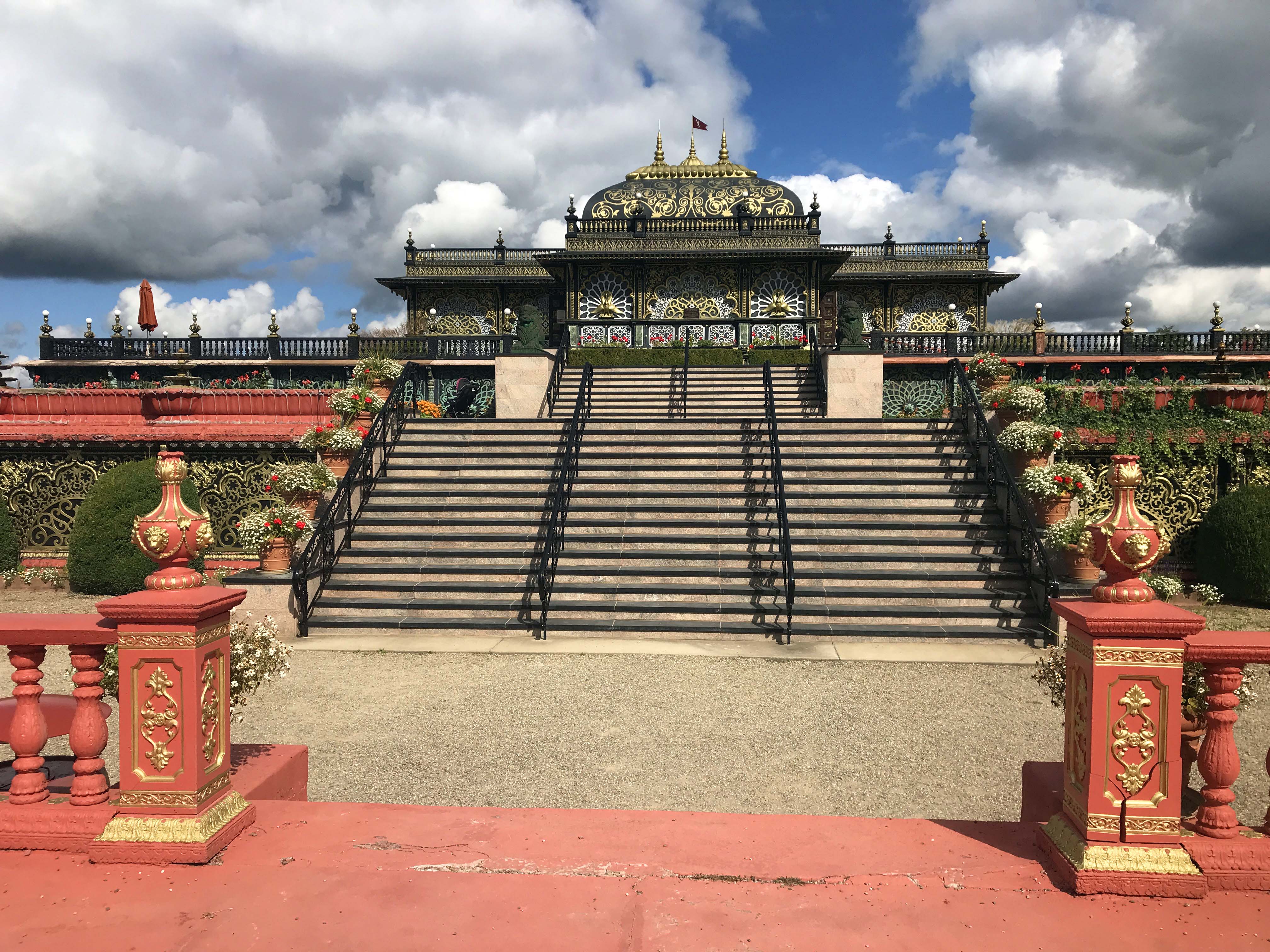
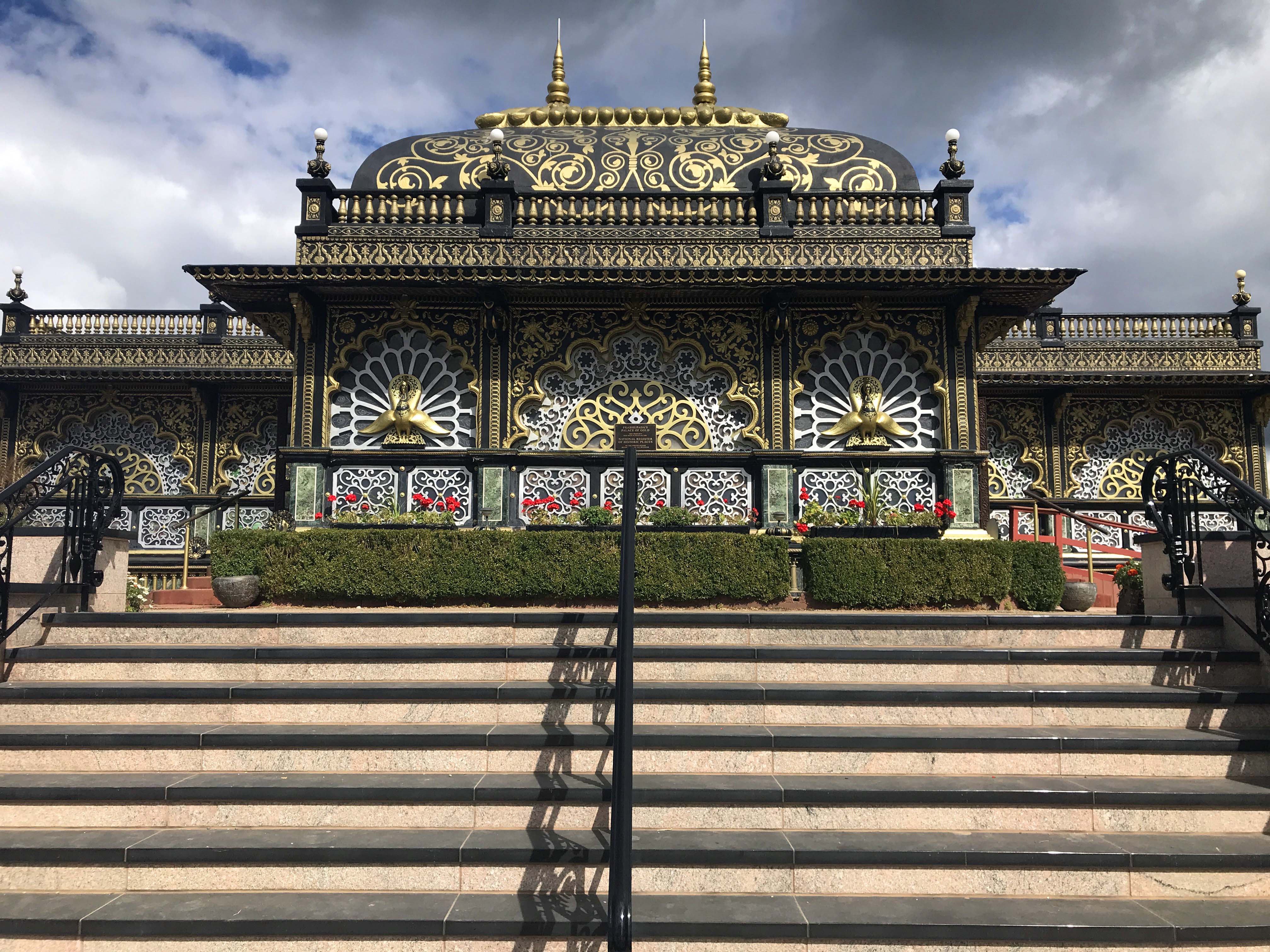
The Golden Palace is at the entrance. We drove past it to get to the visitors center. I definitely recommend you do the same and end with the palace.
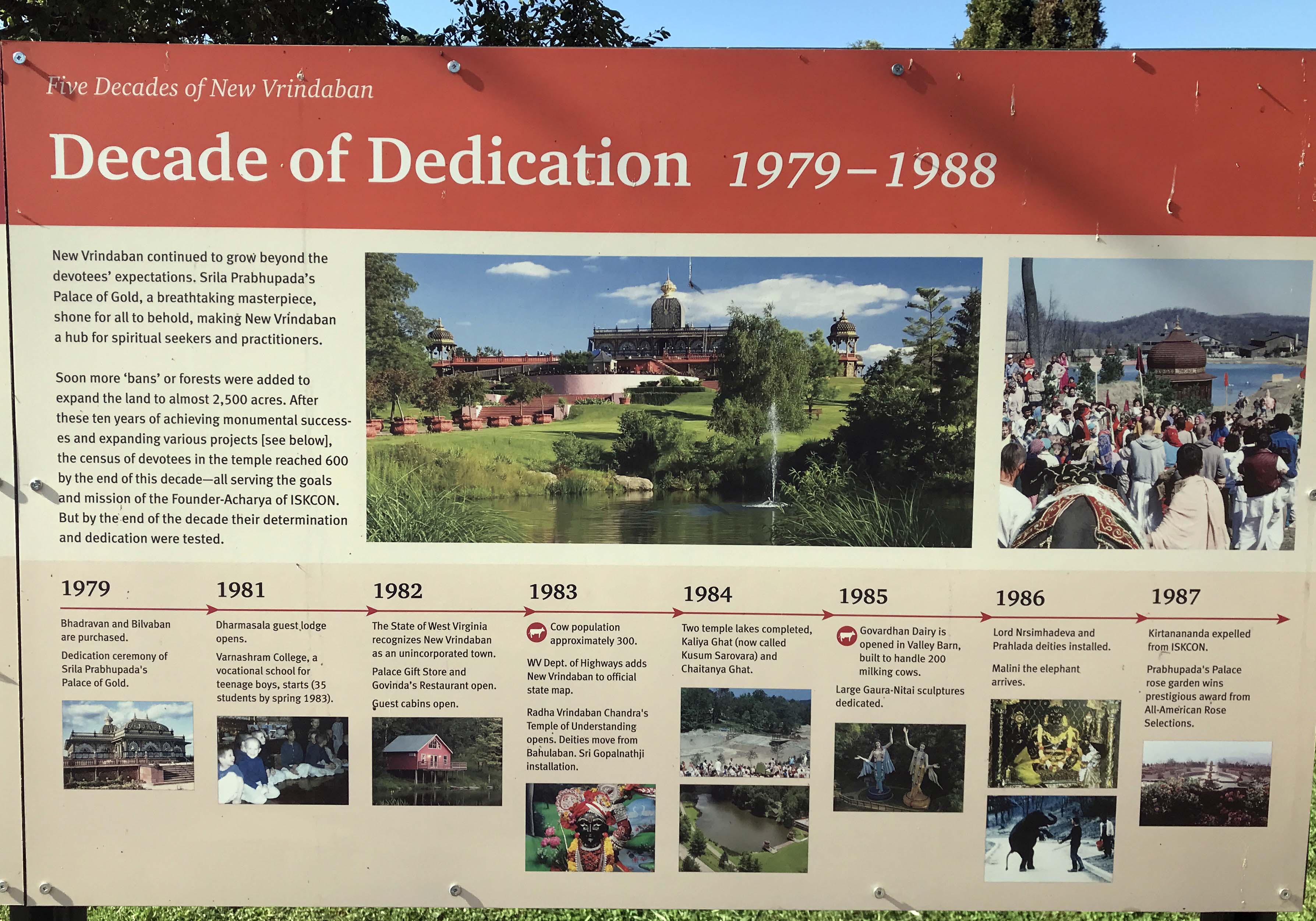
ISKON is the International Society for Krishna Consciousness or is otherwise known as the Hari Krishna movement. If you are old enough, this term probably evokes lots of images of singers in American airports, but the religion was based in India and has over a million followers worldwide. New Vrindaban has had a complicated history with ISKON and for a time was expelled from the parent organization. There was a change in leadership and practices and they were reinstated. These panels show the history if you are interested. I appreciated that they were located right in front of the temple.
.
.
.
We picked up a map here. It is also check in for people staying in the cabins and lodge.
When I saw they only had a vegetarian restaurant I thought Lee might want to leave. 🙂
Map of the grounds
Temple
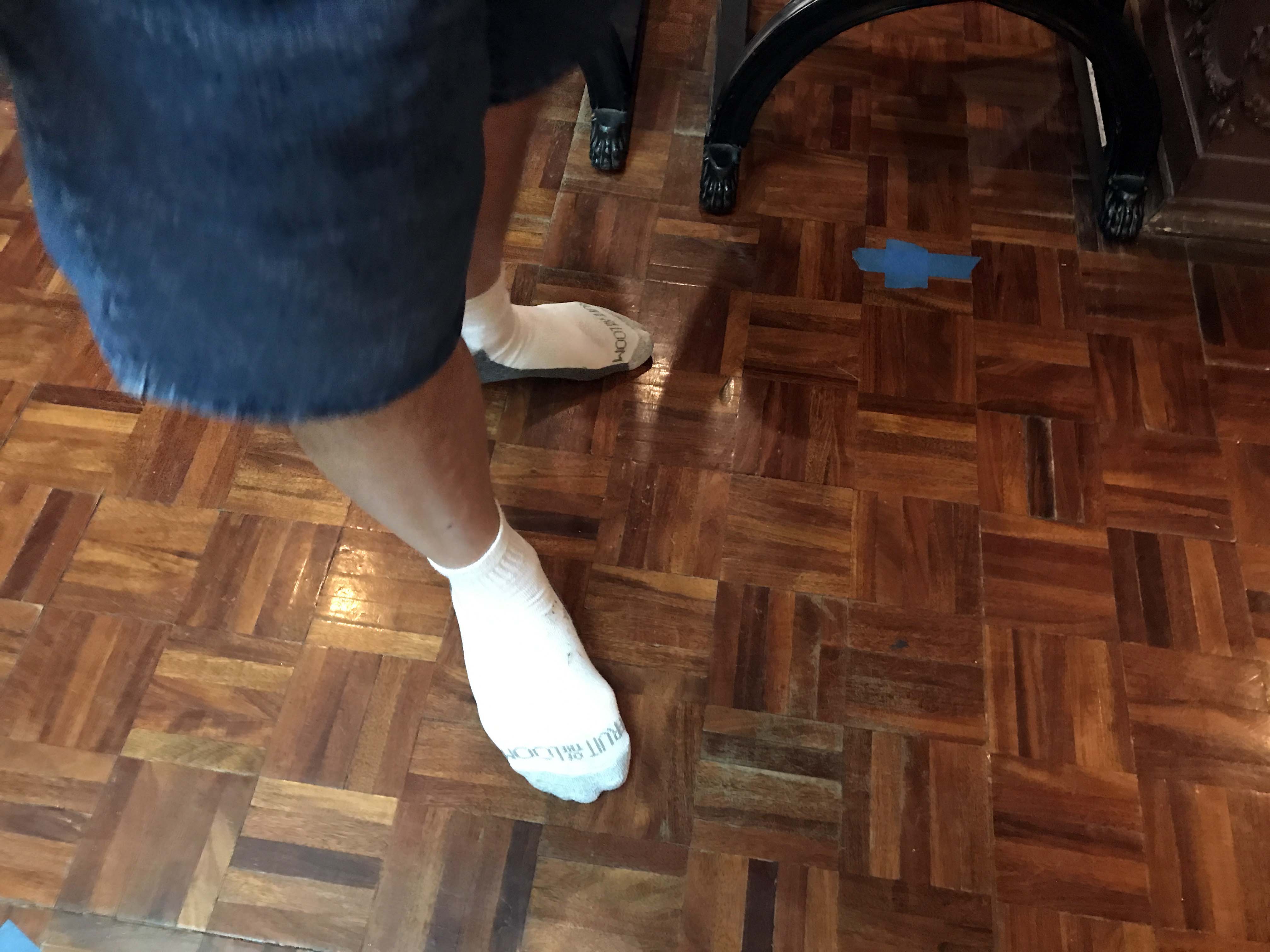
We took our shoes off to enter.
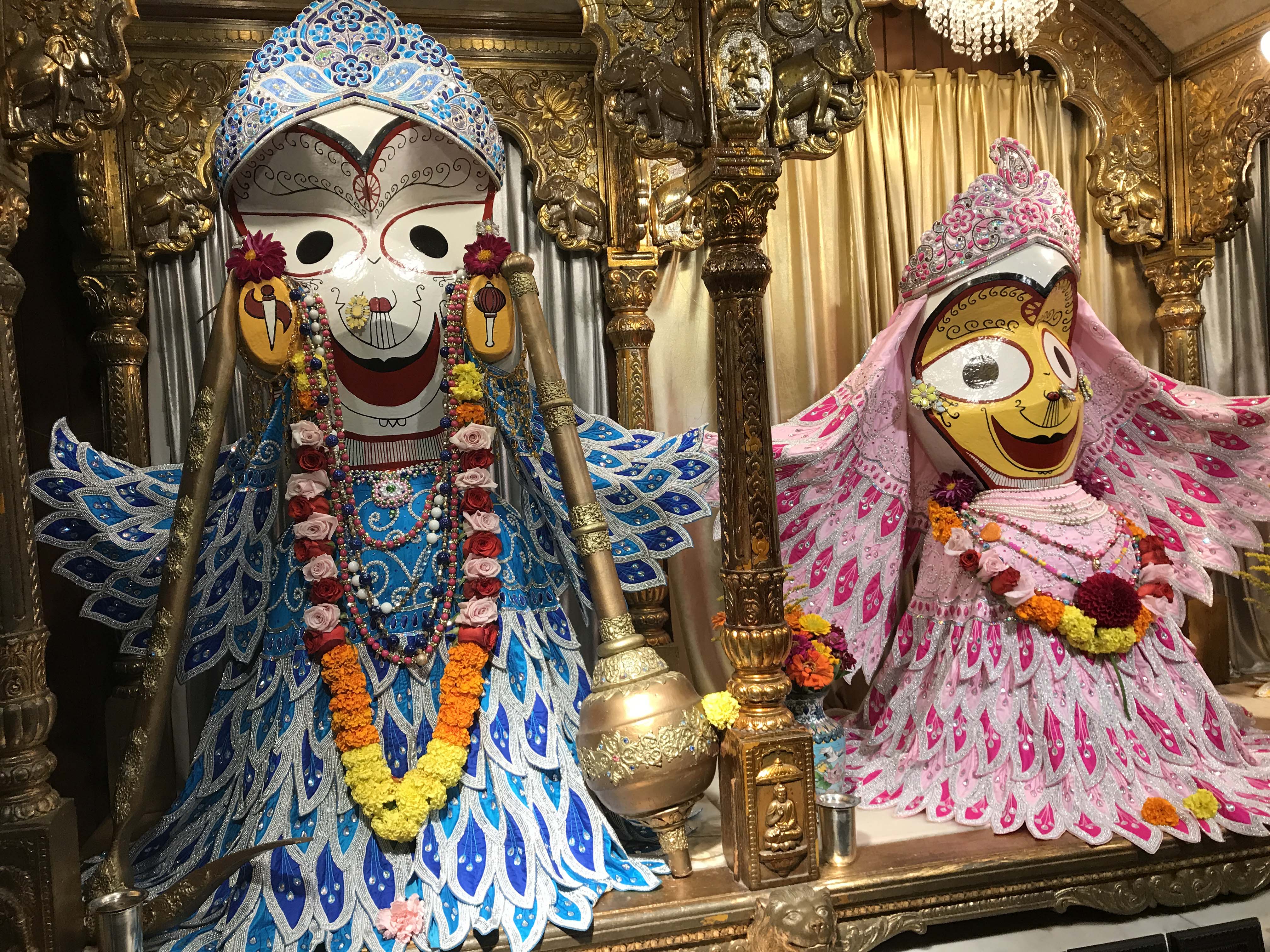
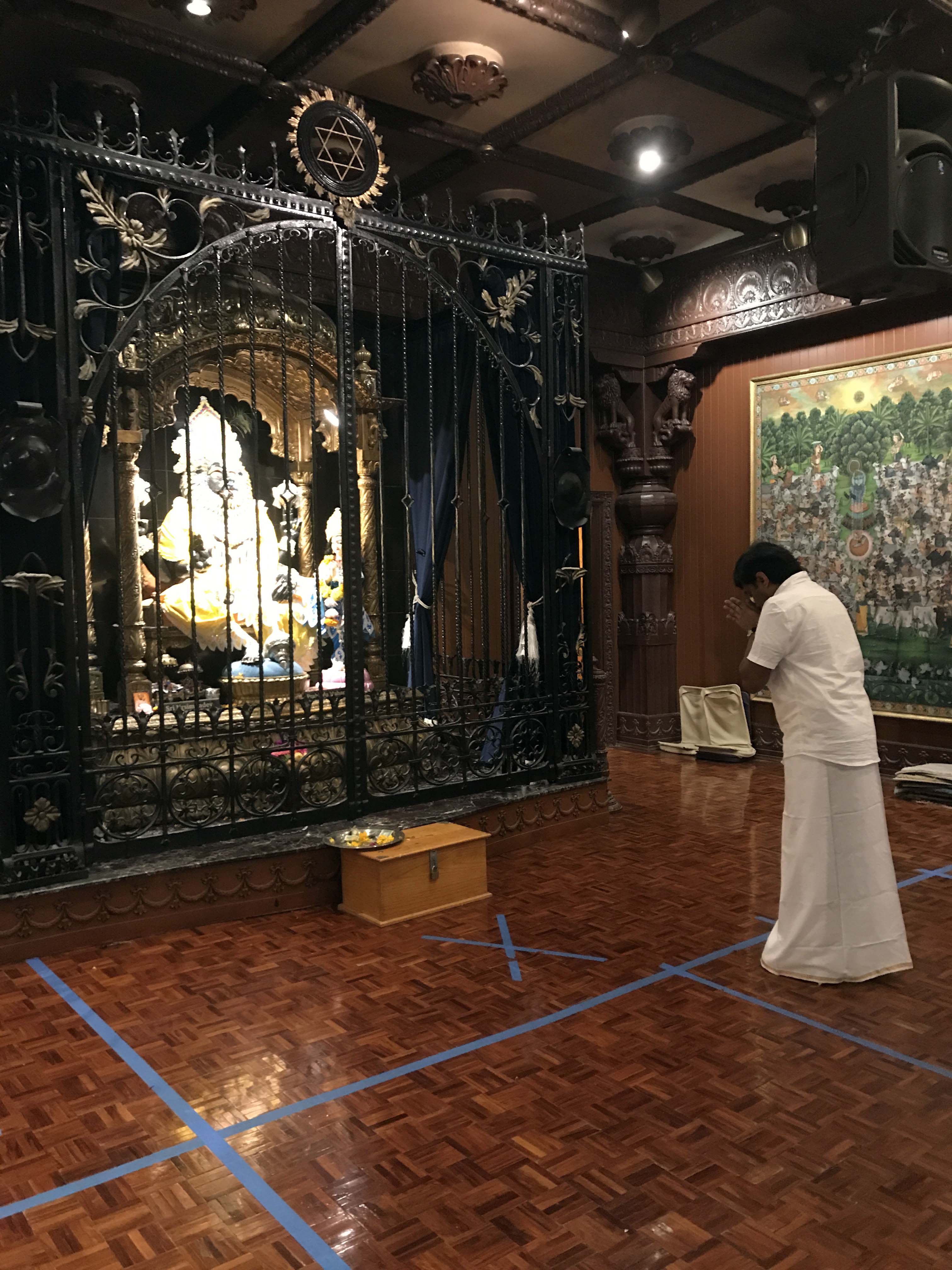
Inside the temple was really amazing. It was a bit crowded with large family groups, but we waited our turn to see the different displays. The religion appeared to be very interactive with offerings made, prayers said, and pictures taken all at the same time. I enjoyed the festive atmosphere, but tried to be careful not to accidentally offend anyone.
Golden Swing
.
Radha is a Hindu goddess who is almost always depicted alongside Krishna and is often revered as the original Goddess. Fresh Flowers are often left as an offering.
.
.
.
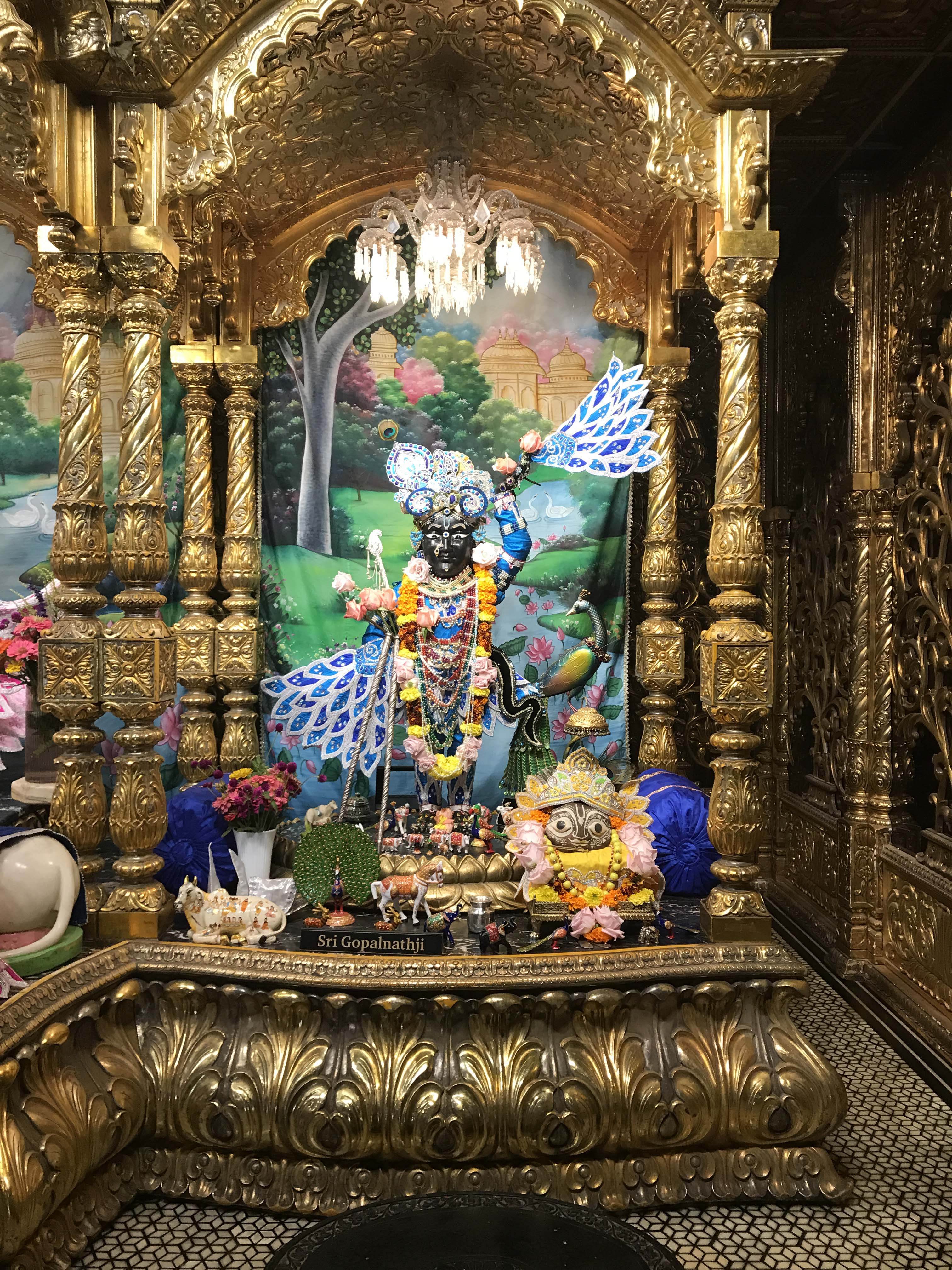
Sri Nathji, the Master of all Creation.
.
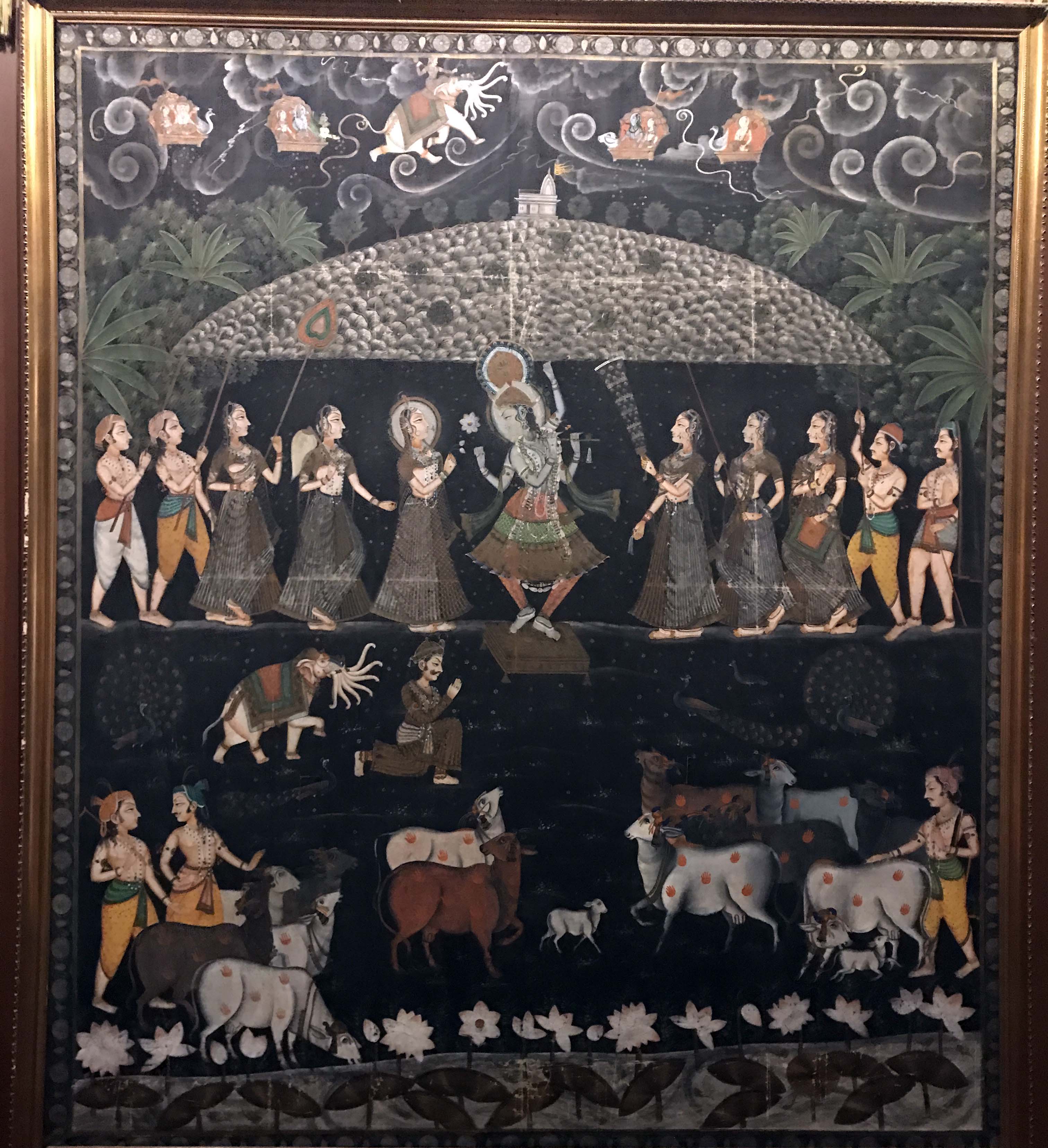
Each display was really elaborate and they also had panels showing stories of Krishna’s life. These reminded me of stories from the bible and I appreciated the elaborate artwork. The most beautiful part though was the ceiling.
.
.
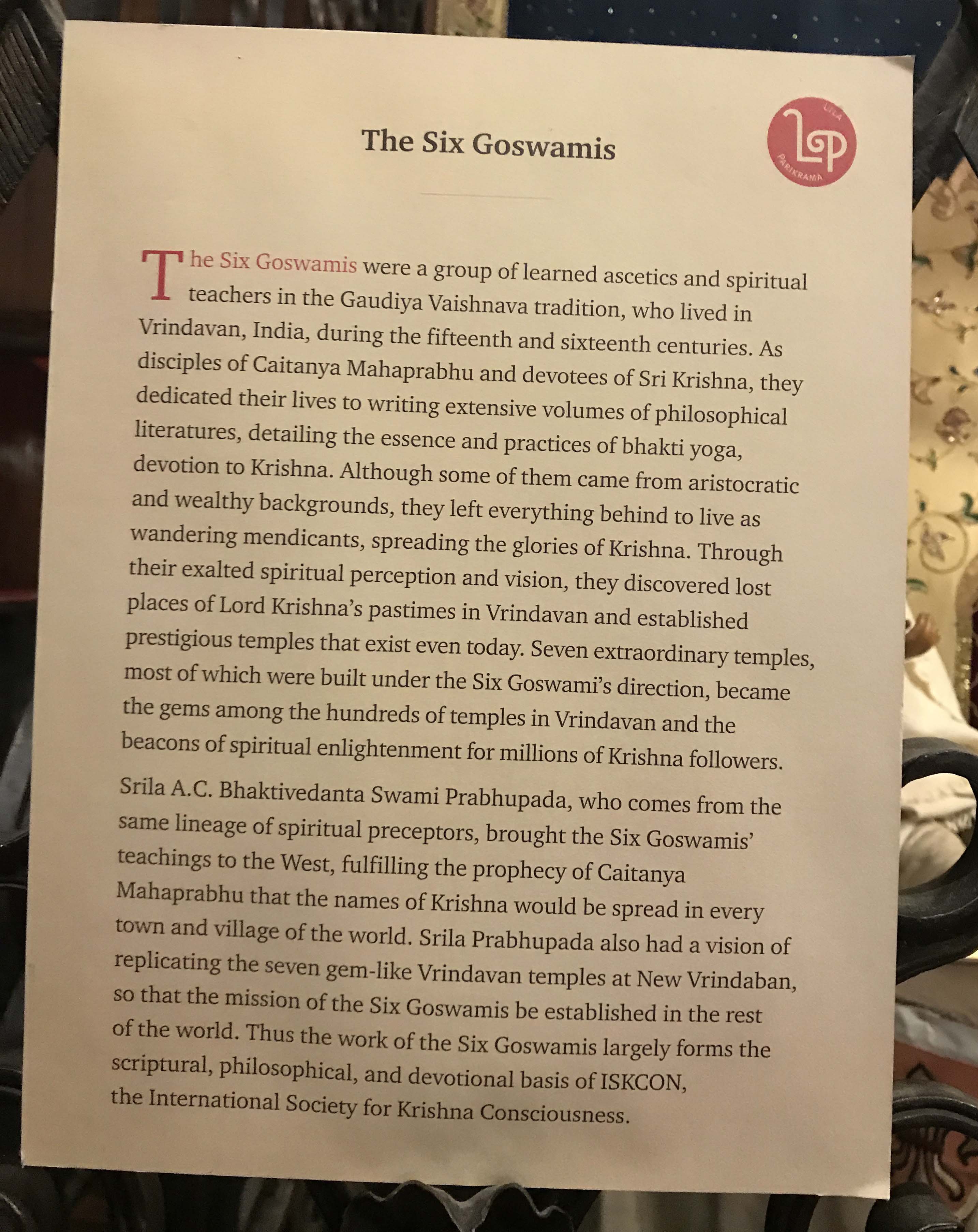
They also had two displays with models of people that were extremely well done. First was the Six Goswamis who were a group of spiritual teachers in the fifteenth and sixteenth century.
.
.
The leader of the movement in the United states was A.C. Bhaktivedanta Swami Prabhupada. This facility was built by a group of followers as part of his vision of spreading the message of Krishna in the west. The Golden Palace, which I will show later, was built by his followers in the hope he would eventually retire there but when he passed away prior to its completion they turned it into a memorial. The statue of the swami was incredibly lifelike.
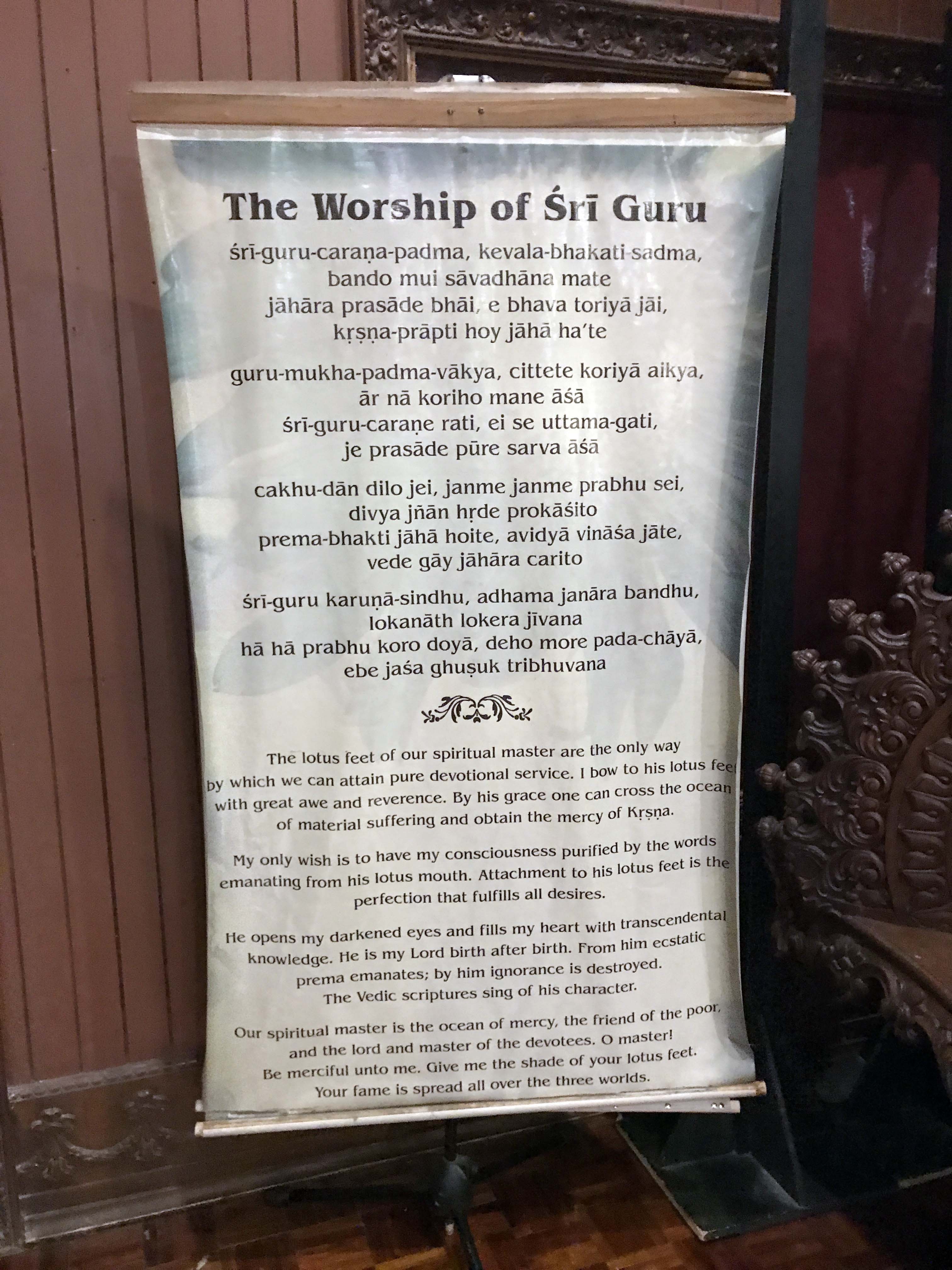
One of the songs that they sing translated into English. The only singing I heard while I was there was off in a distant field where the cows were kept.
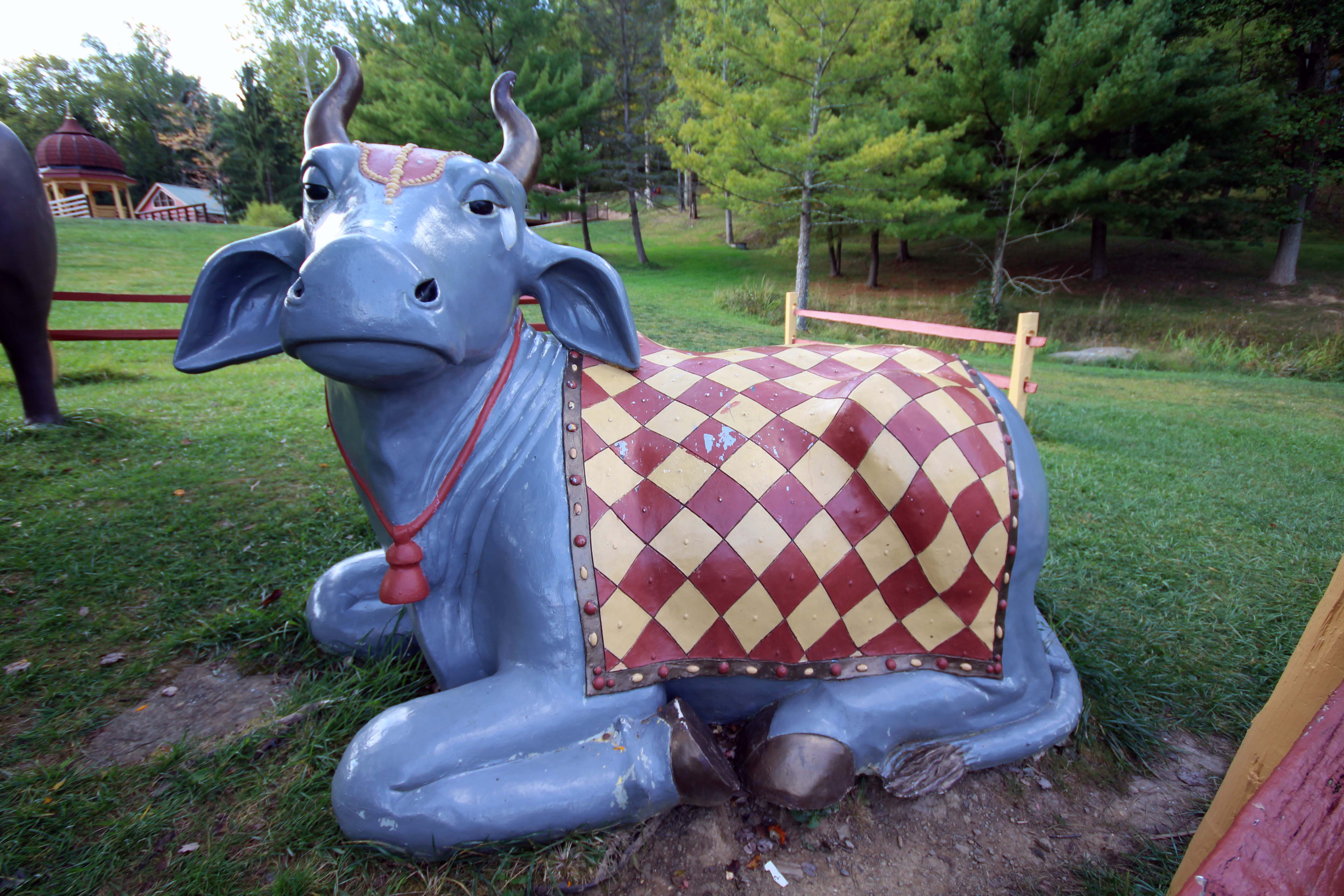
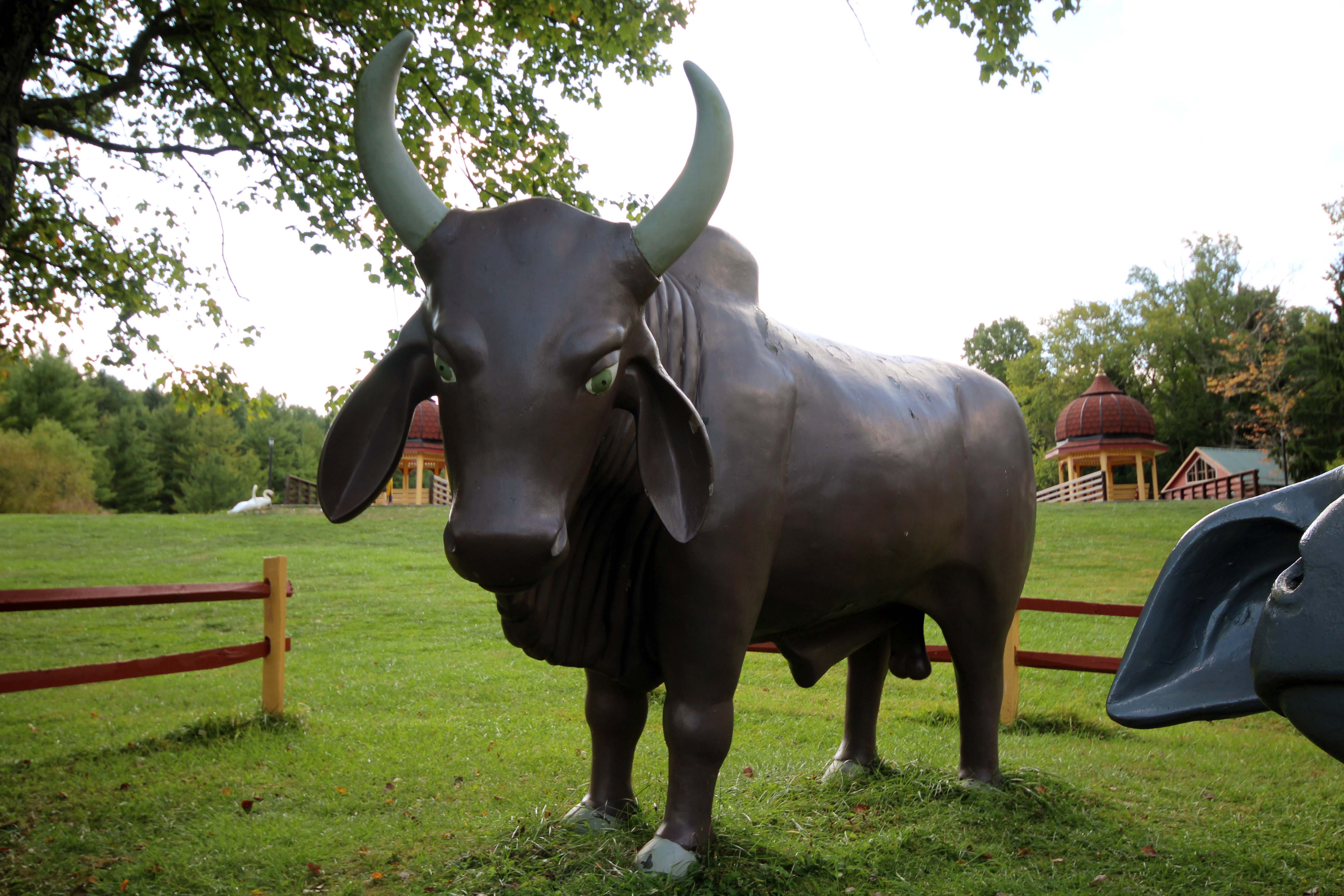
The grounds and temple were free to visit, although they do have a large gift shop and a donation area. The city has America’s oldest cow sanctuary. According to their website, “This traditional Indian practice is based on a sense of gratitude. Since we are nourished by the cow’s milk, she is like our mother and should be cared for with love until the end of her days. The same goes for the bulls who are like our father because they are engaged in working the land. We show due respect for these sacred animals and never send them to slaughter.”
.
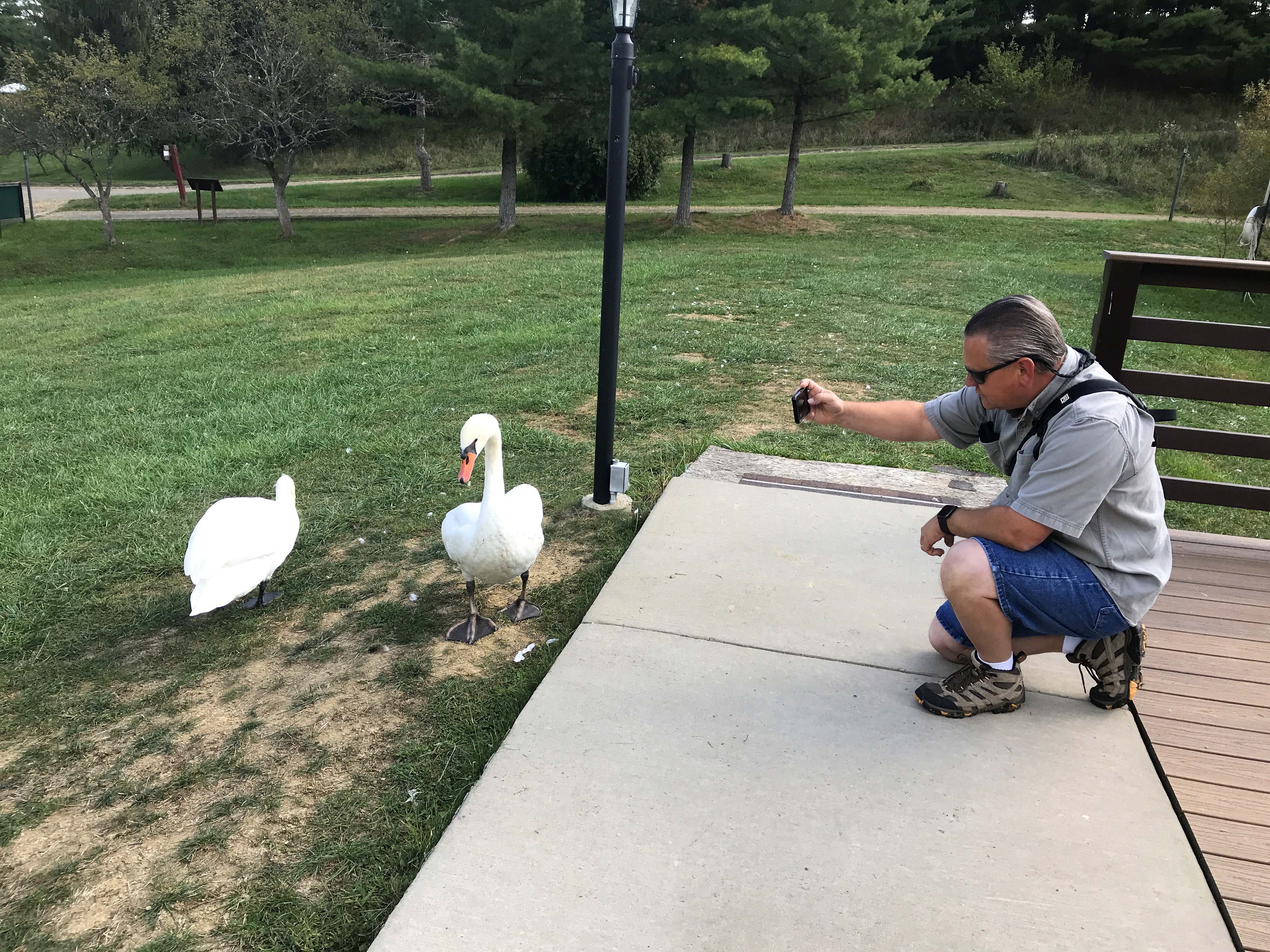
After seeing the temple, we put our shoes back on a walked the grounds. They are really beautiful with swans and peacocks and children were encouraged to laugh and play.
Lee got pretty close to the swans
This may be one of my favorite pictures I have ever taken.
They also had peacocks including a cool white ne. I dont think I have ever seen an albino peacock before.
The peacocks have their own house
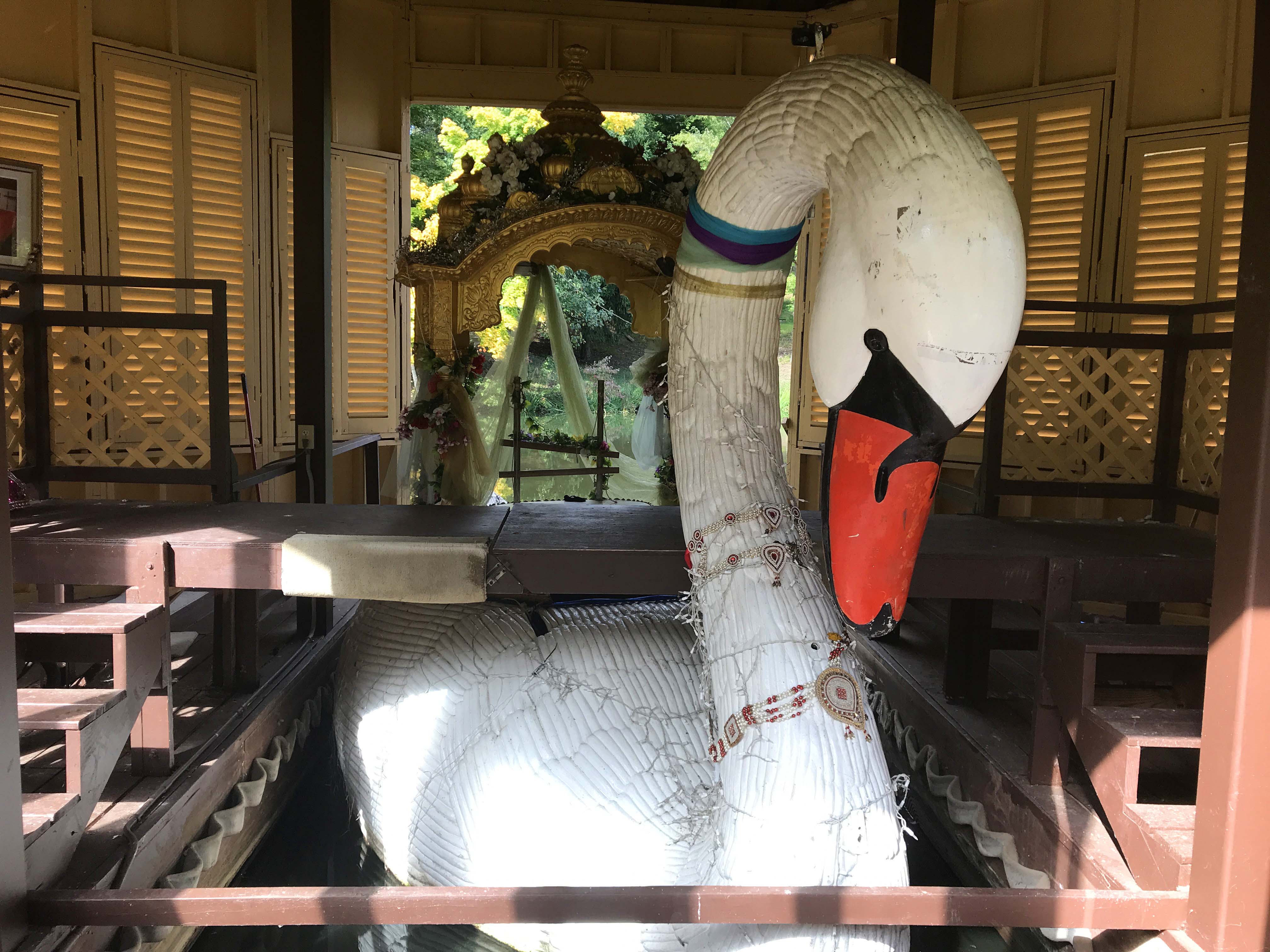
Inside one of the buildings they had a huge swan boat
This made me wonder if they do weddings here and they have in the past.
.
.
There was a small section in the back that looks like it might have been a graveyard but it was difficult to tell. There were only a few monuments.
I saw this symbol several times and it reminded me of the Star of David. After researching I learned that the Jews adopted this symbol from the Hindus where is was the symbol for Anahata or the heart chakra.
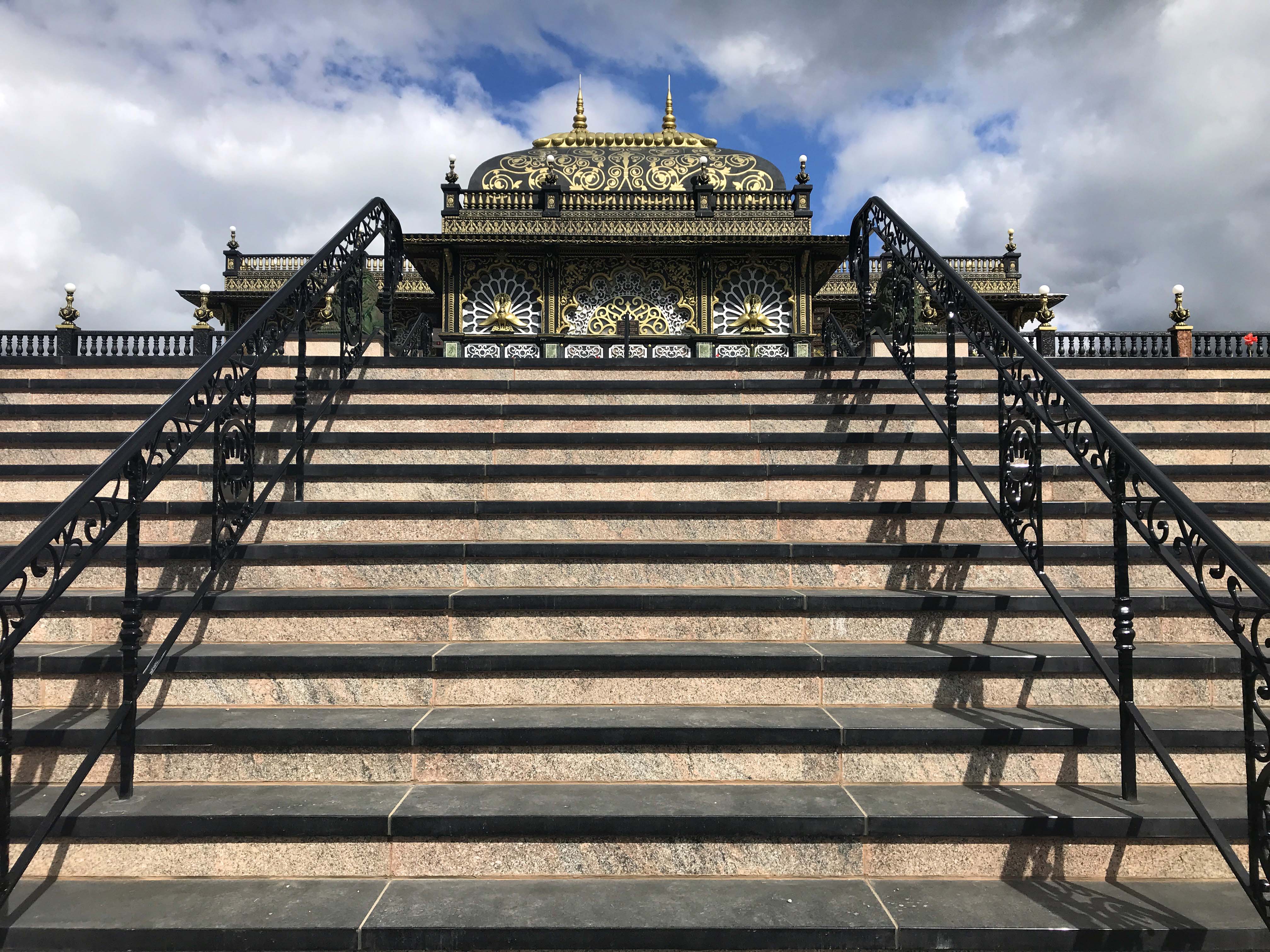
After we toured the grounds, we drove up to the palace of gold. and walked the gardens. They were absolutely beautiful and the best part of the day for me.
.
.
.
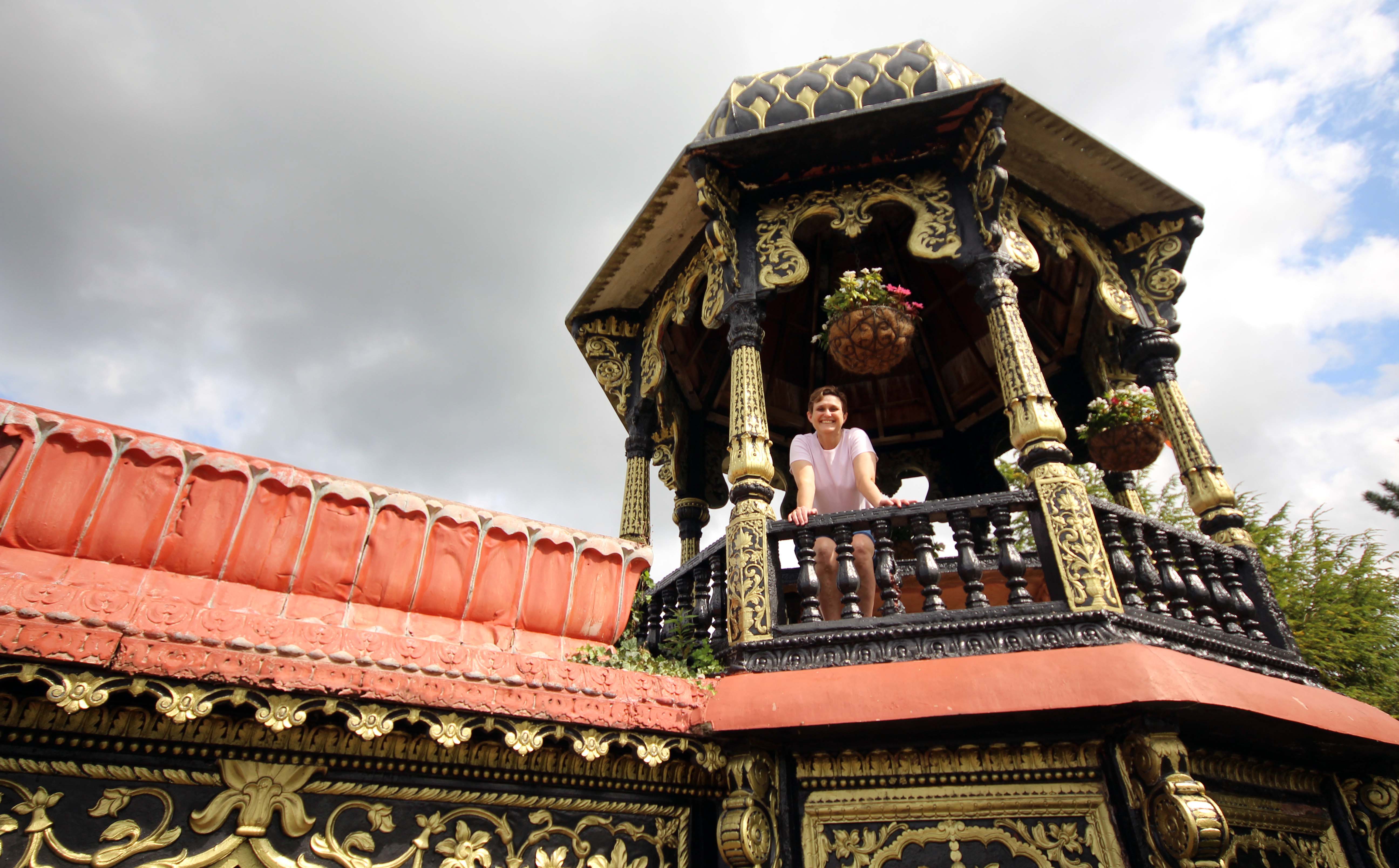
I liked that the balcony had one bench
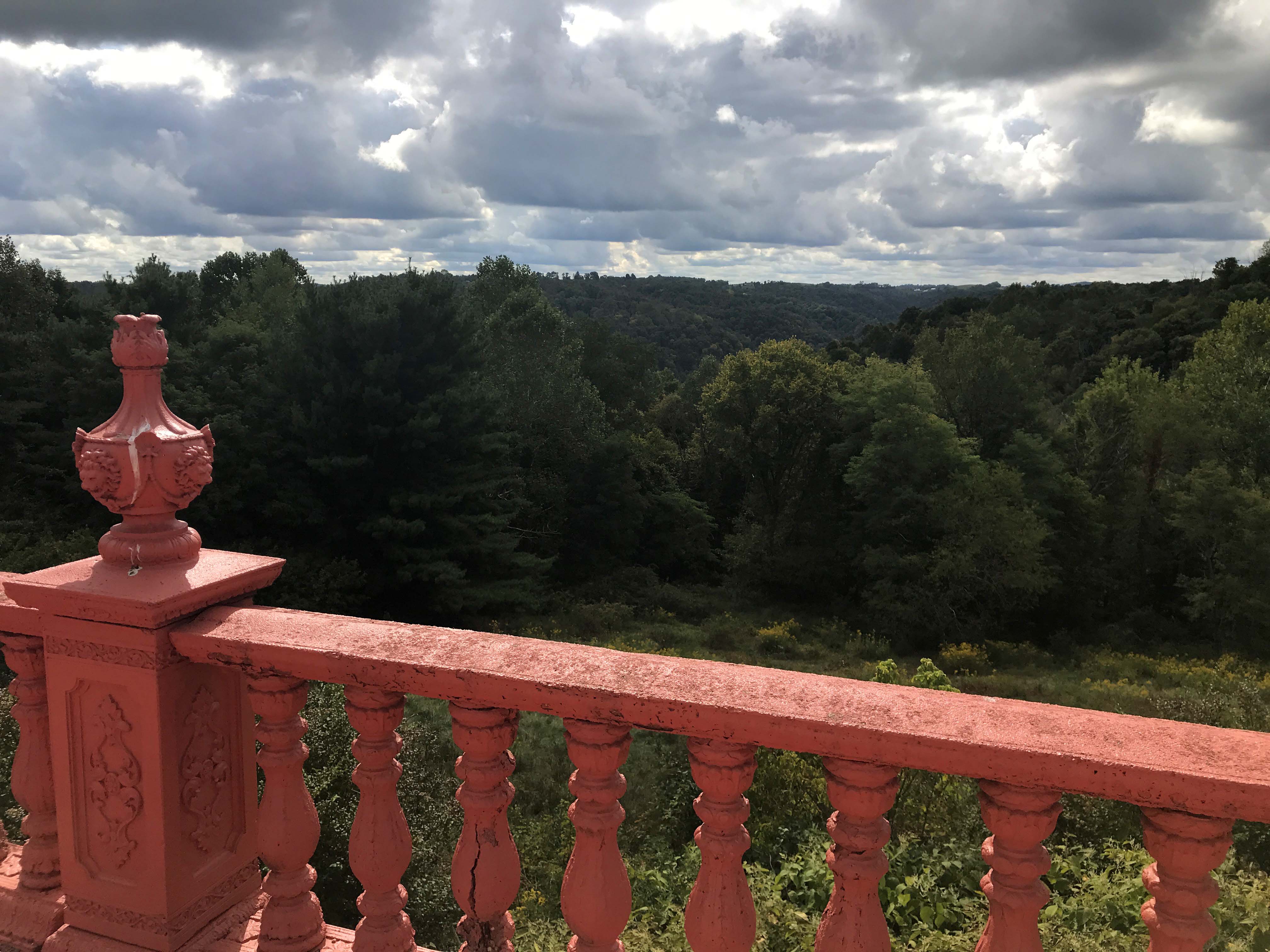
Gorgeous views.
View of the palace from the balcony
.
You just don’t expect to see something like this in West Virginia.
All four side were gorgeous
Inside one of the four pagodas
Again beautiful view
My favorite picture of Lee’s of the day. Deb I think you will love this one.
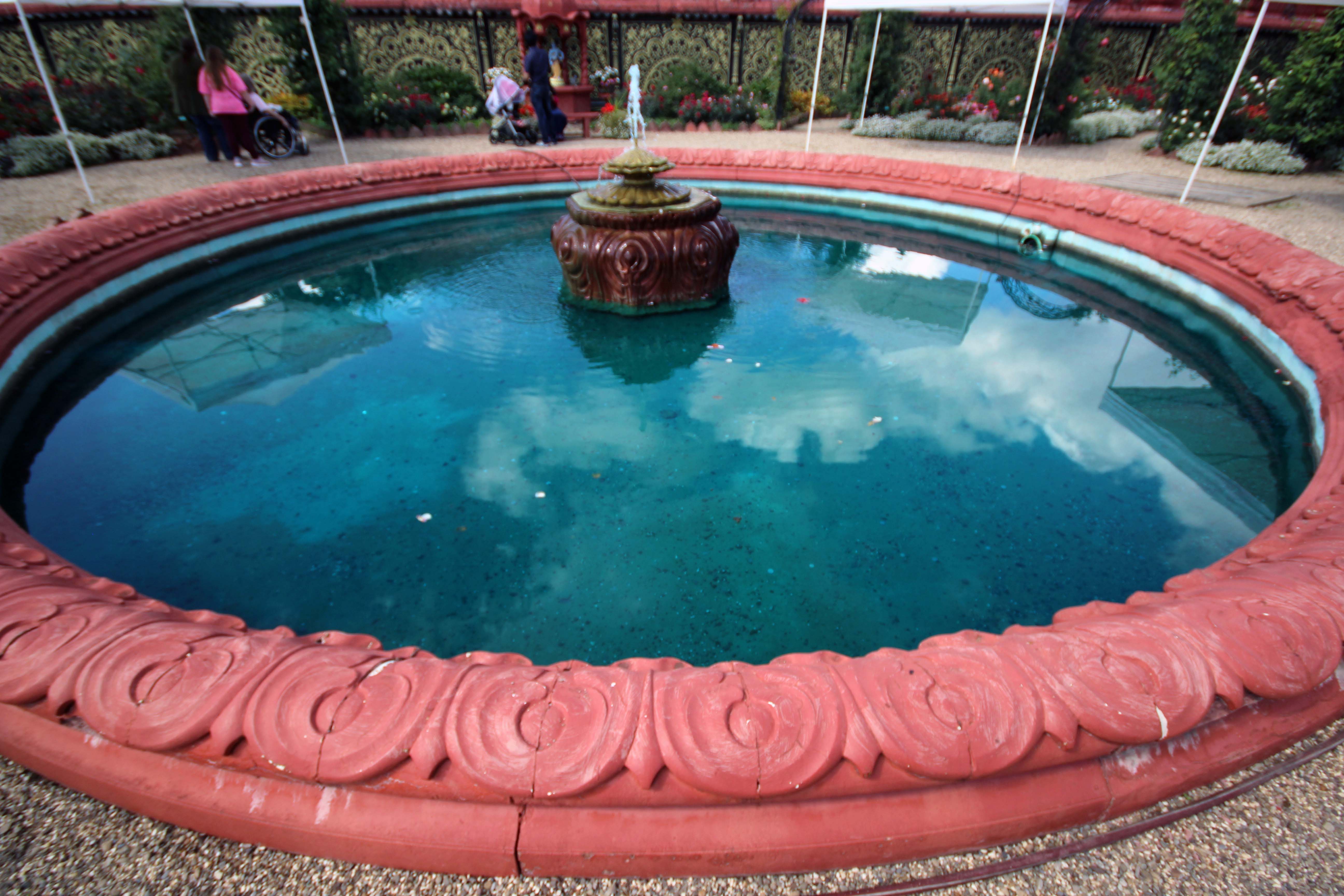
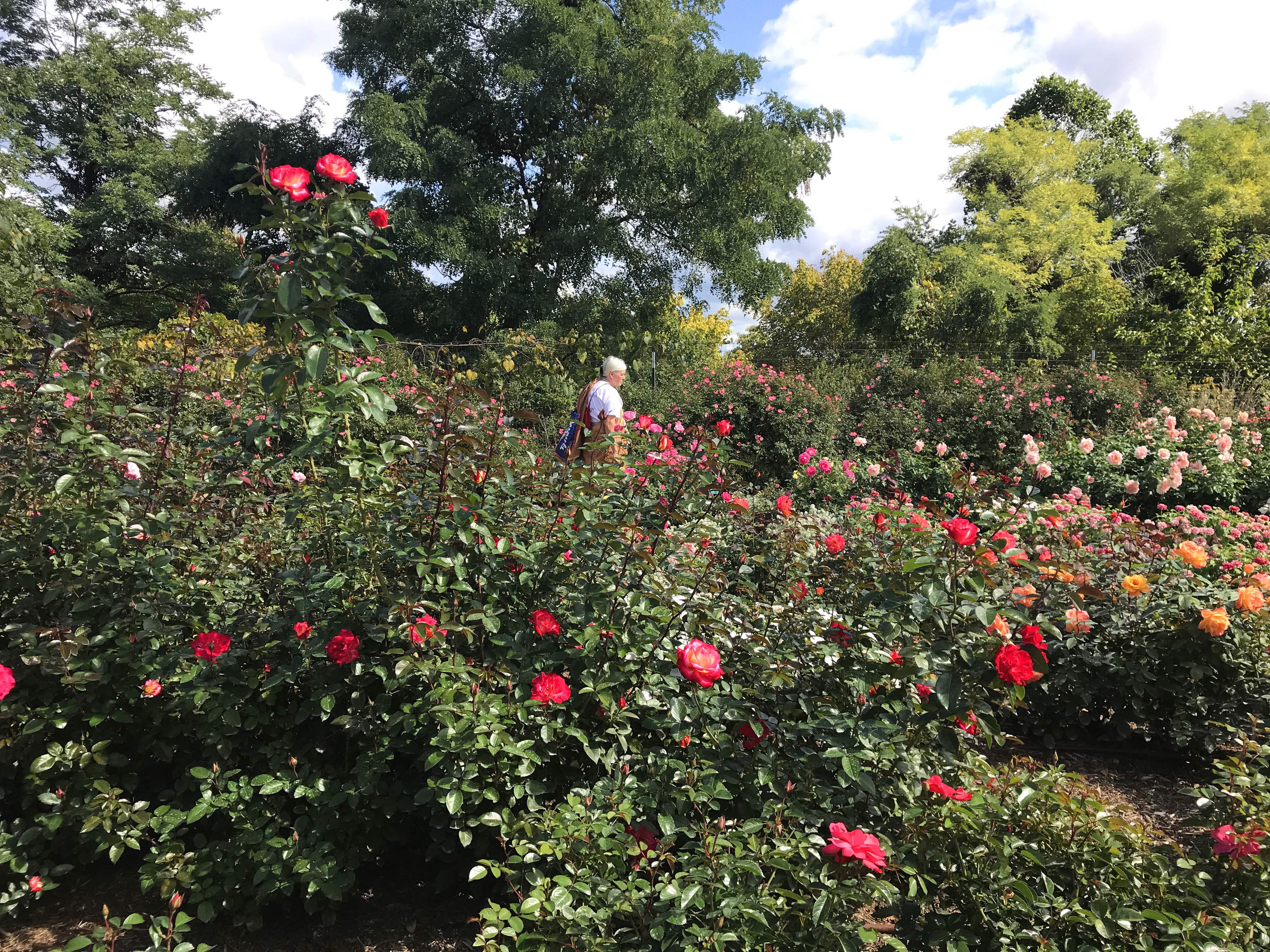
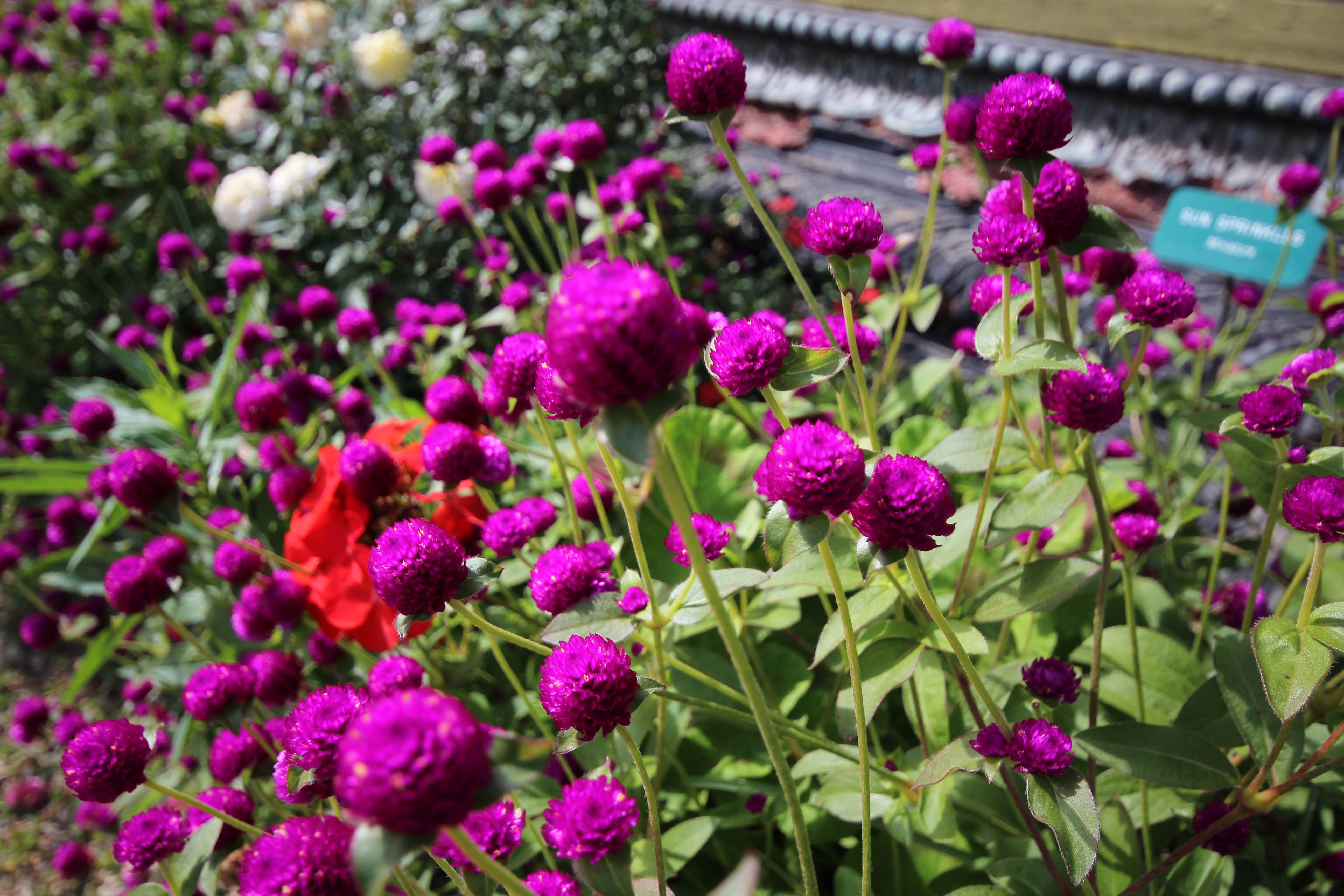
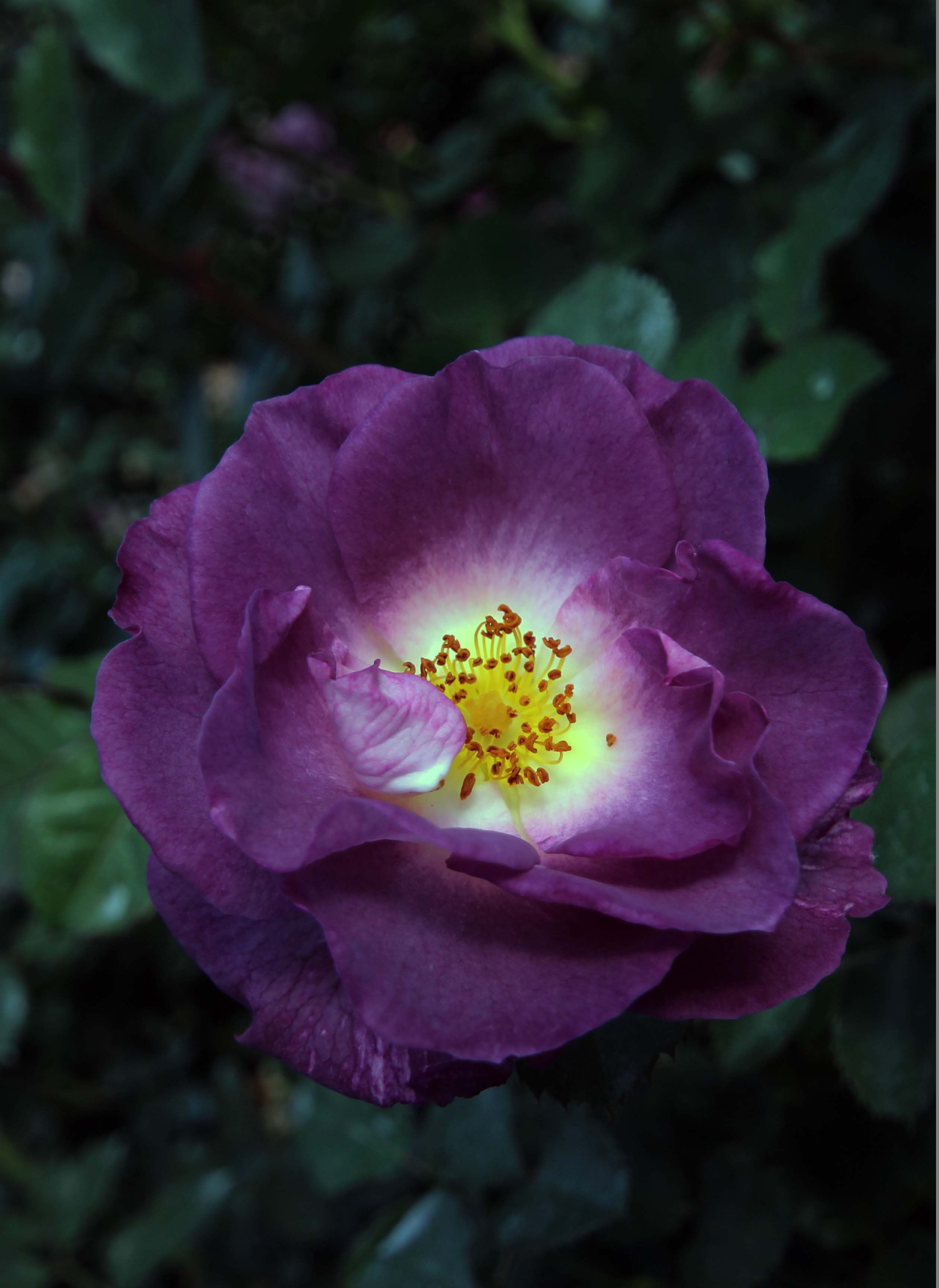
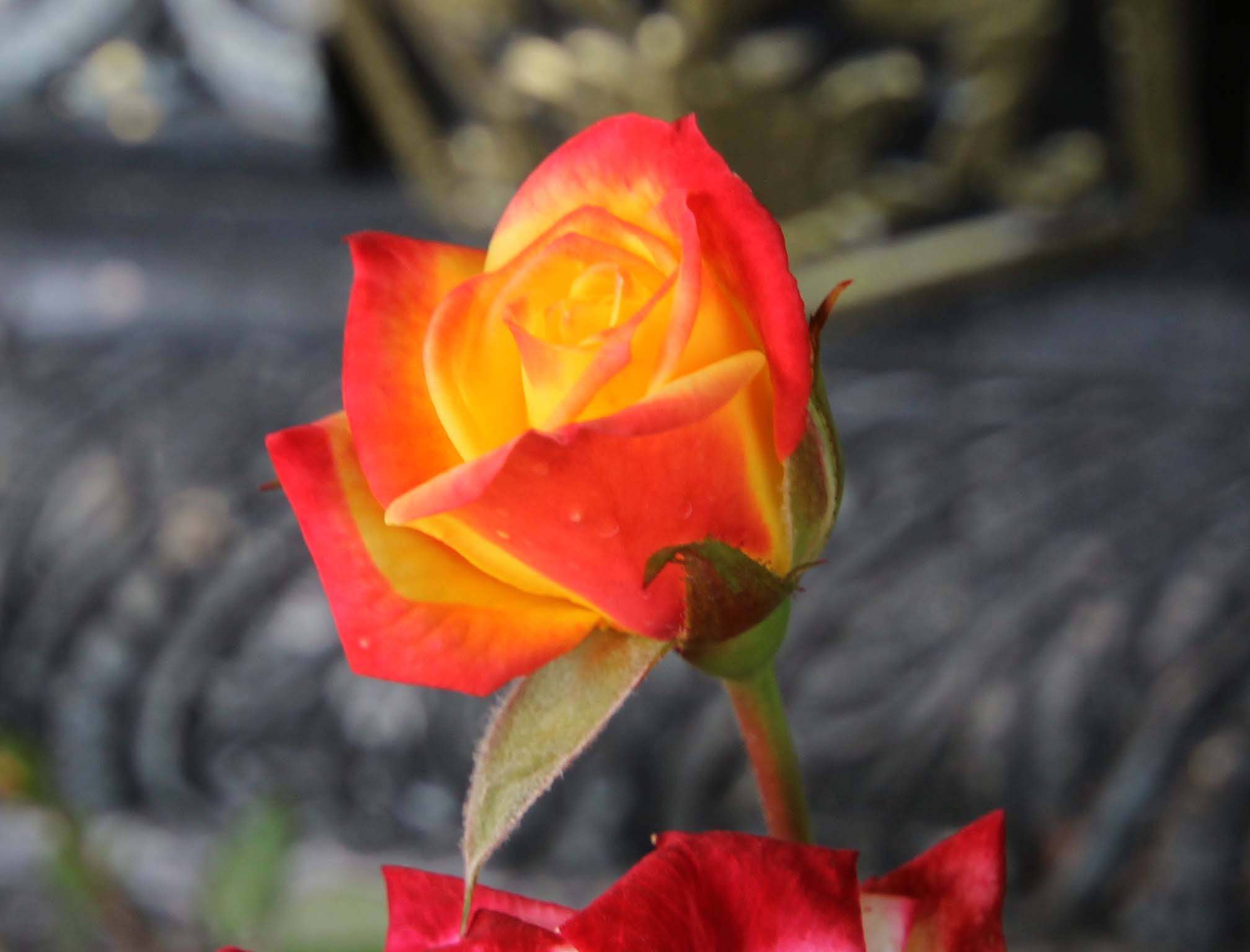
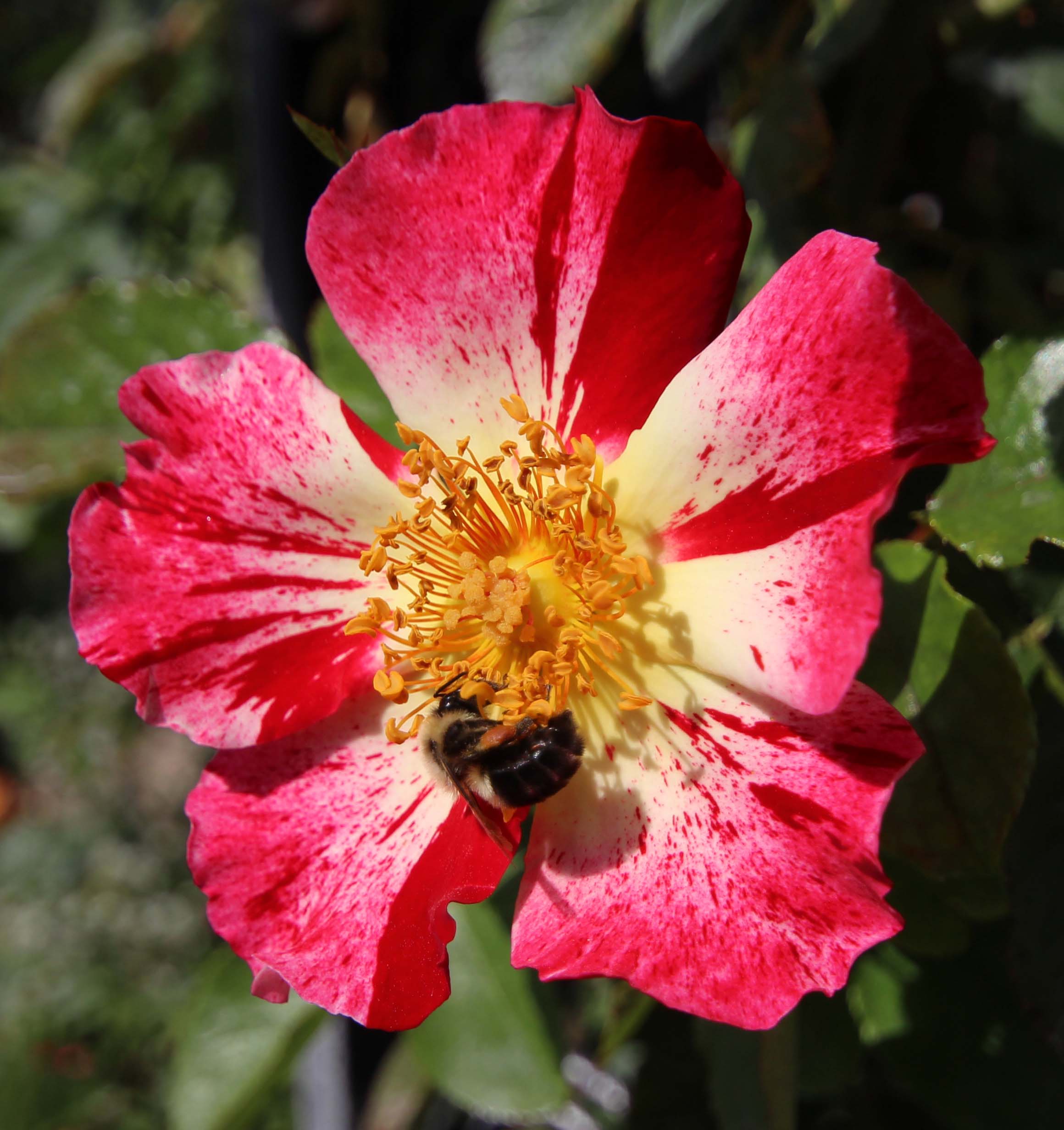
The rose garden was also amazing. The roses were well tended and they were in full bloom. We took so many flower pictures between the two of us. Here are some of our favorites.
The gardener was hard at work the entire time we were there.
.
Starting here the rest of the flower pictures are all Lee’s.
Finally we went up to the palace entrance and discovered the tours are on the half hour. Luckily we were able to snag the last couple of tickets for a tour in 10 minutes and once again I took off my shoes. Lee opted for the booties this time though and we entered with a group of 10 people. I will say that of the entire day I found this the least pleasant. It wasn’t the cost of $9.50 per person, but rather the fact that they don’t allow pictures and I really didn’t care for our tour guide. According to him he had been in New Vrindaban since 1985 and he was pretty grumpy. He did allow us to take pictures of the lobby which gives you a feel for the inside.
You can see the hospital booties on Lee’s feet. Also the Italian marble floor was all hand cut and polished by the followers. They did an amazing job.
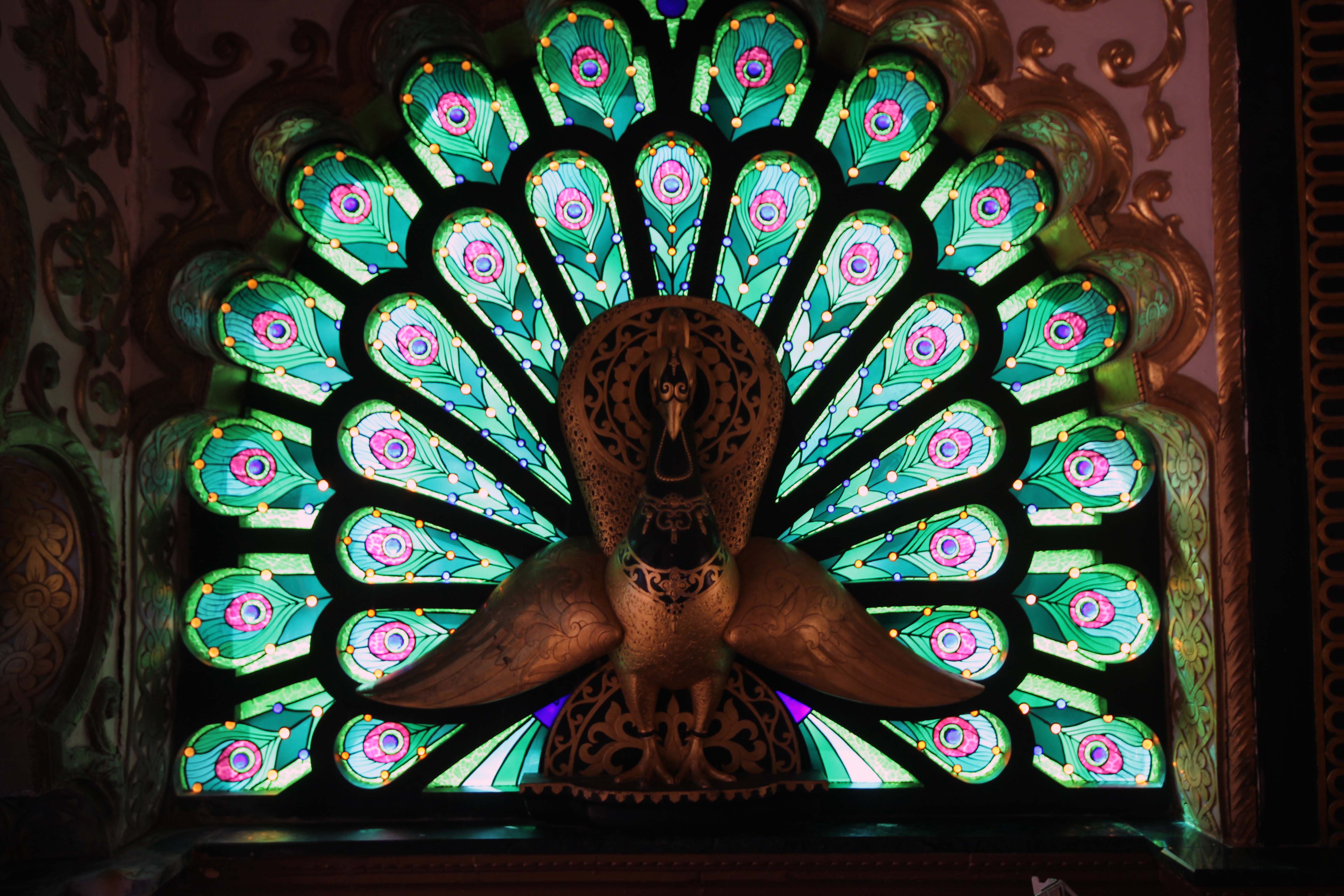
Gorgeous peacock stained window.
The ceilings were actually painted on canvas and then “stuck” to the ceiling. The main temple area in the house was gorgeous.
The tour guide explained that the palace was created by the group as a potential retirement home for the swami. He was able to tour it before he died and then they turned it into a memorial. The inside is pretty small but incredibly gilded. The group taught themselves (mostly by reading books) to build it themselves, which I thought was nice. The materials though were the most expensive they could find; marble from Italy (which they hand cut), home made chandeliers (with Viennese crystals), and even a chandelier from a castle in France. The only thing they didn’t craft themselves was the intricately cut teak doors which they ordered.
I was OK with it until the tour guide talked about how man cannot spiritually ascend to another plane until they give up material possessions. I asked, respectfully, if this was the case then why would they build such a gilded palace for an aesthetic. His response was the group wanted to do something nice for their teacher (which I respected) and they viewed materials used in the service of God differently (which I didn’t quite get). I spent the rest of the tour pondering the incongruousness of that statement and really didn’t enjoy it that much.
Later I did think that there was a cultural significance to what they built and it was intended as a gift. Since it was built for someone who originally came from India I shouldn’t assume my values should apply. Essentially they built what they thought he would like. They have a picture of him touring the facility and he looked pleased from the picture.
Anyway, if you don’t want to spend the money, its definitely worth going and seeing all of the other sites. I am really glad we went to such a unique place and special thanks to Cori for telling us about it.
Supporting our Blog
We very much appreciate your support of our blog.
You can purchase the ebook telling the story of how we became full-time RVers.
You can purchase our recipe book filled with 80 recipes we have cooked in our RV and taste tested by Lee himself. You can purchase the kindle or paperbackversion on Amazon or buy the Apple version on iTunes.
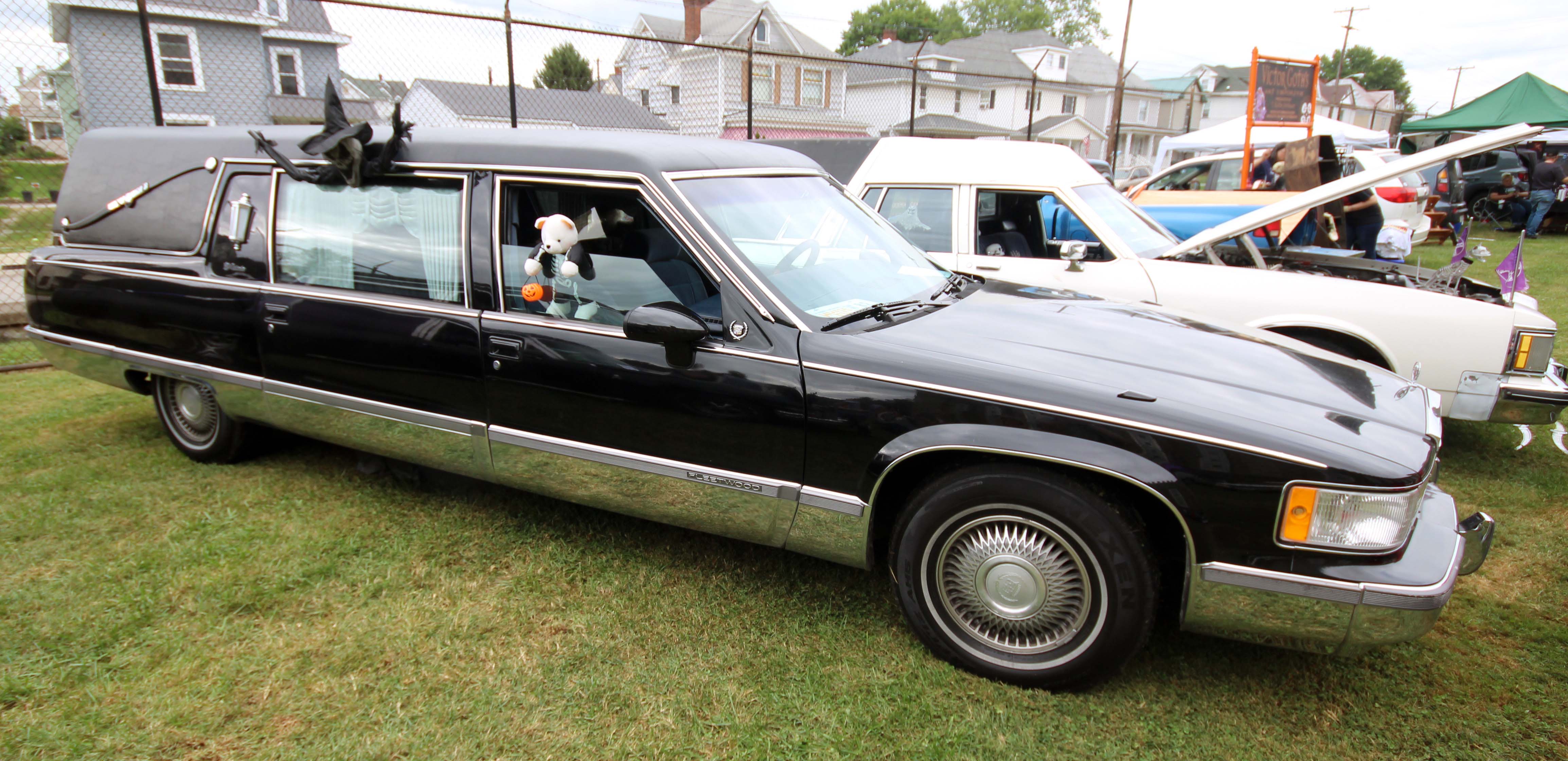
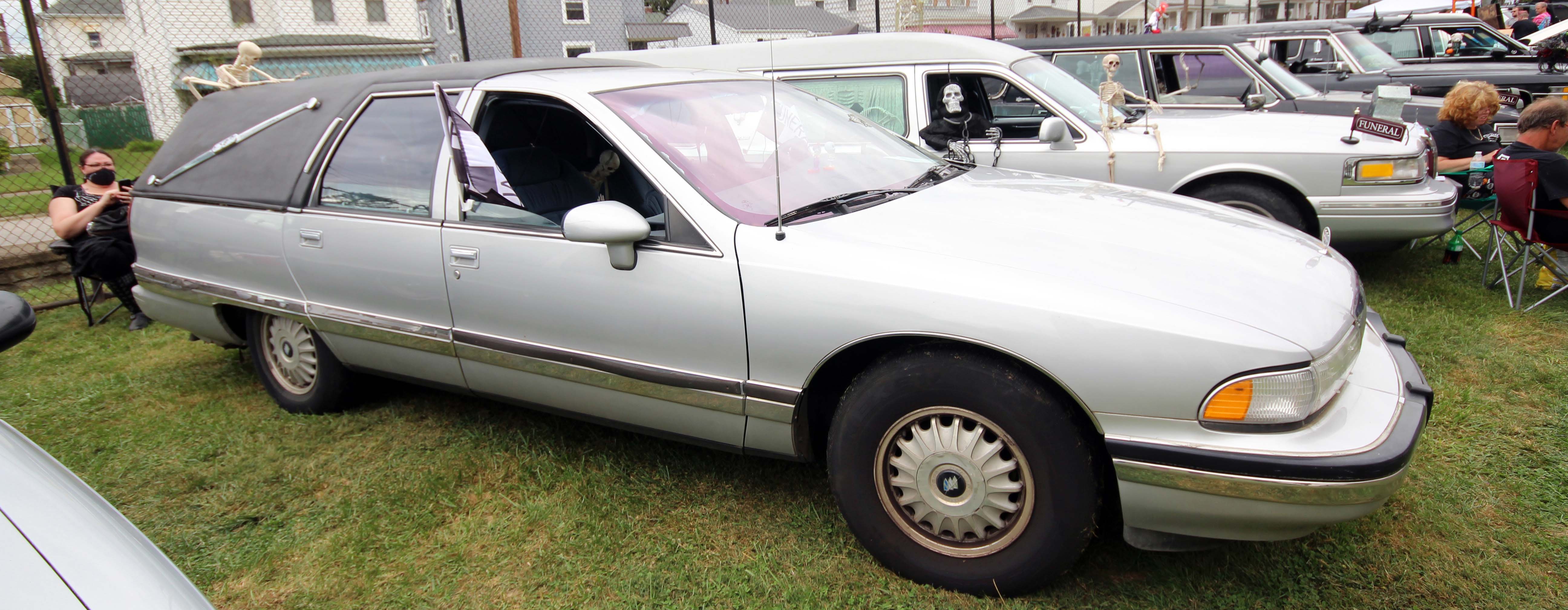
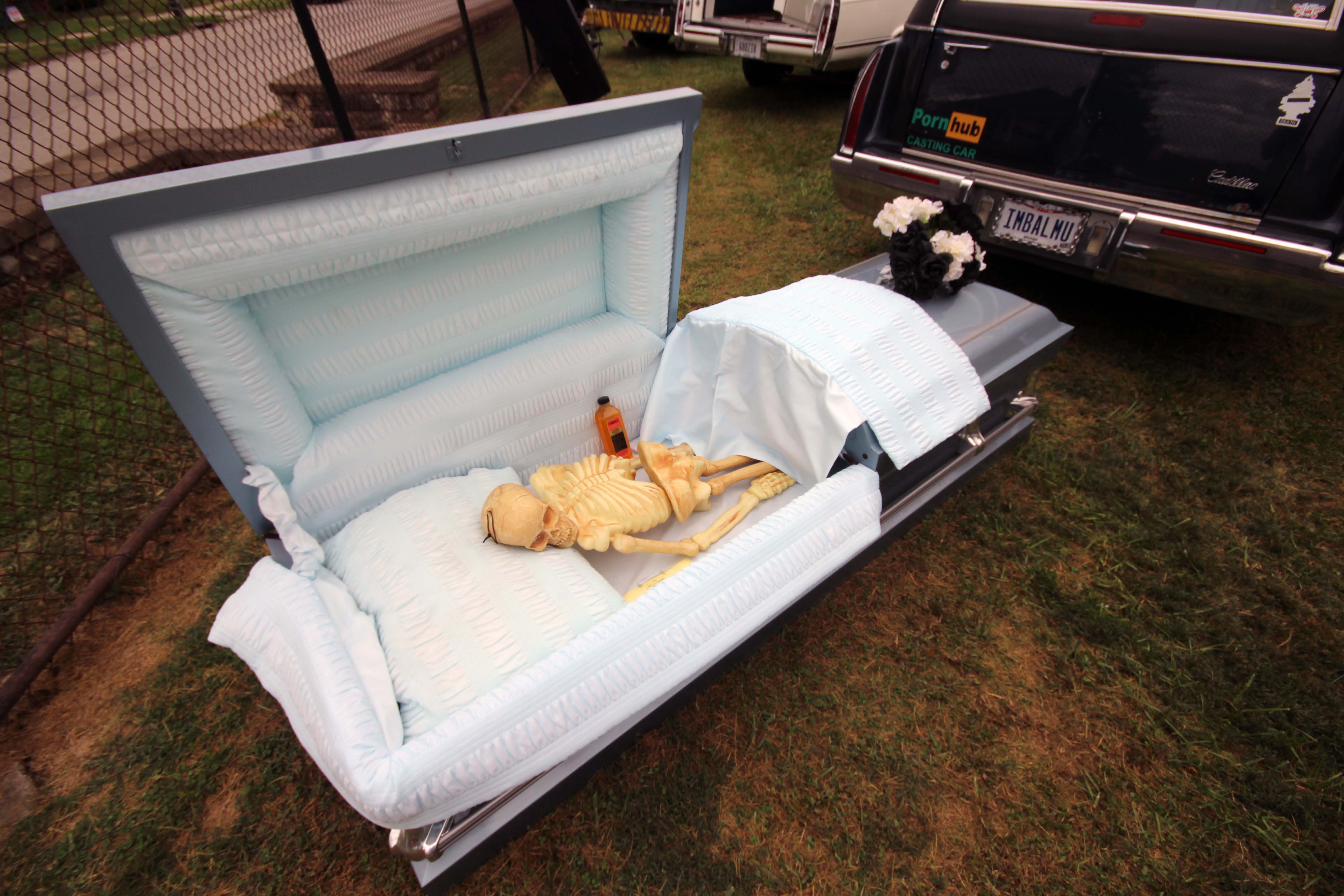
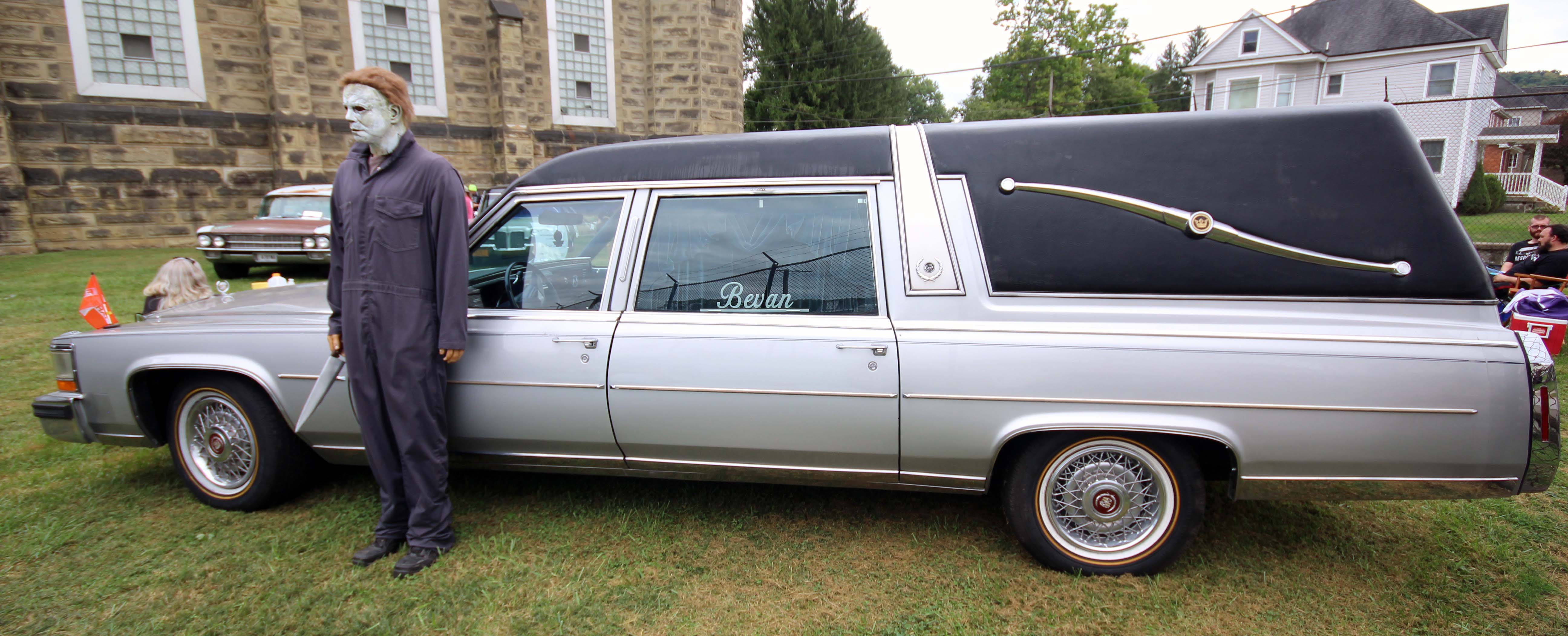
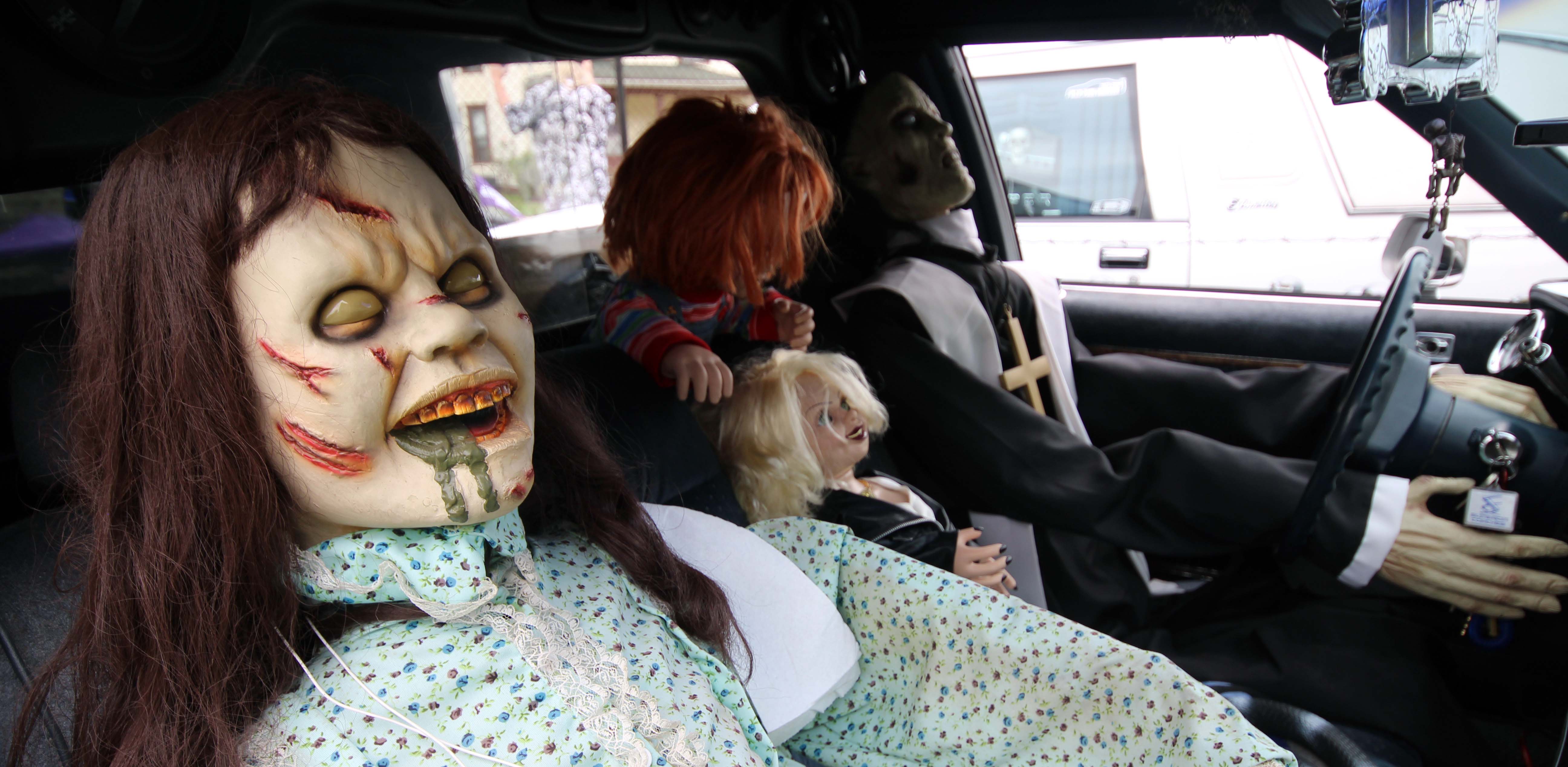
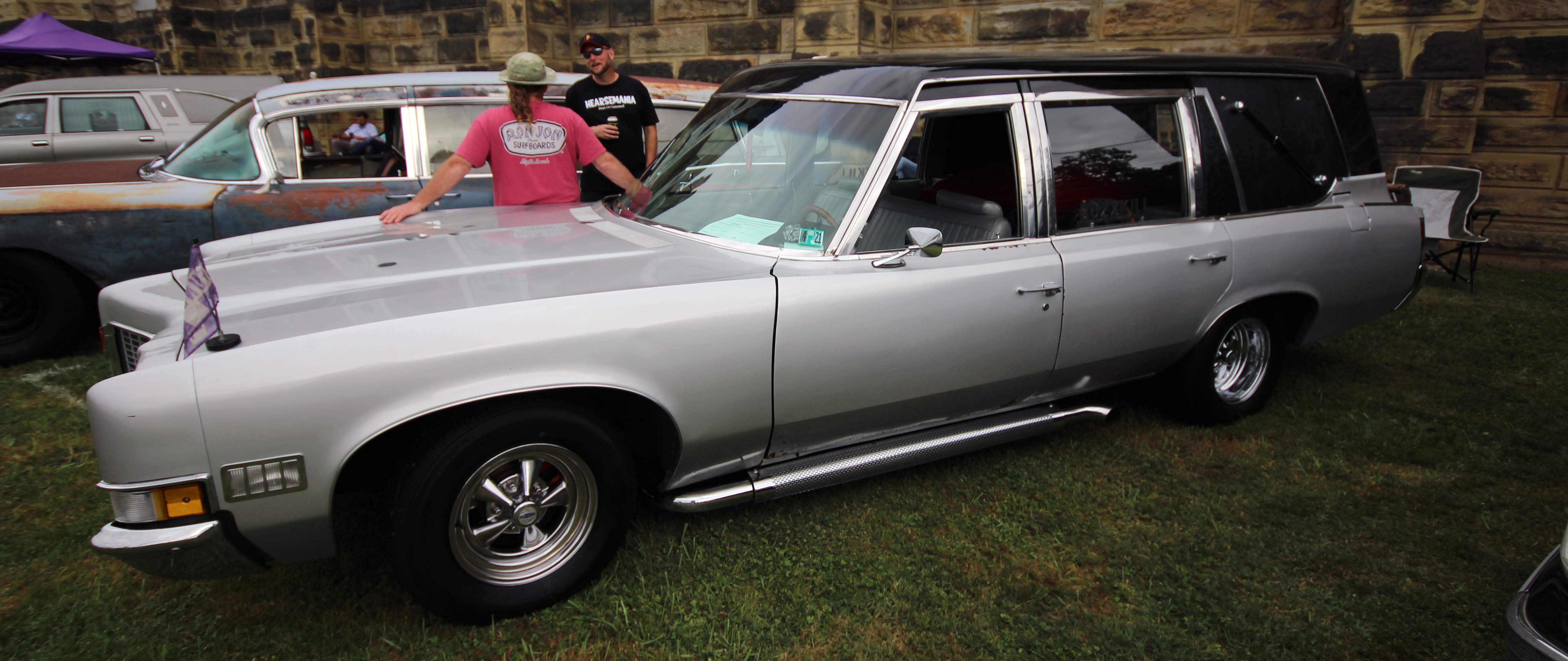
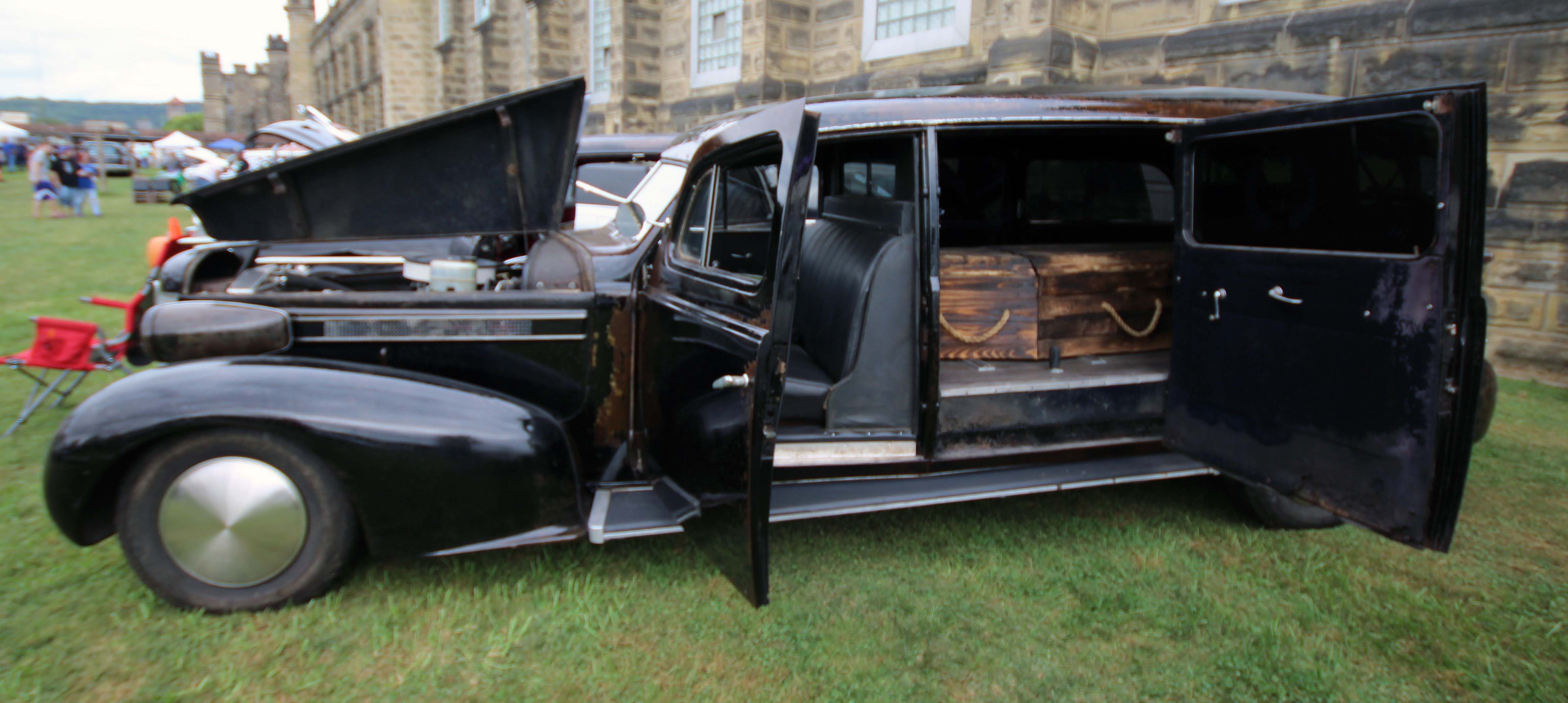
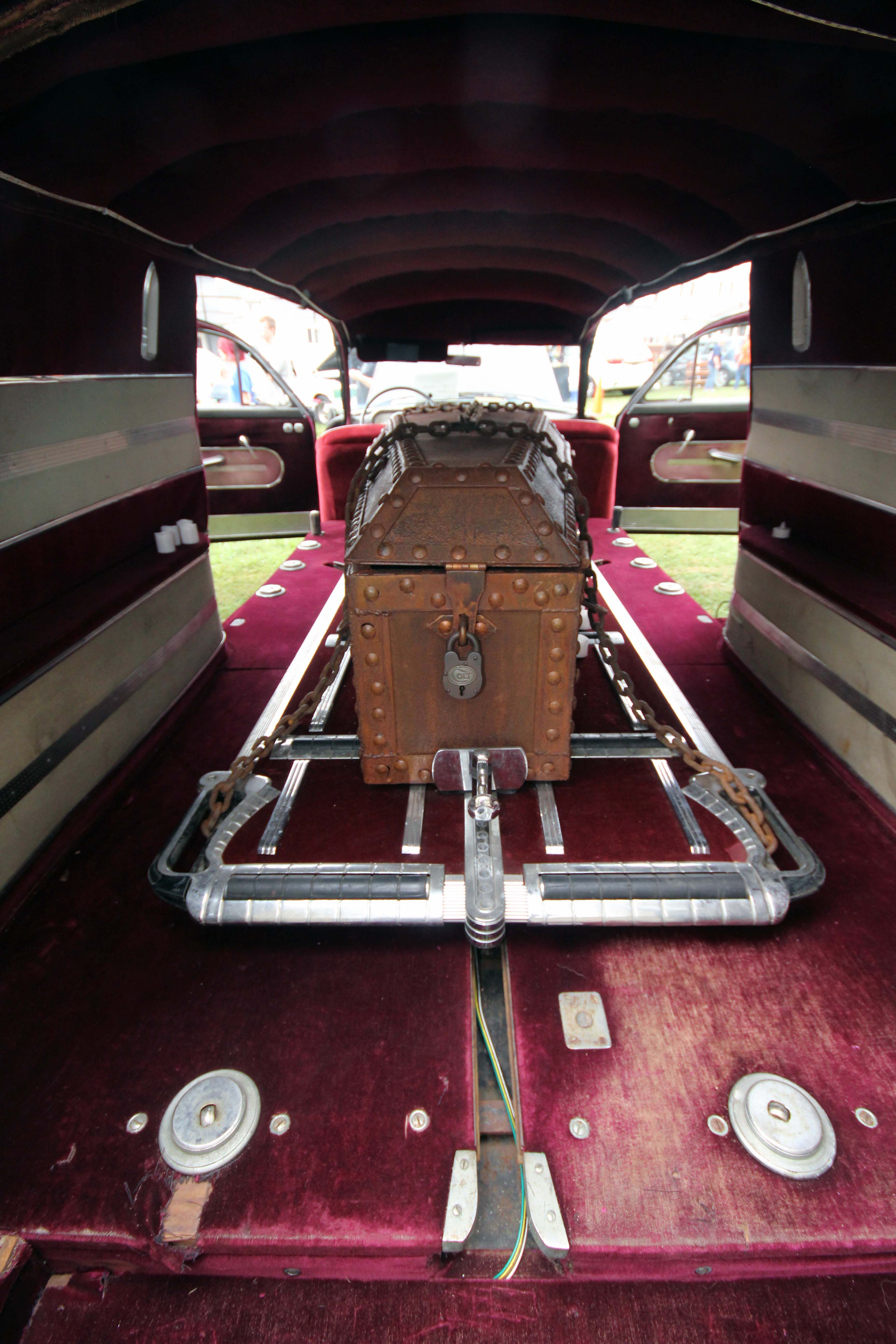
This is an additional post written by Lee. He went back a third time to the prison for Hearsemania. – Trace
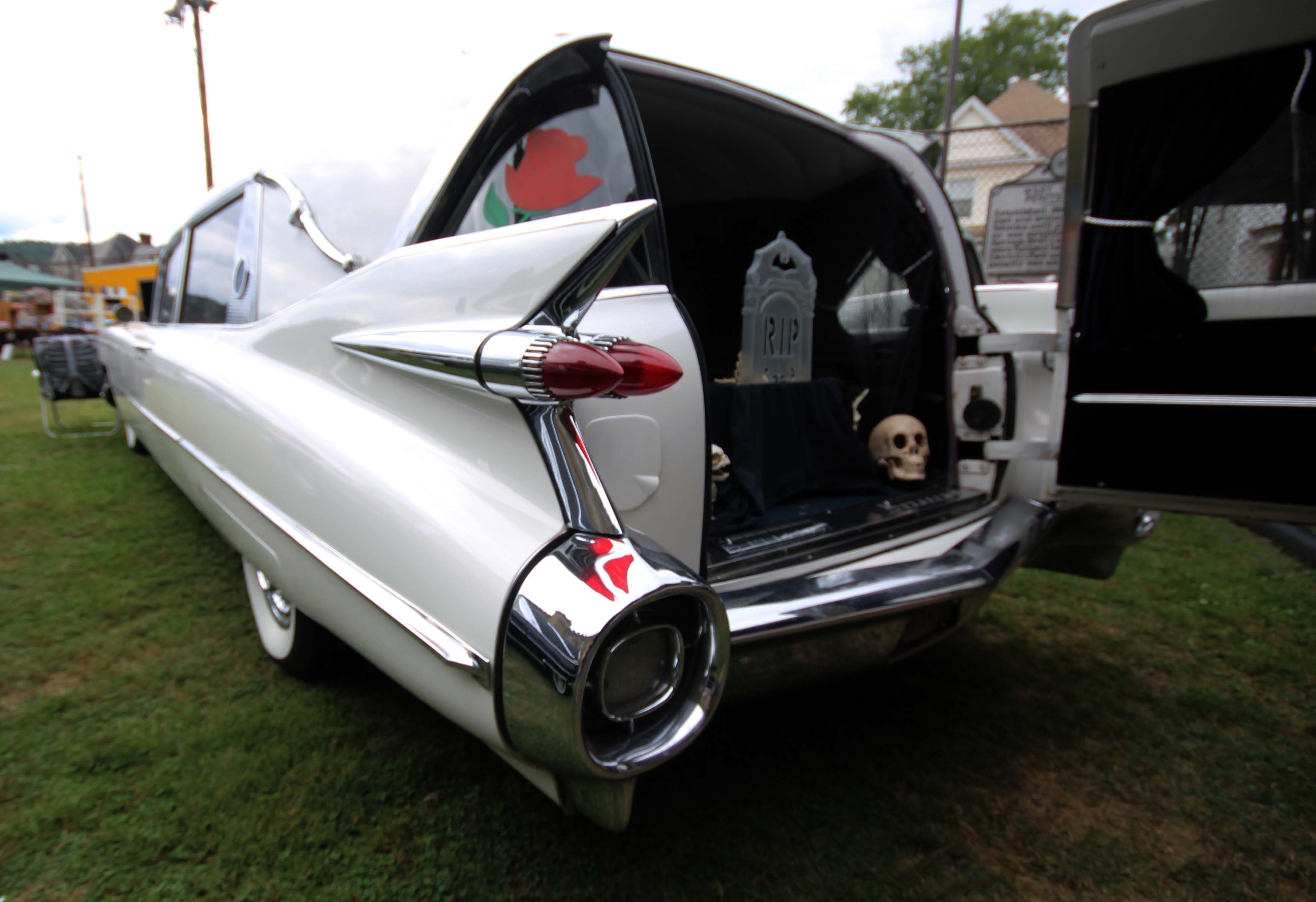
While I was at the prison, I had seen a flyer for something called “Hearsemania” on Saturday at the Penitentiary.
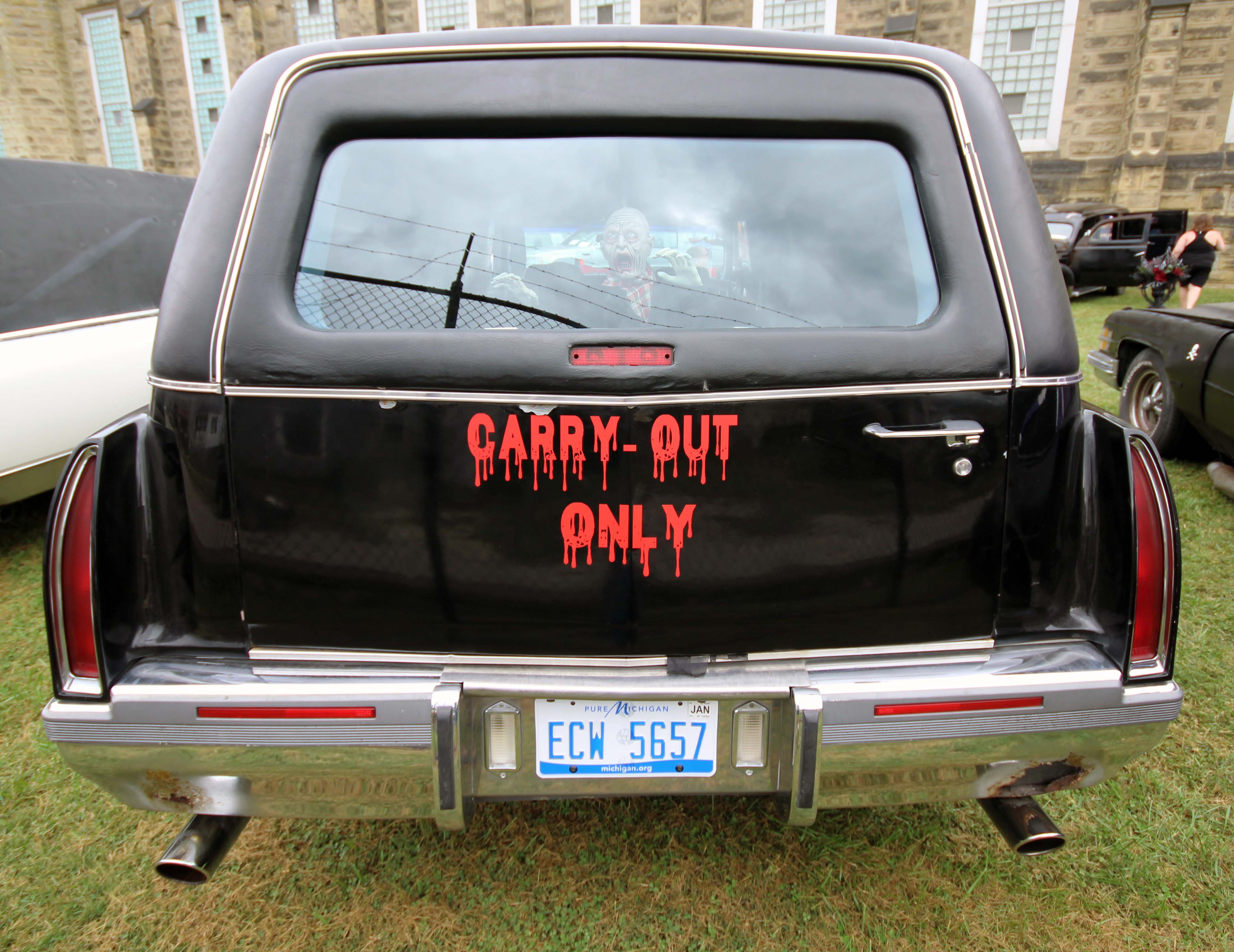
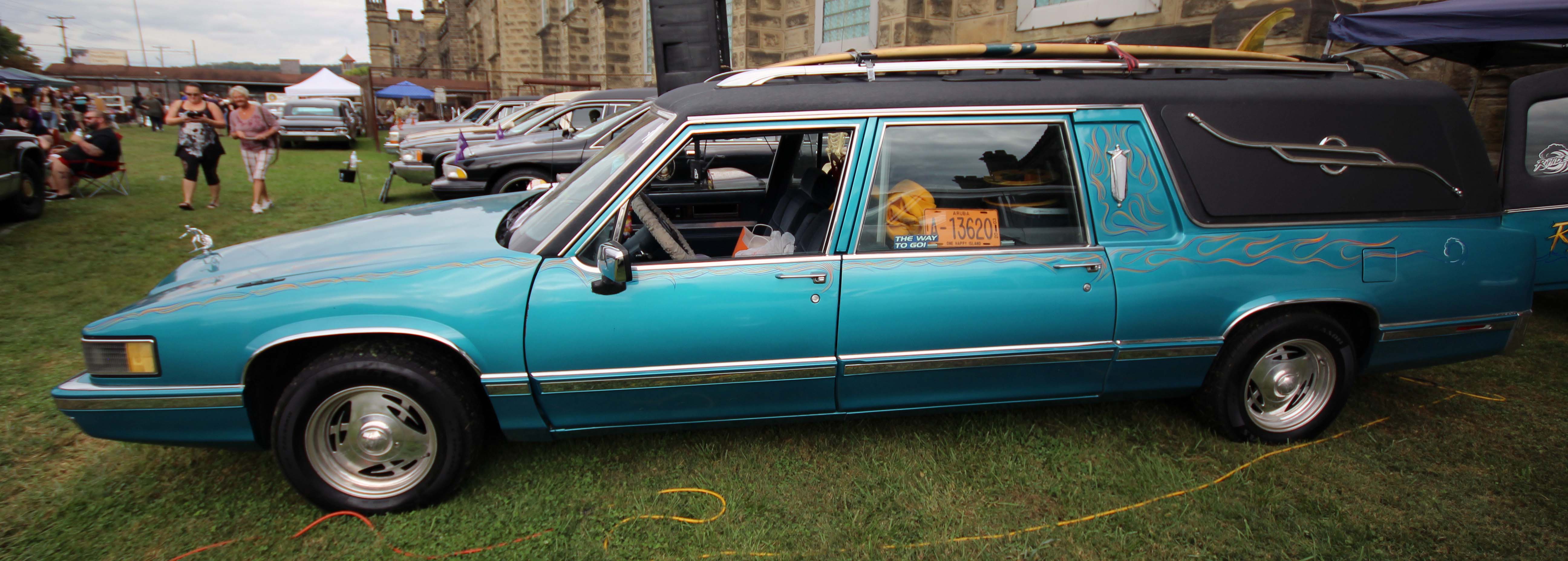
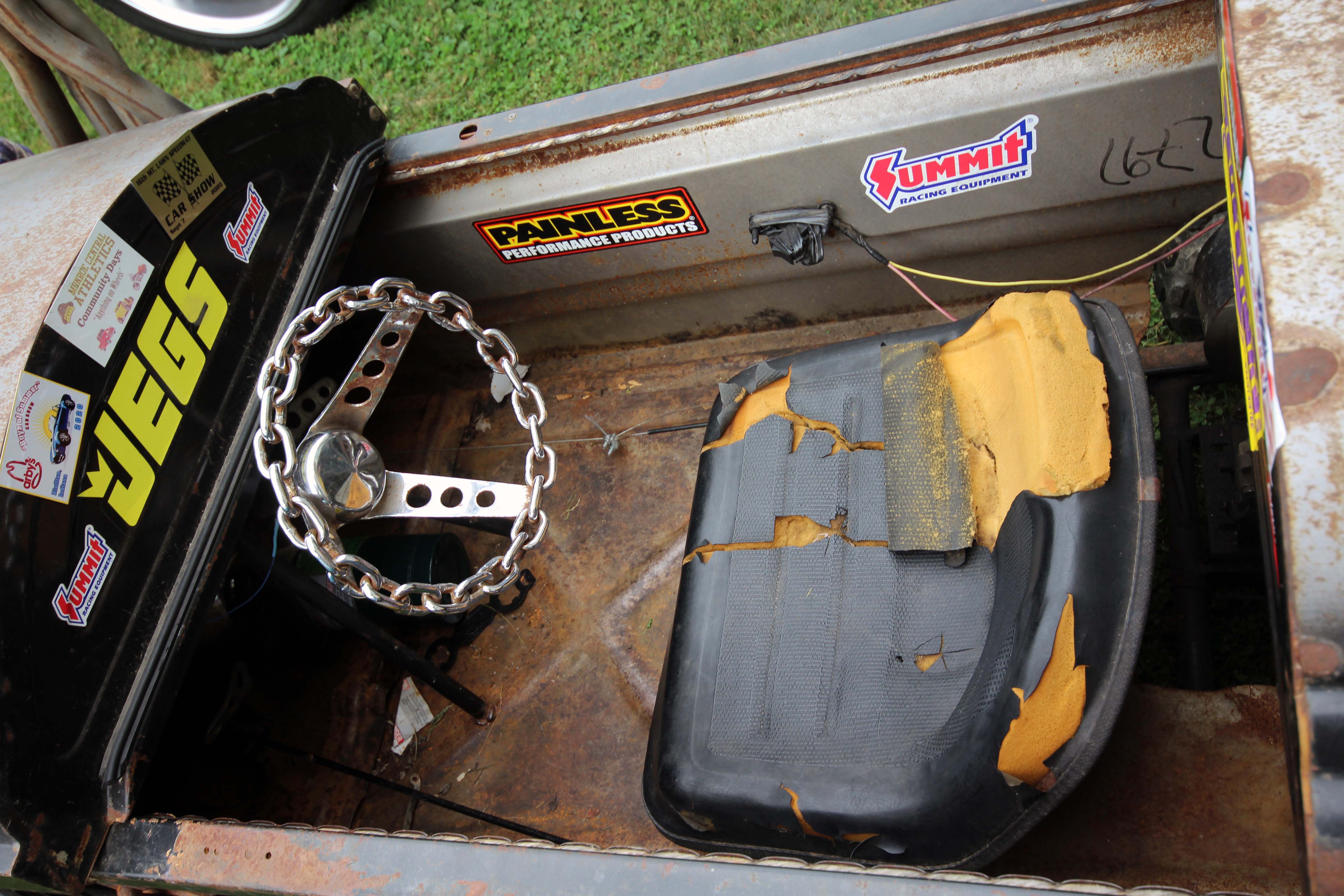
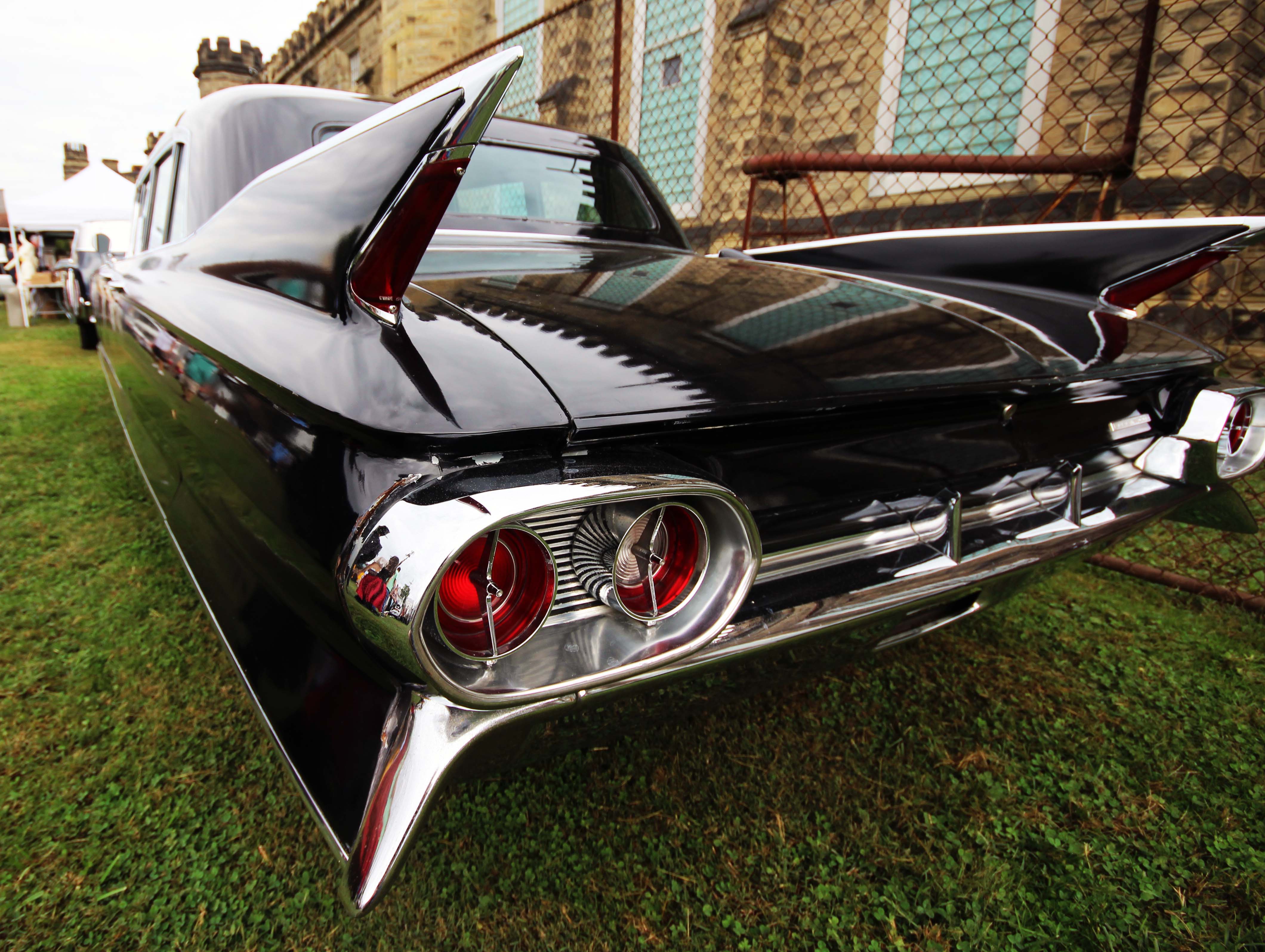
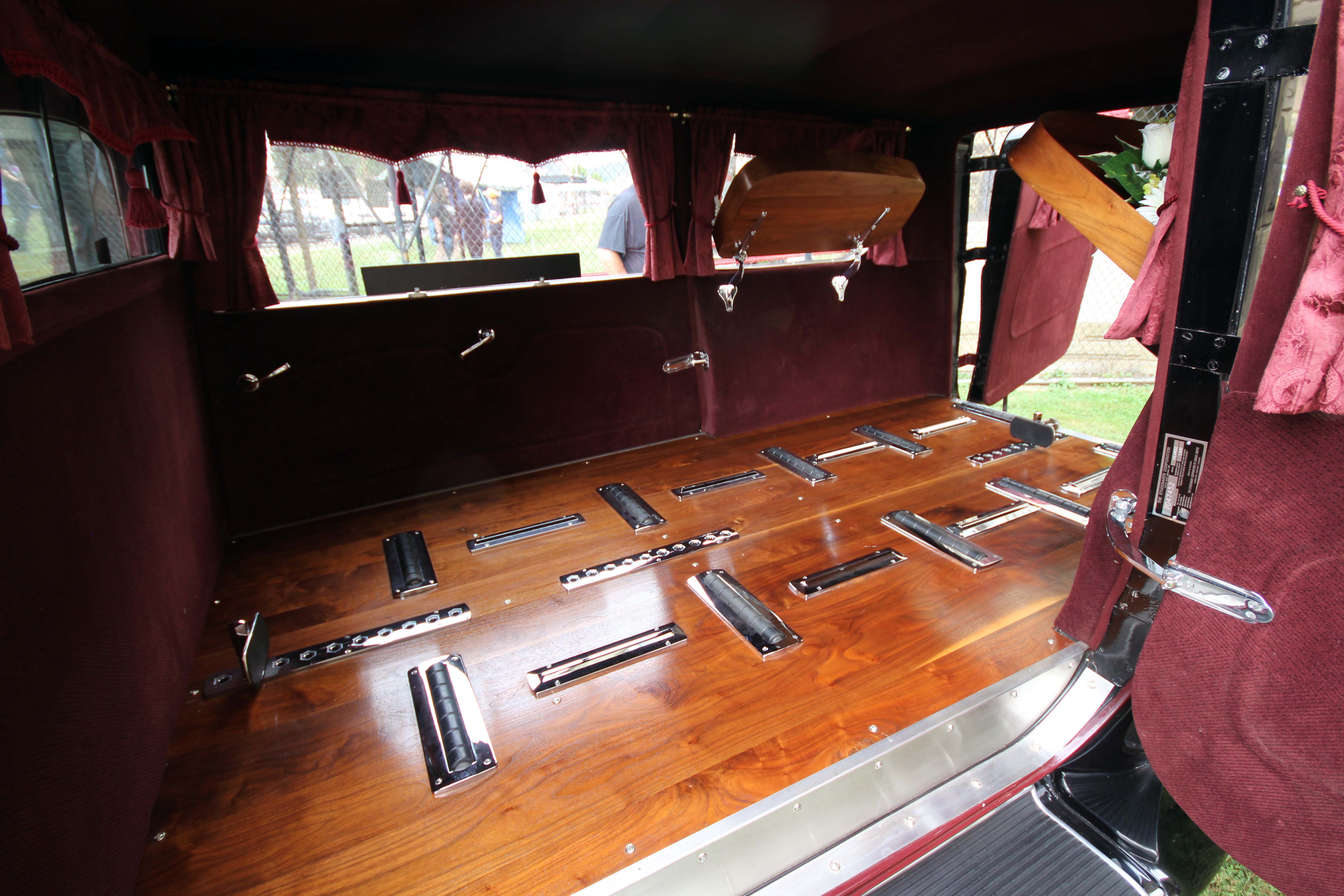
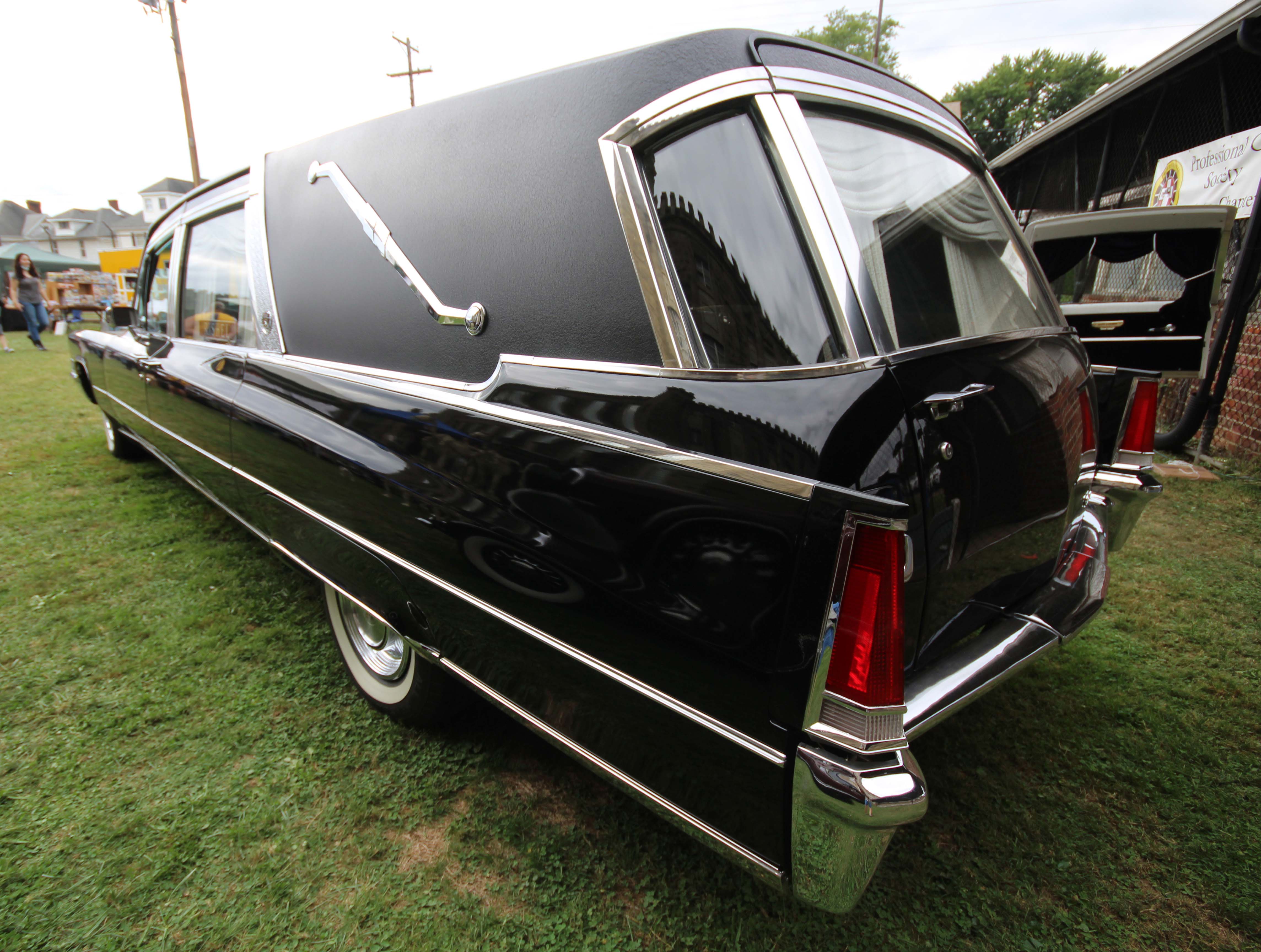
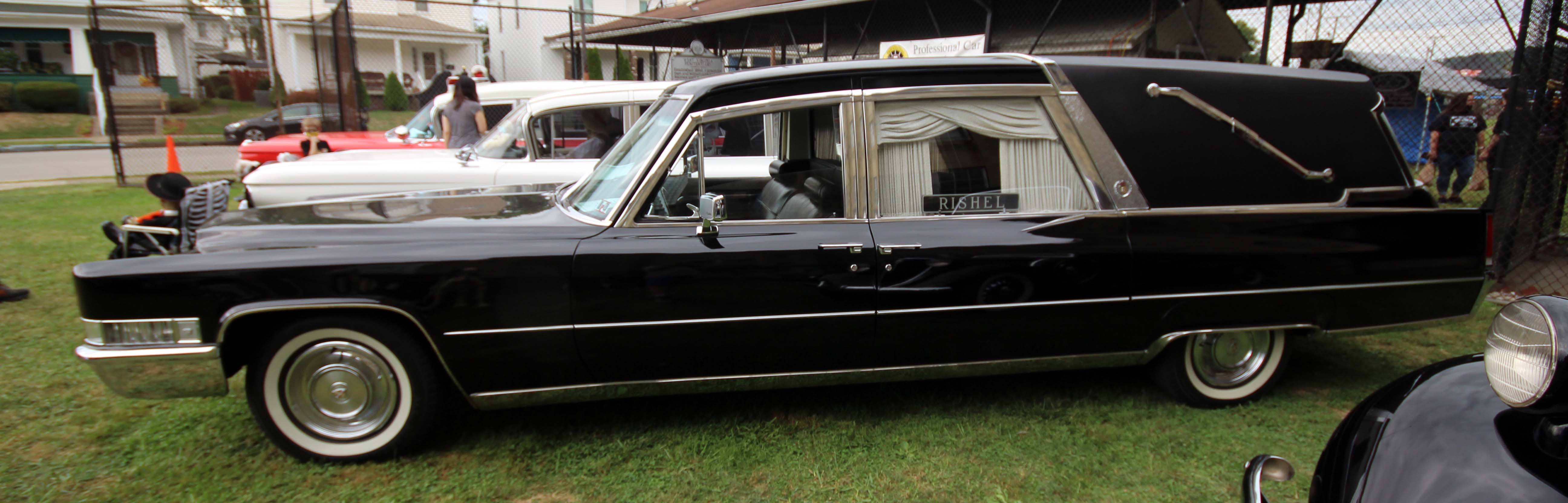
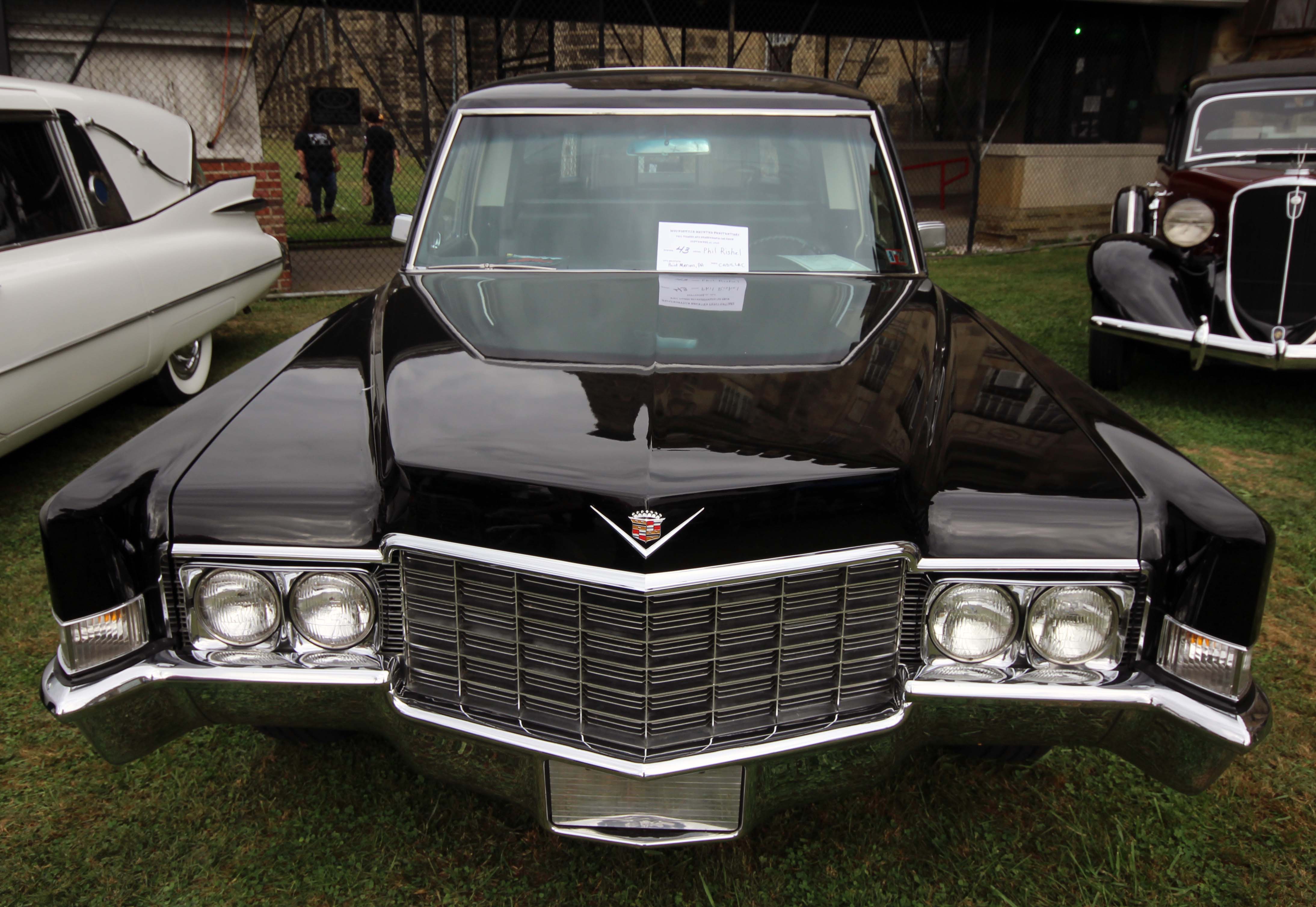
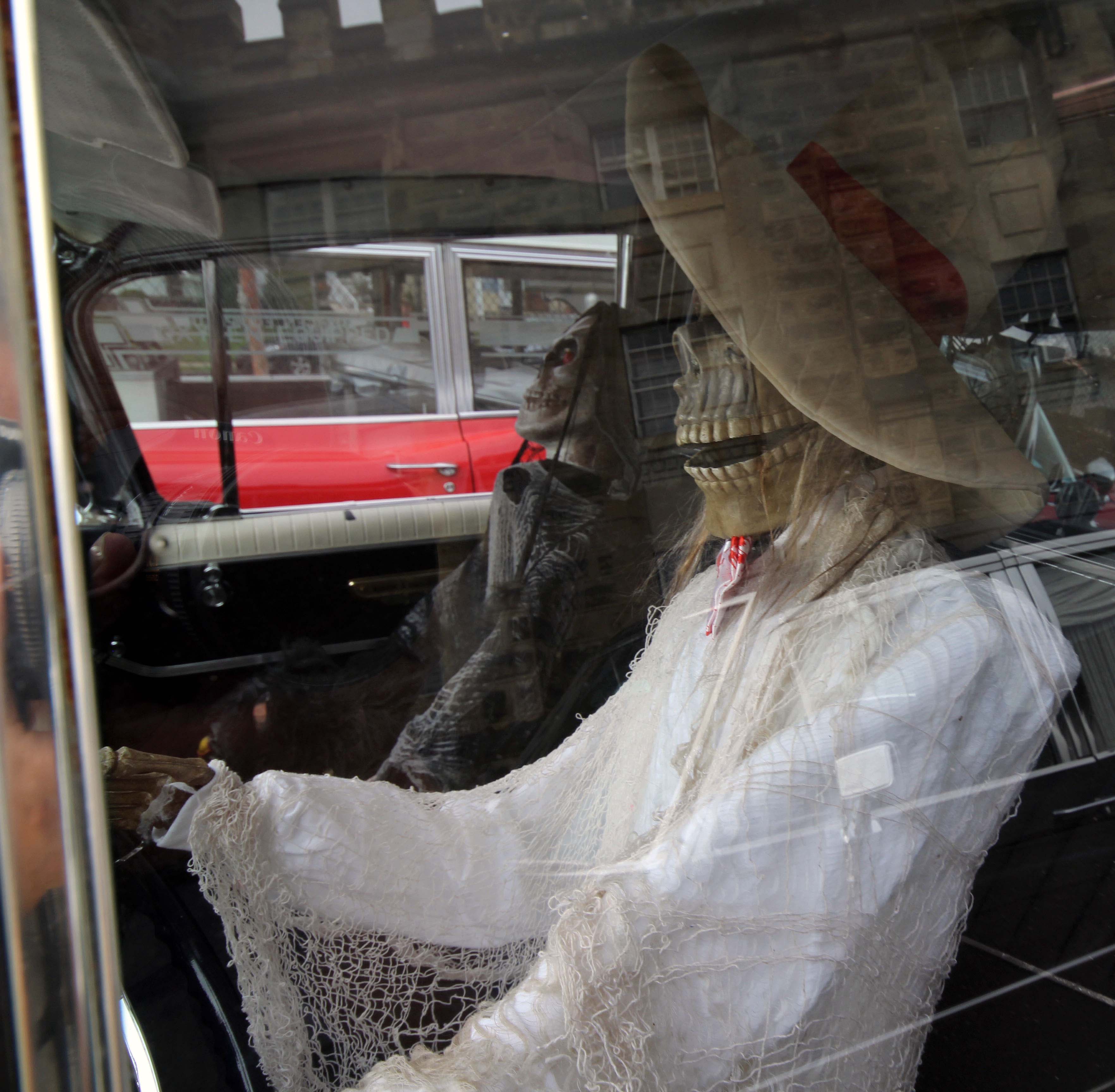
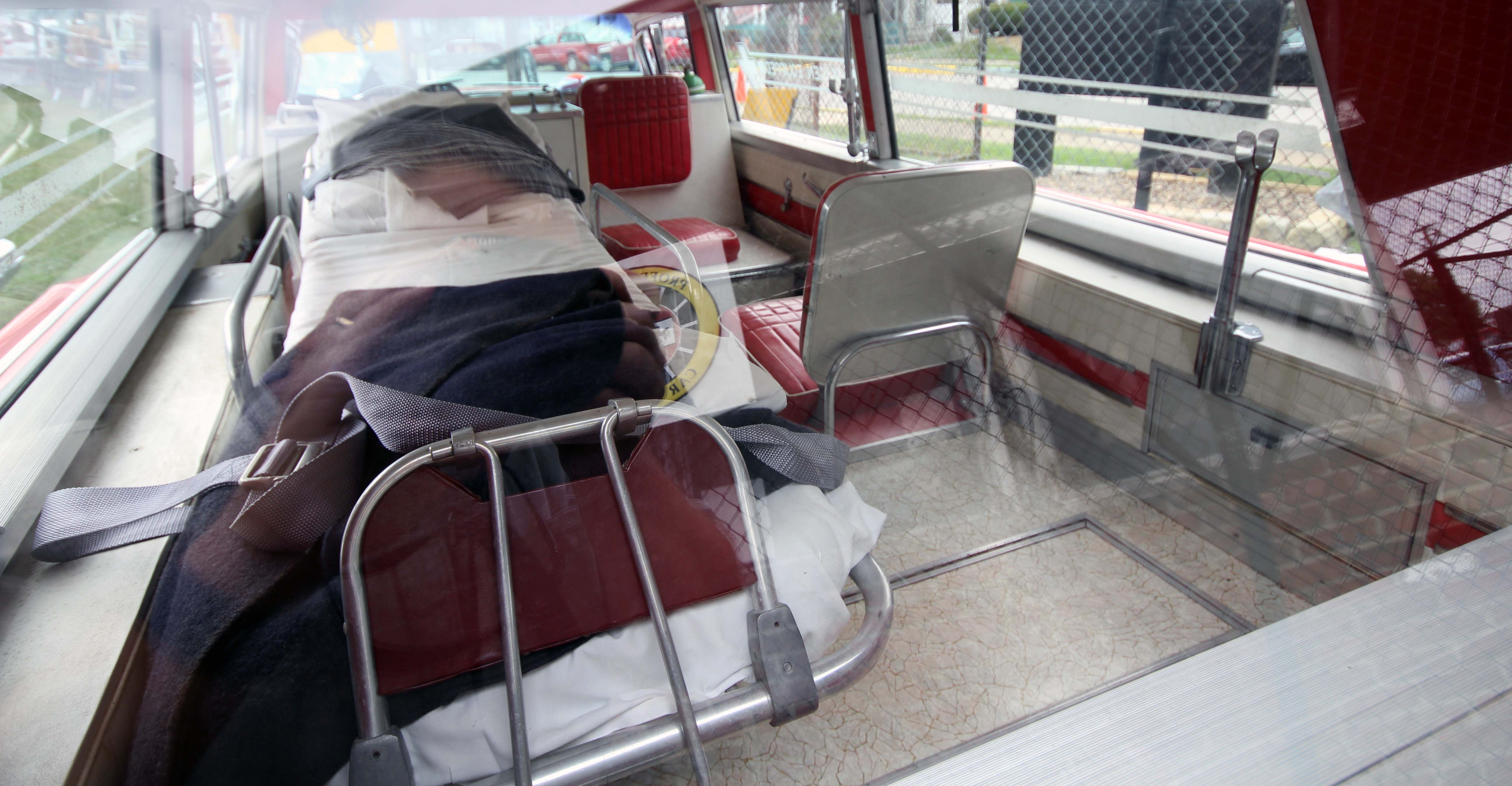
A car show, but with hearses!
It was free, so I thought I would combine that with a quick visit to the Native American burial mound center across the street, and I was not disappointed in either of them. The hearse show was just a bunch of hearses in various stages of restoration lined up for people to stroll through and gawk at. Good old all American Saturday afternoon fun.
This post is nothing but 80 or so pictures, so enjoy!- Lee
Huh – Trace
As I am seeing this pictures for the first time while editing the post I am holding my head in the hands. It is kind of funny though- Trace.
Ok this one was really cool – Trace
No Lee we are not getting a hearse. I wish I could say the gruesome tour was over but there are lots of creepy places in West Virginia and Lee apparently wants to visit them all. – Trace
Supporting our Blog
We very much appreciate your support of our blog.
You can purchase the ebook telling the story of how we became full-time RVers.
You can purchase our recipe book filled with 80 recipes we have cooked in our RV and taste tested by Lee himself. You can purchase the kindle or paperbackversion on Amazon or buy the Apple version on iTunes.
Lee wrote this post based on a trip he made on a day I was working. I have zero interest in visiting prisons let alone haunted ones, but Lee loved it so much he went back for a second trip in the dark. – Trace
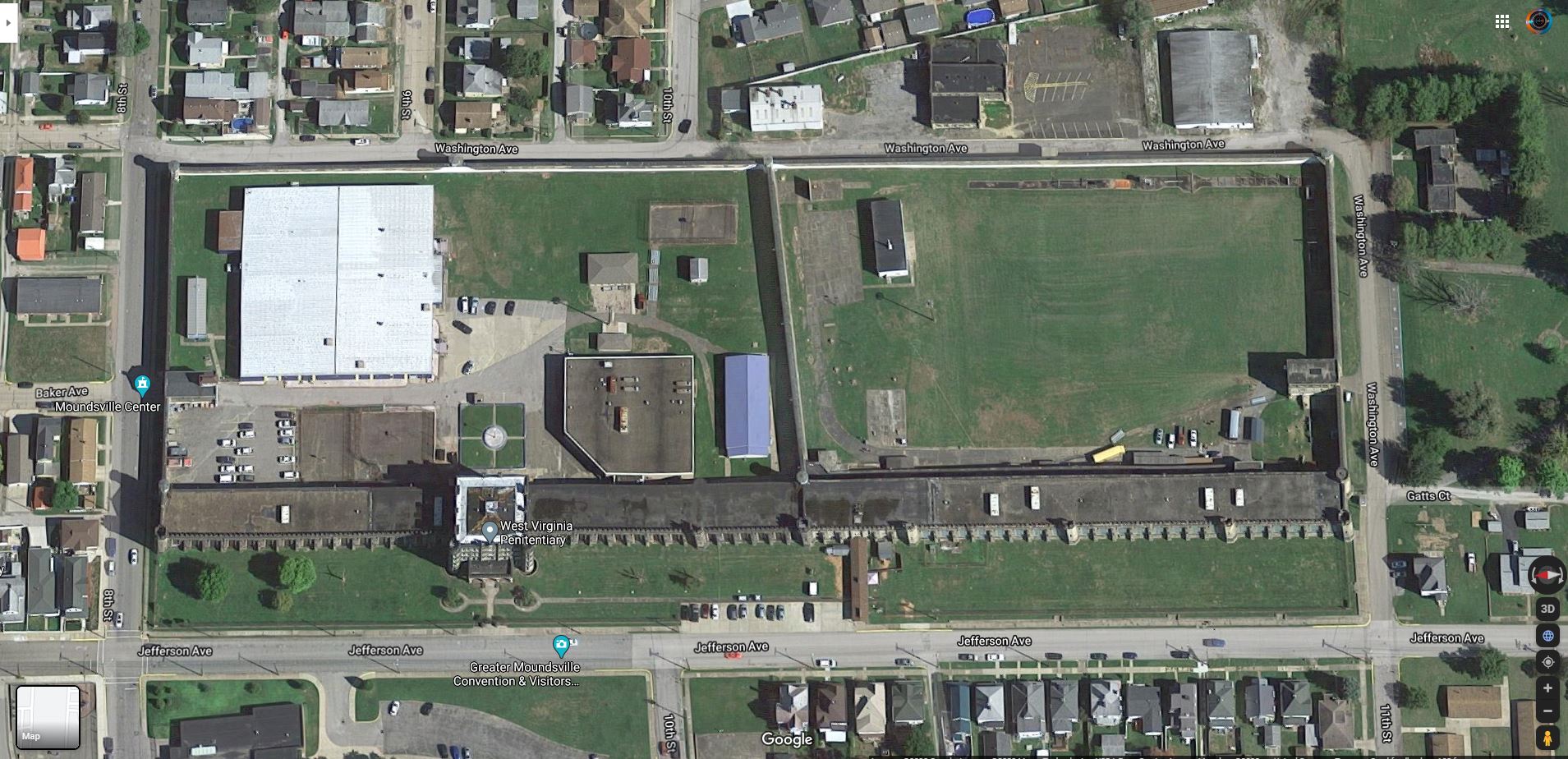
Before you go, be aware that while there is a tiny little parking lot on the West side of the property (bottom center of the image below) it is NOT suitable for any kind of a rig. However, the west side (southbound) lane of Jefferson St is free to park, and the property is only a few blocks east of the main drag through town, so getting there and parking and getting out again is just a matter of using the grid pattern .
As we sloooooooowly work our way towards Charleston for Christmas, we are stopping at a variety of places and spending more time in states we really haven’t spent any time in. Trace works Mon-Fri, so I get to find things to see and do that are interesting to me, but not anything she would be interested in.
In West Virginia, we both wanted to see New Vrindiban, and while we waited for a weekend day to do that, I found a couple of places to see. I’ve always been fascinated by “fringe” places. Places that are extreme. Far away, or really high, or really deep, or just unusual. Abandoned places. Dark places. I’m not morbid, I just like history. I also really like Gothic and Deco architecture, as well. The West Virginia State Penitentiary fit the bill nicely!
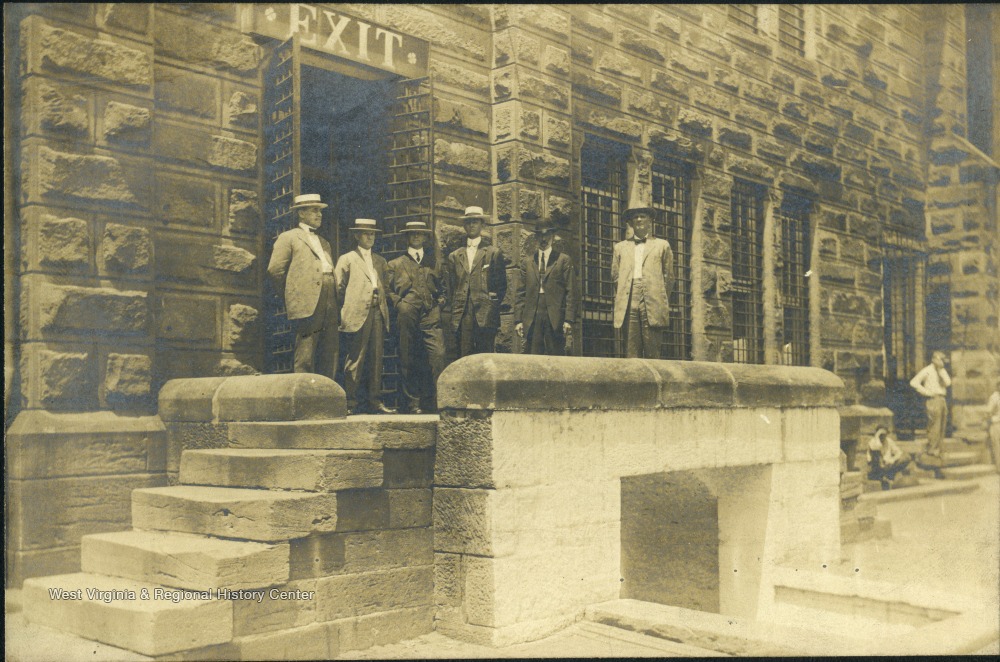
Warden and Staff-1912
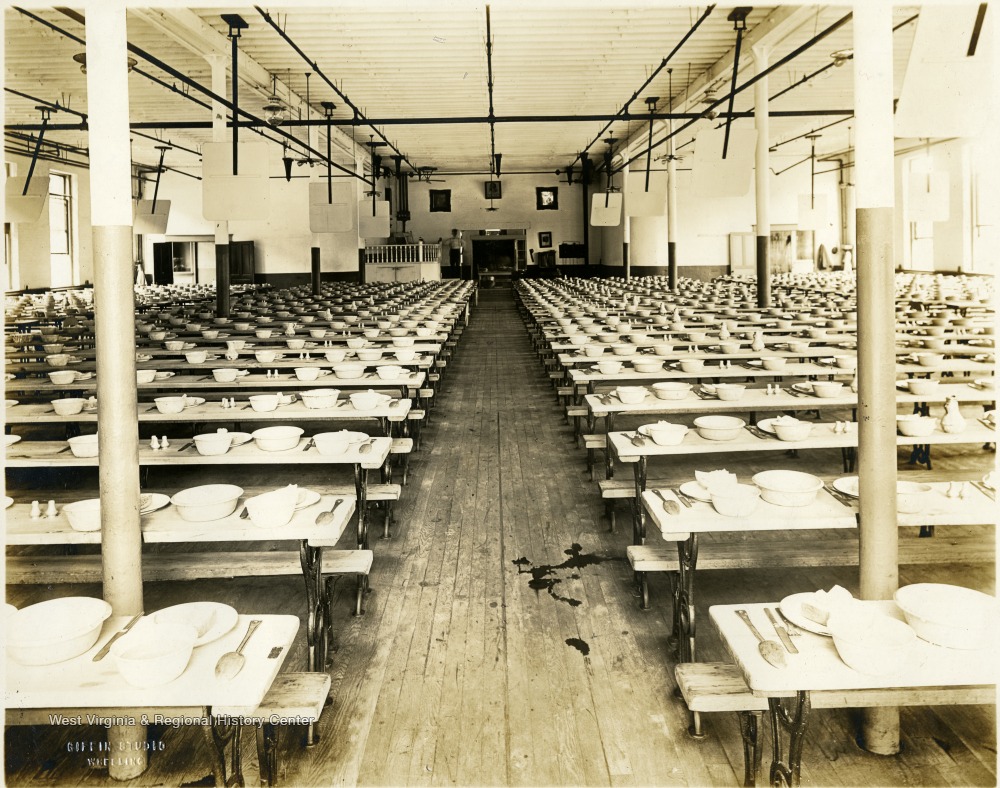
Dining Hall-1912
1912
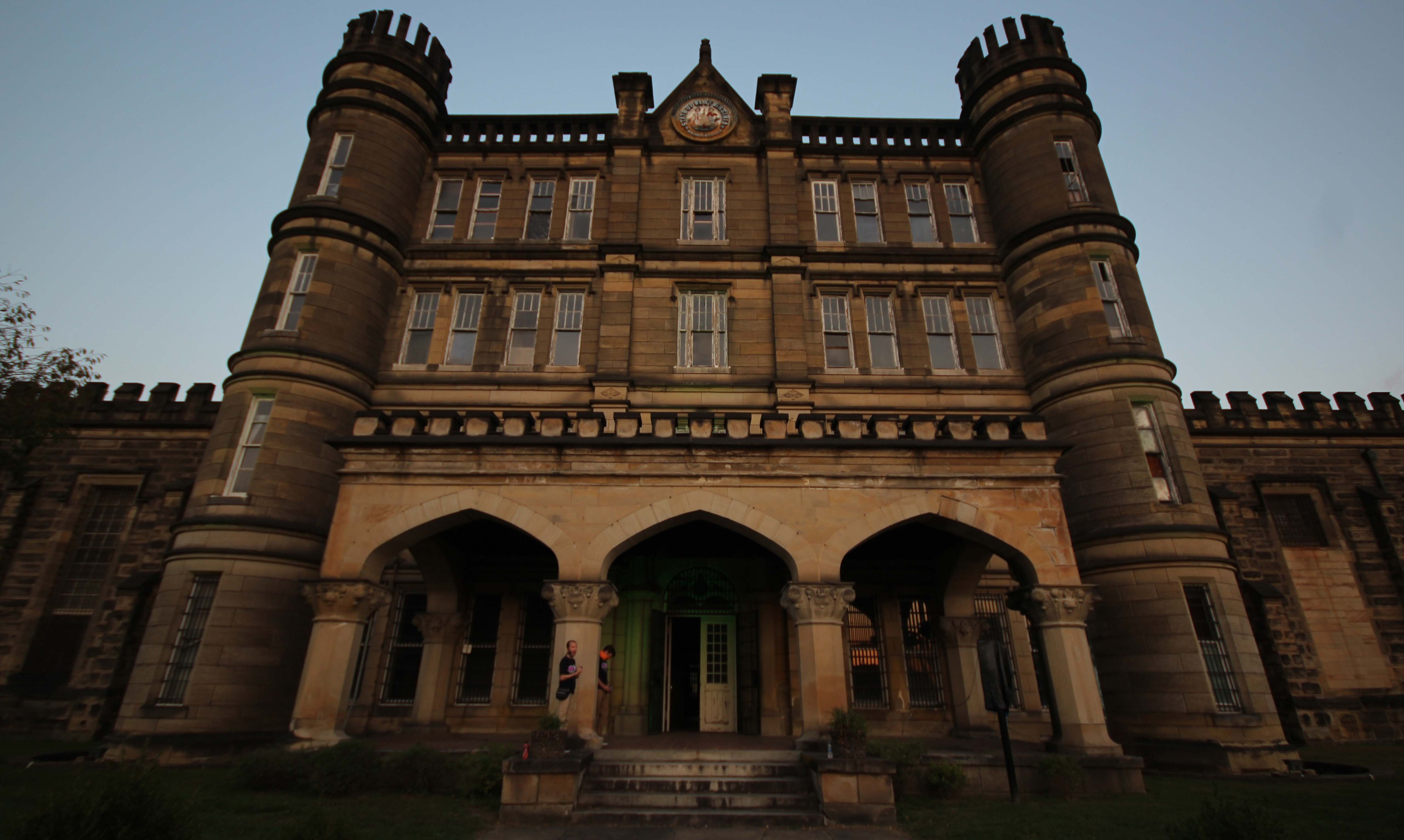
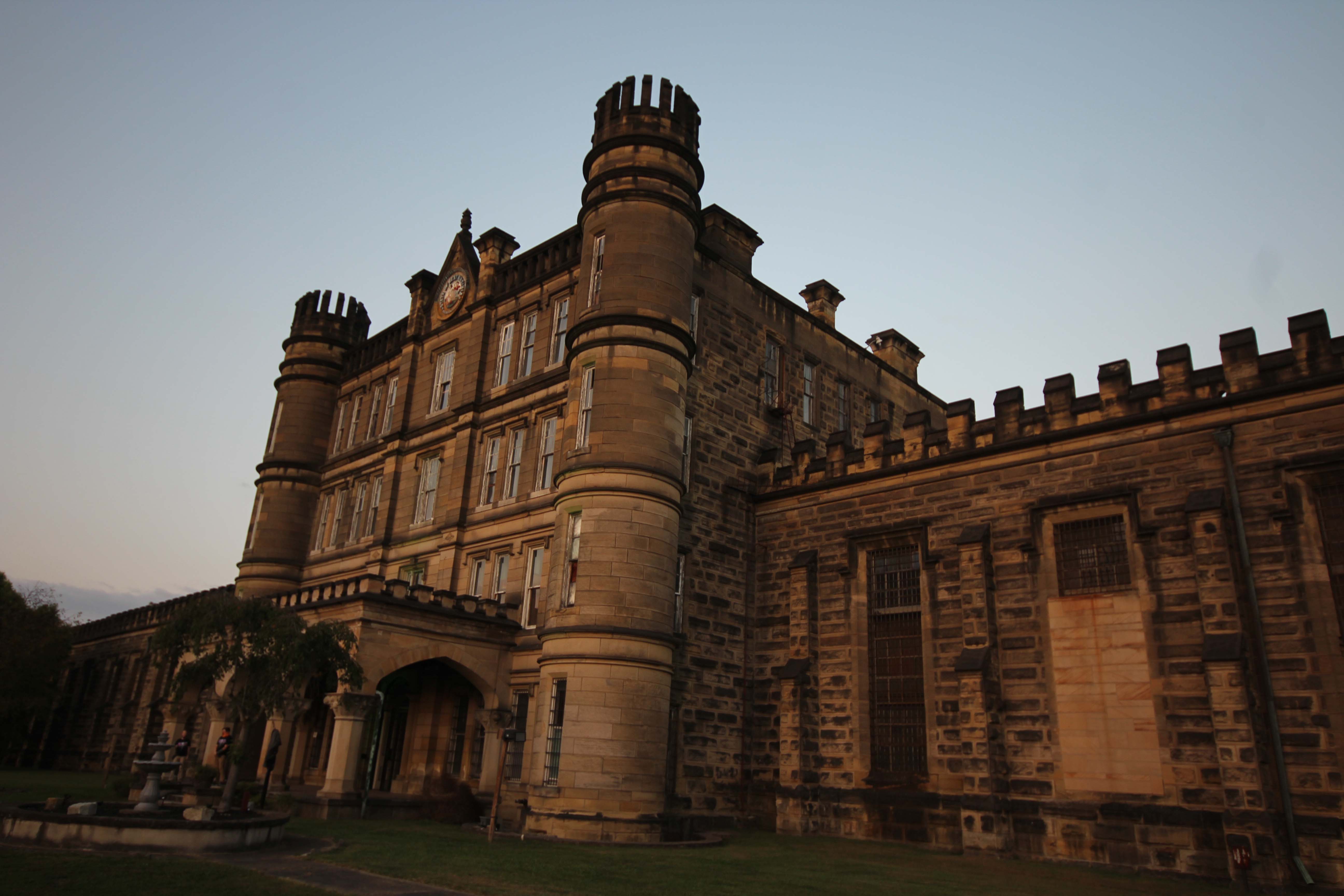
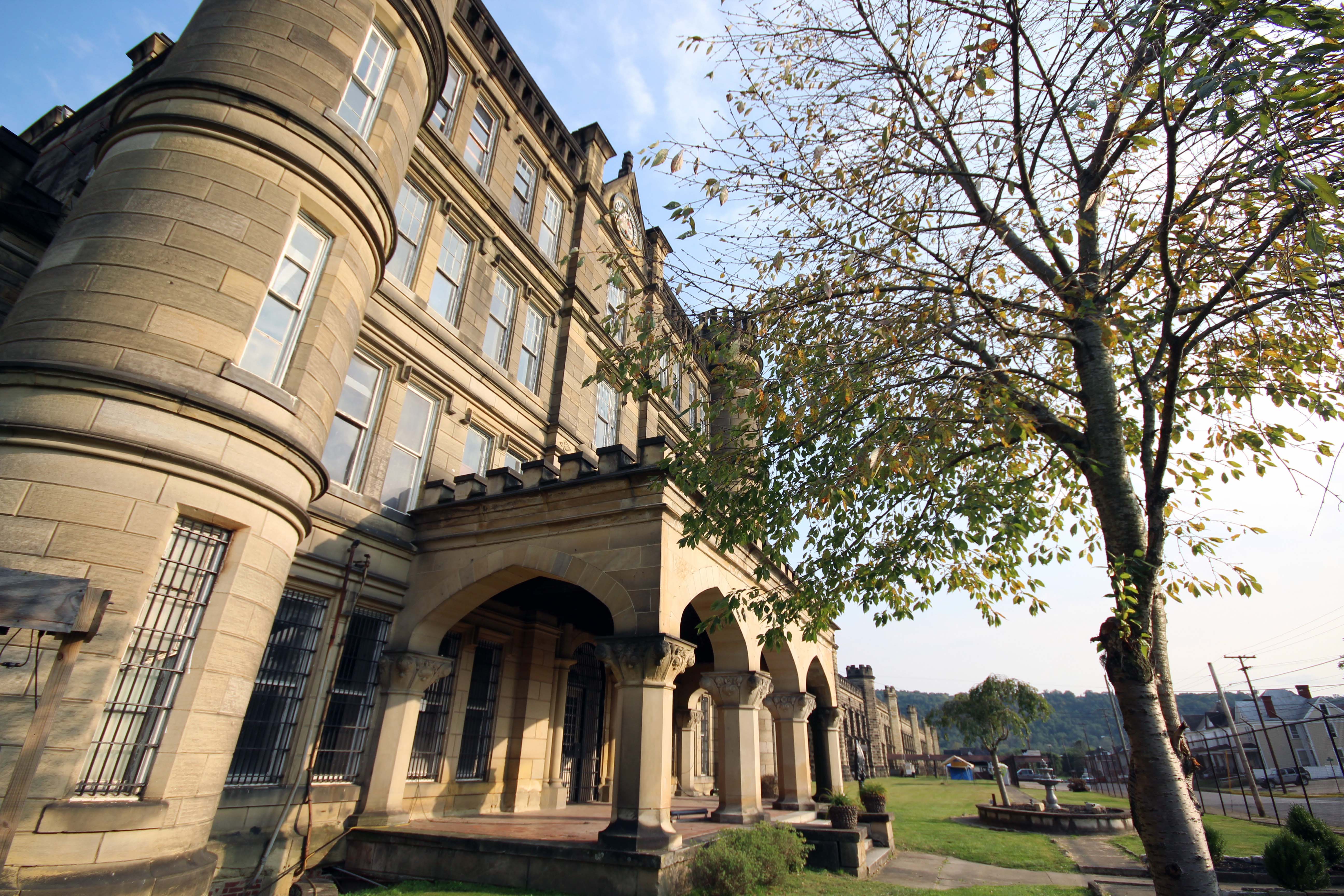
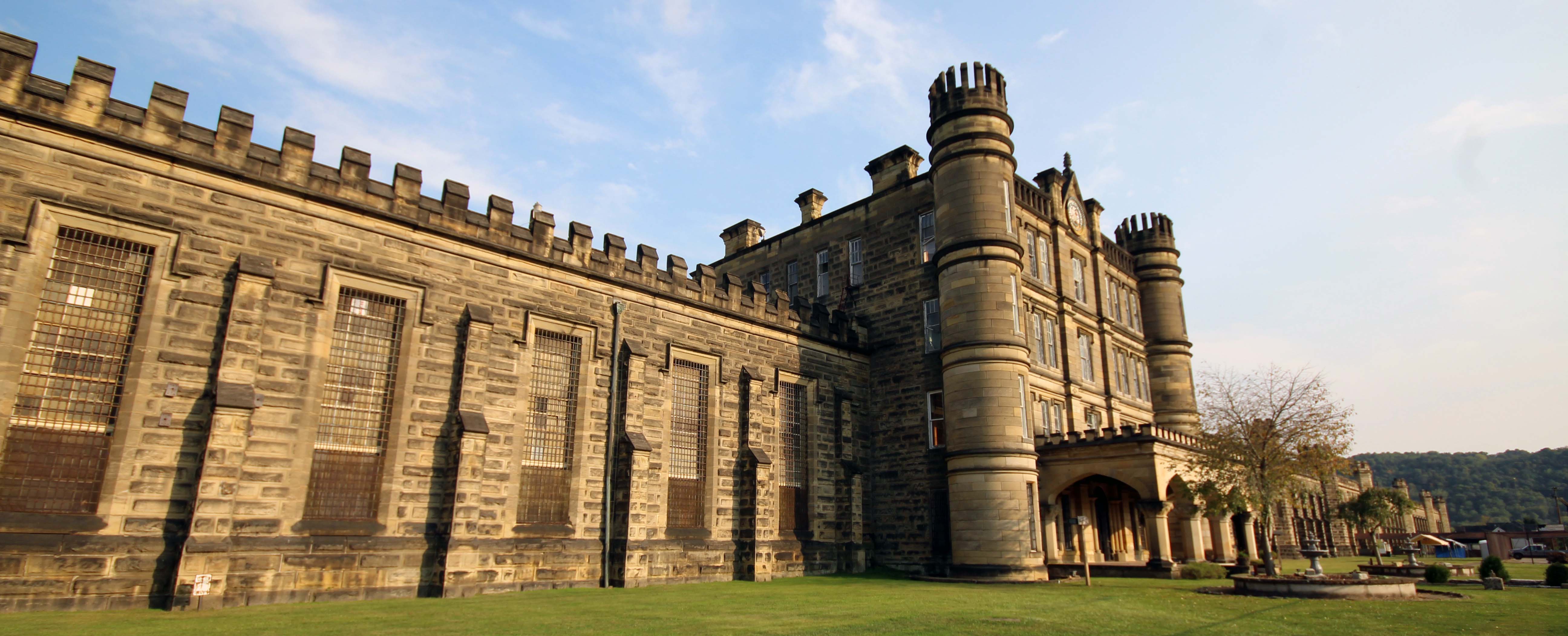
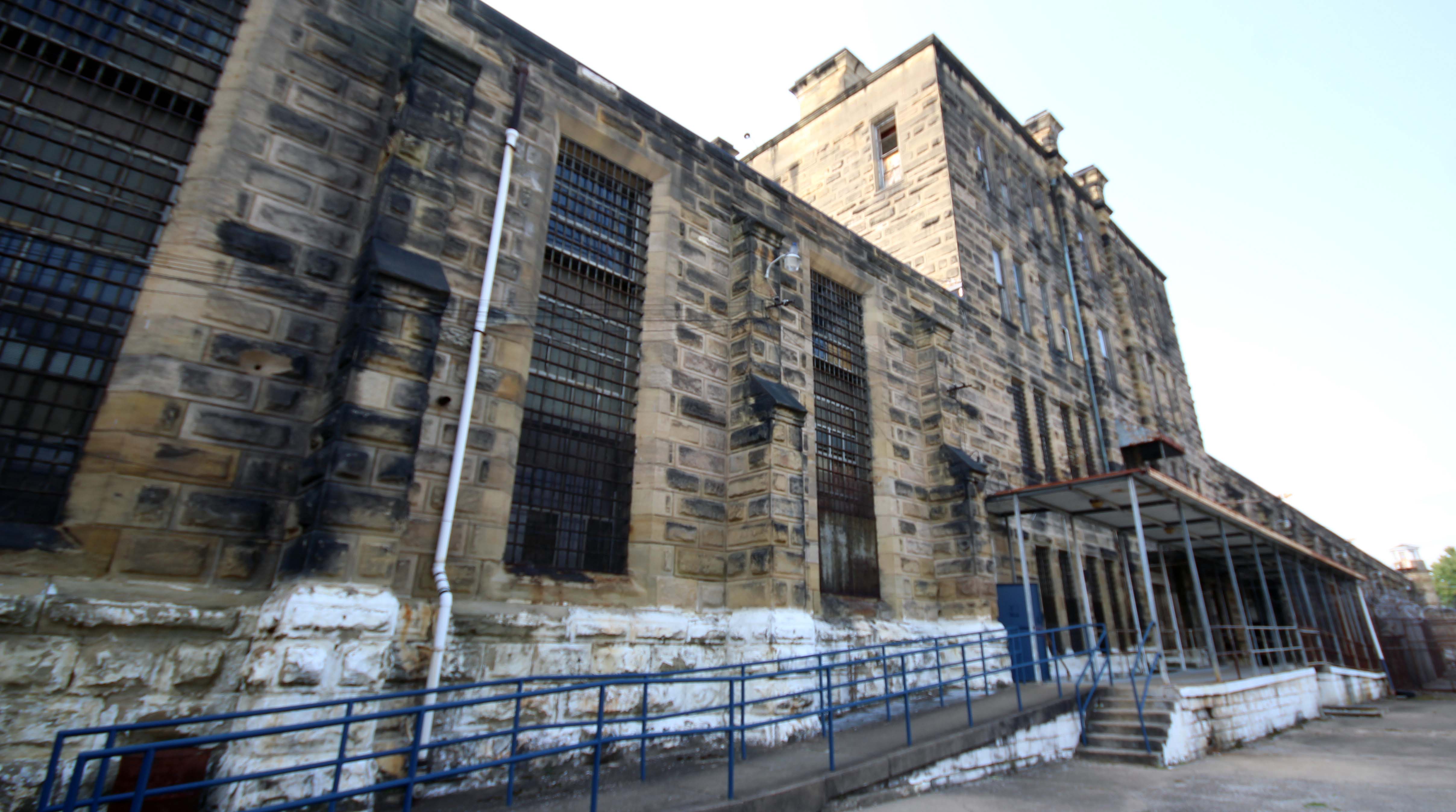
Located in Moundsville, WV, just a little south of Wheeling, the WVSP was built from 1867-1876. It was modeled after the Joliet prison, famously used in The Blues Brothers. The original administrative buildings and cell block wing started operating in 1876 and finally closed in 1995. When it first opened, conditions were “good”, as prison conditions go, but after the turn of the century it all went downhill. Eventually the facility landed on the Department of Justice’s Top Ten Most Violent Correctional Facilities list and stayed there for many years.
In total there were 40 homicides inside the prison, but tour guides claim those were only the ones that were counted because witnesses saw them. Hundreds of other deaths were never ruled homicides.
1924
In 1929, the prison was so overcrowded that they decided to double it’s size. The 5’x7′ cells were far too small for three people, but that’s exactly how many people they had in the cells. One on each bunk and one on a mattress on the floor. It took until 1959 to complete the construction, due to materials shortages during World War II. Even after the addition, the prison was still housing more than twice it’s capacity until it closed. The WV Supreme Court found that conditions at the pen were so bad that just it constituted cruel and unusual punishment, and violated the prisoners 8th amendment rights.
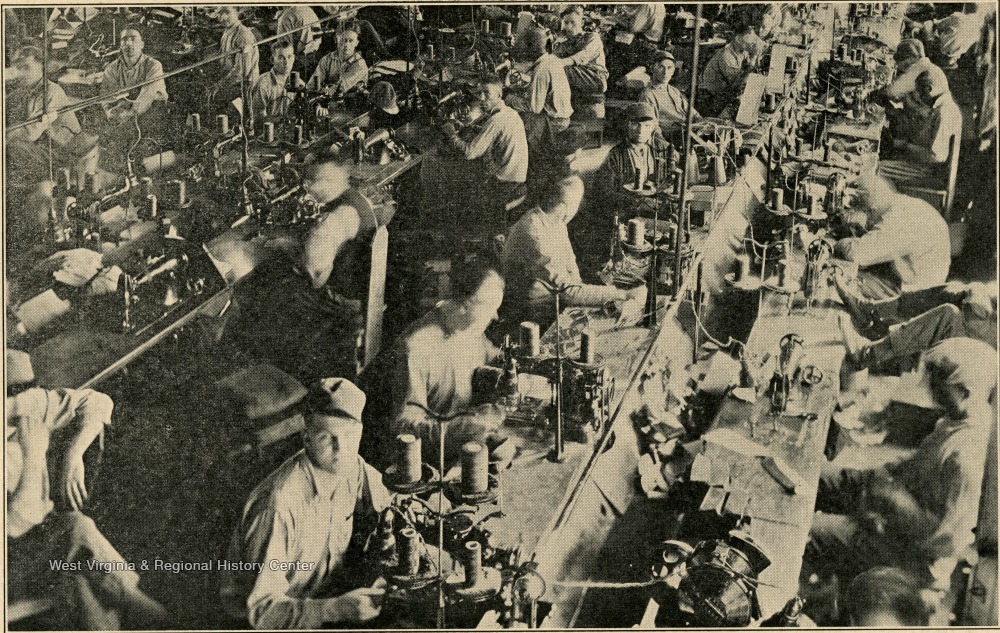
Inmates in the overall factory
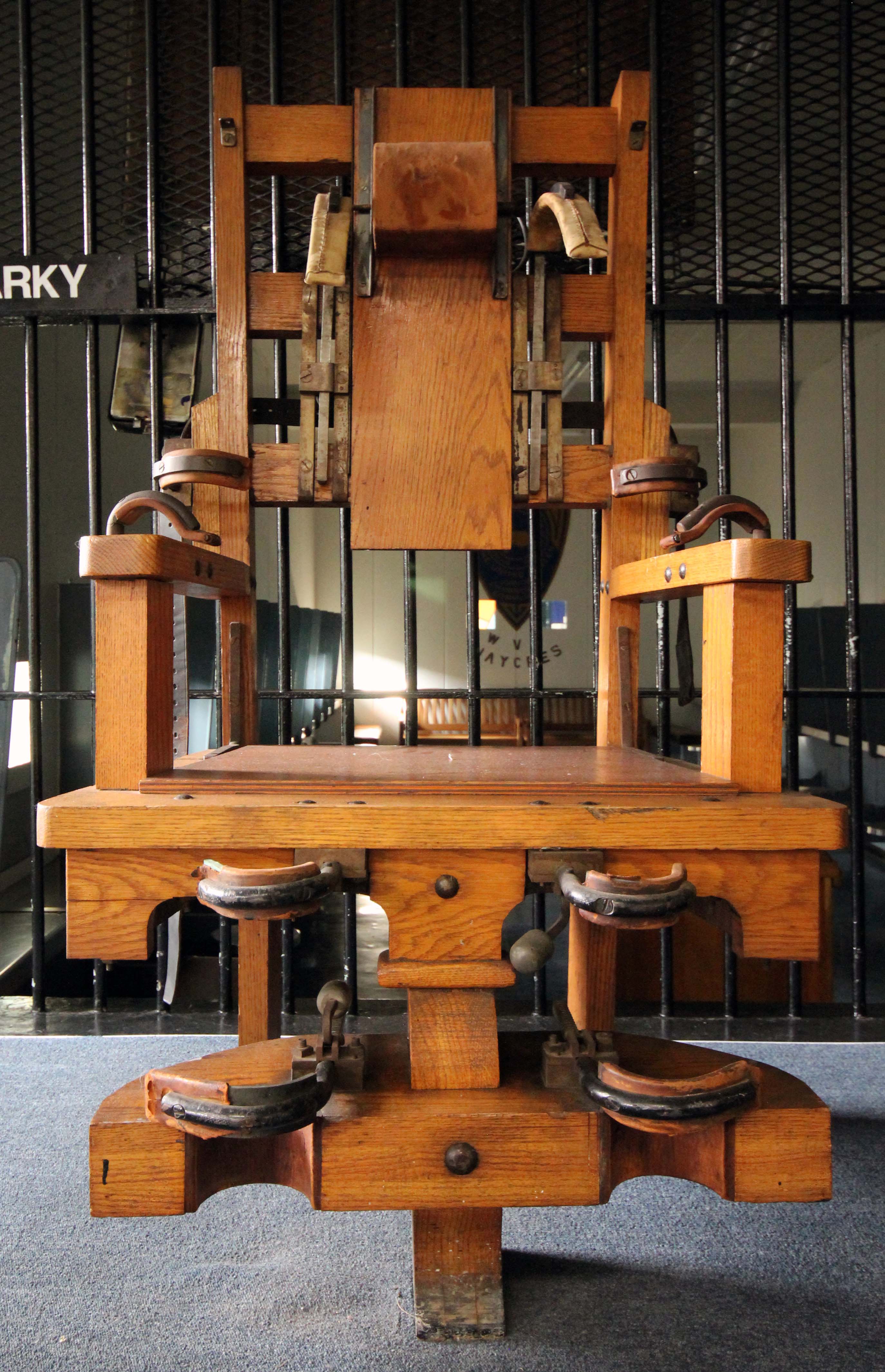
Over the years, 94 men were executed at the prison, most by hanging. Until 1949, eighty four men were hanged, and until 1931 those hangings were public events. At the last public hanging, Frank Hyer was executed for murdering his wife, but when the trap door opened and his full weight hit the rope he was decapitated. From that point on, hangings were by invitation only. After 1951, executions were completed by the electric chair, which was built by a prisoner, who was subsequently stabbed to death by fellow inmates. See this is all so gruesome. Totally not my thing..yuck! – Trace
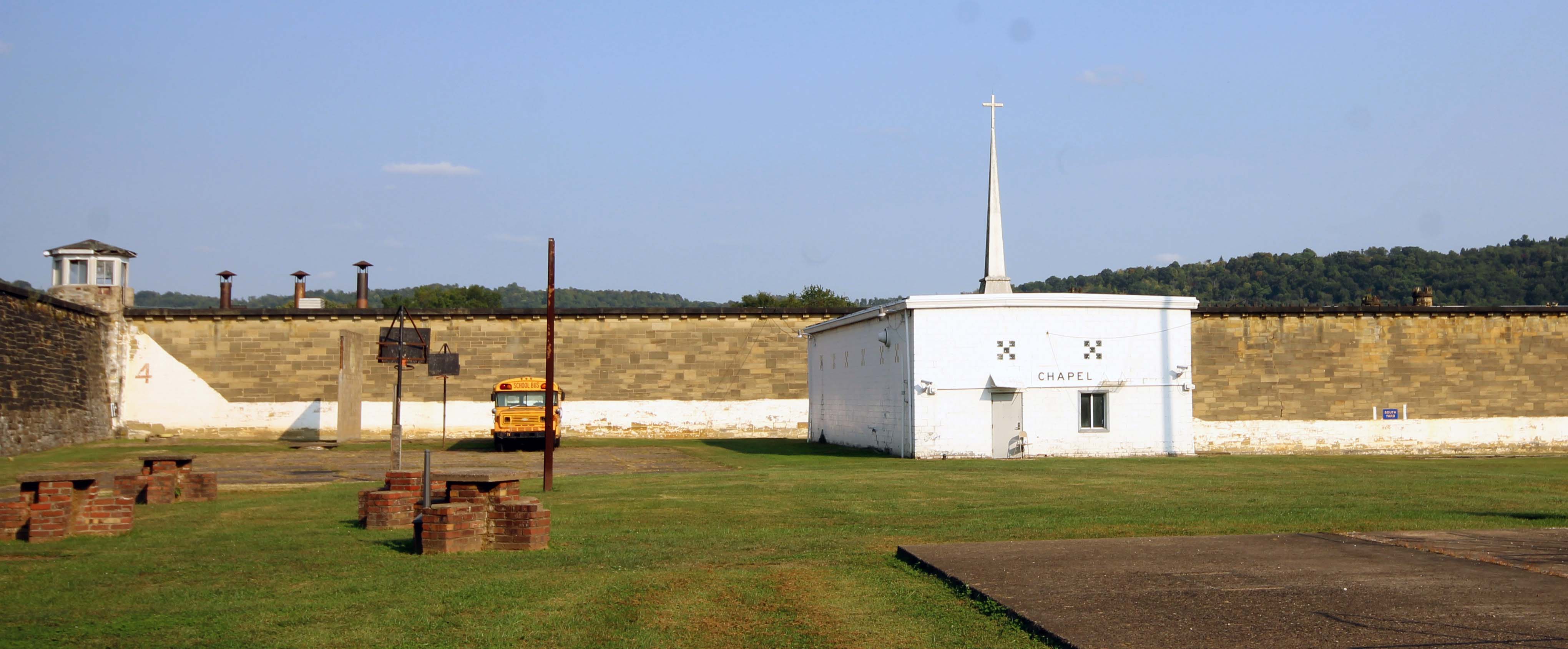
Chapel-1919
“Old Sparky” was used on nine men until 1965 when capital punishment was prohibited by the state. The original chair is still in the prison, and until recently visitors were allowed to sit in it.
In the 1960’s, the prison, which was supposed to house under 700 inmates, had a peak population of over 2000.
A female inmate cell-1924
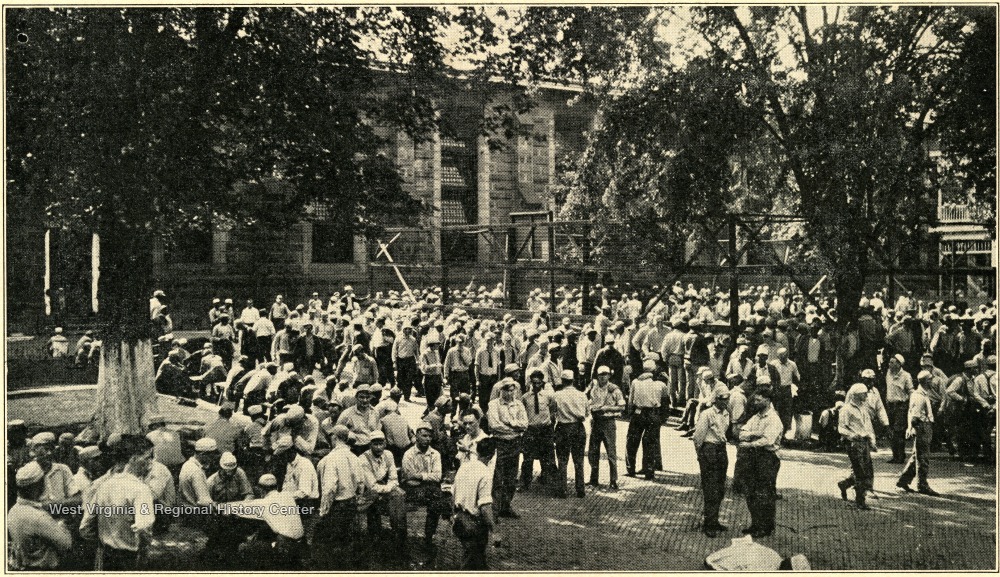
Inmates in the yard-1927
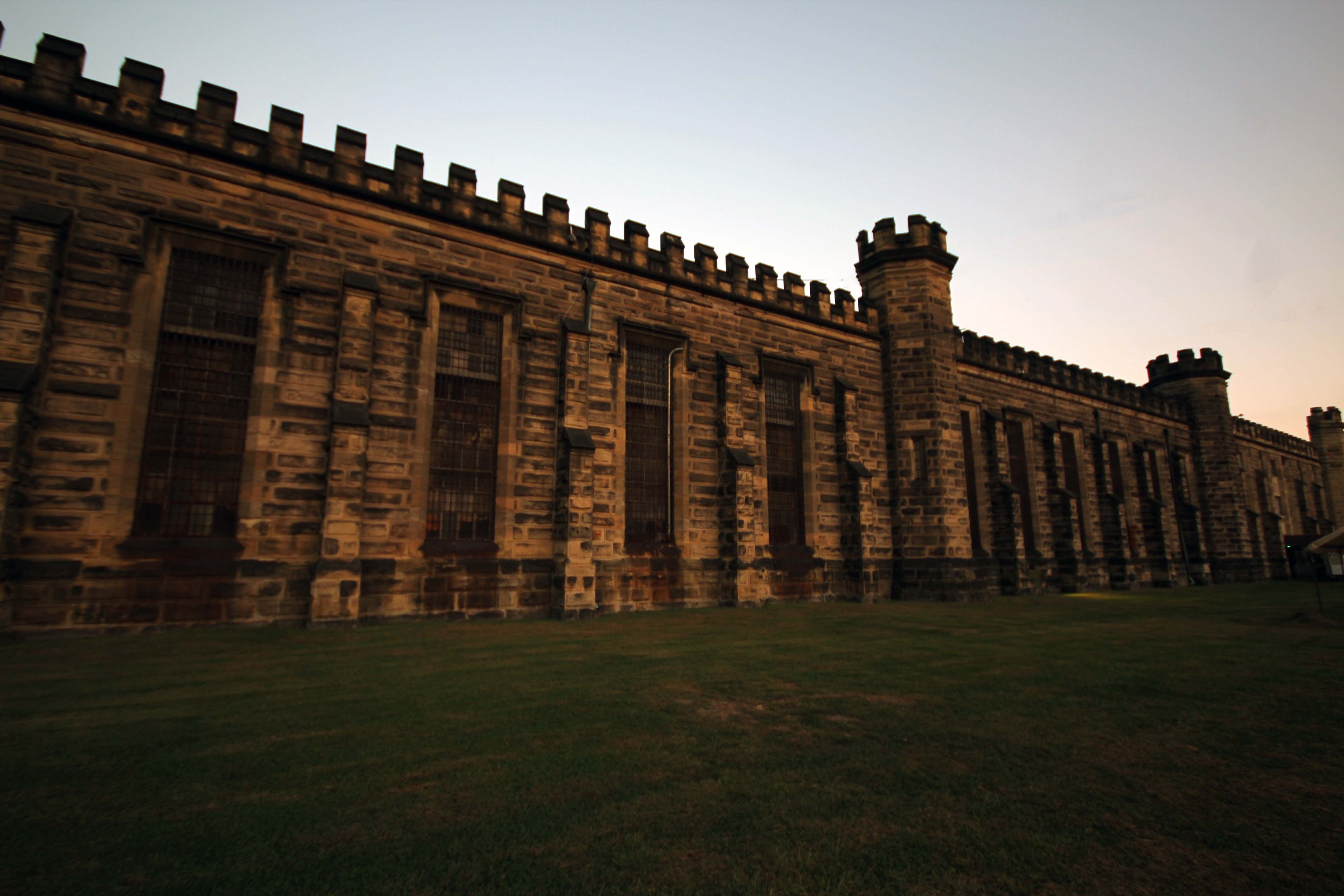
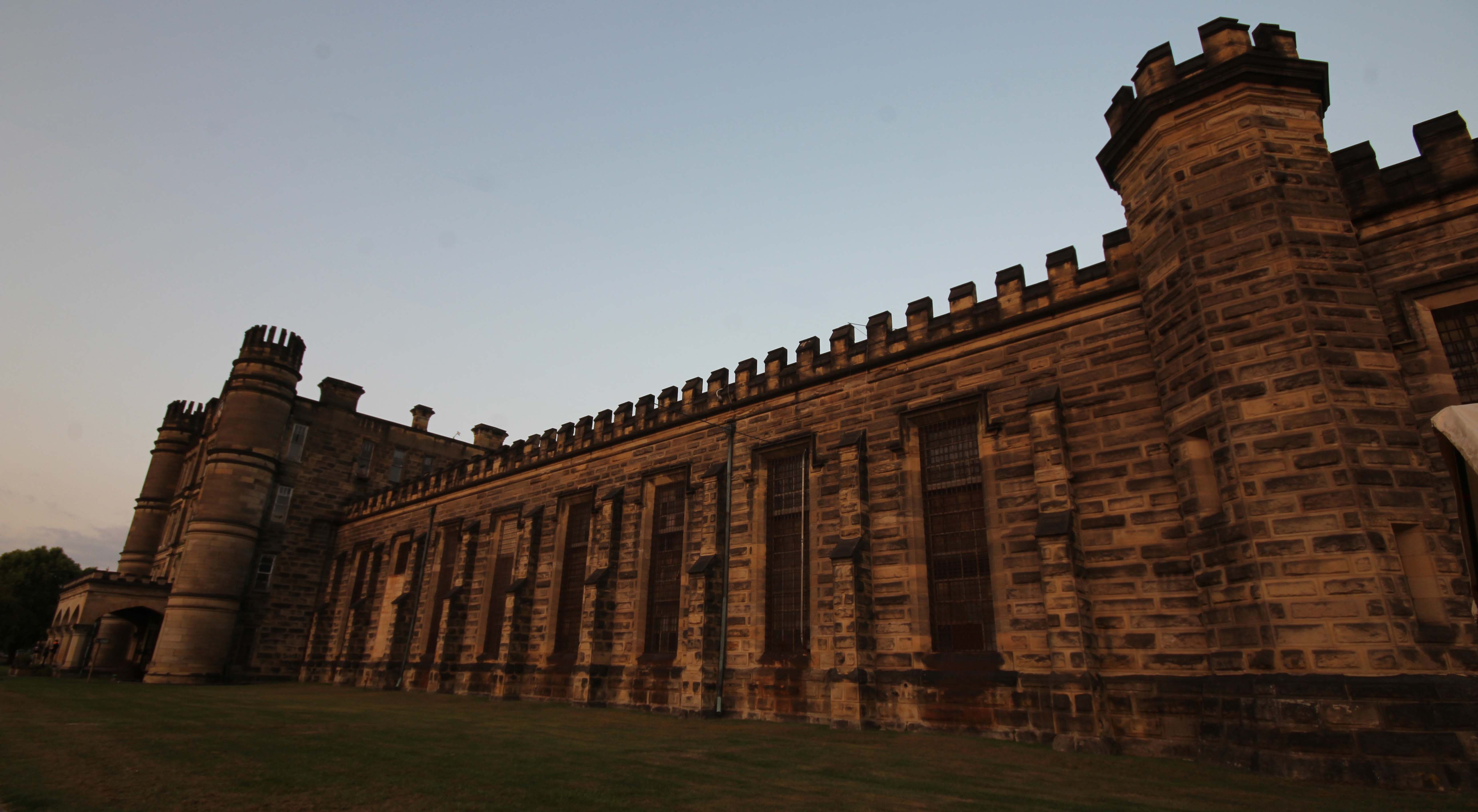
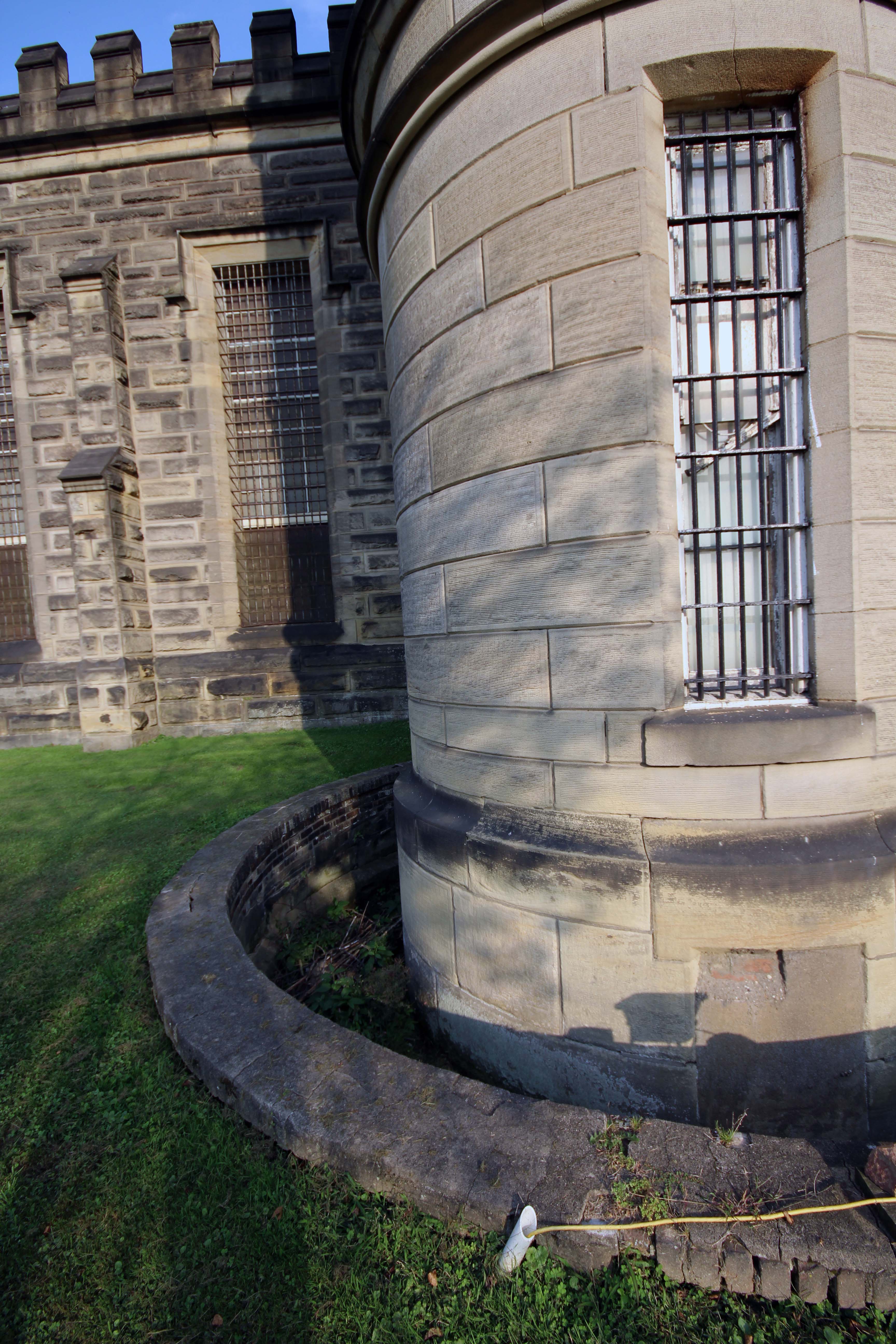
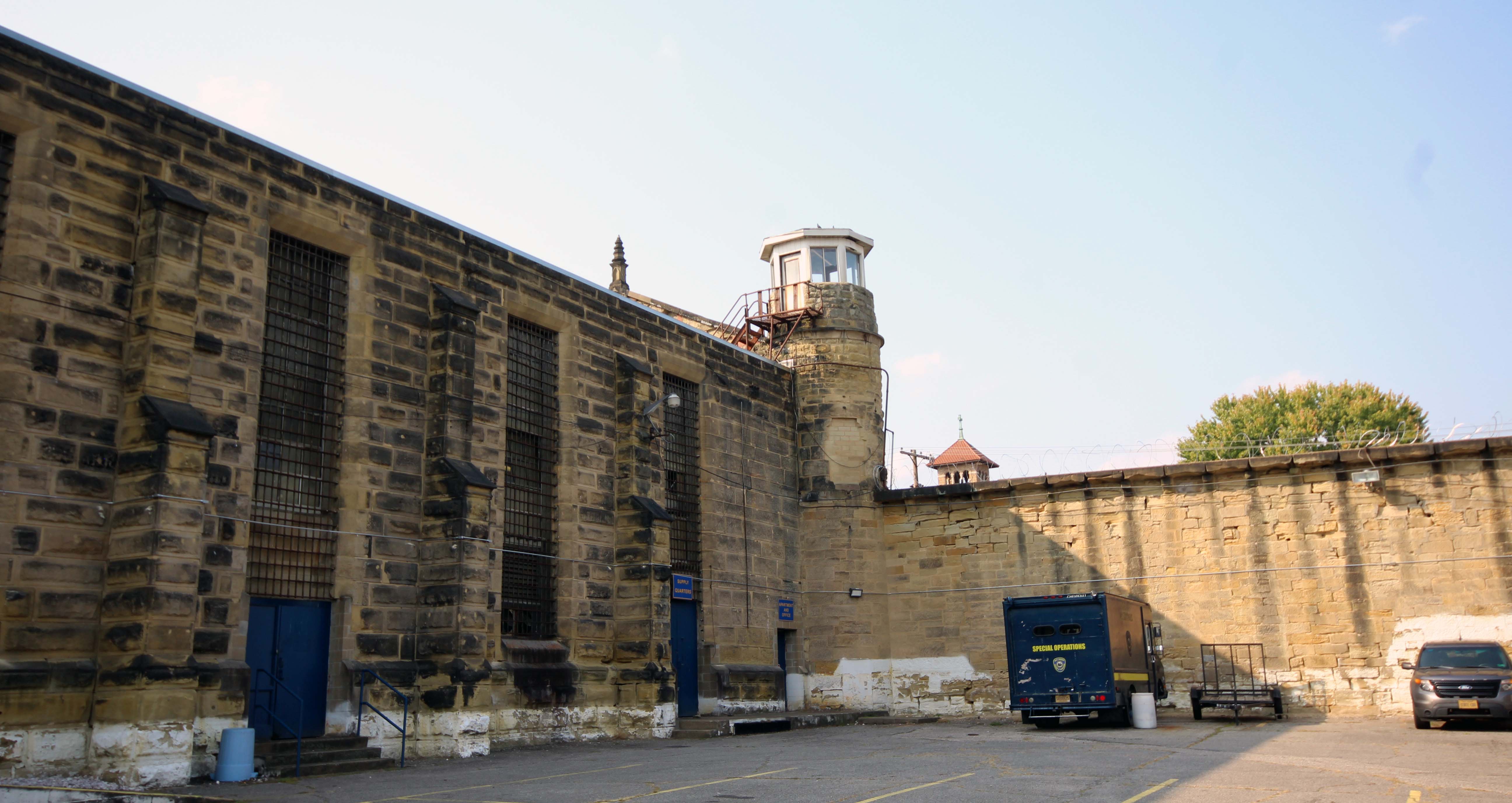
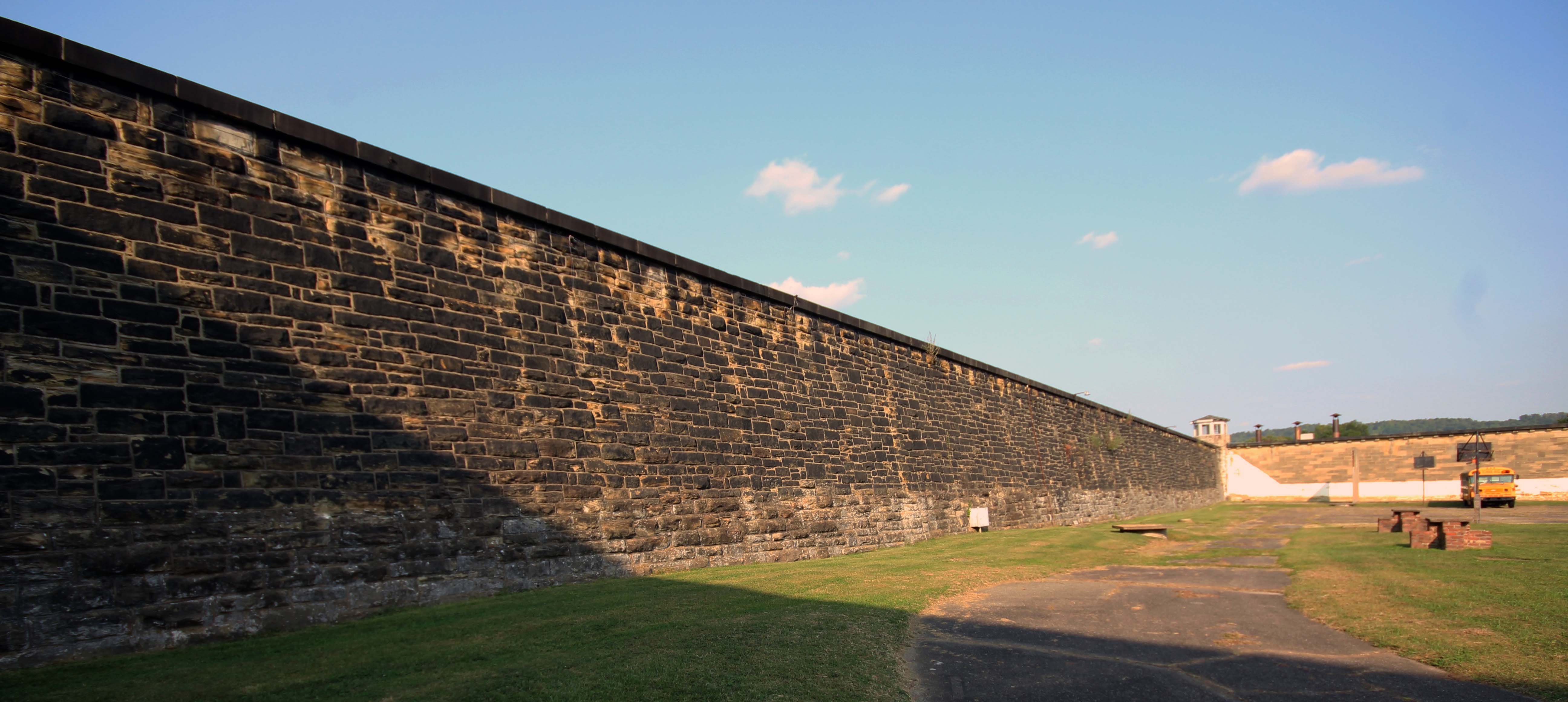
The imposing limestone walls were quarried by prisoners and stand 24 feet tall, are 5 feet thick at the bottom, 2 feet thick at the top, and go 5 feet deep into the ground.
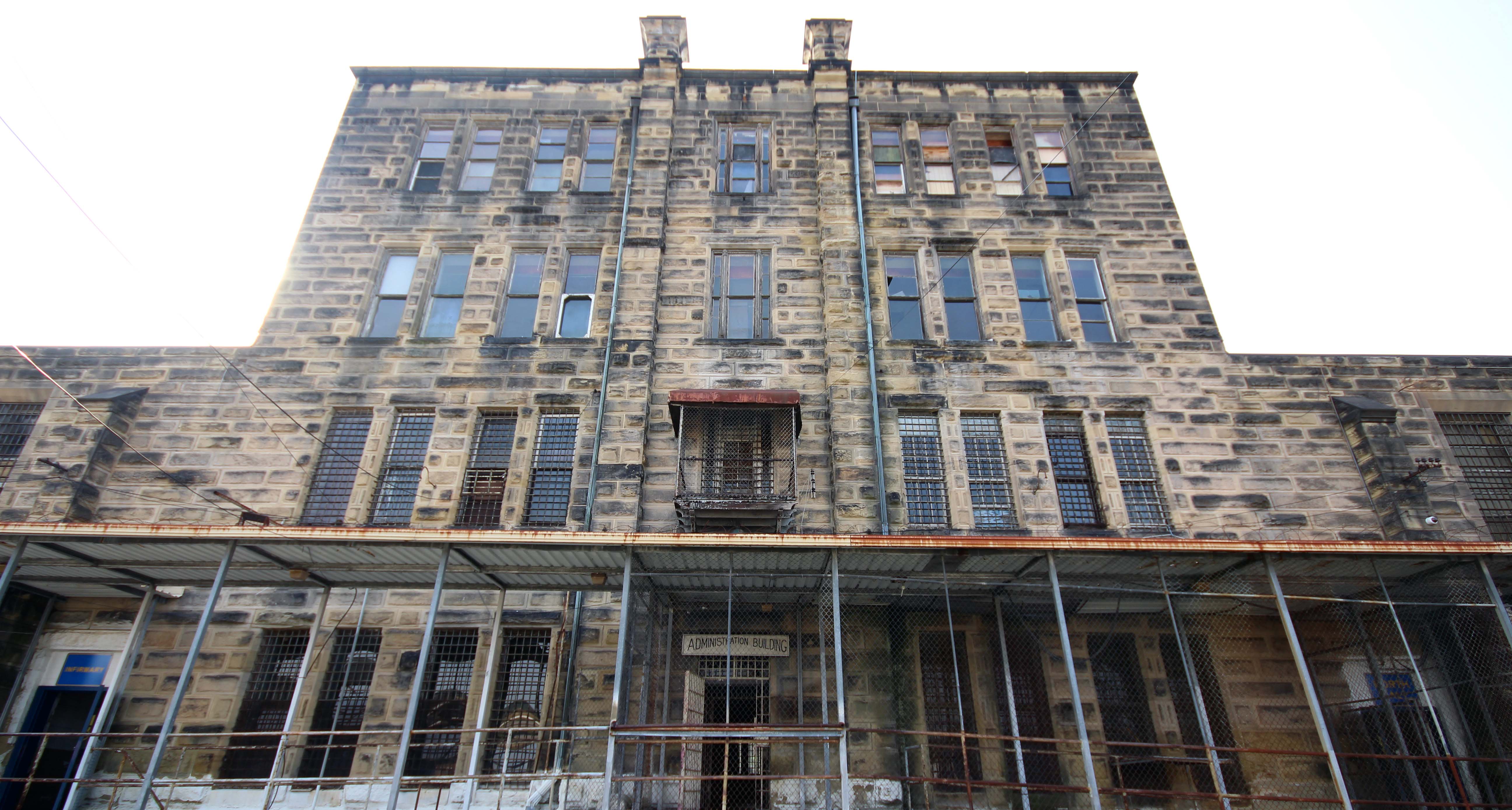
The administration building stands in the center of the original structure, and housed offices, a barber shop open to the public and the non-contact visitation area. The third and fourth floor were occupied by the warden and his family. This makes me wonder how soundproof those floors were. Can’t imagine raising kids in that environment. -Trace
It is a beautiful building. Sad it held so much sorrow – Trace
Gothic Revival architecture “exhibits, as much as possible, great strength and conveys to the mind a cheerless blank indicative of the misery which awaits the unhappy being who enters within its walls.”
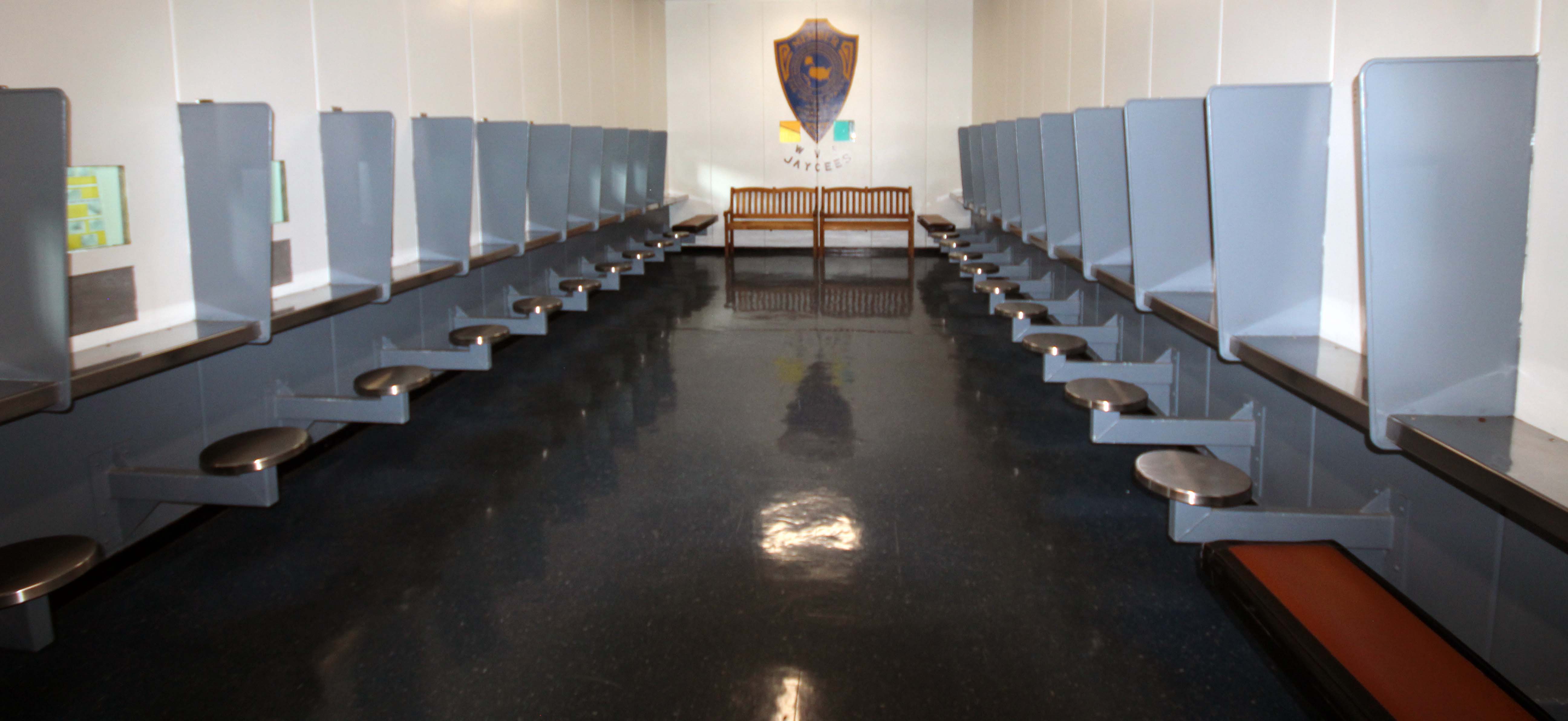
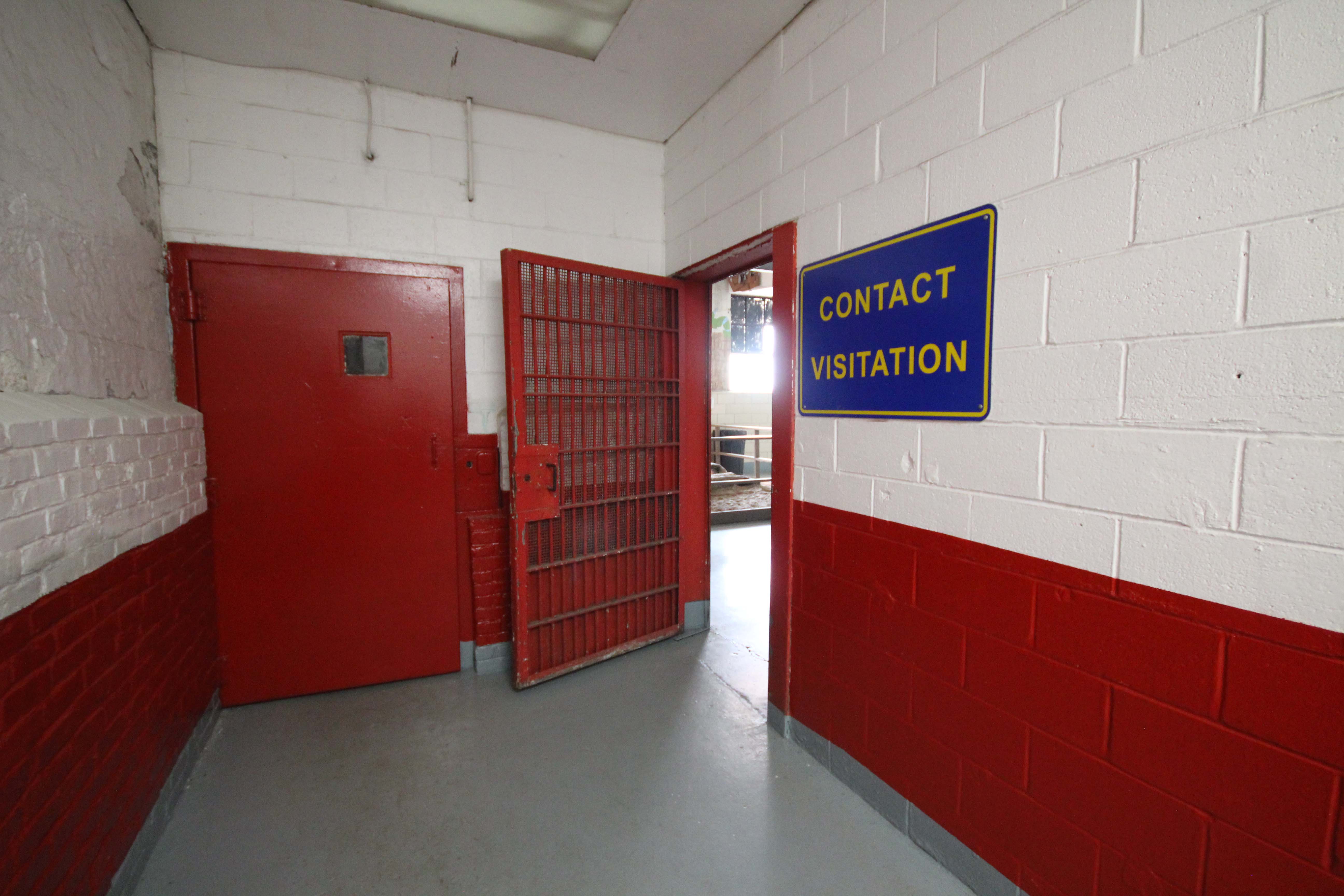
This is the part of the non-contact visitor area where visitors sat. The prisoners sat on the other side, and they could see each other through windows, and spoke on phones.
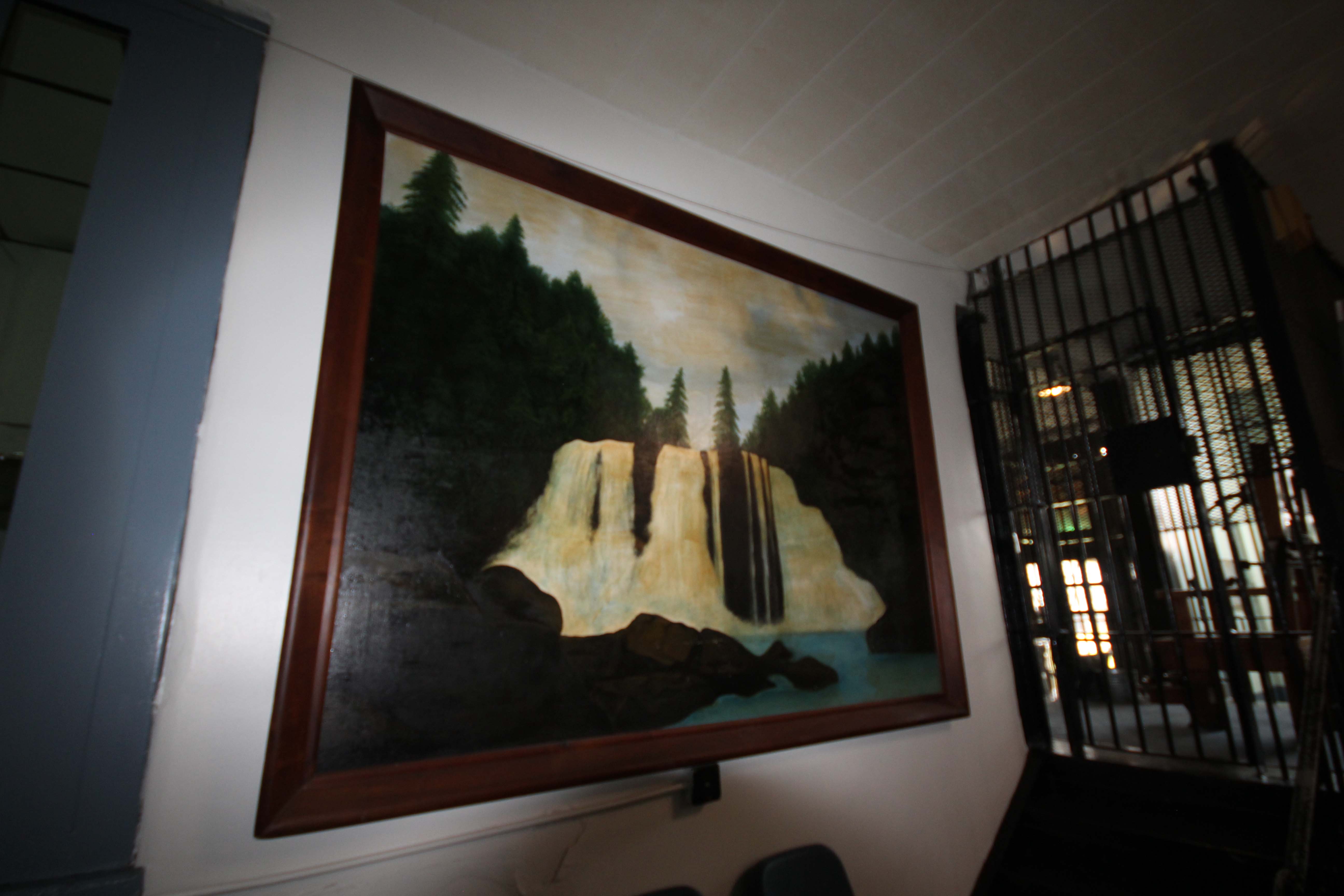
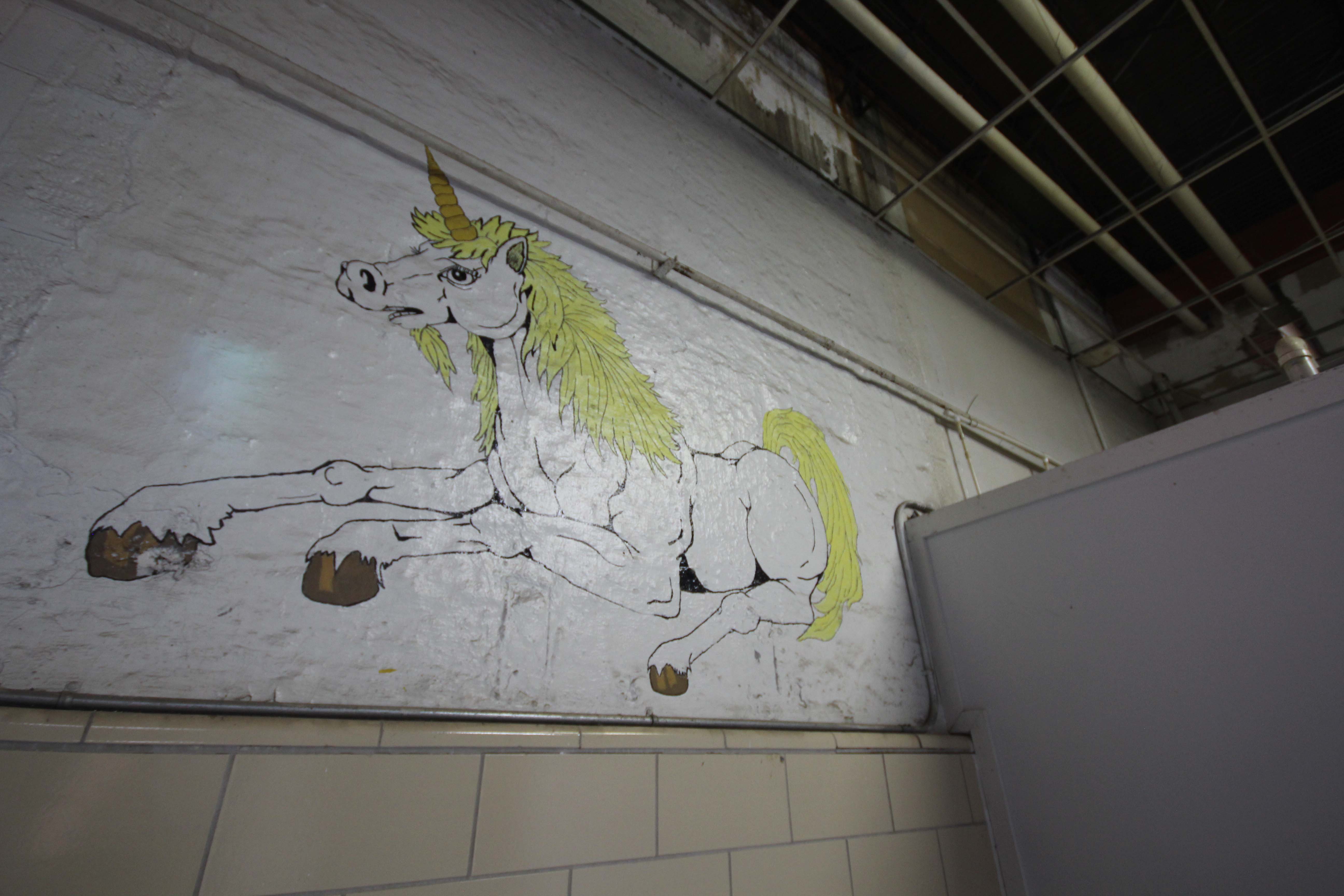
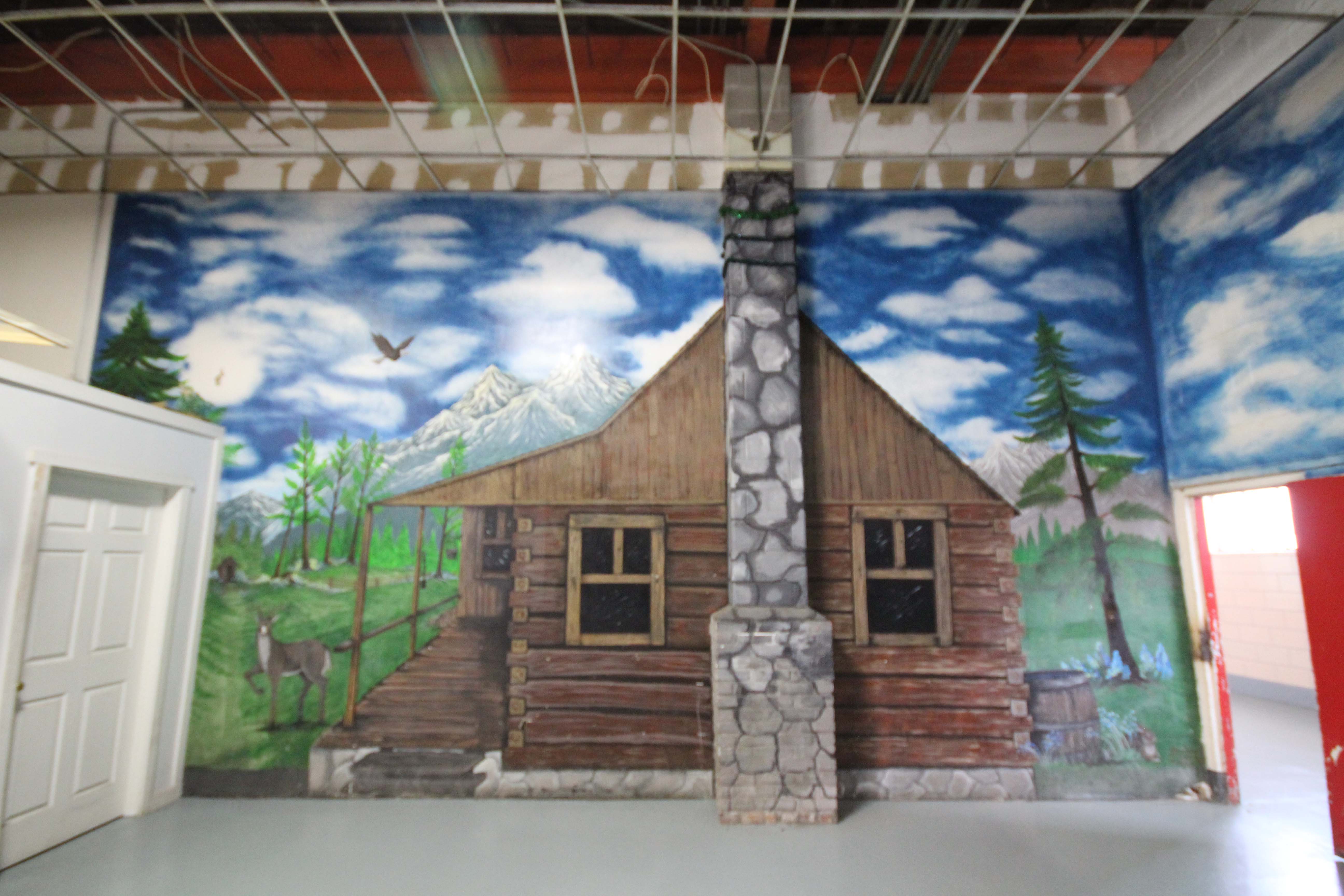
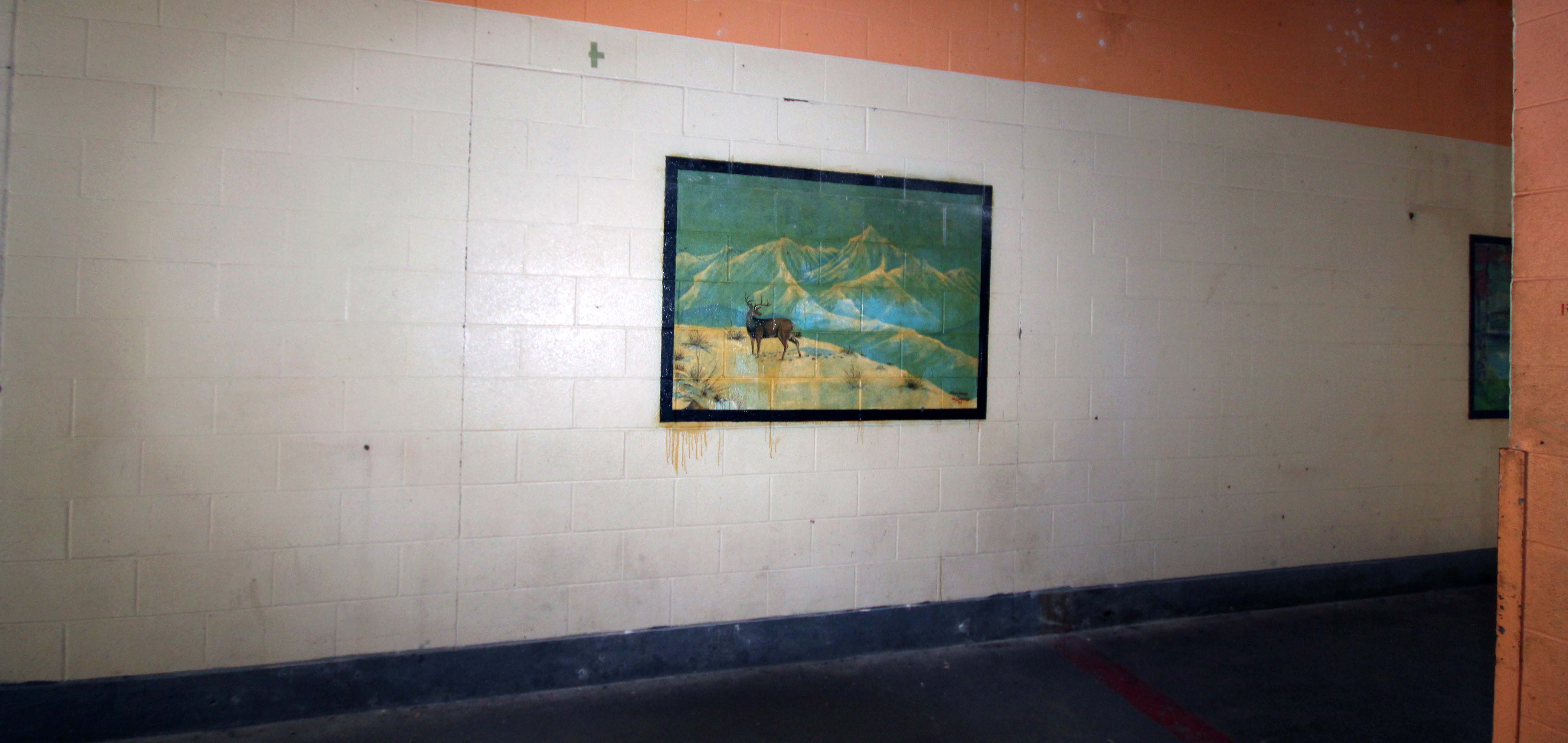
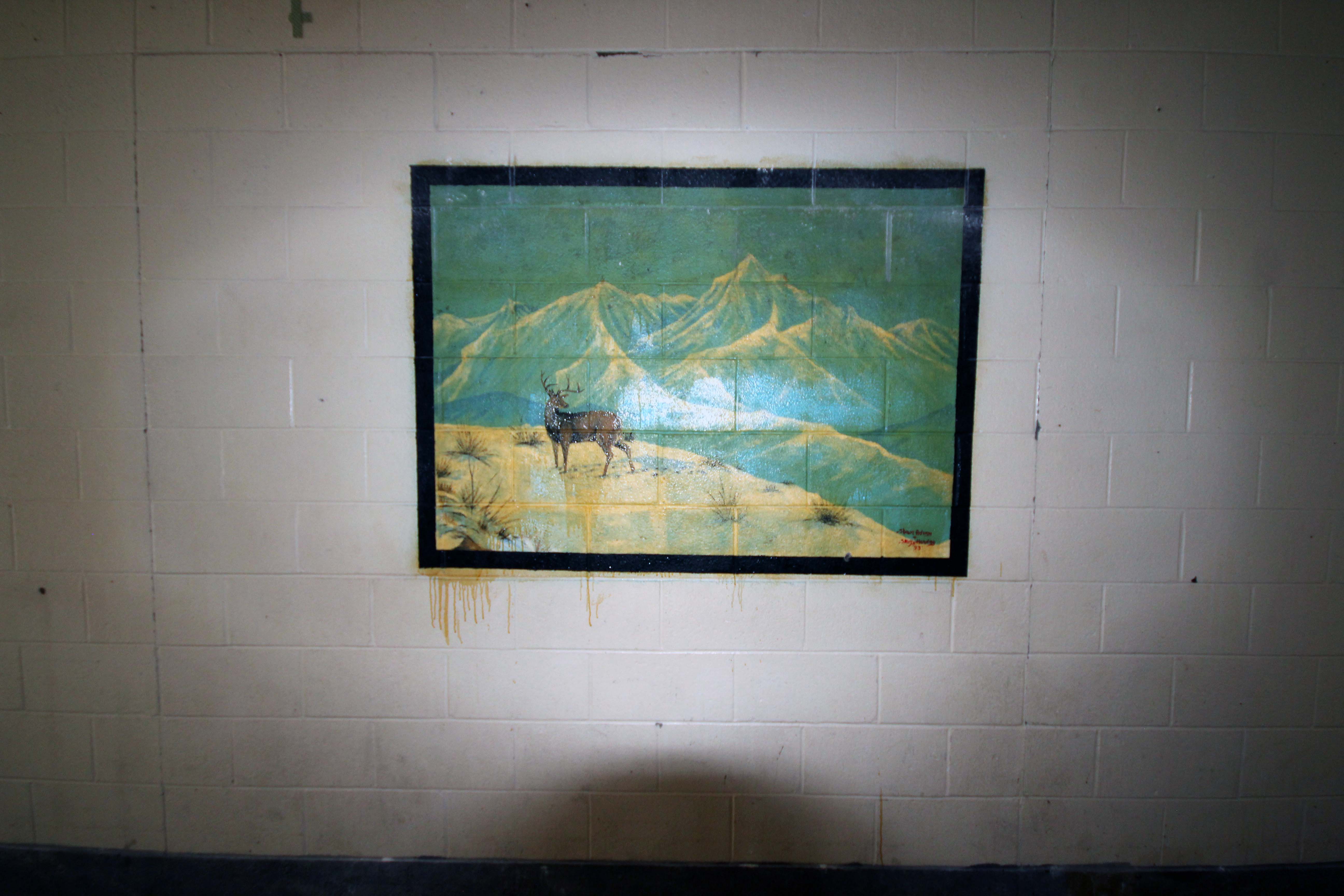
Artwork throughout the facility was painted by various prisoners over the years.
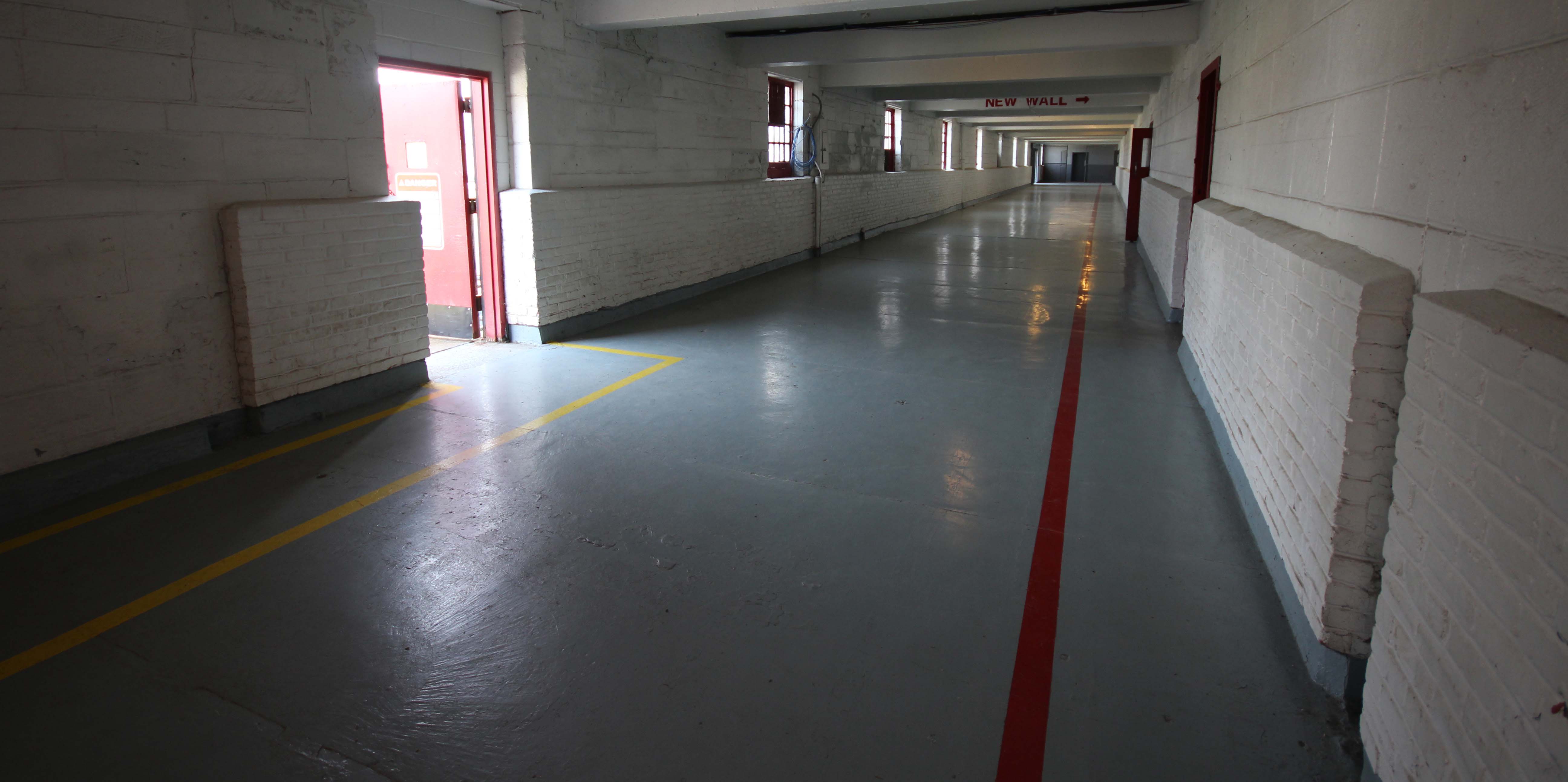
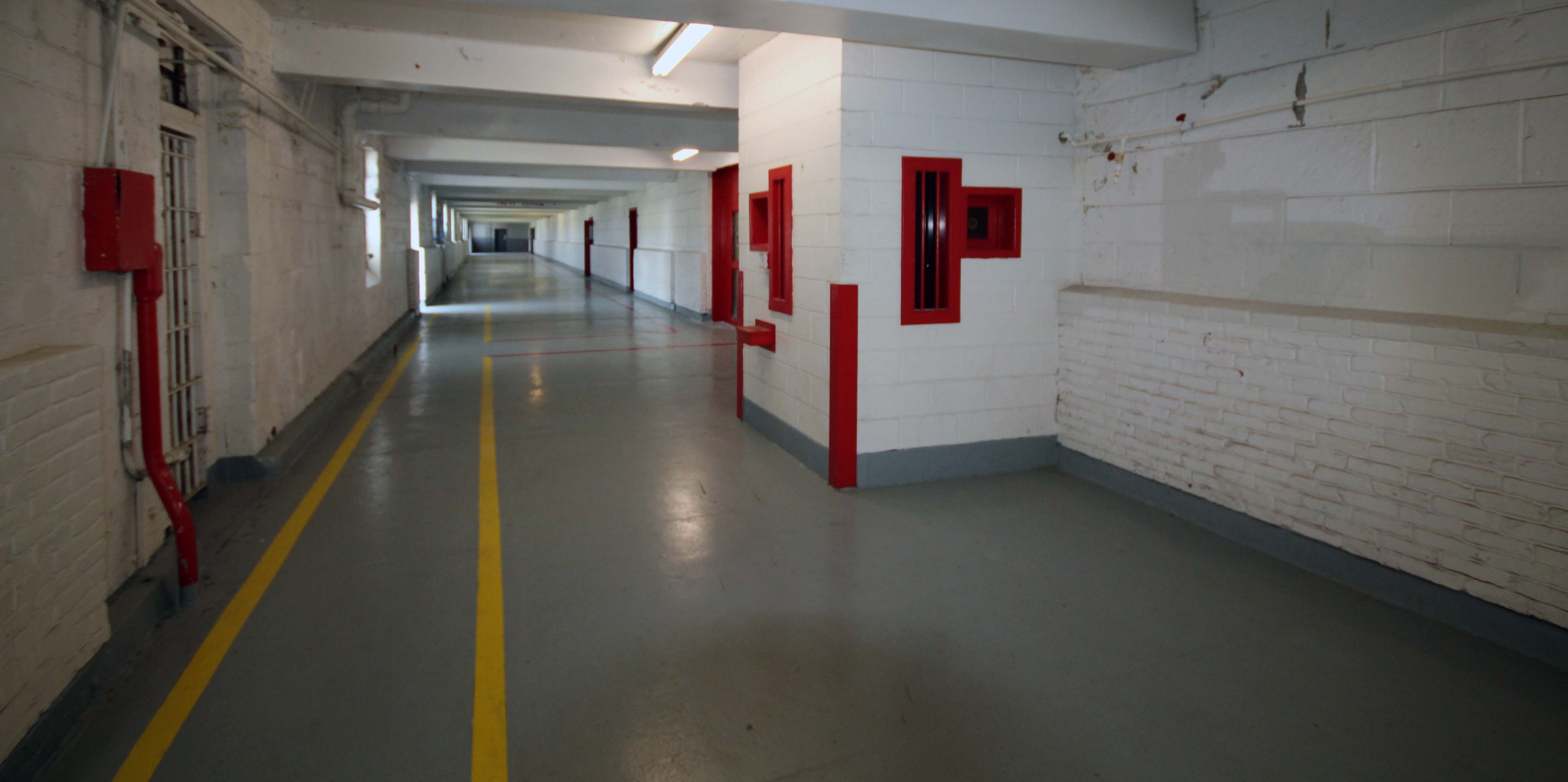
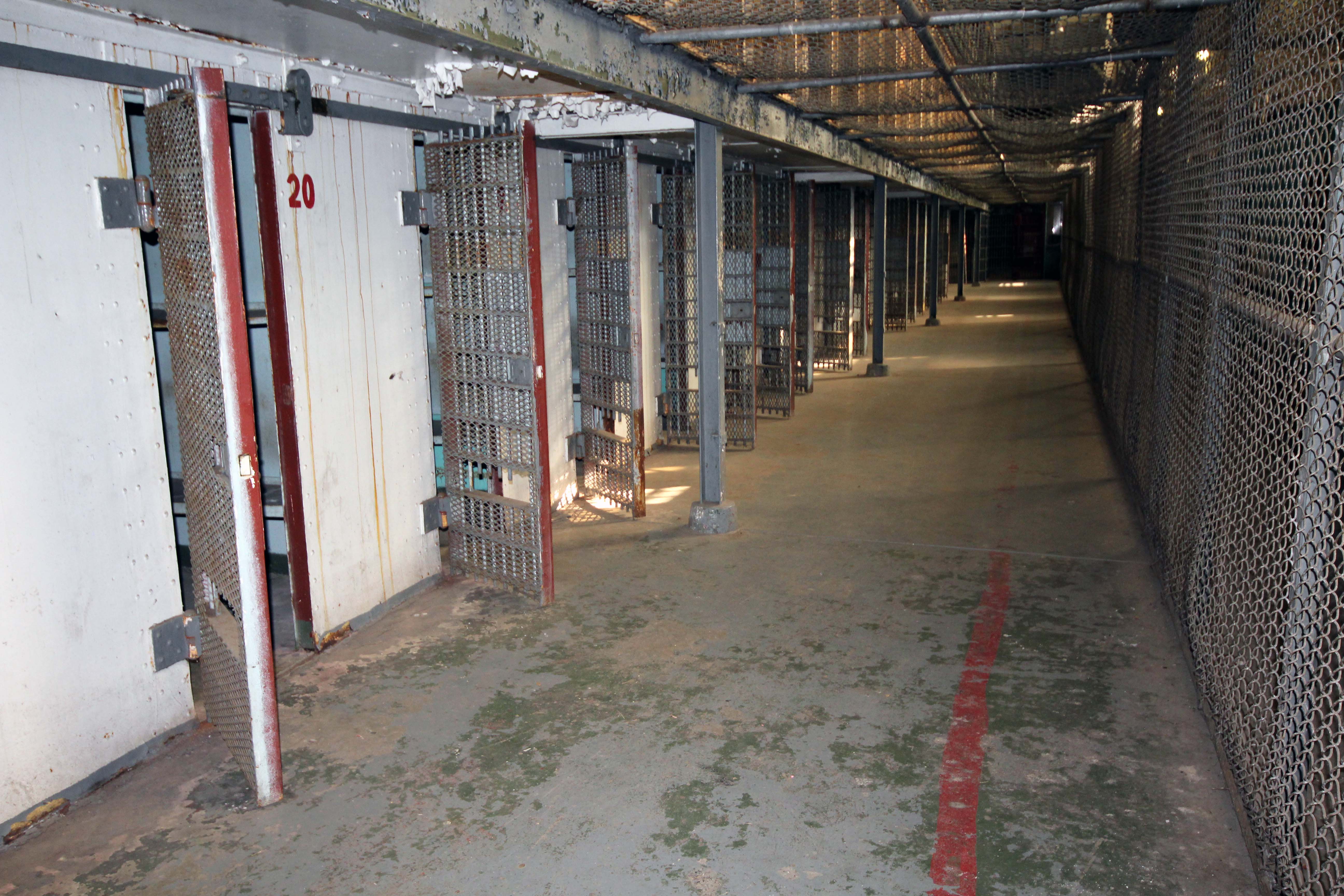
“”Blood Alley” as it was known to the Justice Department was the location of many, many throat cuttings and stabbings. Eventually they painted the hall with a red line, and prisoners were required to only ever walk single file in that two foot path. At the end of the hall a “guard shack” was manned with a sharpshooter. Anyone who stepped over the red line was shot with a rifle. That happened many, many times.
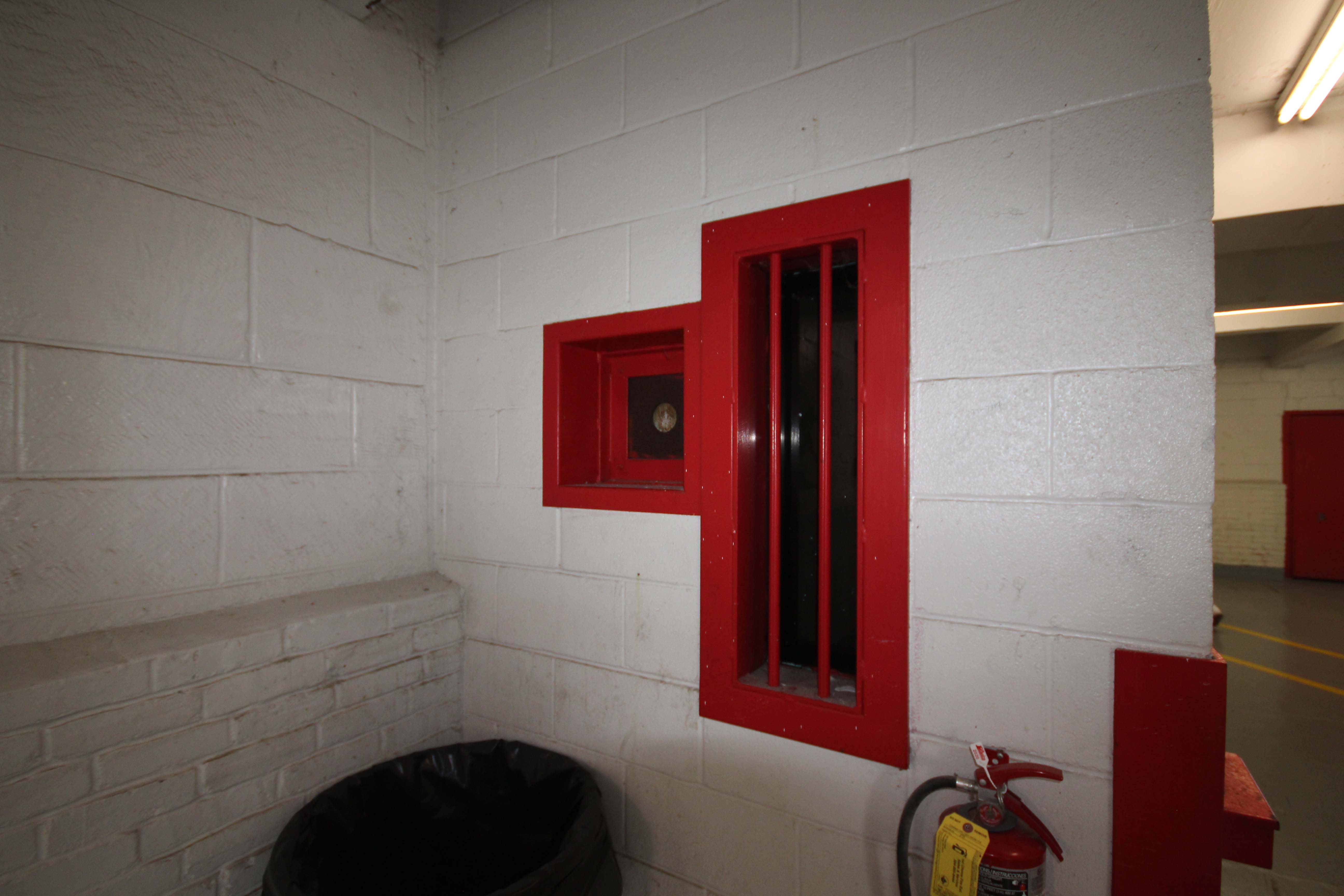
Window and gun portal for the rifleman overseeing the hall.
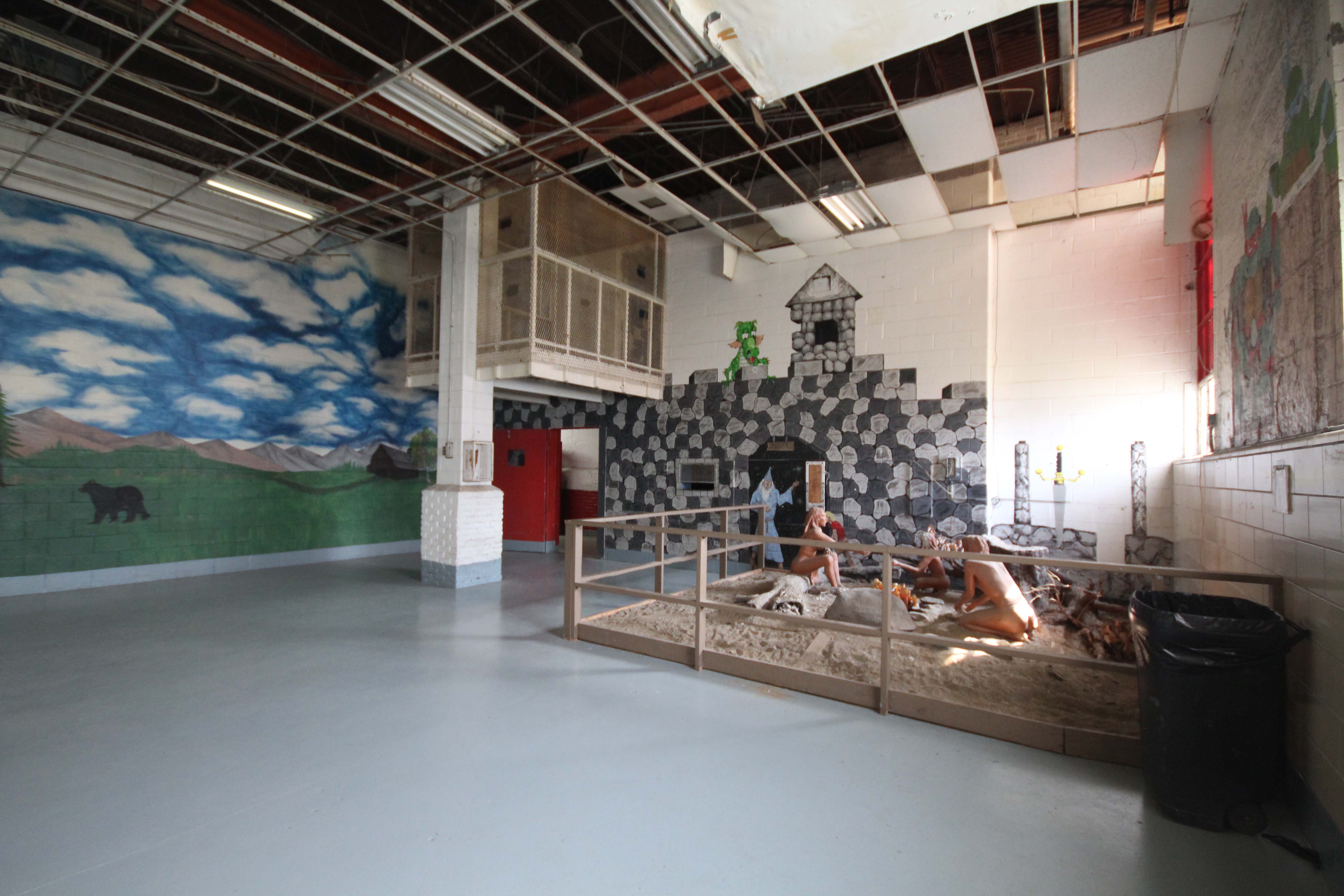
The large contact visitation area, complete with a tableau made by an inmate of a native family to complement the burial mound across the property. Note the guard cage above on the left. Ok that’s just weird – Trace
And they are naked? Again weird – Trace
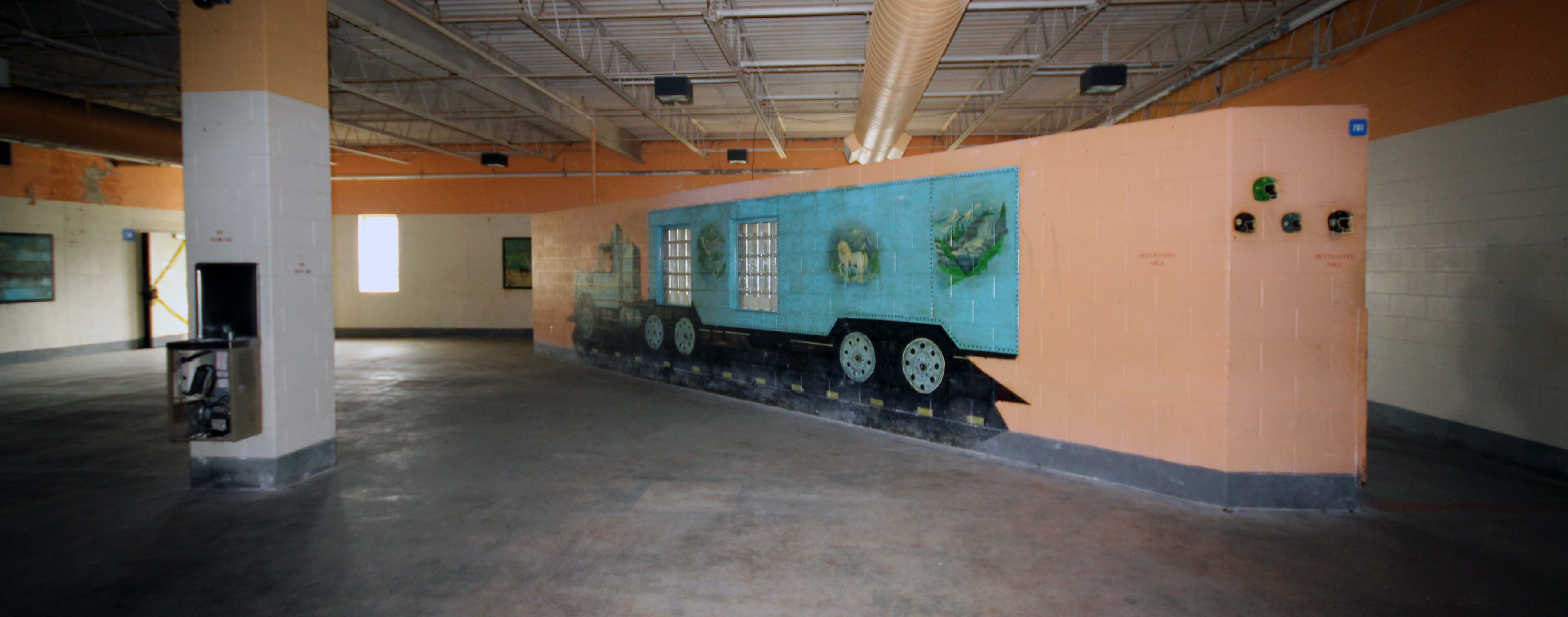
The guards ate in a separate area behind this wall.
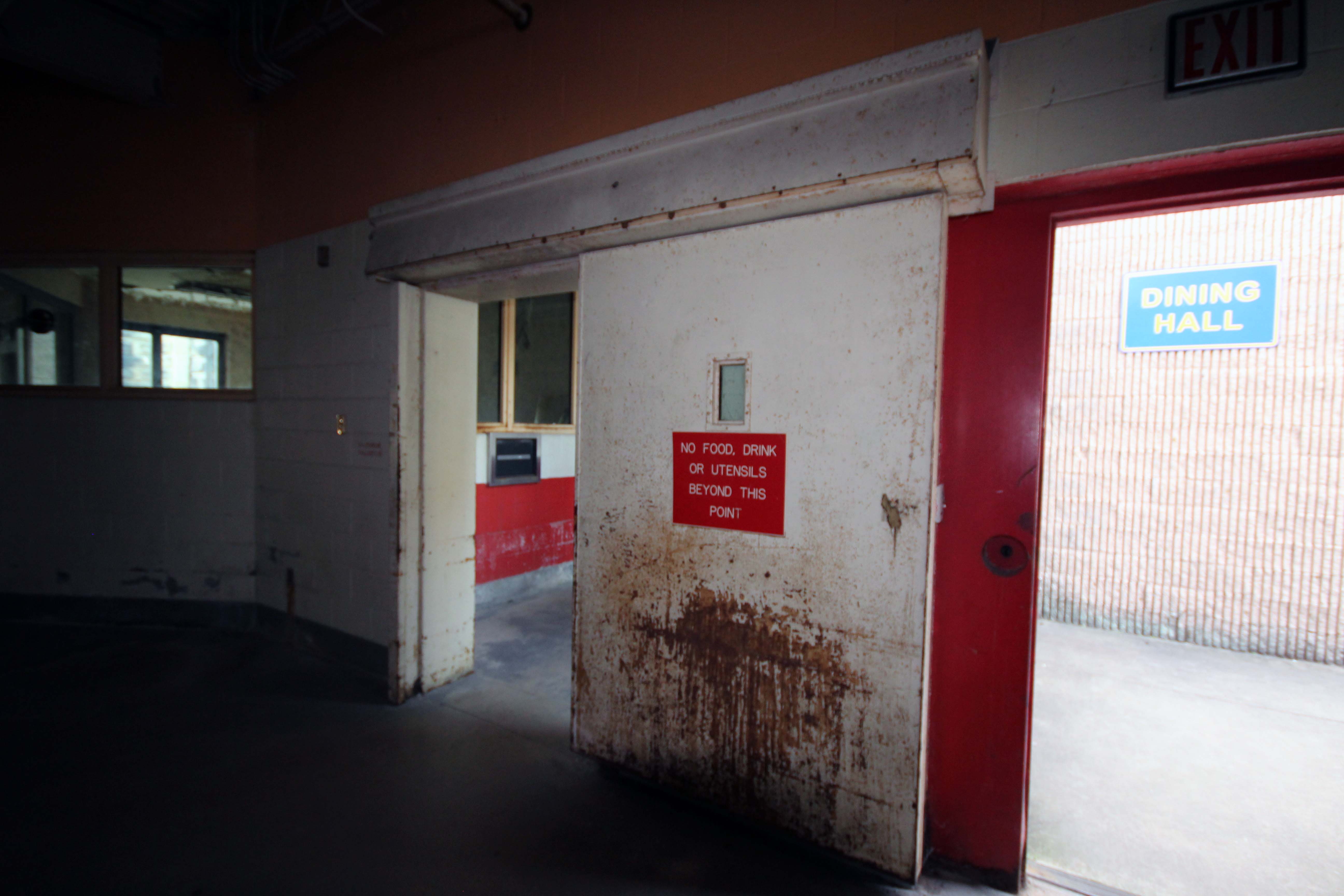
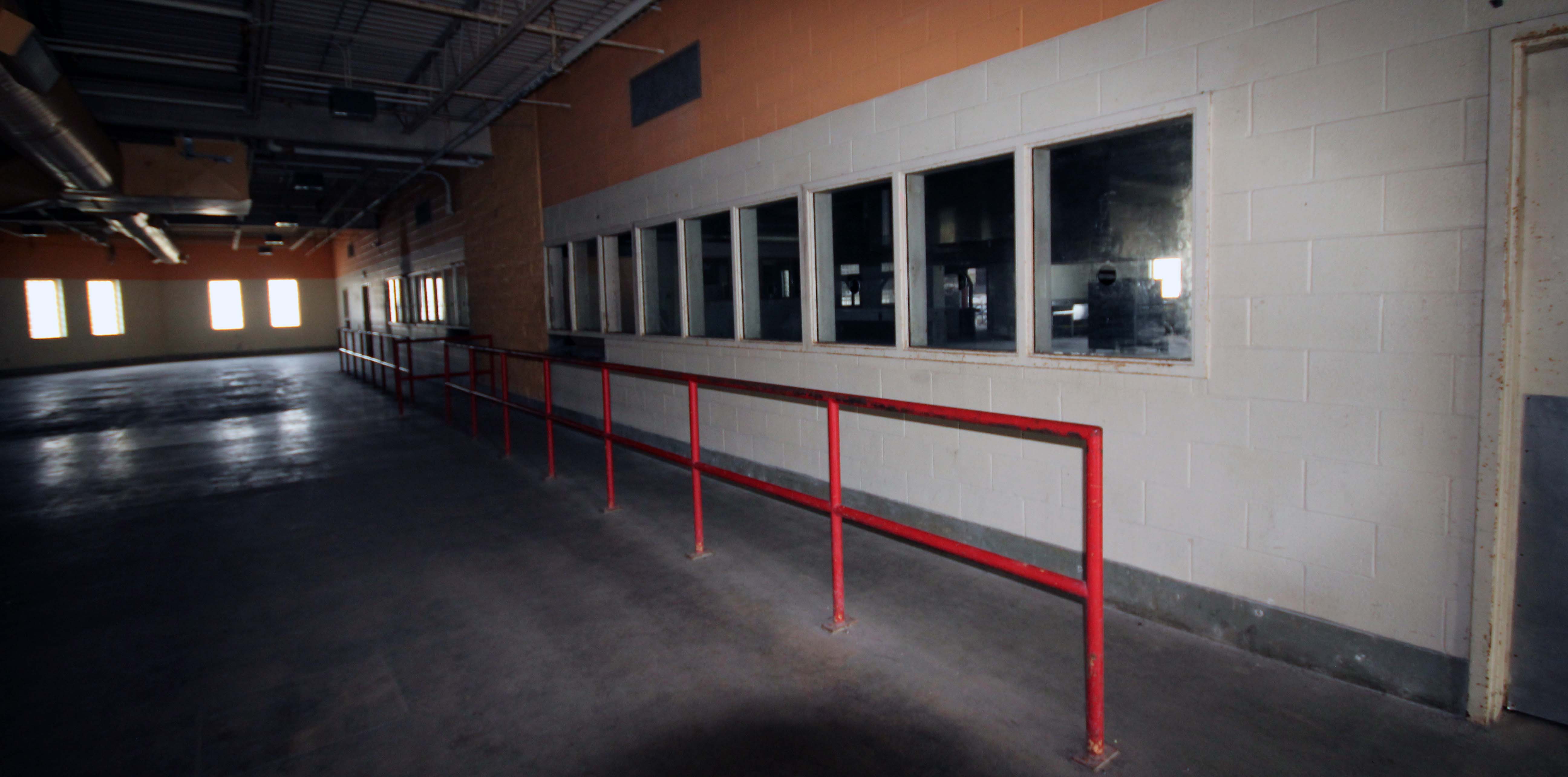
The windows where inmates selected their food. At the end of the line was a thin slit through which they would get their tray.
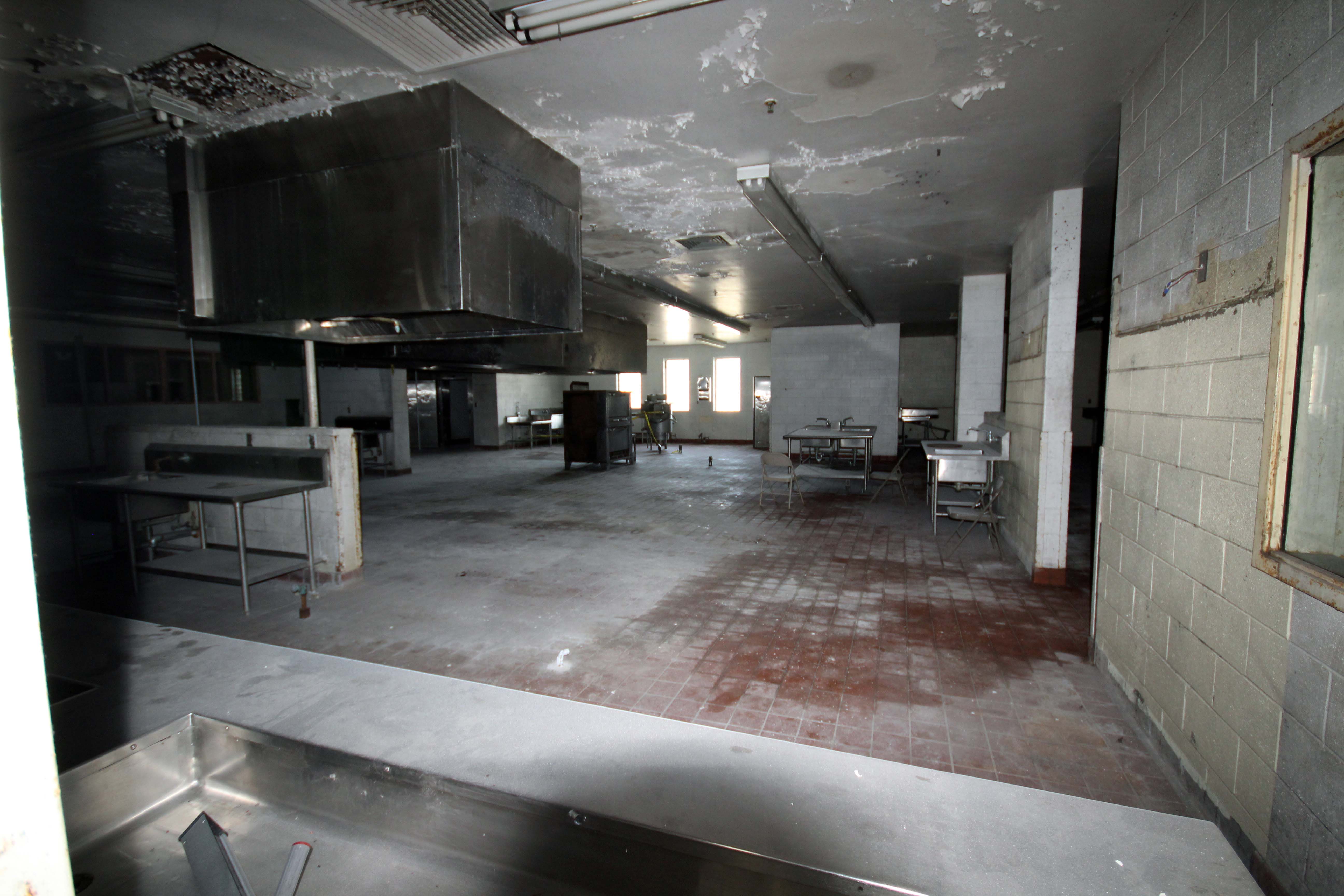
The kitchen
Just behind the wall separating the guard’s dining area from the inmates area is a “riot wall”. A section of the outer wall of the building that was not reinforced with rebar that could be knocked down by law enforcement in the event of a riot.
You can just see the outline of where the mortar has cracked where the wall has settled and isn’t reinforced.
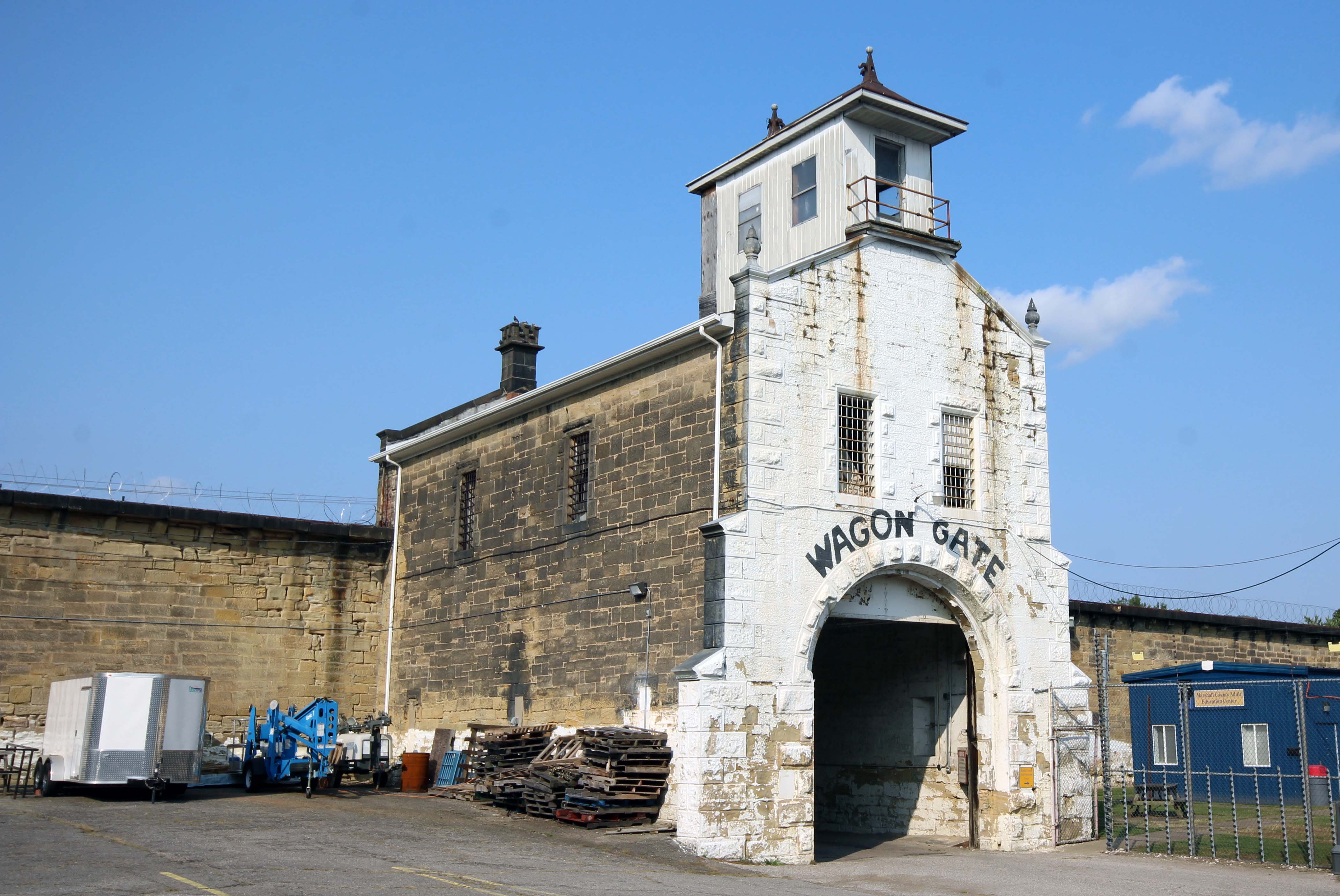
The wagon gate was the first building constructed and was used to allow the public in to view hangings.
This area is where the original gallows was.
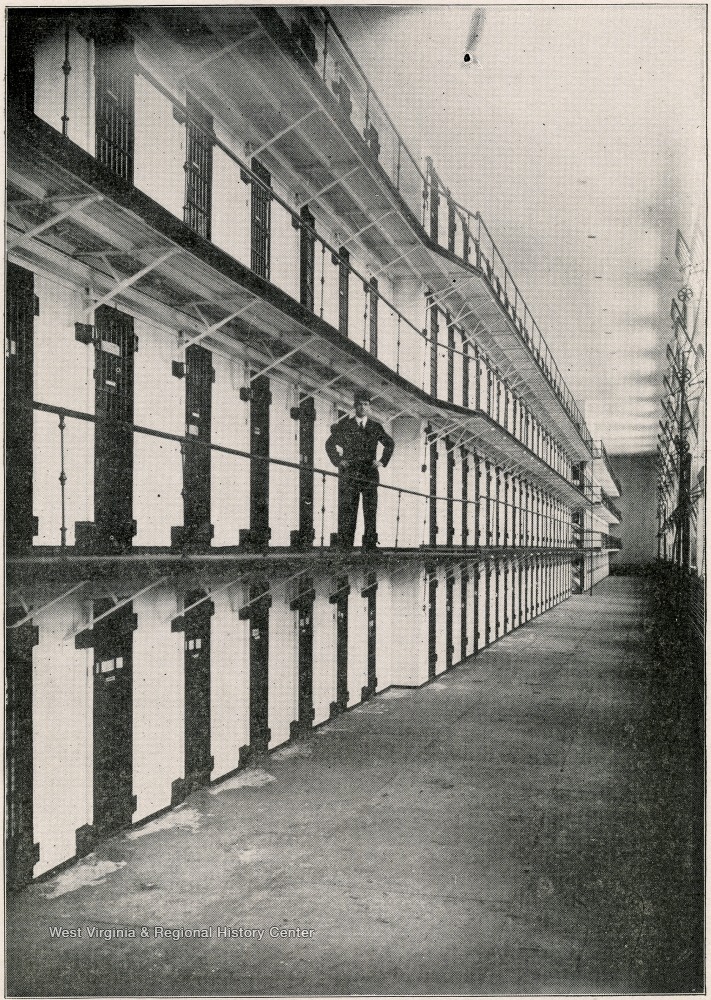
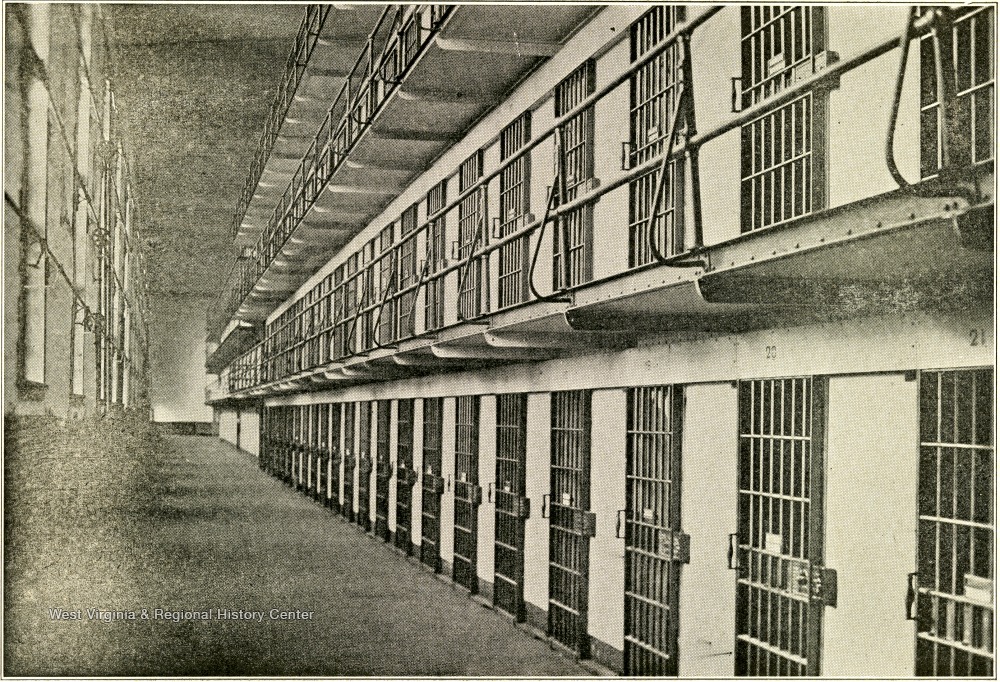
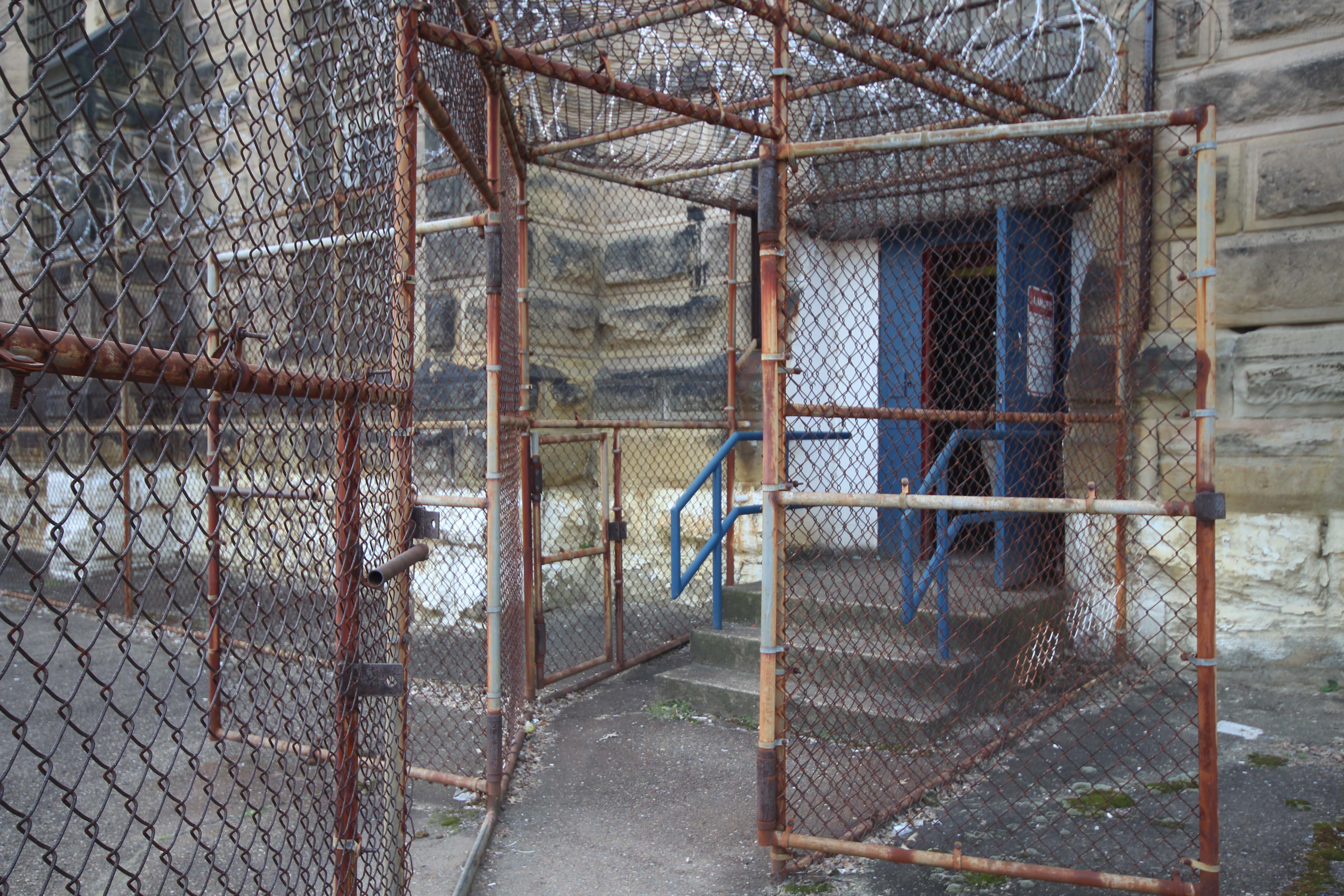
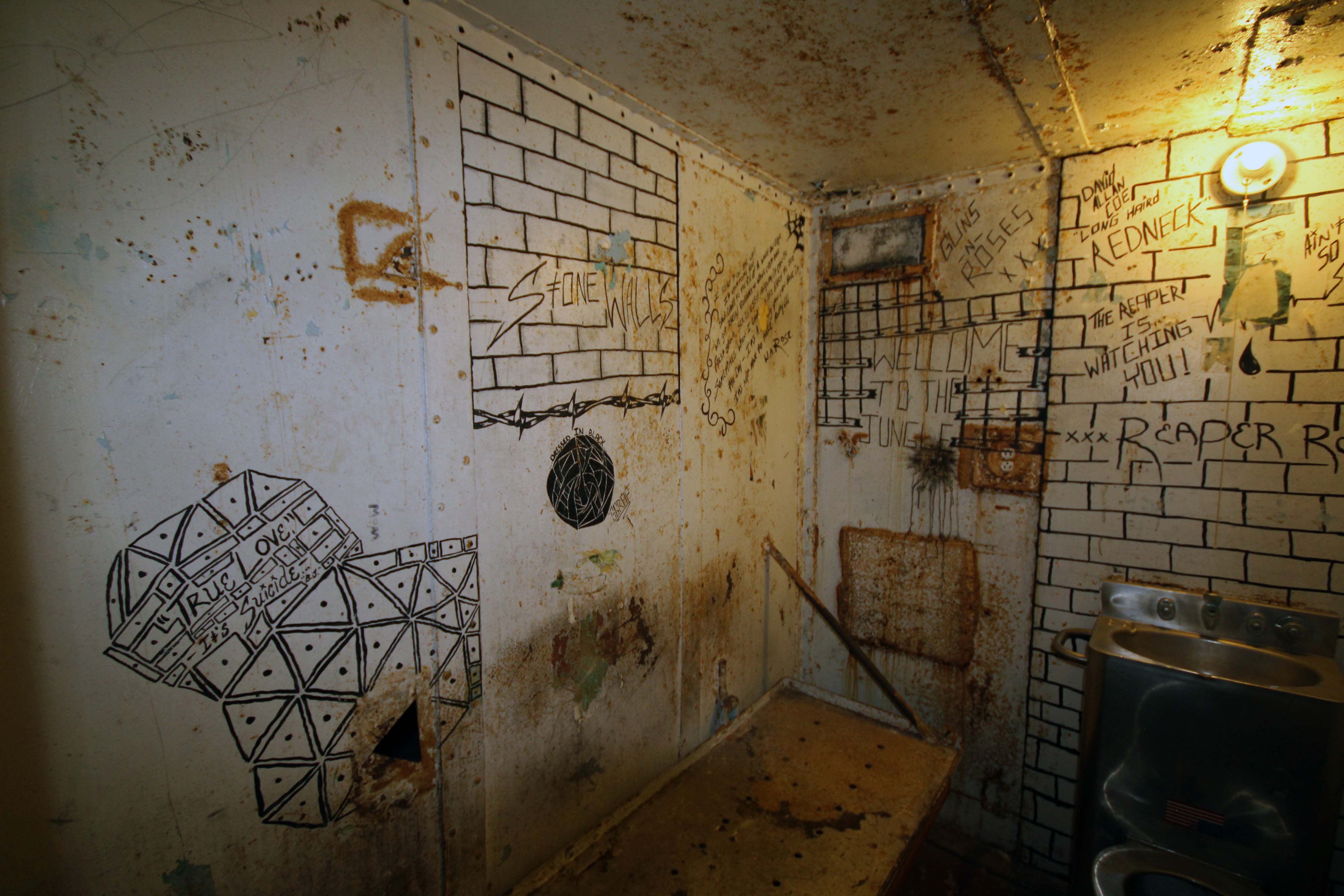
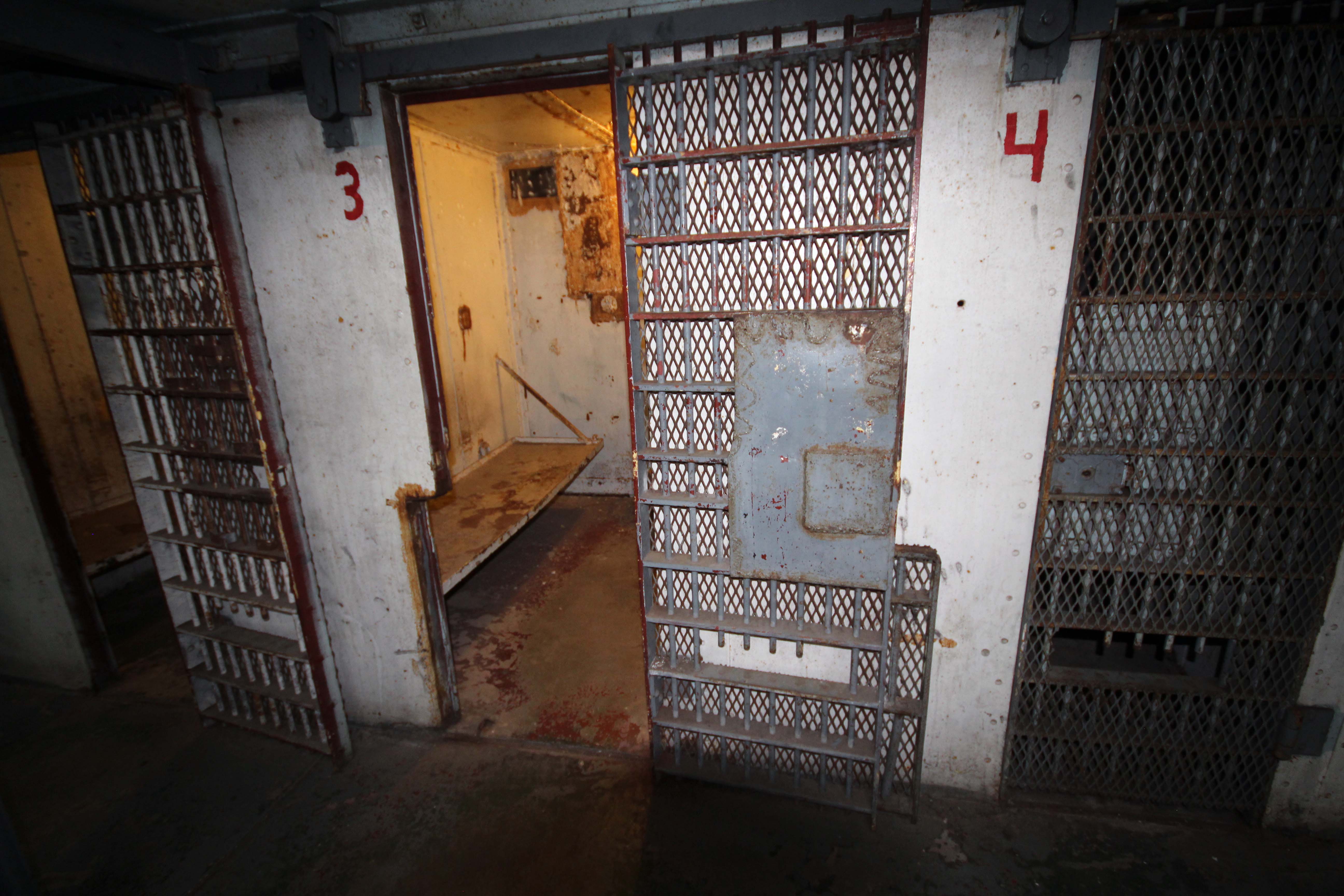
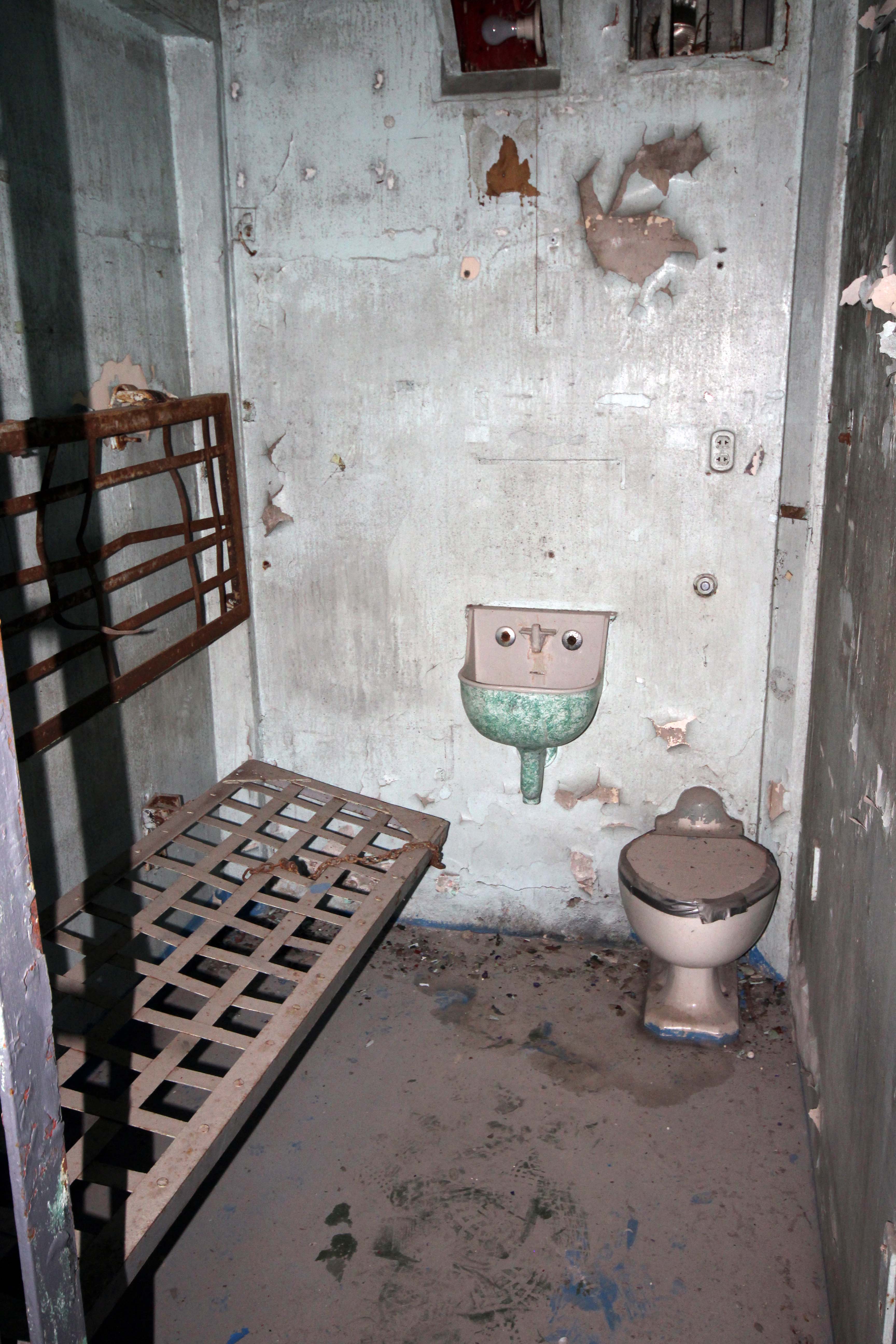
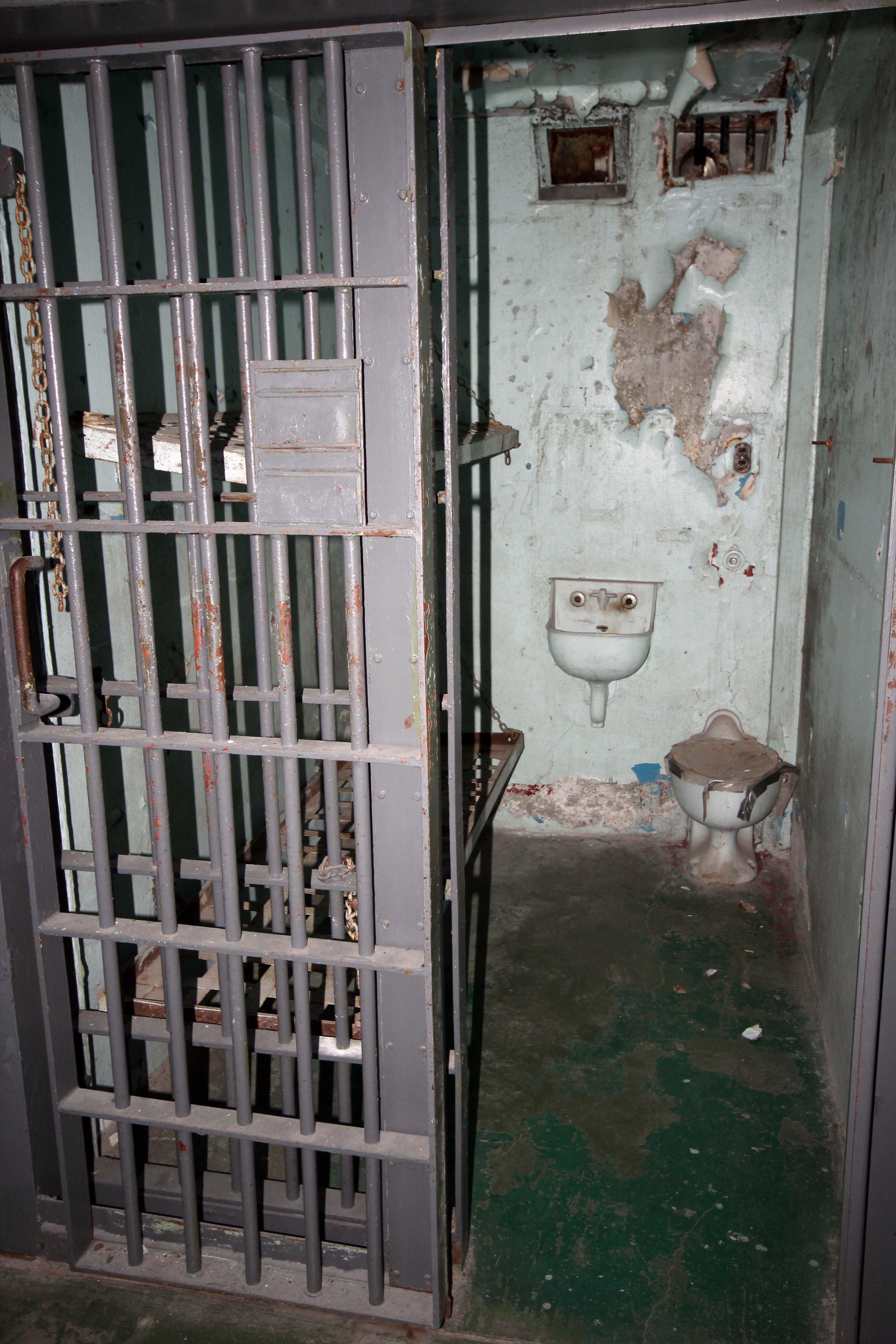
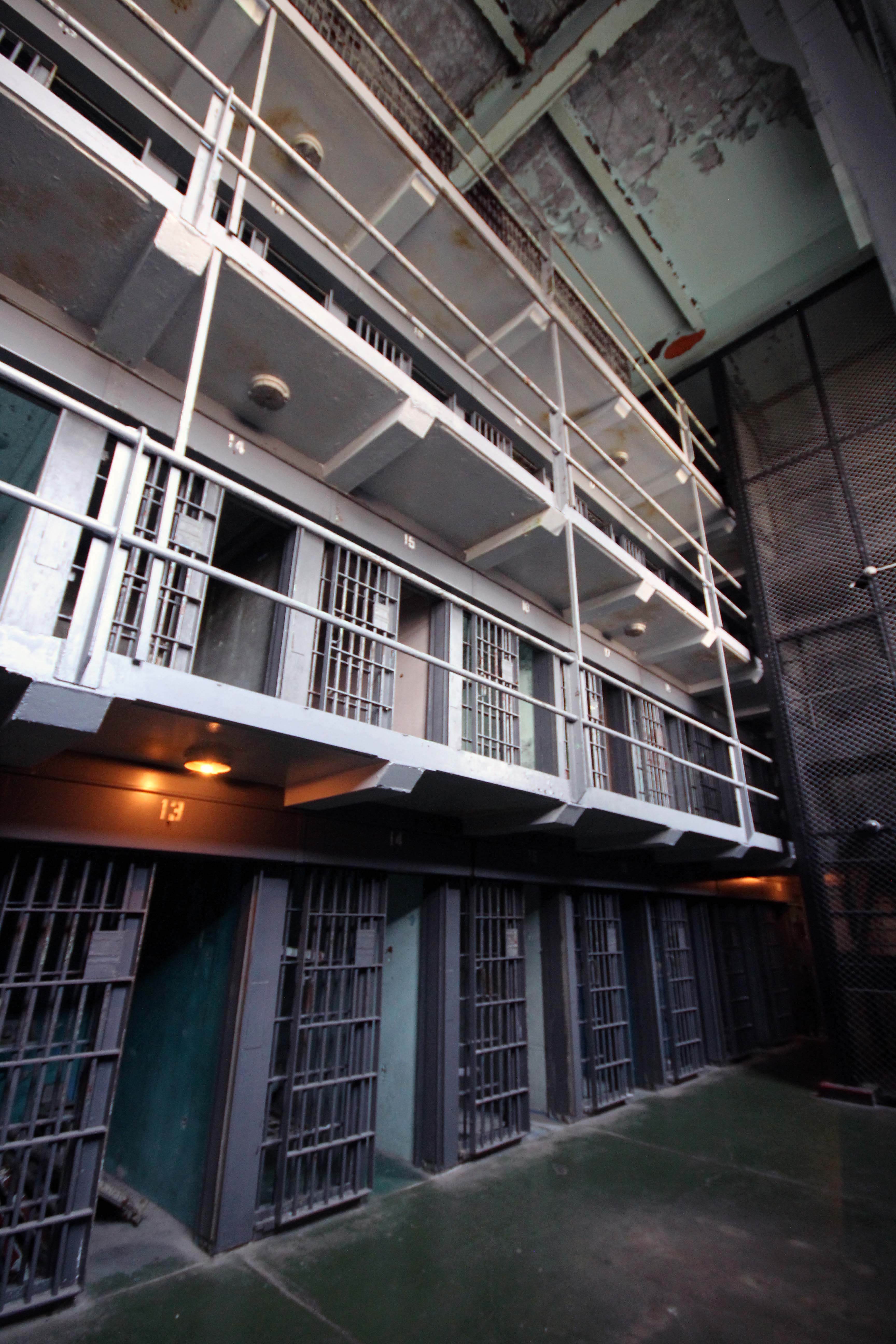
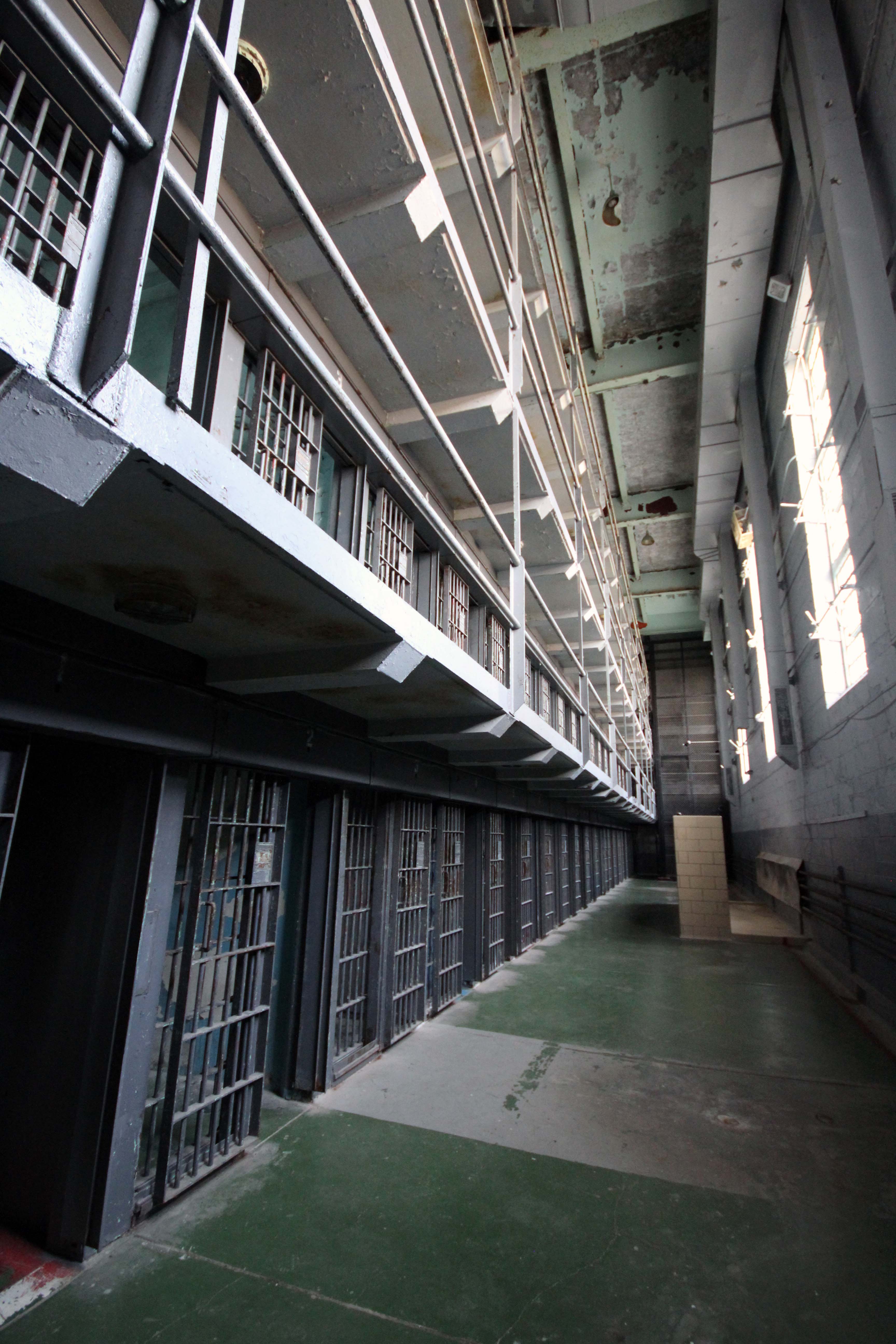
These are the original cells in the North Block, although the fencing was added much later. Each door had to be unlocked and locked independently, but a sliding bar across the top acted as a second lock for all of them at once.
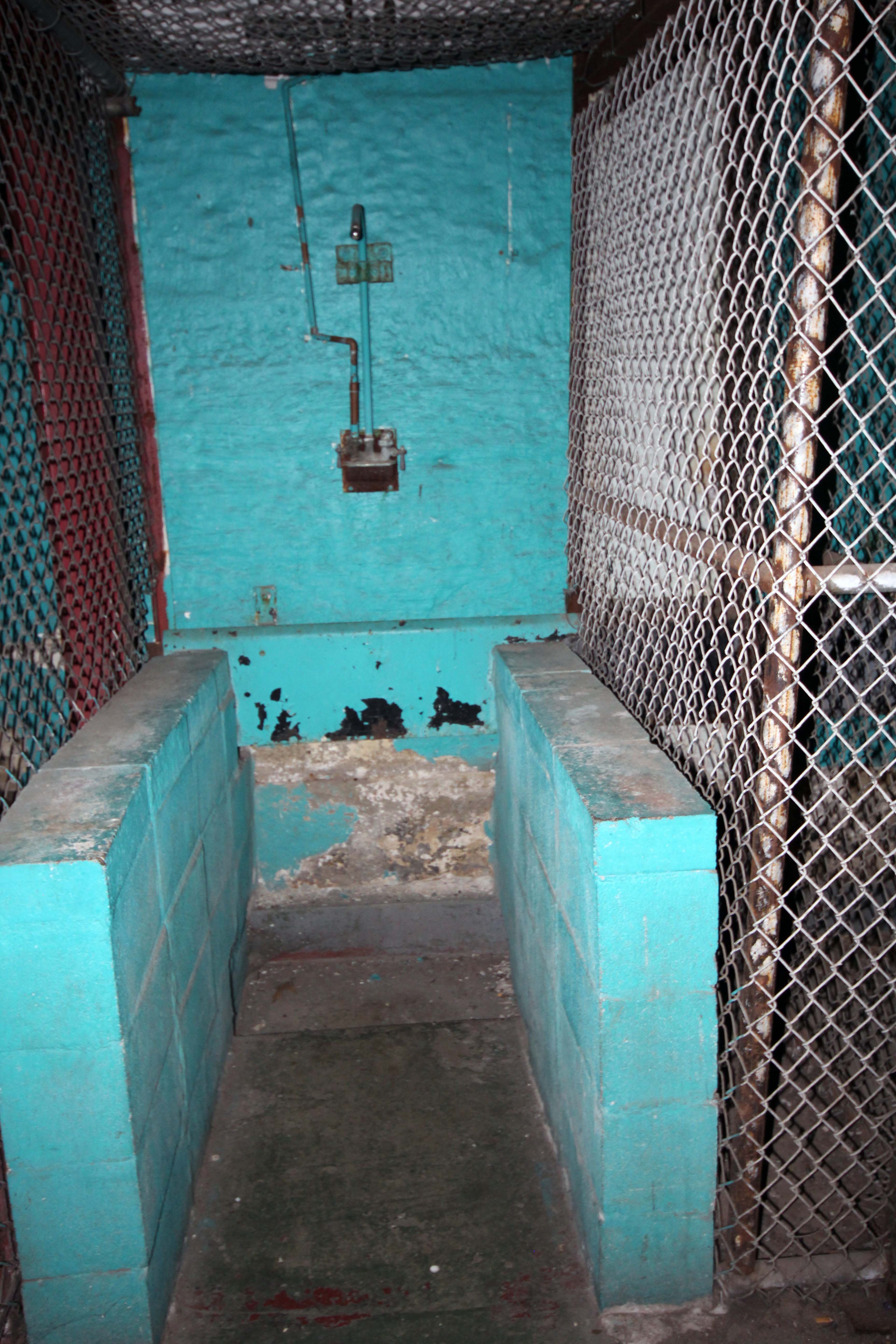
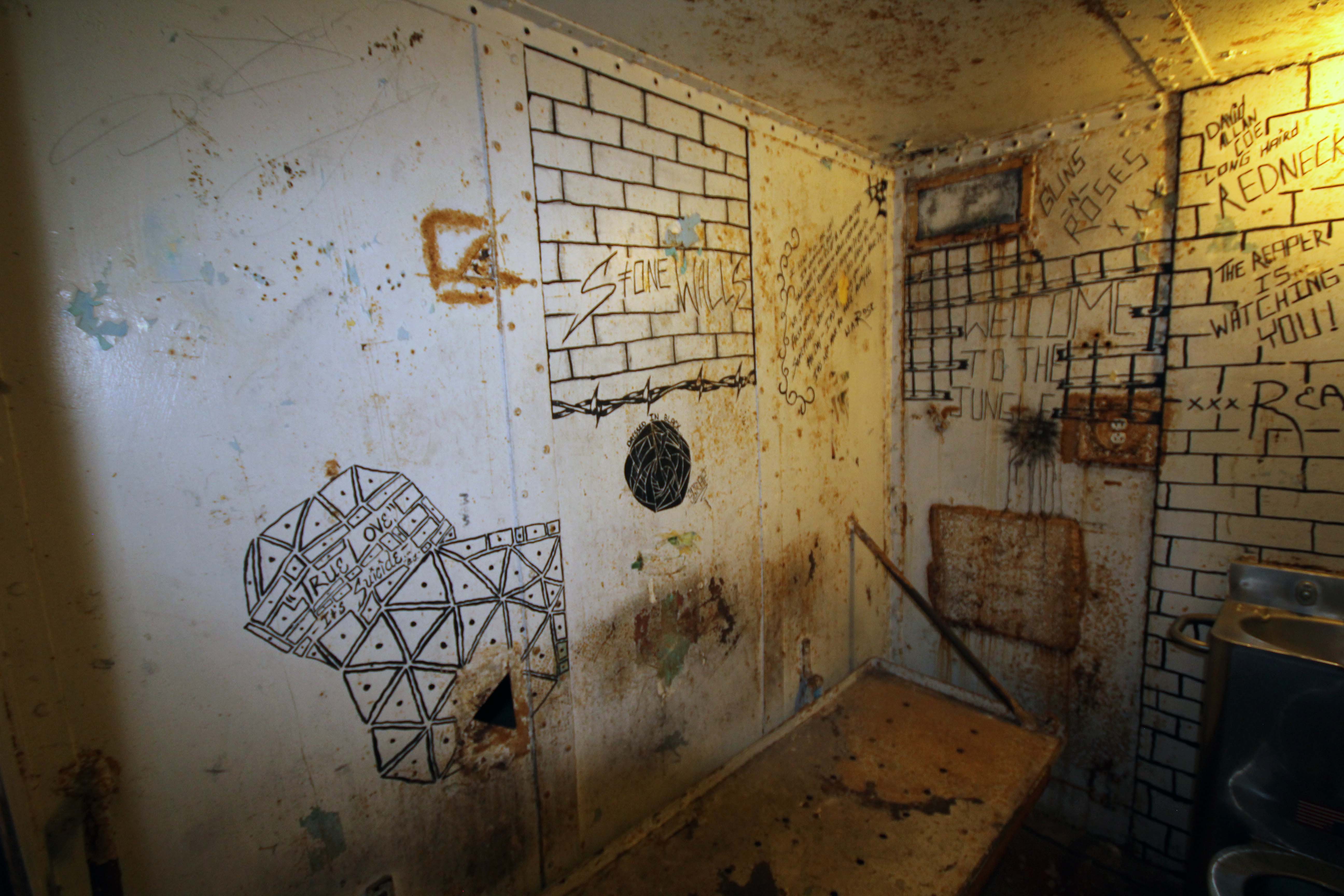
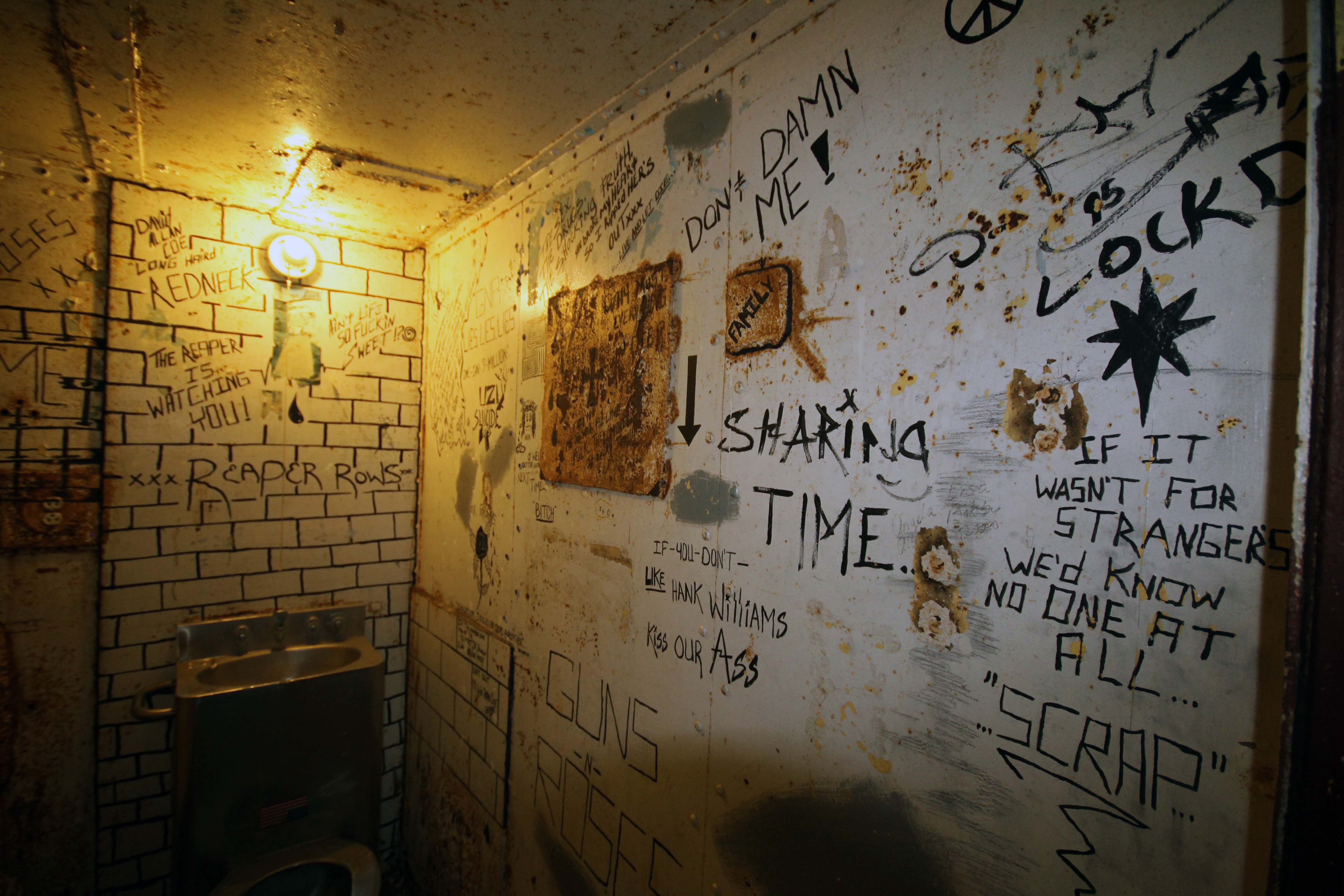
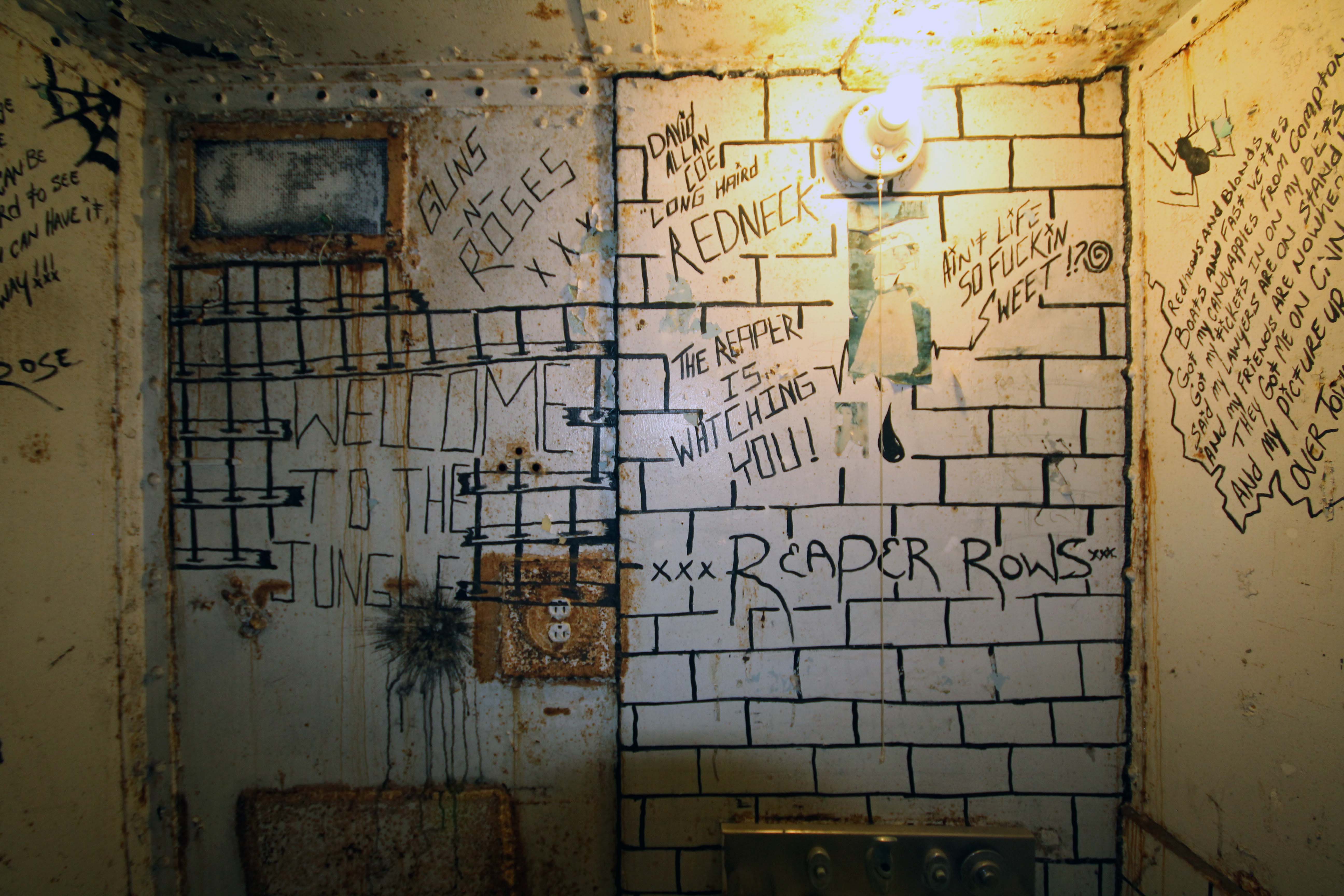
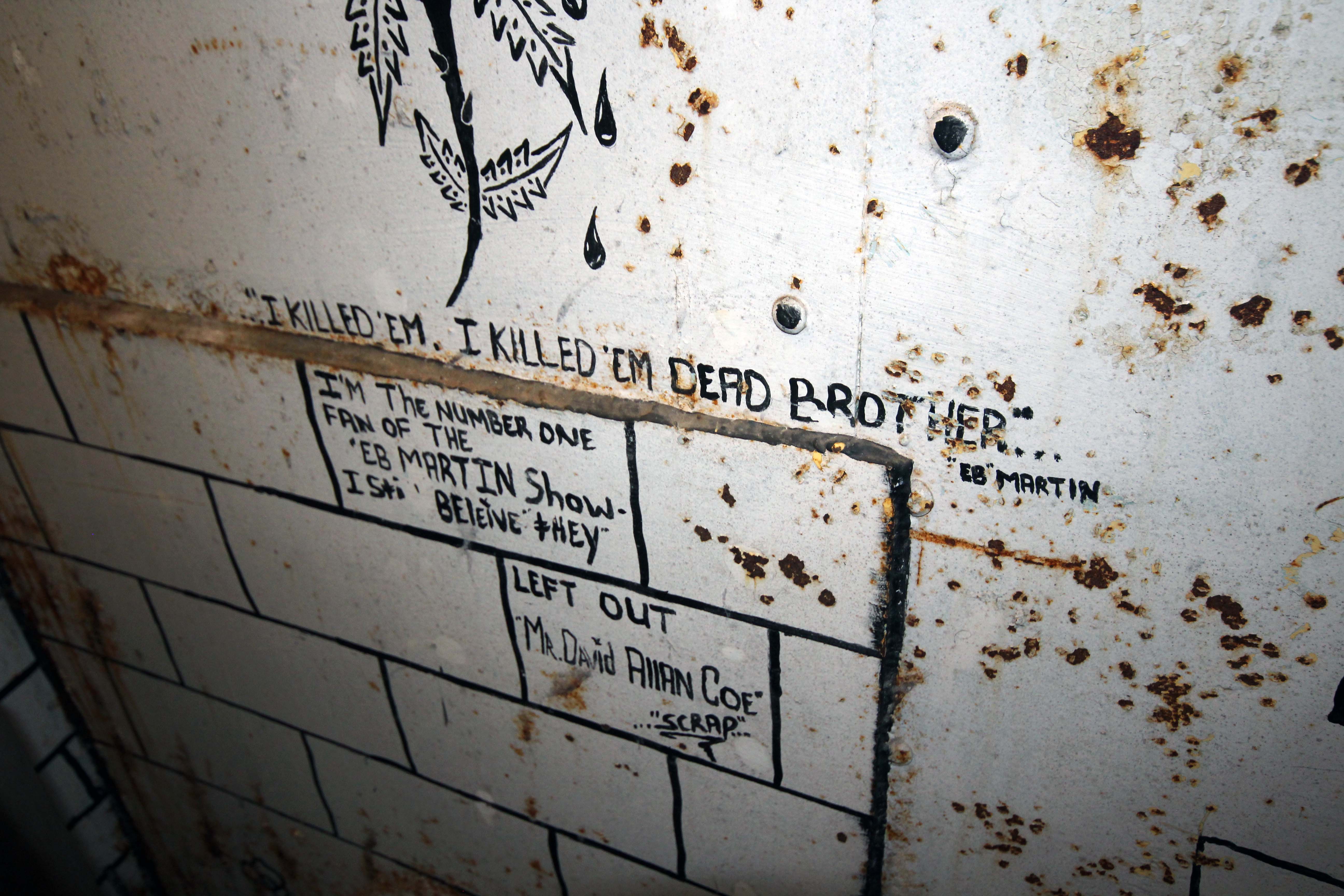
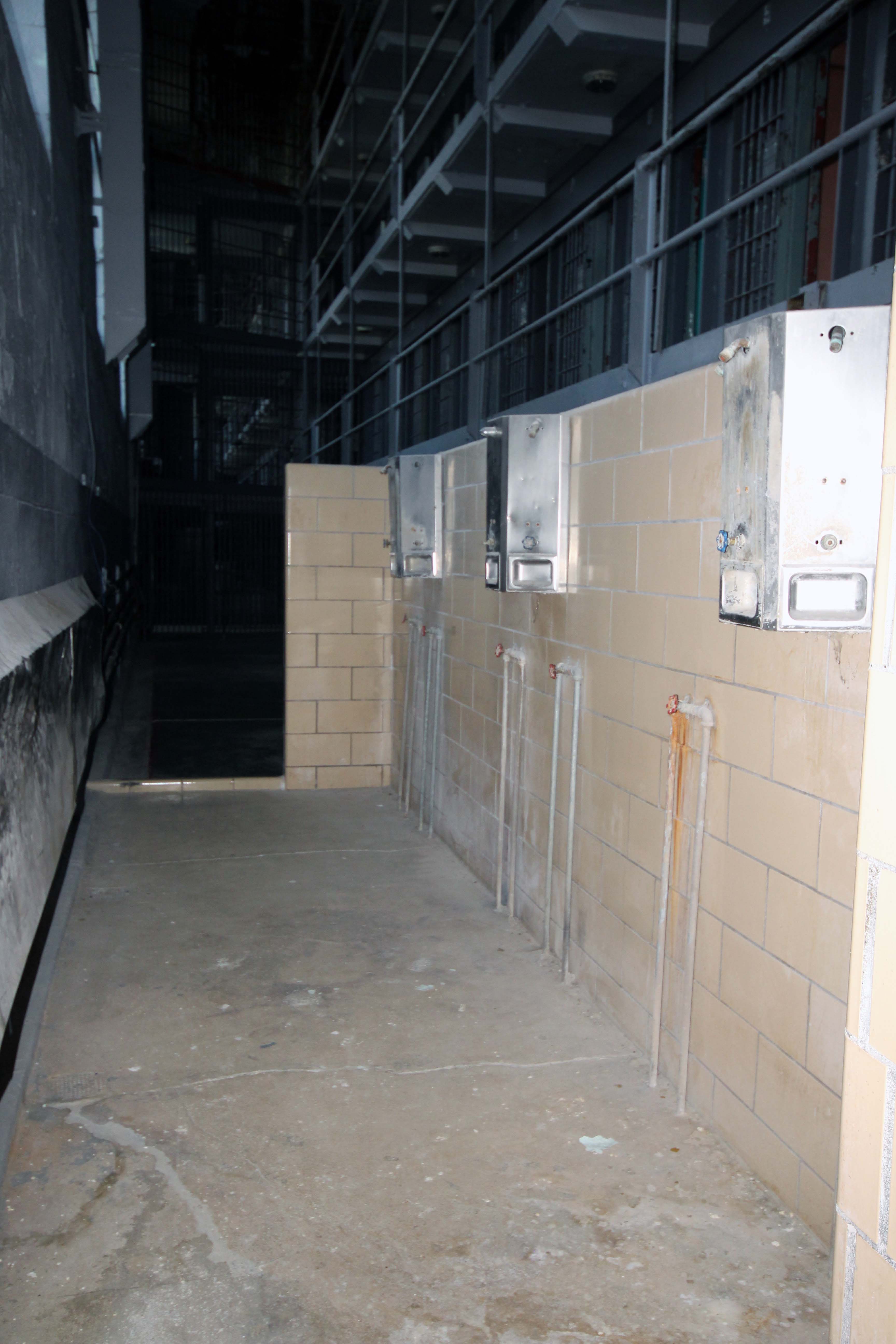
Each cell block had a special area for gang leaders, to keep them segregated from other inmates, and they shared a small shower.
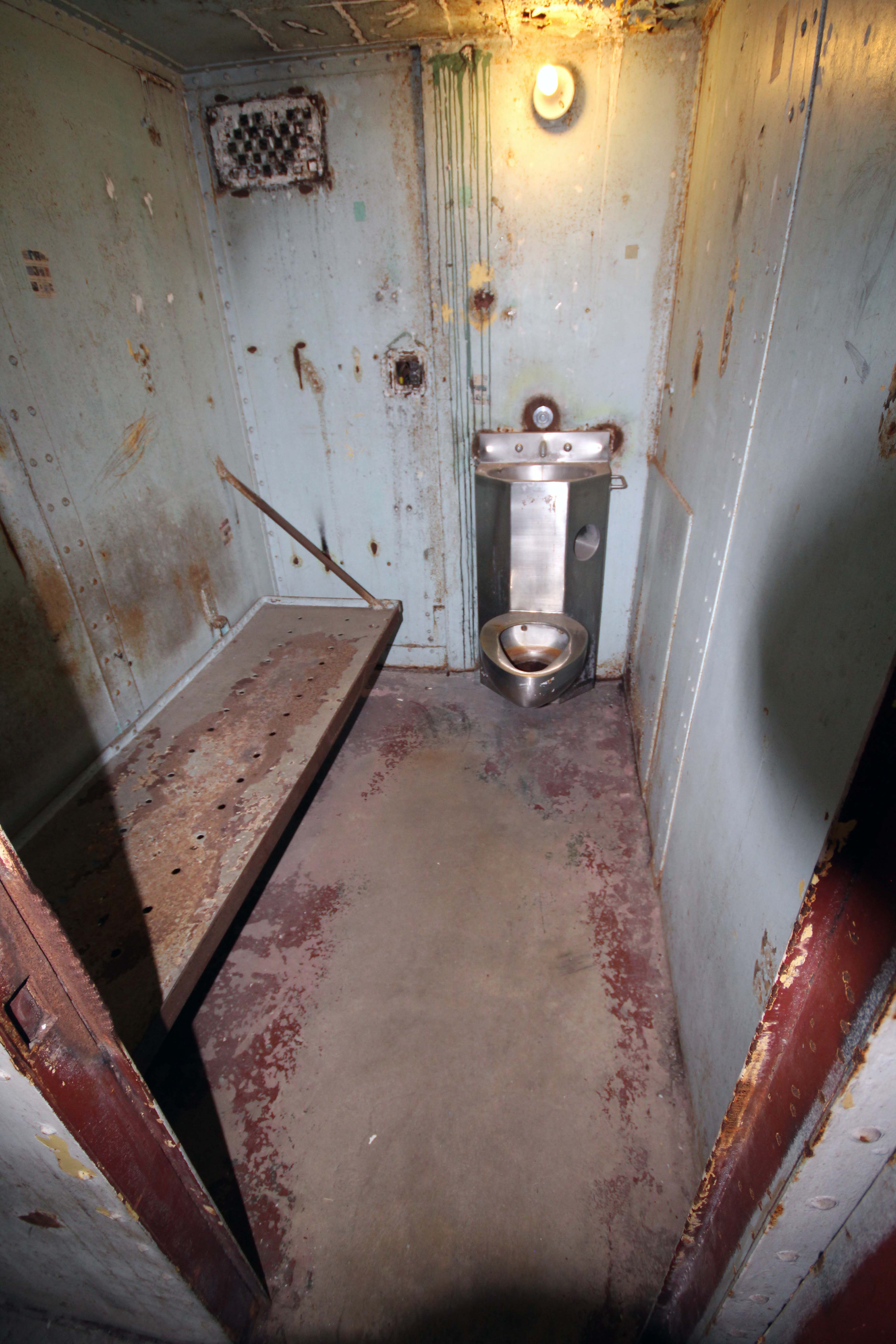
This is what a 5×7 cell looks like. This is one of the single bunk ones for the gang leaders.
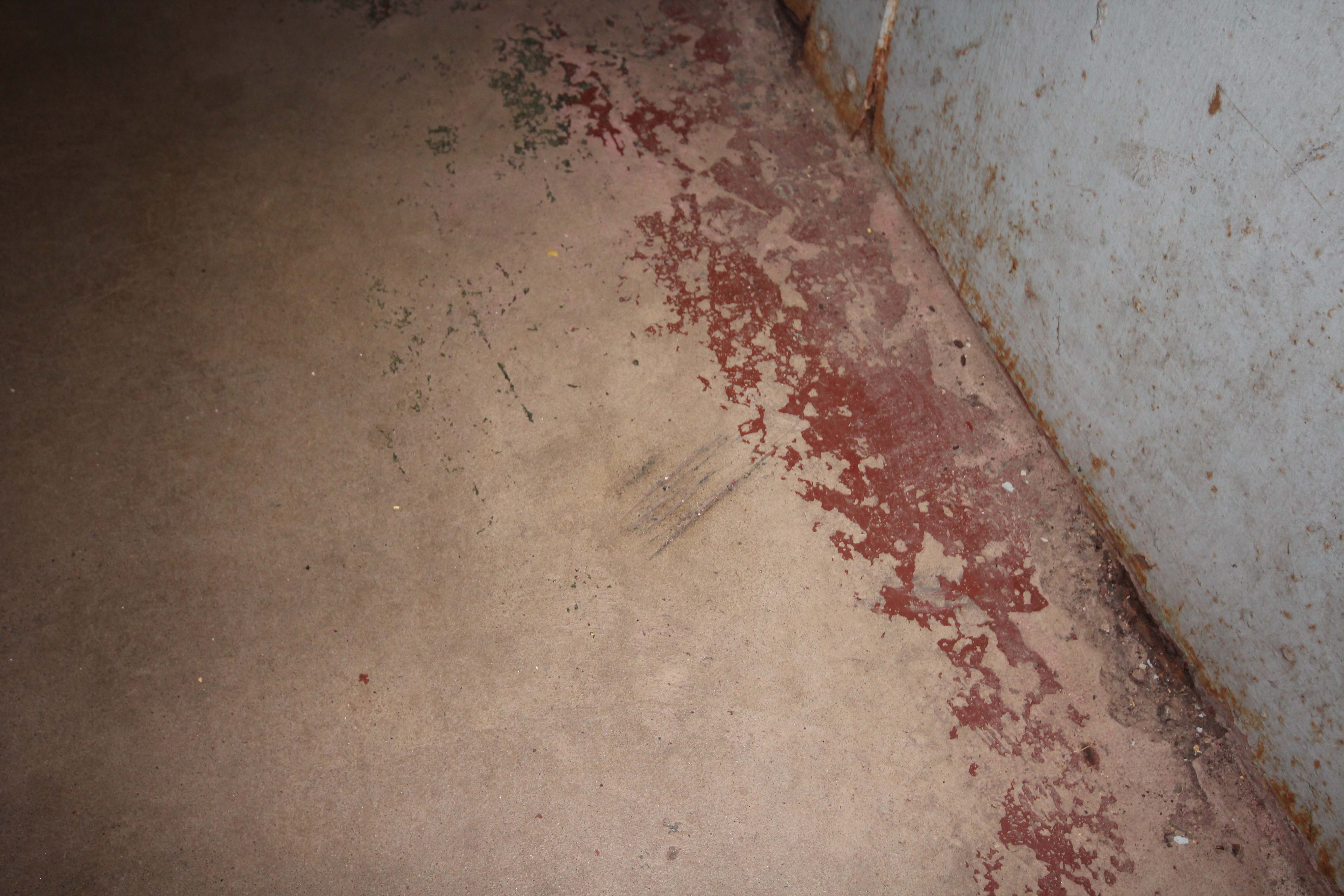
Note the deep grooves on the concrete where a shiv was sharpened over time.
This cell was the home of the prison’s resident tattoo artist.
An inmate who was in a wheelchair had to have his door widened at the bottom for the wheel to fit through. Also note the “bean hole” in the bottom of each door. For the inmates who slept on the floor, if they slept with their head near the door, they risked having their throats slit.
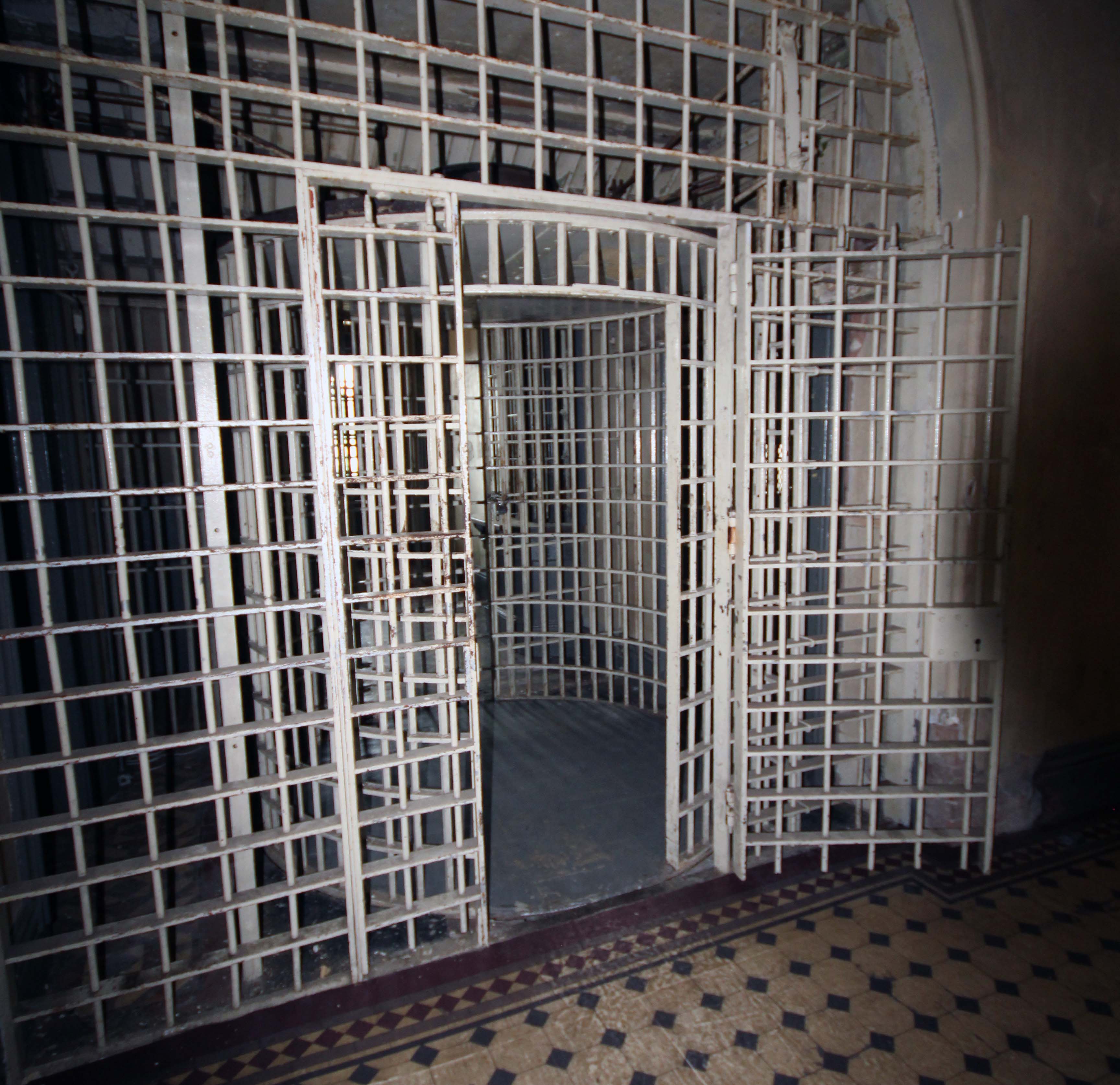
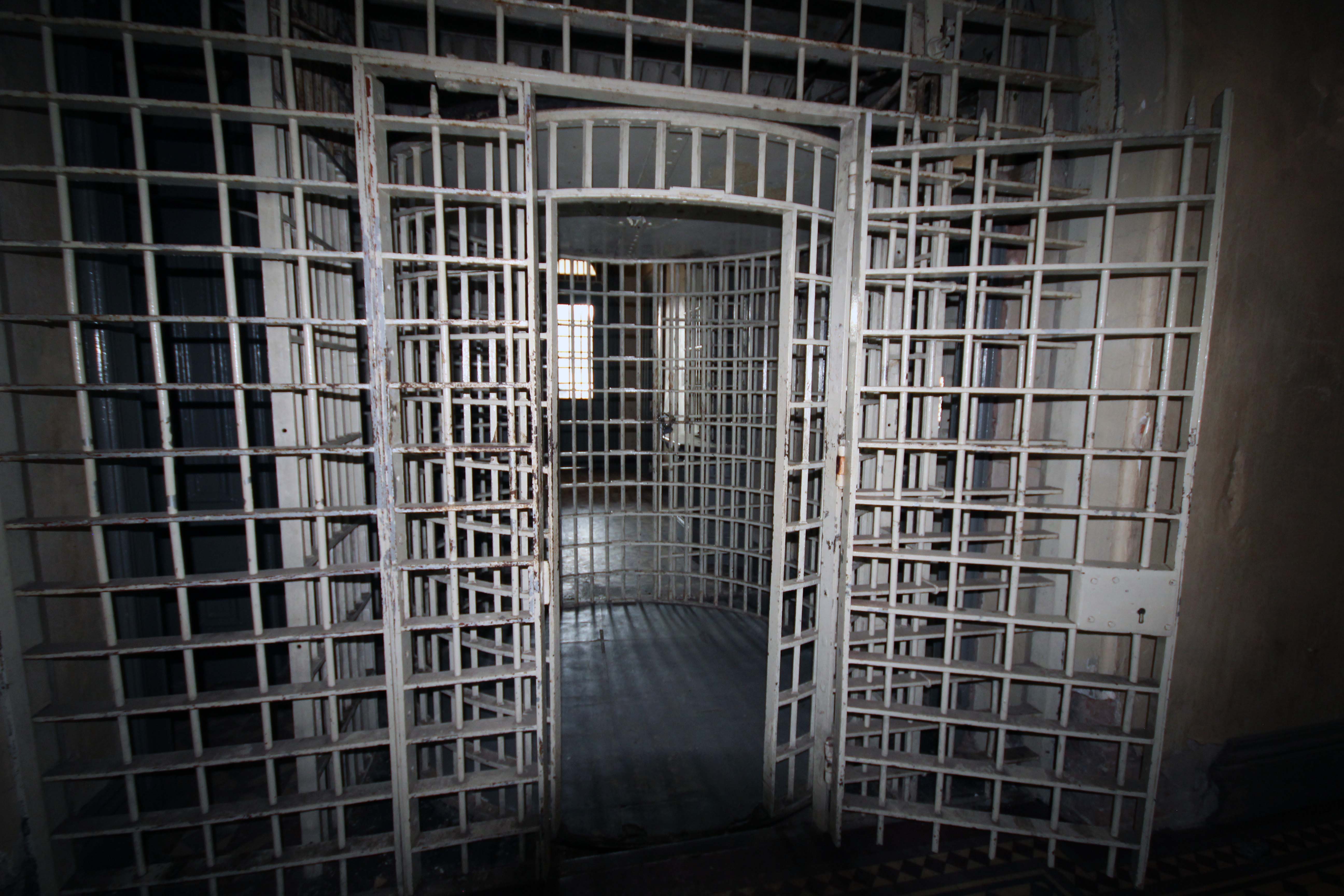
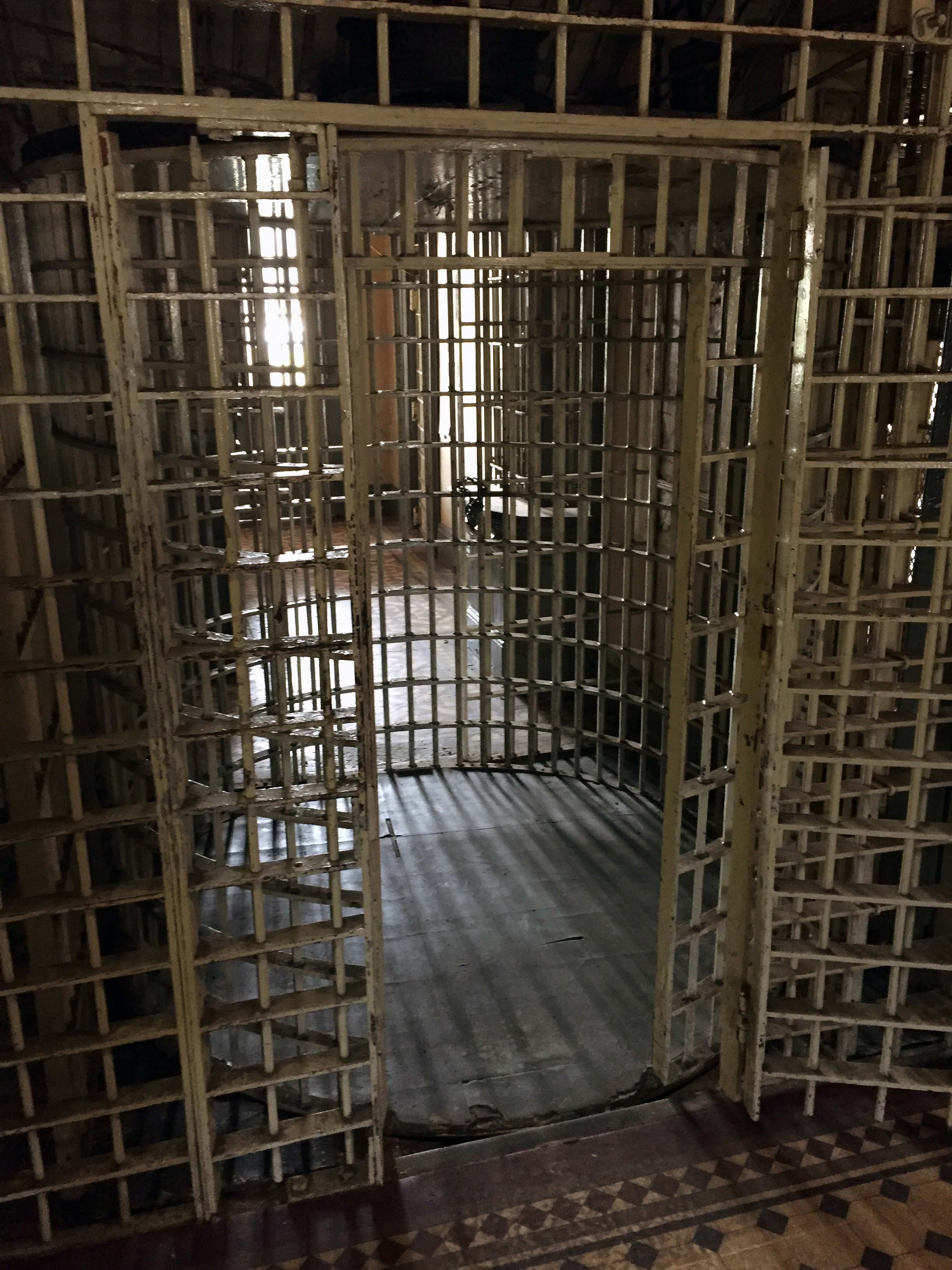
This is the “wheel”. A circular cage inside another cage with a door on each side. People entering the prison went into this and it was rotated to align with whatever door they were meant to do through. There are only two of these in the world that still function.
Each block had a “shower” that could handle three men at a time. The shower was open to the rest of the block, and people were on a schedule that went more or less all day to cycle everyone through. For some reason this really bothered me when Lee explained it. Everyone could watch and comment while you showered – Trace
The more modern block, with electrically operated doors.
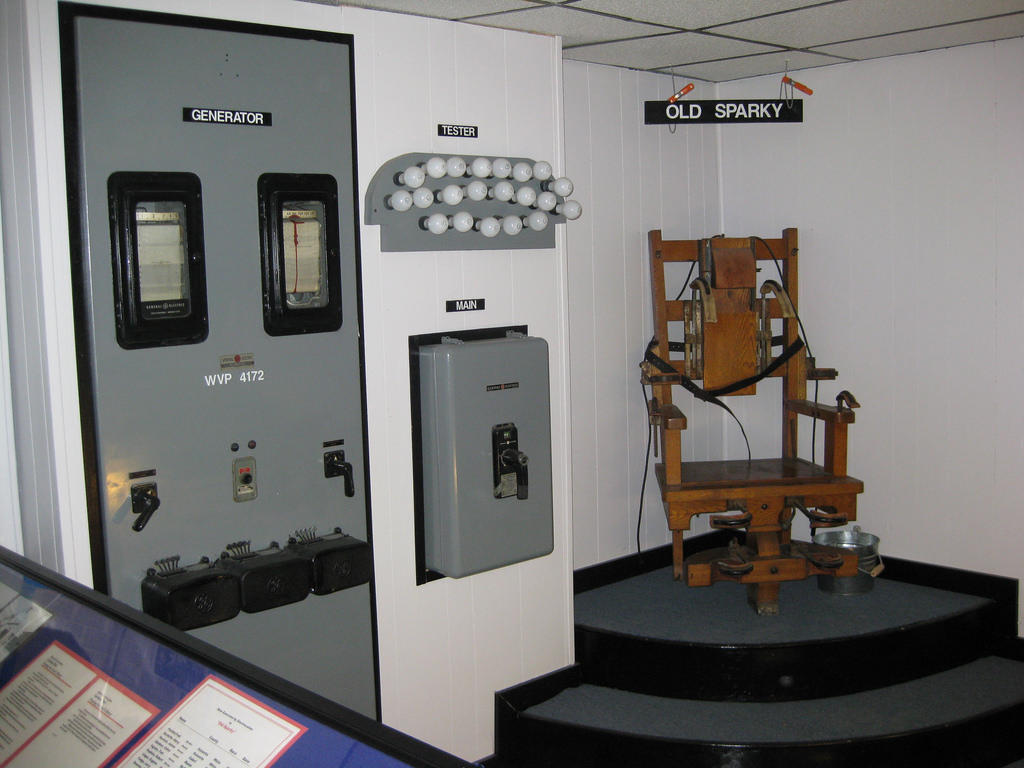
The original “Old Sparky”.
In the pictures below, you can see where Old Sparky used to be displayed.
The day before each execution, an electrician would hook power up to one of the three buttons. Three guards would each push a button simultaneously, and so none would ever know which one actually killed the inmate. There was also a telephone, not pictured, and not once in the entire history of the prison did any execution ever get delayed or stayed at the last minute.
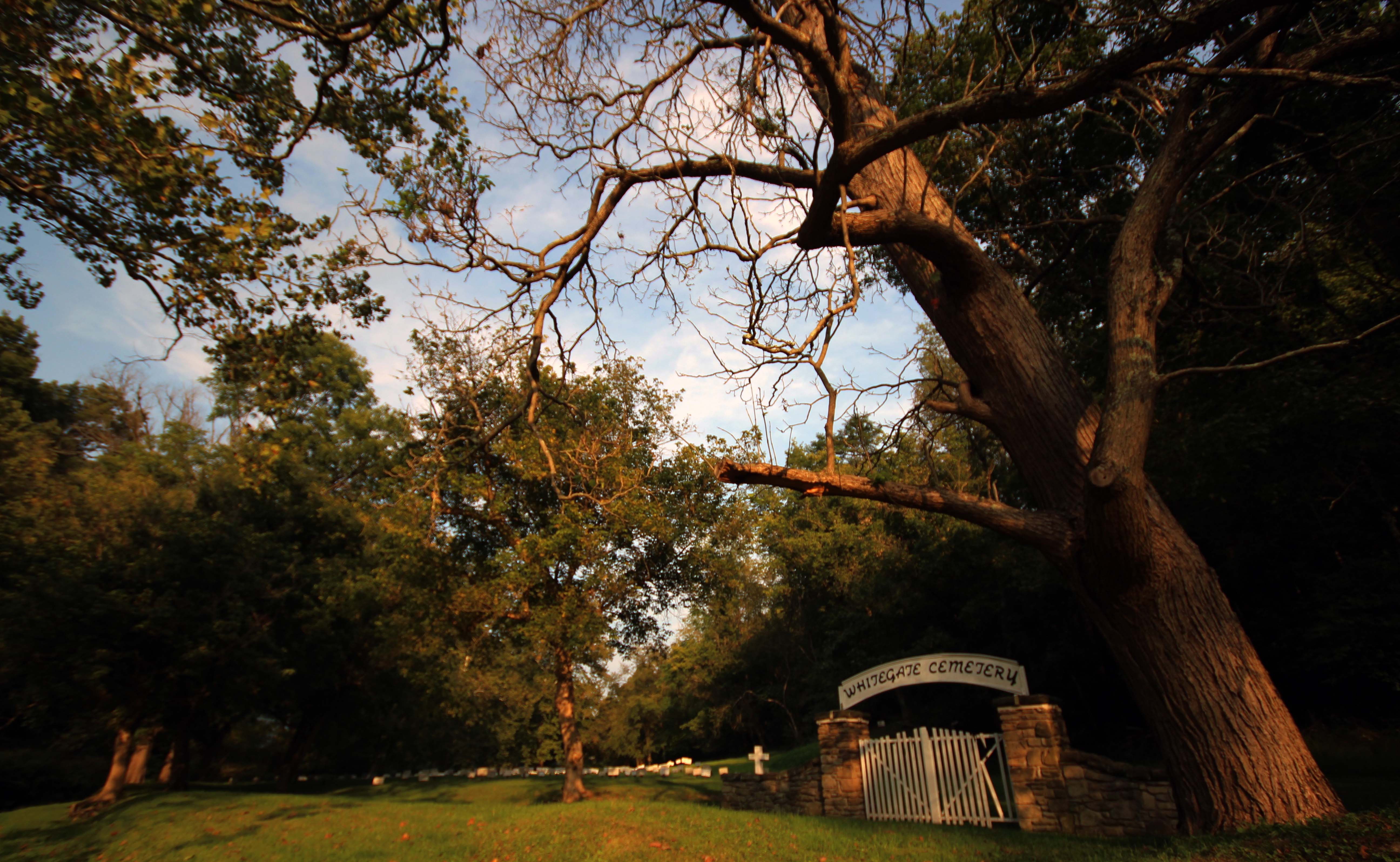
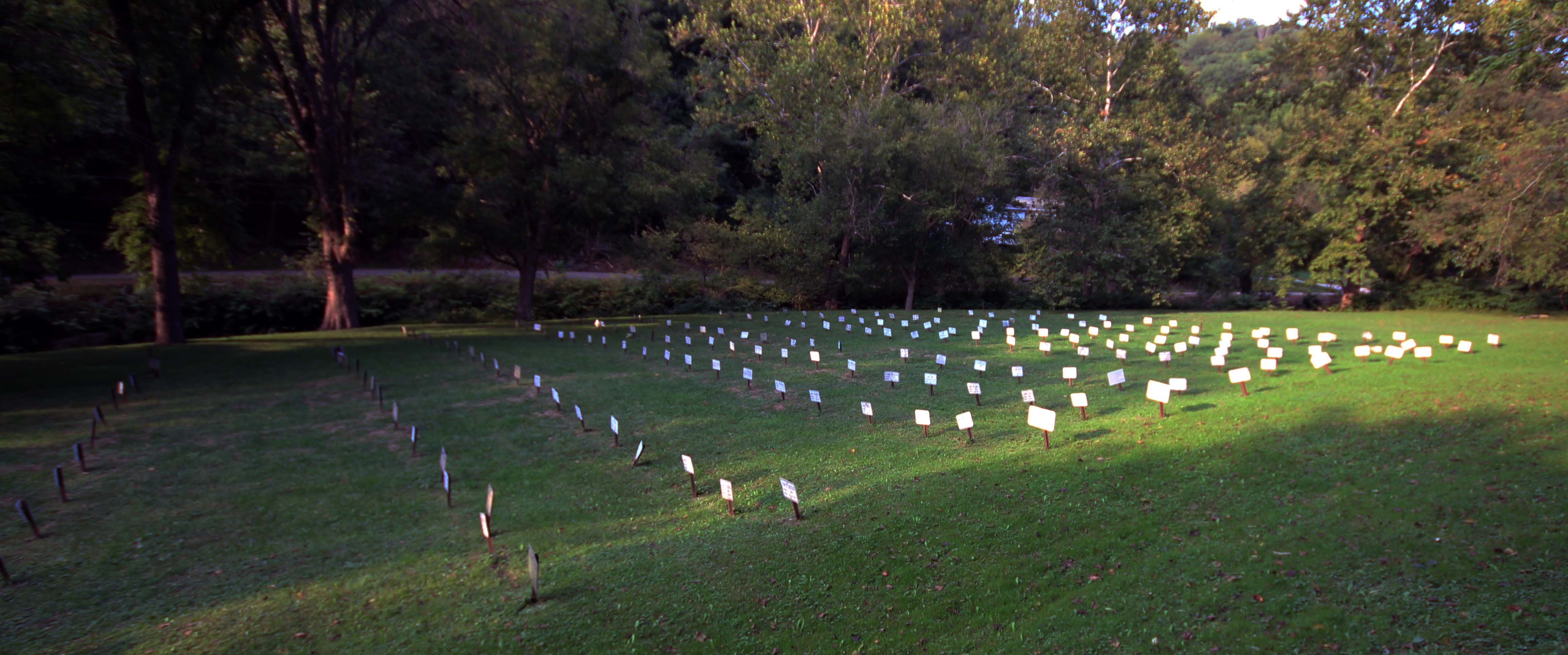
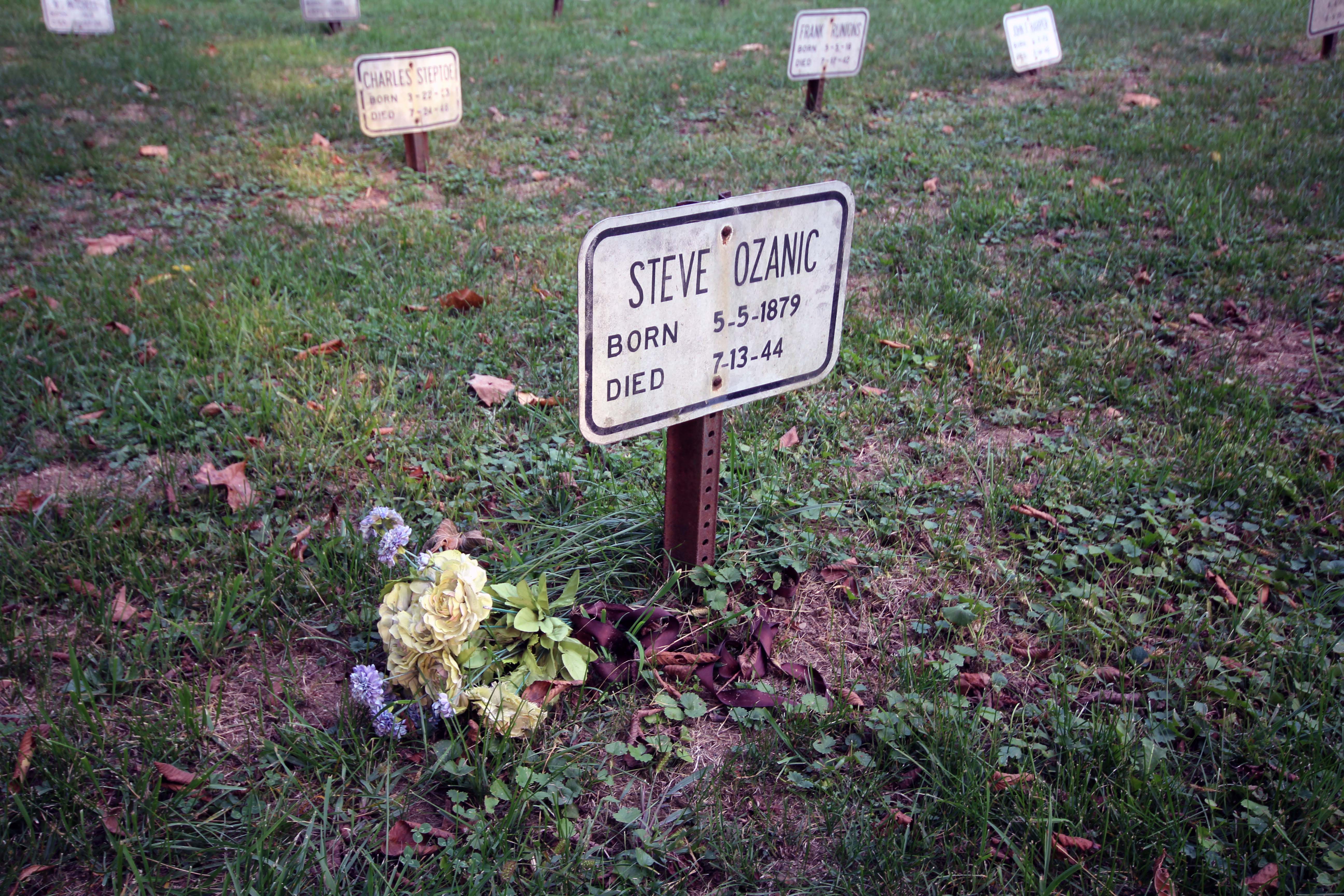
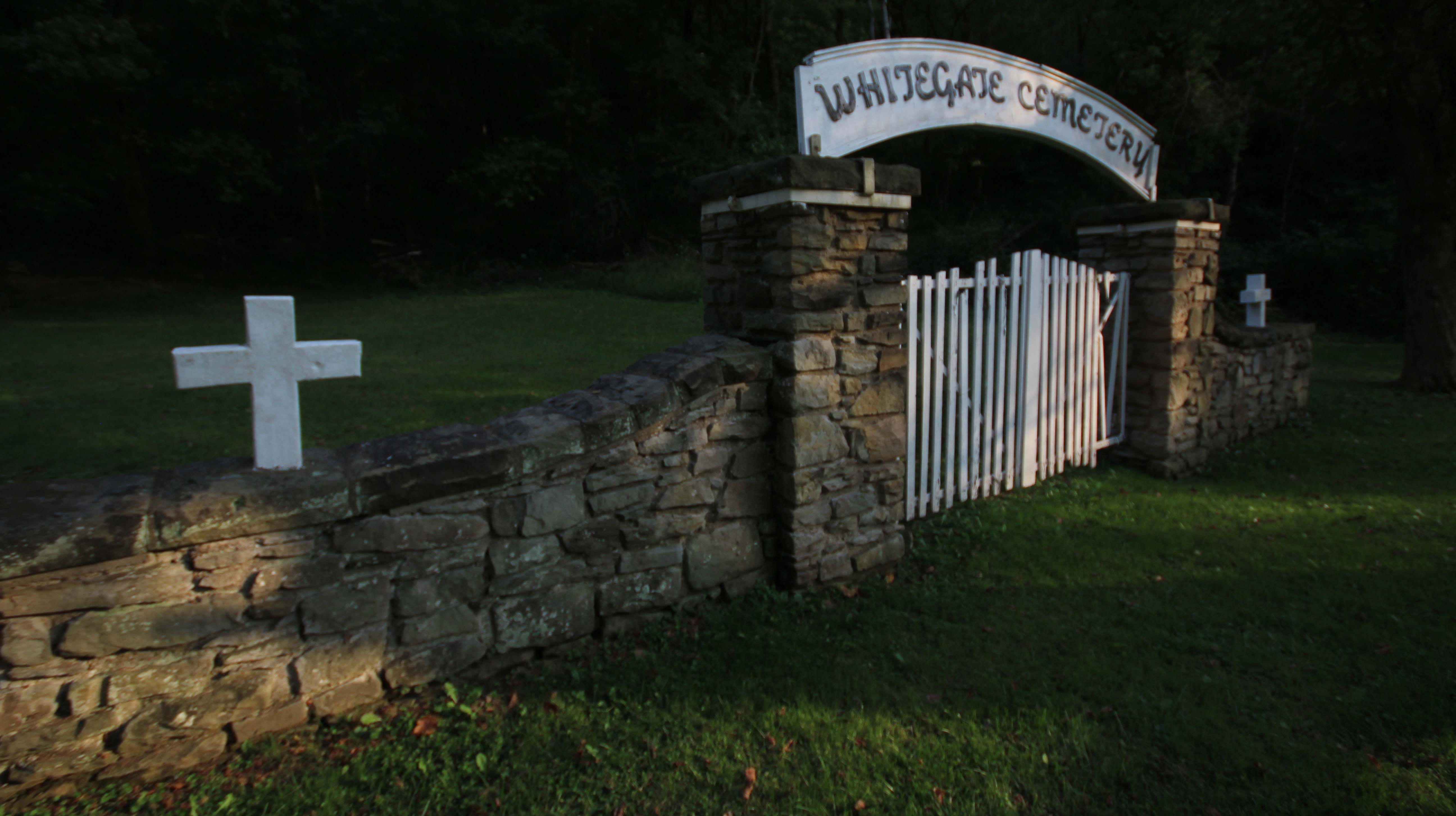
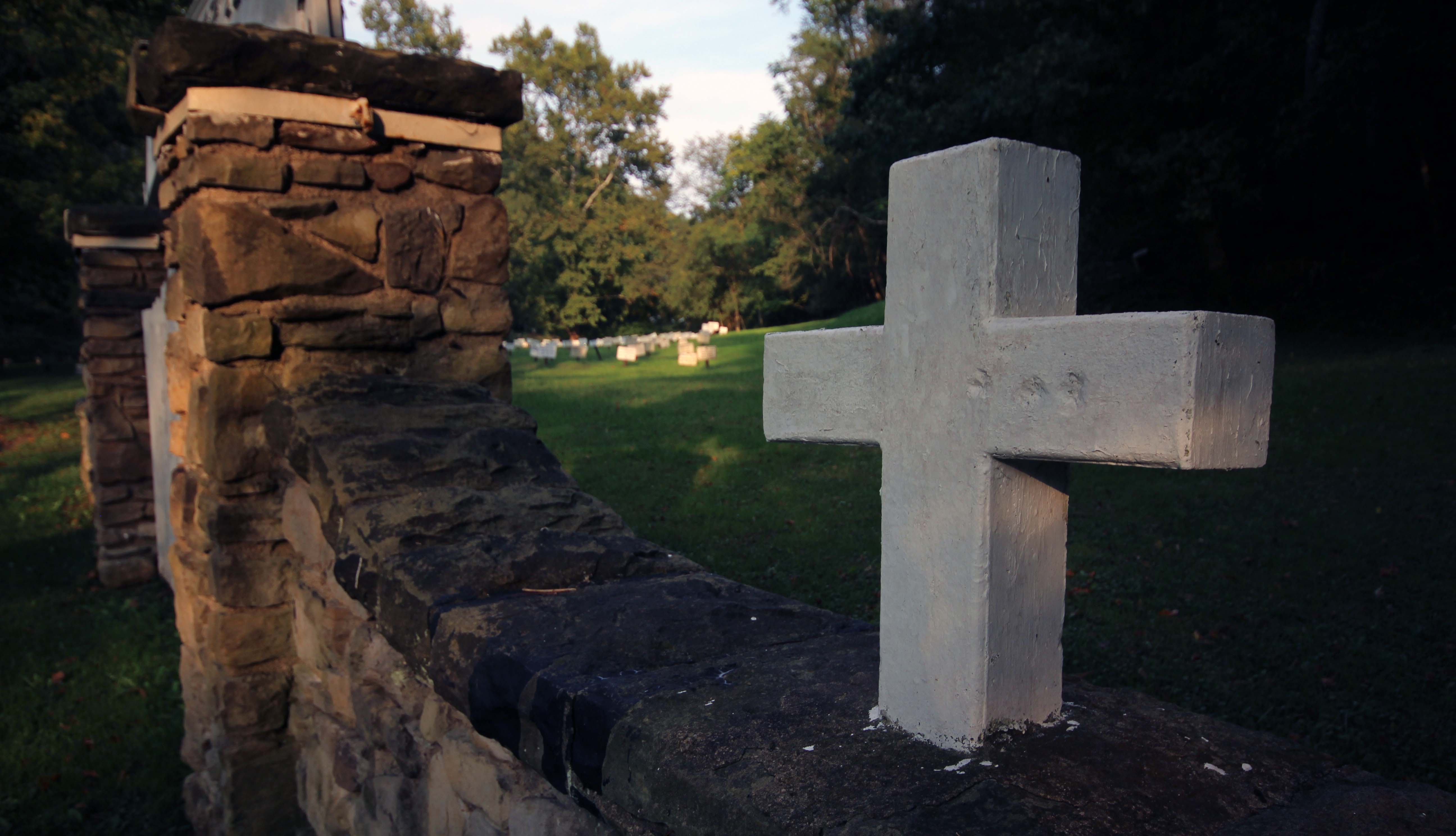
I had such a great time at the prison that I decided to go across town a few miles to the foothills and see the prison cemetery where people were buried who died, were murdered or were executed, if nobody ever claimed their bodies. Ok I am a little worried that this is Lee’s idea of a good time and as a capper he goes and visits a cemetery – Trace
And I was still not satisfied, so I decided to go back the next day for a nighttime flashlight tour. Much, much creepier, and included parts of the prison the first tour did not include.
The first stop that was new was outside, to the entrance to the basement, where solitary was. He was nervous about going back in the night. I was nervous about a restless spirit attaching itself to him and coming back with him. I told him not to bring back any riders. My work schedule would have allowed for this second trip at night, but no way. – Tracy
This are pictures taken in night mode. Keep in mind he went down here with just flashlight light…yikes – Trace
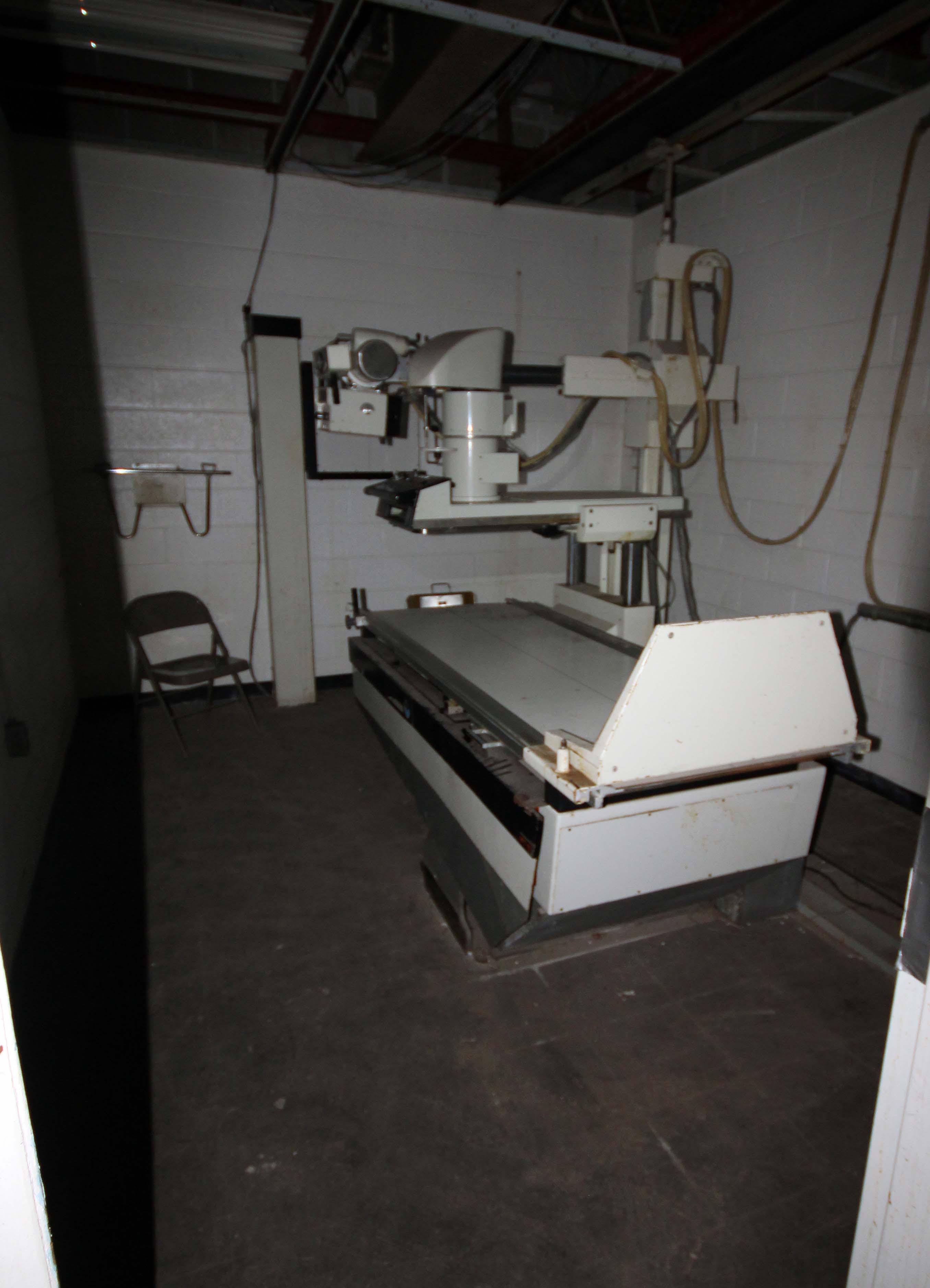
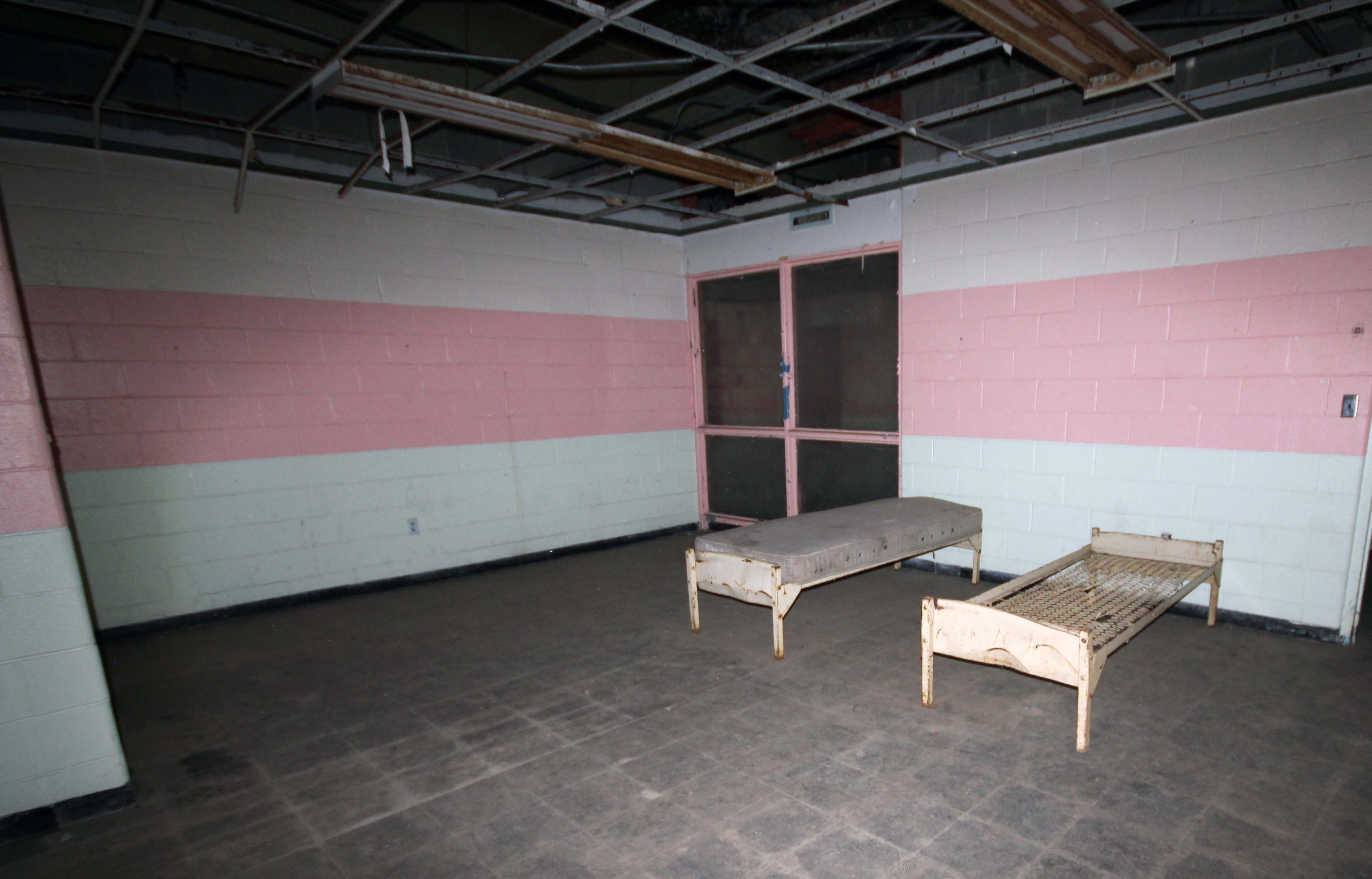
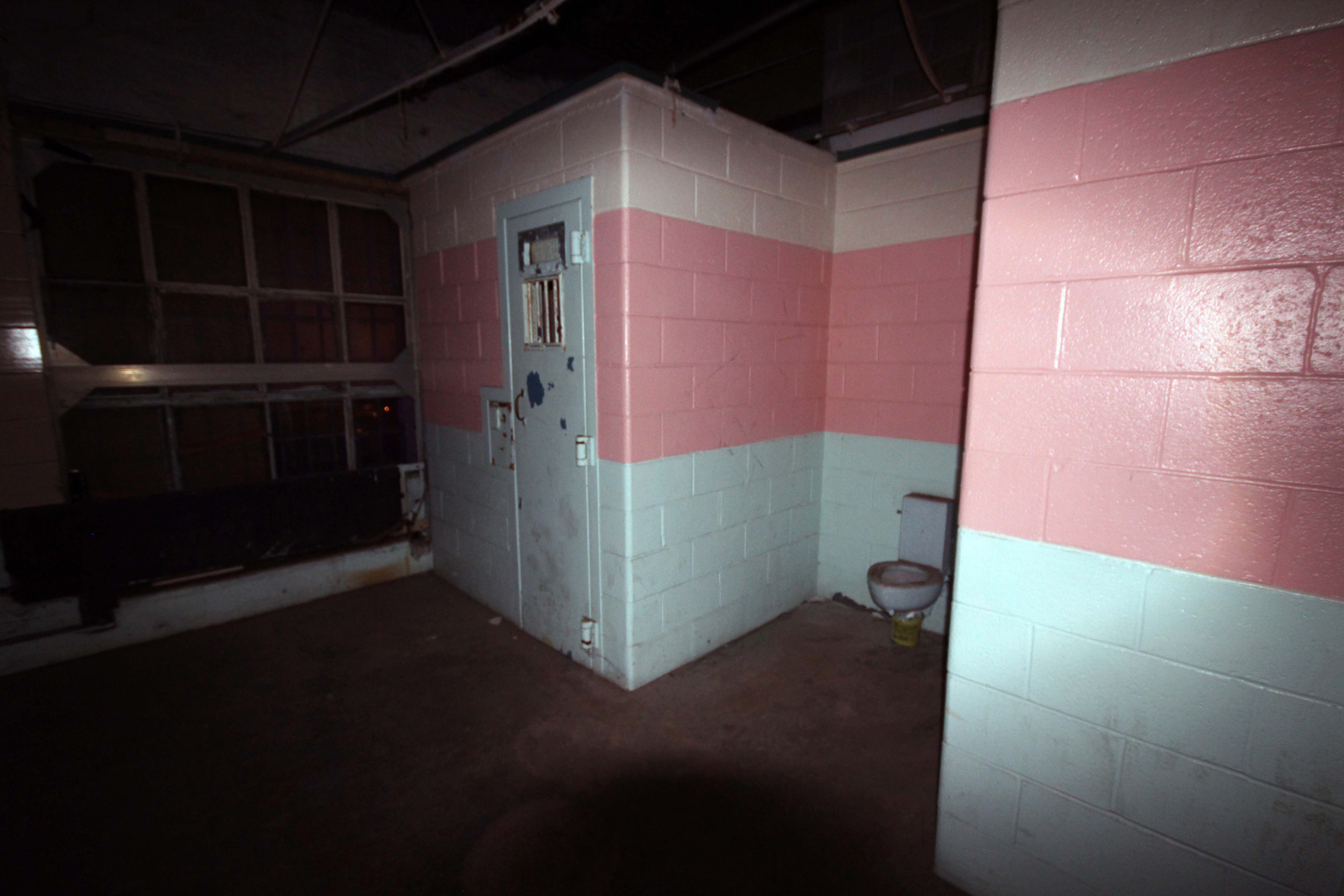
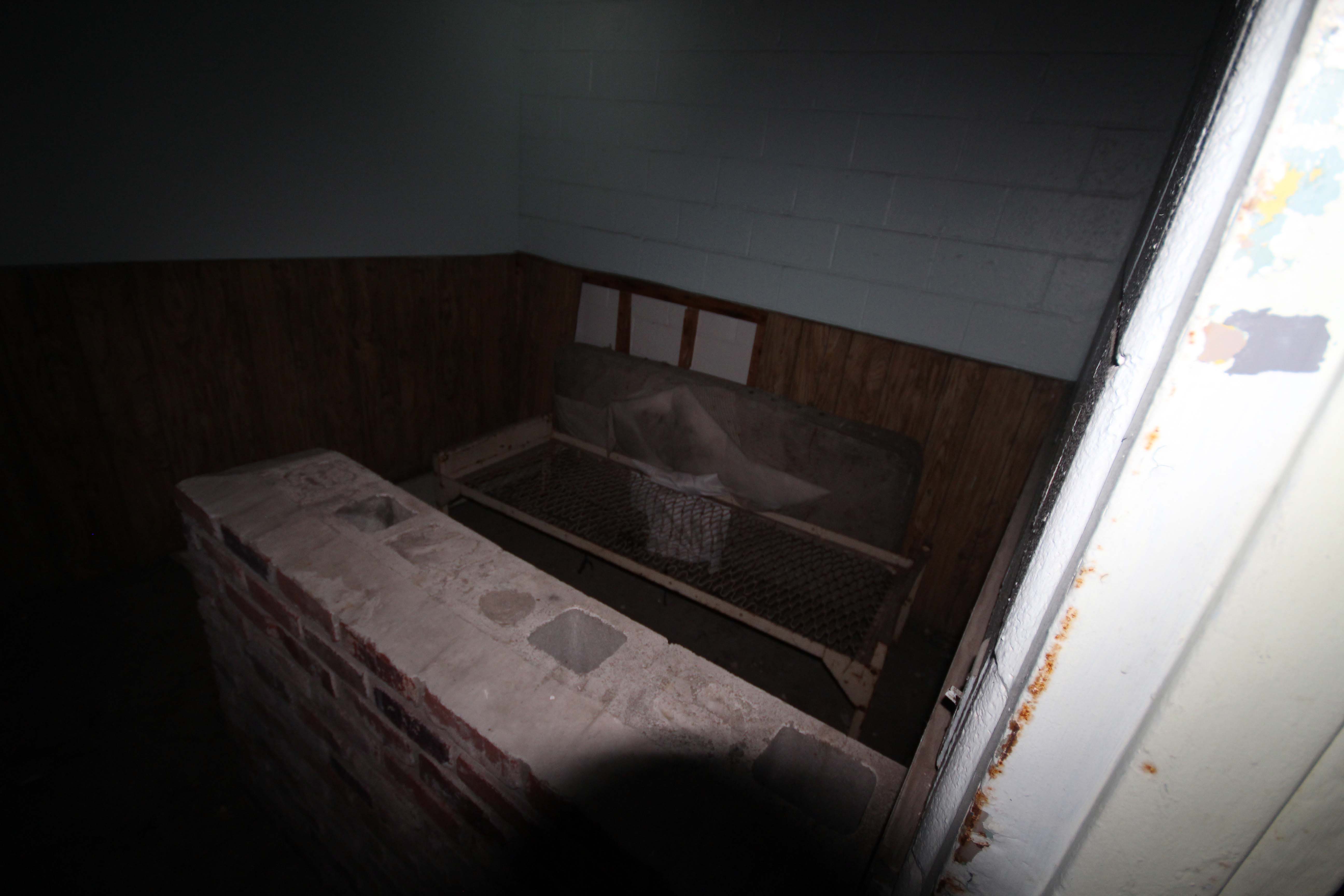
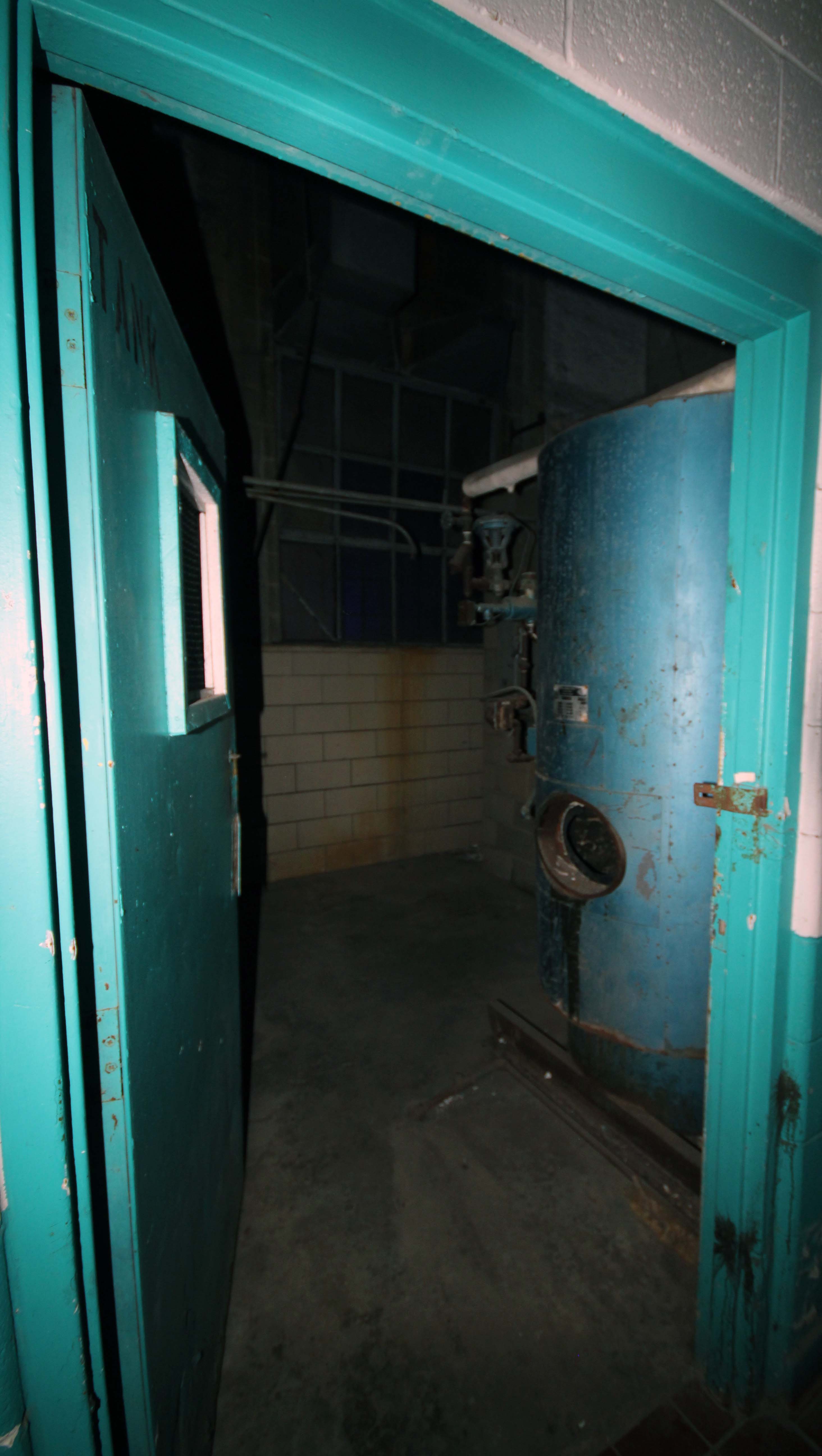
The night tour also included the infirmary and the psych ward.
Psych solitary cells
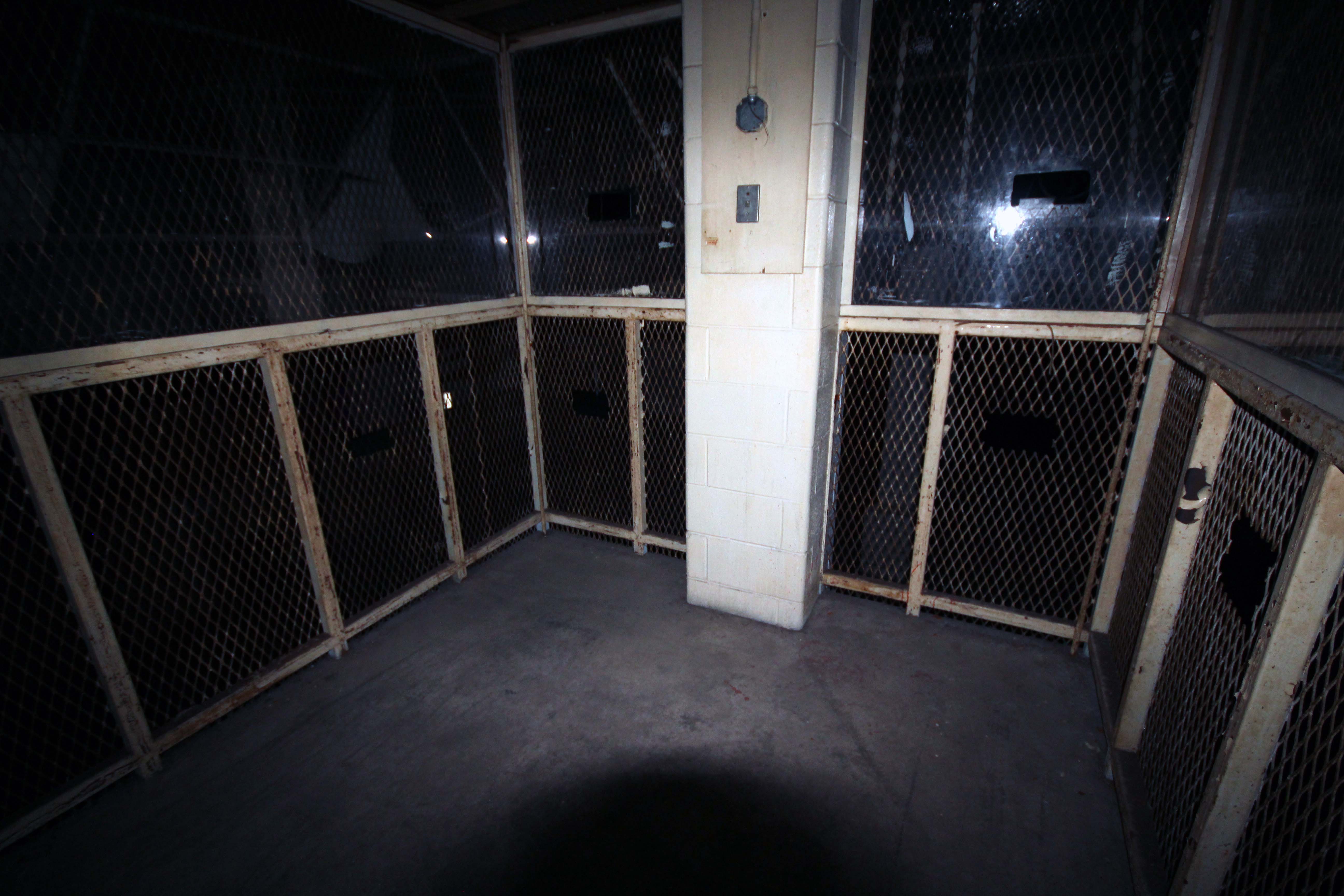
Remember the hanging guard shack in the contact visitation area? This is the inside.
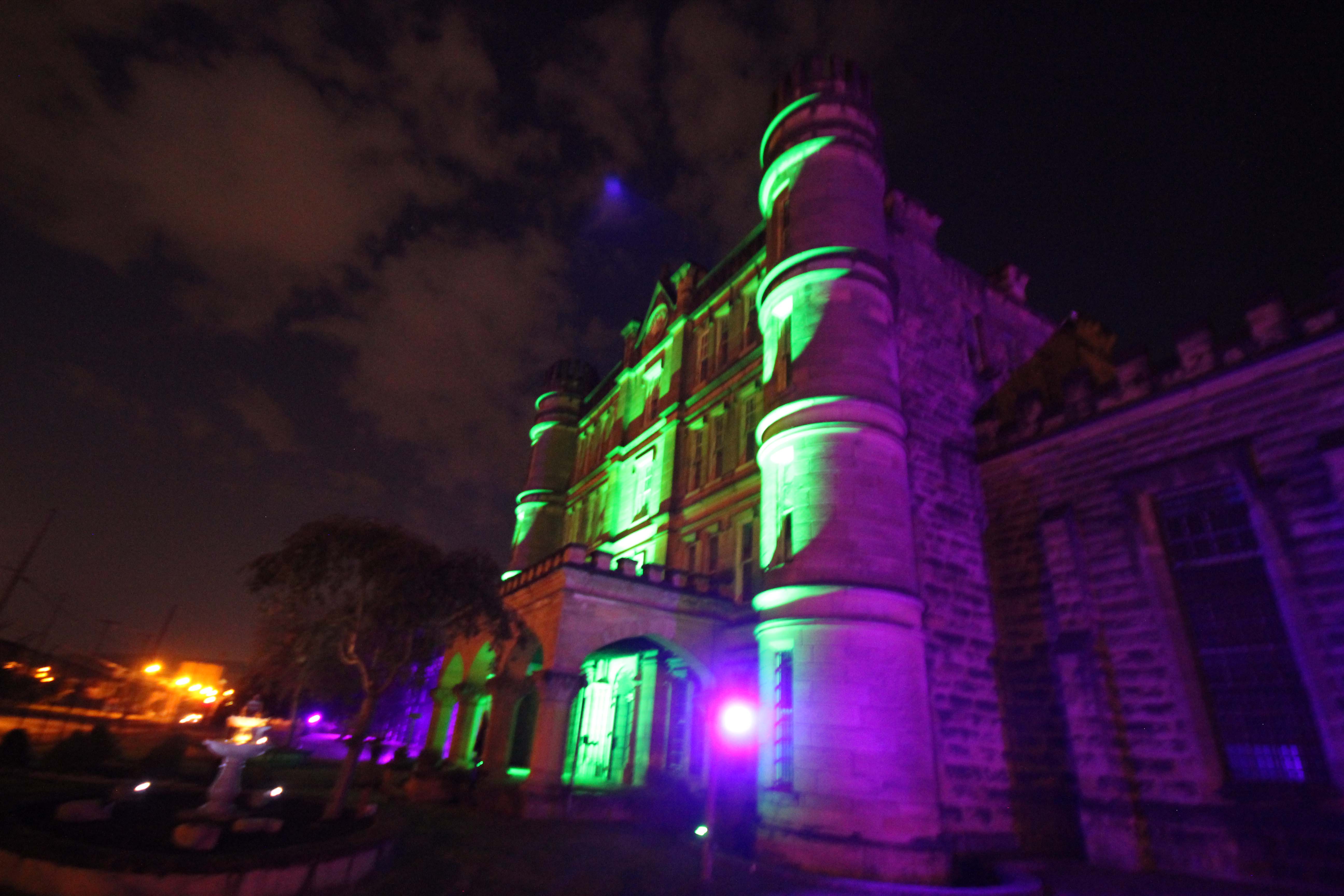
The building is lit up at night with creative colors for the season, because they do a haunted prison halloween thing, and it really photographs well.
So that was my trip to the prison.
Stay tuned for the next dark tour, the Trans Allegheny Insane Asylum! Anyone else seeing a pattern here? – Trace
Supporting our Blog
We very much appreciate your support of our blog.
You can purchase the ebook telling the story of how we became full-time RVers.
You can purchase our recipe book filled with 80 recipes we have cooked in our RV and taste tested by Lee himself. You can purchase the kindle or paperbackversion on Amazon or buy the Apple version on iTunes.





































































































































































































 ‘l;
‘l;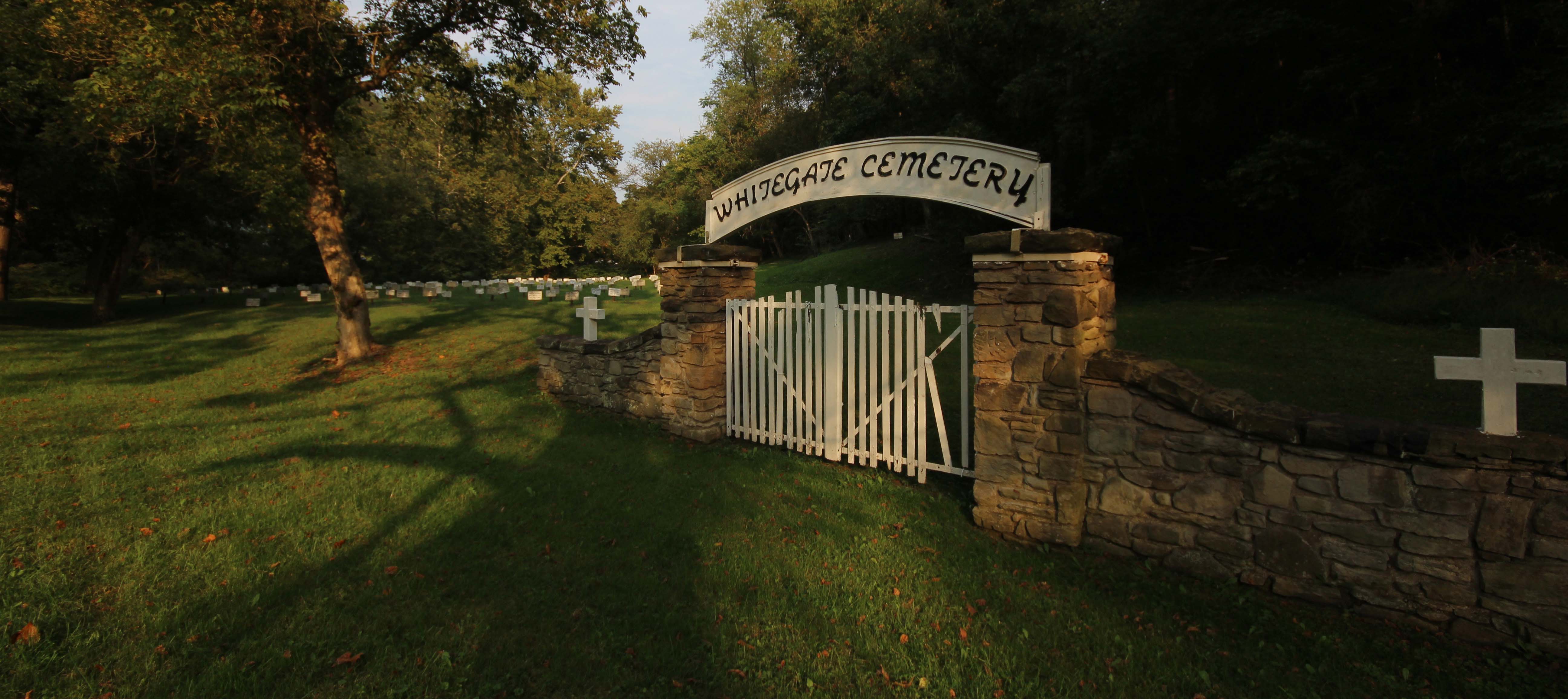

 Camper Chronicles