Lectric Bike Review

Before I write this Lectric Bike Review, I want to make it clear that I am in no way being compensated by the company and have no relationship with anyone who works there. We have owned our Lectric Bikes for a couple of months now and I wanted to wait until we moved from one campsite to another to post this review.

After much research and a recommendation from some friends we decided to buy the Step-Through Lectric bikes with fat tires. The ordering process was pretty simple but we were concerned that we could not get a guaranteed shipping date. As we travel frequently we needed to be sure the bike would arrive during our stay and Lee ultimately solved that problem by finding a live person who had stock on hand. The shipping from that point went off very well and I was impressed by how neatly the bikes were packed.

Despite Lee’s being really good at putting things together he did find it a bit of a challenge although eventually they were all setup. The “out of the box” bikes came with the basics and we immediately saw we wanted to make some upgrades.

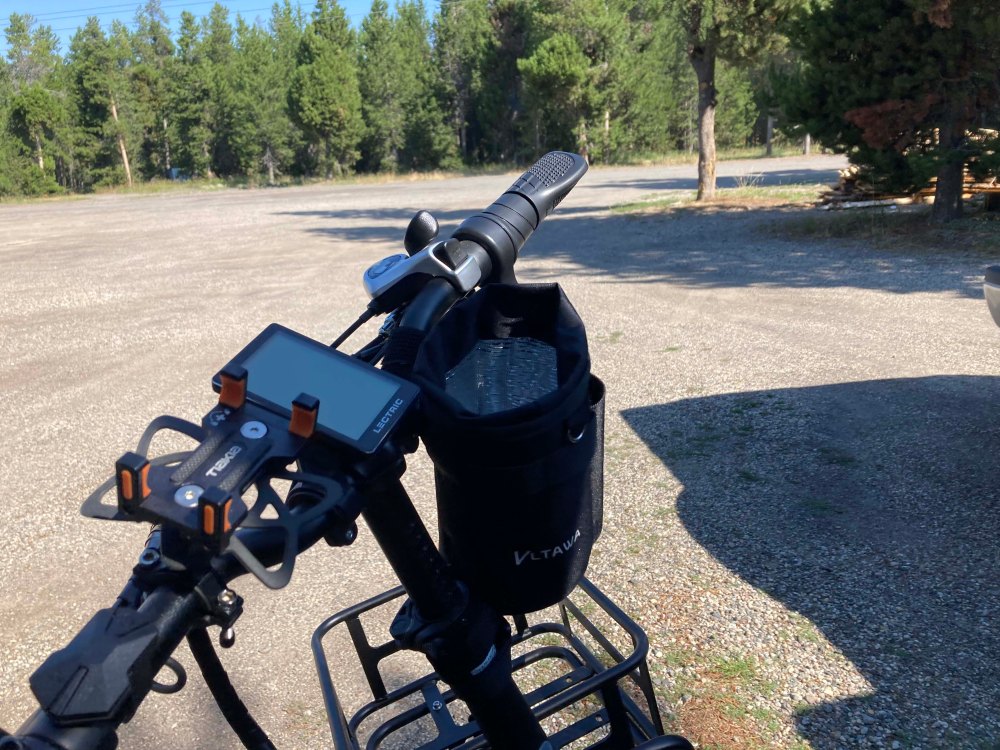
Ultimately we replaced the rear platform with a basket and added rearview mirrors, a cup holder, a phone holder, new seat, nice rain covers, and saddle bags. By the time we were done we had spent roughly $3500 and were excited to try them out.

I was a little nervous initially trying the bikes, but after a short getting used to it I found them to be really great. The driver’s assist function was awesome helping out with pedaling on long rides or up hills and the batteries lasted way longer than I thought they would. My only complaint at this point was how heavy the bikes were compared to what I thought they would be. In all fairness a lighter version is available but I felt like I needed the bigger tires for stability. They were heavy enough before we did the add ons, but once we added the extra baskets we needed both of us to lift them in and out of our truck.

Worse before we added the baskets they folded nicely and fit perfectly under the tonneau cover, but after the baskets were added they didn’t fold as well or fit under the cover. We played around with baskets but Lee never could get the bikes to lay flat after we added them.

On the plus side we were able to chain them up next to our rig and Lee used his almost every day to go to work for weeks. Since we only have one vehicle having a second option for in town travel was absolutely terrific and far less costly than buying a second car would have been. Still we do travel frequently and we weren’t sure how we would load them and tow our RV. Ultimately Lee did find a solution although he was forced to take the front baskets off. They just barely fit in the front of our truck bed with the RV hitched which was a huge sigh of relief.

Long term we are going to look for a better solution, but in the short term this will work. All in all I am super glad we bought them for a second mode of transportation, but honestly I am not sure how often we will take them places just to ride them. It’s a bit of a hassle and getting them in and out of the truck (which is difficult now) will get worse the older we get. Lee is looking into a foldup cargo tray for the back of the rig so we’ll see what happens going forward.

Update: We eventually had a bike rack made and added a bumper to our RV to hold it on which was not cheap. If you would like to read more about this click on this link.

We very much appreciate your support of our blog
  • You can purchase the ebook telling the story of how we became full-time RVers.
  • You can purchase our recipe book filled with 80 recipes we have cooked in our RV and taste tested by Lee himself. You can purchase the kindle or paperback version on Amazon or buy the Apple version on Itunes

Finishing up Yellowstone

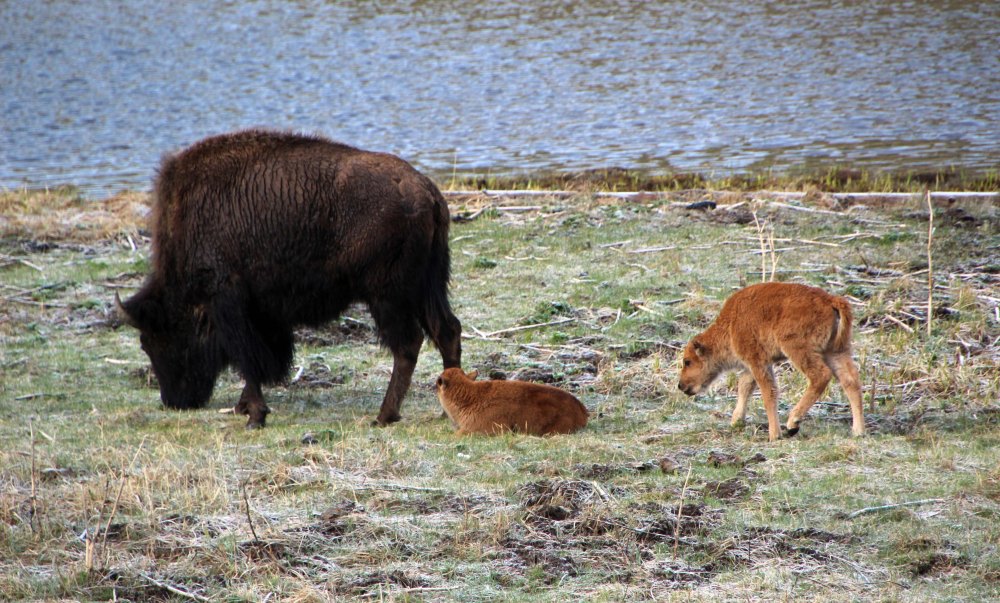
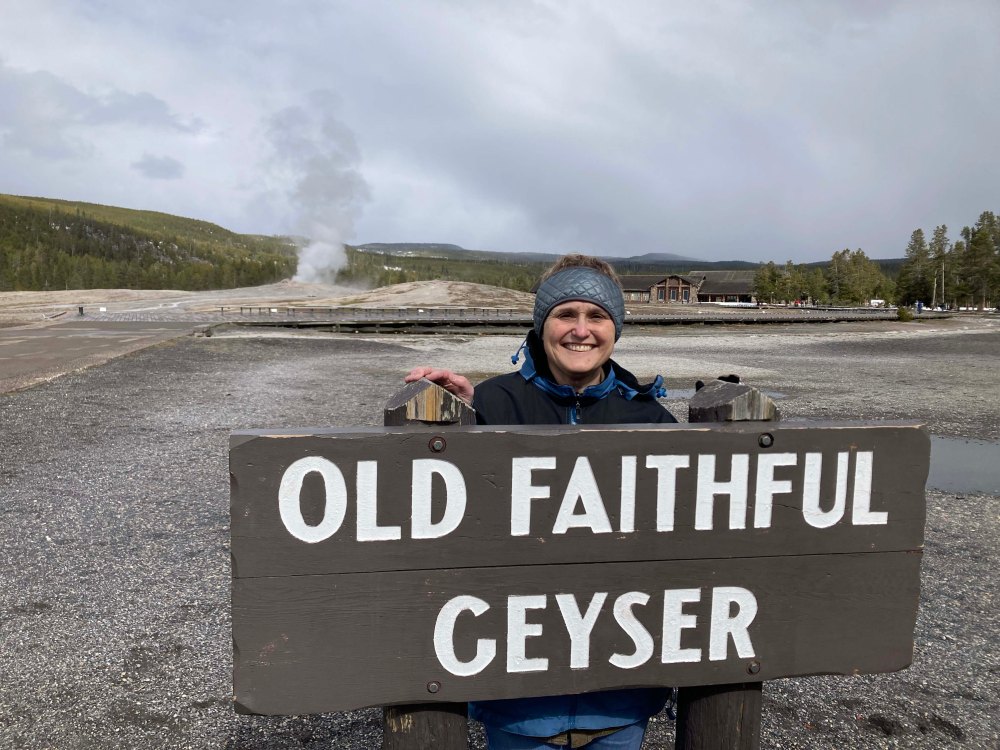
It’s truly been a phenomenal summer here in Yellowstone, so much so that Lee has signed up to work next year at the camera store. Despite our marathon sightseeing days we left a surprising amount on the table and now that we have gotten the lay of the land I cant wait to come back in May. As a piece of advice if you can only come for a short stint I definitely recommend mid May/Early June. Yes, the weather is a little variable and the roads aren’t necessarily all open but the animal sightings were amazing and have steadily decreased as the season has gone on. Makes sense because the animals move to higher elevation when it gets hotter and away from the roads as it gets more crowded.

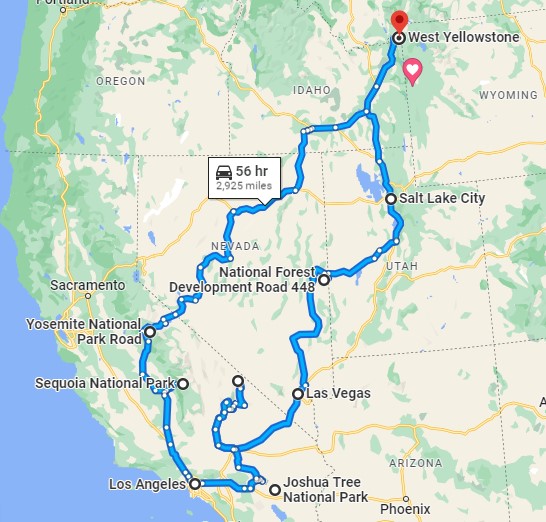
It’s a wonderful park anytime of the year and my new personal favorite National Park. Speaking of which we put together a route that will allow us to hopefully visit several more National Parks and see Los Angeles which is the only major US city I have never been to. Here is a map of our proposed winter travels.

Despite the map we are going to try things a little differently this time. We are not locking ourselves into any particular length of time at a location with the only exception being meeting my Mom in Las Vegas for her 75th birthday. Other than that we are going to stay in an area until we have seen what we want to see and then move on. Traveling this way is going to require a lot of communication with Lee and I so we will see how it goes. After 34 years of marriage you would think we would be better at that but traveling can be stressful at times 🙂

Totally worth it though and we are also going to try and do some boondocking as we travel. We are set up to boondock, but haven’t done it since I started working a corporate job again so it will be interesting to see what that looks like with me working all day. Plus we have the residential refrigerator now and aren’t sure how much battery power that will pull. It’s worth trying to try and keep costs down (and stay in remote places) so I am willing to give it a try.

It’s all very exciting and I am ready to get started on our grand adventure, but let me leave you with some of my favorite pictures from Yellowstone. I feel truly blessed that we were able to see all that we did this summer and look forward to making new memories in 2023.

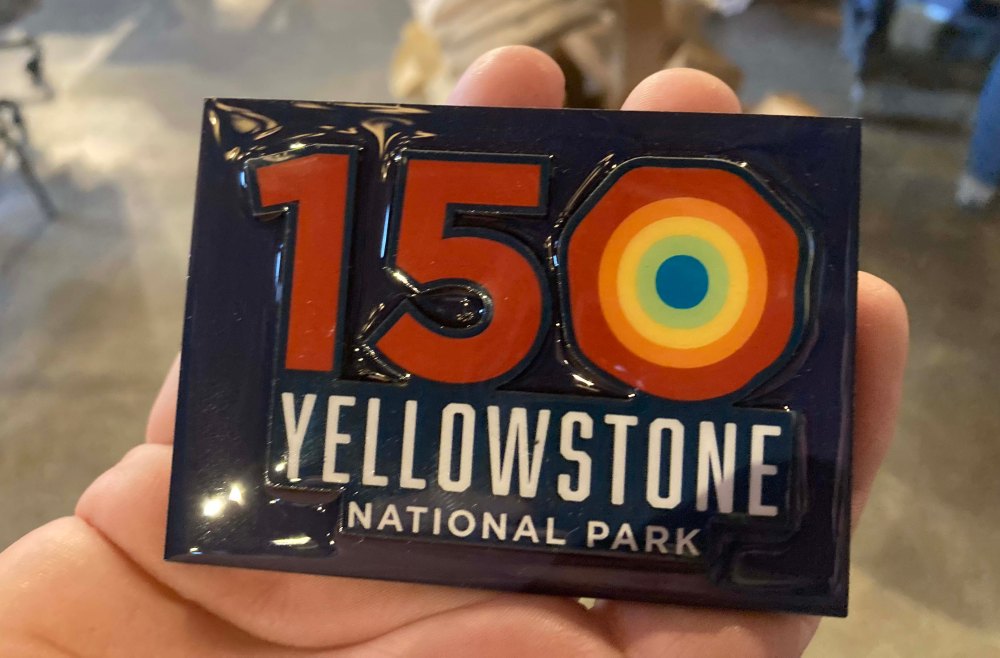
Total dumb luck we were here for the 150th anniversary

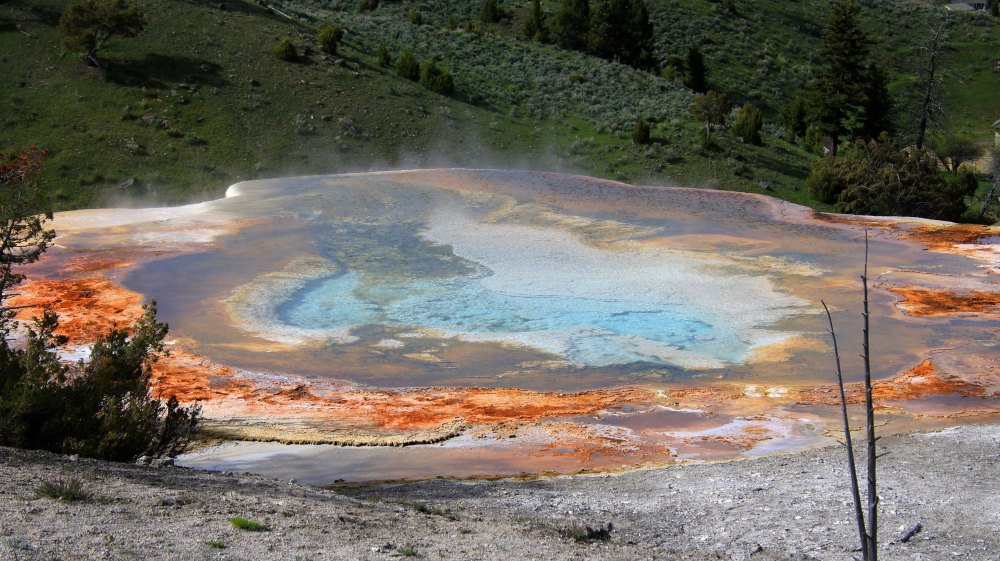
Mammoth Terrace
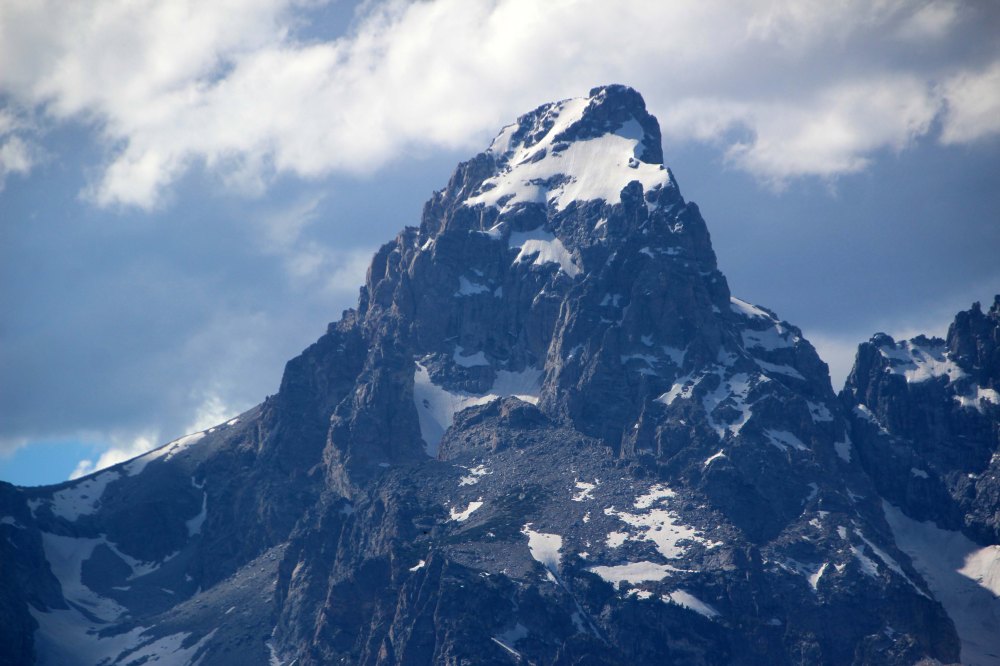
The Tetons
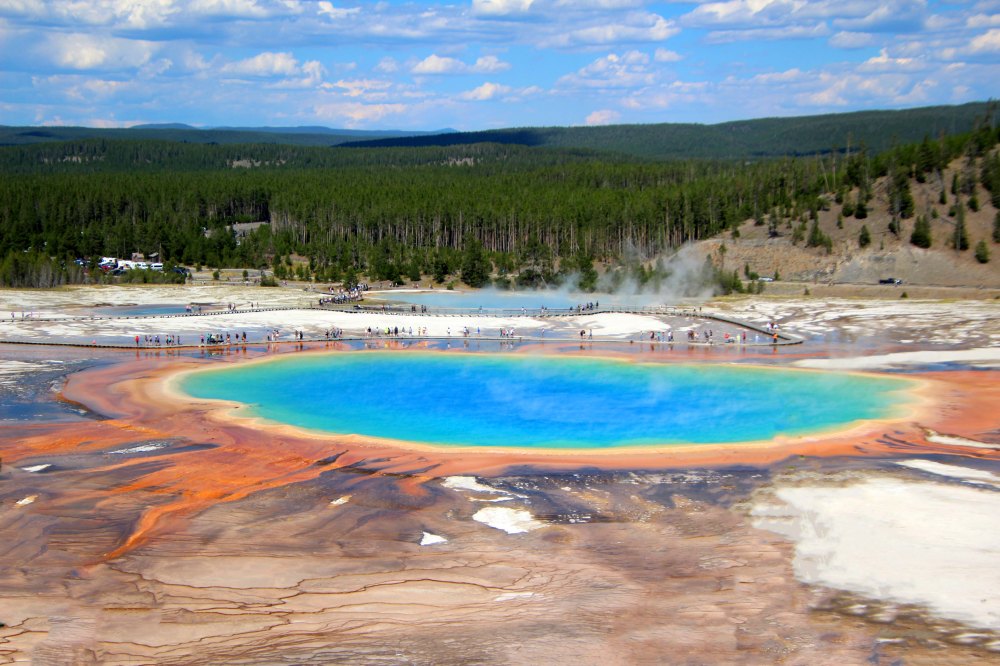
Grand Prismatic

Hope you enjoyed the pictures as much as I did. Much more to come!

We very much appreciate your support of our blog
  • You can purchase the ebook telling the story of how we became full-time RVers.
  • You can purchase our recipe book filled with 80 recipes we have cooked in our RV and taste tested by Lee himself. You can purchase the kindle or paperback version on Amazon or buy the Apple version on Itunes

Wild Horses and Heart Mountain Internment Camp

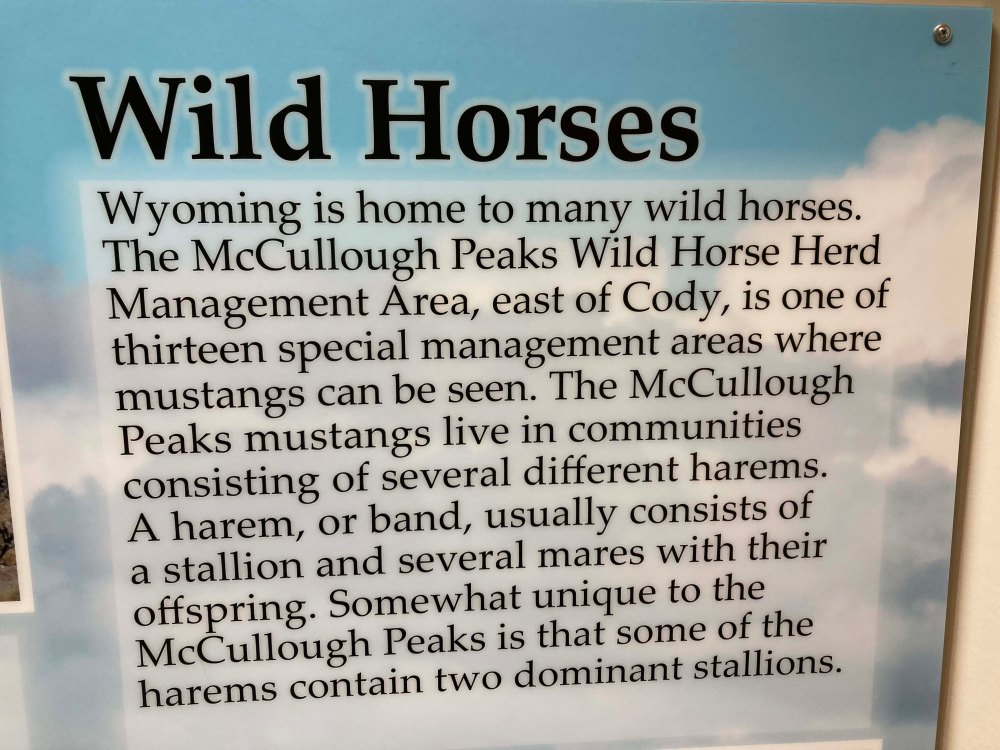
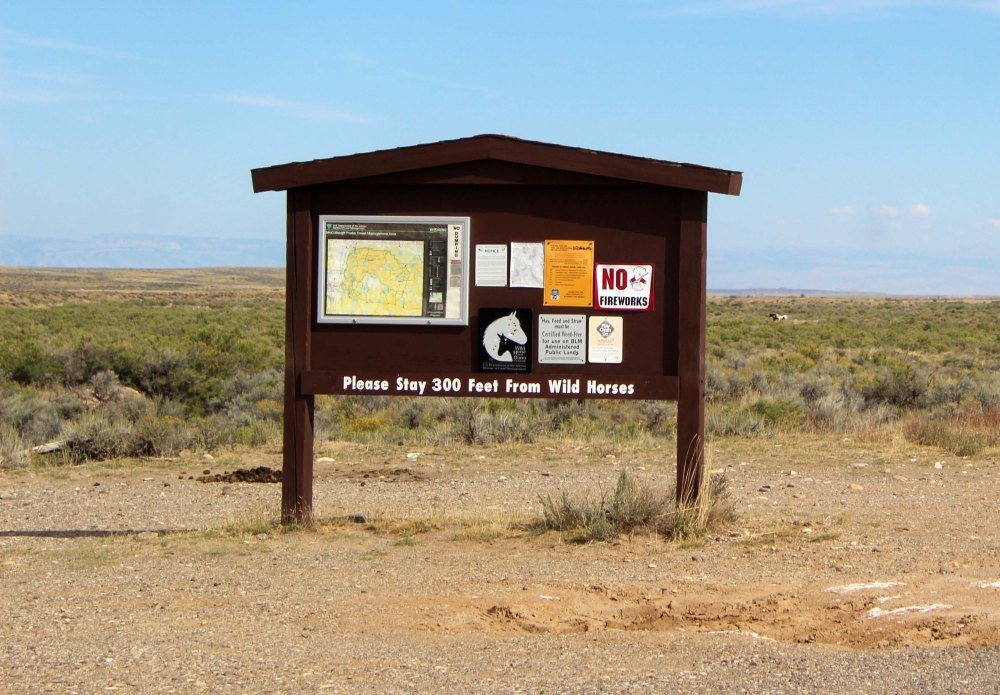
Yeah, I know, weird title, but it was that kind of day. After seeing the dam we still had a couple of hours to kill before the 4pm pickup for Jack so on the advice of some folks Lee works with we headed East from Cody on HWY 14. Lisa and Rob had seen wild horses between MM 74 & 75 so we thought why not. Back in 2018 we visited the Litchfield Wild Horse and Burro Corral and were very impressed by how the BLM manages these precious resources.

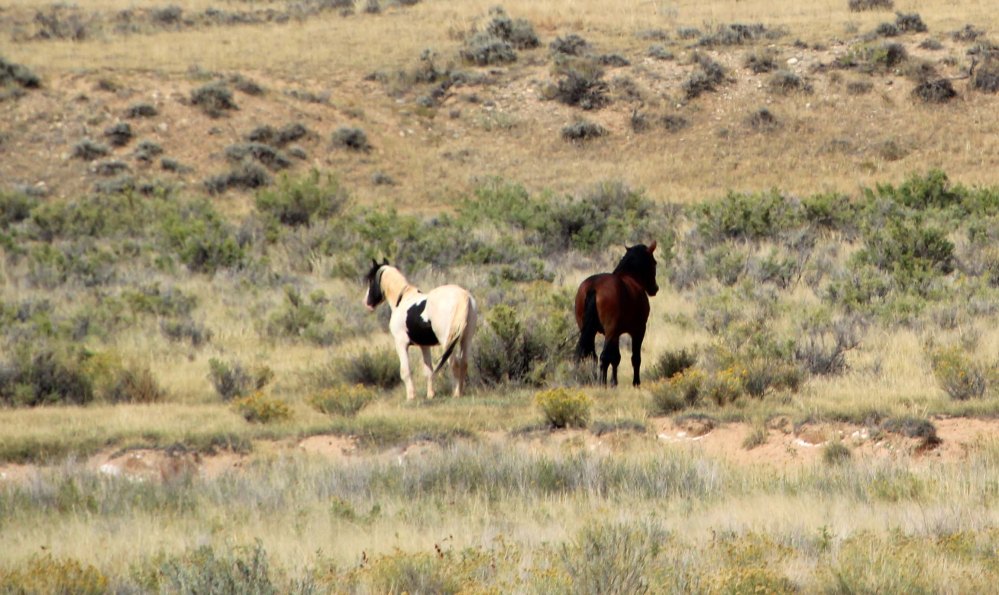
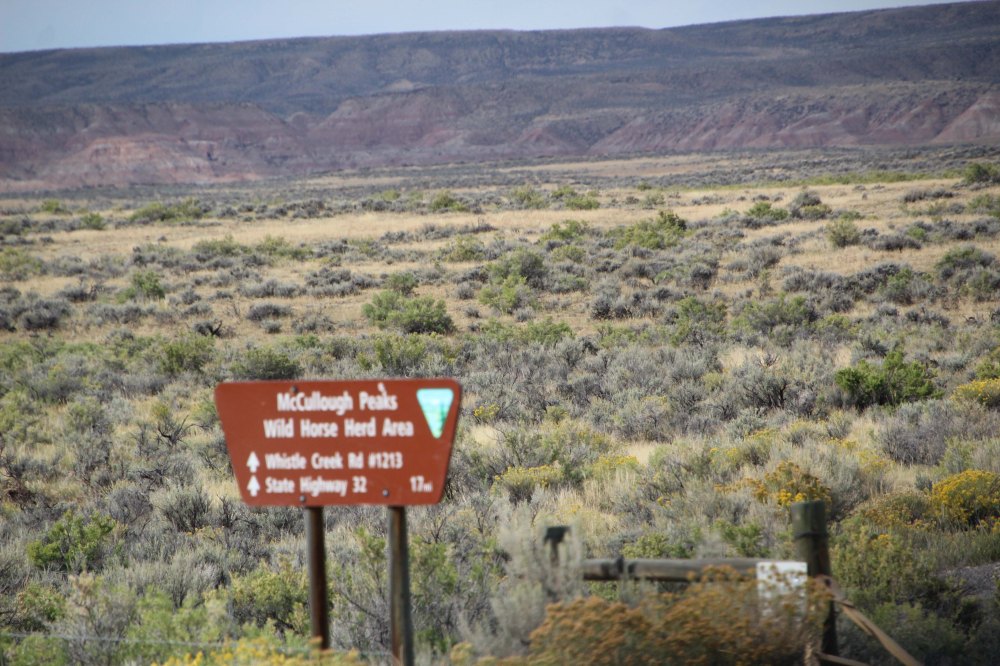
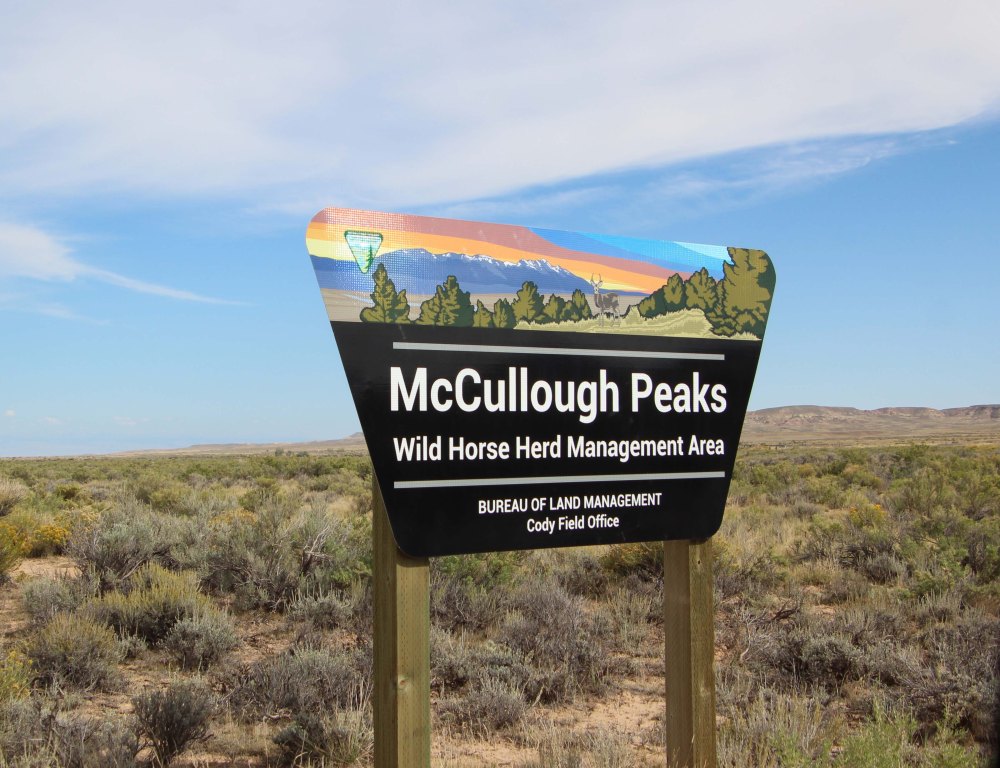
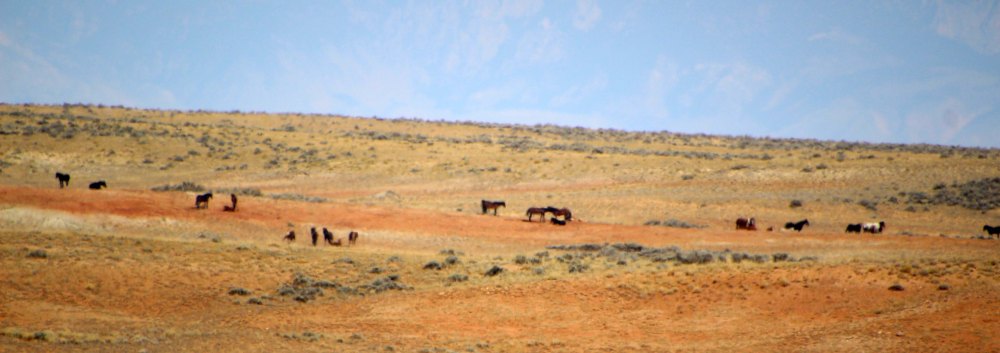
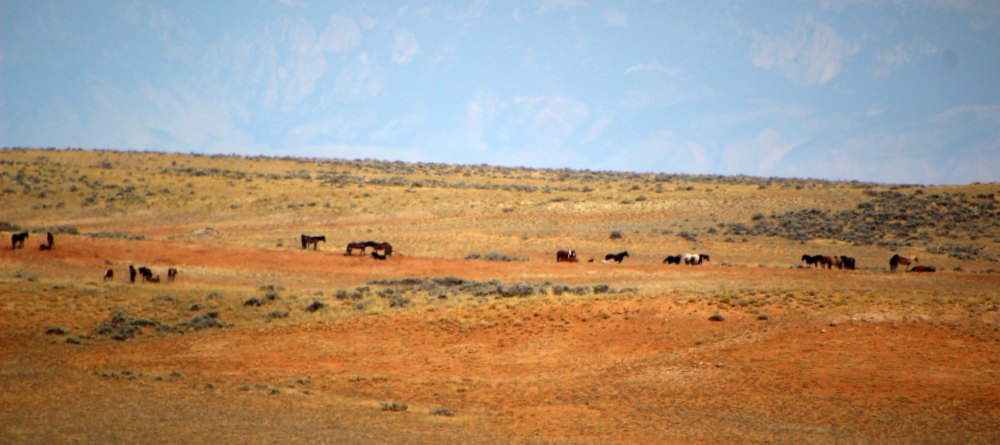
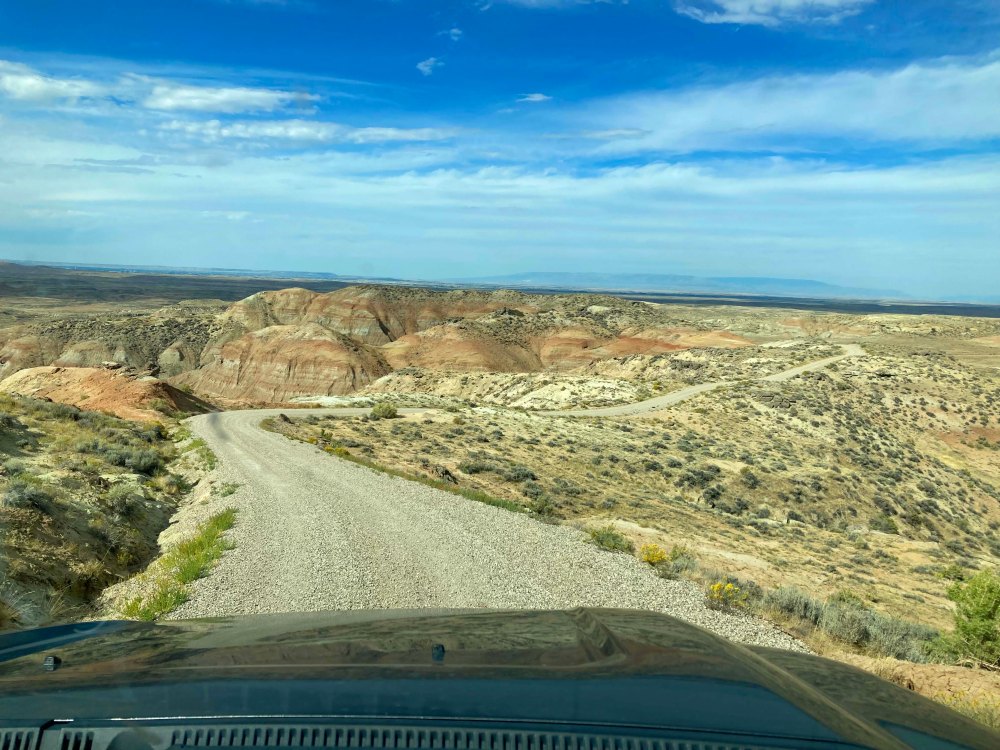
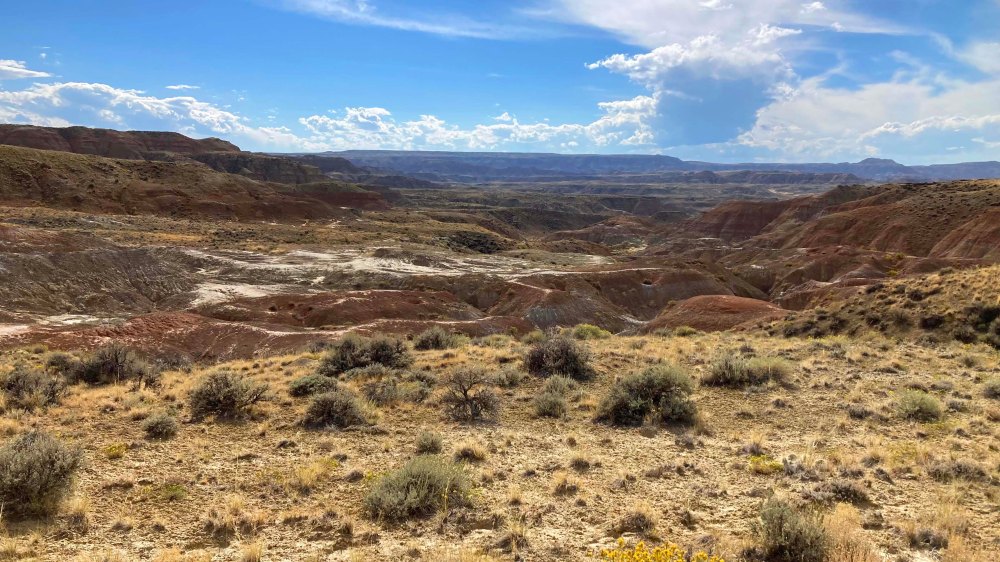
Turns out the McCullough Peaks Wild Horse Management Area is pretty big but its also pretty arid so the horses could be anywhere. We were lucky enough to see some horses off in the distance between 74 and 75 so we decided to turn around and go on a BLM road into the area. I want to caution you here that without four wheel drive I definitely wouldn’t recommend the side roads, but this particular road we are on we learned is used by pipeline inspectors so the main road was gravel but well maintained.

Unfortunately most of the horses stayed pretty far from the main road, but the road itself was really beautiful. It reminded us both of Utah and although a pipeline was under the area the only way you would know that was the occasional sign. We were really out in the middle of nowhere but we saw a couple of people and they told us if we kept going we would hit another highway so we continued on getting pretty close to one horse along the way.

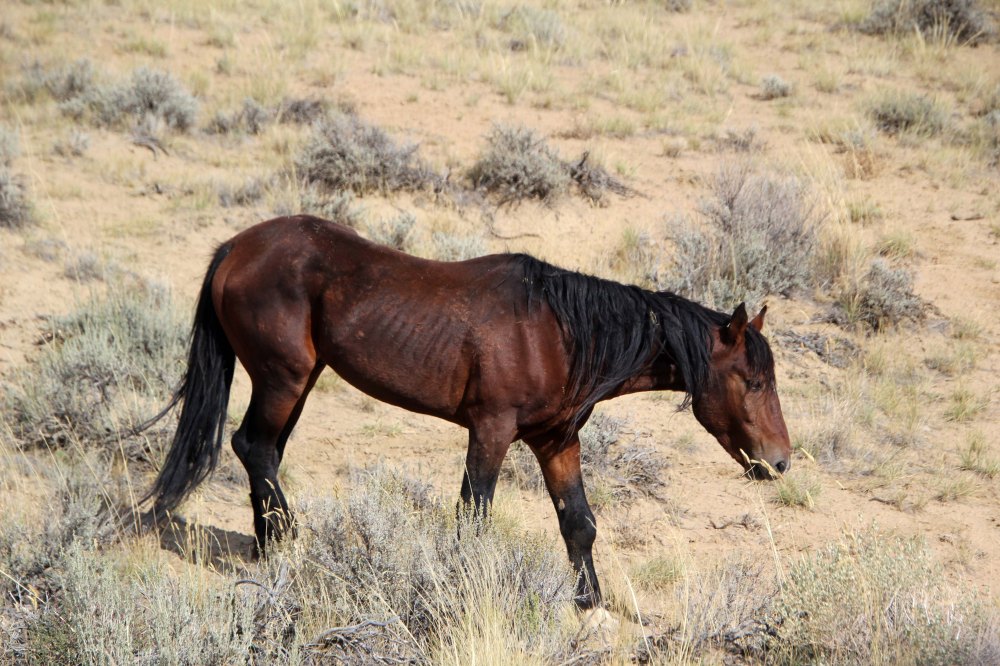
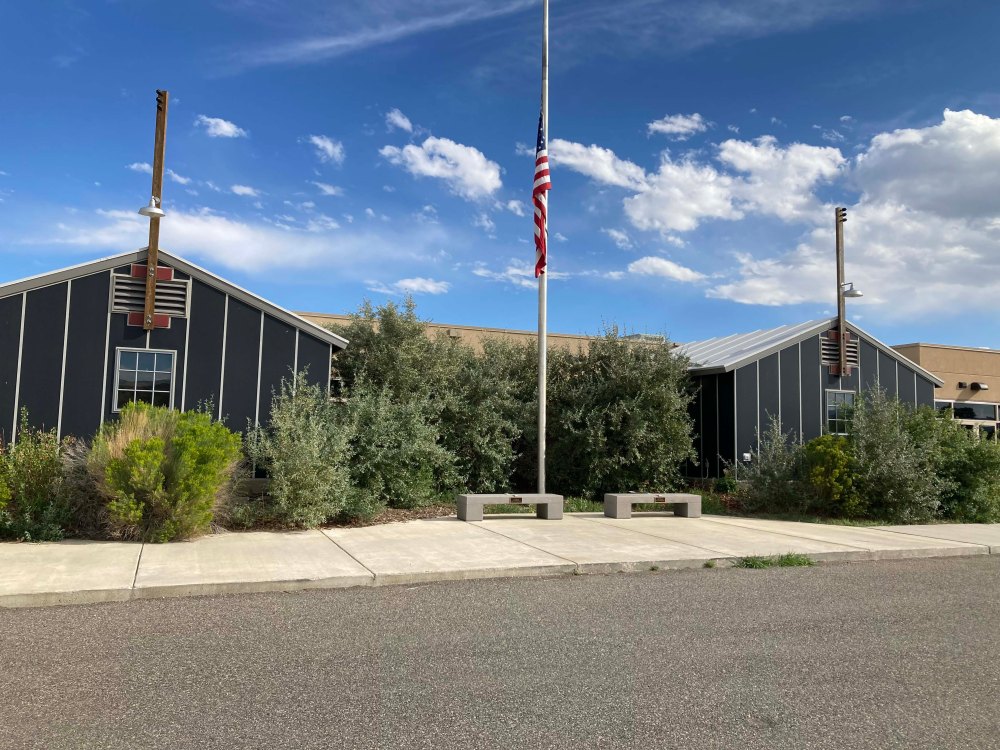
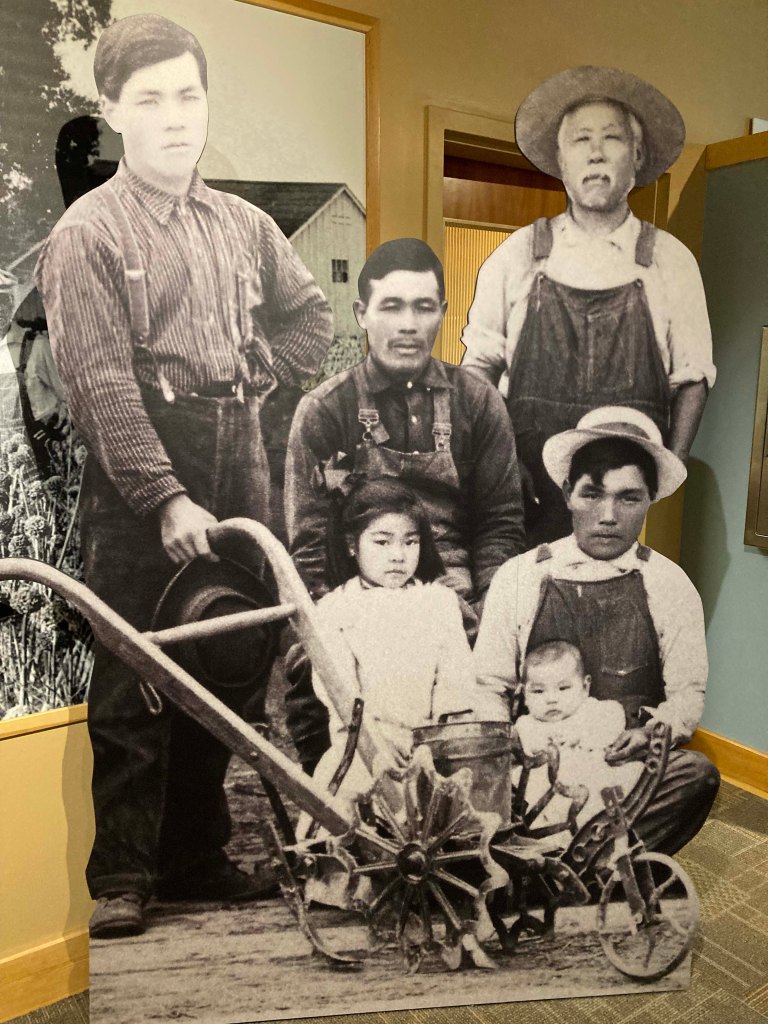
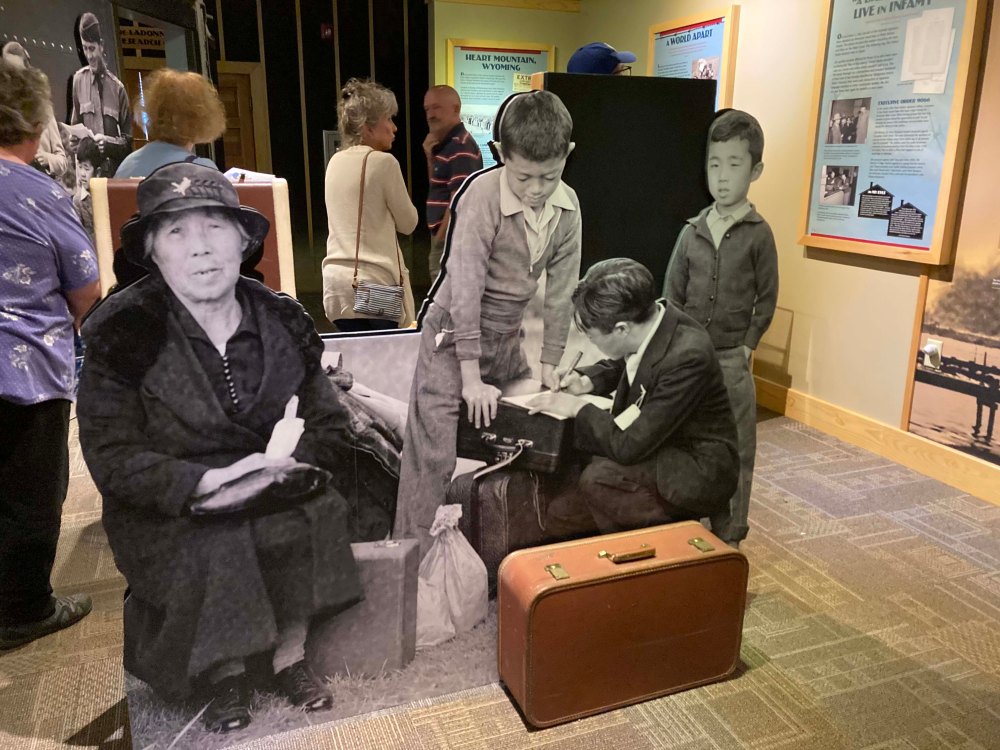
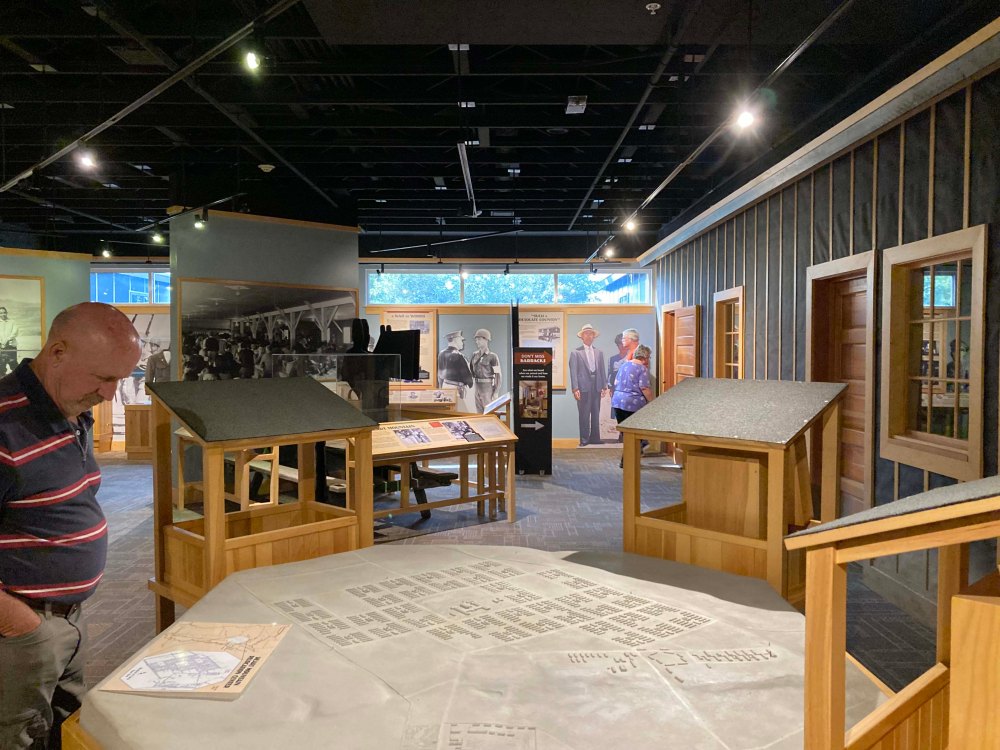
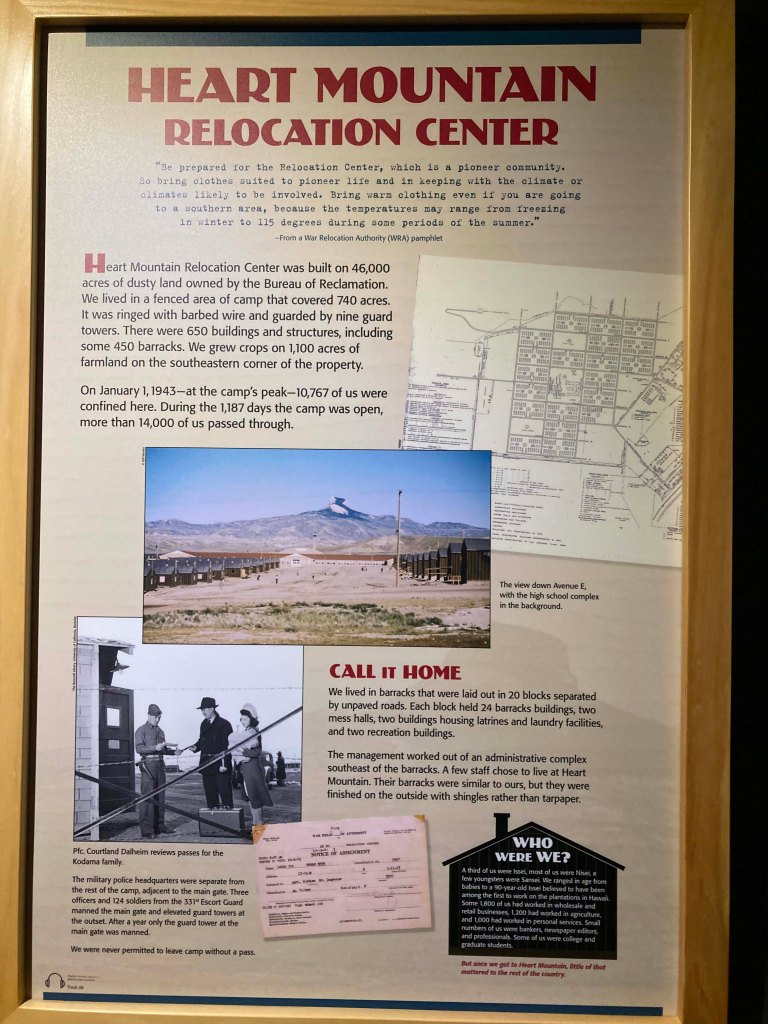
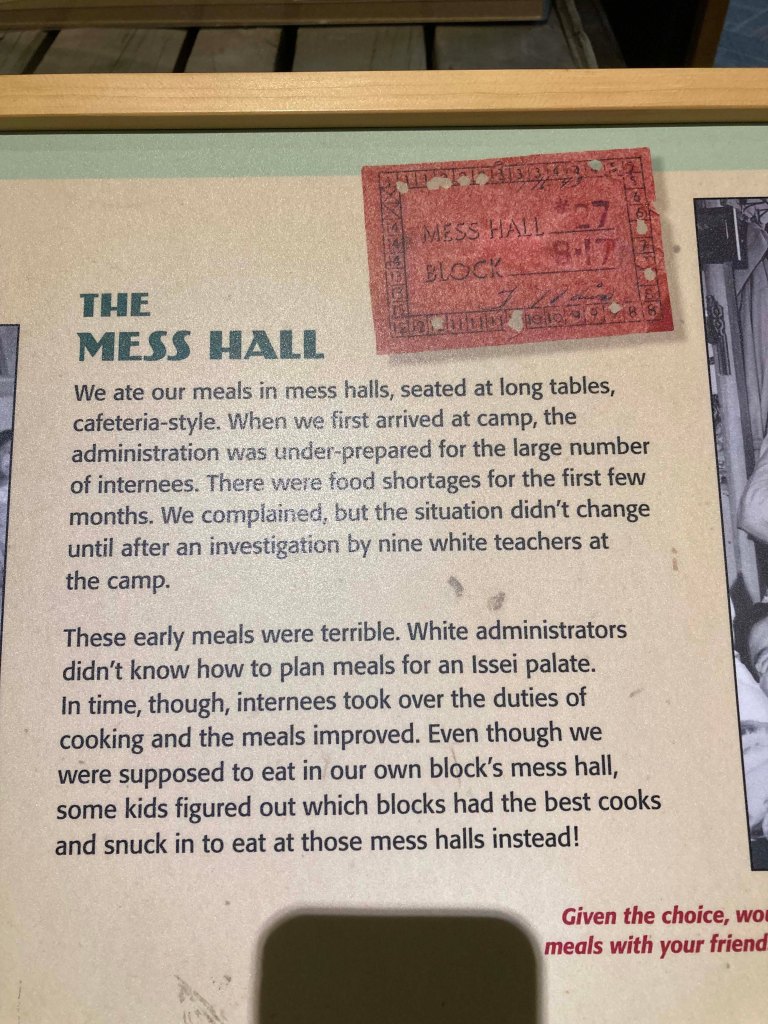
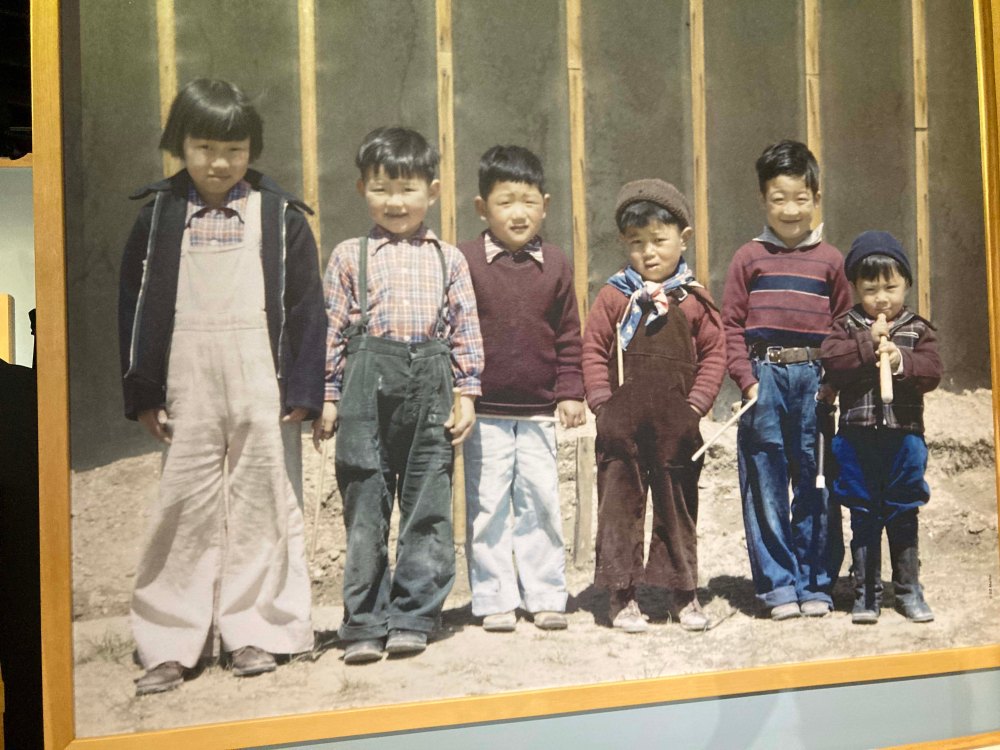
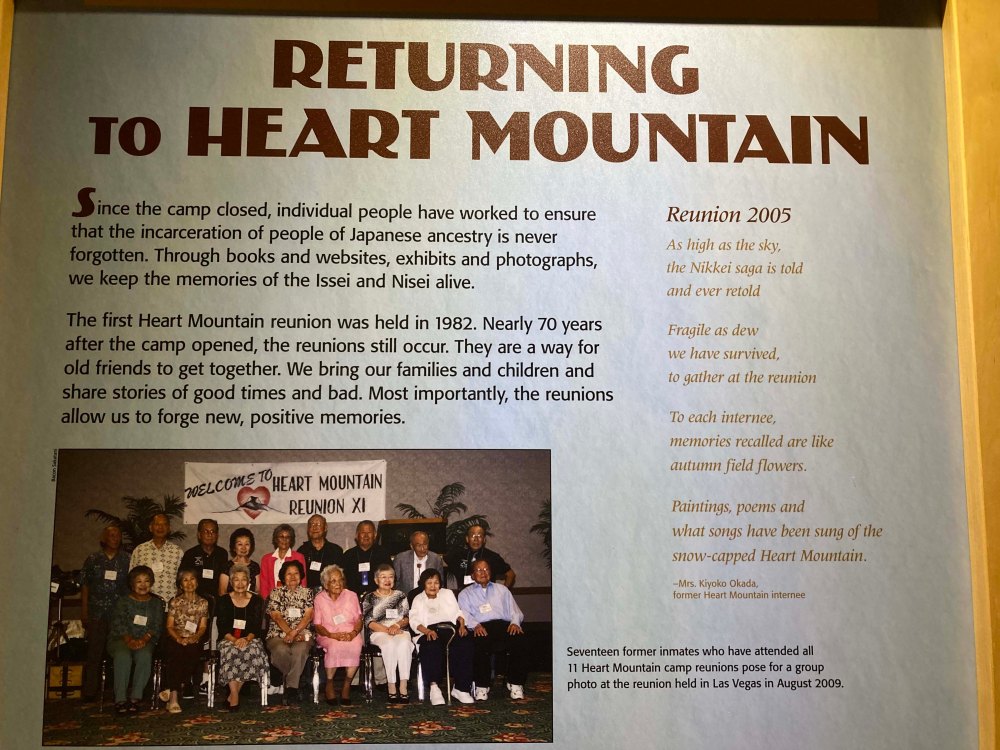
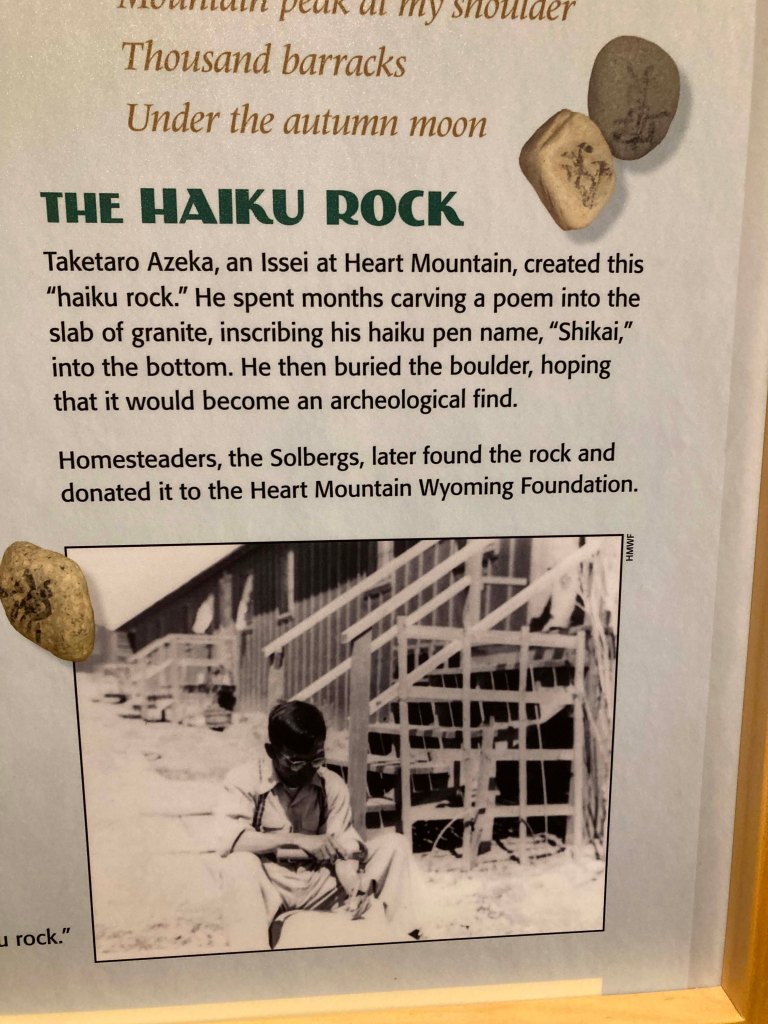
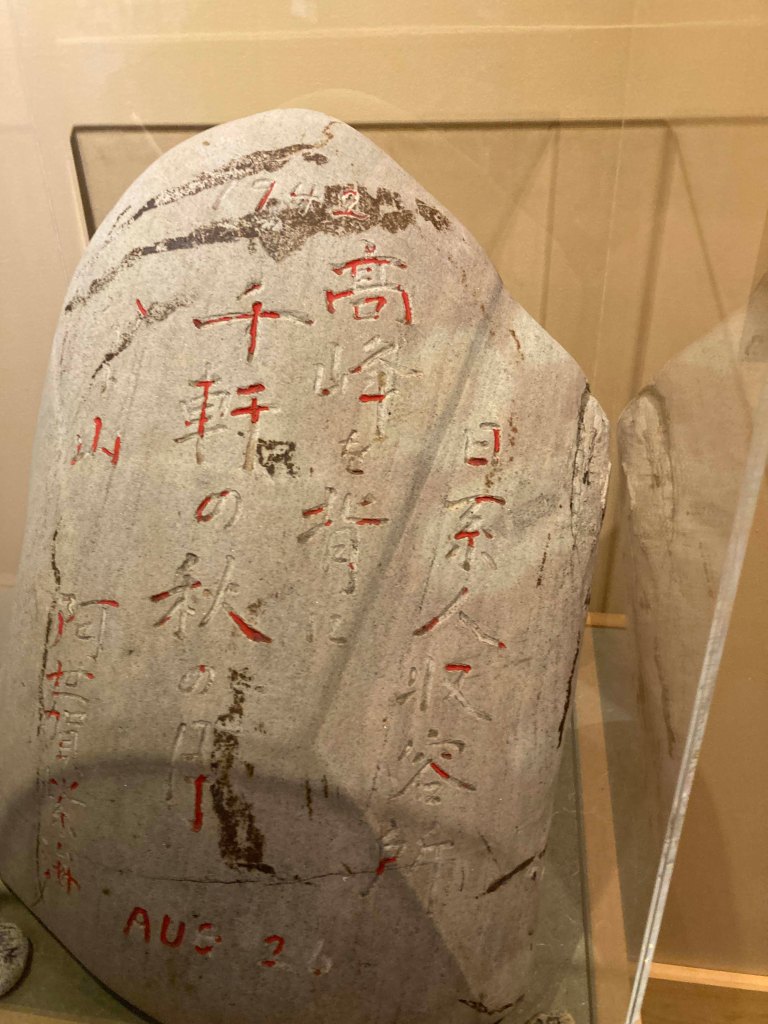
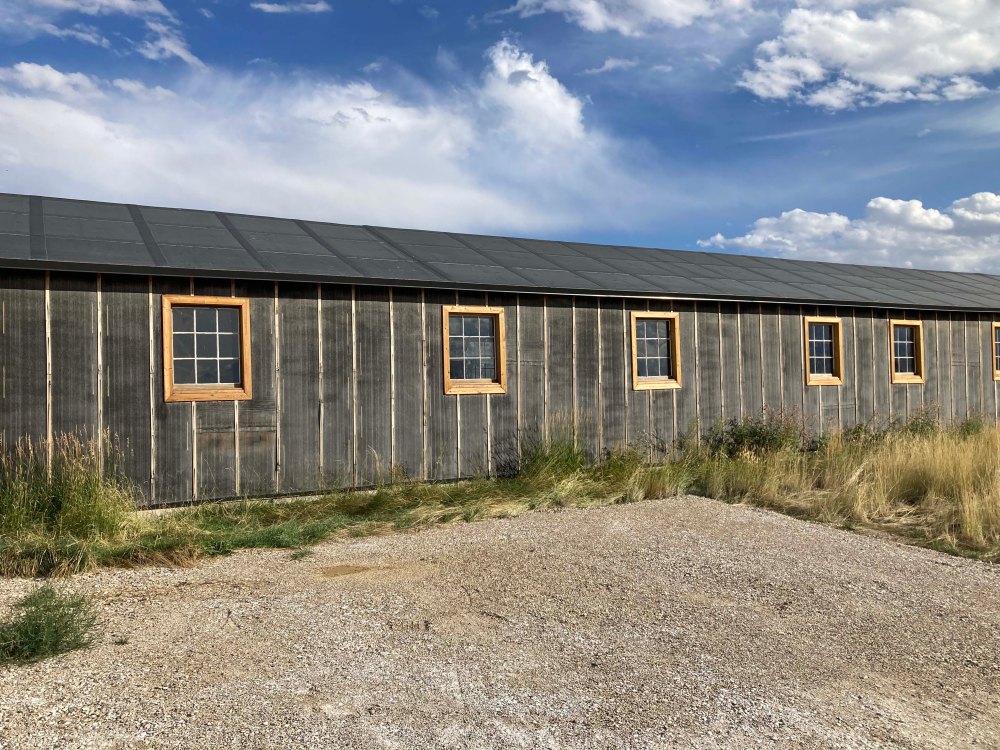
The last horse we saw looked pretty thin, but Lee thought it was probably OK. Resources are scarce in these desert conditions which is why the BLM carefully manages the population. It was a really cool drive and when we came out on 14A we headed back towards Cody. In a little while we were surprised to see a Japanese Internment Camp Museum in the middle of a huge field. We have passed by several of these in our travels but never seen one that was open so we stopped at Heart Mountain Japanese Internment Site.

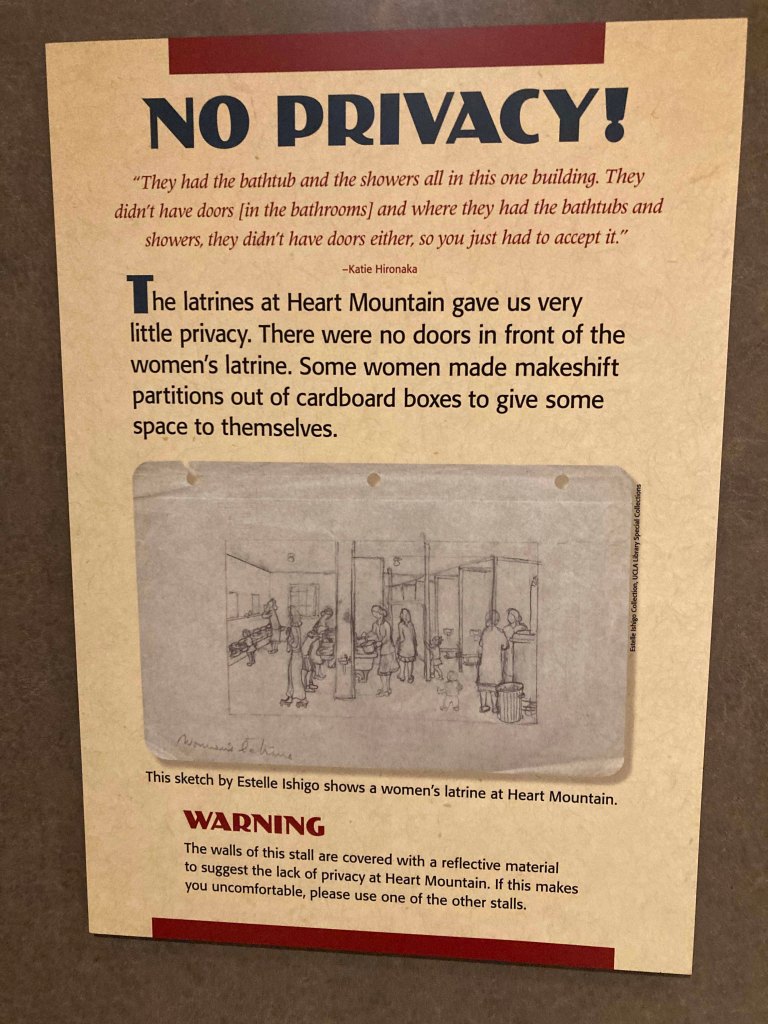
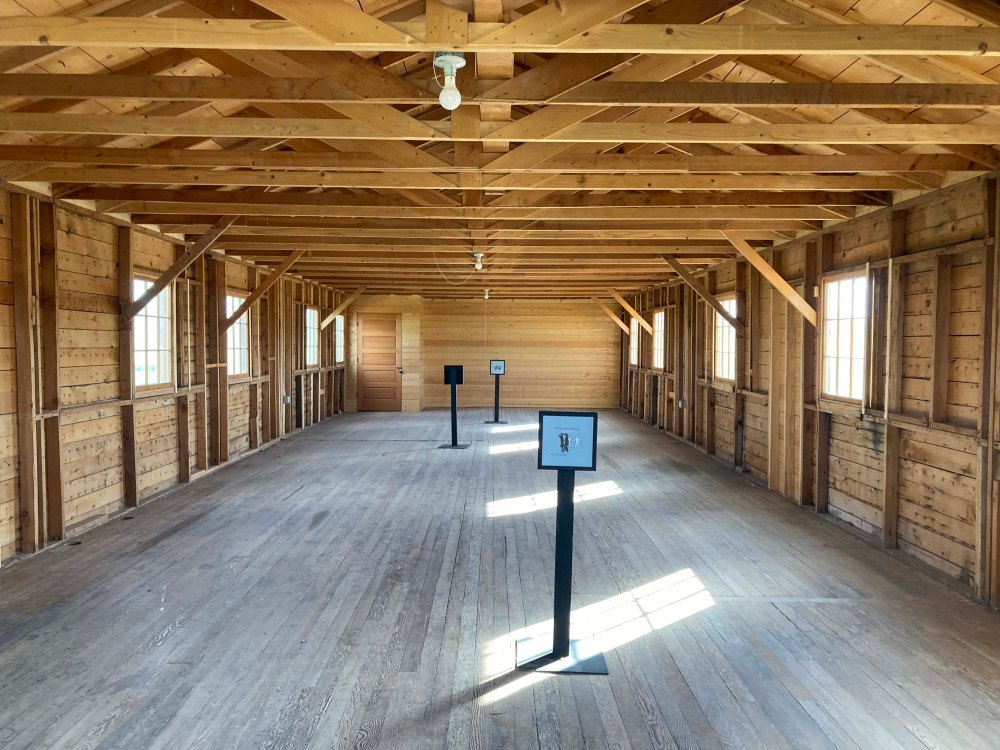
We had about 15 minutes before they closed so we skipped the movie and headed straight into the museum. First I had to use the restroom and was surprised that they had mirrors in the stalls. There was no privacy in the interment camp in the restrooms and they wanted to simulate that.

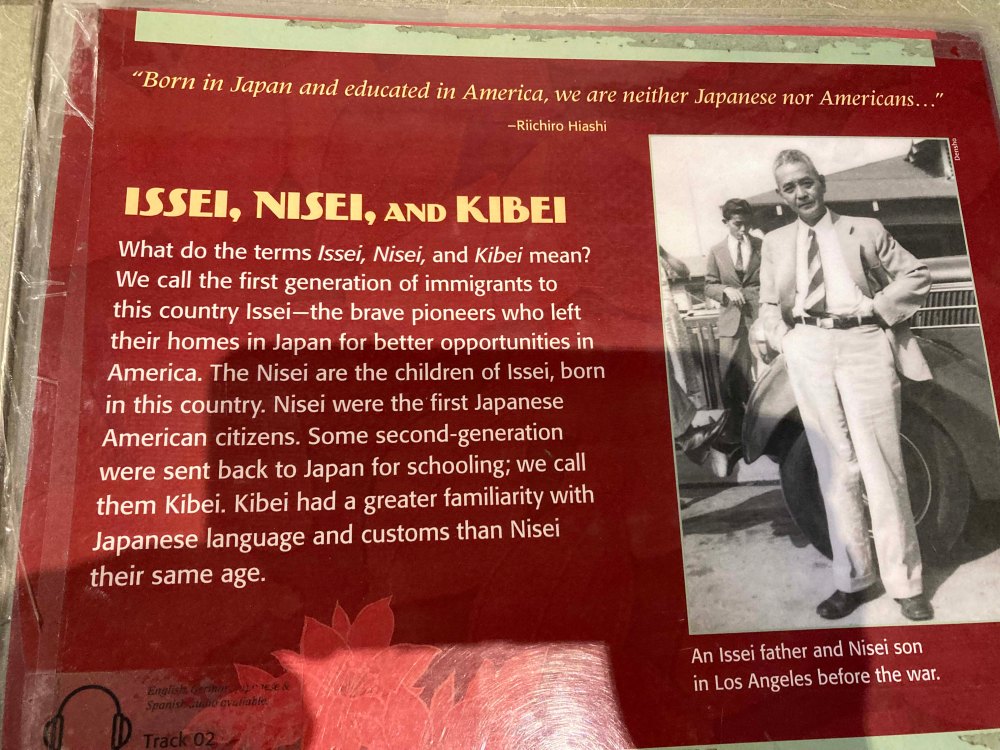
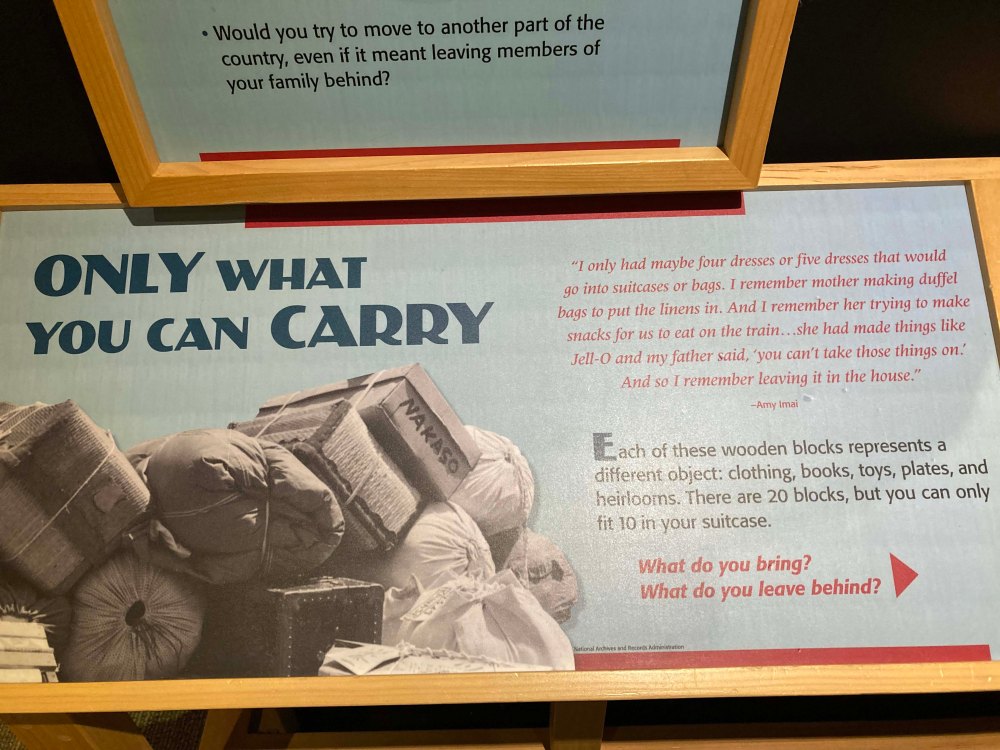
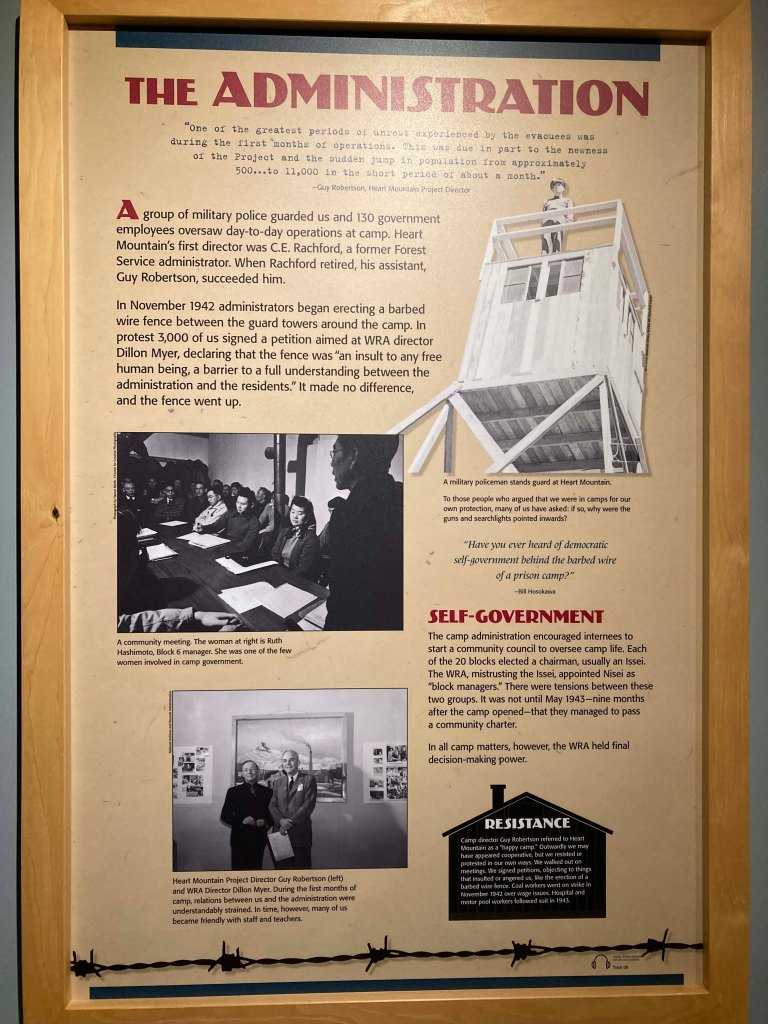
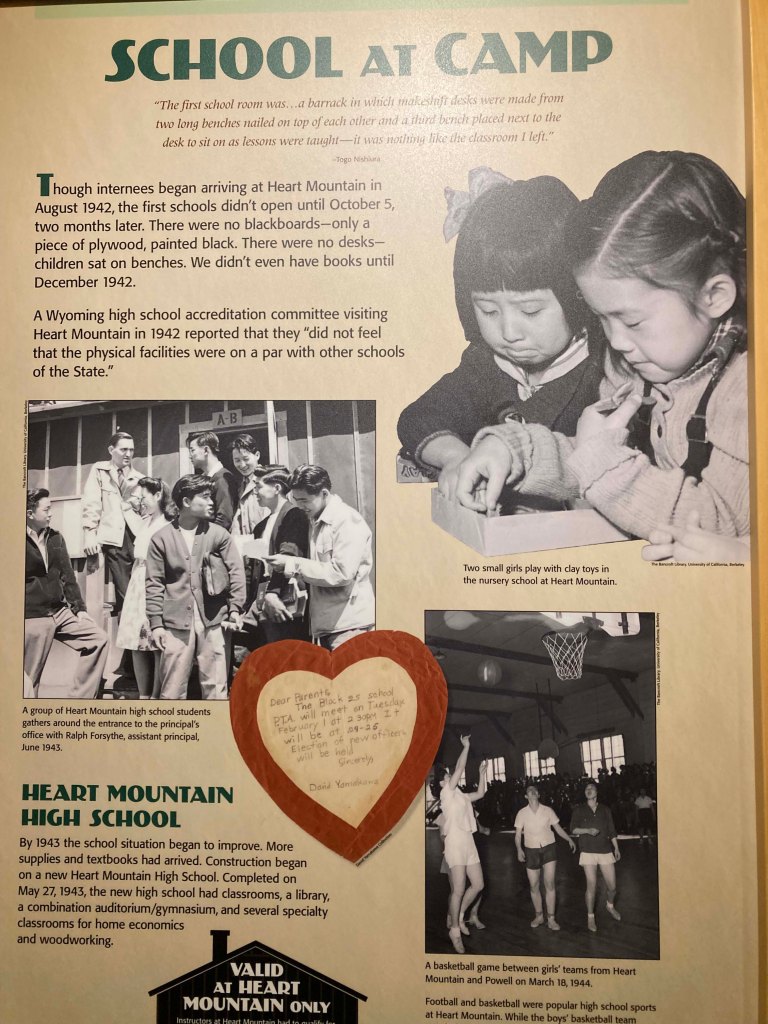
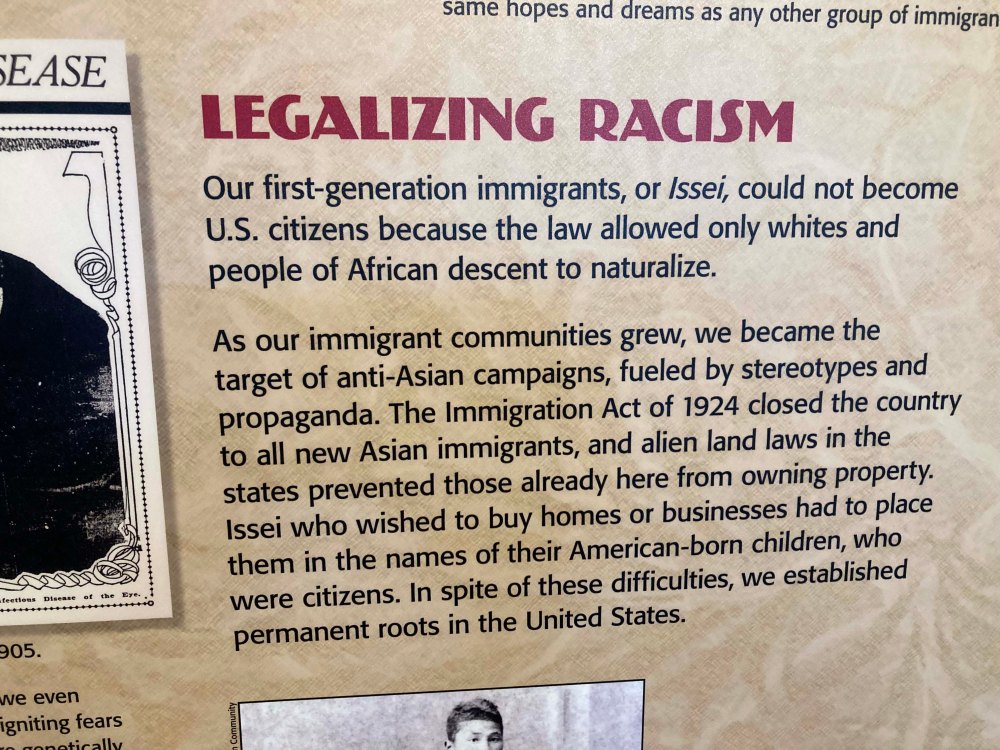
The displays were very well done and many of the quotes were first hand accounts by the children that were there. One thing I did find confusing was the reference to the Issei, Nisei, and Kibei. In our hurry I had missed the display that explained these were generational terms. The Issei were immigrants from Japan, Nisei were first generation American citizens, and the Kibei were second generation who were sent back to Japan for schooling. These groups were treated very differently and since the Nisei and Kibei were younger this went against the Japanese traditions of elders being community leaders.

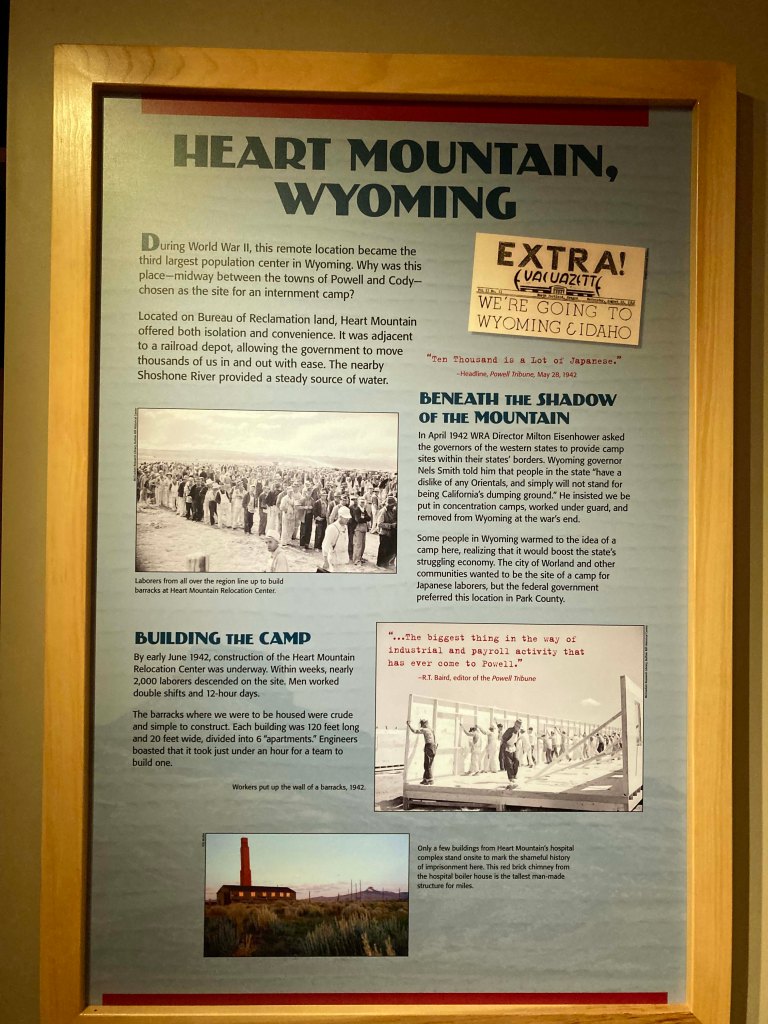
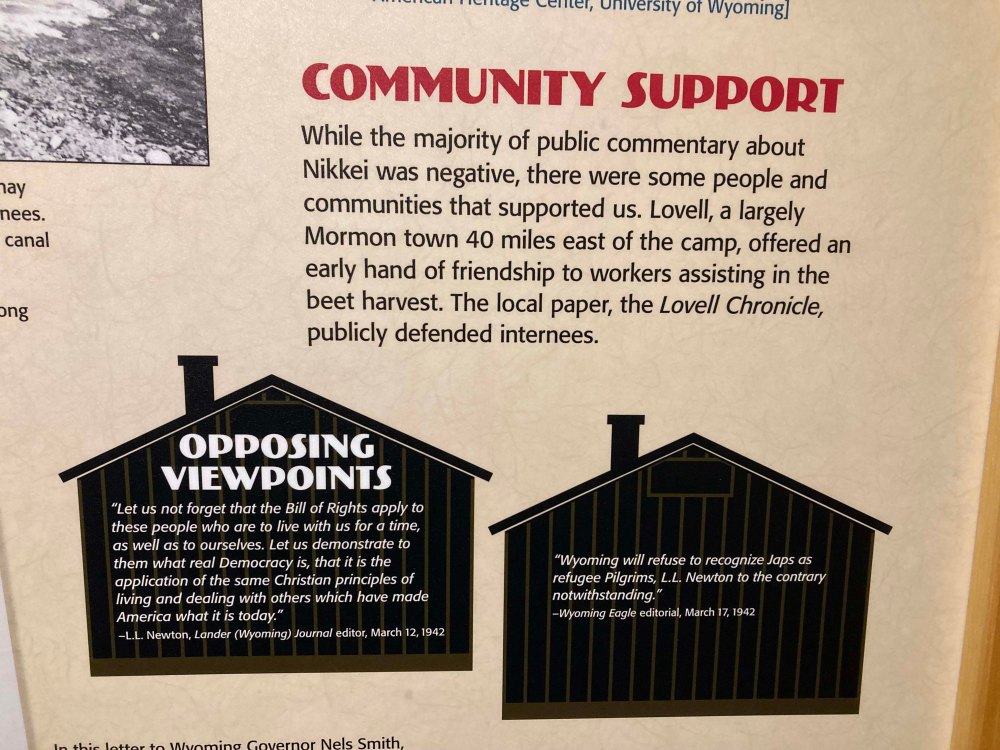
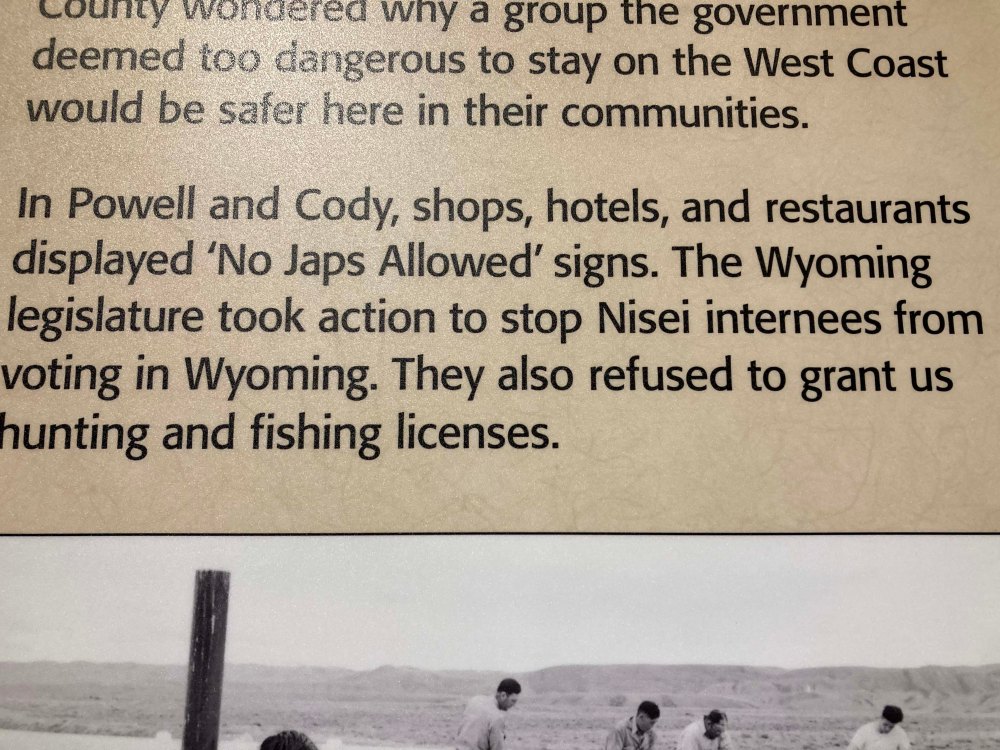
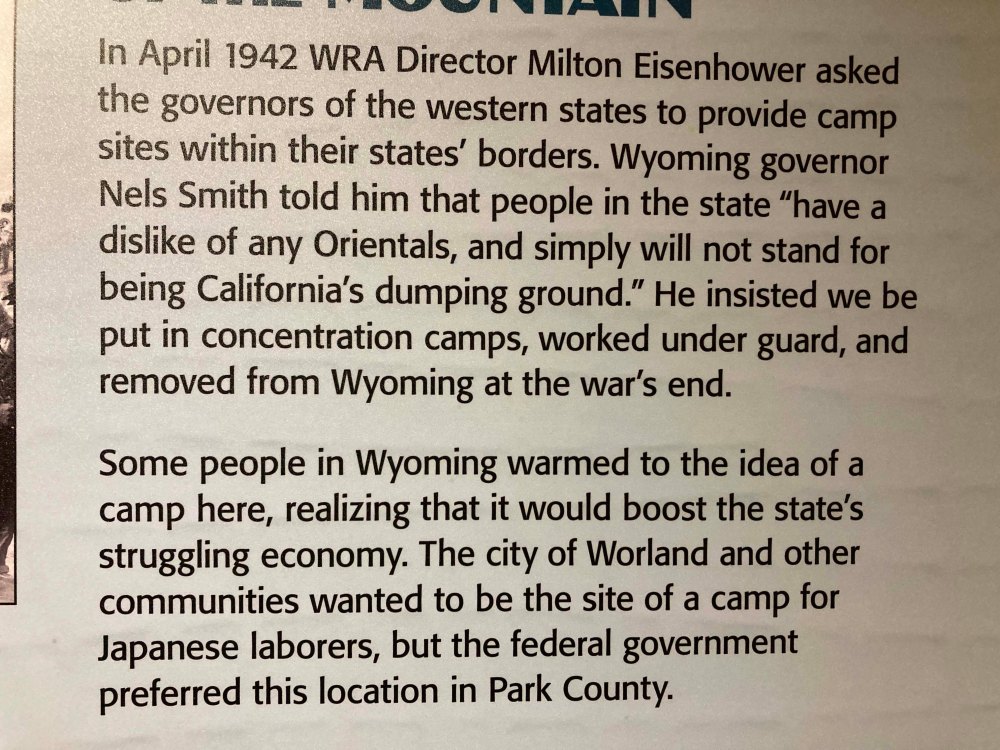
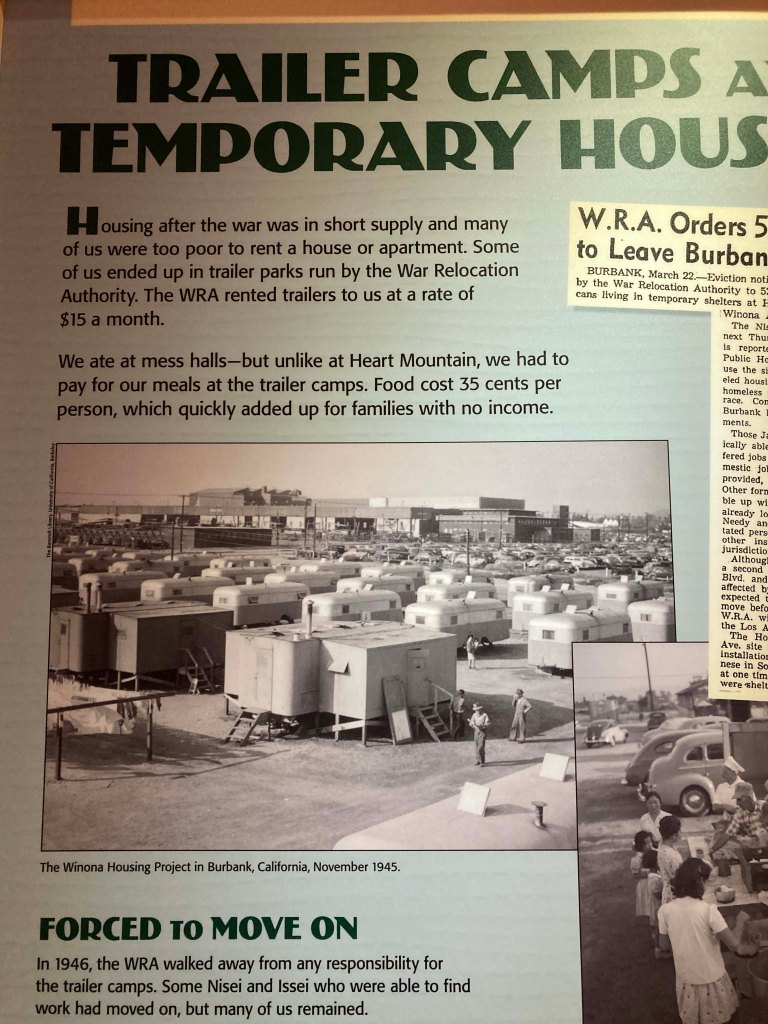
The governor of Wyoming did not want the Japanese in the Cody area and only accepted them after a personal appeal by Dwight Eisenhower under the condition that they leave the area immediately after the war was over. The local towns gave many of them trouble as well refusing to serve the Japanese in town or even in some cases physically attacking those found outside the camp. One major exception to this was the largely Mormon town of Lovell who openly supported them.

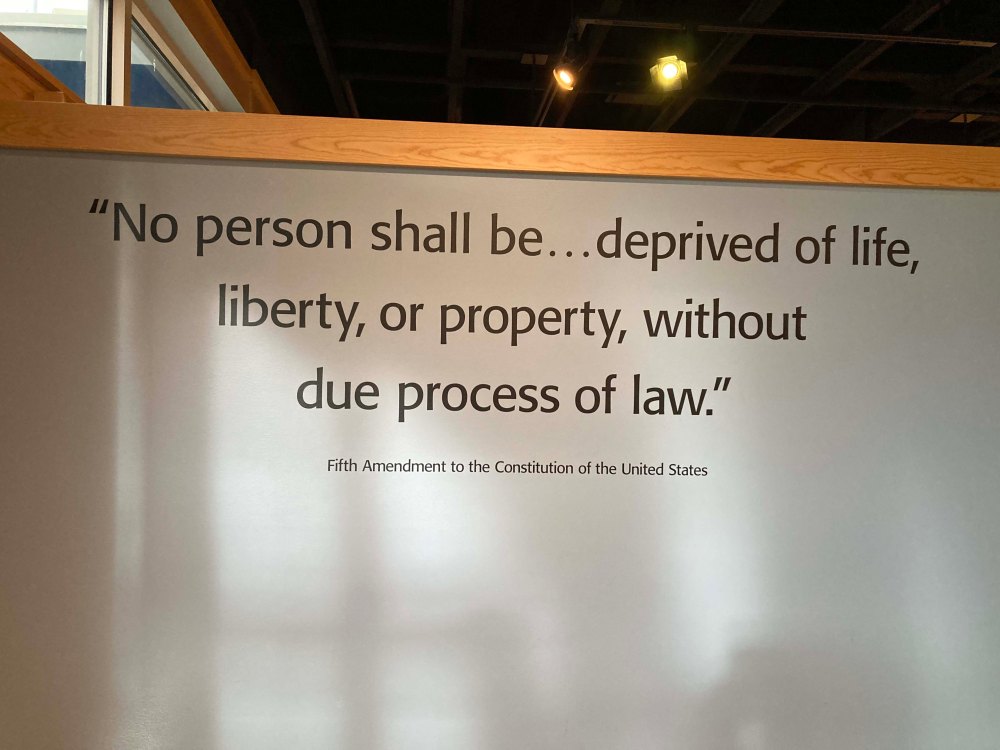
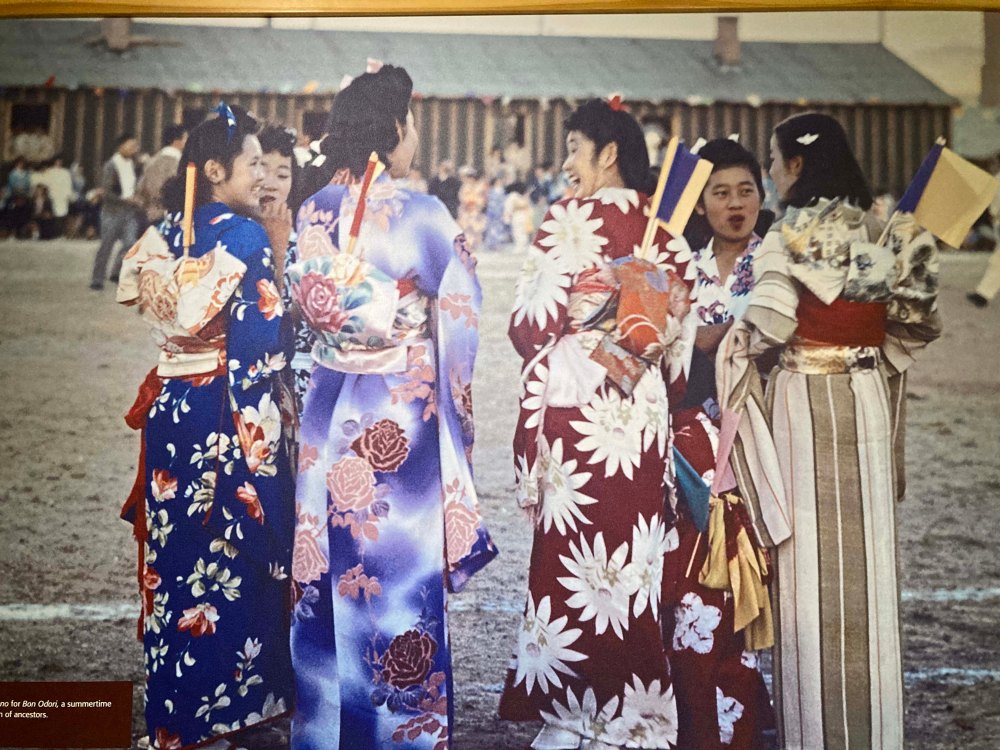
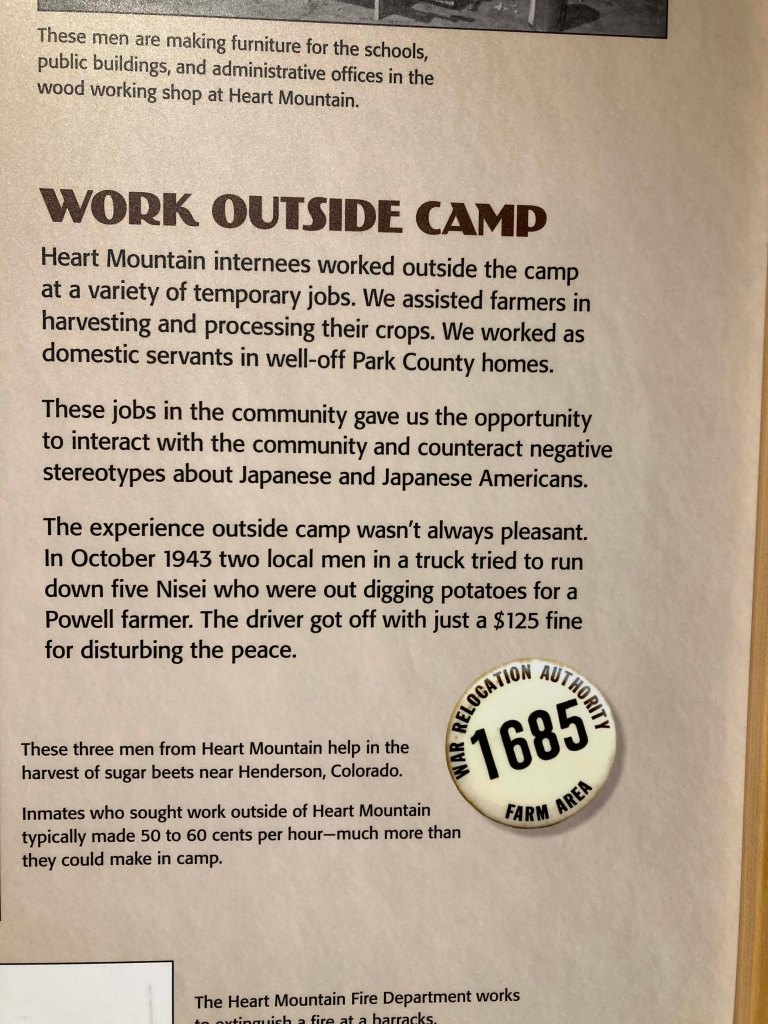
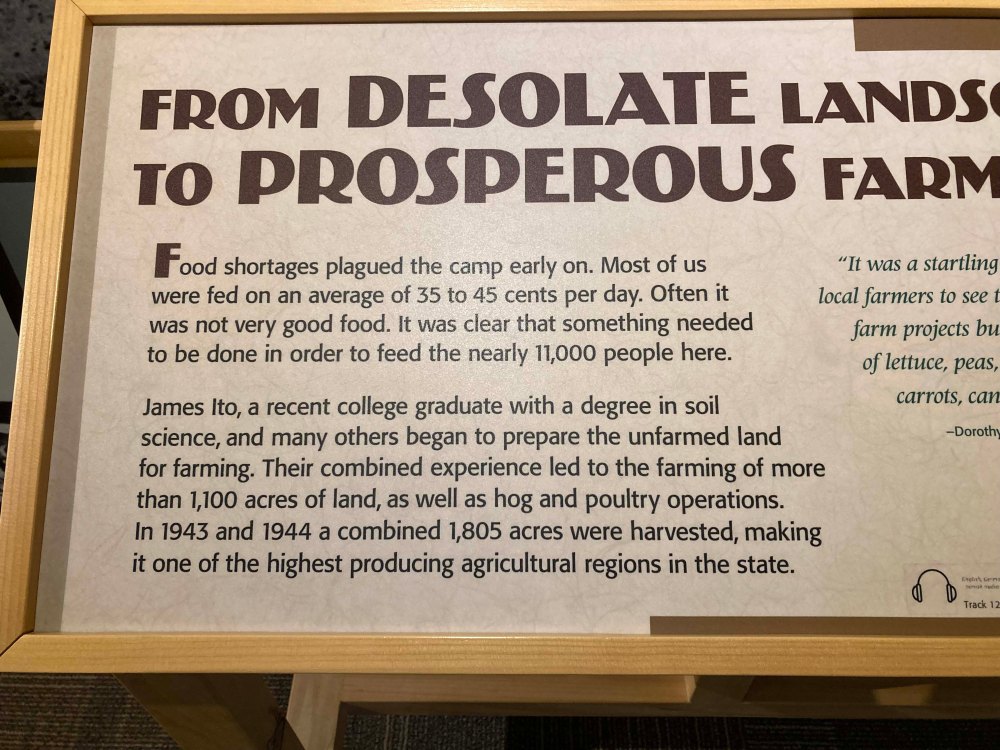
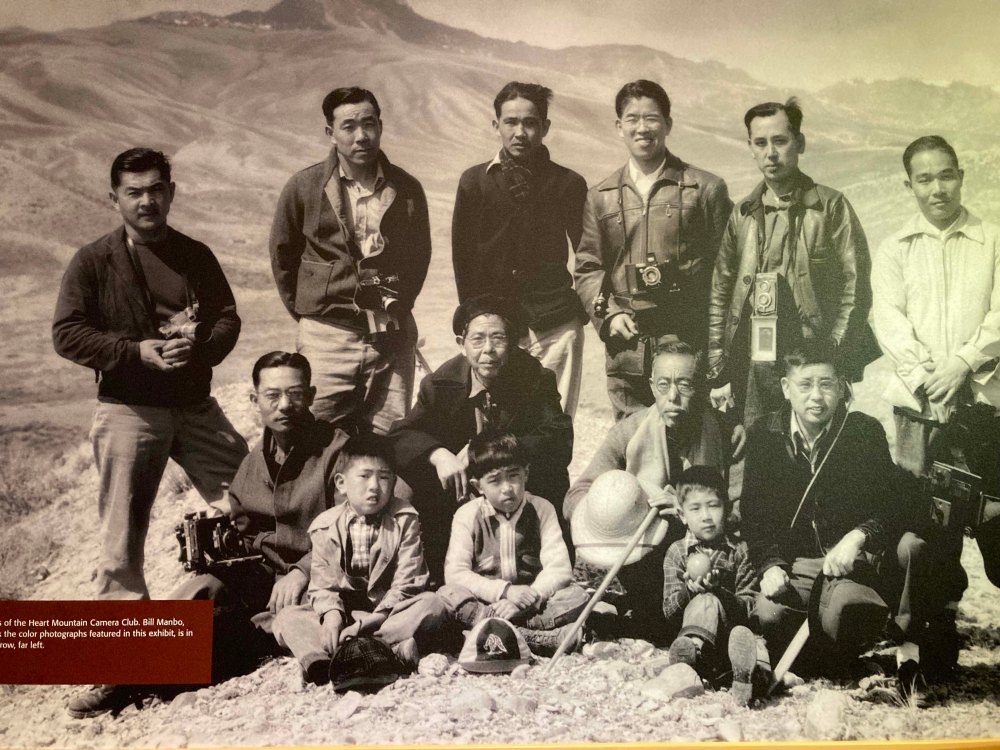
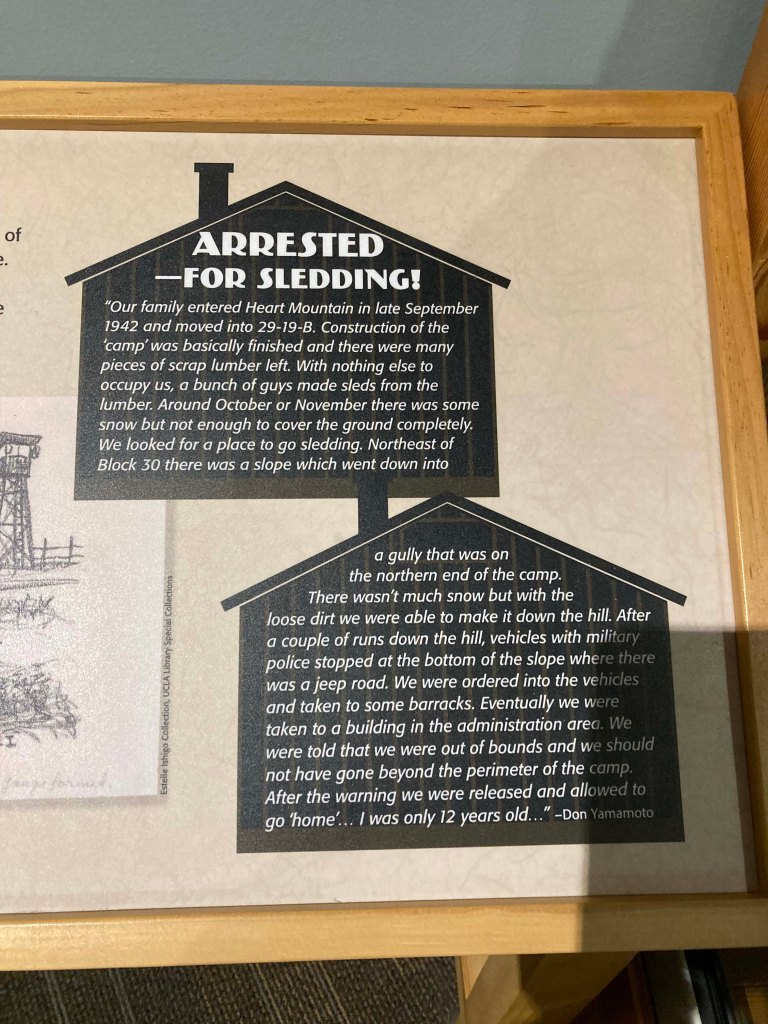
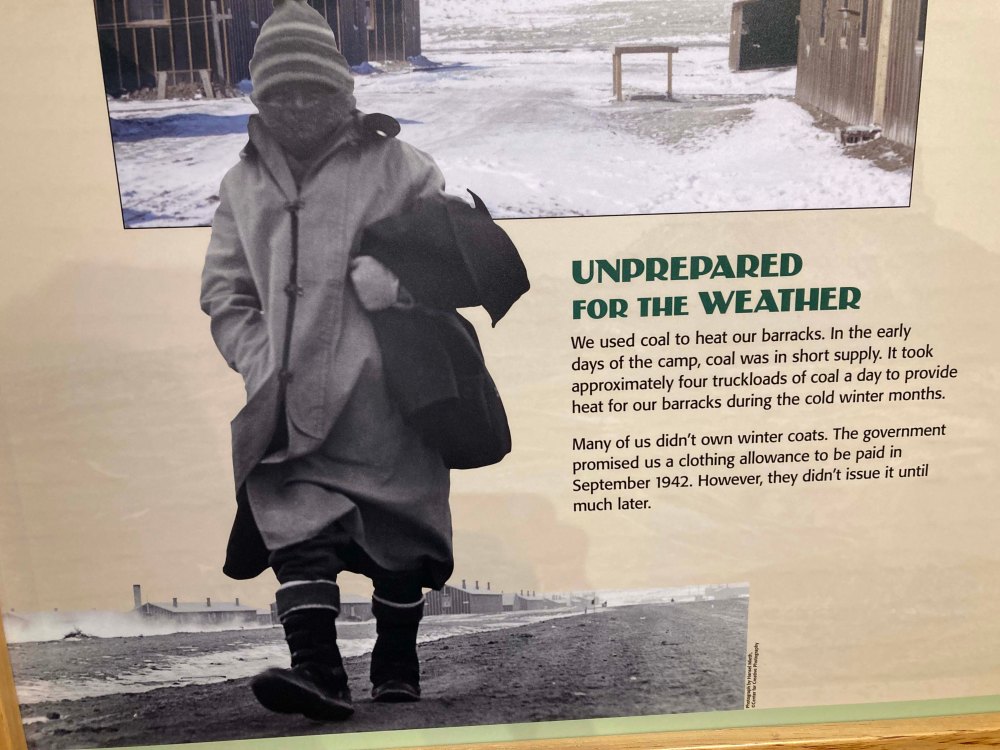
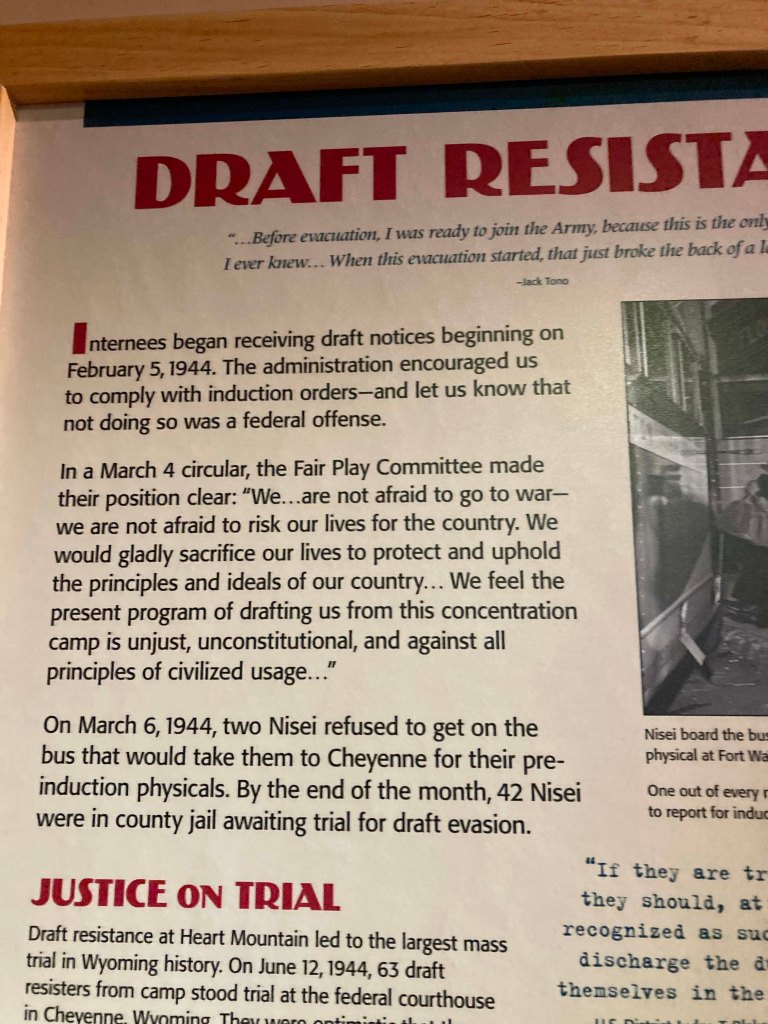
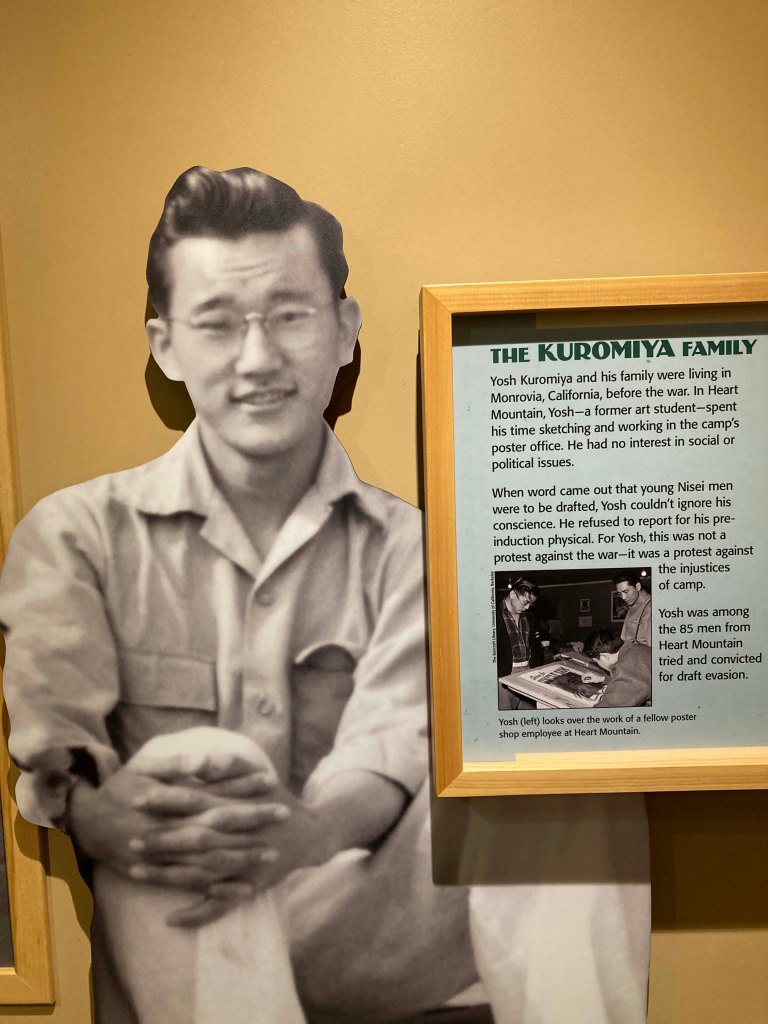
It was an odd mix of rules and restrictions in and around the camp. Some people were allowed to work outside the camp while others were punished for something as simple as sledding on a hill outside the wires. They had their own newspaper and camera club, but they were also ill equipped for the weather and crammed into small spaces with no privacy. Some young men had the opportunity to serve in the war and gain their freedom, but those that refused were prosecuted for draft evasion which is pretty crazy when you think about it. They were being treated as prisoners of war.

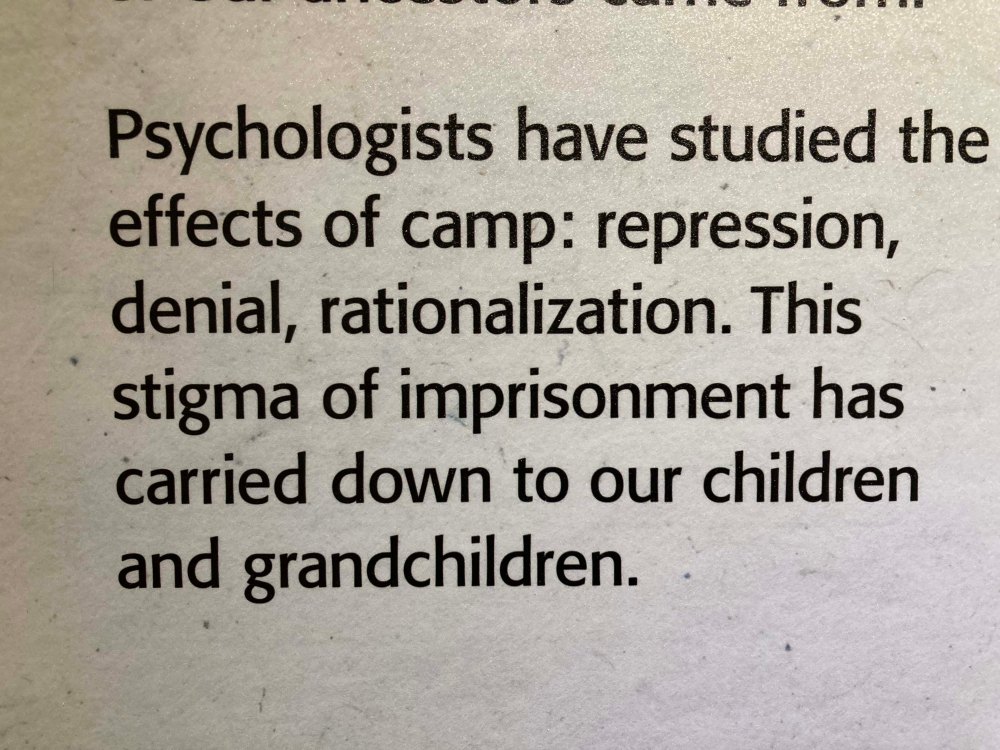
When the camps closed things got really difficult. Most of the detainees had lost their homes and businesses and although some had made wages as laborers they were minimal. Many people literally had no place to go and the state wanted them out as soon as possible. Thankfully the Quakers stepped in and helped relocate many of the families back east. They ended up spread all across the country and their lives were irrevocably changed. The children in particular were left from the scars of that experience although many (like George Takei from Star Trek) went on to have successful careers.

I am really glad we stopped but after seeing the Plains Indian Museum and then this I wasn’t feeling really great about our country to be honest. Still not all history is good history and Lee and I both think it is important to not focus on the sanitized version of our history.

We went and picked up Jack and then had a looong three hour drive back. It was an extremely long and jam packed day but I am really glad we got to experience it. Many people spend the night when they visit Cody which might be a better way to go but we made it work for us.

We very much appreciate your support of our blog
  • You can purchase the ebook telling the story of how we became full-time RVers.
  • You can purchase our recipe book filled with 80 recipes we have cooked in our RV and taste tested by Lee himself. You can purchase the kindle or paperback version on Amazon or buy the Apple version on Itunes

Plains Indian Museum and Buffalo Bill Dam

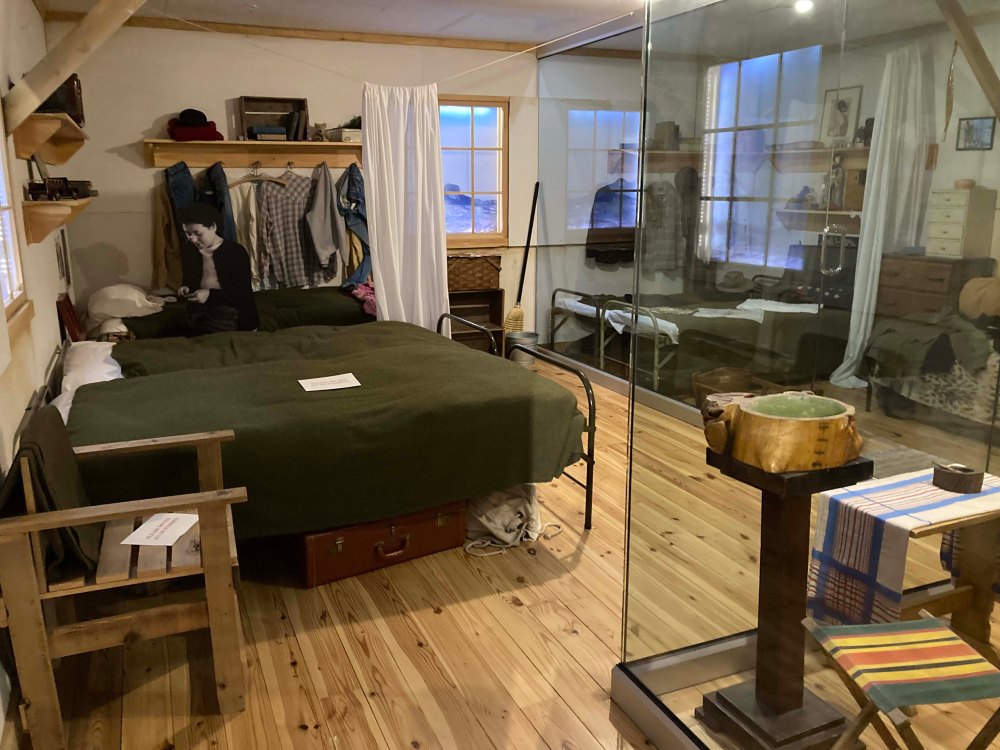
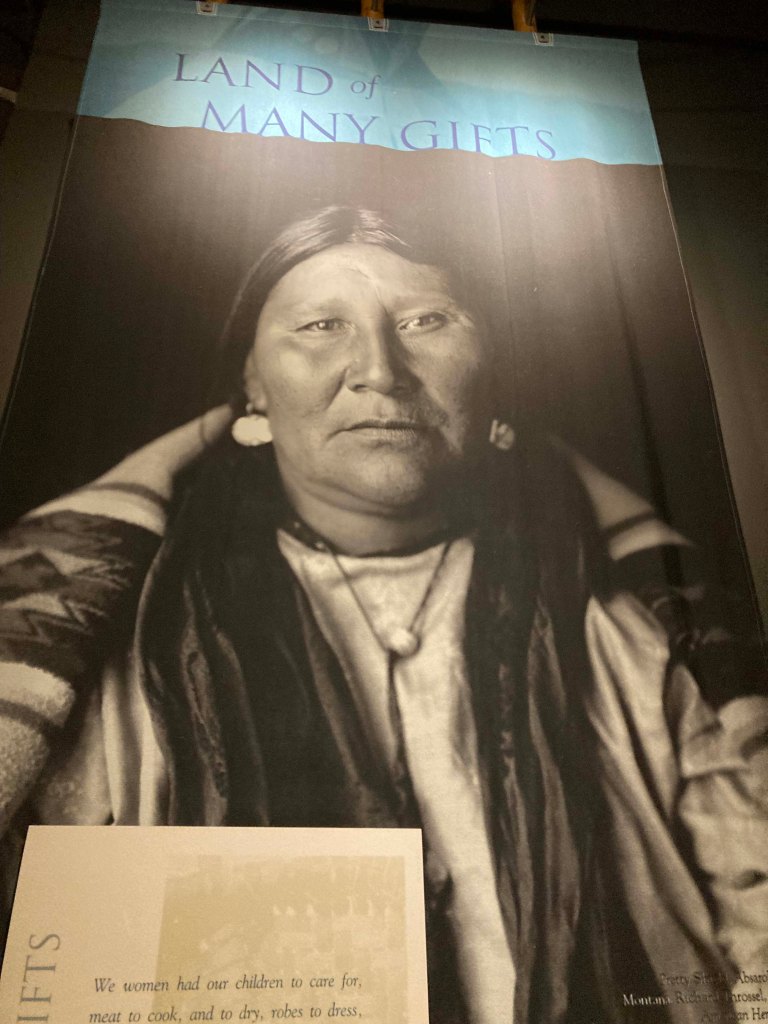
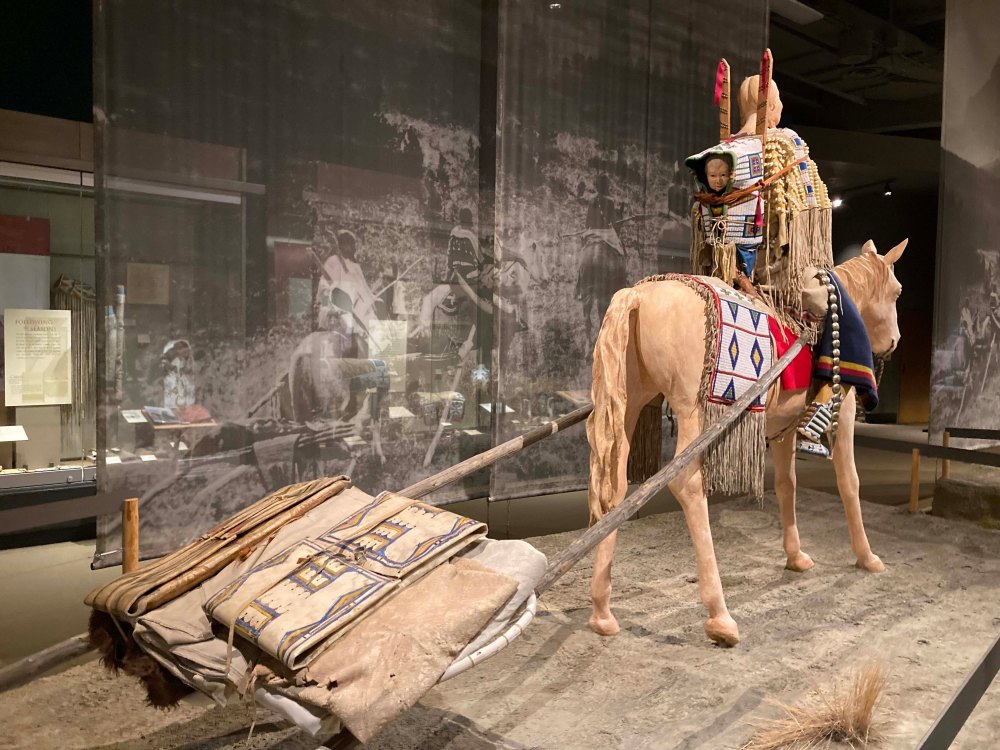
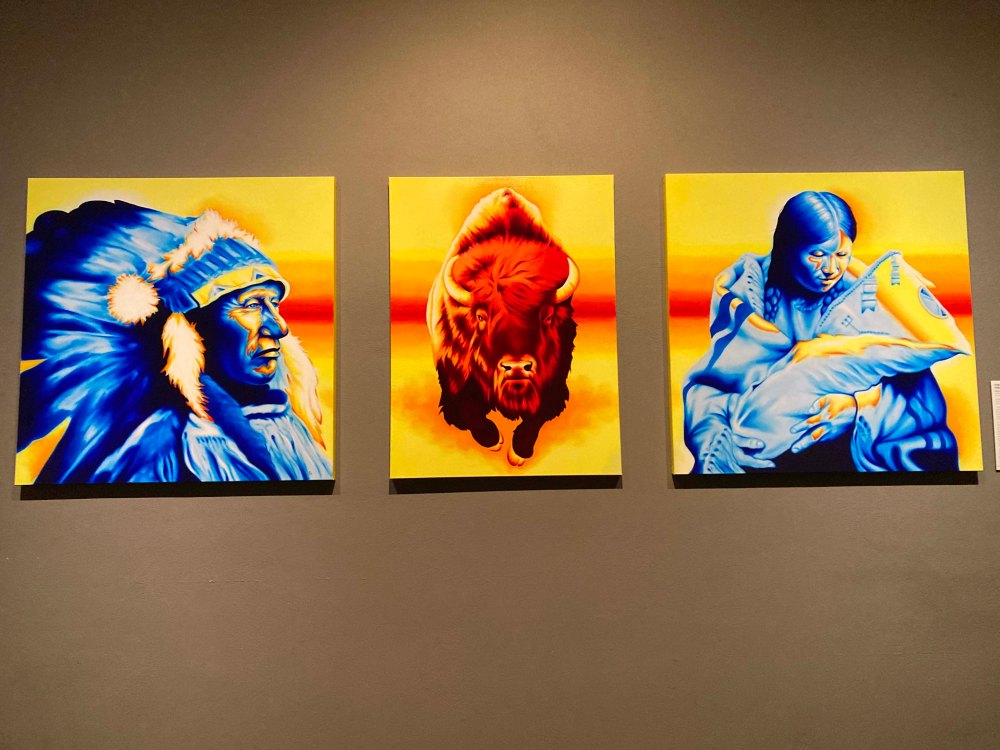
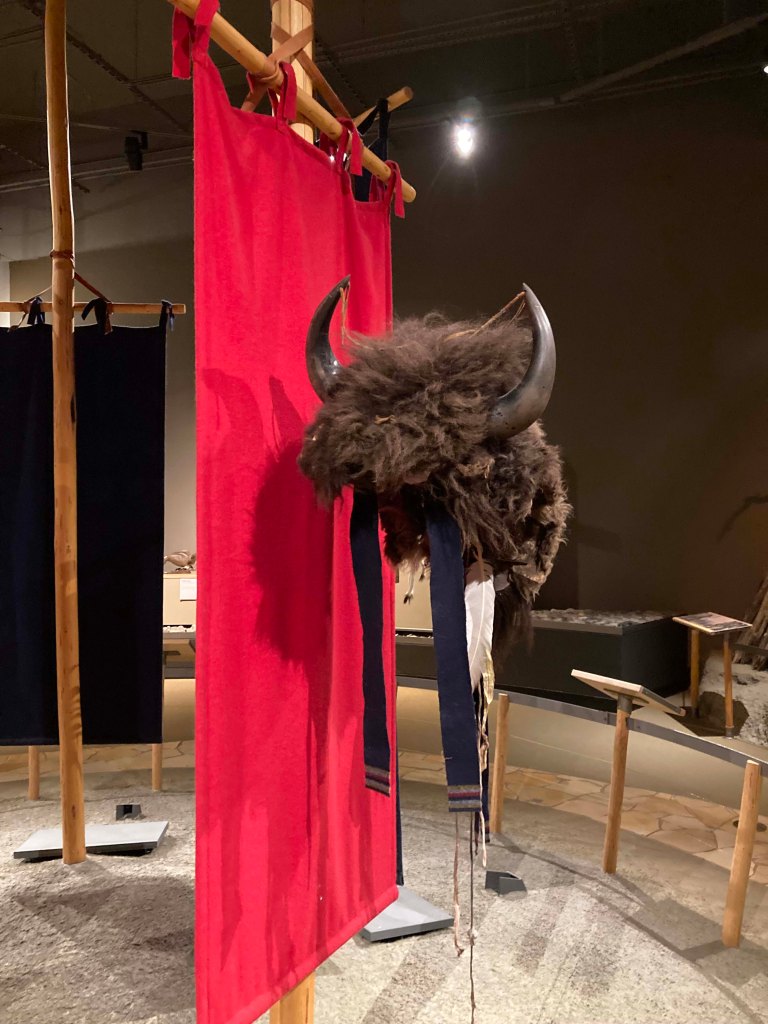
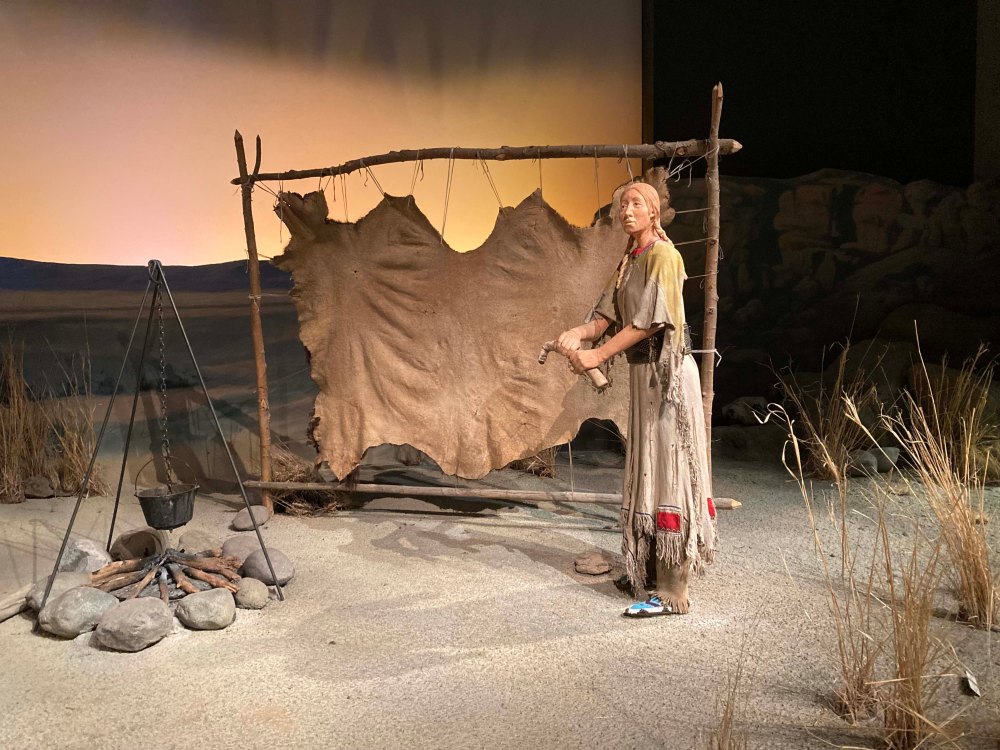
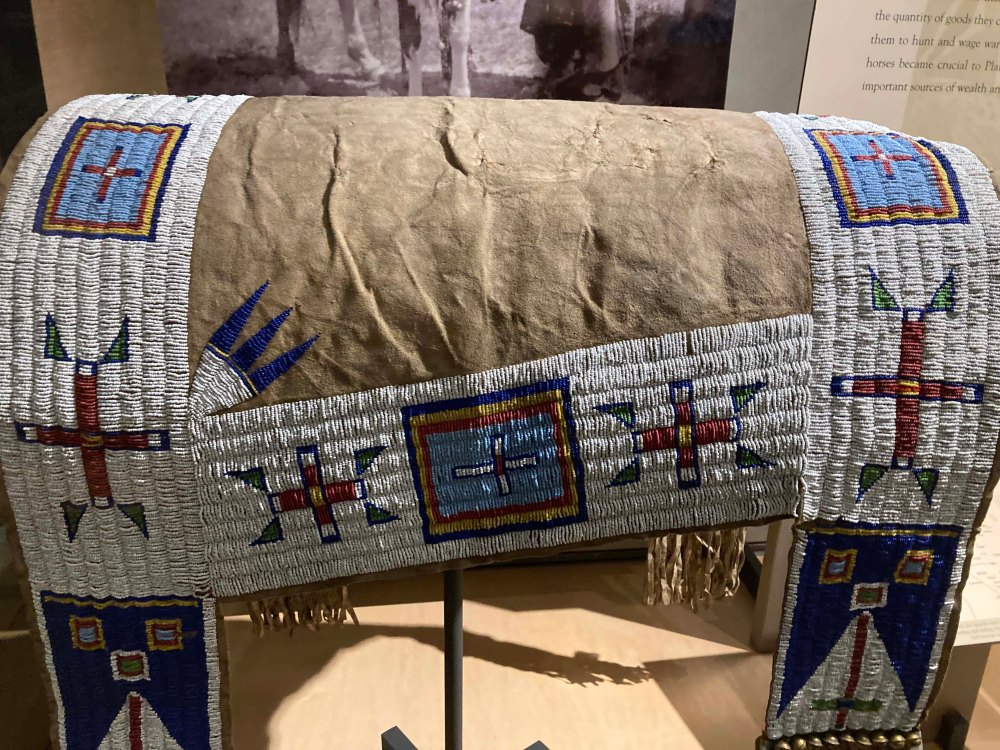
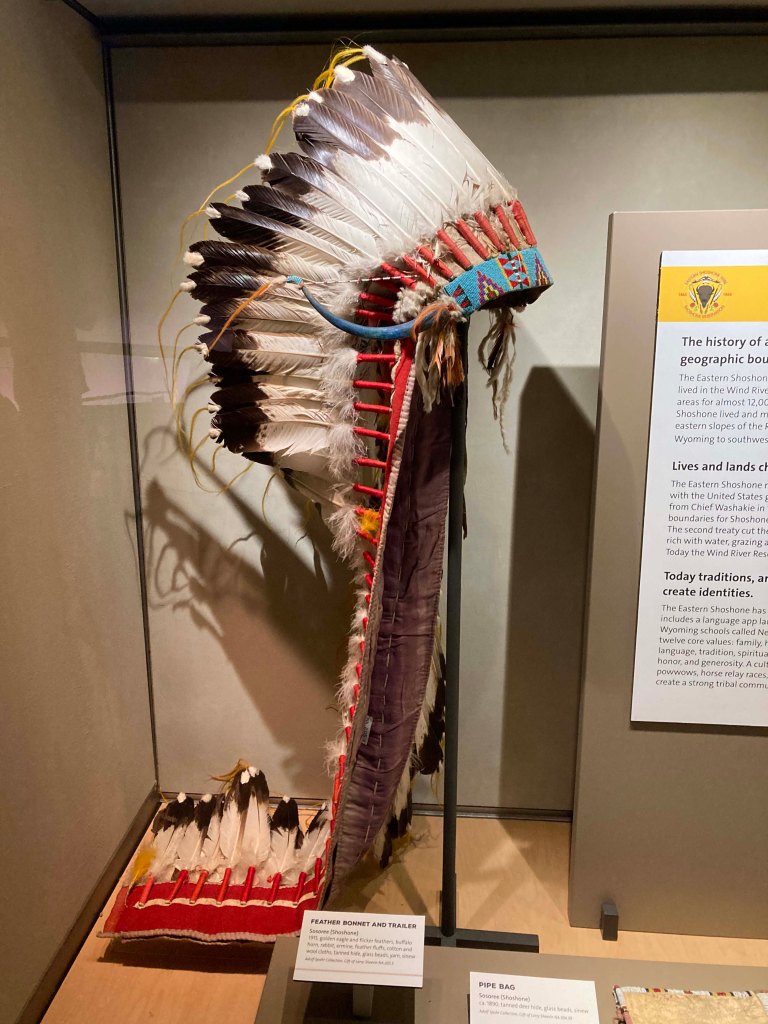
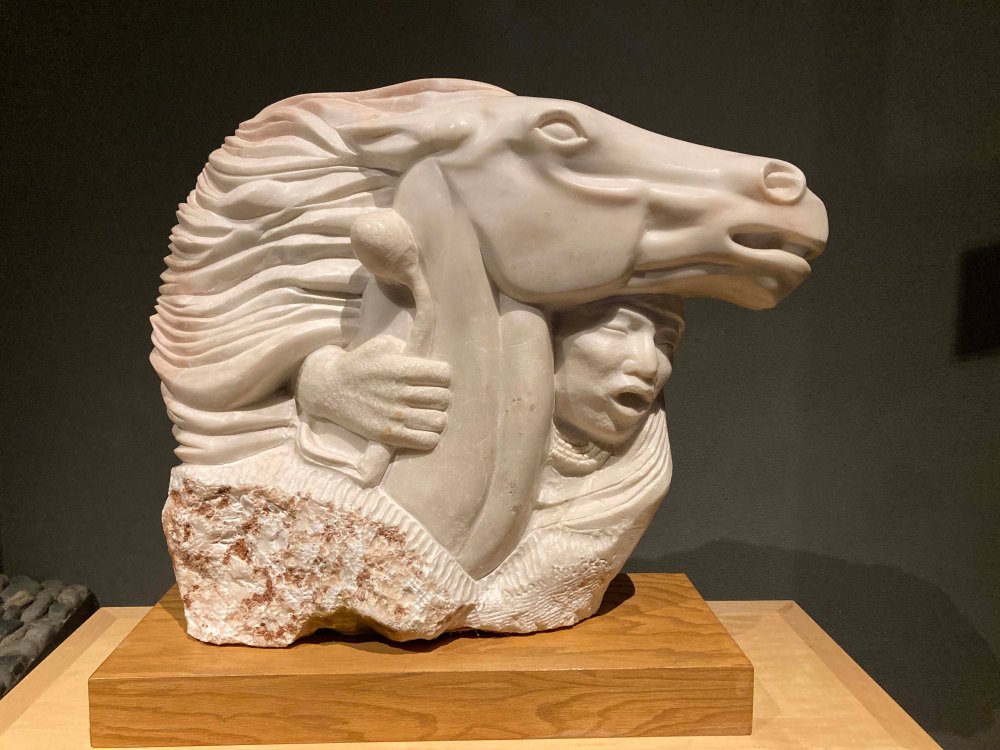
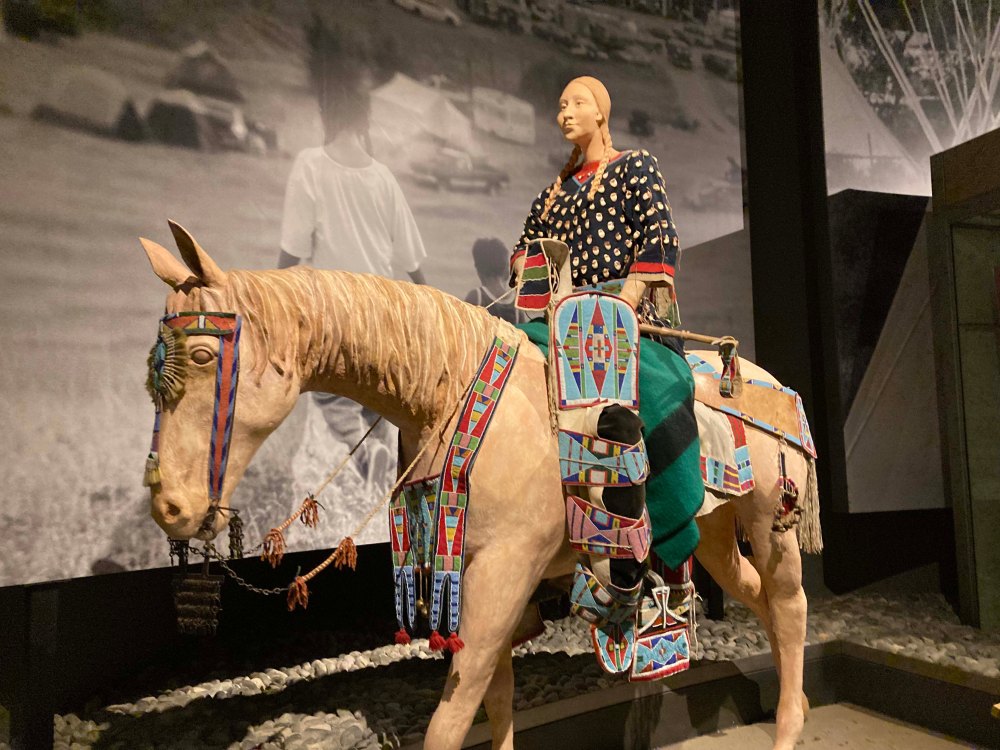
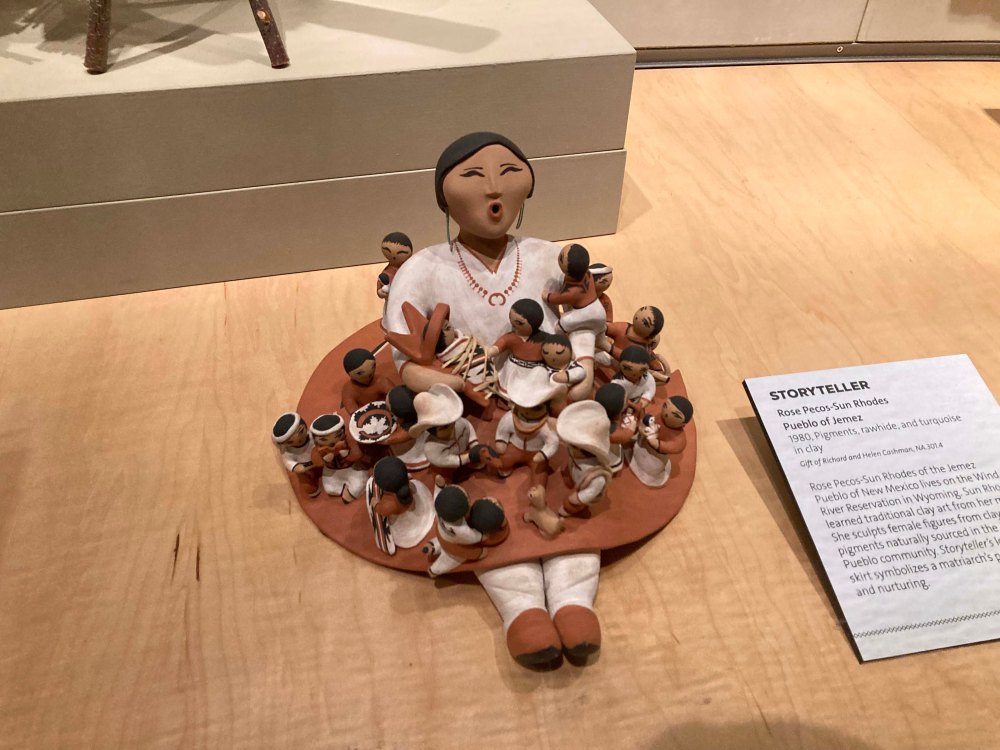
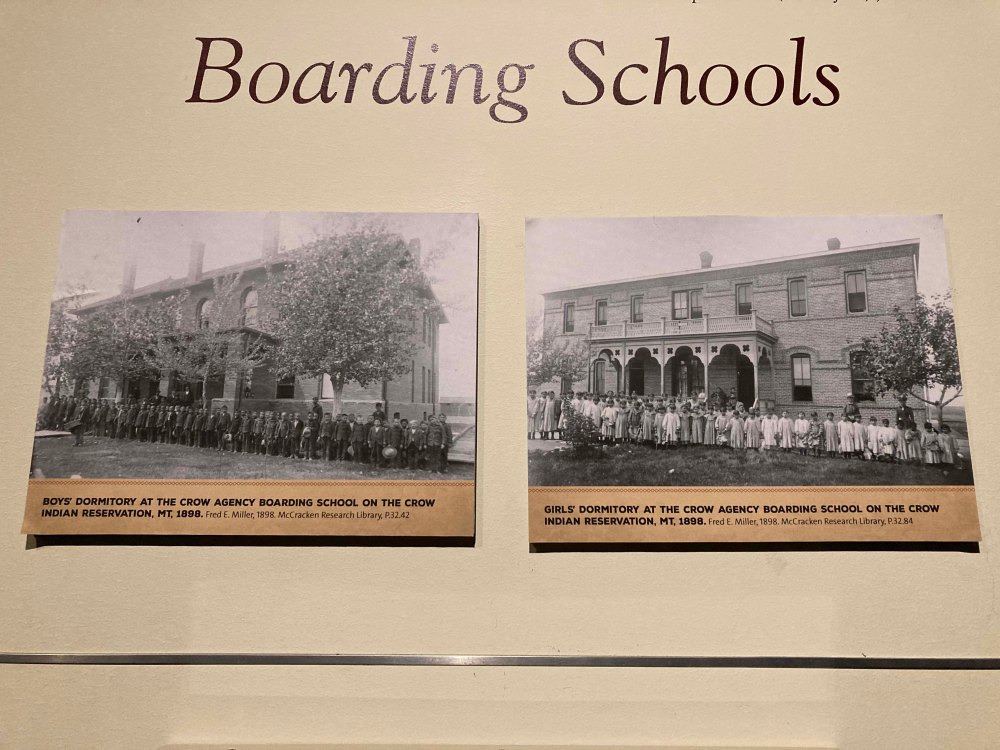
The final museum we saw in the Buffalo Bill Wild West Center was the Plains Indian Museum. According to the literature, the board for this museum included two Native Americans and their input impacted the exhibits. One interesting thing in particular is all the models of people are done in a natural clay color. This was intentional because the different tribes have very different coloring and the clay colors were thought to be neutral and represent all peoples.

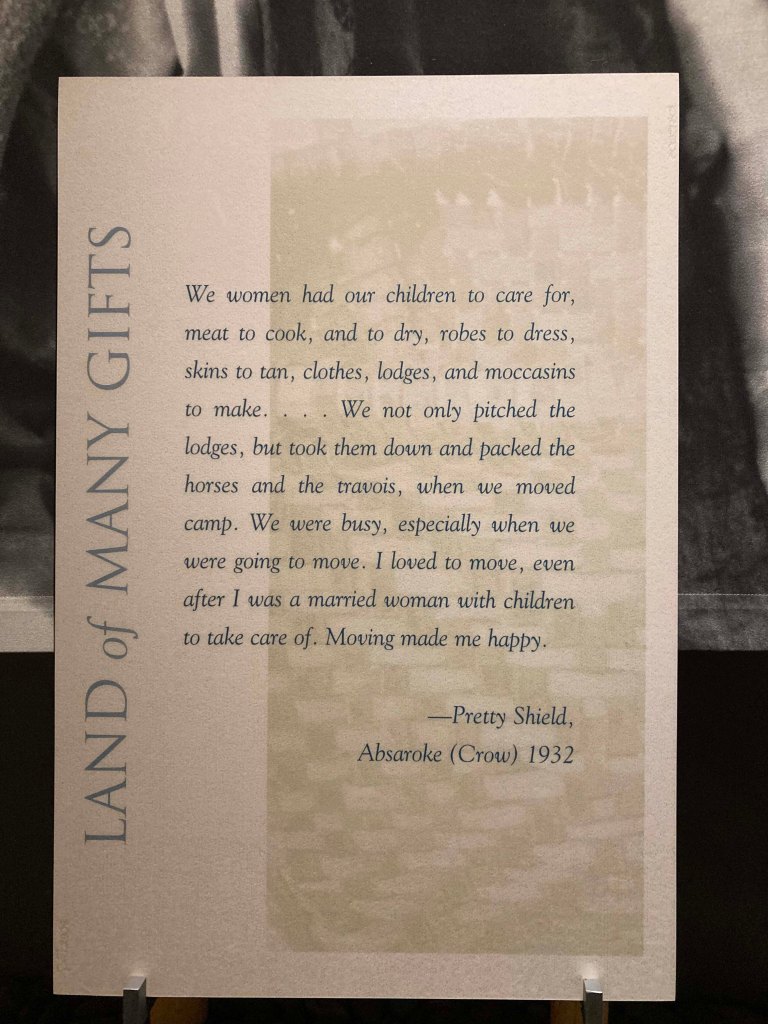
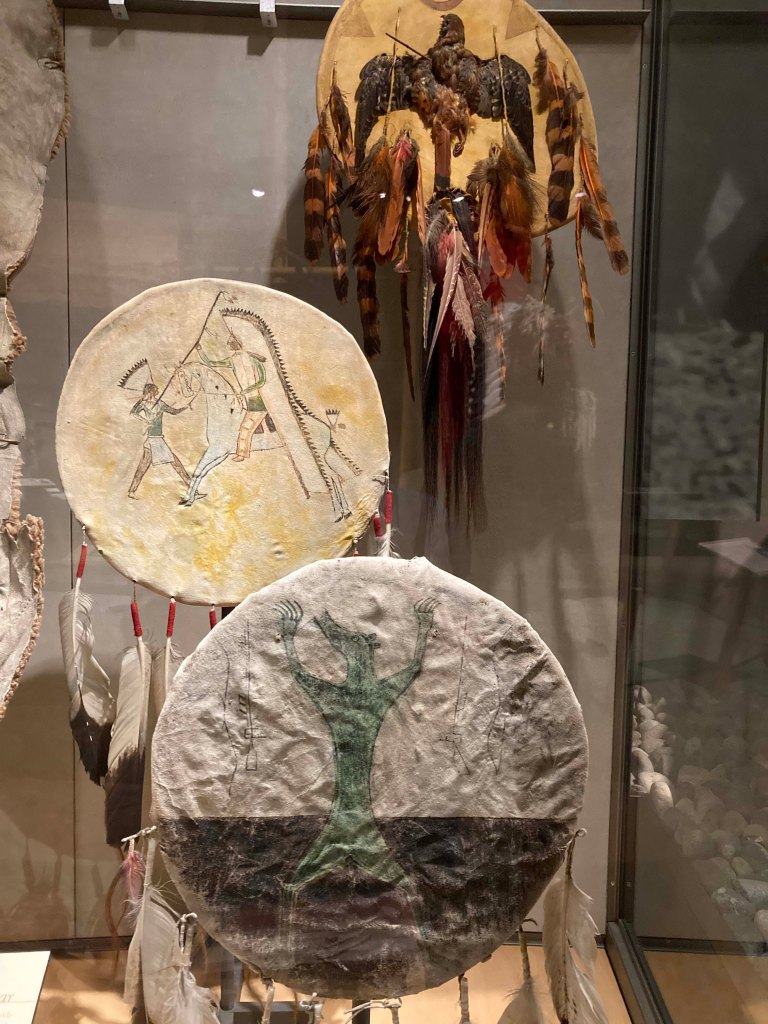
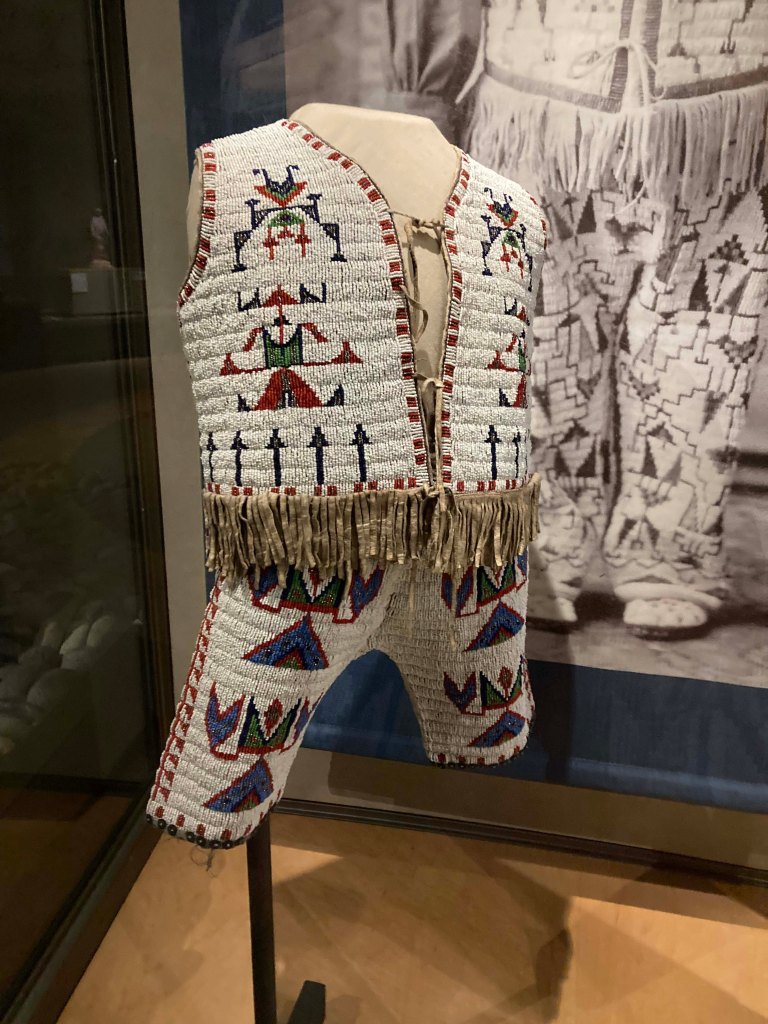
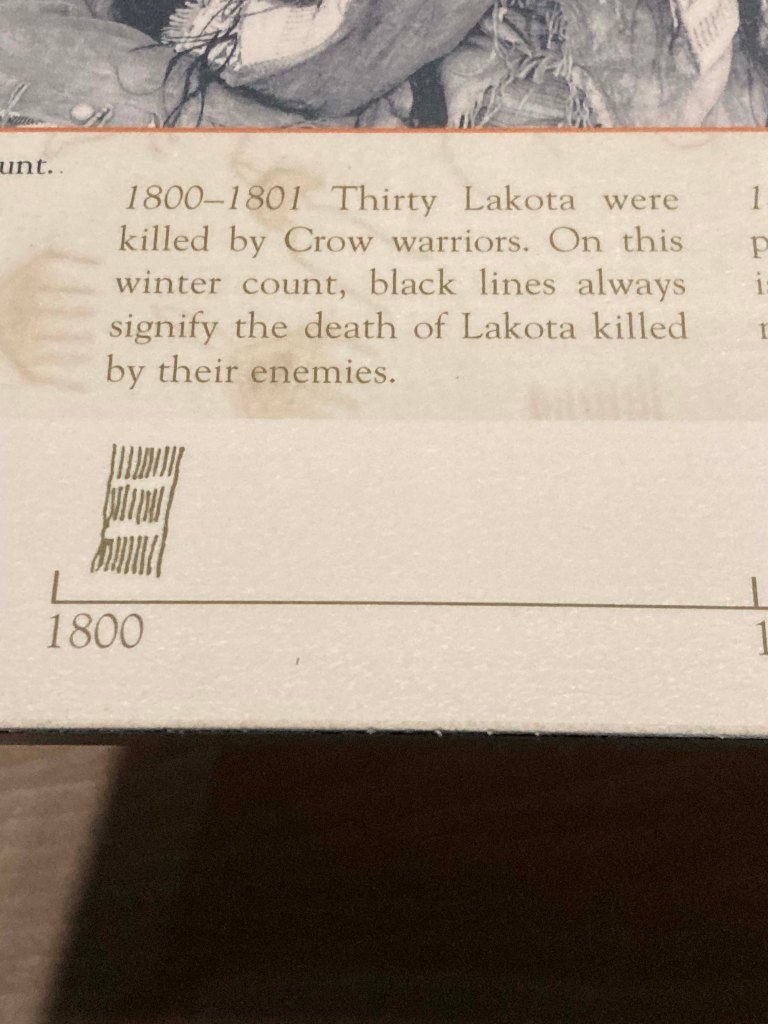
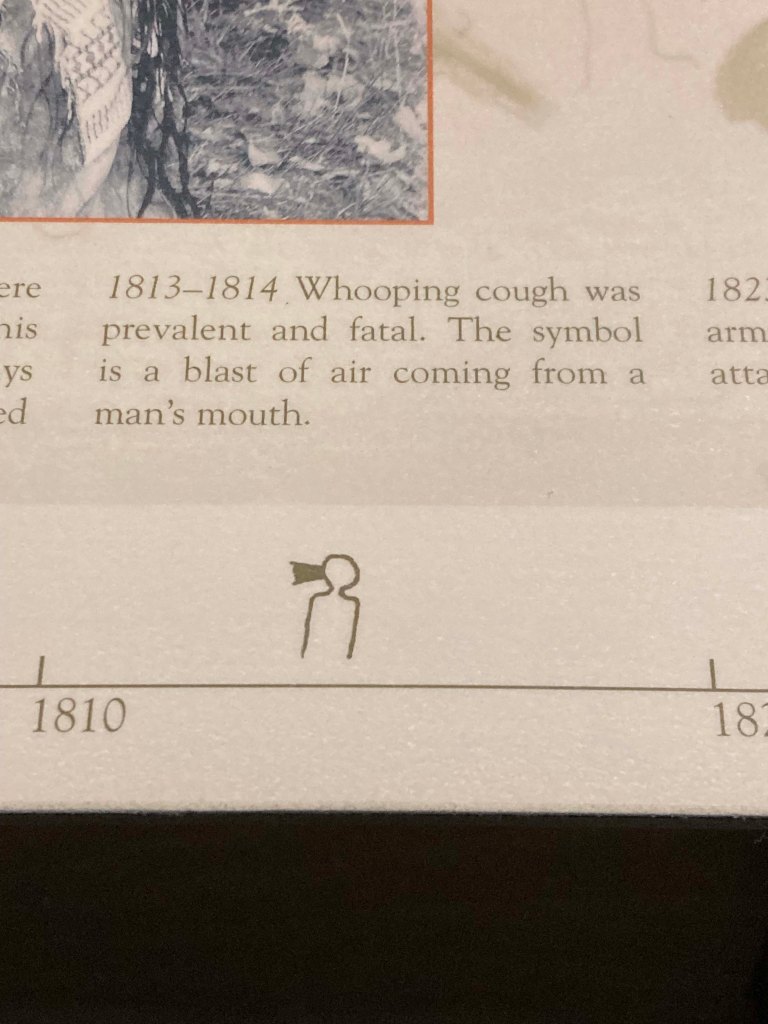
Because these were largely nomadic people their art was portable as well. The needlework is incredible and there were societies of women who were the best artists. The pictorial language was also very interesting to keep records for the moving tribes and they had a great exhibit with one of these portable records.

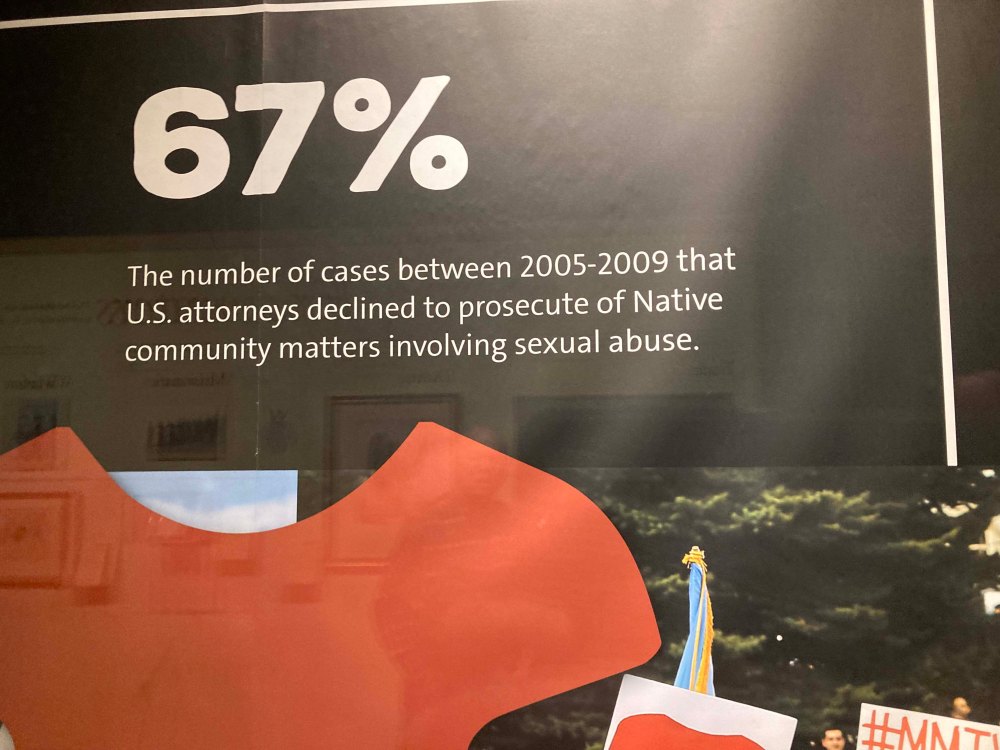
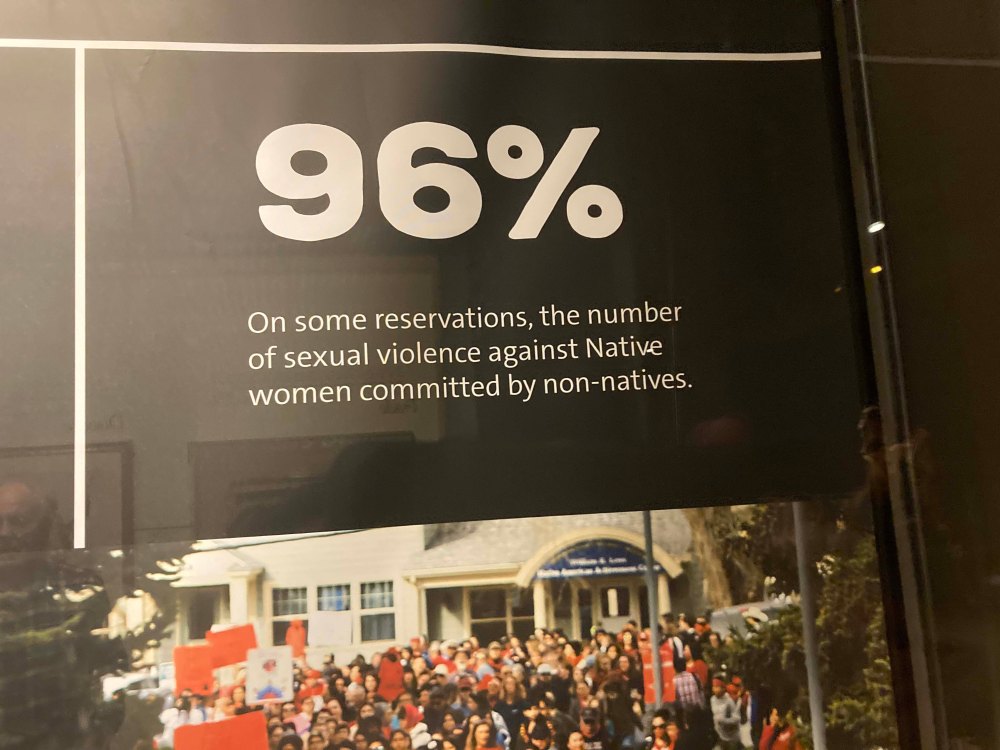
As interesting as the art was, the history was pretty depressing. They didn’t pull many punches on talking about how much white people took from them (Lee felt they didn’t go nearly far enough on this topic) and I left feeling pretty depressed and heavy hearted.

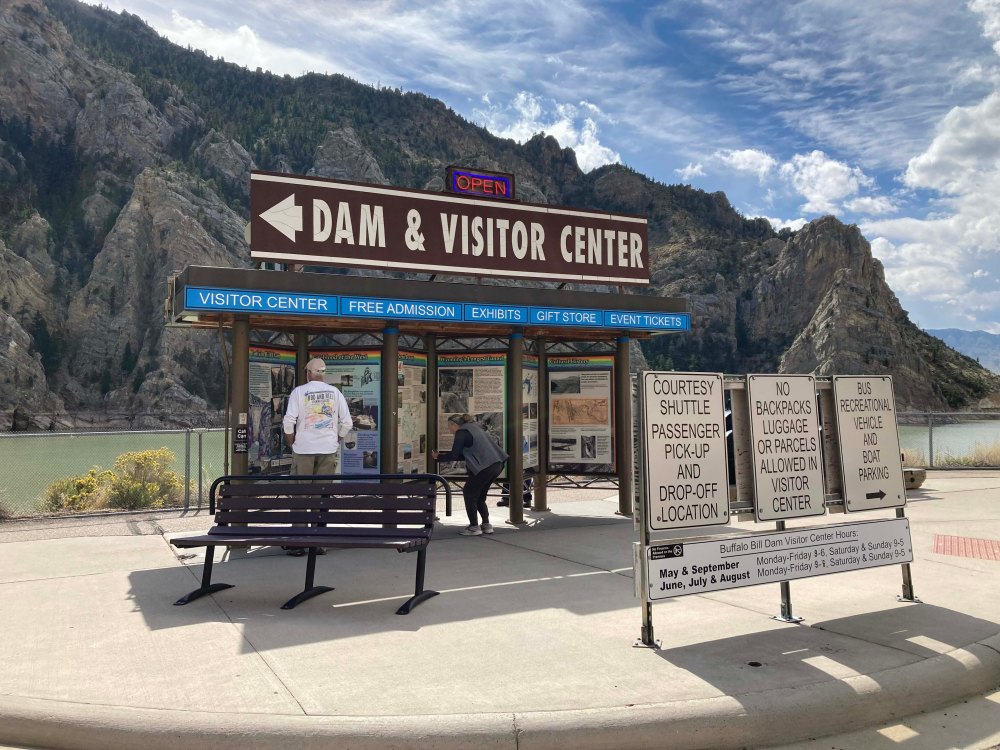
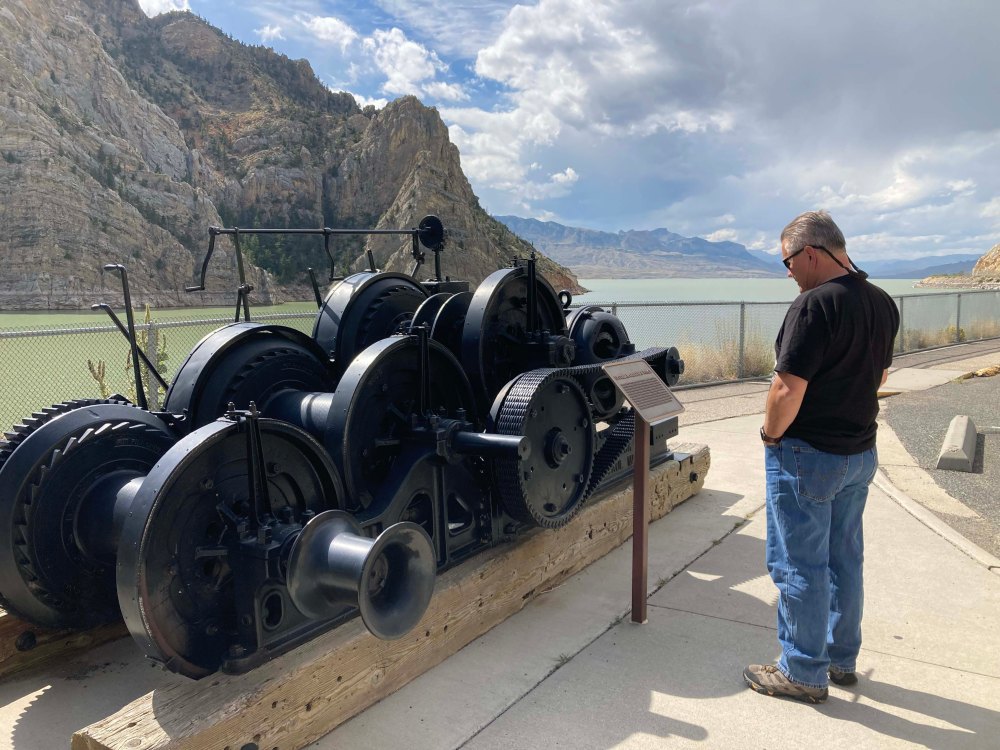
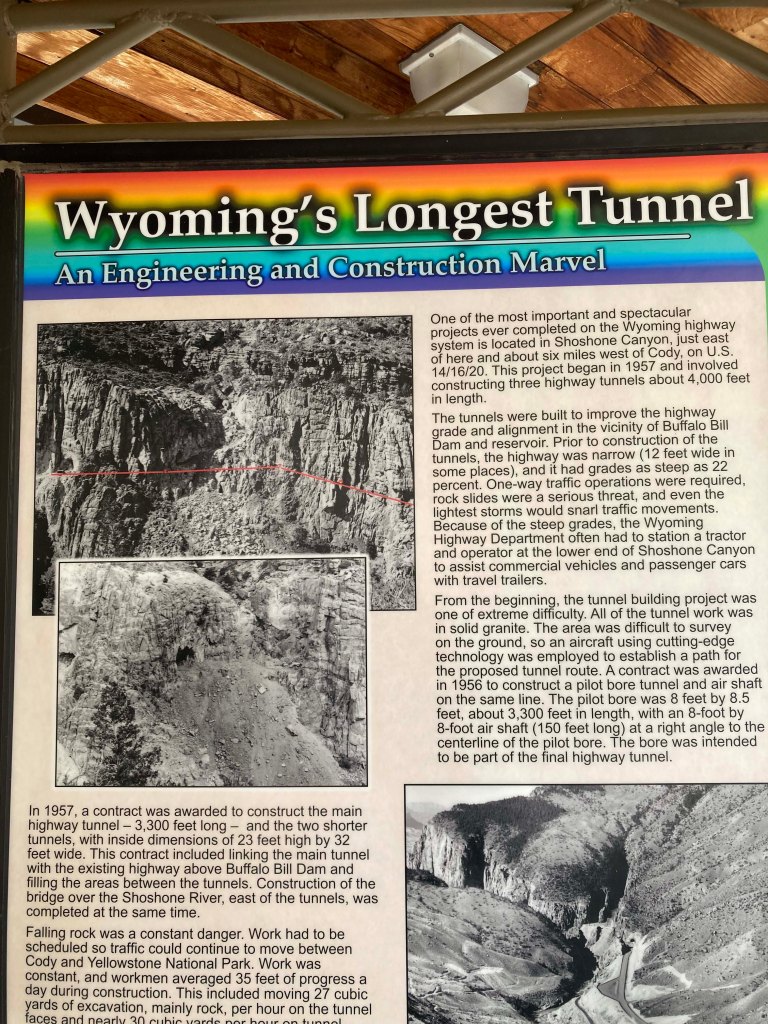
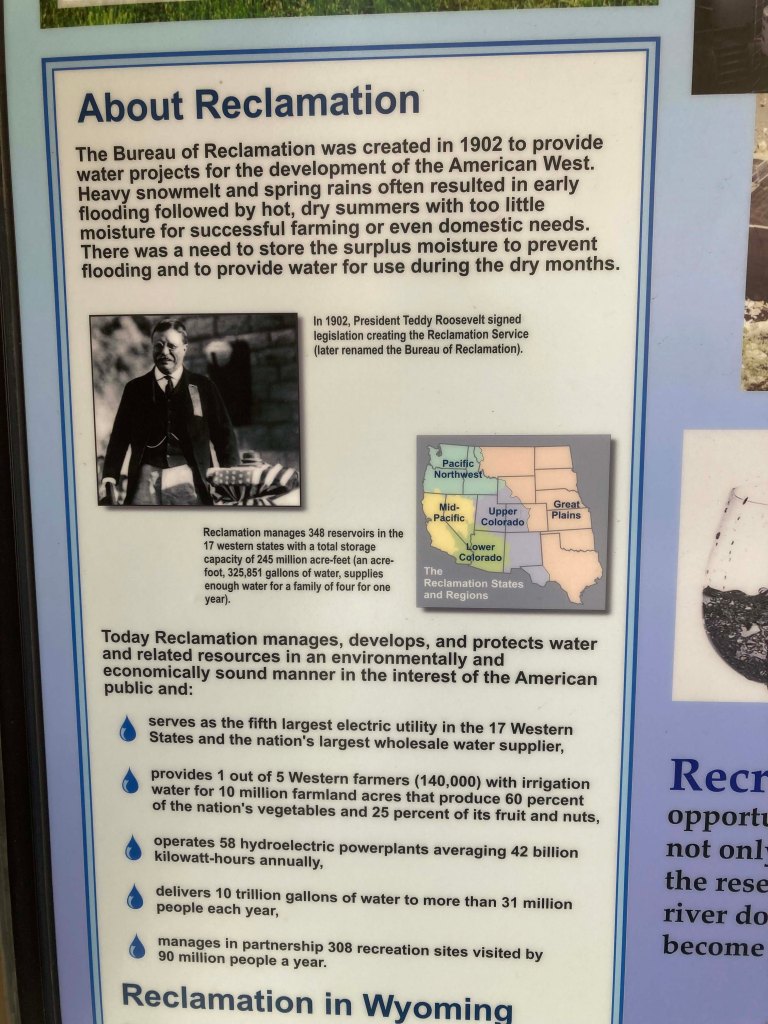
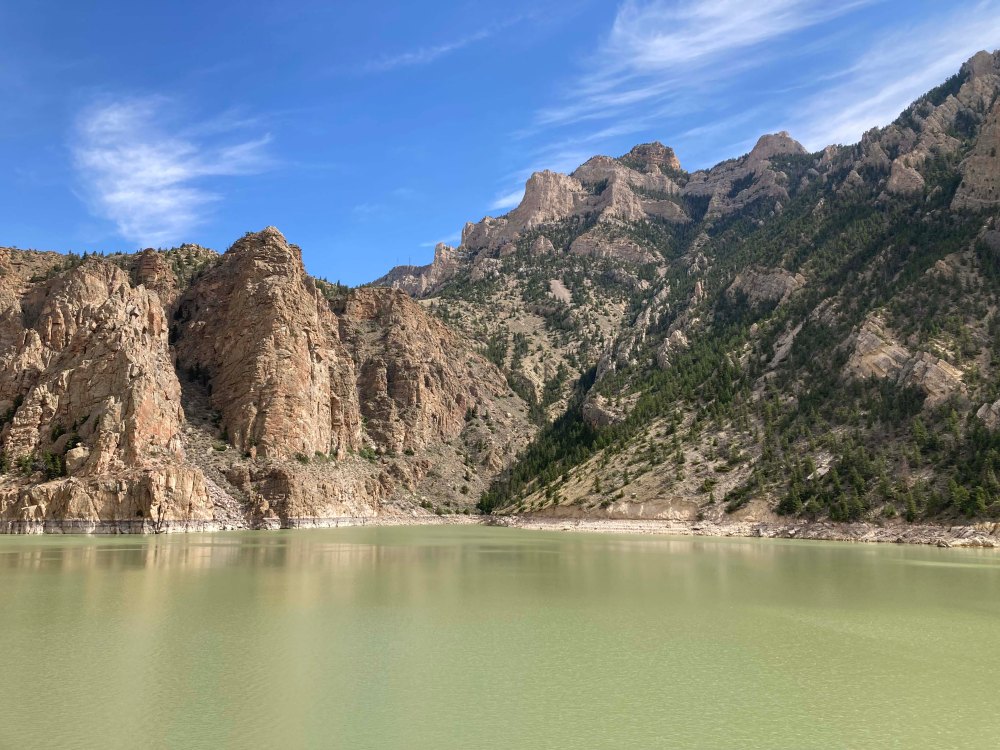
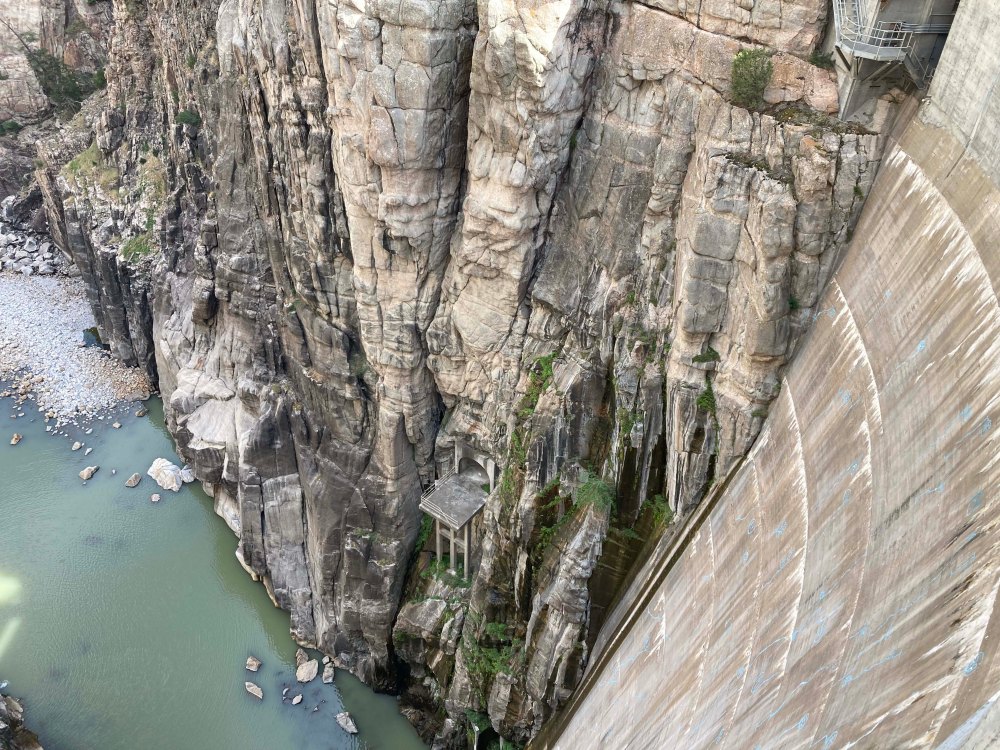
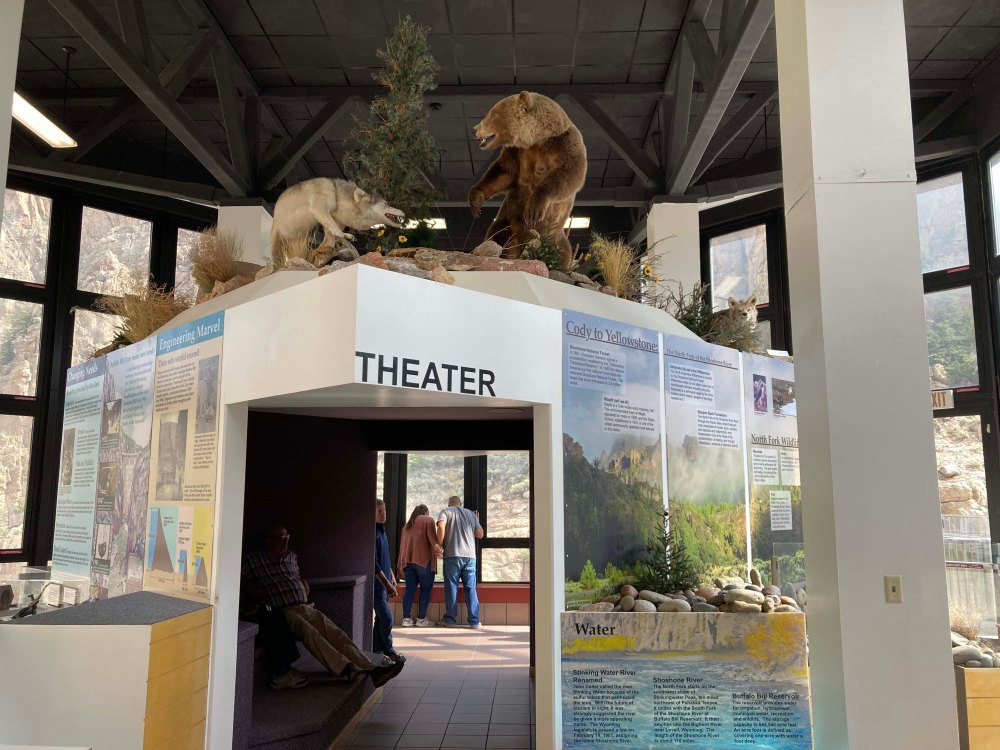
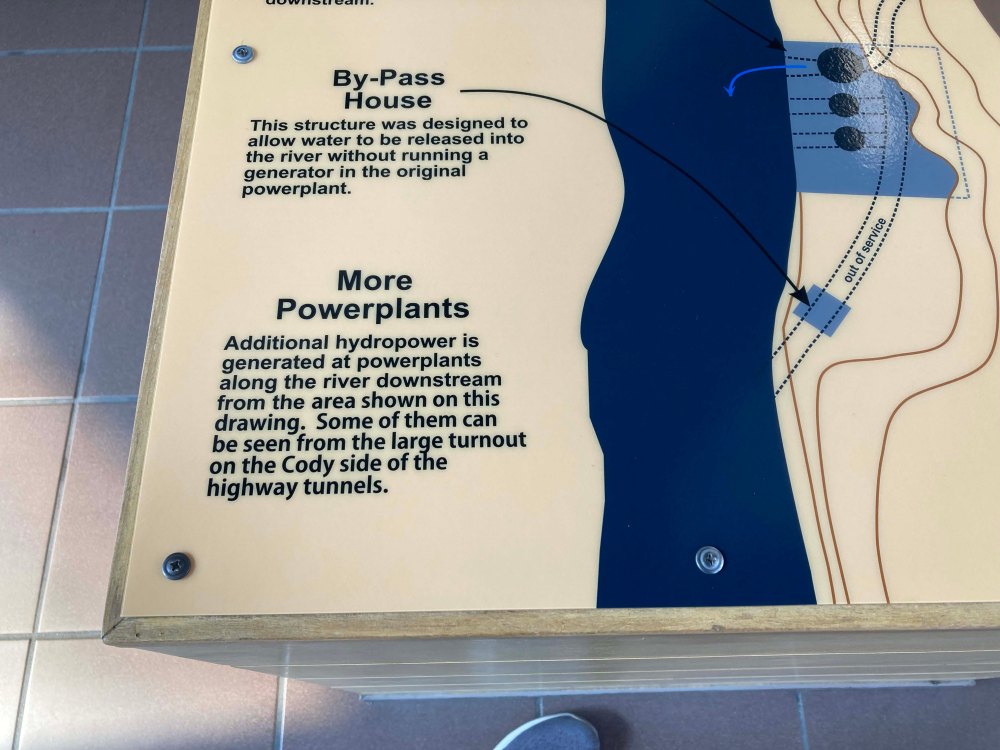
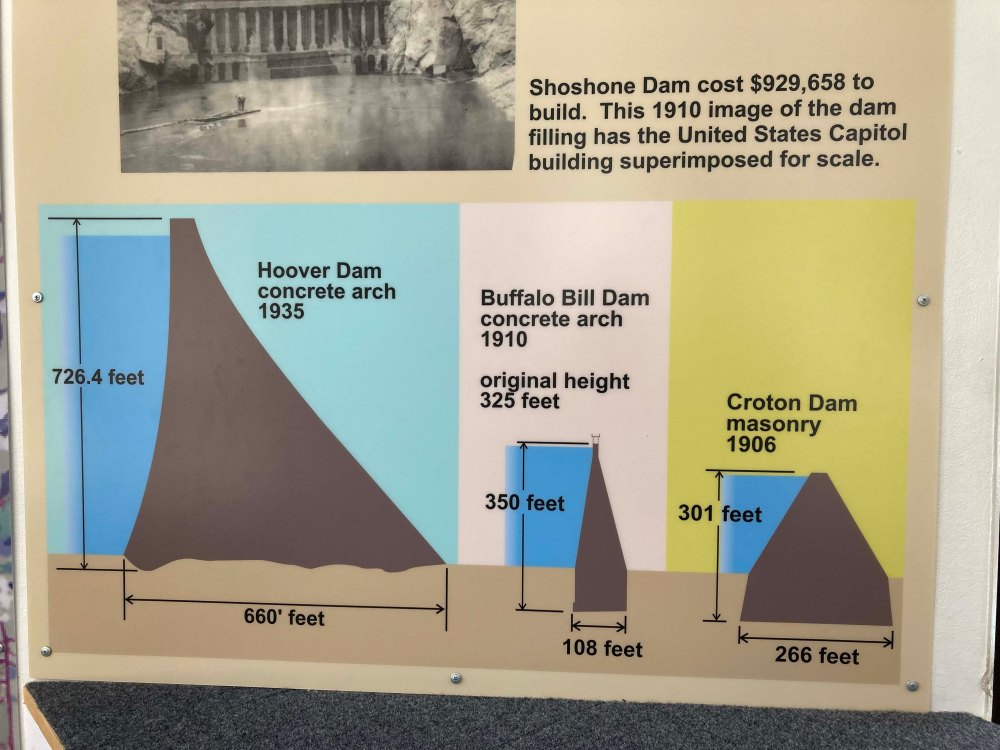
After we finished the last of the museum we still had several hours (couldn’t pick Jack up until 4pm) so we made a quick trip down to the Buffalo Bill Dam. In 1910 when it was built it was the highest dam in the world and for its time an engineering marvel. It’s also a very pretty site and the small visitor center is free so definitely worth a stop. Buffalo Bill pushed for the dam for additional irrigation for this portion of the west and President Teddy Roosevelt started the ball rolling with the Reclamation Act in 1902.

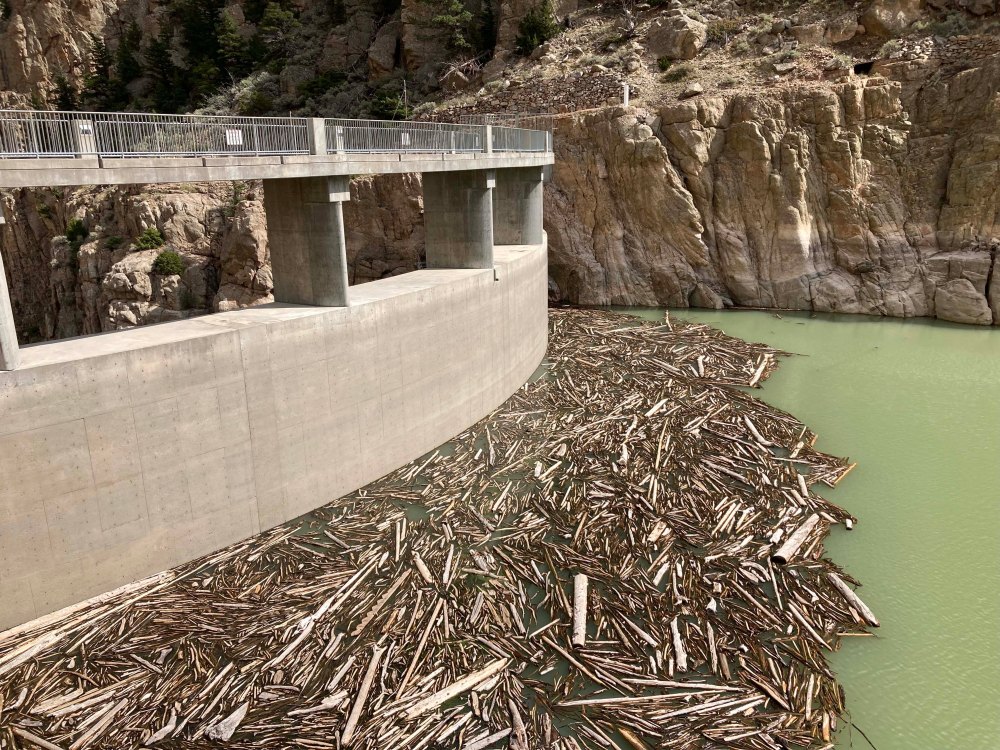
I got some serious vertigo looking down (I wasn’t the only one) and went inside to see how the dam was made. It had a very small exhibit with a decent gift shop but really its all about the views outside. We were curious when we saw all the logs that were up against the dam and were pleased to learn they use a crane to lift the logs out in off season.

The Reclamation Act required that water users repay construction costs from which they received benefits and encouraged settlement of the west. Access to irrigation was critical for farmers and it was estimated that 35 million additional acres could be reclaimed. To be honest since we had just come from the Plains Indian Museum I kept thinking about what impact there was on the local Native American population but I didn’t see anything in the Dam museum about it.

Later when I got home I did some research and according to the National Council for History Education I learned “Though Native Americans have an implied right to certain waters associated with Indian reservations, the uncertainty surrounding these rights has created problems for Native Americans and non-Native Americans in the century since the initial court case in 1908. The Supreme Court’s 1908 decision in Winters v. United States establishes that Native Americans have the right to draw enough water to enable their own self-sufficiency from the rivers that pass through their reservations. On the surface, this decision appears to protect Native people from incursions on their water rights by both white settlers and the federal government. In practice, however, Native Americans received only their paper rights, not actual “wet” rights. Various agencies in the executive branch, such as the Department of Interior and the Reclamation Service, were able to interpret the Winters decision in such a way as to ensure the prioritization of white American water rights and the federal government’s control of waterways.”

Not surprising really that the dams allowed for white settlers to claim the land and the impact on Native Americans was at best an after thought. At this point I was pretty bummed about about everything but then we saw some information about wild horses in the area and decided to take a drive and see if we could find some. I’ll cover that more in my next post.

We very much appreciate your support of our blog
  • You can purchase the ebook telling the story of how we became full-time RVers.
  • You can purchase our recipe book filled with 80 recipes we have cooked in our RV and taste tested by Lee himself. You can purchase the kindle or paperback version on Amazon or buy the Apple version on Itunes

Buffalo Bill Center of the West – Part II

Our third pick for museums was the Whitney Western Art Museum and I would say that of all of the five museums in the center this was the least interesting to us. We have had the privilege of visiting some pretty spectacular art museums in our travels and this just didn’t compare. Still it was worth a walk through if pressed for time I wouldn’t put it at the top of the list.

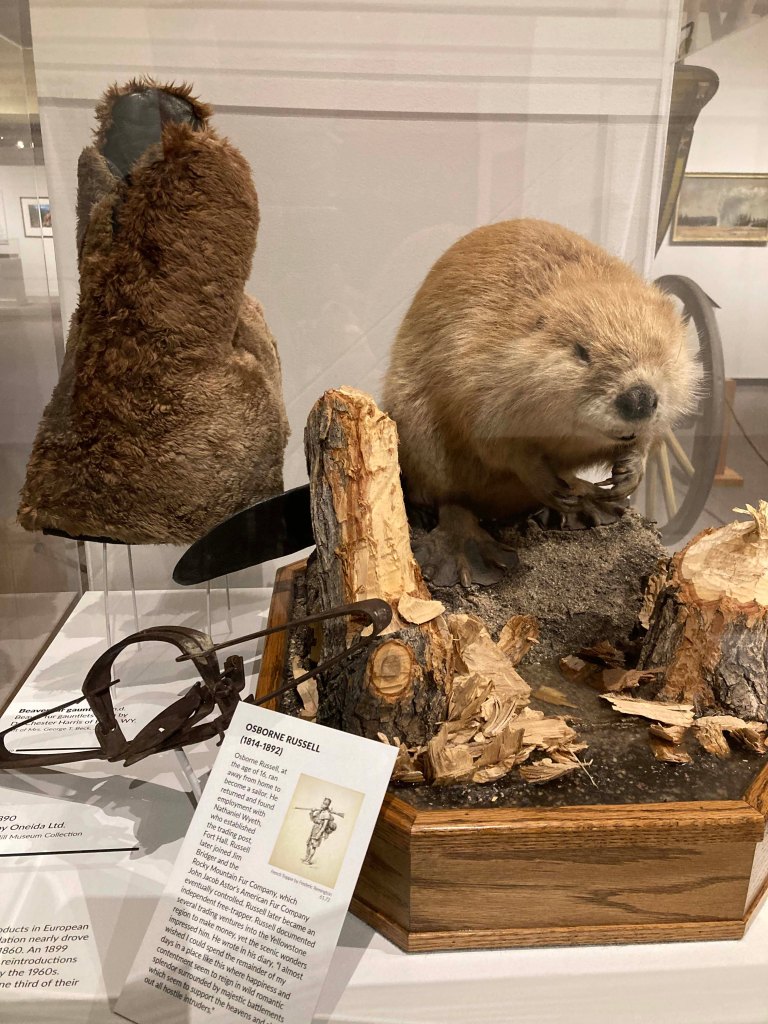
My favorite section of the museum was dedicated to Alexander Proctor. He was a leading animalier which is an artist known for realistic portrayals of animals. They had a giant plaster statue he used to create a famous statue of Teddy Roosevelt and lots of his other work.

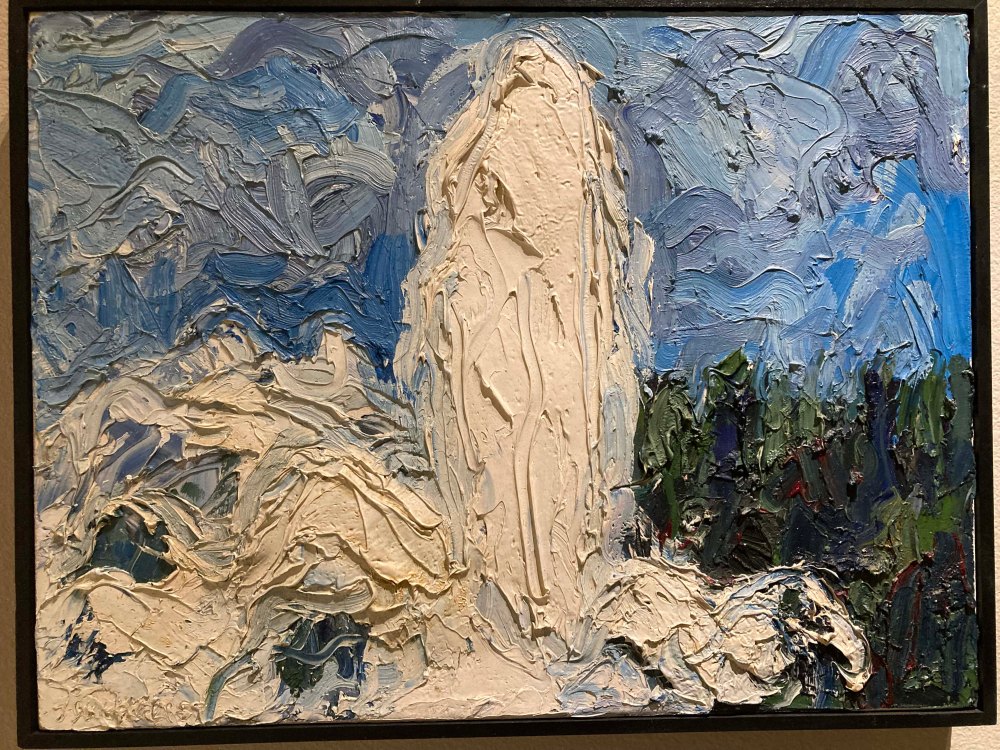
Along with the art museum there was also a special exhibit area dedicated to the 150th anniversary of Yellowstone. It was a bit of an eclectic mix, but I did enjoy some cool paintings of waterfalls in Yellowstone.

We had covered a lot of ground but at this point I was starving. We wanted to have the Chinese buffet in town because none of the cities in this area have one but unfortunately it is closed on Sundays. Instead we went to the Irma Cody hotel and lucked into their Sunday buffet. It had ham, fish, prime rib and a very nice salad bar. I thought it was a great value for the money and eating in the historic hotel was really cool.

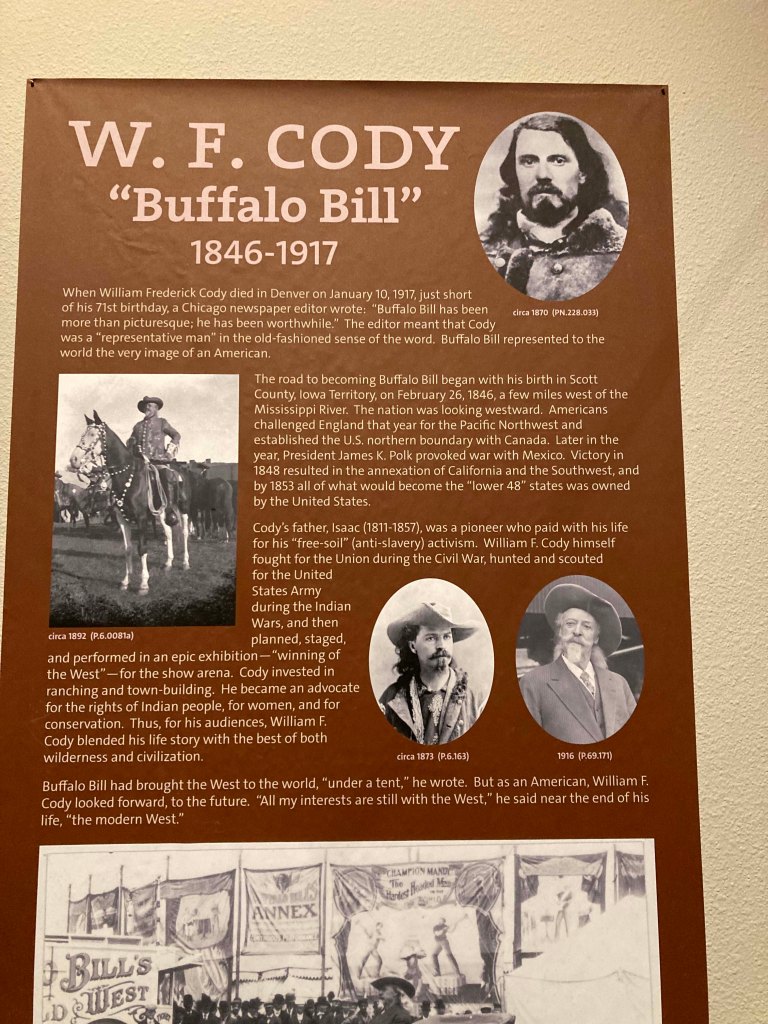
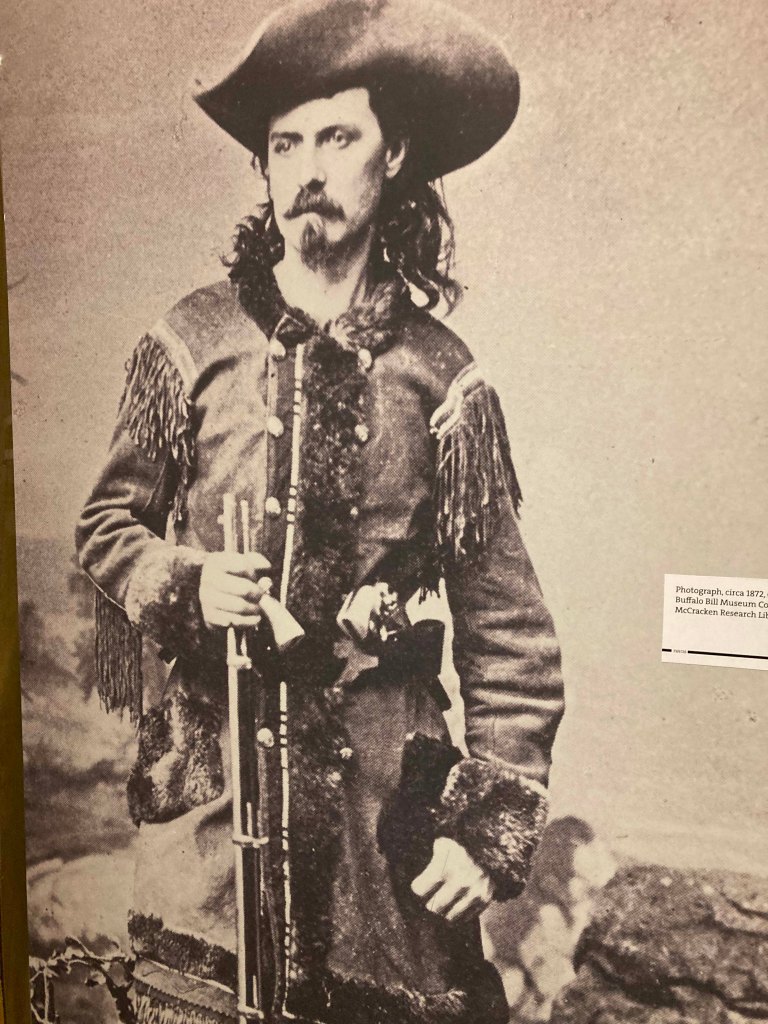
While we were there we heard that the roulette wheel from the hotel was actually in the Buffalo Bill museum so when we headed back that was the first thing we saw. I have to say that museum was very well done and the life of Buffalo Bill Cody was pretty interesting.

His father died when he was young and he started working for a freight company when he was only 11 years old. He did a brief stint with the pony express and gathered buffalo for the army to eat.

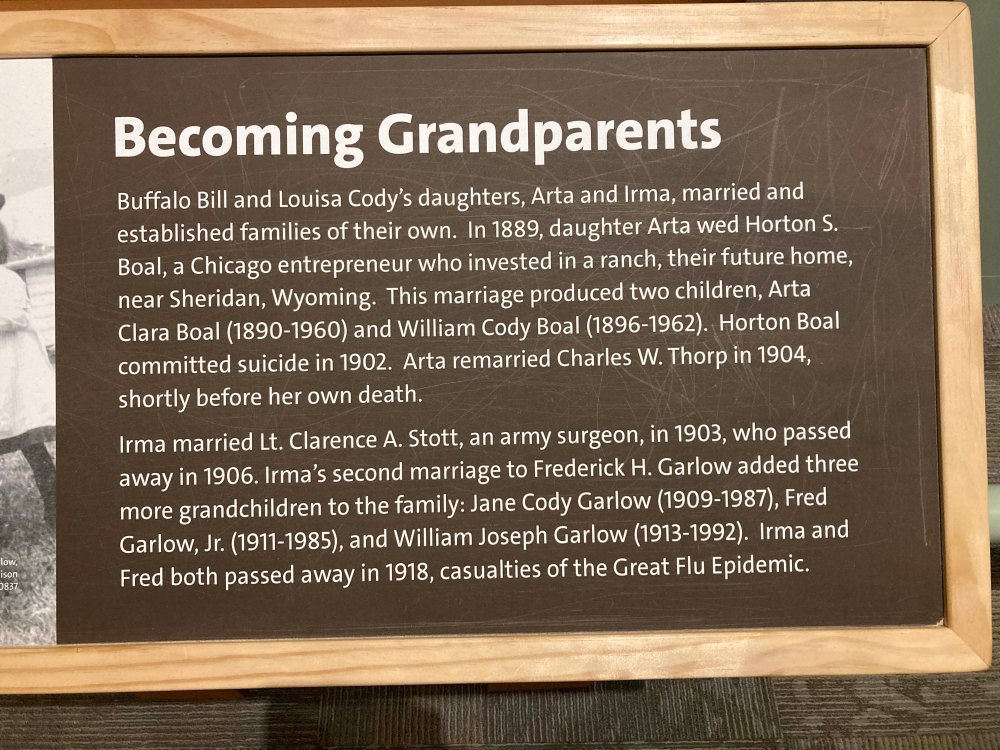
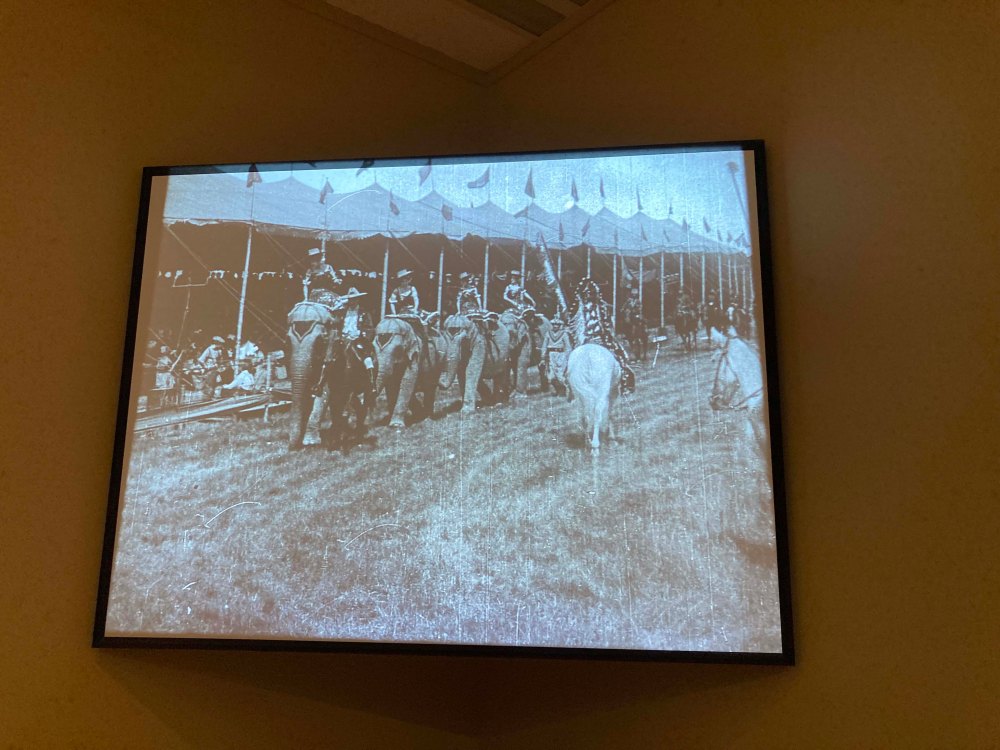
He married very young and ultimately outlived all of his children. He and his wife did become grandparents though and they founded Cody, WY. His big claim to fame was his Wild West show which was pretty amazing. Over time the show included riders from all over the world and did residencies in New York and London. Unfortunately the show seemed to constantly be in financial trouble and he made and lost fortunes several times over. Still we were lucky enough to see some movies from the show itself and it looks pretty spectacular.

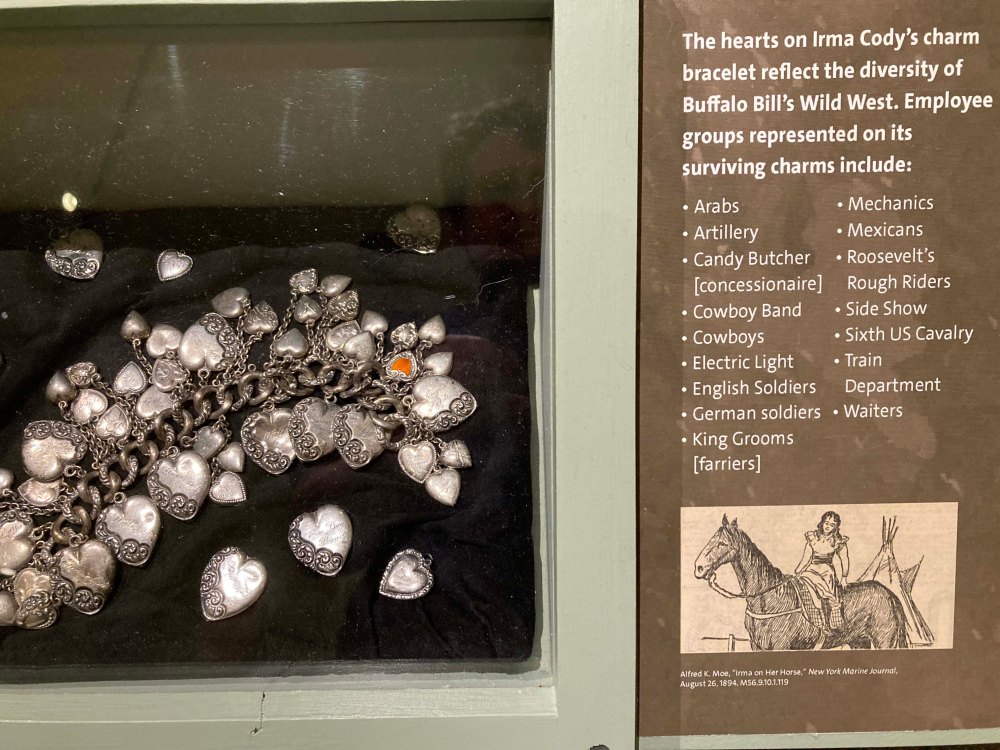
The diversity of his show was really unheard of for its time and based on what we read did quite a bit for Native American / White people relations. It also promoted the American West to Europeans. There certainly is more to the Native American story in the West though and I will save that for my next post about the Plains Museum.

We very much appreciate your support of our blog
  • You can purchase the ebook telling the story of how we became full-time RVers.
  • You can purchase our recipe book filled with 80 recipes we have cooked in our RV and taste tested by Lee himself. You can purchase the kindle or paperback version on Amazon or buy the Apple version on Itunes

Buffalo Bill Center of the West – Part I

I have had several friends talk about this museum so it was high on our list, but because of the three hour drive we weren’t sure how we could make that work with the dog. Finally we learned from some folks Lee works with that there is a reasonably priced doggie day care in Cody so on Sunday we headed over. Because the dogs had to be brought in by 8:30am that meant a 4:30am wake up time for us. To be honest driving through Yellowstone in the dark and heavy fog wasn’t that great but we made it in time to drop off Jack and head to the museum.

It’s actually five museums in one massive set of buildings and since we weren’t sure how long it would take we visited them in order of our level of interest. Since I took over 900 pictures on this day I am going to divide the visit into a few posts. Lee picked the Cody Firearms Museum first so that’s where we started.

To be clear, Lee and I both support reasonable gun control, but we also find the history and engineering of guns pretty fascinating. This collection has over 7000 guns and was really spectacularly done. In particular I appreciated that the rhetoric is pretty balanced and the facts were presented with the focus being on the guns themselves. Overall I thought it was an excellent museum.

The museum was a bit of a maze and its easy to get lost but one of my favorite sections was where they showed the different guns (with examples) through history in a nice long timeline.

I also really liked the gun library that had so many guns grouped alphabetically by manufacturer or by military. They were in these big sliding drawers and it was a cool way to see guns by lesser known manufacturers. Lee was amazed by this library and counted the vertical sliding cabinets and determined that there were over 1000 long guns just in this one section.

I also enjoyed several of the unusual historical guns many of which were owned by past presidents or other famous people. You could spend an entire day going through this collection, but since we had other museums to see mainly hit the highlights.

I was also particularly interested in some advertising posters they had including one which marketed to women for self defense much earlier than I would have thought. Also the poster that talked about a gun being a months salary. You think of guns being somewhat ubiquitous in the west based on the movies but a months salary is no joke.

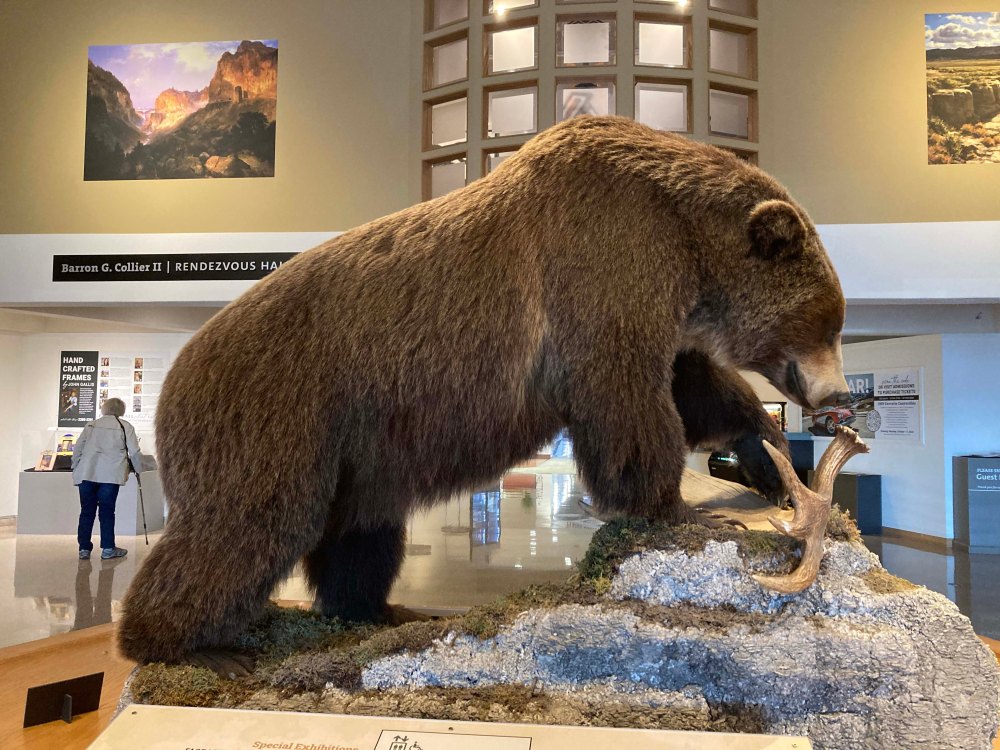
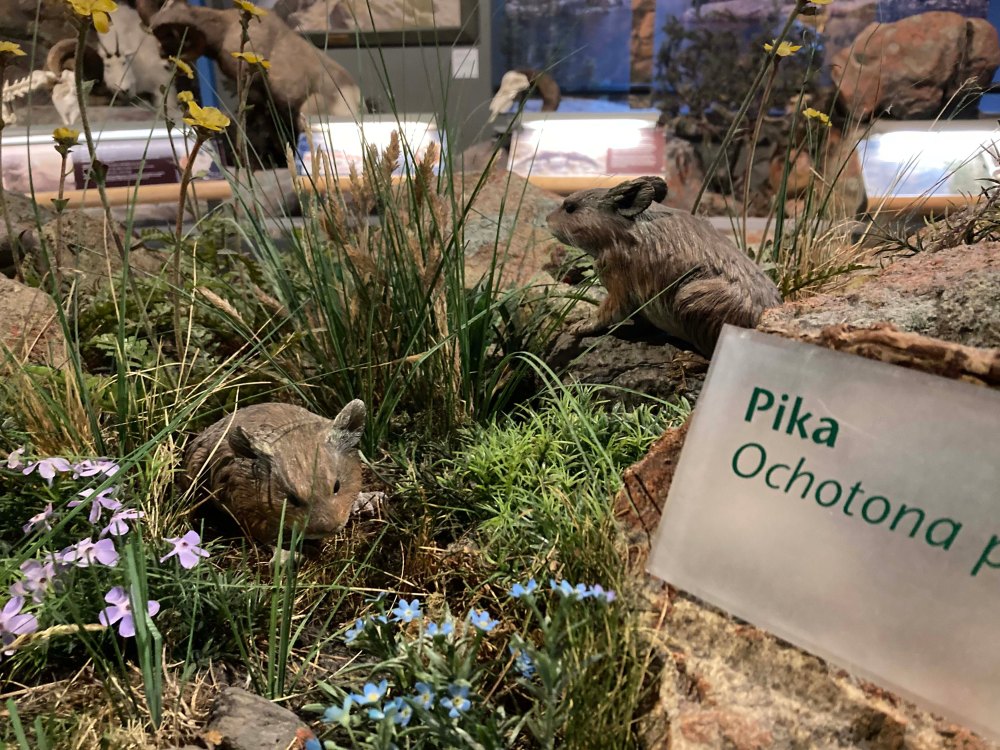
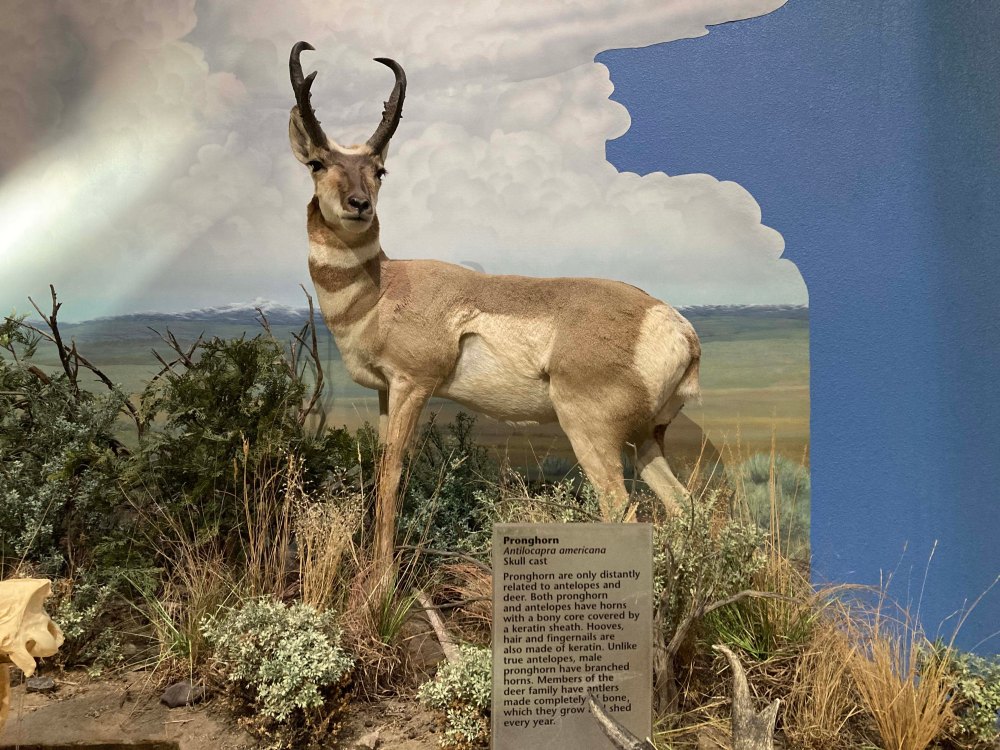
My choice was next and I chose the Draper Natural History museum. I have been to many natural history museums and this one (for its size) was really well done. First off you were on a path the entire time so it was easier to see everything and they had lighting and sound effects that made you feel like you were in nature. It was extremely well done and I enjoyed every minute of it.

Of the five museums this was definitely my favorite for both the content and the environment. So if you don’t have time to see them all I would definitely put this at the top of your list.

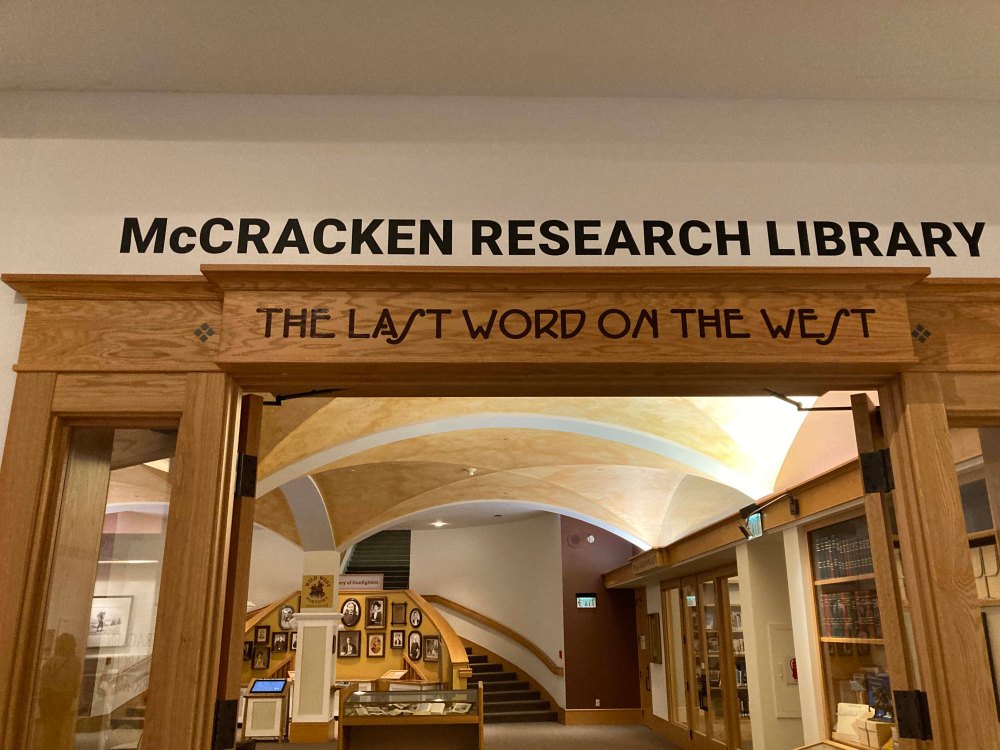
The research center was really cool in particular the golden eagle information. I have actually never seen a golden eagle but later that day when we were driving outside of town I saw my first one. There was also another research library in the basement which had all sorts of historical documents about the area. The gun museum also provides historical research information and authentication services which is pretty cool.

Ok I am going to stop right there and pick up in the next post. Stay tuned!

We very much appreciate your support of our blog
  • You can purchase the ebook telling the story of how we became full-time RVers.
  • You can purchase our recipe book filled with 80 recipes we have cooked in our RV and taste tested by Lee himself. You can purchase the kindle or paperback version on Amazon or buy the Apple version on Itunes

First Time Work Kamping in a Retail Environment

Even though I didn’t work kamp this summer, Lee has given me permission to write about his experience and I will also be adding in some anecdotal information we have heard from many of our friends who have work kamped in a retail setting. I make the distinction because work kamping is not the same as having a regular job in a retail environment and I will get into some of those differences as I go along.

First and foremost the major difference in work kamping is generally you get your campsite either free or partially funded. In general the more desirable a region is the less likely you will get the RV site totally for free but in our case it was fully funded. Since Lee was a solo work kamper (I am working remote in a corporate job) his options were more limited. Not all retail employers will take solo workers because essentially that doubles the cost for them on RV spaces.

Unlike campgrounds who own the spots, retailers almost always have to pay someone else for their sites and although they get a discounted monthly rate it’s still not cheap. Our discounted rate is $1200 a month and when you multiply that by X number of employees that’s a hefty additional cost per month for the employer.

Those costs are offset somewhat by paying the work kamper much less than the going local rate. It’s above minimum wage but still very low for the experience and expertise of the employees they are getting. An example would be if the employee’s site is $1000 a month and they make $10 an hour assuming a 40 hour work week the person is getting roughly $16.25 an hour. It’s slightly better than that because no tax is paid on the RV site but you get the point.

The major problem is many work kampers don’t really count the site as the same value as the hourly rate. This is a source of frustration for the employers which I understand but I also get the work kamper problem with that. First we don’t get to pick where we stay, and in many cases the sites themselves are less than premiere. That is not the case for us at this location, but it has been in the past. Many people I know have walked away from work kamper jobs because the sites they arrive at are not as advertised and I think its fair to say in general that they are rarely sites we would pay for if given the choice. There are exceptions, of course, and we have been extremely lucky to have a very nice site this summer. The quality of the site and the campground go a long way towards increasing the value proposition and make it more likely we will want to return the following year.

Which leads me to what I think is one of the major drawbacks of the retail positions. Because they are seasonal many employers (not all) will only guarantee a range of hours (30-40 hours a week) and the schedules are extremely variable. Again, your mileage may vary on this, but most things we have seen and heard talk about wildly varying schedules that involve lots of changes. Some people don’t care, they will work whenever as long as their days off are together, but for us we like to plan things a little out in advance and the changing schedule makes us a little nuts. In all fairness its more complicated for us because I only have the weekends off (prime retail days in most cases, although again, not for this particular location) so it took some work for Lee to ensure he always has one of those two days off every week.

More importantly, the pay is variable and we have known many people whose season was cut short due to lower than expected sales or had to work more than they wanted to to account for being short staffed. So if you have to have the money to live this may not be the best choice for you, but if you are working for a free site and a little supplemental income it may be a good choice.

Which leads me to the working conditions. In a retail environment you are standing on your feet for most of your shift and since many of the buildings are older that means wood floors or thin carpet. I also found the environment during rush periods to be somewhat claustrophobic as there are way too many people in too small a space. That being said there is lots of downtime in the non peak periods and if you like talking to people this might be a great job for you.

In many tourist towns people are “just looking” and often are more interested in information than the products being sold. A good salesperson can turn the request for information into a sale and folks with those personality traits are highly valuable. If you aren’t that crazy about people and would rather work outdoors obviously this might not be a good fit, but for those who can multi task, who like people, and who enjoy a lot of variety in their day retail might be a good job for you.

Like any other work kamping job you have to be really honest with yourself going into it AND really clear upfront about what your expectations are. We have always had good luck with getting employers to honor commitments they made in advance, but not so much if we just show up and ask while we are there in person. Plus its just better for everyone if you can determine if its a good fit beforehand. Obviously they are going to stress the positives of the job and you need to ask the right question to make sure you don’t have any unpleasant surprises.

For more information on other work kamping jobs we have worked please check out our Work Kamping page.

We very much appreciate your support of our blog
  • You can purchase the ebook telling the story of how we became full-time RVers.
  • You can purchase our recipe book filled with 80 recipes we have cooked in our RV and taste tested by Lee himself. You can purchase the kindle or paperback version on Amazon or buy the Apple version on Itunes

Yellowstone – Wraith Falls

Since the Labor Day crowds finally died down we headed back into the park in search of some animal sightings. Lee heard about a buffalo carcass at work that wolves were hanging around so we got up really early and headed north towards the Roosevelt Tower area. Unfortunately it is a long drive and despite the early (for us) start we missed the wolves by a half an hour. More importantly the carcass was super far away and although I brought a book to read just in case Lee didn’t really want to sit there in the hopes they would come back.

As I have mentioned before many of those great wolf pictures are from very far away and only visible through a super long lens or spotting scope. Folks will sit for hours peering through those scopes for their shots but that’s not really of interest to me or it turns out Lee. We like our wildlife close enough to see with the naked eye and with wolves in particular that is pretty rare.

Still it was a beautiful day so we popped over to see the petrified tree. This is the remains of a Redwood tree which shows that at some point Yellowstone had a tropical climate. It was pretty cool although I wouldn’t make a special trip just to see that.

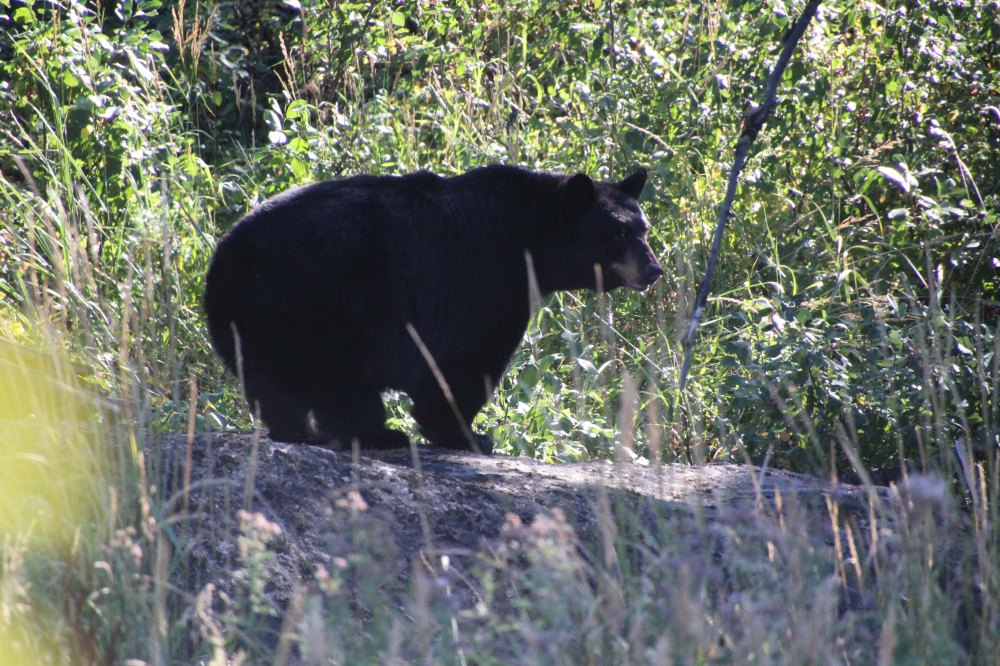
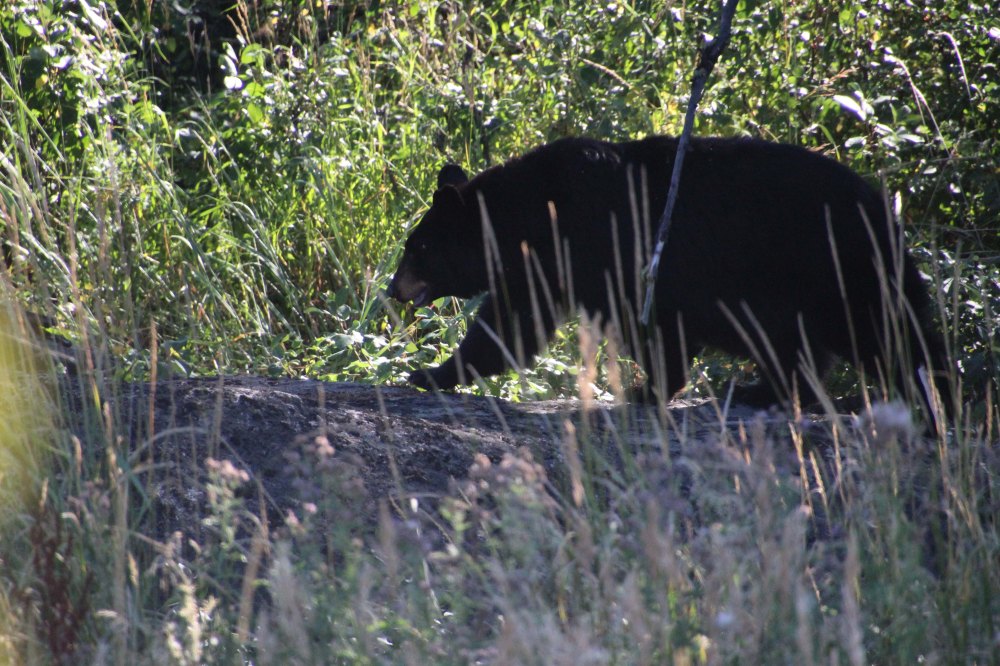
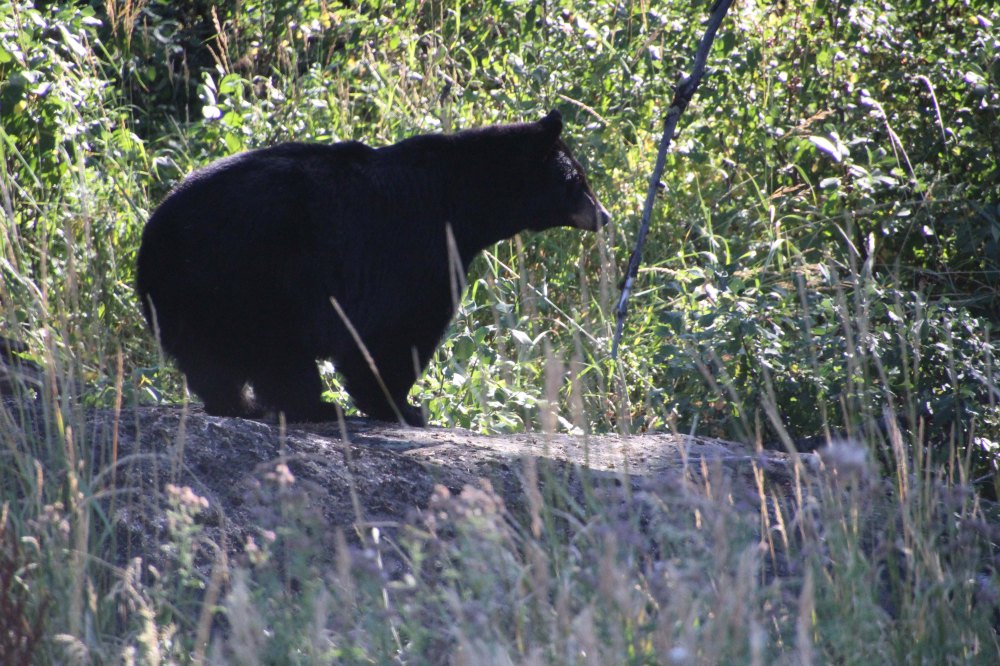
Since we didn’t have anything special in mind we decided to check some smaller items off our list, but first I needed to stop and go to the bathroom. When we stopped at the gift shop near Tower Fall we saw a big crowd and walked over and I got some cool shots of a black bear. That was a nice bonus!

Next we decided to go to Wraith Falls but along the way we saw the Blacktail Plateau Road was open. This road has been closed every time we have passed it, so it was cool to travel along it. It was a huge wild stretch of gravel road traveling through grassland and then forest and although we didn’t see any animals it definitely seemed like a great spot for them. I highly recommend ALWAYS taking these side roads if they are open, because they are open and closed throughout the season and every one of them is pretty cool.


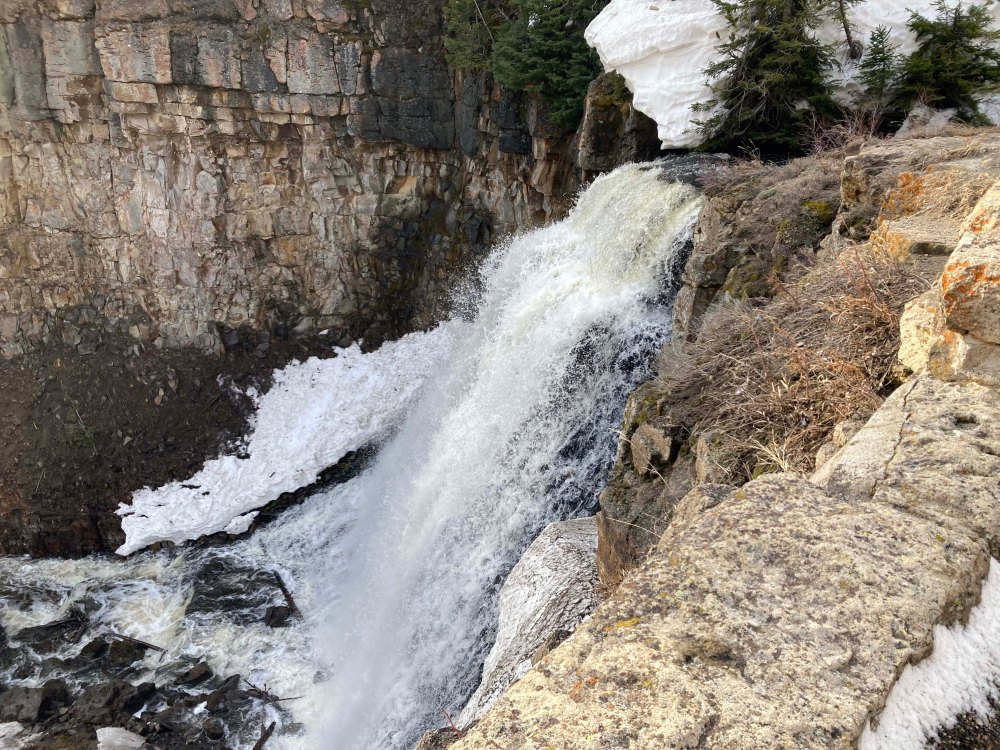
We finally made it to Wraith Falls although unfortunately it was largely dried up. We have been really lucky with waterfalls this year and I definitely want to visit this one again earlier in the season. The walk is about a half mile up and the ground is pretty rocky but the viewing platform is nice and we had a great time watching a chipmunk go crazy eating berries.

Lee’s animal guide is the Chipmunk and we always love watching them. Mine by the way is the female deer in case you were wondering 🙂

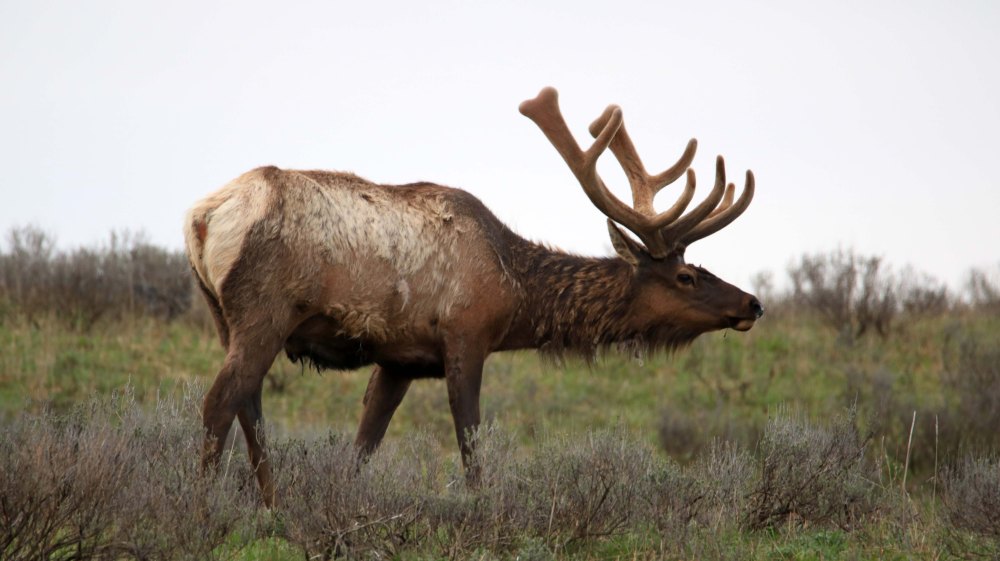
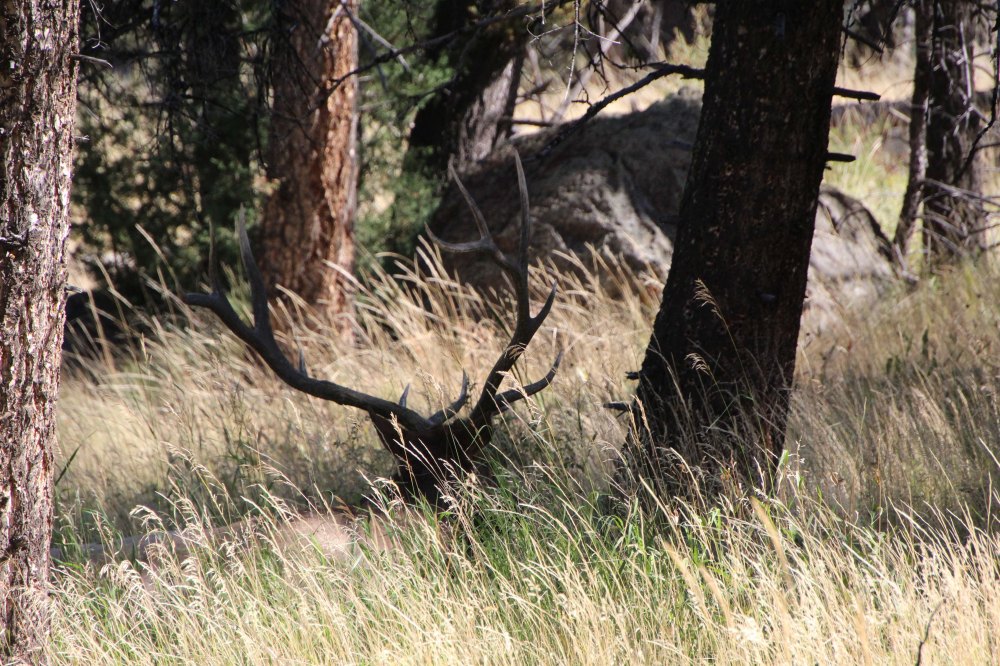
On our way back towards West Yellowstone we got really lucky though and saw a Royal elk (10 tines; between 7-9 years old) close to the road. We stopped and took a bunch of pictures and even got to see him lay down in the grass. I was amazed at how an animal that big could “disappear” in the grass and his antlers just looked like sticks. Based on that I wonder how many times we have passed right by moose or deer because it was extremely well camouflaged.

Yummy Grass
He bugled for us. Much higher pitched than we thought it would be

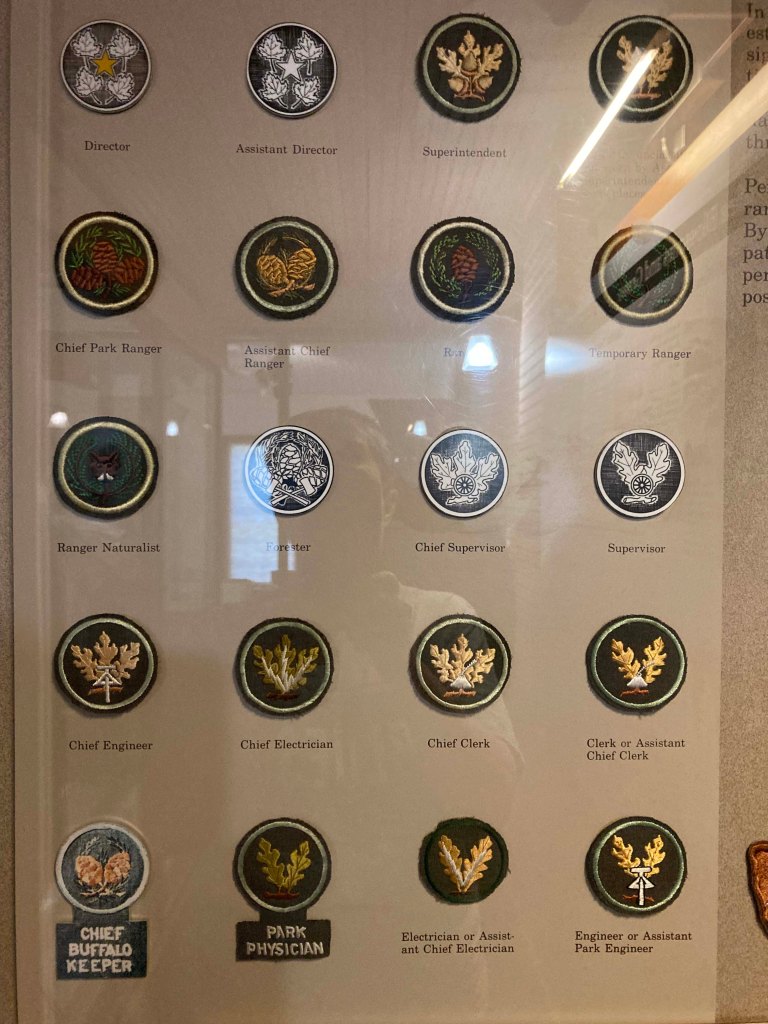
We probably should have left it at that, but Lee wanted to see the Ranger Museum at Norris Basin and that parking lot was PACKED. We got lucky enough to find a parking spot but the crowds were pretty crazy and a little overwhelming. The ranger museum was nice though and I particularly loved the diversity of the park rangers going back to the 1930’s. I highly recommend a stop but would definitely plan a visit on a less crowded day.

It was a nice day but to be honest we probably won’t be spending many more in the park itself. Our season is starting to wrap up and we have lots of tasks and errands that need to be completed before we leave. Because you never know about the weather (as of this writing we have had two consecutive freezing temps overnight) we need to be ready to leave at any time. Lee’s contract is until Oct 15th but the agreement is we can leave if a significant snowstorm heads this way. Basically we are playing it by ear from this point forward and our planned route allows for the flexibility to leave at any time. I’ll keep you updated as events warrant.

We very much appreciate your support of our blog
  • You can purchase the ebook telling the story of how we became full-time RVers.
  • You can purchase our recipe book filled with 80 recipes we have cooked in our RV and taste tested by Lee himself. You can purchase the kindle or paperback version on Amazon or buy the Apple version on Itunes

Cabin Creek Trail

In the hopes of seeing moose we also visited the Cabin Creek area in the National Forest. No luck with the moose but we did come across a really cool area. There is a NFS campground in the Cabin Creek area, but across the road from that there is also a day use area down Ghost Village road. A forest ranger told me about it and although we had a little trouble finding it (look for Day Use signs) once we did it was super cool.

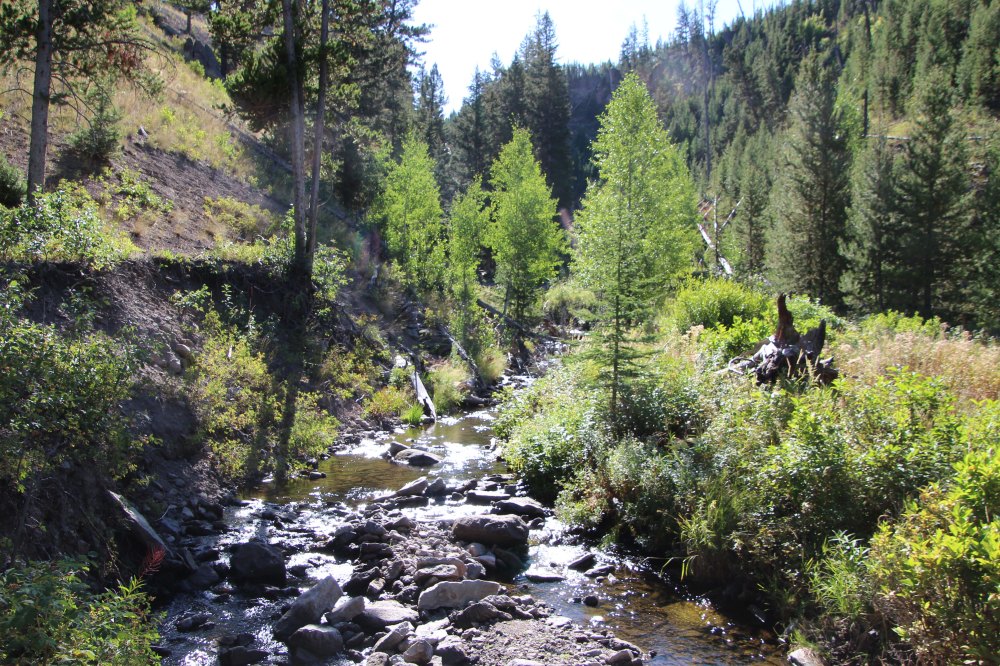
The road goes along a beautiful river with mountains in the background. The area is called Ghost Village and we did see several shacks that had collapsed on themselves across the river. The road ends at a trail that goes into the Lee Metcalf Wilderness area and since bikes are allowed on the trail can’t wait to go back and explore a little further.

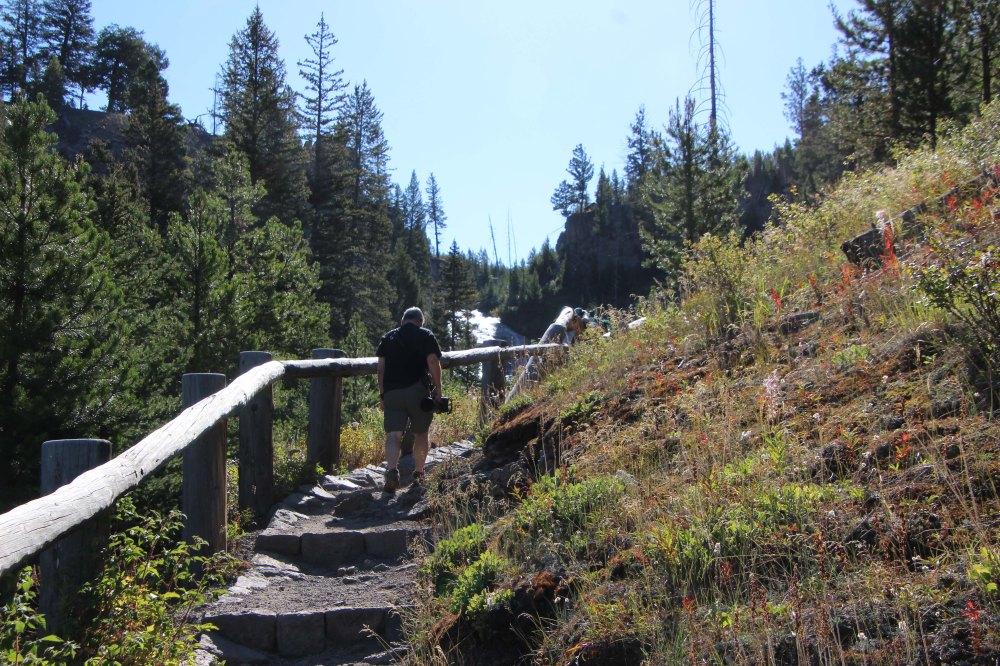
Unfortunately because of the lighting my pictures don’t come close to capturing the majesty of this area and it really felt like we were in the wild. After staying for a bit we went back across the street to try out the Cabin Creek Trail. The Forest Ranger in the Hebgen Lake Ranger District recommended the trail although she said the first couple of miles were the best part in her opinion. Unfortunately it got pretty hot pretty quick and the trail itself was VERY rugged. It was also multi purpose so between watching my footing, avoiding the steep drop off, and dancing around horse poop I felt like I had to watch my feet most of the time.

The path was also at a decent incline so between the heat and trail factors I only made it a mile or so before wanting to turn around. There were some nice views though and if you are a more expert hiker I am sure you would enjoy it. Deb this one is definitely for you!

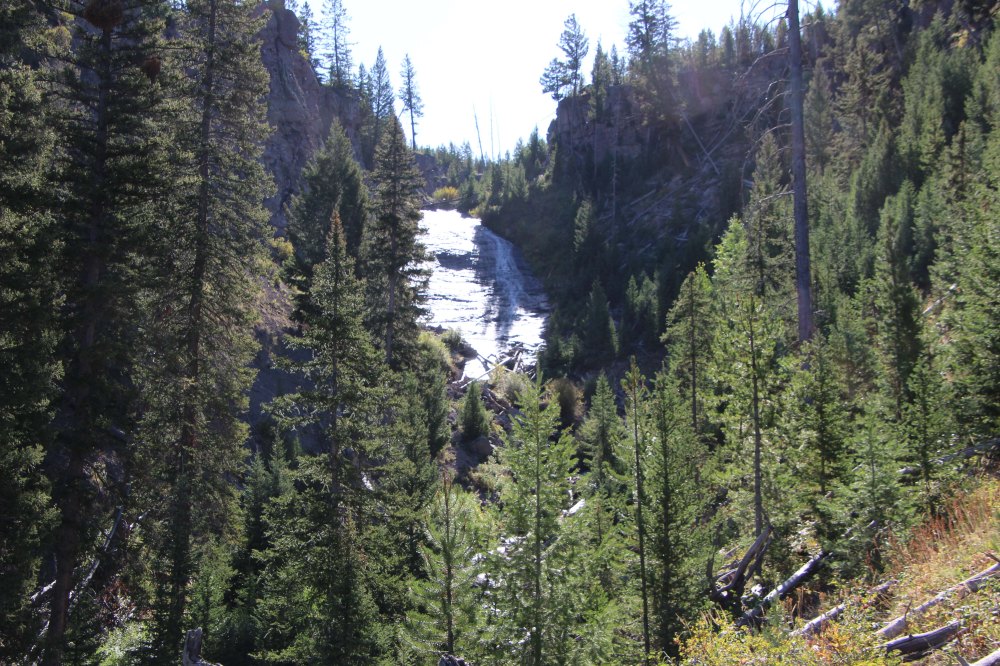
Beautiful canyon
With all the berries and close growth I also felt pretty nervous about potential bear activities

All in all it was worth the drive just to see the road but again proceed at your own risk and be prepared. National Forest trails are generally not as well maintained as National Park trails and always come prepared!

We very much appreciate your support of our blog
  • You can purchase the ebook telling the story of how we became full-time RVers.
  • You can purchase our recipe book filled with 80 recipes we have cooked in our RV and taste tested by Lee himself. You can purchase the kindle or paperback version on Amazon or buy the Apple version on Itunes

Red Rock Pass and Wilderness Area

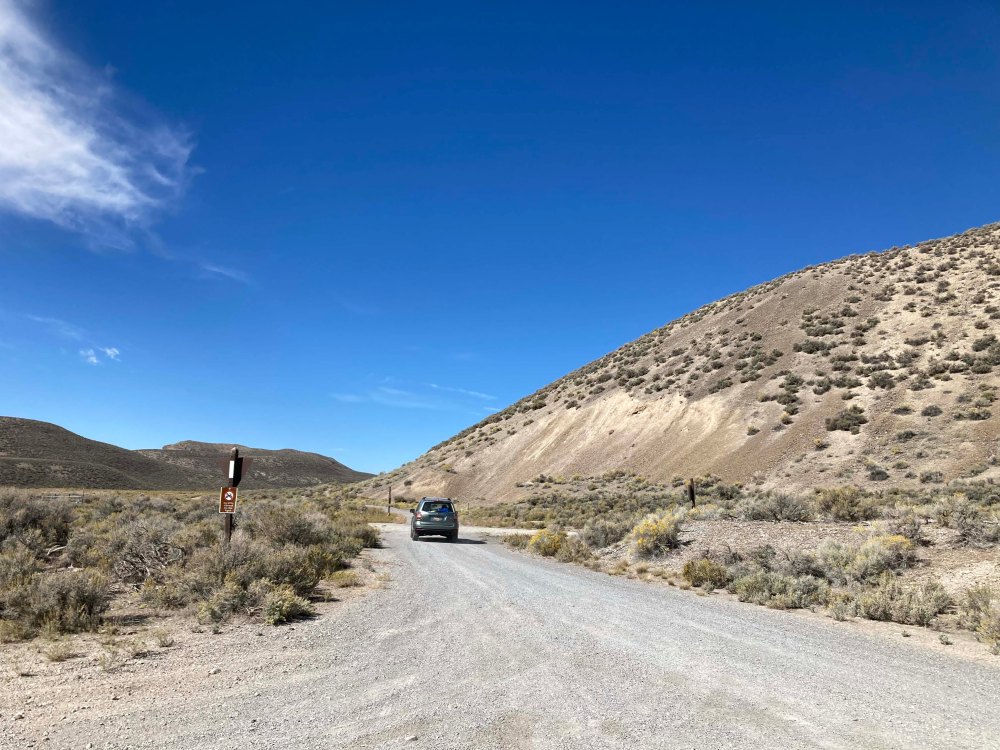
In an effort to avoid the crowds, Lee and I have been exploring the National Forest areas looking for moose. Based on a recommendation from his boss we headed towards Henry’s Lake one afternoon and while we were traveling around the lake we saw a small sign that said Red Rock Pass. In the spirit of adventure we thought why not and traveled 27 miles along a dirt road until we reached the Red Rock Wilderness area.

Sometimes when you take the road less traveled it is only so-so but this trip was really special. So special in fact I was surprised by how few pictures I took because I was really caught up in the moment. It wasn’t that the vistas were the best we have seen, or the animal sightings. It was the complete remoteness of the road and we literally never knew what would be around each corner.

One of the weirdest things is we were in this heavily wooded area and cows were free range grazing kind of everywhere. They also shared the area with moose, and we saw one grazing right near them. The moose had a full rack which Lee said was spectacular but I only saw its backside as it ran back into the trees. The cows on the other hand could have cared less and we had to be pretty careful as we turned corners because they were near or on the road.

After a pretty steep climb we saw a small campground of sorts and a sign saying we were at Red Rock Pass. We continued on and ended up in a stretch of grazing land with a few ranch houses along the road. This area had no cell coverage at all but people were definitely living there. I can’t imagine being that isolated personally because this road is not cleared in the winter so you could be stuck in that valley for chunks of time.

Eventually we reached the Red Rock Lakes National Wildlife Refuge which has several large lakes and a small research facility with families living there. Again no cell coverage the entire trip but I imagine they had some kind of connection in the small town. This area was pretty wild with antelope, gorgeous mountains, and a lake known for trumpeter swan nesting. We drove as far as we were comfortable going and then when it started to get darker we turned around and drove back the other way. We didn’t come close to exploring it all and I definitely want to go back on another visit sometime.

One our way back out we saw the weather station up on a hill and I realized that the area we had passed we had seen from Sawtelle Peak. As much as I enjoy the views from above nothing quite beats seeing things from the ground and I am really glad we got into the thick of things.

Radar station on Sawtelle Mountain seen from the road
Henry’s Lake and surrounding area from the peak
You can kind of see the road we traveled on in the distance

We very much appreciate your support of our blog
  • You can purchase the ebook telling the story of how we became full-time RVers.
  • You can purchase our recipe book filled with 80 recipes we have cooked in our RV and taste tested by Lee himself. You can purchase the kindle or paperback version on Amazon or buy the Apple version on Itunes