This post is written by Lee.
The posts about my sightseeing in DC will be out of order, mainly because some of the stuff just wasn’t enough to fill an entire post, so I lumped those together to make one post, and some of the others took longer to write so ended up getting pushed down the road a little.
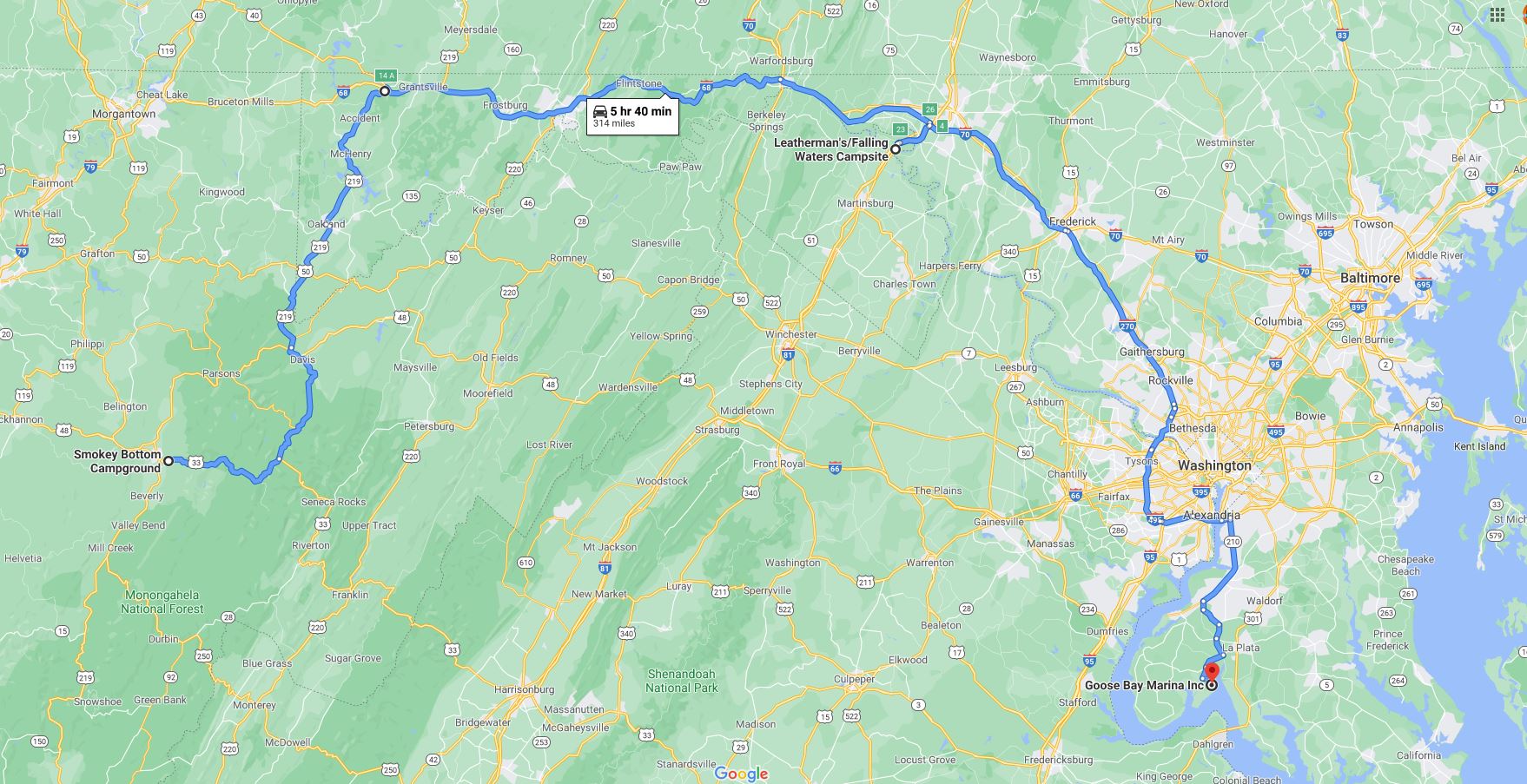
We stayed at Goose Bay Marina campground, which was the absolute closest we could get. The best way to go to DC from there was to take a train. The Metro (subway) is a great way to get around in DC, so I bought a “rechargeable” Smart Trip card and found the end of the Green Line, which is the Branch Avenue station, and each day I drove there and parked in the ample parking lot.

The drive took about 40 minutes, and the train ride from Branch Avenue to Le’Enfant Station about 25 minutes. I’m sure during non-CoVid times, the parking lot would be packed, but each time I went there were less than 10 cars. It was an absolute joy to be in nearly empty platforms and trains, no noise and sparkling clean. Not having restrooms anywhere sucked. If you’ve never experienced a subway system, or just like to know more details, these sites have some great information:
Touring Plans, Rider Guide, and Navigating the Metro
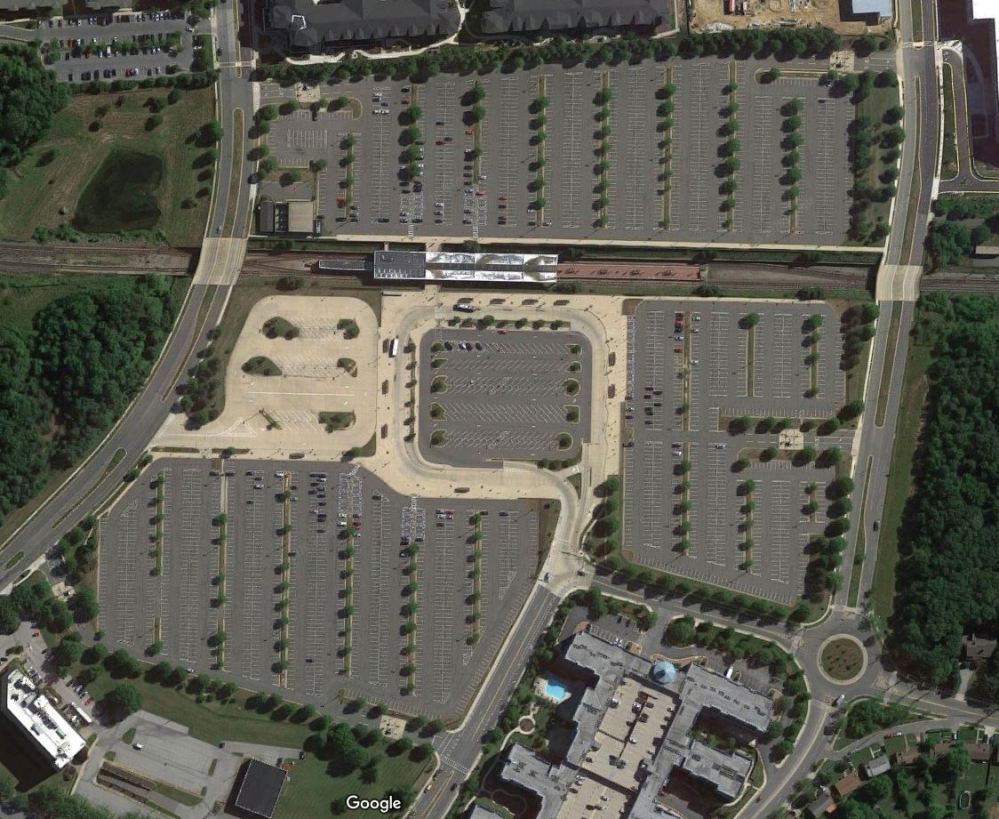
TONS of parking at the Branch Avenue metro station, and just off the Interstate.
If you’ve never used one, the Smart Trip card can be refilled in a station with a credit card, or in an app, or online. You swipe it to get in and you swipe it to get out, and the fare for your ride is deducted from the balance. And each time you swipe it shows you your balance, so you know when you need more. And you can also use it to pay for parking at Metro stations.

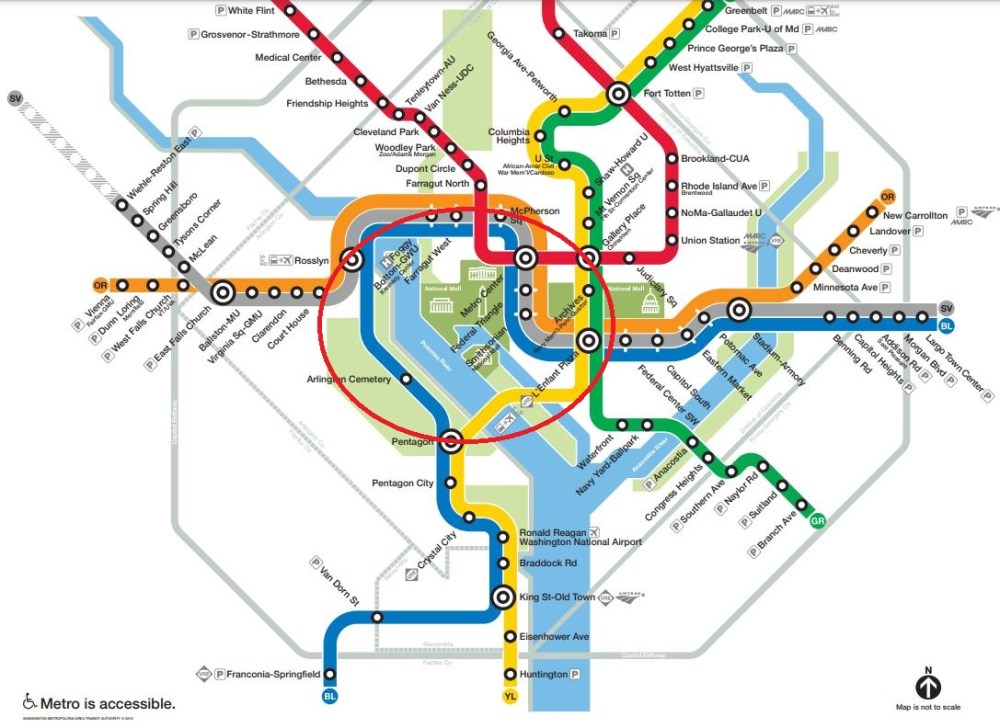
A LOT of the stuff to see is inside that red circle, but as you can see the Metro is pretty easy to understand and use, and the Smart Trip card makes it a breeze!
The Metro is a great way to get around, but it involves a lot of looking for and getting to stations. The entire time you’re not out in the world, you’re underground, so while it’s a great mass transit system, not so much for sightseeing. My hands down total favorite for getting around were the electric scooters. They are EVERYWHERE. Every corner has 10 or 15 of them just sitting there, ready to go.

There are quite a few companies that have them, but they’re all more or less the same. You get the app for whatever company you want to rent a scooter from, set up an account, and find a scooter. They all have maps that show where the scooters are, and there’s even an app that shows you the location of scooters from ALL the companies.
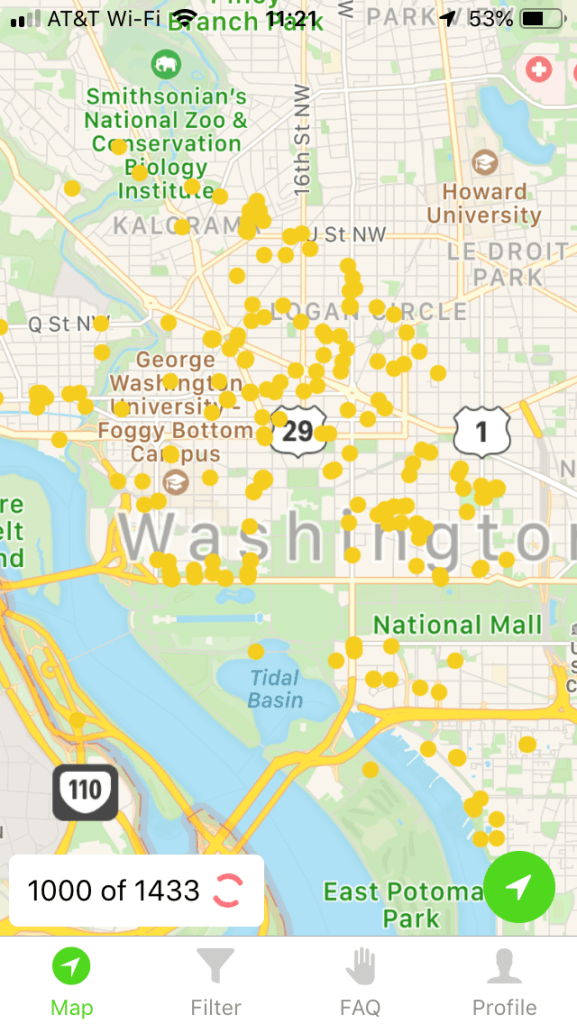
I actually got tired of waiting for all of the dots to load, but as you can see, in the area of the map shown, there are 1400 scooters. If you zoom in, of course, you can see precisely where they are, what company they are, and how much % battery charge they have.
When you want to use one, you scan the QR code on the scooter, it unlocks it and off you go!

They go 10 mph, which doesn’t SEEM fast, but the average person walks 3 mph, so it’s three times faster than walking. And because it’s a scooter, you can easily stop anywhere you want, snap a picture, and move on. (I got lucky one day and got a Spin scooter that was programmed incorrectly and went 17mph. It was delightful, but took a minute to get used to, I almost killed myself at first because I was used to going 10 mph)
As far as price goes, it’s not terrible, but you have to be careful. There’s a $1 fee to unlock the scooter, then you pay by the minute. It varies, but the average price is $ .30 per minute, and they’re all within a few cents of that. If it’s a nice day, you might prefer to walk, but DC is a LOT of walking, and not everyone has the stamina for that. I certainly was able to cover a lot more ground by not having to walk. Another thing I noticed was the effect it had on my “experience saturation”. I was able to decide I had been somewhere long enough, scoot away and grab an ice cream, or go to the bathroom, or get a bottle of water, and sort of rinse my head, and then go back and continue looking at something and not become over-saturated. A few times I just sat on a bench and gazed at the sky and let the tension slowly leak out. That changed my experience enough in most cases that it was totally worth the cost. That’s not something I would do if I had to lose 20 minutes of time and energy just to walking.
On the other hand, on the first day I rode one around for 3 hours and had a fantastic time, and was able to see lots of things at various times of day. I did a lot of back and forth and just generally had a blast. BUT, I didn’t fully understand the pricing structure, and that “ride” cost me $53, which took a LOT of the fun out of that three hours at the end. Interestingly, if someone had told me it was $20 per hour to rent, I would have felt differently, and would have used that time differently. If I had been able to look at the app and see what my current cost was at any point, I might have behaved differently. If I had known that the per minute fee was being charged the entire time I was in possession of the scooter, I also might have behaved differently. Because the word “ride” is constantly being used I thought it charged you while you were riding, and just paused whenever you stopped. So as I zipped around I was constantly stopping to take pictures and read things, and look things up on my phone, and I thought that “non-riding” time was “free”, but it wasn’t.
For example, I was at the Lincoln memorial for at least 30 minutes, which cost me $9.60 while the scooter just sat there and I wandered around taking pictures. Had I known that, I would have ended the ride in the app when I got there, and then started a new one once I was finished wandering around and taking pictures. And certainly at this time there’s not enough people in DC that anyone would have been likely to grab my scooter. Even if they had, there are more all over the place. It’s important to point out that ALL of these companies have gone to some great lengths to keep you from knowing what you’re doing when you’re doing it. There is no way to know how much you are spending until you are actually unlocking a scooter, and even then, knowing you’re spending $ .32 per minute isn’t really very helpful. Looking back at my ride history, I know that I did a lot more aimless scootering around than I would have if I had been carefully monitoring the cost. At no point did I ever think I was spending large amounts of money, but at the end of two weeks, I wasn’t entirely comfortable with how much the total was (around $150). I’d like to go back and do it again more scientifically to see where the breaking point is between cost effective and wasteful. Because I am a giant dorky nerd.
Then again, having the freedom to run back and forth and see things from different angles and at different times of day was a new experience, and overall the days I spent in DC were some of the most fun I’ve had in five years of travel, and it was raining for a few of those days. So how do you measure that?
Anyways, on to one of the things I did while I was there. We knew when we decided to add DC to our itinerary that some (most) of the stuff we would be interested in would be closed, but we decided to come anyway, and we can return post-CoVid when those things are open again. I for one am really glad we did, because everywhere I went there were hardly any people anywhere. I prefer my pictures to have no other people in them whenever possible, so it mean a LOT less Photoshop work to get rid of them. But it was just nice to be able to take in some sights without crowds and noise and traffic and buses and all that fuss.
This post is a great example of that. I went to the National Gallery of Art Sculpture Garden and the entire time I was there, there was nobody within 50′ of me. I was able to spend as much time as I wanted looking at the sculptures without having to listen to other people talk, or crowd me. I could just enjoy it for what it was.
The sculpture garden is outside on the north side of the National Mall, between the National Gallery of Art and the Smithsonian Natural History museum. It’s directly across the mall from the Hirshorn sculpture garden, which I will cover in another post.
At the moment (CoVid) the only entrance is at the corner of 7th and Madison, and the exit is at the corner of 7th and Constitution. Admission is free, and at this time does not require a timed entrance pass. (More on that in posts about places that are indoors) It’s open daily from 11am-4pm.

You would think that the Smithsonian metro station would be the closest to visit, but it’s actually not. The closest station is Archives/Navy Memorial. The Smithsonian metro station is 739 yards (if you walk a perfectly straight line) while the Archives station is only 431. On the other hand, one walk is across the mall and might be prettier than the other. You can see the entrance to the garden in the photo below, on the right side, about halfway down.

To save myself a lot of typing I am copying some of the information from the National Gallery of Art website. Their language is in italics.
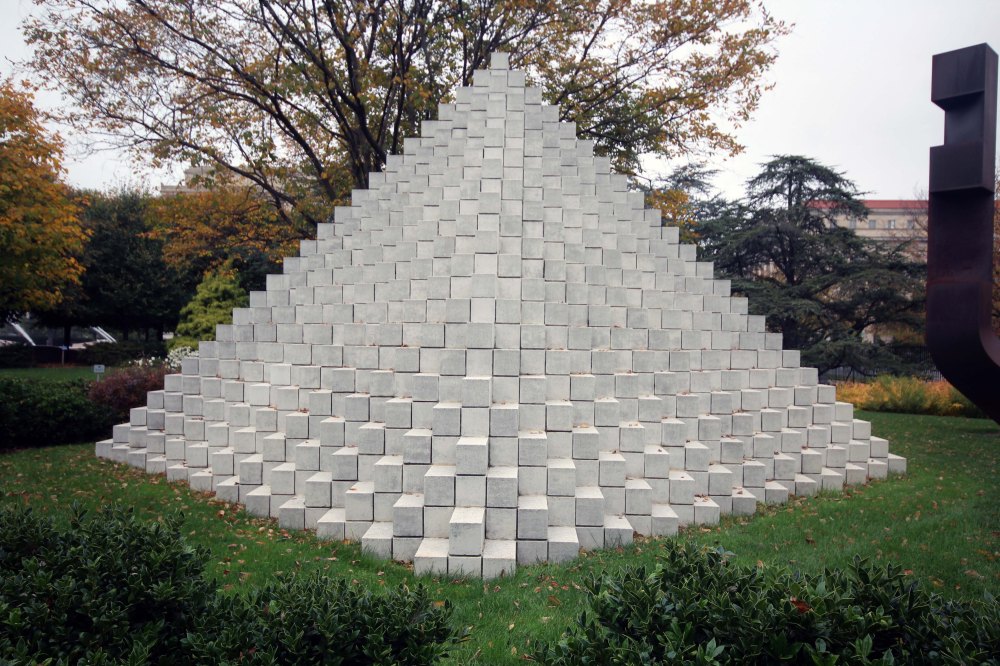
Sol LeWitt, Four-Sided Pyramid, 1999, concrete blocks and mortar
Since the 1960s, Lucas Samaras has made series of obsessional, sometimes hallucinatory objects. Prominent among his motifs is the chair, which Samaras has executed in a variety of materials such as fabric, wire mesh, and mirrored glass, thereby turning a utilitarian object into a fantastic one, the product of a dreamlike metamorphosis. Here, Samaras explores the dual meaning of “flight,” referring to both the stair like form created by the stacked chairs, and to the locomotion of a single chair moving diagonally through space. From different viewpoints, the sculpture appears to be upright, leaning back, or springing forward. From the side, it even appears as a two-dimensional, zigzagging line.

Lucas Samaras, Chair Transformation Number 20B, 1996, patinated bronze
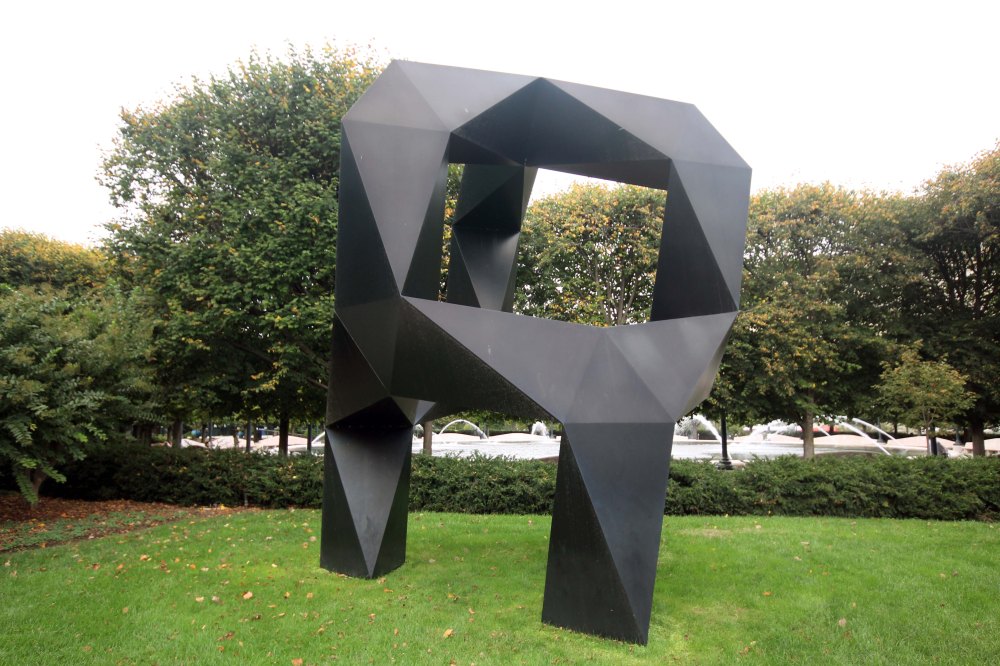
Tony Smith, Moondog, model 1964, fabricated 1998-1999, painted aluminum
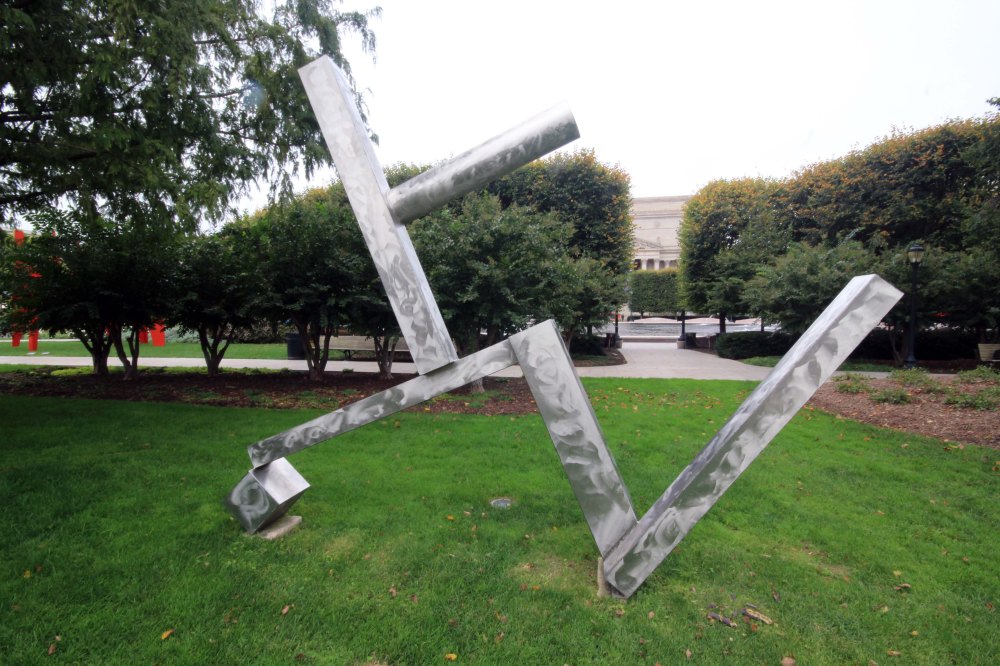
David Smith, Cubi XXVI, 1965, stainless steel,
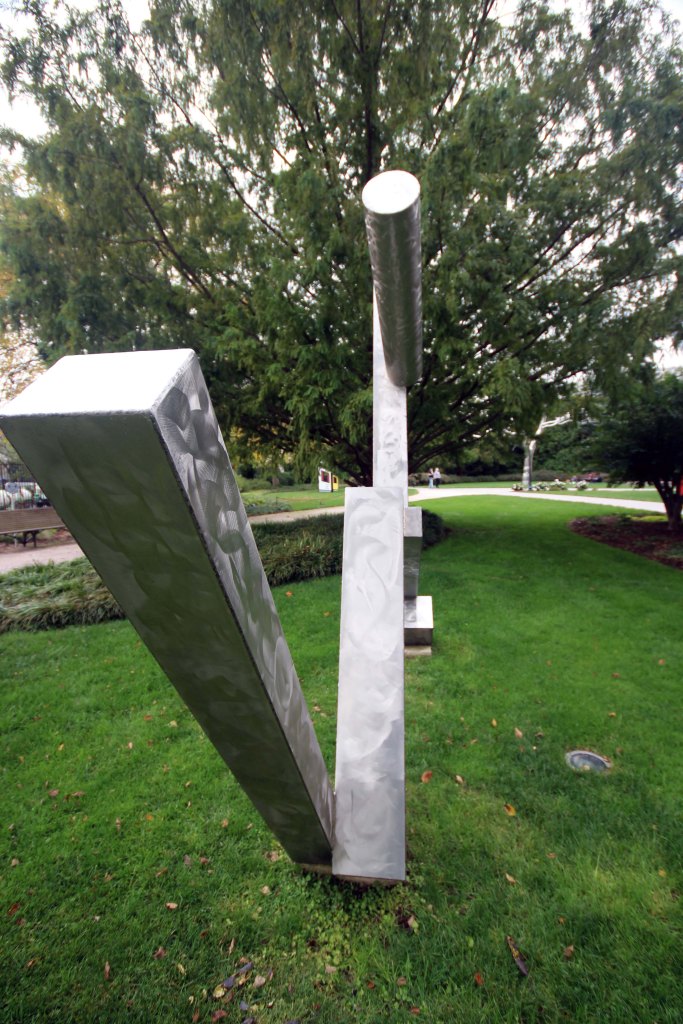
Calder’s outdoor stabiles such as Cheval Rouge exhibit an appealing grace and, though steadfastly abstract, evoke a friendly resonance with natural forms. Here the sleek, tapering legs and tensile up-thrust “neck” recall the muscularity and power of a thoroughbred. This stabile reflects Calder’s assertion: “I want to make things that are fun to look at, that have no propaganda value whatsoever.”

Alexander Calder, Cheval Rouge (Red Horse), 1974, painted sheet metal
I have always been a big fan of Lichtenstein.
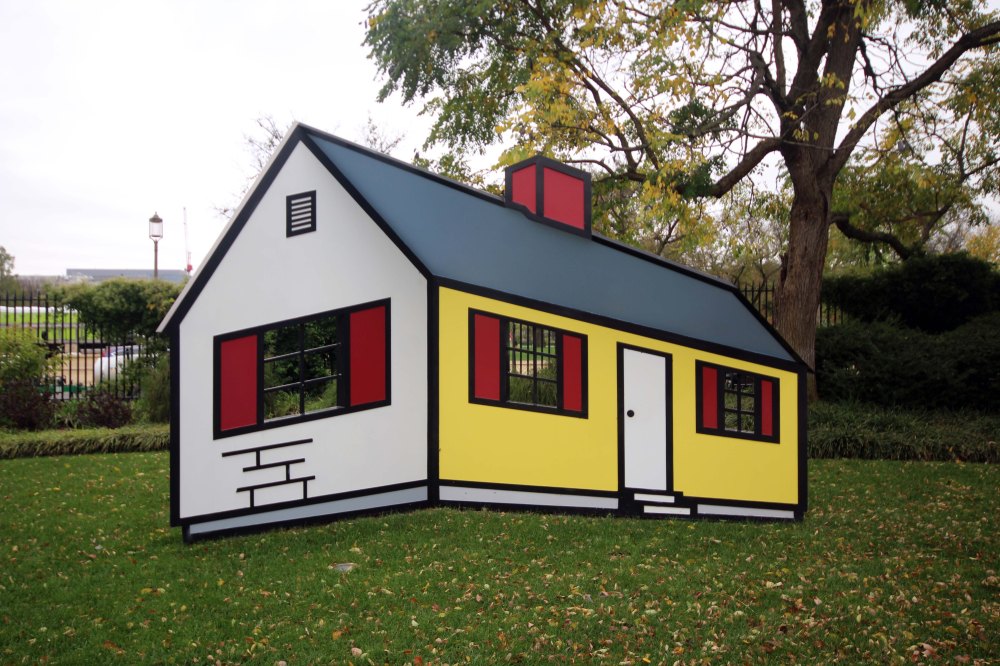
Roy Lichtenstein, House I, model 1996, fabricated 1998, fabricated and painted aluminum
Below was my favorite sculpture. Here’s what the website says:
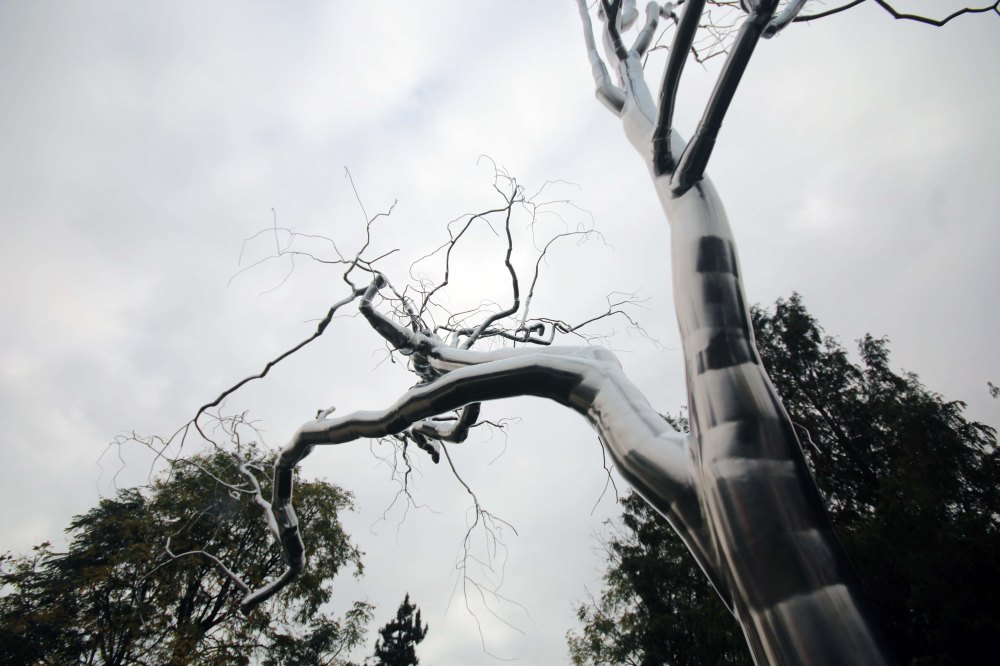
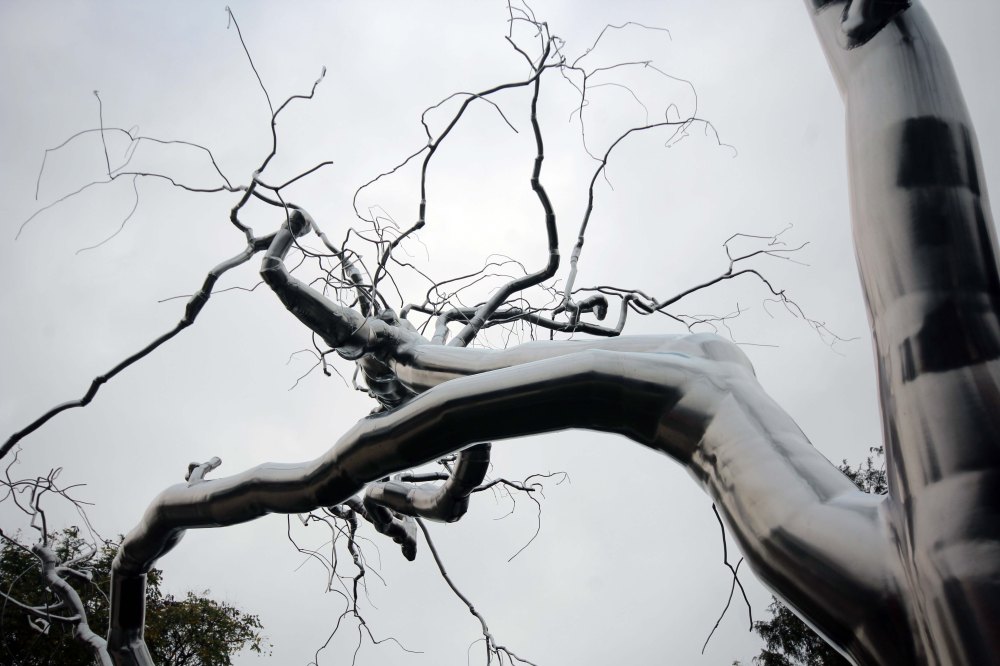
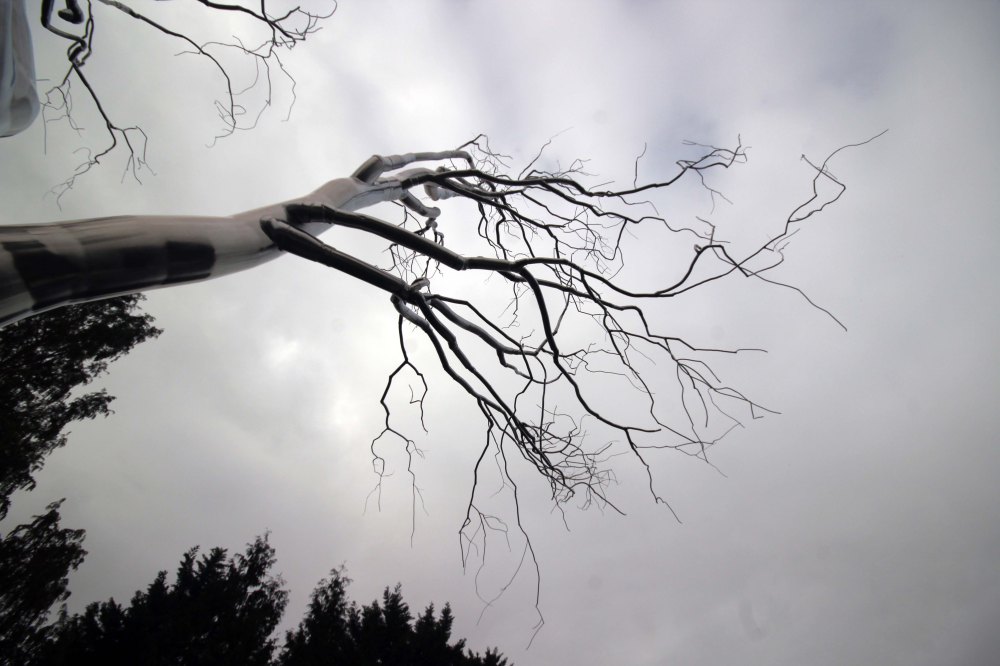
At first glance, this sculpture’s composition of trunk and branches, and its scale, relate Graft to mature trees in the garden. Yet the differences outweigh the similarities, starting with its shiny, stainless steel exterior. One set of branches appears orderly and rational in its progression upward, while the other set exhibits crabbed, twisted, and fraught boughs. The work’s title refers to the horticultural procedure of joining one tree or plant to the bud, stem, or root of another in order to repair it, adapt it to climate or soil change, propagate it, or produce new fruits or flowers. The conjoining of two distinct sides in Graft may also be seen to connect the binary historical tropes in the history of art—classical on the one hand, and romantic on the other. Another definition of “graft” refers to the means by which an individual or entity gains power unfairly. This sculpture is part of a series of stainless steel sculptures the artist refers to as “Dendroids,” a term that describes a tree-like, branching form, but also evokes an artificially engineered or mutant body. Graft was added to the Sculpture Garden on the 10th anniversary of its opening.

Roxy Paine, Graft, 2008-2009, stainless steel and concrete


Until his 70th birthday in 1963, Joan Miró was best known for his surrealist paintings and drawings. However, in the last two decades of his life he created more than 150 sculptures. These late works mostly fall into two categories: those cast from forms created by the artist, and those cast from found objects. One of Miró’s largest sculptures, Personnage Gothique relates to both types: the bird was cast from an object the artist created, while the top portion was cast from a cardboard box and the arch-shaped form from a donkey’s collar. The objects combine to suggest a figure, while at the same time the empty box and unoccupied harness imply absence. Personnage Gothique embodies Miró’s lifelong concern with richly imaginative imagery that he said was “always born in a state of hallucination.”
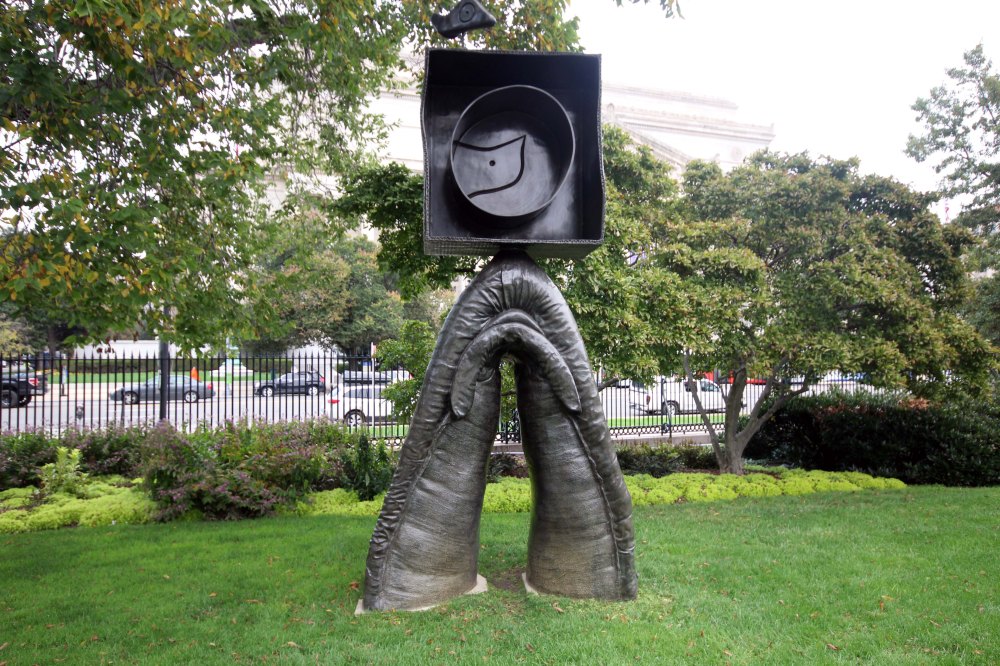
Joan Miró, Personnage Gothique, Oiseau-Eclair (Gothic Personage, Bird-Flash), model 1974, cast 1977, bronze
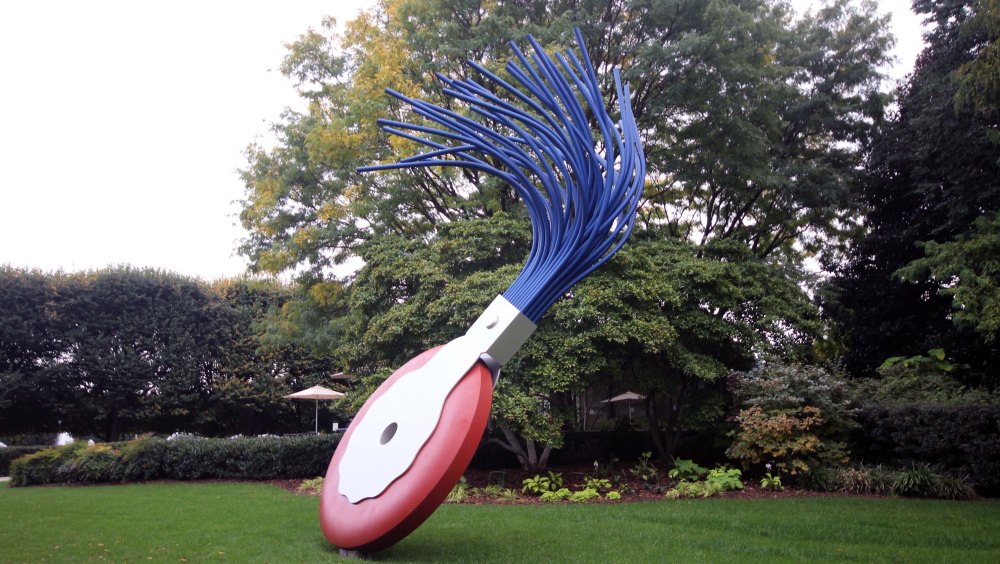
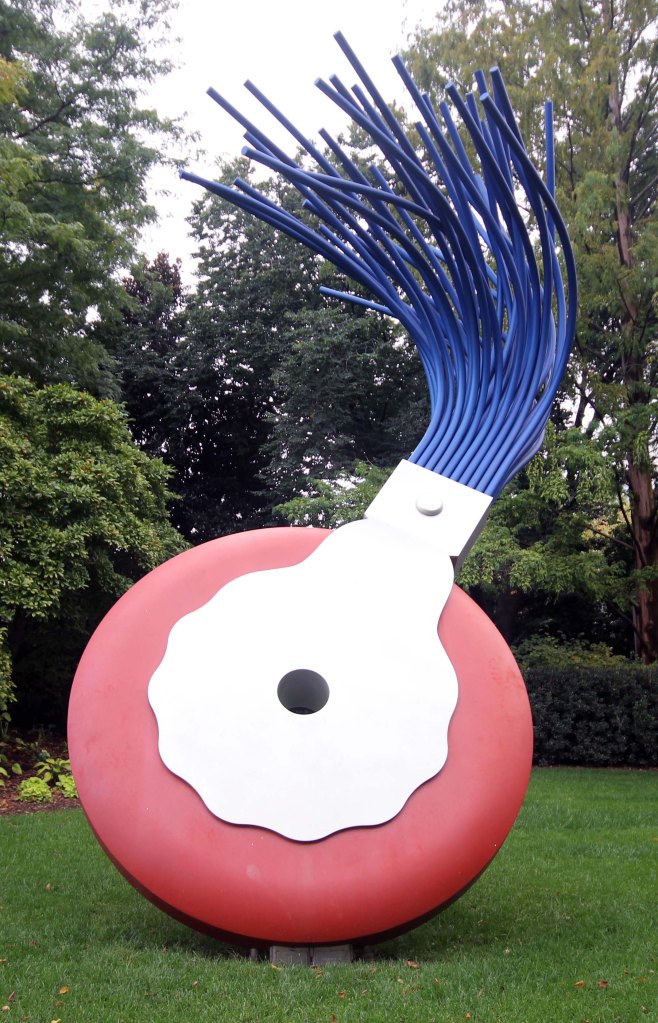
Claes Oldenburg and Coosje van Bruggen, Typewriter Eraser, Scale X, model 1998, fabricated 1999, painted stainless steel and fiberglass
In the mid-1960s, Claes Oldenburg began to visualize public monuments based on common objects, such as a clothespin or a pair of scissors, instead of historical figures or events. The artist chose the (now obsolete) typewriter eraser as his model for this work based upon childhood memories of playing with the object in his father’s office. In the late 1960s and 1970s he used the eraser as a source for drawings, prints, sculpture, and even a never-realized monument for New York City. Here the giant brush arcs back, conveying a sense of motion, as if the wheel-like eraser were rolling down the hill and making its way toward the gate of the garden.
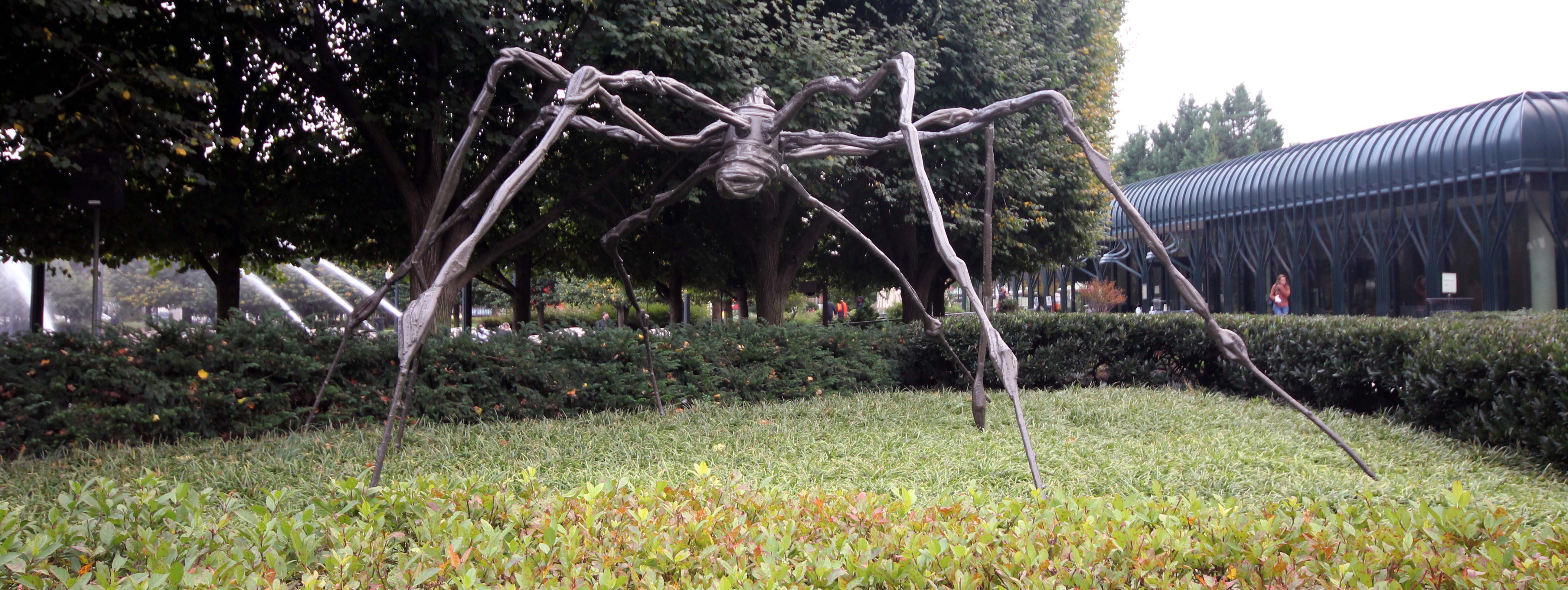
Louise Bourgeois used the spider as the central protagonist in her art during the last decades of her life. For the artist, whose work explored themes of childhood memory and loss, the spider carried associations of a maternal figure. Bourgeois associated the “Spider” series with her own mother, who died when the artist was 21 years old. From drawings to large-scale installations, Bourgeois’s spiders appear as looming and powerful protectresses, yet are delicate and vulnerable.
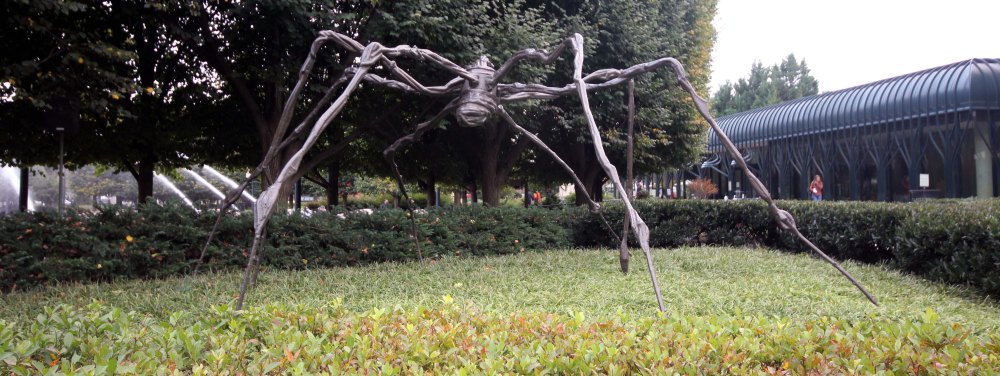
Louise Bourgeois, Spider, 1996, cast 1997, bronze with silver nitrate patina
The sculpture of Polish artist Magdalena Abakanowicz is largely drawn from her experience of World War II and its aftermath. She is best known for her “crowds” (as she called them) of headless, rigidly posed figures whose anonymity and multiplicity have been regarded as the artist’s personal response to totalitarianism.
Each of the thirty bronzes in Puellae (meaning “girls” in Latin) is unique, made from individually sculpted wax forms based on a body cast of a single child model. Abakanowicz applied burlap to each of the forms prior to casting to give them a rough, organic texture. This work refers to an account the artist heard while growing up in Poland about a group of children who froze to death as they were transported in cattle cars from Poland to Germany during the war.
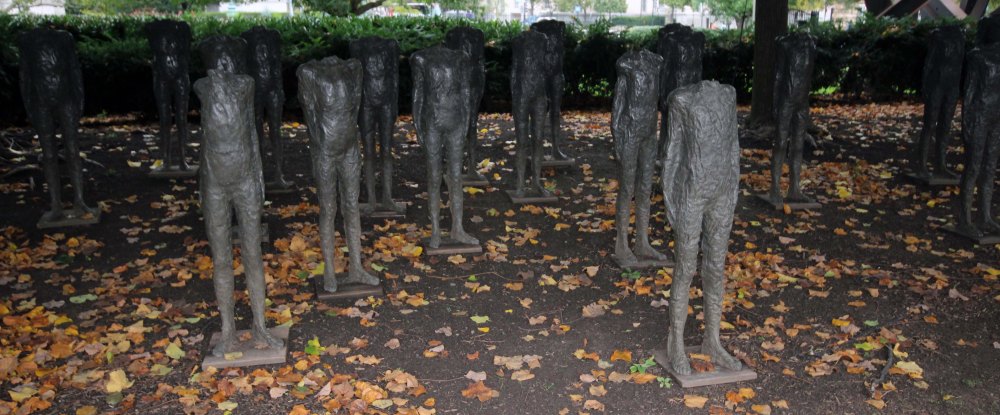
Magdalena Abakanowicz, Puellae (Girls), 1992, bronze
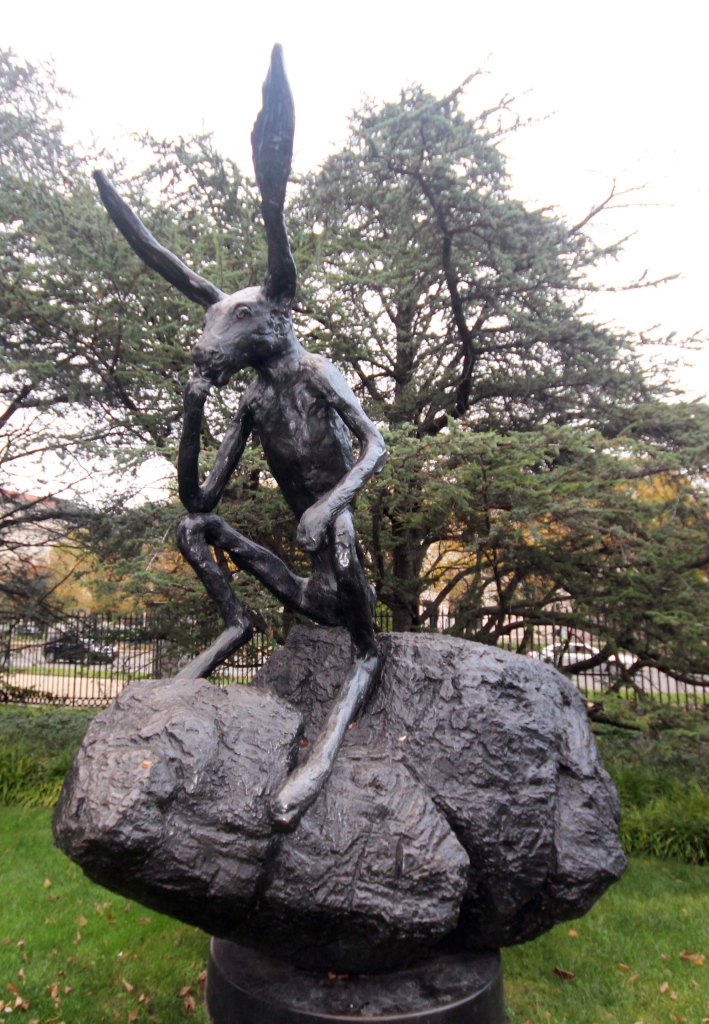
Barry Flanagan, Thinker on a Rock, 1997, bronze
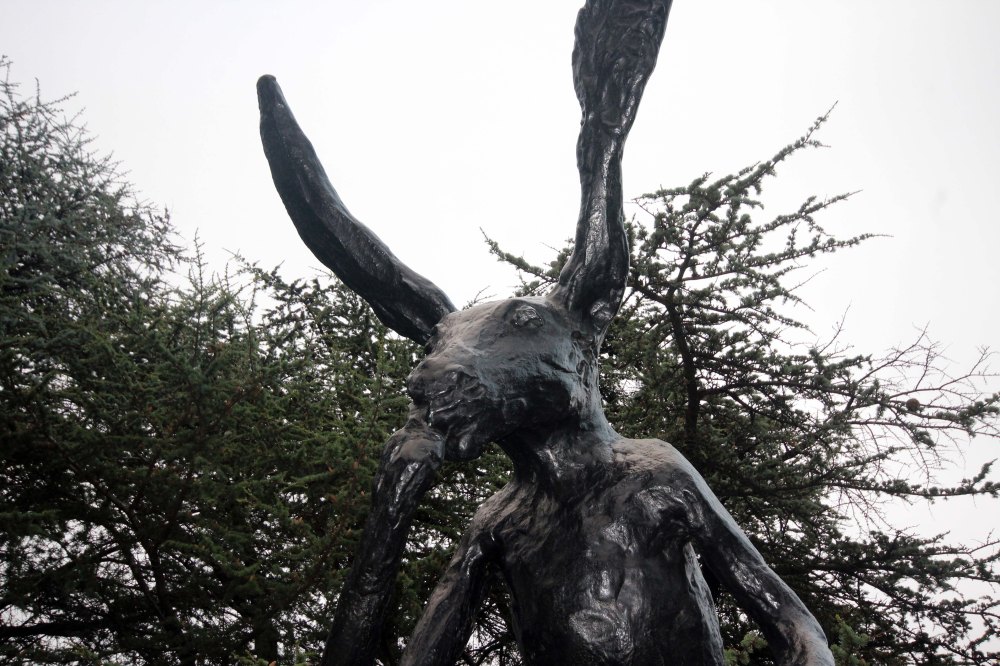

Ellsworth Kelly, Stele II, 1973, one-inch weathering steel
I actually preferred these two sculptures together!
(Foreground) Joel Shapiro’s Untitled may bring to mind a human figure in motion, yet at the same time it can be understood as an abstract sculpture that explores the properties of balance and gravity. The impression changes as you move around the object and encounter a variety of animated compositions. Originally constructed from plywood sheets, the elements of this work were carefully cast to retain the wood grain pattern.

(Foreground) Joel Shapiro, Untitled, 1989, bronze (Background) Mark di Suvero, Aurora, 1992-1993, steel
(Background) Mark di Suvero began making sculpture in the late 1950s with massive, weathered timbers and found objects such as barrels, chains, and tires. Bold and gestural, the dramatically cantilevered forms in di Suvero’s early works were considered the sculptural equivalents of abstract expressionist paintings. In the 1960s di Suvero began to craft works from steel beams that he moved with cranes and bolted together to create large outdoor pieces. Aurora is a tour de force of design and engineering. Its sophisticated structural system distributes eight tons of steel over three diagonal supports to combine massive scale with elegance of proportion. Several beams converge within a central circular hub and then explode outward, imparting tension and dynamism to the whole. The title comes from a poem about New York City by Federico García Lorca (Spanish, 1898–1936). The steel forms a letter “k”: the artist has said the work is a portrait of his wife, Kate.

Robert Indiana, AMOR, conceived 1998, fabricated 2006, polychrome aluminum
Scott Burton believed that art should “place itself not in front of, but around, behind, underneath (literally) the audience.” In this way, he challenged ideas about sculpture’s monumentality, formality, and status as an object to be looked at on a pedestal. Instead, he wanted his sculpture to occupy the same space as its beholder, to be functional and, preferably, placed in a public setting. Burton openly acknowledged a debt to Constantin Brancusi, an early modern sculptor who challenged the conventional distinction between aesthetic and utilitarian form. Here, the blunt geometry of Burton’s seats contrasts with the material (red granite) that is visually sumptuous and warm. The artist specified two possible configurations to encourage social interactions and gathering: a ceremonial circle, as the work appears here, or side-by-side to form a long bench.
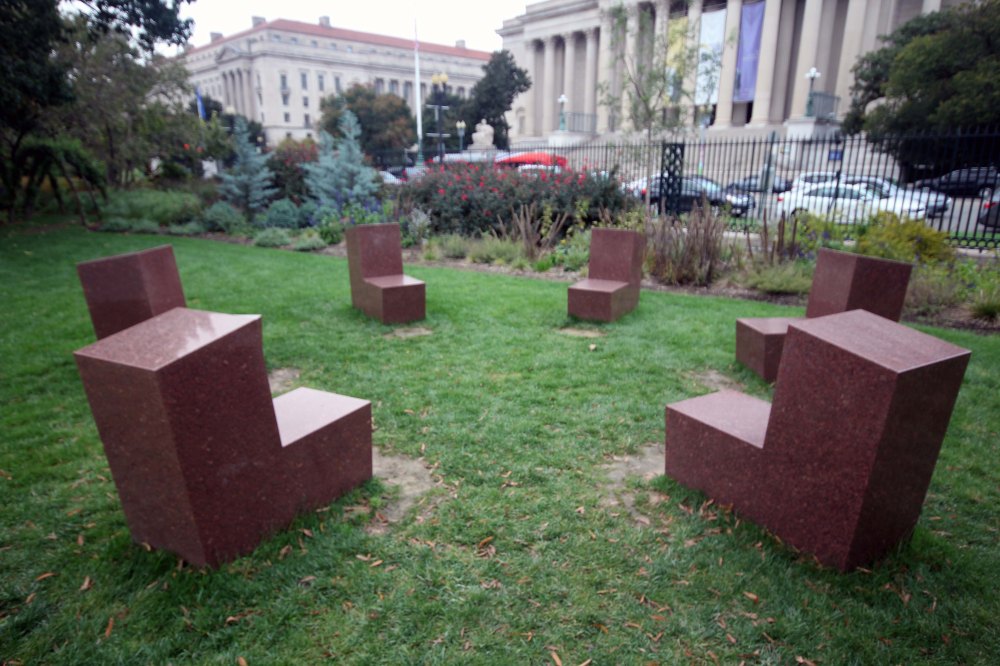
Scott Burton, Six-Part Seating, conceived 1985, fabricated 1998, polished granite
Next up….revisiting some of the memorials that I haven’t seen for over twenty years!
Supporting our Blog
We very much appreciate your support of our blog.
- You can purchase the ebook telling the story of how we became full-time RVers.
- You can purchase our recipe book filled with 80 recipes we have cooked in our RV and taste tested by Lee himself. You can purchase the kindle or paperback version on Amazon or buy the Apple version on iTunes.











































 Camper Chronicles