
WARNING THIS POST IS GRAPHIC. PLEASE DO NOT CONTINUE IF THIS WILL UPSET YOU.
I really should have named this post “First Time Killing a Chicken” because that is essentially what I did, but it truly was a process, so let me go back a bit and explaine how all this happened. In the process of looking for chickens and goats to buy I joined a few local Facebook farm animal groups and one of them had a workshop to process an entire chicken. The cost was $35 and you got to take home the chicken you processed which in my mind was more than a fair deal. I asked Lee if he would be interested and he said absolutely, and I prepaid and booked it.
Fast forward to the end of August and the workshop was upon us. I would be lying if I didn’t say I had serious concerns about the entire thing, but my driving factor was my desire to know if I could actually kill an animal I planned on eating. Believing intellectually you canld do it is far different than putting knife to neck and I thought it was important that I discover this about myself on way or the other. So we drove 1-1/2 hours to a small farm in Northeast, Ohio and with some trepidation walked around the small ranch house to the back yard. I was simulataneously intimidated and pleased by getting to look at someone else’s setup and since we were a little early I walked around a bit.
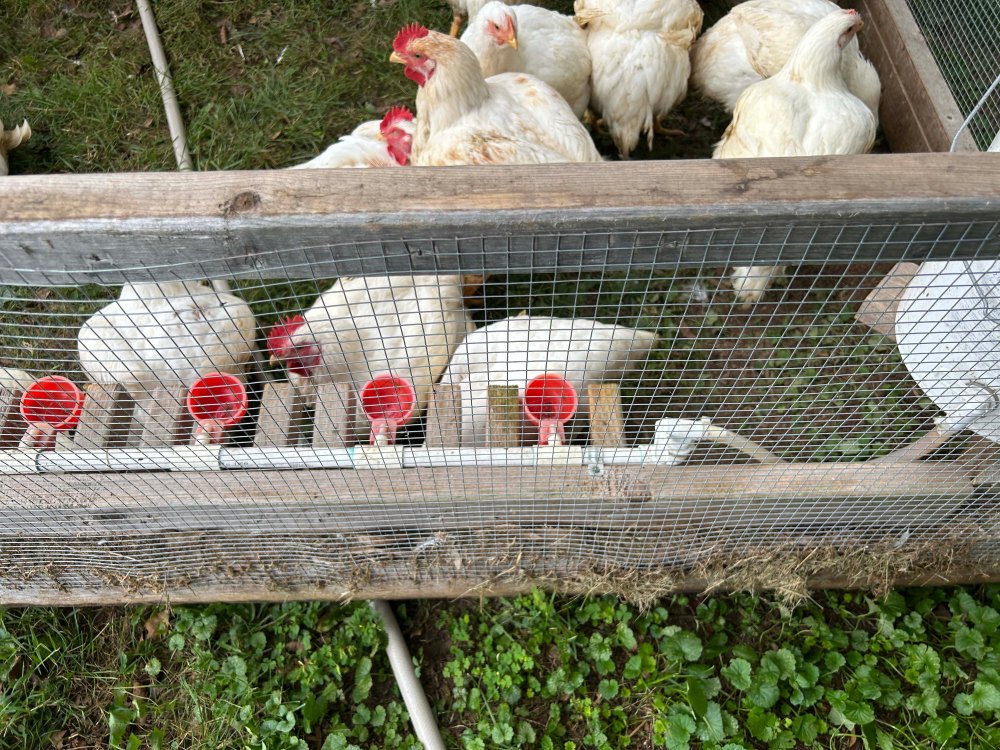
He had his Rhode Island Reds (which is the breed we have) in a very cool pasture setting but his meat chickens and layers in totally different spacing. His feeding and watering systems were really cool though and I took some pictures. There are always different ideas out there.


It was time to start though, and we all gathered around while the farmer talked to us. This guy is not a professional trainer, and he was a little hard to hear but once we started, he did a great job. It helped that it was a really small class (lots of last minute no shows) and it was a man and his 14-year-old daughter, two brothers from Toledo who drove 2-1/2 hours to get there, us, and a single man. We jumped right in and he killed the first chicken and processed it and then said it was our turn. Everyone turned to me and I was like “I’ll do it but I am NOT going first”, so Lee and a couple others jumped in. It helped to watch others do the steps first but I was really dreading my turn. Let me show you why. (To be clear this is where you may want to stop, and there are different ways of doing it, but I appreciated the efficiency of this particular system.

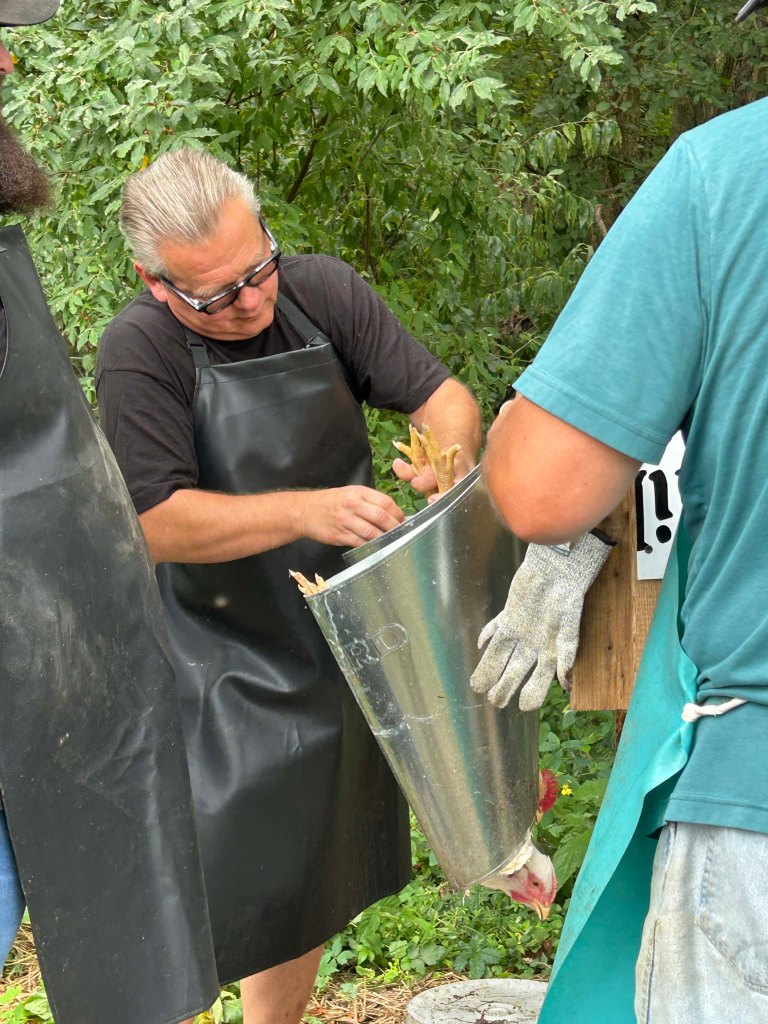
Step #2 – Put the chicken in a metal cone and zip tie the feet. This stops them from getting their feet down by their head and pushing themselves out backwards. It also hides some of the more violent aspects of their final moments.


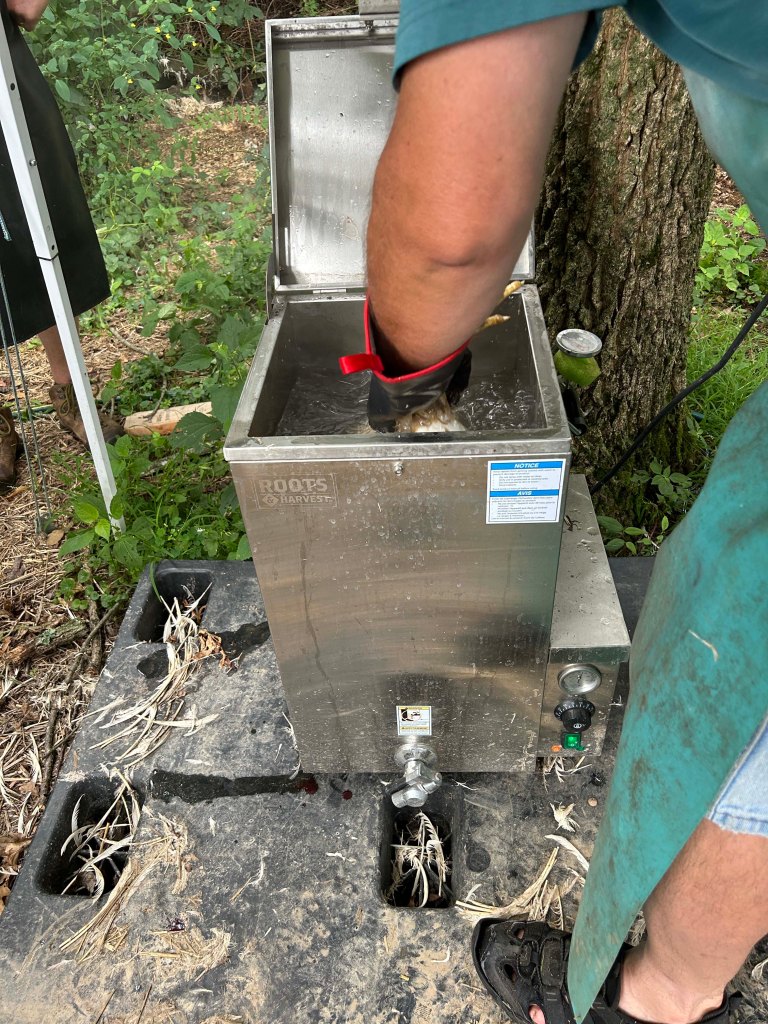
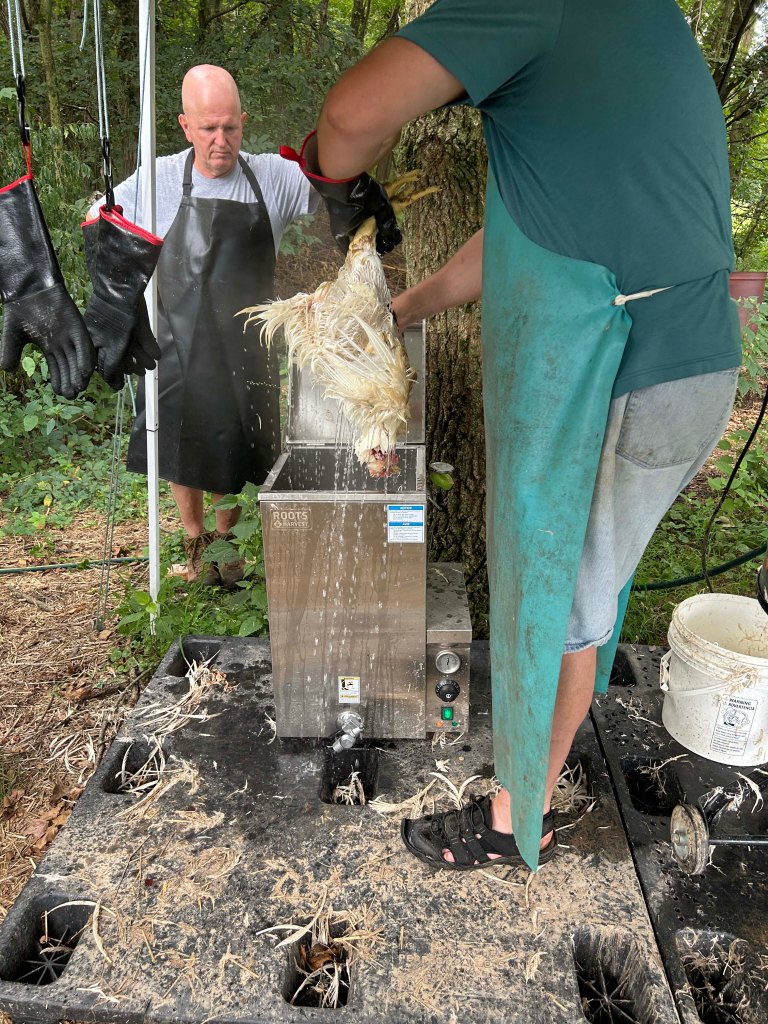


Step #5 – Place the chicken in the plucker while the water is running and it is spinning. This machine costs $450 but it works incredibly fast (about 10-15 seconds) and gets 99% of the feathers out. Unfortunately, you have to look into the hole while doing it and the water sprays into your face getting in you noise and mouth if you are unfortunate enough to leave it open like Lee did. This can actually cause sickness so I would recommend safety glasses and maybe a mask over the nose and mouth.

Step #6 – Clean the bird. This was actually the hardest part for me (and several others) because it is a ton of steps and pretty gross. The young woman only did half of hers and although I got through it was really gross. I have cooked more turkeys than I can count but when you buy them from the store this work is already done and I guess I didn’t get that.


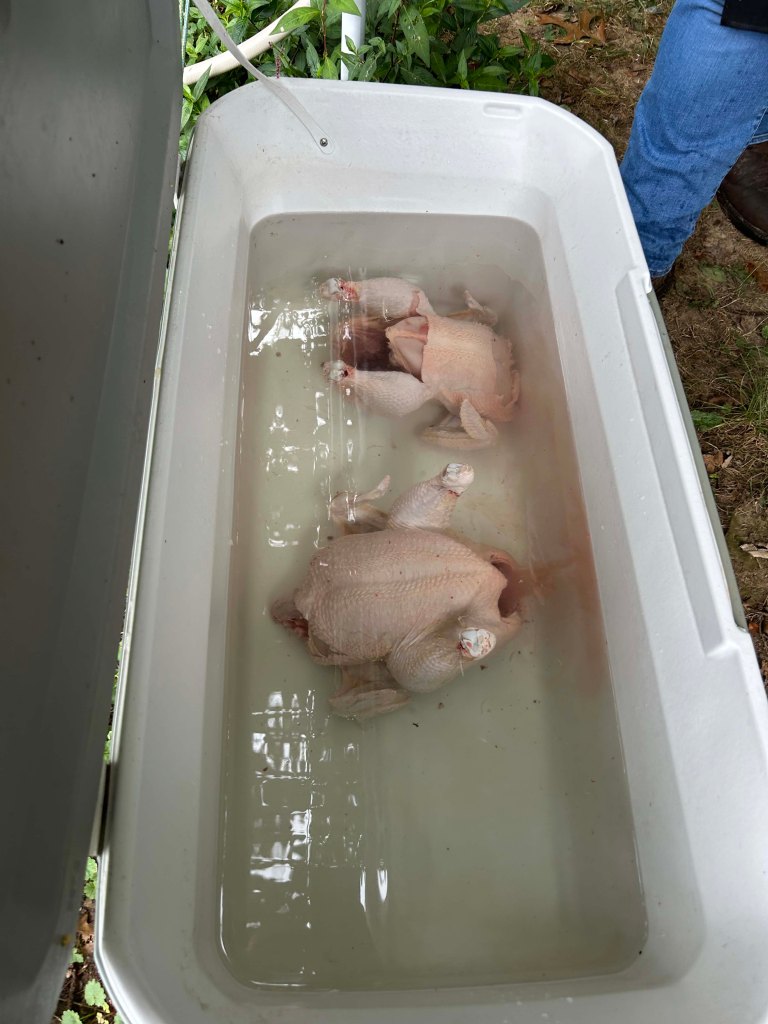
He usually leaves them in for 24-48 hours in ice water to allow rigor mortis to set in and then dissipate, but we just waited a little while and then he broke one down. That was easy for me because it’s just like the chicken you get in the store, and I was pretty familiar with how to do this.
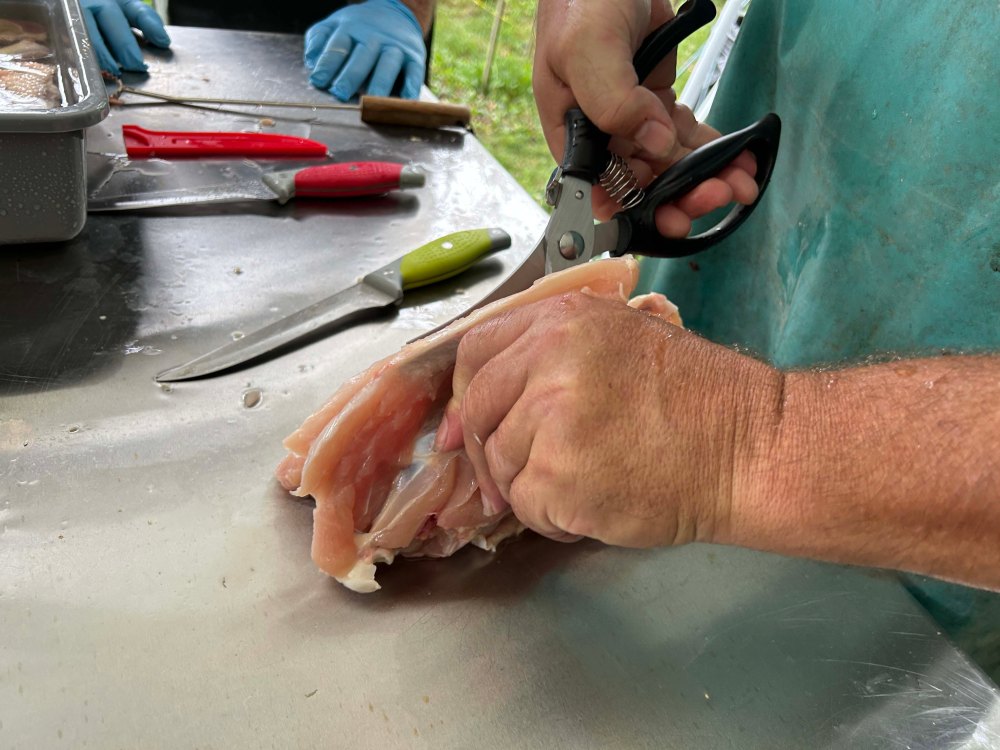

After that the class was about 1/2 way done and he offered to let people process more chickens. Lee did one more, but I was all set pretty much landing on I knew I could do it but wasn’t sure I wanted to. I spent the time having a great conversation with the two brothers from Toledo who have a 200-chicken farm. They gave us some great advice and made us feel tons better about the job we were doing. They also drove all this way because multiple times a week people stop and want to buy chicken meat. They don’t have processors near them either (most won’t bother with it unless its more than 100 birds at a time) so they wanted to see how hard it was to do themselves. The general consensus from the group was it would be better to self-serve although the entry cost for plucker and hot water tank was a little high. Yes you can pluck manually but everyone said its pretty time consuming and miserable.
My other questions were around what to do with the waste. The last thing I want is to attract predators and the answers I got didn’t really satisfy me. Still Lee is really interested in building a chicken tractor and possibly raising meat chickens next year, so I am willing to give it a go. We had the chicken for dinner the next night and it was tender but honestly, I had a hard time getting the images (and smells) from the previous day out of my head. Still it is nice knowing where your food comes from, so let me just say at this point I am on the fence about the whole thing. We will see how it goes.
If you made it this far good for you. It was tough to write it in such detail but I thought it was super important to include all the steps.
We very much appreciate your support of our blog.
 Camper Chronicles
dang girl I’m impressed with you! Having lived on a ranch I know it’s not for everyone. I always stayed with our animals and said a prayer while they were killed. Luckily we had Farm Kill available to process our hogs, steers and Emus. It’s wasn’t so hard for me as I grew up in a hunting and fishing family.
Thanks Deb!!